







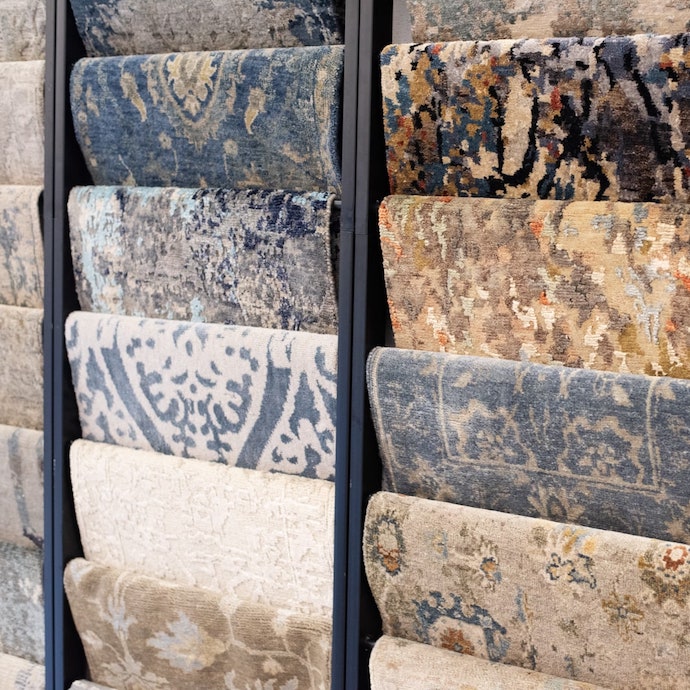
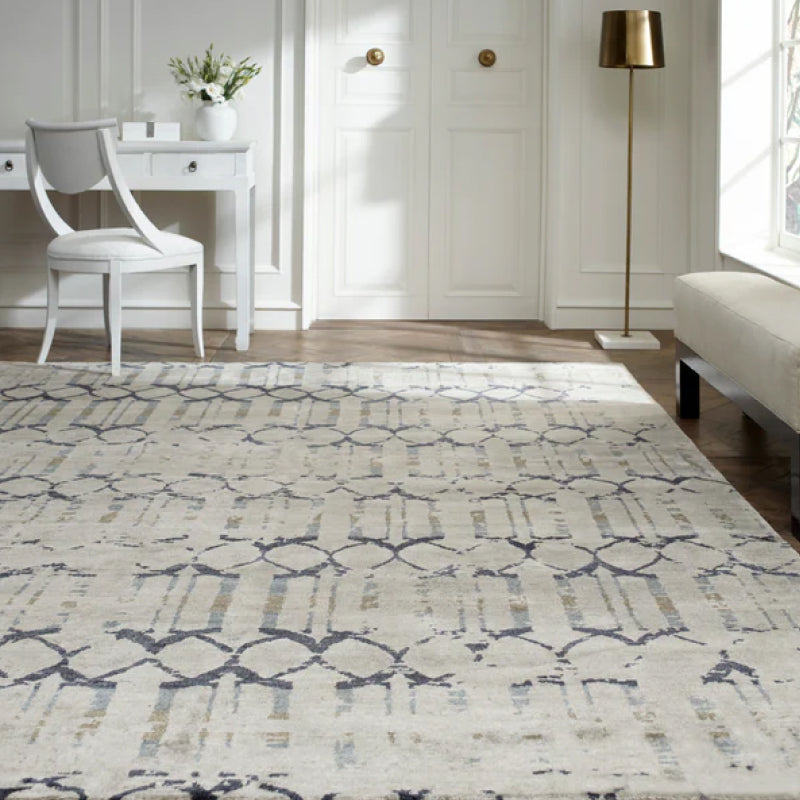
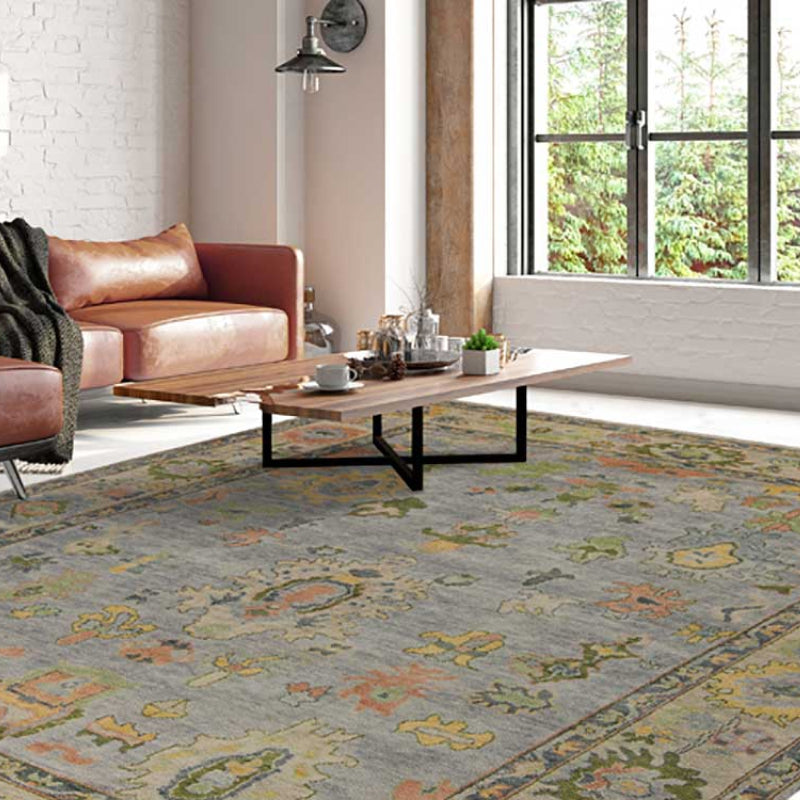
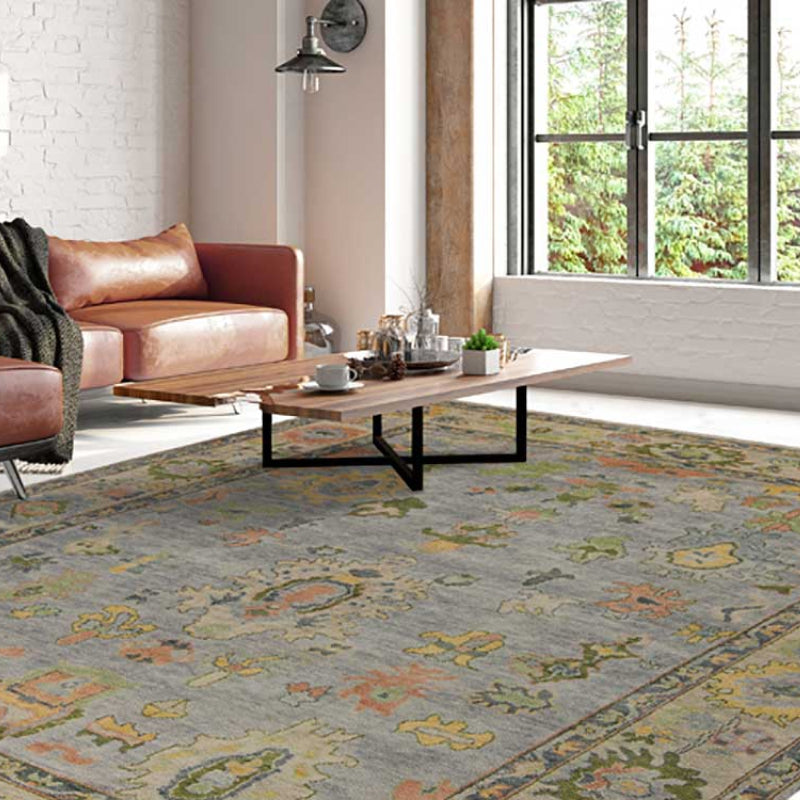
Let's get right to it. When designers and discerning homeowners talk about a truly foundational piece for a room, they're often talking about a hand-knotted rug. But what does that actually mean?
It’s about so much more than a floor covering. A hand-knotted rug is a piece of art, painstakingly crafted by a skilled weaver who ties every single knot by hand. This isn't a process you can rush; it's a centuries-old tradition that turns natural fibers into a story you can live on.
Think of it as the difference between an original oil painting and a high-quality print. Both might look beautiful, but one is a unique creation, imbued with the artist's soul. That’s a hand-knotted rug.
The Soul of a Room: What Are Hand-Knotted Rugs?
Unlike their mass-produced cousins, hand-knotted rugs are built to last for generations. It’s this incredible durability and timeless artistry that makes them an essential investment for creating spaces with genuine character—from a high-end Buckhead estate to a sophisticated Milton home.
The secret lies in a construction method perfected over centuries.
- Human Artistry: Each rug comes to life on a vertical loom. Weavers meticulously tie individual knots of wool or silk onto the rug's foundational warp and weft threads.
- Generational Craft: This process is incredibly time-intensive. A single rug can take a team of artisans months, or even years, to complete.
- Unmatched Durability: The tightly tied knots create a dense, resilient pile that can withstand decades of foot traffic, making them heirlooms that only get better with age.
For anyone creating an elevated interior in Atlanta, choosing a hand-knotted rug is an investment in unparalleled quality. It’s the kind of piece that grounds a room, providing the perfect anchor for an exquisite Verellen sofa or custom upholstery from our designer fabrics.
These rugs represent the soul of a room. They carry history, artistry, and an energy that machine-made products simply can't replicate. It’s a foundational layer that elevates every other element in the space.
The demand for these woven masterpieces speaks for itself. Hand-knotted rugs are a top-tier segment in the global floor covering market, with a projected annual growth rate of 5.28%. This interest is fueled by a growing appreciation for true craftsmanship. You can explore more about this trend with these insights on the global rug market.
So, when you ask, "what are hand-knotted rugs?" the answer is simple: they are the heart of a well-designed home. And experiencing their texture and richness in our Buckhead showroom is the only way to truly understand their magic.
Quick Guide: Hand-Knotted vs. The Rest
To put things in perspective, let's get down to brass tacks. The differences in construction, materials, and lifespan are massive.
| Attribute | Hand-Knotted | Hand-Tufted | Machine-Made |
|---|---|---|---|
| Construction | Knots are tied by hand directly to the foundation. | Pile is punched through a backing with a tufting gun, then glued. | Woven by a power loom controlled by a computer. |
| Fringe | An integral part of the rug’s foundation. | Glued or sewn on as a decorative afterthought. | Often sewn or glued on to mimic a hand-knotted look. |
| Backing | The woven pattern is a mirror image of the front. | Covered with a latex or canvas backing to hold tufts in place. | Typically has a rigid, grid-like pattern and serged edges. |
| Lifespan | 50-100+ years. Becomes a true heirloom. | 3-10 years. The glue backing degrades over time. | 3-20 years. Depends heavily on material quality. |
| Value | An investment that holds or increases in value. | Value depreciates significantly after purchase. | Low initial cost, but little to no resale value. |
This table gives you a snapshot, but the key takeaway is that hand-knotted rugs are in a class of their own. While other options have their place, they can't offer the longevity, unique character, or investment value of a rug woven by hand. It's the go-to choice for luxury furniture in Atlanta.
How Artisans Create These Woven Masterpieces
Let’s go behind the loom. Think of a hand-knotted rug as art, but instead of paint, the medium is thousands of individual knots of wool or silk. Each one is tied by hand, one at a time, building a dense, intricate pattern that literally weaves a story.
This mesmerizing process starts long before the first knot. It begins with sourcing exceptional materials, like the rich, lanolin-filled wools used in rugs from our partners at Kalaty and HRI. These natural fibers provide the incredible durability and subtle sheen that sets these rugs apart. The wool is then carded, spun into yarn, and dyed in small batches, creating beautiful, nuanced variations in color.
This infographic breaks down the simple, yet profound, journey from a single knot to a family heirloom.

The visual gets to the heart of the craft: it's a patient, manual process where every action contributes to a final product genuinely built for life.
The Foundation of Artistry
Once the materials are ready, the real work begins on a large, vertical loom. Vertical threads, the warp, form the rug's skeleton. Artisans then tie individual knots of dyed yarn around these warp threads, building the design row by painstaking row.
After each row of knots is finished, a horizontal thread called the weft is passed through to lock it in place. This sequence is repeated thousands upon thousands of times. It’s an incredibly labor-intensive process. A single 9x12 rug can contain over a million knots and take a team of weavers nearly a year to complete.
This methodical construction guarantees the rug's foundation is as strong as its design is beautiful. That’s why a handcrafted Verellen sofa or a custom Lee Industries chair deserves a foundation built with the same integrity. These pieces are meant to go together, a perfect pairing for any high-end furniture project in Buckhead or Roswell.
Demystifying Knot Count and Style
You’ll often hear the term Knots Per Square Inch (KPSI). Think of it like thread count in luxury sheets—a higher KPSI generally means a more detailed pattern and a denser pile.
KPSI is a measure of density, detail, and the time invested. A rug with 300 KPSI is a work of fine art, requiring incredible precision and many more months on the loom than one with 80 KPSI.
But KPSI isn't the only sign of quality. The type of knot used also plays a huge role. The two main styles are:
- Persian (Senneh) Knot: This asymmetrical knot allows for fluid, curvilinear designs. It's perfect for the intricate floral patterns you might see while browsing our Atlanta fabric showroom, creating a finer, more detailed weave.
- Turkish (Ghiordes) Knot: This symmetrical knot produces a more robust, geometric look often found in tribal and nomadic rugs. The result is a thicker, more resilient pile.
The knotting style is a signature of the region and its artisans, giving each rug a unique personality.
Once weaving is done, the rug is cut from the loom, and the pile is sheared to reveal the pattern's true clarity. A final wash sets the dyes. What emerges is a masterpiece, ready to anchor a sophisticated space—from a designer project on West Paces Ferry to a cozy living room in Alpharetta.
How to Spot True Hand-Knotted Quality
With so many look-alikes on the market, how can you tell a masterpiece from an imitation? Let’s walk through the details that separate a genuine hand-knotted rug from a machine-made one. Whether you're a designer sourcing for a client in Marietta or a homeowner seeking that perfect piece for your East Cobb home, these are the signs of authentic quality.
The first test is the easiest: flip the rug over.
A real hand-knotted rug reveals a pattern on its back that’s nearly identical to the front. You should be able to trace the design clearly, seeing the individual knots. This is your most reliable first clue.

Look for the Unmistakable Signs of Craftsmanship
Once you’ve done the flip test, look closer at the details machines can’t replicate. These are the hallmarks that designers and collectors prize.
-
The Fringe Is Part of the Rug: On a hand-knotted rug, the fringe isn't just decoration—it's the rug's very skeleton. These are the warp threads that run the entire length of the piece. In machine-made or tufted rugs, the fringe is often just sewn on afterward.
-
Embrace Imperfect Knots: Look closely at the back again. You’ll see that the design is made of tiny pixels of color. Each one is a knot tied by a human hand. Because of this, you'll notice slight variations. This is a good thing! It's the signature of the artisan.
A machine-made rug screams perfection from a factory. A hand-knotted rug whispers a story of human artistry, with subtle imperfections that prove its soul.
This appreciation for genuine craft is a growing trend. The global handmade carpet market was valued at $66.9 billion in 2023 and is only expected to grow. You can read more about the trends shaping the handmade carpet market and see why this art form is more valued than ever.
The Beauty Is in the Flaws
Beyond the construction, the true soul of a hand-knotted rug is found in its unique character—the very "flaws" a machine would be programmed to avoid.
Meet Abrash Ever notice subtle, organic stripes or clouds of color in a handmade rug? That's called abrash. It happens when a weaver introduces a new batch of hand-dyed yarn. Since natural dyes create slight variations, a beautiful, painterly shift in color occurs.
Far from being a defect, abrash is celebrated by designers. It’s visual proof of the rug's handmade origins and the use of natural materials, giving it a depth a flat, uniform machine-made color can never achieve. For more, learn about the key differences in a hand-knotted rug that set it apart.
When you see abrash, you aren't seeing a mistake. You're seeing the history of the weaving process—a beautiful testament to its story. It’s what makes a rug feel truly alive.
Why Hand-Knotted Rugs Are a Smart Investment
Let's talk value. Every choice you make is an investment in your quality of life. A hand-knotted rug isn't just another purchase; it's an asset. It's why our Lewis and Sheron Trade Program members, who design stunning homes from Buckhead to across North Georgia, consistently choose them.
Unlike machine-made alternatives that depreciate the moment they arrive, a hand-knotted rug is crafted to be timeless, not trendy. It's one of the smartest investments you can make for your home.
Built to Last for Generations
The most compelling reason to choose a hand-knotted rug is its incredible durability. These aren't delicate pieces of art; their origins are in nomadic traditions, where they were made to withstand daily life.
Each knot is meticulously tied and packed down, creating a dense, resilient foundation that can handle decades of foot traffic. A quality hand-knotted rug won't just last for 50, 75, or even 100+ years—it gets better with age, developing a soft patina that tells a story.
A Timeless Style That Anchors Any Room
Truly great design never goes out of style. A classic hand-knotted rug effortlessly bridges different design eras. It can serve as the perfect sophisticated foundation in a room filled with contemporary luxury furniture from our vendors like Lee Industries or Ambella.
Just imagine a traditional Persian design grounding a minimalist living room in a Roswell high-rise. Or picture a vibrant tribal rug adding soul and history to a classic estate in Milton. This unique ability to harmonize with any aesthetic is a design secret that professionals from East Cobb to Forsyth County rely on to create spaces that feel both personal and timeless.
Choosing a hand-knotted rug is like buying a classic timepiece. Its value isn't just in its function but in its craftsmanship, history, and the story it tells—a story that becomes part of your own.
An Asset That Appreciates in Value
Finally, let's talk numbers. While a machine-made rug loses most of its value almost immediately, a well-cared-for hand-knotted rug can maintain or even increase its worth over time. They are collected and traded much like fine art.
The demand for authentic knotted carpets is growing, with a projected increase of 7.7% annually from 2026 to 2033. This growth is fueled by discerning homeowners and designers who recognize these rugs as tangible assets. You can discover more insights about the carpet market and its trajectory. For our clients building heirloom-quality homes from Marietta to Cumming, this makes a hand-knotted rug one of the smartest investments you can walk on.
Caring for Your Rug Without the Headaches
You’ve brought a piece of floor art into your home. So, how do you keep it looking incredible? You might be surprised. Caring for a hand-knotted rug isn't the high-maintenance headache you’d expect.
These rugs are built for life. They’ve been woven for centuries in parts of the world where they are walked on, lived on, and celebrated daily. With just a few simple habits, your rug will not only survive but thrive.
The Everyday Essentials of Rug Care
Your vacuum is your best friend. A regular vacuum—about once a week—is the single most important thing you can do. It lifts away the dirt that can wear down the wool fibers. But here’s the crucial part: always turn off the beater bar. Those spinning bristles are far too aggressive for the hand-tied knots.
Spills happen. When they do, don’t panic. Just remember the golden rule: blot, never rub.
- Immediately grab a clean cloth and press down firmly to soak up the spill.
- Always work from the outside edge of the spill inward. This keeps it from spreading.
- For anything that remains, a damp cloth with plain water is your next step.
High-quality wool has natural lanolin, which acts as a built-in stain repellent. This gives you a precious window of time to act before a spill sets. For a deeper dive, our guide on how to care for wool rugs is an excellent resource.
Long-Term Strategies for Longevity
Beyond weekly upkeep, a few habits will protect your investment. First, a high-quality rug pad is non-negotiable. It acts as a shock absorber, cushioning the rug from foot traffic and reducing wear on the knots.
A great rug pad is like a premium mattress for your rug. It provides essential support, prevents premature aging, and ensures it performs at its best for years.
Next, rotate your rug 180 degrees once a year. It’s a simple task that ensures wear from foot traffic and sunlight is distributed evenly.
Finally, plan on a professional cleaning every three to five years. To truly keep it in heirloom condition, you need to know How to Maintain Your Area Rug with expert help. A specialist who works with handmade rugs will give it a deep, gentle cleaning that revives its colors and luster.
Finding Your Perfect Hand-Knotted Rug in Atlanta
It's one thing to read about what makes a hand-knotted rug special, but it's another to experience one for yourself. This is where the vision for your space—whether it’s a living room in Buckhead or a dining room in Roswell—truly comes to life.
You’ve learned about the artistry, the history, and the marks of real quality. Now it's time to bring that knowledge into our Buckhead showroom, Atlanta's destination for designers and homeowners who know the difference.
Run your hand over the dense, tightly packed wool. See how light catches the subtle shifts in color from natural dyes. Feel the substantial weight of a piece that is as much art as foundation. It’s an experience a picture on a screen can't capture.

A Curated Collection for the Discerning Eye
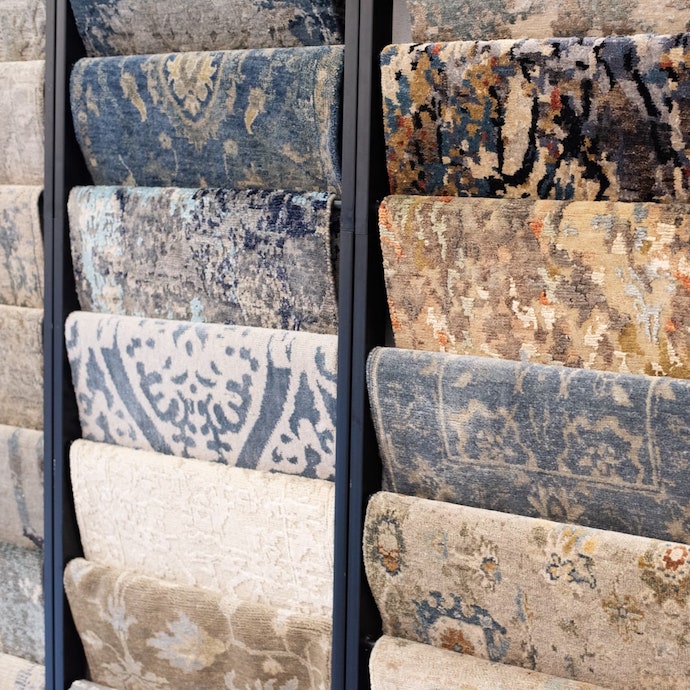
We know your time is valuable. That’s why we’ve already done the hard work, curating a beautiful collection of hand-knotted rugs from world-class vendors like Kalaty and HRI. These are pieces we have personally selected for their incredible craftsmanship and timeless appeal.
Instead of scrolling through endless online catalogs, you can see, touch, and compare the very best right here in our showroom. This helps you make a choice with confidence, knowing you’re investing in a piece that will anchor your design for decades.
For our design partners from Marietta to Alpharetta, this curated approach is a game-changer. It streamlines the selection process, letting you find that perfect, show-stopping rug that elevates your entire project.
Visiting our showroom isn't just about shopping; it's about discovery. It’s where you connect with the story of a rug and begin to imagine the story it will help you tell in your own home.
Your Secret Weapon for Flawless Design
For interior designers working on projects from West Paces Ferry to Forsyth County, our Lewis and Sheron Trade Program is your ultimate resource. Think of our trade team as an extension of your own, providing dedicated support to source the perfect foundational pieces for your clients.
We speak the language of design. We’re here to help you:
- Source the Perfect Piece: Tap into our network to find rugs that match your exact specifications.
- Coordinate with Textiles: Bring your fabric swatches from our expansive Atlanta fabric showroom and let’s build a cohesive palette from the ground up.
- Expert Collaboration: Work with our complimentary in-house designers to pair our rugs with luxury furniture from vendors like Verellen, Wesley Hall, and Lee Industries.
So, bring your paint chips, your fabric samples, and your biggest ideas. Whether you’re a homeowner searching for that one perfect rug or a designer juggling multiple projects, our team is here to help you pull it all together. As you plan your room, our guide on how to choose the perfect living room rug might also be a helpful place to start.
Answering Your Hand-Knotted Rug Questions
From designers in Buckhead to homeowners in Alpharetta, we hear a lot of the same great questions in our Atlanta showroom. You’re making a big decision, and you deserve clear, honest answers. Let's walk through some of the most common ones.
Are Hand-Knotted Rugs Really Worth the Price?
They absolutely are, but it helps to think of it less as a "price" and more of an "investment." That cost is a direct reflection of months of an artisan's life, their incredible skill, premium natural materials, and a level of durability that machine-made rugs can't match.
A machine-made rug might look good for a few years, but a hand-knotted piece is a true heirloom designed to last for generations. It’s a foundational piece that can even appreciate in value. When you consider its longevity, it’s one of the smartest choices you can make for your high-end furniture collection.
Can I Put a Hand-Knotted Rug in a High-Traffic Area?
Yes—in fact, you should! These rugs come from nomadic traditions where they were made for the rigors of daily life. The combination of dense knotting and the natural lanolin in high-quality wool creates a surface that's incredibly resilient, naturally resisting stains and crushing from constant foot traffic.
They are truly built to be lived on. Put it in the family room, under the dining table, or in an entryway to enjoy its beauty every single day. It's the perfect partner for a hardworking Wesley Hall sofa or a set of stylish Lee Industries chairs.
What Is the Difference Between a Persian and an Oriental Rug?
Fantastic question. The easiest way to think about it is that 'Oriental' is the big, overarching category. It technically refers to any rug handwoven anywhere in Asia, from Turkey to China.
'Persian' is a specific, and very famous, type within that larger Oriental family. A Persian rug is one made exclusively in modern-day Iran. So, all Persian rugs are Oriental, but not all Oriental rugs are Persian.
Every region has its own signature designs and knotting techniques. We'd love to show you the distinct differences in our Atlanta fabric showroom.
Does a Higher Knot Count Always Mean a Better Rug?
Not necessarily. While a higher knot count, or KPSI (knots per square inch), allows for a much more intricate pattern—and takes far longer to weave—it isn't the only measure of a great rug. The quality of the wool, the artistry of the dyes, and the skill of the weaver are just as crucial.
Many beautiful tribal rugs have a lower knot count by design. Think of it like comparing a photorealistic painting to a gorgeous impressionist one; they're both masterpieces, just with different artistic goals. What matters most is the overall artistry, the integrity of the materials, and finding the style you truly love.
Feeling more confident? The best next step is to see and feel these incredible works of art for yourself. At Lewis and Sheron Textiles, our team is ready to help you find the perfect piece to anchor your home's story.
Explore our curated rug collections and visit our Atlanta showroom today.