




Ever wonder what really separates a sofa that lasts a season from one that becomes a family heirloom? It’s not just the gorgeous fabric or the handcrafted frame—it’s the different types of sewing stitches holding it all together.
You got it. The stitches.
From the strong, hidden seams to the beautiful decorative details, every single stitch tells a story of quality and craftsmanship. It’s a language, and once you know how to read it, you’ll never look at furniture the same way again.
The Unseen Detail Defining Luxury Furniture

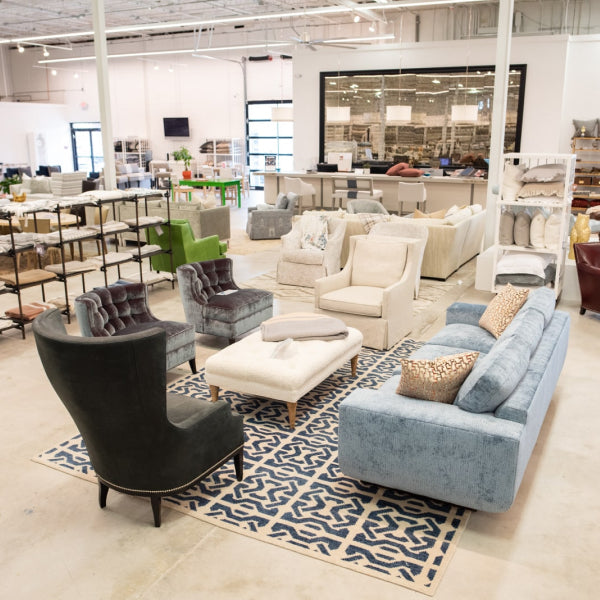
Step inside our Buckhead showroom and you’ll understand why Lewis and Sheron has been Atlanta’s destination for exquisite furniture and fine fabrics for decades.
The elegant lines of a Verellen sofa or the deep comfort of a Lee Industries chair pull you in immediately. But the real secret to their enduring beauty and longevity lies in something much smaller and often overlooked: the stitches themselves.
For interior designers across Atlanta and homeowners with an eye for quality, understanding the language of stitching is like having a key to exceptional craftsmanship. It’s the detail that distinguishes mass-produced furniture from the high-end furniture in Buckhead you invest in for a lifetime.
Why Stitches Are the Soul of Quality Construction
Think of it this way: the fabric is the art, but the stitch is the architecture.
A poorly chosen or badly executed stitch can undermine even the most beautiful designer fabrics, causing seams to pucker or cushions to lose their shape. It’s the difference between a piece that looks stunning for years and one that shows its age after just a few months.
This is precisely why our vendor partners are true masters of their craft. They know exactly which stitch to use for every material and every application. This ensures a flawless, durable result.
Knowing what to look for in a seam or a hem empowers you to invest confidently in true quality. It helps you understand why brands like Wesley Hall and Ambella are celebrated for their lasting design. It lets you ask the right questions when planning custom upholstery.
This guide will give you the confidence to navigate the world of fine furniture. Whether you’re sourcing for a client through our Lewis and Sheron Trade Program or selecting the perfect piece for your home in Roswell, Milton, or Alpharetta, you'll learn to spot the markers of true excellence.
It’s time to discover the very seams of quality that make Lewis and Sheron the premier Atlanta fabric showroom and furniture destination. Let’s dive in.
The Lockstitch: The Backbone of Quality Upholstery

If you've ever run your hand over a perfectly straight seam on a high-end sofa, you've met the lockstitch.
It’s the single most important stitch in modern machine sewing, and for good reason. It’s what gives furniture its shape, its structure, and its incredible durability.
Look at the diagram. The magic is its brilliant design: a top thread from the needle literally "locks" together with a bottom thread from a small spool called a bobbin. This creates a seam that is incredibly strong and won't unravel. It's the secret behind the resilience you feel in a custom Wesley Hall sofa or the crisp topstitching on a Lee Industries chair, making it the go-to for luxury furniture in Atlanta.
Precision Makes Perfect
But strength is only half the story. The lockstitch is also about precision.
When our artisans work on a reupholstery project, they're not just sewing; they're sculpting fabric to a frame. A perfect lockstitch makes the seam virtually disappear.
This level of detail is absolutely essential when we're working with premium textiles, from a heavy Belgian linen to a delicate silk. It’s a core component of the craftsmanship seen in high-end furniture stores in Buckhead.
The lockstitch, known in the industry as the Class 300 stitch, is the foundation of quality construction. Its resistance to unraveling makes it indispensable for securing fine designer fabrics, especially challenging weaves like beautiful Belgian linens. Given that industrial applications in furniture are projected to account for nearly 70% of sewing machine revenue by 2025, mastering this stitch is non-negotiable for any serious craftsperson. You can explore its technical details alongside other stitch types in this comprehensive list of sewing stitches.
When you bring a piece to our Atlanta fabric showroom, this is the stitch that gives it new life. Our team uses it to build seams that are often even stronger than the original factory work, ensuring your project is built to last.
Why Stitch Length Matters with Premium Fabrics
Not all lockstitches are created equal. One of the most critical adjustments our experts make is to the stitch length—the distance the needle travels before making the next stitch.
Getting this right is crucial for both the look and longevity of the piece.
Here’s a quick guide to how we approach it:
- For Heavy Upholstery: On thick, dense fabrics, we use a longer stitch. This prevents the needle from perforating the fabric too many times, which could weaken the material.
- For Lighter Fabrics: With silks, cottons, and other fine fabrics Alpharetta designers love, we shorten the stitch length. This creates a tighter, more secure seam on delicate materials.
- For Decorative Topstitching: A longer stitch is often our choice for visible topstitching. It creates a bold, clean line that beautifully accentuates the furniture's silhouette.
Once you know what to look for, you'll start to see the difference a well-executed lockstitch makes. It's that invisible detail that promises the Verellen furniture you see in our showroom won’t just look good for a season—it will truly stand the test of time.
Finishing the Job: Reinforcing Seams with Overlock and Zigzag Stitches
If a lockstitch builds the frame, an overlock stitch is the master finishing work inside the walls.
It’s that beautifully complex, looped stitch protecting the raw fabric edges inside a high-quality cushion. It’s a detail that quietly says, “this was made to last.”
Next time you’re admiring a piece from Verellen or Wesley Hall, take a peek inside a cushion. You’ll see it—a pristine, encased seam that will never, ever fray. This single detail is non-negotiable for us, and for designers in Roswell and Alpharetta who source the fine fabrics Alpharetta is known for. It’s what protects your investment.
The Zigzag: A Versatile Workhorse
So where does the zigzag stitch fit in? It's the overlock's incredibly handy and versatile cousin.
While a true overlock requires a special machine called a serger, the zigzag is a workhorse that can be done on a standard machine. Its side-to-side motion catches the raw edges of the fabric, forming a powerful barrier against unraveling.
The zigzag’s real claim to fame is its ability to stretch. This makes it the go-to stitch for fabrics with a bit of give, like knits. It’s a foundational technique for ensuring a huge range of designer fabrics are durable enough for real life.
When you’re talking about the kind of luxury furniture Atlanta designers look for, a perfect interior finish is a must. The choice between an overlock and a zigzag really comes down to the specific fabric. An overlock gives that flawless, factory-perfect edge for woven upholstery, while a zigzag brings strength and flexibility to the table.
When we create custom upholstery for you in our Buckhead showroom, these are the behind-the-seams details that truly count. It’s what makes the difference between a cushion that holds its shape for years and one that falls apart from the inside. Of course, none of this works without a proper understanding of seam allowance, which provides the necessary fabric for these finishing stitches to grab onto.
Why This Matters for Your Furniture
So, which one is better? Wrong question.
It’s never about which stitch is "better," but which one is right for the job. Our expert craftsmen look at the fabric—its weight, its weave, how it behaves—before making a single stitch.
- Overlock Stitch: The gold standard for preventing fraying on woven fabrics like linen, cotton, and velvet. It's the signature of high-end construction you’ll find on premium furniture.
- Zigzag Stitch: A strong, practical choice for finishing edges, especially on fabrics with some stretch or for internal seams that need to flex without breaking.
This careful approach ensures that every piece, whether it’s a new Lee Industries chair or a treasured sofa getting a new life, is built to endure. It's a mastery of all the different types of sewing stitches that defines the quality you'll find at Lewis and Sheron.
Achieving a Flawless Finish with Invisible Stitches

The real mark of high-quality, custom work isn't what you see. It's what you don't see.
That's the magic of the slip stitch and the blind hem—secret weapons in any expert sewer’s toolkit.
These nearly invisible stitches create those polished, professional finishes that seem to float in place. You’ll find them closing the final seam on a perfectly plumped cushion or giving a custom drapery panel its clean hem, all with no thread in sight. This is the subtle art of the unseen, and it’s a powerful sign of true craftsmanship.
The Vanishing Seam: The Slip Stitch
Think of the slip stitch, or ladder stitch, as the perfect finishing touch.
When we're closing the opening on a cushion for a beautiful Wesley Hall sofa, this is the hand stitch we turn to. It works by grabbing tiny, alternating bits of fabric from the folded edges of the seam and pulling them together.
The result is a seam that’s not only strong but also completely disappears into the fabric. It’s this meticulous detail that separates true custom upholstery from something off a factory line.
Clean Hems, Seamless Style: The Blind Hem Stitch
The blind hem stitch is just as clever but used for a different purpose. It’s our go-to for creating those gorgeous, uninterrupted lines you see on tailored furniture skirts and high-end drapery panels.
The technique is designed to catch just a single thread from the front of the fabric.
This stitch is exactly why hems on fine fabrics from our Atlanta fabric showroom hang so perfectly. By eliminating a visible line of thread, the material can drape just as it was meant to, creating an effect of pure, flowing elegance.
For designers in our trade furniture program, explaining these details to clients in Cumming or Forsyth County highlights the value of custom work. It shows the skill involved in creating the kind of heirloom furniture that Atlanta homeowners are looking for. Want a closer look? Our guide on how to do a blind stitch breaks it down.
Ultimately, mastering all the different types of sewing stitches ensures every piece leaving our Buckhead showroom is nothing less than exceptional.
Using Decorative Stitches to Elevate Your Design
Not all stitches are meant to hide. Some are placed right where you can see them, turning a simple seam into a standout design feature. The best example? The topstitch.
A well-placed topstitch does more than hold fabric together. It’s a deliberate choice that traces the lines of a piece of furniture, adding a crisp, tailored finish that feels completely bespoke.
Think about the clean, architectural lines on a piece of Ambella furniture. A bold, contrasting topstitch running along the arms of a chair is like a perfect pinstripe on a custom suit—it’s a mark of quality and confidence. For those looking for luxury furniture Atlanta designers rave about, this detail makes all the difference.
From Functional to Fabulous
You can completely change a piece's personality just by switching up the thread. A thick thread creates a more rustic, handsome feel. A finer thread that matches the fabric color lends a subtle, sophisticated texture that whispers elegance.
This is a conversation we have all the time in our Atlanta fabric showroom. We help designers and homeowners choose the perfect stitch and thread to go with their designer fabrics. A simple detail like this can make a Wesley Hall sofa feel more contemporary or give a Lee Industries chair a classic, traditional vibe.
The Bartack: A Mark of Strength
Sometimes, a decorative stitch has a tough job to do. The bartack is the perfect example—a small but mighty series of tight, reinforcing stitches placed at high-stress points. You'll find them at the corners of slipcover pockets or where a handle is sewn onto a heavy cushion.
A bartack is a secret insurance policy for your furniture. It’s a tiny detail that guarantees your beautiful new piece can handle daily life, whether it's in a busy Milton home or a high-traffic commercial space.
This tough little stitch is crucial for long-term durability, especially on custom furniture built for active households in Roswell or Marietta. Just like how custom piping can define a cushion's shape, a bartack reinforces core strength. By using these different types of sewing stitches, we transform functional seams into intentional statements of luxury and endurance.
Choosing the Right Stitch for Your Upholstery Project
So, you’ve found the perfect fabric in our Buckhead showroom. A stunning Kravet print. A rich, textured solid. You can already see the finished piece in your home.
But how do you make sure the construction lives up to the design?
This is the art of custom upholstery. Picking a stitch isn't just a technical detail; it’s a design decision. A family room sofa in a busy East Cobb home needs a workhorse stitch, while decorative pillows call for an invisible touch.
It all starts with the fabric itself. Getting a feel for different upholstery materials is key. A heavy-duty performance fabric requires a completely different approach than a light, airy linen.
Matching the Stitch to Fabric and Function
When it comes to holding furniture together, the straight stitch (or lockstitch) is the undisputed champion. It's the absolute foundation for building furniture that's meant to last.
In fact, the simple straight stitch is the backbone of over 70% of all seams in high-end furniture. A piece built with strong, properly executed lockstitches can easily last 15-20 years before needing major attention. It’s the quiet hero of durable upholstery.
For the stitches you do see, the decision becomes more about style.

As you can see, a topstitch is perfect for outlining the beautiful lines of a chair, while a bartack adds muscle to a high-stress area.
Here’s a quick look at how we approach this for clients creating luxury furniture in Roswell and other Atlanta neighborhoods:
- For Structural Seams: We always use a classic lockstitch. It’s non-negotiable for providing the strength a Wesley Hall sofa or Lee Industries chair needs.
- For Seam Finishing: An overlock stitch is our standard for cleanly encasing the raw edges of woven designer fabrics. This simple step prevents fraying inside the cushions.
- For Decorative Details: A well-placed topstitch can beautifully define the silhouette of an Ambella piece. For a flawless finish on a custom pillow, a hidden slip stitch is the perfect solution.
At Lewis and Sheron, our team—supported by our Lewis and Sheron Trade Program for fellow designers—has been making these decisions for decades. We help you navigate the options to ensure your investment is not only beautiful but built to be enjoyed.
Your Upholstery Stitch Questions Answered
When you’re looking at a beautifully crafted piece of furniture, it’s easy to focus on the silhouette or the fabric. But what holds it all together? The stitching.
Here are a few of the things people in our Buckhead showroom most often ask.
What Is the Strongest Stitch for Upholstery?
Hands down, the lockstitch.
Think of it like a knot being tied with every single stitch. The top and bottom threads literally lock together inside the fabric, creating an incredibly secure seam that refuses to unravel.
This is why you'll find it on all structural seams of high-end furniture from brands like Verellen and Wesley Hall. They use it because they know it’s the key to making a piece that can handle daily life and last for generations. It’s the unsung hero of luxury furniture here in Atlanta.
Can I Request Specific Stitches for My Custom Furniture?
Absolutely. This is one of the best parts of creating a custom piece.
While foundational stitches are non-negotiable for strength, you absolutely have a say in the stylistic details.
You can choose the type of topstitching, the color of the thread—all the little things that make the furniture uniquely yours. This collaboration defines our trade furniture program and is a huge part of the bespoke experience at Lewis and Sheron.
A quick tip: always peek inside a cushion. A quality piece will have an overlock or serged stitch finishing the raw fabric edges. This simple detail prevents fraying. Without it, the fabric can slowly degrade, eventually putting stress on the main seam. It's a critical detail for protecting your investment in fine fabrics Alpharetta designers source from our showroom.
How Does Fabric Choice Affect the Stitch?
The fabric is everything. They have to work together perfectly.
A heavier, thicker fabric needs a longer stitch length and a stronger thread. This ensures the needle goes through smoothly without creating too many tiny holes that could weaken the material. On the flip side, a fine Belgian linen or silk requires a much shorter, finer stitch to create a tight seam without causing the fabric to pucker. Our artisans are experts at this pairing, matching the perfect technique to every one of our designer fabrics, whether it's a durable Lee Industries performance textile or something more delicate.
Ready to see this level of craftsmanship for yourself? The design experts at Lewis and Sheron Textiles can walk you through every detail, from the perfect fabric to the ideal finishing stitch. Visit our Atlanta showroom or browse our furniture collections online to get inspired.