
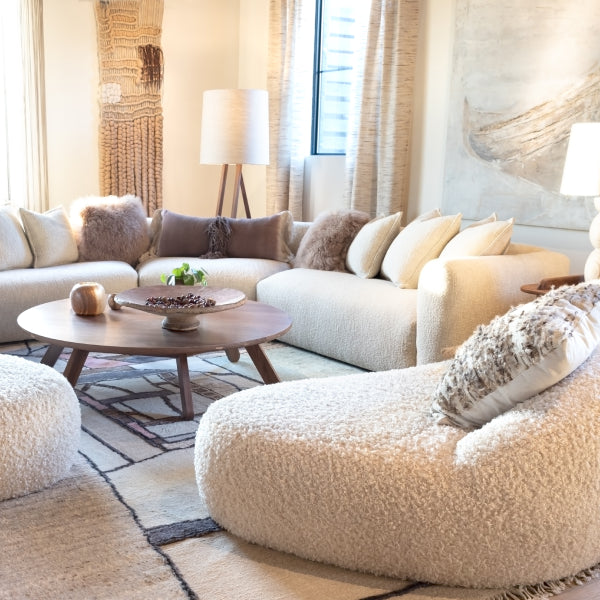
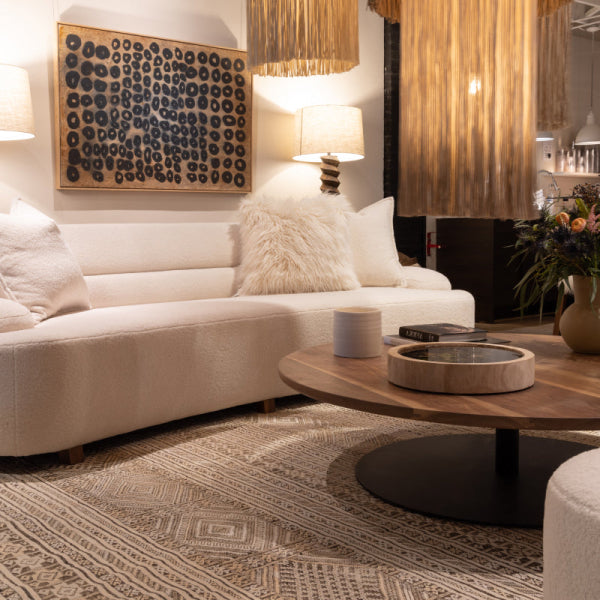
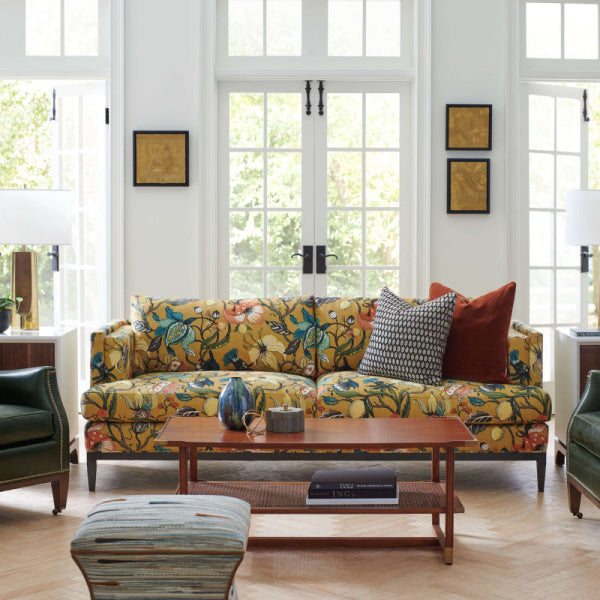
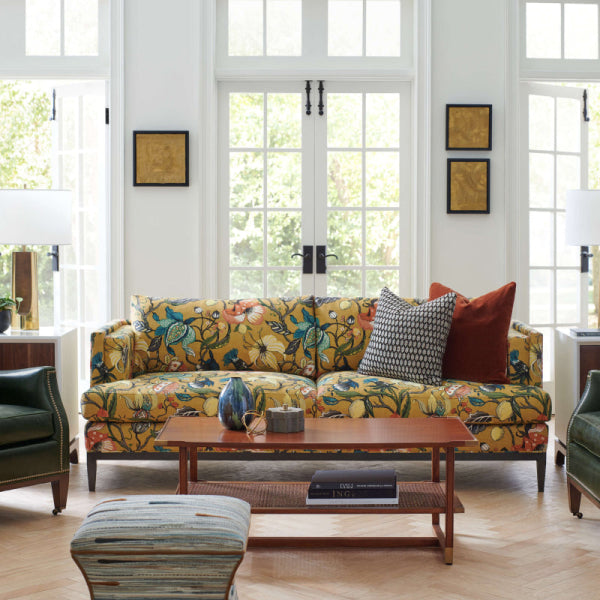
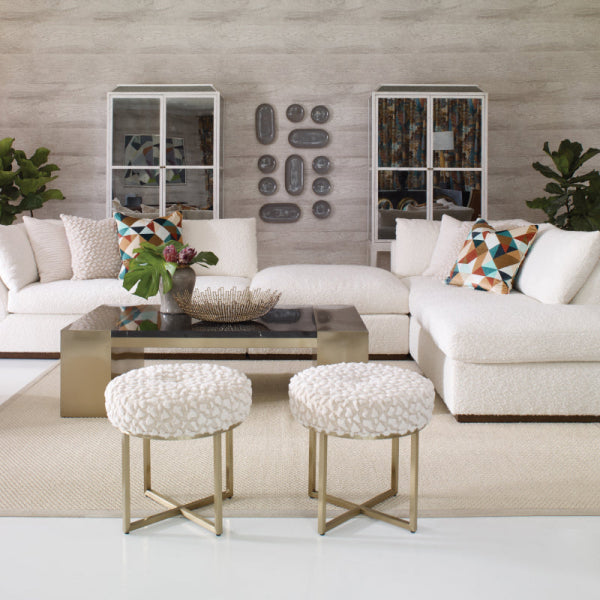




Ever admired a long, custom sofa and wondered how the pattern flows so perfectly from one end to the other without a single break?
The secret isn’t magic—it’s a technique called railroading.
Think of it this way: instead of a pattern running vertically up the fabric roll, it’s turned on its side to run horizontally across the roll. This simple shift is the key to achieving that flawless, high-end finish you see in the most sophisticated homes across Atlanta.
The Secret to Seamless Sofas
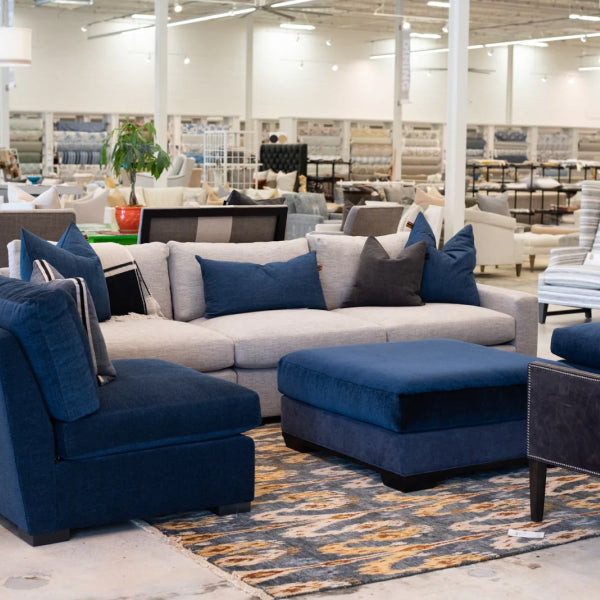
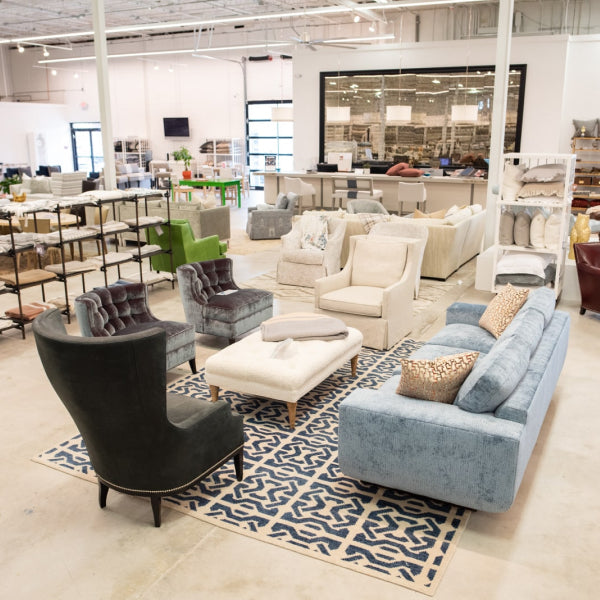
Step inside our Buckhead showroom and you’ll understand why Lewis and Sheron has been Atlanta’s destination for exquisite furniture and fine fabrics for decades. From the handcrafted lines of Verellen and Wesley Hall to the curated textures of Lee Industries, every piece tells a story of quality, comfort, and design mastery.
The stripes on a long sofa bench flow without a single jarring seam. The intricate botanical on a custom headboard stretches across its entire width, completely uninterrupted.
That seamless quality is no accident. It's a deliberate design choice made possible by knowing when and how to use railroaded fabric.
In the world of luxury furniture, the details are everything. Railroading is one of those insider techniques that separates a masterfully crafted piece from the rest. It’s the difference between a custom sofa that feels intentional and a piece that looks cobbled together. For Atlanta's interior design pros and discerning homeowners alike, getting this right is a must.
What Does "Railroaded" Actually Mean?
Picture a standard roll of fabric. Typically, the pattern runs vertically, parallel to the finished edges (the selvage). We call this orientation “up the roll.” It’s perfect for projects like drapery panels or the back of a dining chair, where vertical height is the main dimension.
But what about a 10-foot sectional? If you used an "up the roll" fabric, you'd have to stitch multiple panels together. This creates unsightly seams that chop up the pattern and cheapen the final look.
Railroaded fabric solves this problem beautifully. By turning the pattern 90 degrees to run horizontally across the roll, an upholsterer can use one continuous piece of fabric to cover the entire length of a sofa. The width of the fabric roll effectively becomes the length of the furniture. No seams, no interruptions—just pure, seamless design.
This is a game-changer for custom upholstery projects across North Georgia, from Roswell to Marietta. To truly appreciate the art of a seamless sofa, it helps to understand what goes into selecting the best American-made sofas, where fabric choice is paramount.
Whether you're working with our trade furniture program or designing a piece for your home, knowing when to ask for railroaded designer fabrics makes all the difference. For more guidance, our post on the best fabric for reupholstering a sofa is a fantastic starting point.
Let’s break it down side-by-side.
Railroaded vs. Conventional Fabric At a Glance
Here’s a quick summary comparing railroaded and conventional (up the roll) fabric.
| Feature | Railroaded Fabric | Conventional Fabric (Up the Roll) |
|---|---|---|
| Pattern Direction | Runs horizontally across the roll (selvage to selvage). | Runs vertically up the roll (parallel to the selvage). |
| Best For | Long pieces: sofas, sectionals, headboards, banquettes. | Taller pieces: drapery, chair backs, short ottomans. |
| Primary Advantage | No seams on long applications, creating a continuous, uninterrupted look. | Efficient for covering height; pattern appears upright in standard uses. |
| Yardage Consideration | Can sometimes require more yardage, depending on the pattern repeat and application. | Yardage is calculated based on vertical cuts and pattern matching at the seams. |
| Cutting Method | Cut as one long, continuous piece. The roll width covers the furniture's length. | Cut into multiple vertical panels that are then sewn together. |
| Common Patterns | Often solids, textures, and non-directional patterns. Some stripes and geometrics. | Can feature any type of pattern, including large-scale florals or motifs with a clear top. |
Neither orientation is "better" than the other—they are simply different tools for different jobs. The right choice always comes down to the specific piece of furniture and the look you want to achieve.
Why Fabric Direction Changes Everything
So, why does turning a pattern sideways matter so much? It’s all about achieving a flawless, professional finish—the kind of detail that signals true luxury in high-end furniture.
When an expert upholsterer works on a sprawling sofa or a wide, custom headboard, the goal is always a single, uninterrupted canvas. Railroading makes this possible.
This clever technique gets rid of seams that would otherwise awkwardly chop up stripes or geometric prints. Without it, you’d be stuck with vertical breaks in the pattern every 54 inches or so, which instantly cheapens the look of an otherwise beautiful piece from vendors like Verellen or Ambella.
The Art of the Unbroken Line
For homeowners with a keen eye, understanding this technique is the key to getting that truly custom, high-end look. It’s the "how" behind the sophisticated, clean lines that define timeless style.
The pattern flows gracefully across the furniture, creating a solid, intentional appearance that just feels right. This is especially important for contemporary furniture designs that celebrate long, horizontal forms.
This quick illustration shows exactly how it works.
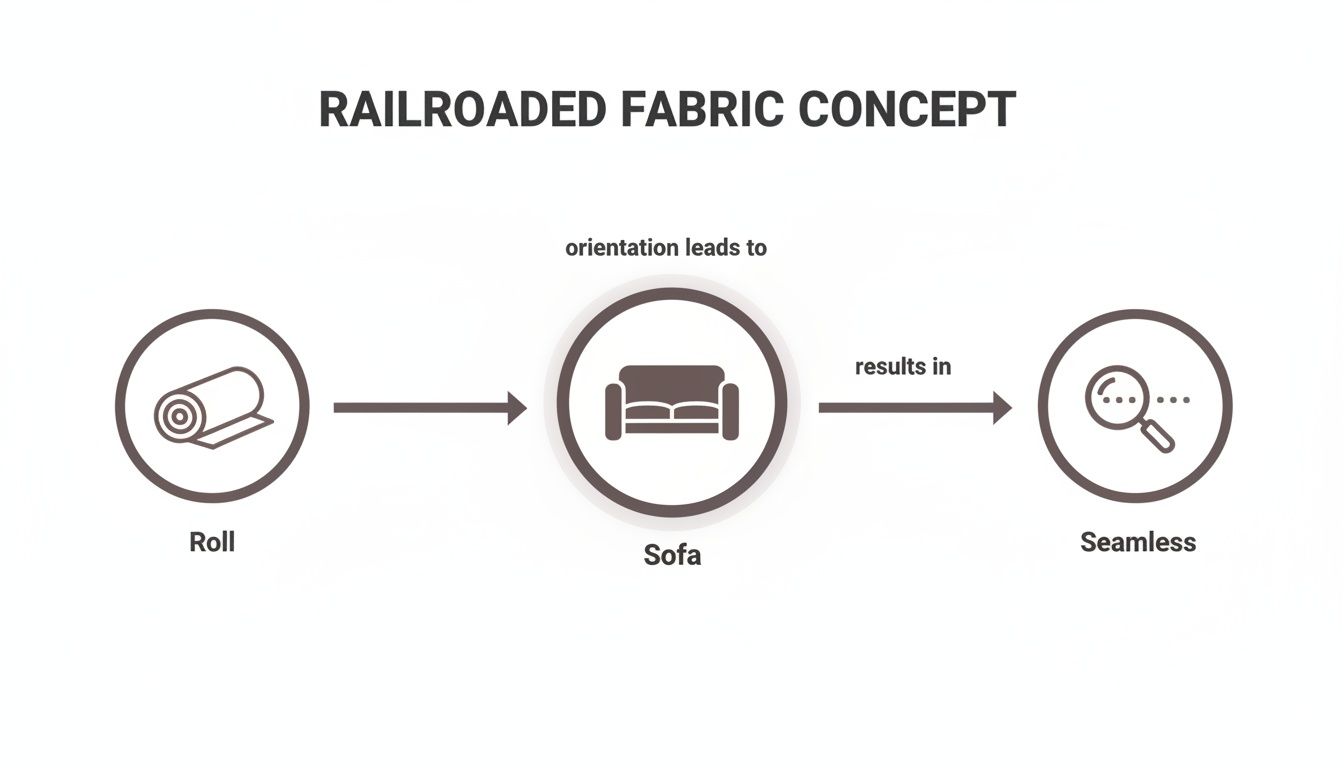
You can see how turning the pattern lets it run horizontally, giving you continuous coverage without any breaks.
In short, railroading isn't just a technical trick; it's a design philosophy. It puts the beauty of the fabric first, ensuring the final piece is a true work of art.
A Smarter Choice for Modern Design
Because a railroaded fabric’s pattern runs horizontally, it's the perfect solution for wide furniture. It’s a common-sense technique used with premium textiles from top mills like Kravet and Fabricut, both of which you can find in our Atlanta fabric showroom on Collier Rd.
Ultimately, choosing a railroaded fabric affects not just the look but also how much material your project requires. Get a better handle on how orientation impacts your order with our guide on how to buy fabric by the yard.
When Should You Choose a Railroaded Fabric?
Alright, you get the what and the why. Now for the when. Knowing the perfect moment to opt for a railroaded fabric is a detail that takes a design from good to truly exceptional.
Think of this as the practical advice you need before stepping into our Buckhead showroom. Once you're here, you'll see these principles in action on our gorgeous Verellen and Wesley Hall sofas.
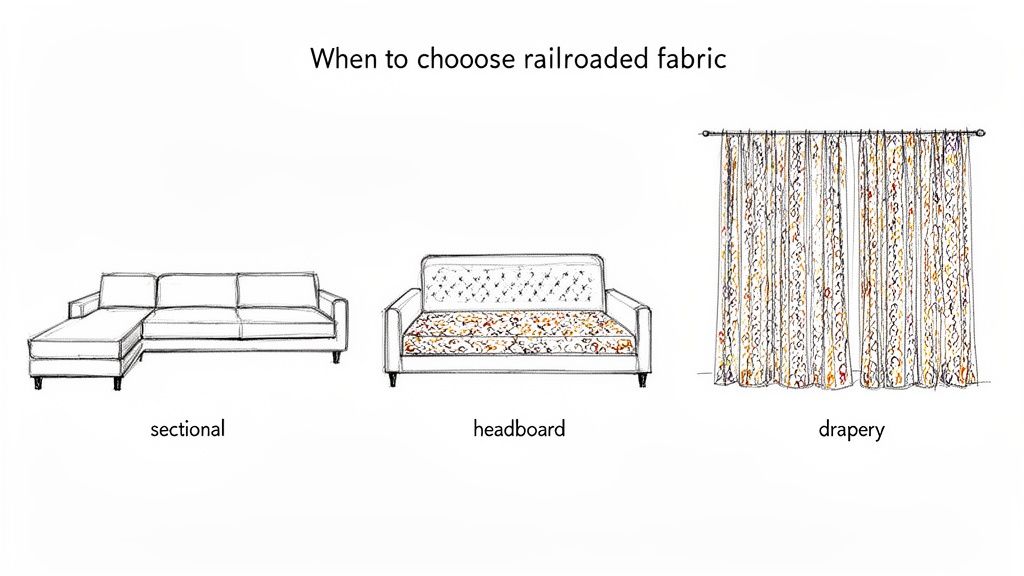
Where Railroading Really Shines
Some projects practically beg for the uninterrupted beauty of railroading. For designers and homeowners from Milton to East Cobb, these are the situations where this technique is an absolute game-changer.
- Sprawling Sectional Sofas: This is the #1 reason to railroad fabric. A long, elegant Wesley Hall sectional can't have awkward seams breaking up its beautiful lines. Railroading gives you one cohesive, stunning piece that anchors a room.
- Long Benches and Banquettes: Picture a beautiful tufted bench in a Forsyth County foyer or a chic breakfast banquette in an Alpharetta kitchen. Railroading lets the fine fabrics stretch flawlessly from end to end.
- Custom Wide Headboards: A king-sized headboard is a statement. Using a railroaded fabric lets the pattern run across the entire width without a single break. It’s what gives you that truly custom, luxurious finish.
- Expansive Drapery Panels: For a dramatic wall of windows, a railroaded fabric can create a breathtaking, unbroken curtain. No seams, just a sheer wall of pattern. It's a high-impact choice that feels both modern and timeless.
Patterns Made for the Sideways Life
Not every pattern is a good candidate for being turned on its side. But some are practically made for it.
These are your go-to options:
- Horizontal Stripes: A railroaded striped fabric creates clean, linear movement that can make a piece of furniture feel longer and more elegant.
- Non-Directional Motifs: Think abstract textures, small-scale geometrics, or organic patterns that don't have a clear "up" or "down." These are wonderfully versatile.
- Solid Colors and Textures: When texture is the star—like a rich chenille or a beautiful Belgian linen—railroading provides a smooth, monolithic surface that lets the quality of the material shine.
Railroading isn’t just a problem-solver; it’s a design tool. It’s about intentionally choosing a fabric and its orientation to create the cleanest lines and the most impactful statement for your furniture.
Picking the right material is a huge part of this process. For more ideas, you can learn more by choosing the right upholstery fabric in our detailed guide. This knowledge empowers you to make confident choices for your next custom upholstery project in Atlanta.
A Designer's Perspective on Pros and Cons
Every design choice has a trade-off. Knowing how to weigh them is what separates an experienced designer from a novice. When it comes to railroaded fabric, the upsides are huge, but it's not the right call for every project.
This is the kind of straightforward advice our in-house designers give clients from Roswell to Marietta every day. We want you to feel empowered to make the smartest choice for your custom upholstery project.
The Clear Advantages of Railroading
The biggest win with railroaded fabric is its seamless beauty. For a grand Wesley Hall sofa or a long, elegant bench, this method gives you an uninterrupted flow of pattern that looks incredibly high-end. It’s the secret behind that clean, monolithic look you see in luxury furniture showrooms across Buckhead.
But the benefits are more than skin deep.
- Less Waste, Smarter Budget: By using one continuous piece, you often need less yardage than you would for sewing together multiple "up the roll" cuts. Less waste means real cost savings.
- Stronger Construction: Fewer seams mean fewer potential weak points. A single, solid piece of fabric offers better durability and a cleaner finish.
- Perfect Pattern Flow: For non-directional textures or horizontal stripes, railroading ensures the pattern looks intentional and flows gracefully across the entire piece.
The bottom line? Choosing to railroad a fabric is a strategic move that delivers both visual perfection and practical efficiency. It’s a hallmark of high-quality custom upholstery.
Understanding the Limitations
Of course, railroading isn't a magical fix. A bold vertical stripe will become a horizontal one. That might be a stunning choice for a sleek Ambella bench, but a deal-breaker if you had your heart set on a classic, upright stripe.
The main limitation is the pattern's direction. Any design with a clear "up" and "down"—like a climbing floral vine or a classic toile scene—won't work when turned sideways. The result would look unnatural.
This is why our Atlanta interior design resources are so crucial; our experts at the Collier Rd showroom can tell you in an instant if a fabric is a good candidate for railroading.
Making the right call is about balancing your vision with the fabric's design. It’s this careful consideration that elevates a piece from furniture to art.
Weighing Your Options with Railroaded Fabric
So, how do you decide? Sometimes, seeing the pros and cons laid out makes the decision clear.
| Pros (Advantages) | Cons (Limitations) |
|---|---|
| Seamless Finish: Creates a clean, uninterrupted look on long pieces like sofas and benches. | Pattern Orientation: Vertically oriented patterns (like climbing vines) will become horizontal. |
| Reduced Yardage: Often requires less fabric, which can lead to cost savings. | Not for Directional Designs: Unsuitable for fabrics with a clear "up" and "down," such as toile scenes. |
| Increased Durability: Fewer seams mean fewer potential points of failure over time. | Limited Fabric Choice: Only works with non-directional or horizontally oriented patterns. |
| Consistent Pattern Flow: Ideal for ensuring horizontal stripes or textures align perfectly. | Potential for "Bowing": On very long pieces, some patterns might slightly curve if not handled by a skilled upholsterer. |
The choice depends on two things: the fabric you love and the furniture you're covering. If your fabric has a non-directional pattern and you're working with a long sofa, railroading is almost always the superior choice.
Expert Tips for Your Atlanta Upholstery Project
Knowing the difference between fabric orientations is one thing. Putting that knowledge into action is what elevates a project from good to exquisite. This is the hands-on advice that ensures your vision—whether for a luxury Roswell residence or a high-end Buckhead firm—is executed flawlessly.
Think of this as your pre-project checklist. Before you commit to yards of designer fabrics for that Wesley Hall sofa, a few key steps guarantee a perfect outcome.
Communication Is Key
The single most important tip? Never assume. Your upholsterer is a skilled artisan, but not a mind reader.
Clearly communicate how you want the fabric applied. A simple conversation upfront can prevent costly mistakes. When you visit our Atlanta fabric showroom, we make this part of the process, ensuring your work order specifies the correct orientation.
This isn't just about saying "railroad it." It's about confirming that you and your upholsterer have the exact same vision for the final piece.
Inspect the Pattern Before You Commit
Before you finalize your order, really look at the fabric. Unroll a good portion of it. Does a pattern that seems non-directional from a small swatch suddenly reveal a subtle "up" and "down" when you see a larger piece?
This is so crucial for custom upholstery projects. A quick inspection can save you from discovering that your abstract texture looks upside down on your Lee Industries chairs. Our experts on Collier Rd can walk you through this.
Ask the Right Questions About Yardage
Calculating yardage for a railroaded fabric is different from a conventional application.
Here are the essential questions to ask your upholsterer or fabric expert:
- Will railroading this fabric require more or less yardage for my piece?
- How will the pattern center on the furniture? (Crucial for an Ambella headboard).
- Are there any concerns about pattern "bowing" on a long sofa? A skilled upholsterer can prevent this, but it’s a smart question.
Working with an expert is non-negotiable for a luxury result. Our team provides complimentary design services to help every client—from designers in our trade furniture program to homeowners in Alpharetta—navigate these decisions with confidence. For a deeper dive, our guide on everything you need to know about upholstery materials offers great insights.
Bring Your Vision to Life at Lewis and Sheron
You now have the knowledge that sets Atlanta's top designers apart. Understanding what is railroaded fabric is a great start, but the real magic happens when that technique is applied to an extraordinary textile on a beautifully crafted piece of furniture.
The final step is bringing that vision to life.
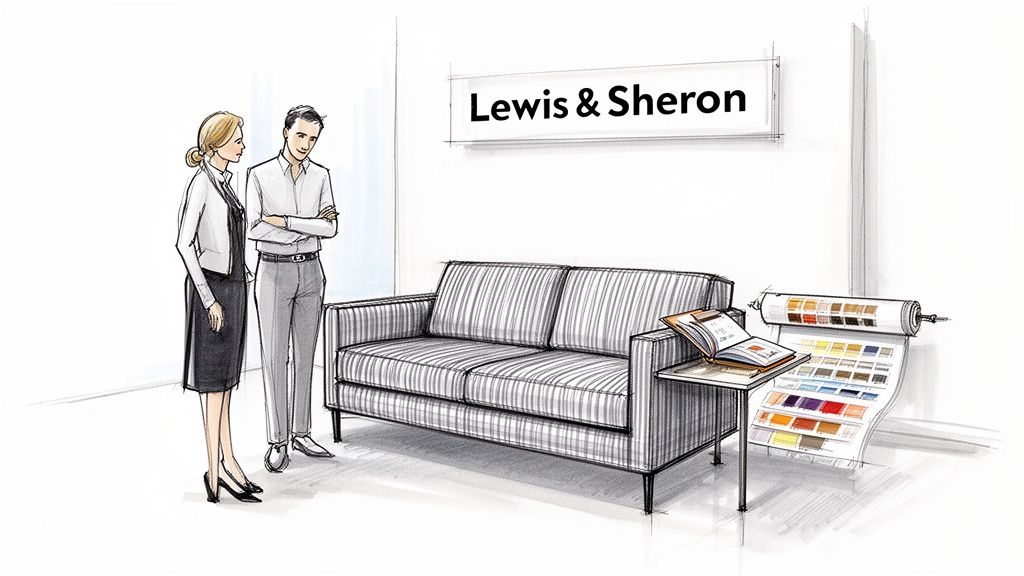
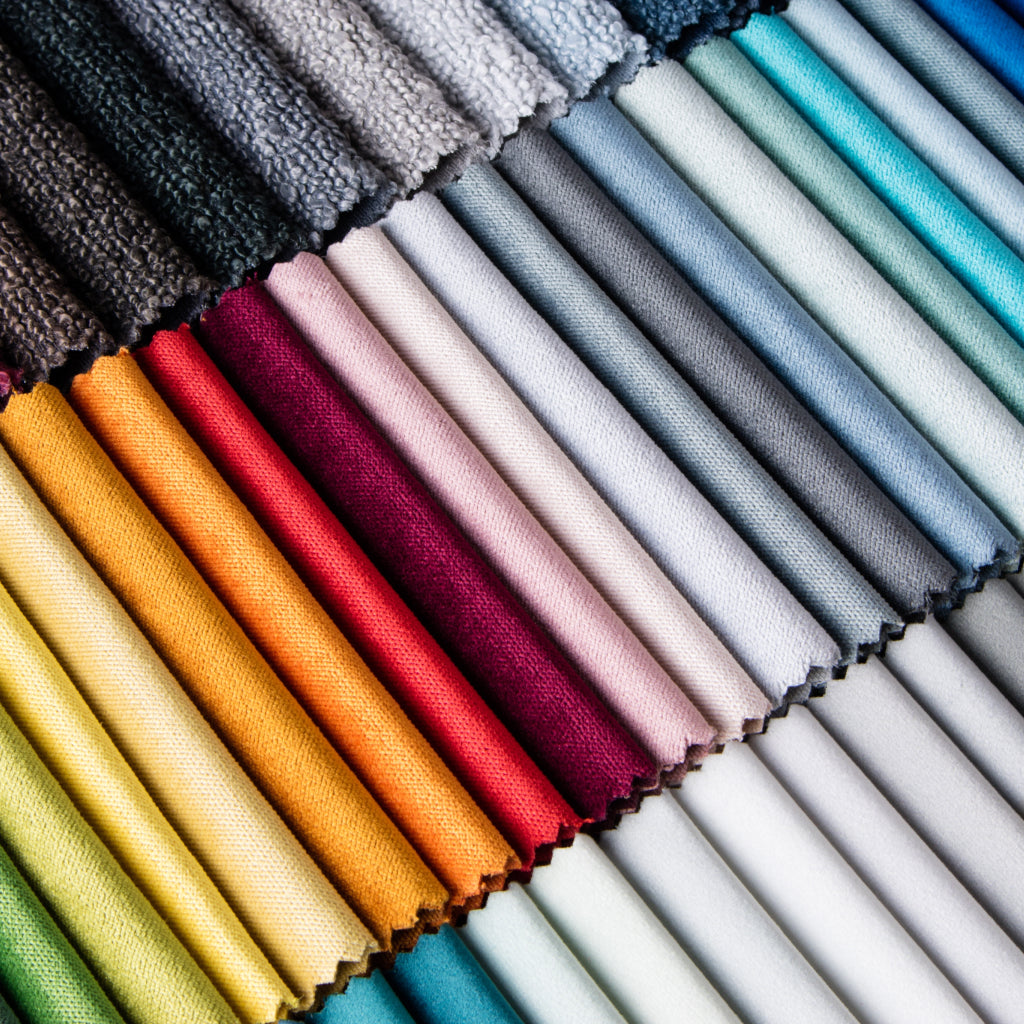
We invite you to our Buckhead showroom to experience this firsthand. This isn’t about clicking on tiny swatches online; it’s about feeling the rich textures of exclusive designer fabrics from the world’s most respected mills.
Experience the Craftsmanship
Come see the seamless application of these principles on our stunning luxury furniture Atlanta collections.
- Run your hand along a sprawling Verellen furniture piece and feel the uninterrupted flow of Belgian linen.
- Sit on one of our Wesley Hall sofas and appreciate how a subtle texture creates a flawless, unified statement.
- Examine the clean lines of our Lee Industries chairs, where every detail is considered.
Our expert staff is here to translate your ideas into reality. We live and breathe fine textiles and custom upholstery. Whether you're a designer sourcing for a client in Milton or a homeowner in East Cobb, we are your essential partners.
The difference between a good interior and an exquisite one lies in the details. Railroading is one of those details, and the perfect fabric is the soul of the design.
Our custom upholstery services are ready to make it happen. Visit us on Collier Rd, browse our Atlanta fabric showroom, and let’s create the seamless, sophisticated interiors you’ve always envisioned. For designers, our trade furniture program provides unparalleled access to the best in the industry.
Let's start the conversation.
Your Top Questions About Railroaded Fabric, Answered
After we walk clients through the basics, a few key questions always pop up. Here are the quick, clear answers our designers share every day in our Atlanta fabric showroom.
Can Any Fabric Be Railroaded?
Not always. Many of our high-end furniture fabrics are designed for it, but some patterns just won't work. Imagine a beautiful climbing floral vine pattern turned sideways—it would look completely wrong.
It is absolutely essential to check the pattern's intended direction. When you're in our Buckhead showroom, our experts can instantly point you toward the perfect choices for your Wesley Hall sofa or Ambella furniture piece, taking all the guesswork out of it.
Does Railroaded Fabric Save Money?
Often, yes. For wide pieces of furniture common in luxury design, using one continuous cut is a game-changer. It dramatically cuts down on waste and the labor needed to piece multiple sections together.
This efficiency translates into yardage savings, making it a smart financial choice for your project—whether it's in Roswell or Alpharetta.
How Do I Know if a Fabric Is Railroaded?
The best way is to ask an expert. While our designer fabric samples are marked to indicate orientation, nothing beats a quick conversation to ensure perfection.
When you visit us, just tell us about your project. Are you reupholstering classic Lee Industries chairs or designing new custom drapery? We'll show you the ideal options from our collections. We make the whole process simple.
Ready to explore the finest textiles for your project? The team at Lewis and Sheron Textiles is here to help you select the perfect fabric and achieve a flawless finish. Visit our Atlanta showroom or shop our collections online today.