








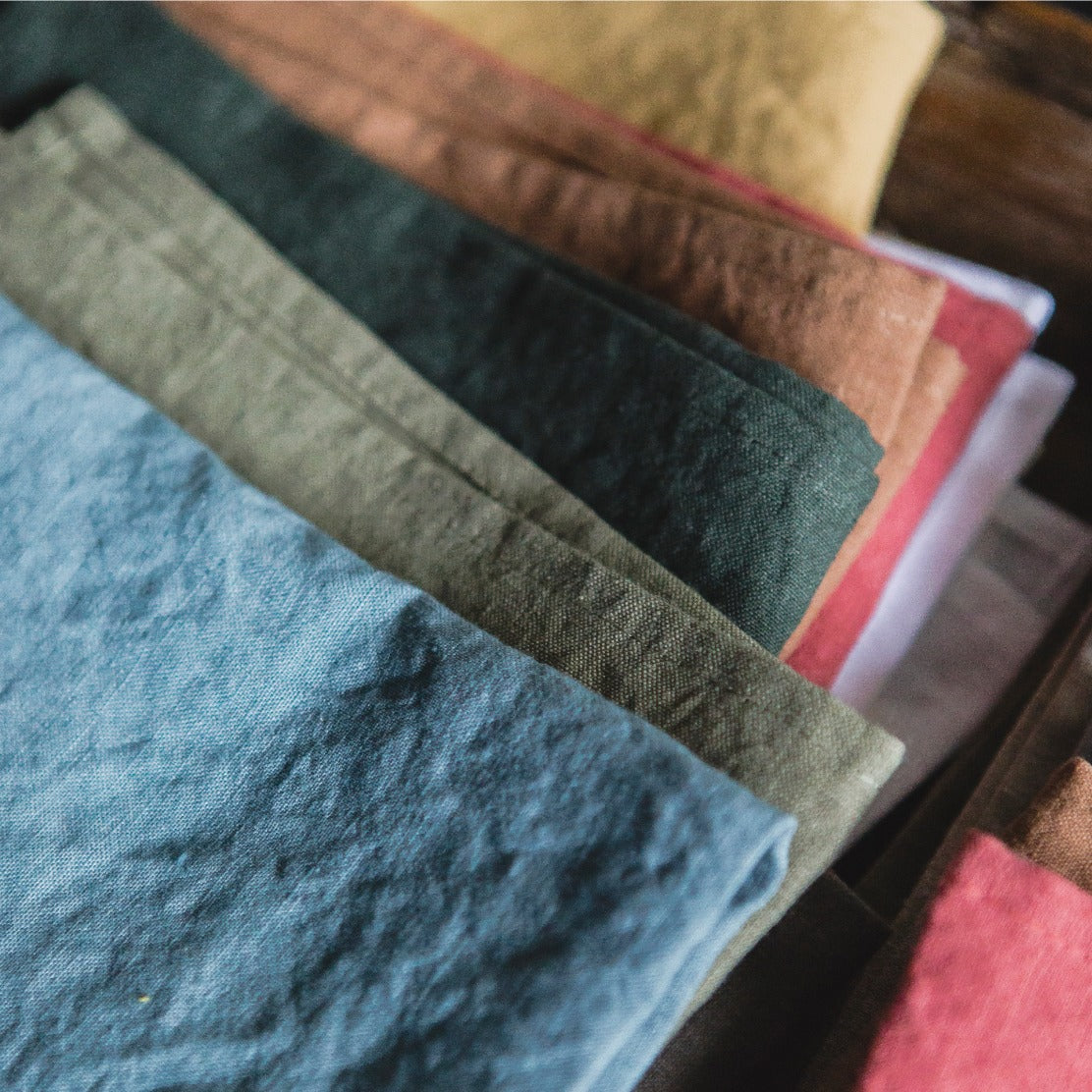

Ever wondered what designers mean when they talk about muslin? Forget the dry definitions. Muslin is the secret weapon in a designer's toolkit—a family of lightweight, plain-weave cotton fabrics prized for its breathability and versatility.
Think of it as the foundational magic behind countless luxury interiors, from Buckhead to Alpharetta.
What Exactly Is Muslin Fabric?
Let’s cut right to it. Muslin is an honest, essential cotton fabric. Its defining feature is the plain weave—a straightforward over-one, under-one grid pattern that gives it that distinct texture and feel. It’s the workhorse textile behind some of the world's most exquisite designs.
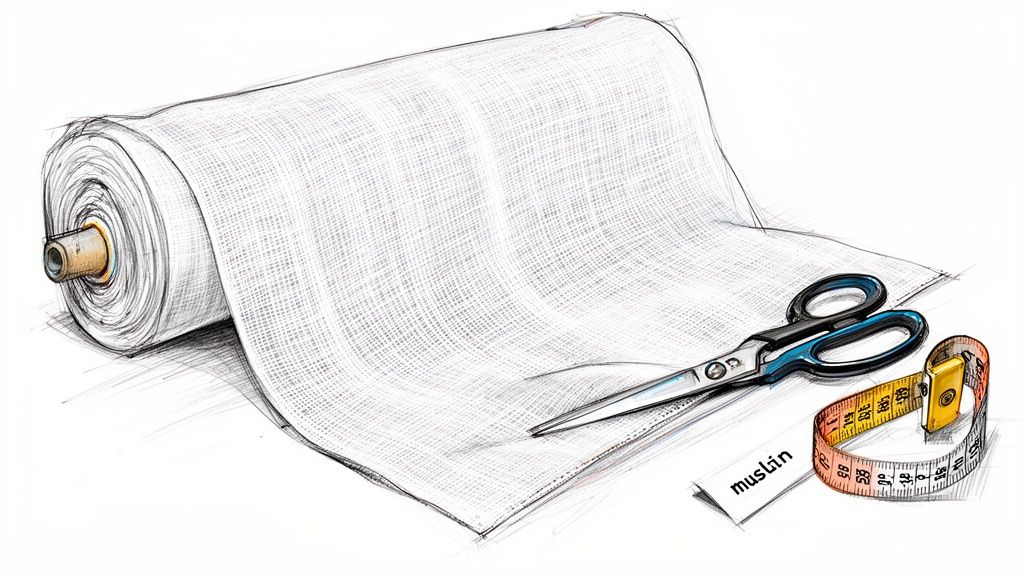
This fabric is the starting point for greatness. Interior designers from Buckhead to Milton rely on it to perfect the drape of custom curtains or to create a toile—a full-scale model—of a bespoke Wesley Hall sofa before ever touching the final, precious designer fabric.
It’s the blueprint, the rehearsal, and the structural support all rolled into one. It's the secret sauce in high-end furniture design.
The Foundation of Fine Design
At Lewis and Sheron, we see muslin as the essential first step in luxury. It’s not just utility cloth; it's a critical tool for achieving that flawless, custom finish. Imagine it as the expertly prepared canvas before the masterpiece is painted.
Our trade partners use it for:
- Perfecting Patterns: Creating mock-ups for custom upholstery on Verellen furniture to ensure every curve and seam is impeccable.
- Adding Body to Drapery: Serving as a high-quality lining that helps fine fabrics hang with confident, beautiful weight.
- Providing Structure: Acting as a durable backing on upholstered pieces from Lee Industries and Ambella furniture.
Muslin’s genius is in its simplicity. It offers a pure, unfiltered look at a design’s form and function, allowing for adjustments before committing to more expensive textiles. This is why it’s an indispensable Atlanta interior design resource.
Essentially, while you may not always see the muslin, you always feel its impact in the final, polished piece. Its plain weave is the starting point for countless textiles—learn more in our guide to examples of woven fabrics. It's the quiet confidant behind some of the most stunning luxury furniture in Atlanta homes.
A Fabric Woven Through History
The story behind muslin is as rich as any tapestry in our Atlanta fabric showroom. This isn't just plain cotton. It’s a fabric with a deep, compelling past, woven through centuries of global trade, artistry, and even royal courts.
While the fabric gets its name from Mosul, a major trading post in modern-day Iraq, its true heartland was India. During the Mughal Empire, artisans in the Bengal region perfected the craft, producing muslins so breathtaking they became legendary. You can get lost in the fascinating history of the worldwide muslin trade and its origins.
From "Woven Air" to Modern Design
For centuries, the finest muslin was considered more precious than silk. It was nicknamed "woven air" because it was so impossibly fine and lightweight—so much so that an entire bolt could supposedly pass through a finger ring.
This made it one of the most sought-after luxury goods in the world, adored by European royalty and aristocrats.
That heritage is why muslin holds so much value in high-end design today. When you choose quality muslin, you're not just picking a fabric; you're bringing a piece of genuine textile history into your home.
This legacy of quality and craftsmanship connects an ancient textile to the modern, handcrafted ethos you'll find in our Buckhead showroom. You see it in the custom upholstery of a Wesley Hall sofa and the clean, impeccable lines of Verellen furniture. It’s a story of excellence that continues right here in Atlanta’s finest interiors.
Understanding The Different Grades Of Muslin
Not all muslin is created equal. To truly understand this fabric, you have to know its grades. Much like the curated furniture collections here at Lewis and Sheron Textiles, muslin comes in a range of weights and finishes, each suited for a specific role in high-end design.
Think of it like choosing the right tool for the job. You wouldn’t use a tiny artist’s brush to paint a wall, and you wouldn't use heavy canvas for a light, breezy curtain. Every grade has a purpose, from creating ethereal sheers to providing hidden structural support.
This historical journey from Mosul to Dhaka paved the way for the incredible variety we have access to now. Let’s break down the most common types you’ll encounter when sourcing fine fabrics in Alpharetta or working on a custom project in Marietta.
From Gauze To Canvas
Getting a handle on muslin grades is straightforward once you know what to look for. The main differences are thread count and weight, which dictate the fabric's drape, durability, and translucency. For designers and homeowners, matching the right grade to the project is the secret to a perfect outcome.
- Gauze: This is the lightest, most delicate grade. It’s incredibly soft and breathable with a loose, open weave. Perfect for sheer drapery that softly filters light in a sun-drenched Roswell home.
- Sheeting: A step up in weight, sheeting is the versatile workhorse. It's durable enough for pattern mock-ups—like perfecting the lines of a custom Verellen sofa—yet soft enough for drapery lining or bedding.
- Canvas: As the name implies, this is the heavyweight champion. It's tough, durable, and all about structure. In the world of luxury furniture Atlanta, you’ll find it as an internal structural layer in custom upholstery or as a sturdy backing on pieces from makers like Lee Industries.
The secret to a flawless result is knowing which grade to deploy. A lightweight gauze creates an ethereal feel, while a heavy canvas provides the unseen strength that makes quality furniture last for generations.
To make this even clearer, here’s a quick rundown of how these grades translate to real-world interior design projects.
Common Muslin Grades And Their Interior Design Uses
| Muslin Grade | Key Characteristics | Best For In Your Home |
|---|---|---|
| Gauze | Feather-light, open weave, translucent, and incredibly soft. | Sheer curtains, decorative drapery overlays, and projects needing a delicate touch. |
| Sheeting | Medium weight, balanced weave, durable yet soft. The all-rounder. | Drapery linings, bedding, and creating toiles (test garments) for custom furniture. |
| Canvas | Heavyweight, tightly woven, and exceptionally strong. Built for support. | Upholstery backing, dust covers, and internal structural layers inside sofas and chairs. |
Each grade has a distinct personality and a job to do. Picking the right one is what separates a good project from a great one.
Whether you’re a professional designer in our Trade Program prototyping a chair for a Buckhead client or a homeowner in Alpharetta searching for the perfect fine fabrics, understanding these grades is your first step. It ensures your vision is executed with the technical precision that defines timeless design.
How Designers Use Muslin In Atlanta Homes
Walk into the workspace of any top Atlanta interior designer, and you’ll find muslin. From elegant Buckhead estates to modern Alpharetta homes, this simple fabric is the secret weapon behind the city's most beautiful interiors. It's the go-to tool for turning a creative vision into a tangible, flawless reality.
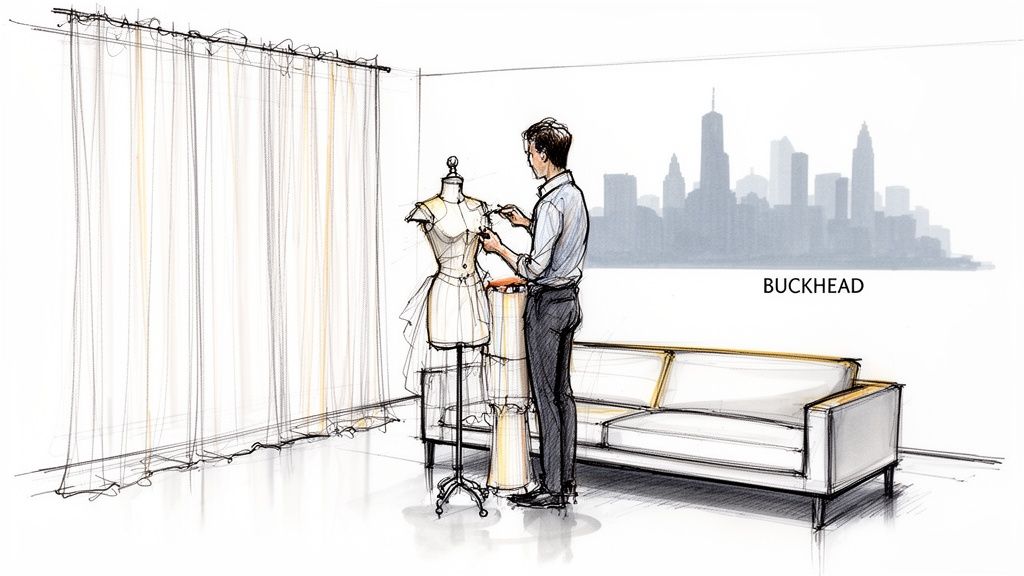
Its most crucial role is creating a toile. Think of a toile as a full-scale prototype for custom furniture, like a Wesley Hall sofa or a one-of-a-kind Lee Industries chair. Before they ever touch the final, often priceless, designer fabric, designers use a muslin toile to perfect every curve, seam, and proportion.
It’s the ultimate dress rehearsal for luxury furniture.
Beyond The Mock-Up
But muslin's value doesn't stop at prototyping. Its practical applications are hallmarks of high-quality design in the finest homes across Marietta, Roswell, and Forsyth County.
Here’s how it gets put to work:
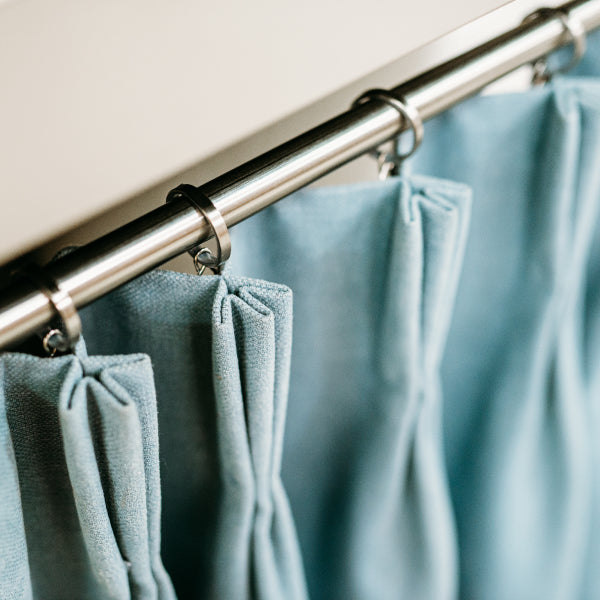
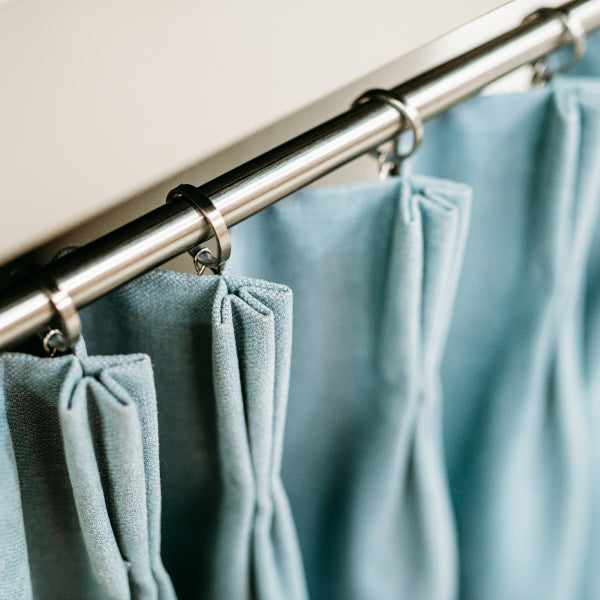
- Superior Drapery Lining: A quality muslin lining gives draperies structure and beautiful weight, ensuring they hang perfectly. It also filters sunlight, protecting the main fabric from fading and filling the room with a warm, inviting glow.
- Crisp Upholstery Backing: Ever wonder what finishes the back of an Ambella accent chair or a custom headboard? Often, it's muslin. It provides a clean, durable backing that hides the internal frame and gives the piece a polished, high-end look from every angle.
- Ethereal Bed Canopies: For a serene and romantic bedroom, designers turn to lightweight muslin gauze. It’s perfect for crafting dreamy, floating bed canopies or testers that add elegance without feeling heavy or overwhelming.
A toile isn’t just a mock-up; it's an insurance policy for perfection. For members of our Lewis and Sheron Trade Program, using muslin to finalize a silhouette for a Verellen piece ensures the client’s vision is executed without error, saving time, money, and priceless materials.
From foundational support to the final decorative touch, muslin is the versatile textile that underpins luxury design. If you're curious about cotton textiles, check out our guide on thin cotton fabric.
Why Sourcing Quality Muslin Matters
In the world of high-end design—especially for luxury furniture in Atlanta—where your materials come from is everything. A bolt of muslin from a top-tier mill is a completely different animal than a generic, mass-produced version. For discerning designers and homeowners, that distinction separates an okay project from an exceptional one.
It’s not just the quality of the raw cotton. It’s the entire journey—from the consistency of the weave to the precision of the finishing process.
Think of it this way: you wouldn't pour a weak foundation for a custom-built home. The same logic applies to a Wesley Hall sofa or tailored drapes. The unseen materials are just as vital as the final designer fabric.
Sourcing from reputable mills and suppliers ensures predictable performance, a beautiful hand, and the durability high-stakes projects demand. Quality speaks for itself.
The Hallmarks of Superior Muslin
When you're deep in a project, the last thing you want is surprises. Predictability is arguably the most important trait in high-end design. If you're patterning a mock-up for Verellen furniture, you have to trust that your muslin won't shrink, warp, or stretch. Premium sourcing delivers that confidence.
This unwavering commitment to quality is why Lewis and Sheron has been a trusted fabric resource in Atlanta for decades, serving designers and homeowners from Buckhead to Roswell and beyond. This appreciation extends beyond muslin to all kinds of beautiful artisan materials by origin.
In short, better materials lead to a better outcome—every single time. It’s the unseen detail that separates merely good design from truly exquisite interiors.
The demand for quality textiles like muslin isn't just a trend; it's a growing movement. The global muslin market is projected to reach USD 3.34 billion by 2032, a powerful indicator of its lasting importance. You can see more on the growth of the muslin market. This dedication to sourcing the best defines our entire collection of designer fabrics.
How to Choose the Right Muslin for Your Project
So, you see the potential—but how do you pick the right one? This is where a good project becomes great. The trick is matching the fabric’s weight and finish to what your design actually needs.
Thinking about custom draperies for a sunny room in East Cobb? A medium-weight, pre-shrunk muslin is an excellent choice. It gives you enough body for a graceful hang while softly filtering the light.
Or maybe you're planning custom upholstery for a family heirloom. A sturdy, unbleached muslin provides the perfect foundational layer, giving the piece the structure it needs before you add that final, beautiful upholstery fabric.
A Few Insider Tips for Choosing Muslin
Picking the right muslin matters. For a deep dive, our article on how to choose upholstery fabric is a fantastic resource. But for now, here are the key things to keep in mind:
- For Mock-Ups: Match the muslin's weight and drape to your final fabric. If you don't, your toile won't give you an accurate picture of how the finished piece will hang or fit.
- For Linings: A higher thread count is your friend. A tighter weave prevents "grinning"—the main fabric color peeking through—and gives better UV protection.
- For Visible Use: When muslin is the main event, go for a bleached or dyed option. This gives it a crisp, clean look that’s polished enough to stand on its own.
The versatility of muslin is fueling serious growth in home textiles. The global market for muslin bedding is expected to jump from USD 751.9 million in 2024 to over USD 1.2 billion by 2032. That trend speaks volumes. You can find more details on muslin's market dynamics over at credenceresearch.com. Of course, the best way to choose is to see it for yourself—our team is always here to help you explore the options.
Answering Your Muslin Questions
When you're working on a project, you need straightforward answers, not fluff. After decades in the fabric business here in Atlanta, we've heard just about every question there is about muslin. Let's tackle the most common ones.
Is Muslin Strong Enough for Upholstery?
Great question. The answer is all about how you use it. While a heavy-duty muslin could be used on a decorative, low-traffic piece, that’s not its true strength in upholstery.
Think of it as the hidden framework. On high-end furniture from masters like Wesley Hall, muslin is the secret ingredient providing a sturdy, smooth foundation for the beautiful designer fabric you actually see and touch. For the main event—the part you sit on—you’ll want a true upholstery-grade textile. We can help you find the perfect one.
Do I Really Need to Pre-Wash Muslin?
Yes. Absolutely. If you take away only one tip, let it be this one. Muslin is made from cotton, and cotton naturally shrinks when washed.
For any project where measurements must be exact—think custom drapery for a client in Roswell or a fitted slipcover—pre-washing is non-negotiable. Skipping this step can ruin your hard work. The alternative? Buy pre-shrunk muslin to ensure a stable, predictable result from the start.
Can I Dye Muslin?
You sure can. In fact, it's one of the best fabrics for the job. Natural, unbleached muslin is a blank canvas, ready to soak up color evenly and beautifully.
Its excellent absorbency makes it a go-to for custom color projects. Whether you're matching a specific paint chip or creating a bold accent piece, muslin gives you a reliable base to bring your vision to life.
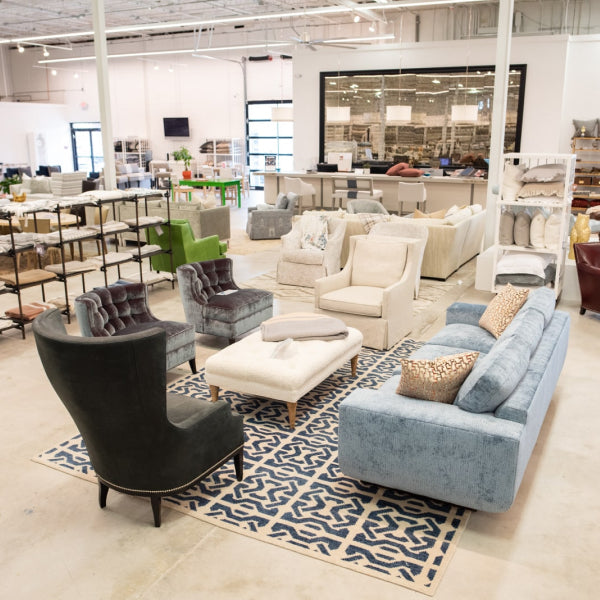
Here at Lewis and Sheron Textiles, our team is always ready to talk through your project and help you choose the perfect material. Come visit our Buckhead showroom or browse our full collection of luxury furniture and designer fabrics online at lsfabrics.com.