












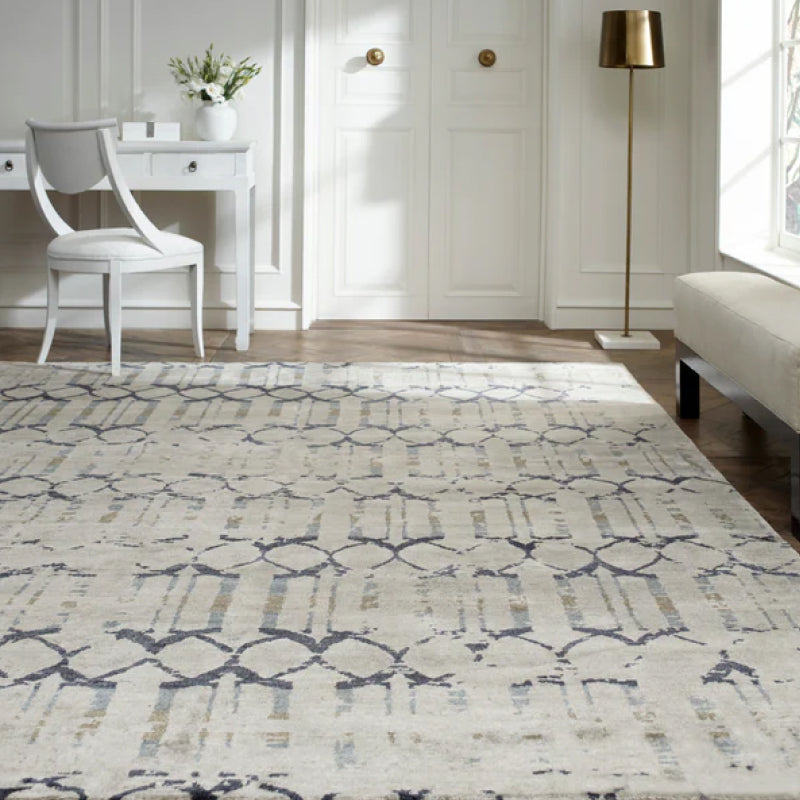
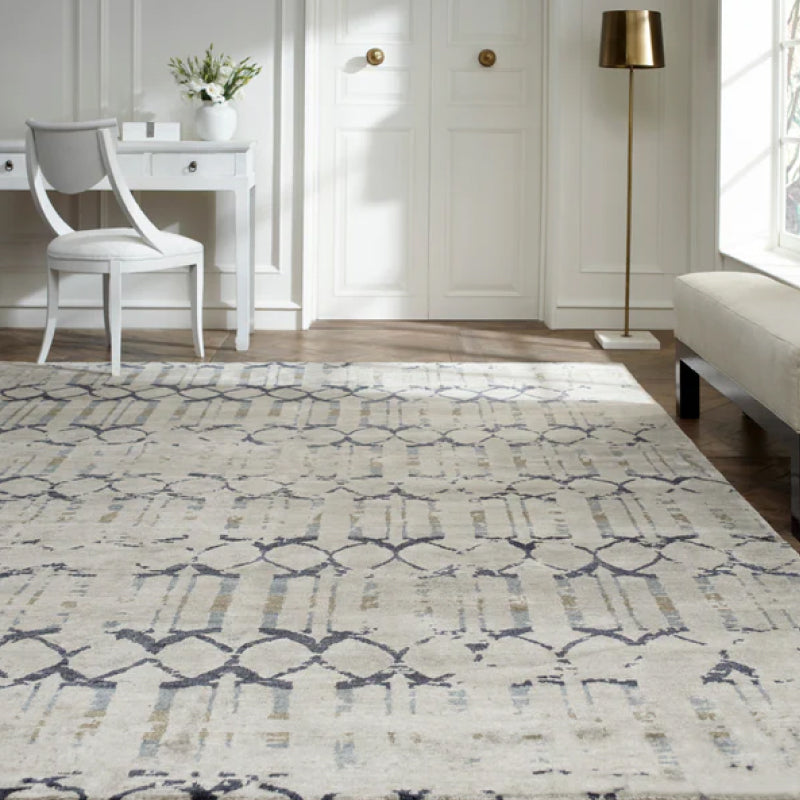
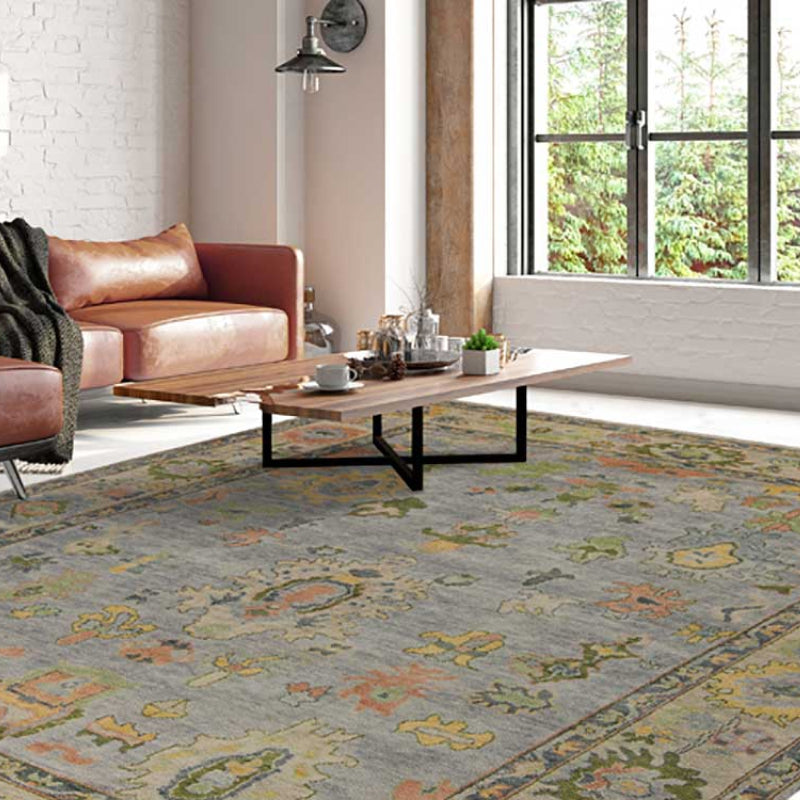
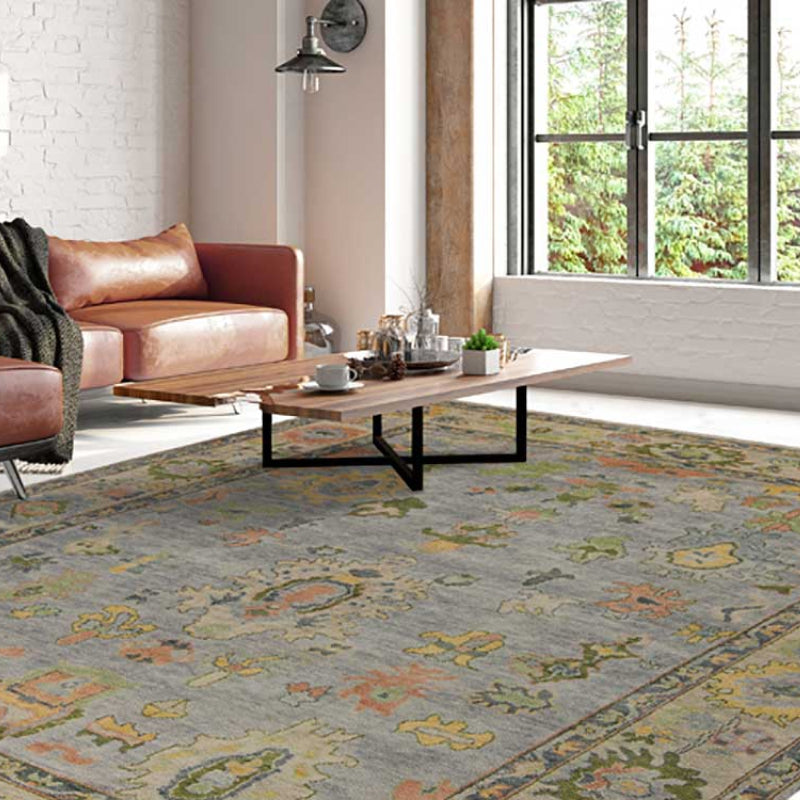
Choosing the right rug for your dining room is about so much more than covering the floor. Think of it as the anchor for your furniture, the element that defines the space, and a true layer of artistry that ties everything together. A great rug pulls your table, chairs, and lighting into one cohesive story. Get it wrong, and the entire room feels… off.
Why the Right Dining Room Rug Is Everything
Let’s be honest. The soul of a dining room often isn’t the table itself, but the beautiful foundation it rests on. A well-chosen rug brings warmth, quiets the room, and protects your floors with serious style. It's the difference between a room that’s just a collection of furniture and one that feels like a curated dining experience.
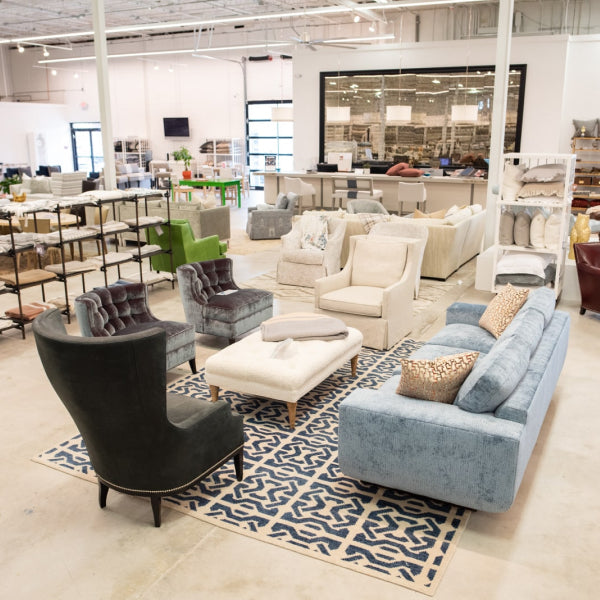
This is the secret behind the most stunning dining rooms you see, from Buckhead estates to homes in Roswell. It’s all about creating an atmosphere that feels intentional and flawlessly designed. Step inside our Atlanta fabric showroom, and you'll see it every day—how a single piece can completely transform a space.
The Three Non-Negotiables
Getting the dining room rug right comes down to mastering three core elements:
- Size: This ensures your dining set feels grounded, not stranded on a tiny island.
- Material: It must handle real life—spills, scrapes, and all—with grace.
- Style: This is where the magic happens. The pattern and color tell your home's unique story.
While rugs are a fantastic way to define your dining space, it's also worth looking into various wood floor coverings to understand the different aesthetic and protective options out there for your home.
At Lewis and Sheron, we believe a rug is an investment in your home's character. It’s a philosophy we’ve perfected over four generations, helping designers and homeowners across North Georgia find pieces that last a lifetime.
From the handcrafted quality of a Verellen dining table to the custom upholstery on a set of Lee Industries chairs, the right rug unites every single element. It’s not just about how it looks; it's about function and feel. Let's dive in.
Getting the Rug Size Right the First Time
The single biggest mistake we see in homes from Marietta to Milton? A dining room rug that’s tragically too small. It makes a beautiful dining set look like it's stranded on a tiny, lonely island. A properly scaled rug does more than just sit under the table; it grounds the entire dining space.
The rule here is simple and absolute: all chair legs must stay on the rug, even when someone is seated and pushed back from the table. This isn't just about looks; it's about function. Nobody wants to catch a chair leg on the edge of the rug every time they get up.
The 24-Inch Rule is Non-Negotiable
To get that seamless function, you need a crucial buffer zone around your table. Measure your tabletop first, then add a minimum of 24 to 30 inches of rug on all sides. This guarantees your dining chairs can slide back smoothly without snagging the edge. It's the kind of detail that separates good design from truly great design.
Of course, the rug is just one piece of the puzzle. It's essential to consider how it fits into the broader picture when planning your overall room layout for a truly cohesive feel. This is a foundational principle of Atlanta interior design we apply everywhere, from living rooms to bedrooms.
This simple process is key to getting it right: start with size, then material, and finish with style.
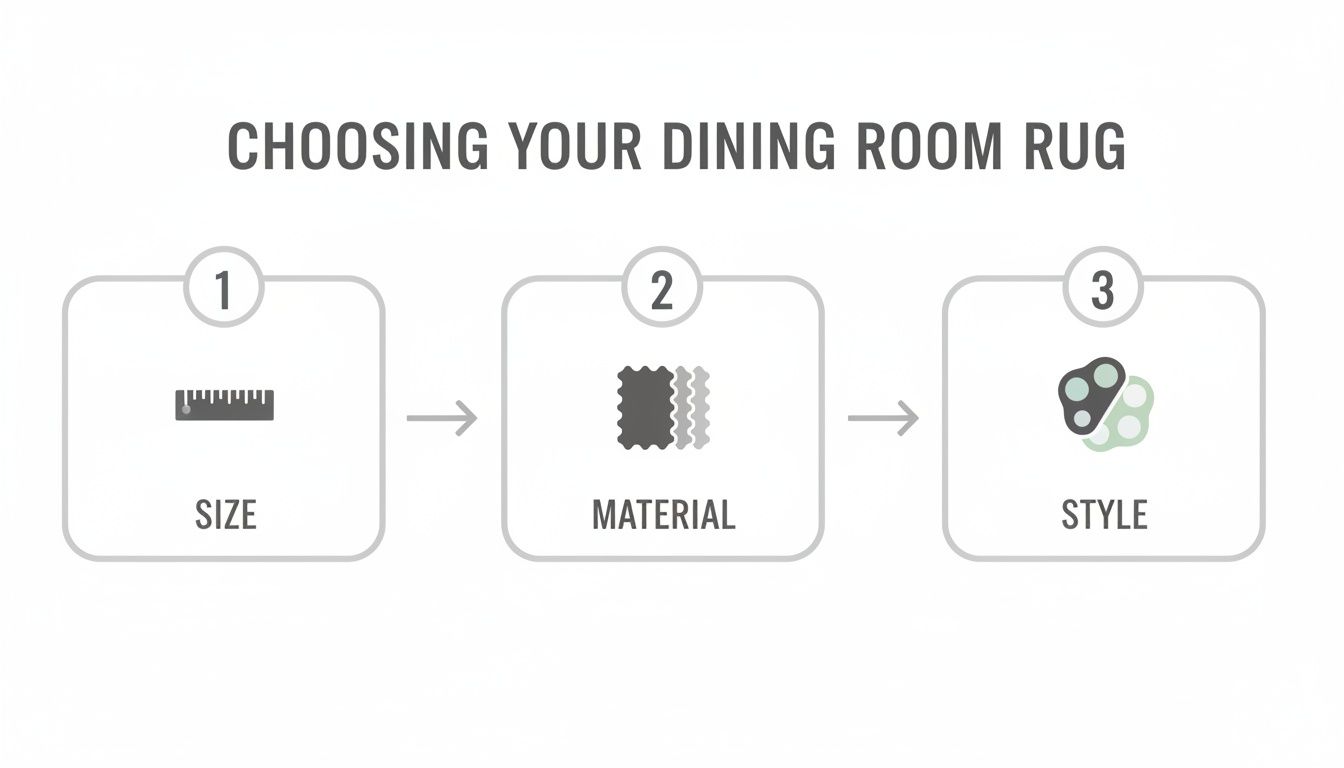
Nailing these three elements in order is the surefire way to choose a rug that's both practical and beautiful, avoiding costly mistakes.
A Designer's Pro Tip for Sizing
Here’s a trick our designers in the Buckhead showroom swear by: grab painter's tape. After you've calculated your ideal dimensions, use the tape to map out the rug’s footprint directly on your floor. Live with it for a day or two. This simple visualization trick is foolproof and prevents that sinking feeling of realizing your brand-new rug is just a few inches off.
This isn’t just a recommendation; it's backed by years of experience. We see it all the time—undersized rugs are a common mistake. At Lewis and Sheron, our Atlanta showroom on Collier Rd features premium hand-knotted rugs from brands like Kalaty and HRI that fit these specs perfectly, and our designers are always here to help you measure for a flawless fit.
To make it even easier, here's a quick guide.
Dining Table and Rug Size Pairing Guide
| Table Shape & Size | Seats | Minimum Rug Size (Rectangular) | Minimum Rug Size (Round/Square) |
|---|---|---|---|
| Round Table (48") | 4-6 | 8' x 10' | 8' Round or 8' x 8' Square |
| Round Table (60") | 6-8 | 9' x 12' | 9' Round or 9' x 9' Square |
| Rectangular Table (72"L x 36"W) | 6 | 8' x 10' | N/A |
| Rectangular Table (96"L x 42"W) | 8 | 9' x 12' | N/A |
| Rectangular Table (120"L x 48"W) with leaf extension | 10-12 | 10' x 14' or 12' x 15' | N/A |
| Square Table (60" x 60") | 8 | 10' x 14' | 10' x 10' Square |
Think of this chart as your starting point. Always measure your specific table and chairs before making a final decision, but this should give you the confidence to start your search for luxury furniture in Atlanta.
Choosing Materials That Handle Real Life with Style
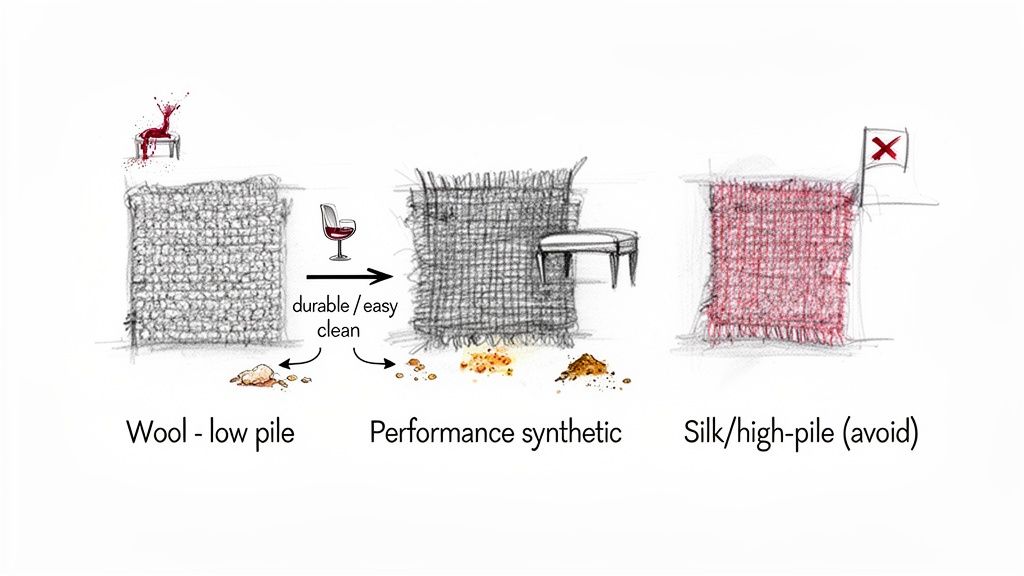
Let's be realistic: a dining room is meant for living, not just for looking. Red wine will eventually spill, chairs will scrape across the floor, and crumbs are a fact of life. Your rug needs to handle all of this with a certain grace.
This is not the place for a delicate silk or a high-pile shag rug—that’s just a cleaning nightmare waiting to happen, whether you live in East Cobb or Forsyth County. Think of it as investing in beauty that's built to last. It’s the same philosophy behind the exquisite, American-crafted Verellen and Wesley Hall furniture we hand-pick for our Buckhead showroom. Durability and style can and should go hand-in-hand.
The Unbeatable Champion: Wool
When it comes to the dining room, wool is the undisputed king. It’s a natural powerhouse, beloved by designers for its incredible resilience and natural stain resistance. The lanolin in wool fibers creates a protective barrier, giving you a precious window to clean up spills before they set.
It's a material that’s both luxurious and incredibly practical—a rare and valuable combination. For families with young children or those who entertain often, you might also want to explore performance fabrics from our Atlanta fabric showroom, like those from Crypton, which make liquids bead up on contact.
Pile Height and Weave: The Details That Matter
Beyond the material itself, the construction of the rug is critical. For a dining room, you need a low-pile, tightly woven rug.
Why does this matter so much? Two simple reasons:
- Easy Cleaning: A lower pile—think under 0.5 inches—traps far less dirt, dust, and food debris. A flatweave is even better.
- Effortless Movement: Dining chairs need to slide in and out smoothly. A dense flatweave or a low-pile construction allows for that easy movement without snagging.
This focus on functional elegance is what makes a dining space work. The rug should support the activity of dining, not get in the way. It’s about creating a foundation that is as practical as it is beautiful.
This practical approach is especially true for hand-knotted rugs, which are world-renowned for their tight weave and unbelievable durability. If you’re considering a true heirloom piece, we highly recommend you learn more about the difference of a hand-knotted rug to appreciate its unmatched craftsmanship.
Smart Synthetics for Modern Living
While wool is our top recommendation, high-performance synthetics have come a very long way. Materials like polypropylene and nylon now offer fantastic stain resistance and are often more budget-friendly, making them a practical choice for busy households.
When you visit our high-end furniture store on Collier Rd, our designers can walk you through our curated collections, from timeless wool to innovative performance textiles. We’ll help you find the perfect material that fits your lifestyle and complements your luxury furniture, whether it’s a stunning Ambella Home piece or a classic Lee Industries chair.
Telling Your Style Story with Pattern and Color
Now for the fun part. Sizing is science, materials are about practicality. But choosing a pattern and color? That’s where the artistry comes in. Your rug is the canvas for your dining room's entire personality.
This is your chance to decide: do you want a bold, conversation-starting centerpiece, or a subtle, textured foundation that lets your Wesley Hall sofas and Verellen furniture shine?
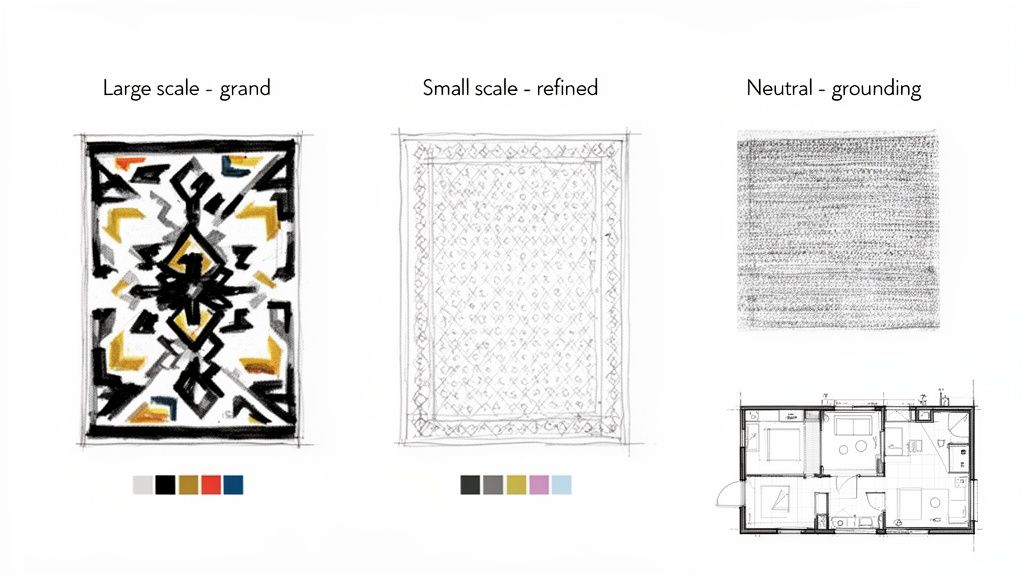
This is how you tell your story. It’s what makes a dining room in Milton feel serene and another in Alpharetta feel vibrant and energetic. The right pattern and color palette pull everything together.
Pattern Is Your Best Friend
Let’s get one thing straight: a patterned rug is a smart rug, especially in a dining room. It’s your secret weapon against the inevitable spills and crumbs that come with a life well-lived.
A busy, multi-toned pattern is masterful at camouflaging minor accidents. That means you can relax and enjoy your dinner party instead of cringing at a stray drop of red wine.
But it’s about more than just hiding messes. Pattern introduces movement and visual interest, keeping a room from feeling flat. The real key is understanding scale.
- Large-Scale Patterns: Think bold, graphic geometrics or oversized florals. These designs make a confident statement and can make a smaller dining room feel grander.
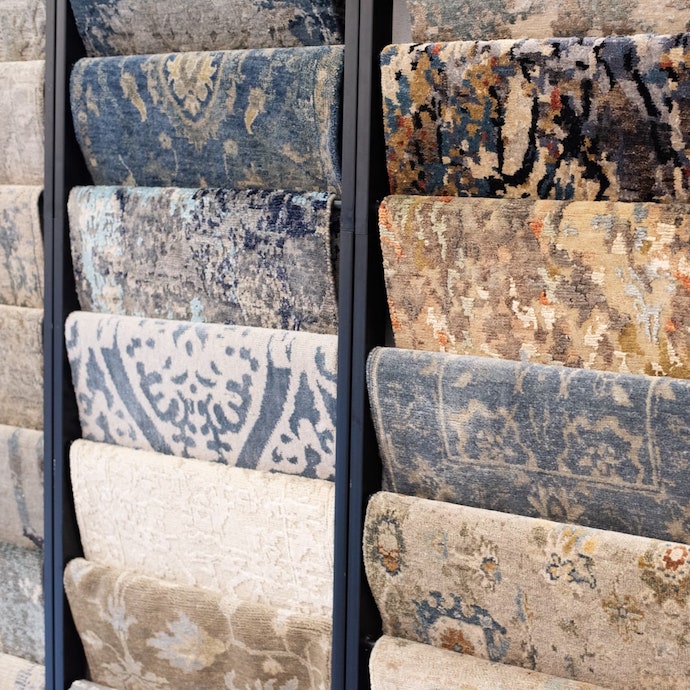
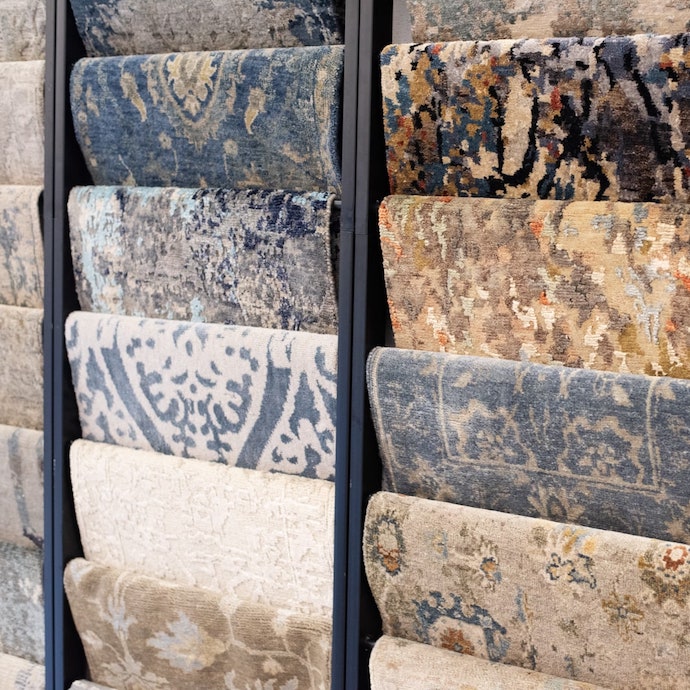
- Small-Scale Patterns: Intricate, detailed designs like traditional Persian motifs add quiet sophistication. They create a rich foundation without overwhelming the space.
Finding Your Perfect Palette
When it comes to color, the goal is harmony, not a perfect, sterile match. A rug that’s the exact same shade as your walls will just disappear. Instead, think of your rug as the thread that connects all the other pieces.
Pull inspiration from what you already love. A secondary color from a piece of art, the subtle metallic thread in your designer fabrics, or the warm wood of your Ambella dining chairs can be the perfect starting point for your rug’s color story.
For instance, if you have drapes made from our fine fabrics in Alpharetta with a beautiful navy and gold pattern, look for a rug that picks up one of those tones. This creates a curated, layered look that feels intentional and uniquely you. It’s a design principle our in-house designers in Buckhead use every day.
They can pull samples of Verellen linen, Wesley Hall leather, and other exclusive textiles from our collection to help you visualize the entire room coming together.
Ultimately, choosing a rug is about confidence. It’s about finding a piece that reflects your personal style while beautifully complementing the luxury furniture you’ve invested in. Whether you’re furnishing a home in Roswell or Cumming, the right rug will make your dining room feel complete, considered, and ready for a lifetime of memories.
Why a Rug Pad Is Your Rug's Best Friend
You’ve finally found the perfect rug—the one that pulls your entire dining room together. But before you roll it out, there’s one more piece you absolutely cannot skip: a quality rug pad.
Think of it as the unsung hero of your dining room. It prevents your beautiful rug from becoming a dangerous slip-and-slide on a hardwood floor. More than that, it adds cushioning and dramatically extends the life of your rug.
A rug pad acts as a shock absorber. It takes the brunt of every footstep and scraping chair leg, protecting the delicate rug fibers from being crushed against the hard floor. This simple addition can add years to the life of a fine rug, safeguarding your investment.
More Than Just a Safety Net
Beyond preventing a nasty fall, the right rug pad brings a surprising number of benefits to the table. It’s a small detail that elevates the entire feel of the room.
- Luxe Comfort: You'll feel the difference. A good pad adds a layer of softness underfoot that makes the room feel more plush and inviting.
- Floor Protection: It’s a critical barrier between your rug and the floor, preventing dye transfer and stopping rough backings from scratching your hardwoods.
- Noise Dampening: That extra layer also helps absorb sound, creating a quieter, more peaceful dining atmosphere.
A rug without a pad is like a bespoke suit without proper lining. It might look good on the hanger, but it won't have the structure, comfort, or longevity that defines real quality. It's a finishing touch we insist on for our clients.
Keeping Your Investment Looking its Best
Once your rug and pad are perfectly placed, a little know-how will keep it looking pristine. Life happens—wine will spill, crumbs will fall—but knowing how to react is everything.
The golden rule for spills? Blot, never rub. Grab a clean, dry cloth and gently press down to absorb as much of the liquid as you can. Always work from the outside of the spill toward the center to keep it from spreading.
For general upkeep, don’t underestimate the power of a professional. A yearly deep cleaning by an expert can lift out the embedded dirt and grit that a vacuum can't reach, bringing the colors and texture of your rug right back to life.
This is what turns a beautiful floor covering into a family heirloom. It’s about preserving the craftsmanship you chose.
Answering Your Top Dining Room Rug Questions
We get these questions all the time in our Buckhead showroom. They come from seasoned designers in our Lewis and Sheron Trade Program and homeowners just starting their first big project. So, let’s get right to the answers you need.
Can I Put a Rug Over Carpet in My Dining Room?
Absolutely. Layering is a fantastic design trick, especially when you need to define a dining space in an open-concept room. It instantly adds texture, depth, and a clear visual anchor for your dining set.
The key is to pick a low-pile rug with a texture that contrasts with the carpet beneath it. A tightly woven wool rug, like the beautiful options we carry from Kalaty, is a perfect example. To stop it from bunching up, you'll need a special rug pad made for layering on carpet. It keeps everything stable and smooth.
What Is the Best Rug Shape for a Round Table?
With a round table, a round rug is the classic, no-fail choice. It mirrors the table's shape and creates a harmonious, elegant look. You can’t go wrong with this pairing.
That said, a square rug can be a stunning, modern alternative. It frames the table with an architectural edge, creating a cool, graphic feel that grounds the entire set. Both work beautifully. Just don't forget the golden rule: make sure the rug is big enough for the chairs to pull out comfortably on all sides.
How Do I Coordinate a Rug with My Drapes and Furniture?
The goal here is coordination, not a perfect match. You want a room that feels curated and collected over time, not like it came straight out of a box.
If your drapery or custom upholstery is bold and patterned—maybe something from our designer fabric collections like Kravet or Fabricut—then lean toward a more subtle, textured rug in a complementary neutral. On the other hand, if your furniture is solid and understated, like a timeless Lee Industries chair, the rug is your chance to bring in personality with color and pattern.
Pull a secondary color from a piece of art or your existing textiles and find a rug that incorporates it. This is how you create a cohesive, layered look that feels deeply personal and professionally designed.
Our in-house designers are always here to help. They offer complimentary consultations in our Atlanta showroom to help you find that perfect unifying piece among our vast collection of fine fabrics and luxury furniture.
Should I Choose the Rug or the Dining Table First?
Most designers will tell you to choose the rug first, and for good reason. A gorgeous rug can act as the inspiration for the entire room's color palette. It's often easier to find a dining set that works with a rug you've fallen for than the other way around.
However, if you already have a beloved heirloom table or a beautiful set from one of our partners like Wesley Hall or Verellen, just bring the dimensions and a few photos with you. We’ll help you find the perfect rug to complement the exquisite furniture you already cherish. Keeping it beautiful is just as important; you can find our expert advice on how to care for wool rugs to ensure your investment looks pristine for decades.
At Lewis and Sheron Textiles, we believe the best advice comes from experience. Visit our Buckhead showroom to explore our exquisite furniture collections and designer fabrics, and let our team help you create the dining room you've always envisioned. Find your perfect piece at https://lsfabrics.com.