



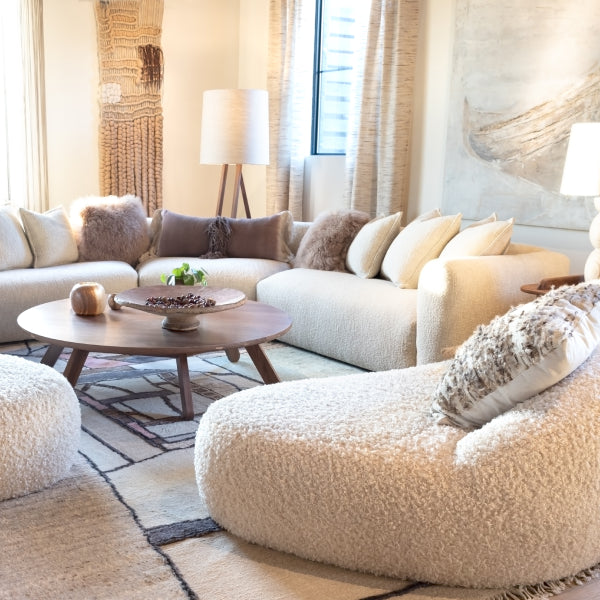
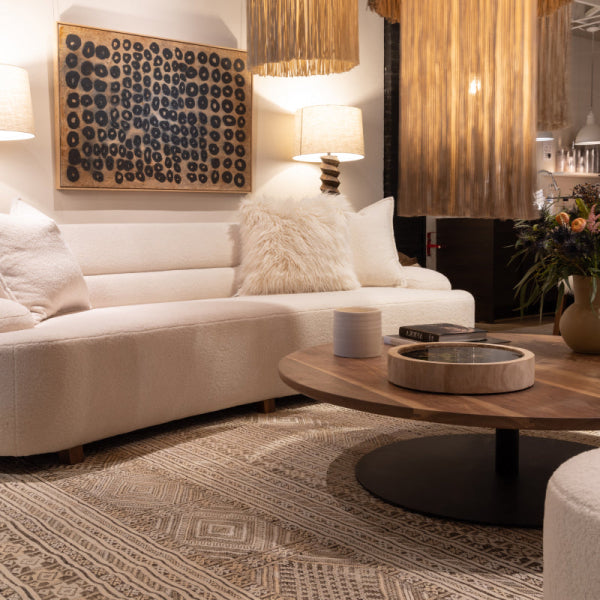
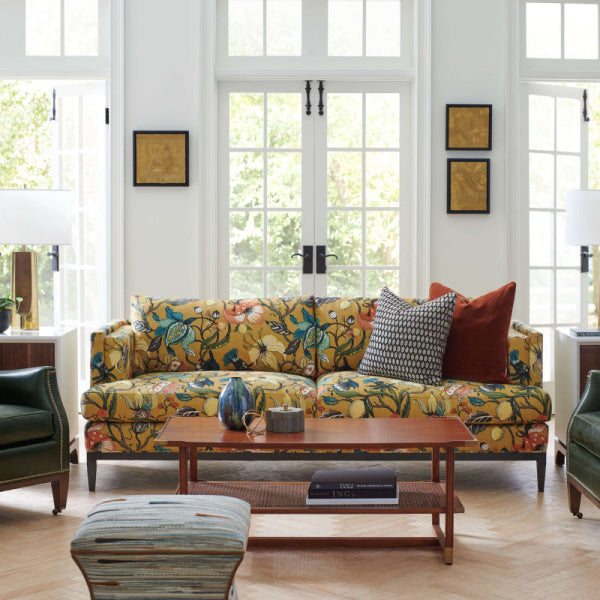
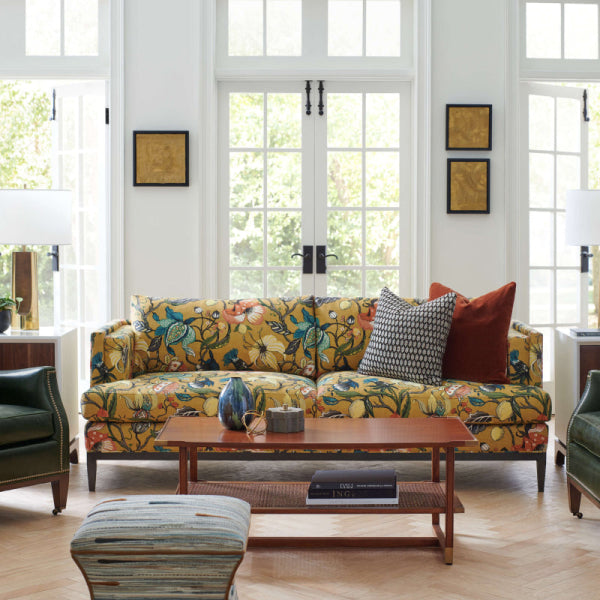
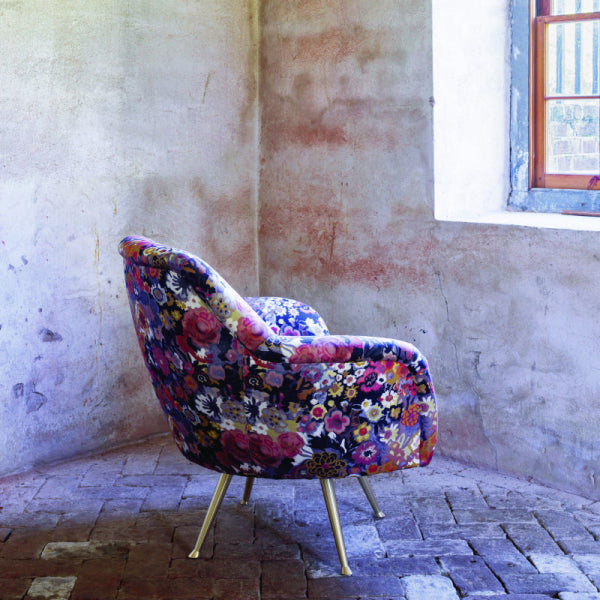
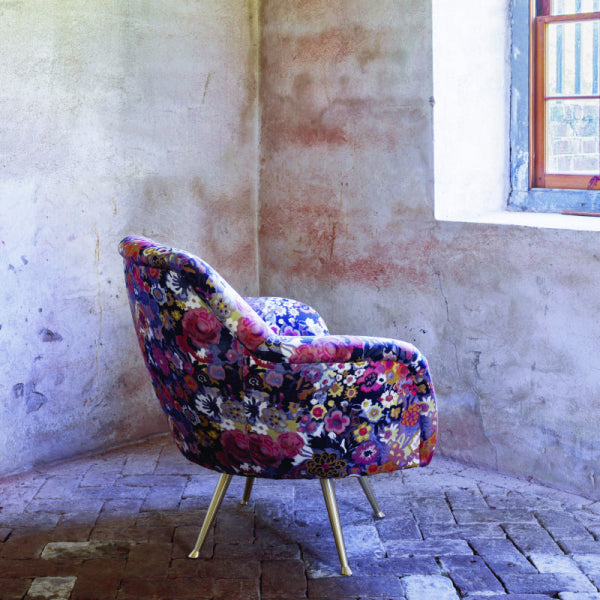
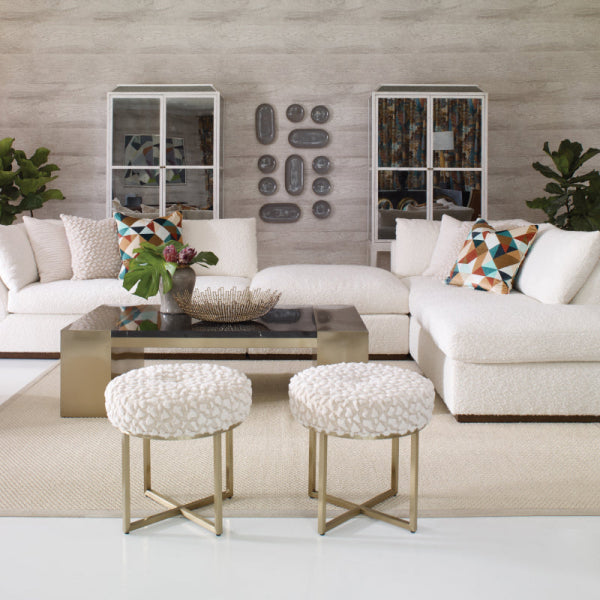








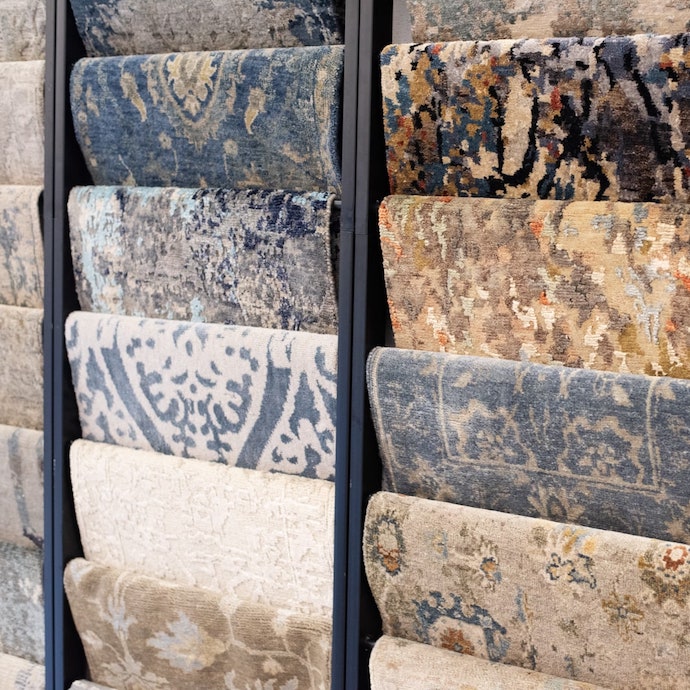
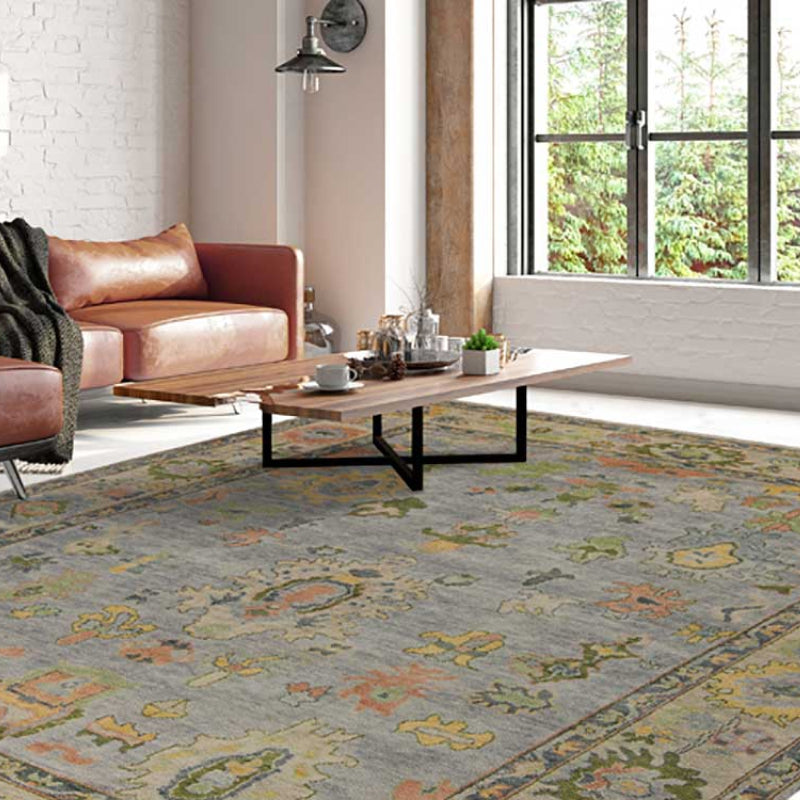
You're standing in a Buckhead living room with a familiar problem. The frame of your sofa is solid, the proportions still suit the room, and the cushions are comfortable, but the original upholstery has surrendered to years of daily use. A flat neutral would be easy. A beautiful corduroy upholstery fabric would give the piece more depth, but only if the construction can handle the life you expect it to live.
That distinction matters in Atlanta, where bright rooms, active family spaces, pets, and frequent entertaining put real pressure on luxury furniture. Corduroy can make a sofa feel warmer, more refined, and more memorable than a mass-produced alternative. It can also disappoint if you select it by color alone. Wale count, pile, fiber blend, abrasion rating, backing, finish, and frame construction decide whether the fabric looks substantial years from now or merely fashionable at delivery.
Why Corduroy Is Back in Luxury Livingrooms
An Atlanta homeowner recently brought a worn family wingback chair to a custom upholstery workroom with a clear preference, heavyweight corduroy. The chair had sentimental value, but the goal wasn't to preserve it as a museum piece. The right fabric needed to make the frame feel current while respecting its age. A substantial rib, a restrained color, and careful nap placement did exactly that. The chair gained presence without losing its history.
That's why corduroy is returning to designer projects, showrooms, and bespoke commissions. Its ribs create a tactile surface that flat fabrics can't provide, while the matte response keeps the effect grounded. Light breaks across the wales instead of reflecting evenly, so the upholstery changes character as you move through the room. The result feels relaxed, but not careless.
Corduroy also carries useful associations. It recalls academic interiors, classic menswear, vintage lounges, and the warmer side of mid-century design. Historical context strengthens that appeal. In 1918, Henry Ford selected corduroy for the interior upholstery of the Model T, an early example of the fabric being valued for durability and comfort in a demanding, high-use setting. This historical overview of corduroy places that automotive use within a much longer transition from utilitarian textile to decorative interior material.
Why the revival needs discipline
The current interest in wide corduroy for luxury interiors is a projection of design-market coverage for 2026, not a guarantee that every fashionable bolt belongs on a primary sofa. A cotton-rich corduroy can photograph beautifully for editorial interiors, disguise everyday soil better than a completely flat weave, and offer a softer visual atmosphere. Technical backings and performance treatments can also make selected constructions appropriate for demanding upholstery.
But a fashion-led fabric still needs specification. Low-quality pile can crush, weak grounds can slip at seams, and poorly dyed wales can shift under sunlight. My position is straightforward: corduroy belongs in high-end furniture when the fabric is engineered first and styled second. The rest of this guide focuses on the details that separate an heirloom-quality statement piece from a short-lived trend.
Understanding Corduroy Weave, Pile, and Wale Counts
A corduroy sofa can look rich in a showroom and feel insubstantial at home if its construction is poorly specified. Start with the fabric, not the color. Corduroy is a cut-pile textile: its ground weave holds extra yarns that rise above the surface, then those yarns are cut and brushed into vertical ribs called wales. The result is depth, directional nap, changing light response, and a surface that requires disciplined cutting and matching.
Three specifications determine how the fabric will perform:
- Wale count measures ridges per inch. Fewer wales create broader, bolder ribs. More wales give the upholstery a finer, more refined appearance.
- Pile height controls softness and visual fullness. A taller pile feels plush, but pressure marks may remain longer and recover more slowly.
- Base weave determines how securely the pile is held. A stable, dense ground supports cleaner seams and more consistent performance on shaped furniture.
Published descriptions place corduroy across a broad range, from about 1.5 to 21 wales per inch, while the traditional standard commonly falls between 10 and 12 wales per inch. Technical descriptions of corduroy construction and wale count show why the measurement matters. Wale count affects scale, hand, and the furniture applications the fabric can handle visually.
Use the nap as part of the design
Nap direction changes how corduroy reflects light and how its color reads across a sofa. It also affects yardage planning, cushion placement, matched panels, and any piece with multiple fabric orientations. Before ordering, review this guide to fabric nap and upholstery planning, then confirm that every visible panel will be cut in the intended direction.
| Wale Count | Pile Height | Best Use | Hand & Look |
|---|---|---|---|
| 16 to 21 wales per inch | Low to moderate | Fitted cushions, smaller custom chairs, refined panels | Fine, neat, and clothing-inspired |
| 8 to 12 wales per inch | Moderate | Luxury sofas, sectionals, dining seating | Balanced texture with a versatile hand |
| 4 to 6 wales per inch | Moderate to substantial | Statement chairs, ottomans, library seating | Broad, architectural, and visually weighty |
| About 1.5 to 3 wales per inch | Substantial | Select accent applications where bold scale is intentional | Chunky, casual, and highly tactile |
Use wale count as a specification, not a style label. A wide wale can give a deep library sofa authority, while a fine wale can make a dining chair look precise and fitted. Match the rib to the furniture's scale, cushion proportions, and seam layout. Lewis and Sheron's Atlanta sourcing and custom upholstery services help connect those decisions to a finished piece built for lasting value.
Corduroy Compared to Velvet, Chenille, and Twill
Corduroy competes most often with velvet, chenille, and twill in premium upholstery specifications. Each creates a different relationship between touch, light, tailoring, and maintenance. The right choice depends on what the furniture needs to communicate and how hard it must work.

Corduroy versus velvet
Velvet offers a smoother, more dramatic surface and a stronger sense of formal luxury. Its nap creates depth, but the overall field can read more reflective and polished. Corduroy supplies warmth and dimensionality with less visual glare, and its directional ribs can disguise ordinary light wear more effectively than a perfectly uniform surface.
Velvet wins when you want jewel-box drama, saturated color, or a sleek barrel chair. Corduroy wins when the room needs character, comfort, and a less ceremonial interpretation of luxury. Velvet can also be easier to manipulate visually on certain curves, while corduroy's ribs demand disciplined cutting and alignment. For a deeper treatment of the alternative, see this guide to the best velvet upholstery fabric.
Corduroy versus chenille
Chenille generally feels softer and more enveloping. It's a strong choice for sink-in seating where touch is the central experience. Corduroy, by contrast, has a crisper structure that supports structured arms, welt details, skirts, and cleaner seam lines. I prefer it for a library club chair or formal family-room sofa where the upholstery must look composed rather than overstuffed.
Corduroy versus twill
Twill has the advantage of a tighter, more uniform weave and often delivers stronger abrasion performance. It's a rational selection for heavy-use seating where pure wear resistance outranks surface drama. Corduroy brings more shadow, acoustic softness, and tactile interest, but the raised pile introduces maintenance responsibilities that twill largely avoids.
My recommendation: Choose corduroy when texture and character lead the design brief. Choose twill when abrasion resistance is the primary decision, velvet when sheen matters most, and chenille when enveloping softness is the priority.
Durability, Abrasion Ratings, and Fiber Blends
A corduroy sample isn't upholstery-grade just because it feels thick. Ask for the test method, the rating, the fiber composition, and the construction details. Domestic-use targets are commonly cited around 15,000 to 25,000 Martindale cycles, while higher-traffic or commercial specifications are often above 30,000 cycles. Independent guidance also places well-made upholstery corduroy in the 15,000 to 30,000 double-rub range. This upholstery corduroy durability guidance provides the useful benchmark range for moderate-to-heavy residential use.
Martindale and Wyzenbeek are not interchangeable scales. Martindale reports cycles, while Wyzenbeek reports double rubs. Compare like with like, and don't treat a test number as a promise of service life. Furniture design, pile height, seam tension, cleaning, sunlight, and household use all affect the result.
Fiber blend changes the outcome
Cotton-rich corduroy offers a natural hand and a quieter, more matte appearance. Cotton-polyester blends typically provide stronger resistance to tensile wear and surface abrasion than pure cotton, making them a practical choice for family-room sofas. Cotton-rayon can feel fluid and luxurious, but the specific yarn structure and pile need closer inspection before using it on hard-use seating.
Pile height matters as much as fiber. Tall, loose pile feels generous in the hand but can crush under repeated pressure. A tightly built, moderate pile usually gives a better balance for a primary sofa. Low-quality grounds can also create seam slippage, while poor dyeing can produce visible color shifts across the wales.
| Application | Min. Double Rubs | Preferred Fiber Blend | Pile Height |
|---|---|---|---|
| Decorative accent piece | 15,000+ | Cotton or cotton-rich blend | Low to moderate |
| Family-room sofa | 30,000+ | Cotton-polyester blend | Moderate and dense |
| Dining chair | 50,000+ | Performance cotton-polyester blend | Low to moderate |
| Premium sectional | Confirm tested upholstery rating | Polyester-reinforced construction | Moderate, with stable recovery |
For a deeper explanation of testing, consult this guide to fabric abrasion resistance. My floor rule is firm: decorative fashion corduroy belongs on decorative furniture. Primary seating needs a documented rating and a ground weave strong enough to support the pattern.
Best Rooms and Furniture Pieces for Corduroy
Corduroy performs best when its ribs reinforce the room's architecture. In a North Atlanta family room, I like a broad rib on a substantial sectional because the upholstery gives a large silhouette enough surface movement to avoid looking visually heavy. Choose a medium-dark olive, tobacco, clay, or warm stone when the room receives strong daylight. These colors work with oak, walnut, plaster, and painted millwork without making the sofa feel overly precious.
Family rooms and libraries
For a family-room sectional, start with 8 to 12 wales per inch and a moderate, dense pile. A wider rib can work on a deep sofa, but only when the scale of the frame supports it. The same approach suits a library club chair, especially in tobacco, moss, oxblood, or charcoal. These colors emphasize the fabric's shadows and complement bookshelves, leather, brass, and dark wood.
A statement chair can take more visual risk. Four to 6 wales per inch creates a broad, substantial texture that works beautifully on an accent chair, ottoman, or compact lounge piece. Keep the surrounding fabrics quieter so the chair reads as a deliberate statement furniture piece rather than visual clutter.
Dining chairs and bedrooms
Fine wale corduroy works well on dining chair seats, headboards, and bench cushions. A higher wale count gives these smaller applications a refined scale and supports sharper upholstery details. Use warm neutrals, softened greens, or dusty blue when the room already contains patterned drapery or a prominent rug.
Corduroy also brings a useful sense of enclosure to a bedroom. A fine rib on a headboard can soften a room without the shine of velvet, while a mid-tone color makes the piece feel composed in both morning and evening light.
Where I'd avoid it
Sun-exposed rooms require caution. Direct UV can fade the wales unevenly, so corduroy isn't my first choice for a sofa positioned beside unfiltered glass. Large shedding pets create a second challenge. Hair collects in the grooves, and claws can catch raised pile. In those homes, use a tighter, lower pile, a stronger performance blend, or reserve corduroy for a chair the pets don't treat as a launchpad.
Care and Cleaning for Real Households
Corduroy upholstery doesn't need complicated care, but it does need directional care. Dust settles in the grooves, and pressure changes the way the nap reflects light. A careless vacuum head or aggressive scrub can make the surface look uneven faster than ordinary use will.

The weekly routine
Use a vacuum with a clean upholstery brush attachment, moving in the direction of the ribs. Don't drag a stiff floor head across the pile. For pet hair, follow with a soft fabric brush or lint tool that lifts hair from the grooves without snagging the yarns.
Spills need immediate attention. Place a clean, lint-free white cloth over the liquid and blot from the outside toward the center. Rubbing pushes moisture deeper into the pile and can distort the nap. If a mild upholstery cleaner is appropriate for the manufacturer's care code, test it in a concealed area first and avoid saturating the ground.
Reviving pressure marks
Seat cushions commonly show crushed nap after regular use. That doesn't automatically mean the fabric has failed. A light steam refresh can help lift compressed wales, but keep the steamer away from direct contact and let the fabric dry naturally. Once the surface is dry, use a soft-bristle brush in the direction of the nap. A stiff brush can split or roughen the pile.
Pressure marks are a grooming issue first, not a reason to panic. Restore the nap gently before you decide the upholstery needs replacement.
| Frequency | Maintenance |
|---|---|
| Weekly | Vacuum with an upholstery brush, following the ribs; remove pet hair with a soft fabric tool |
| Monthly | Inspect seams, corners, and high-use cushions; rotate or reverse cushions when the construction allows |
| Annually | Arrange professional upholstery cleaning suited to the fabric's care code; review fading, nap recovery, and loose threads |
Denim dye transfer, embedded hair, and flattened seat areas deserve early attention. Don't use carpet-cleaning equipment or excessive water. Professional cleaning is the safer route when a stain has penetrated the pile or the entire sofa has lost its clarity.
Performance Finishes, Backing, and Custom Sourcing
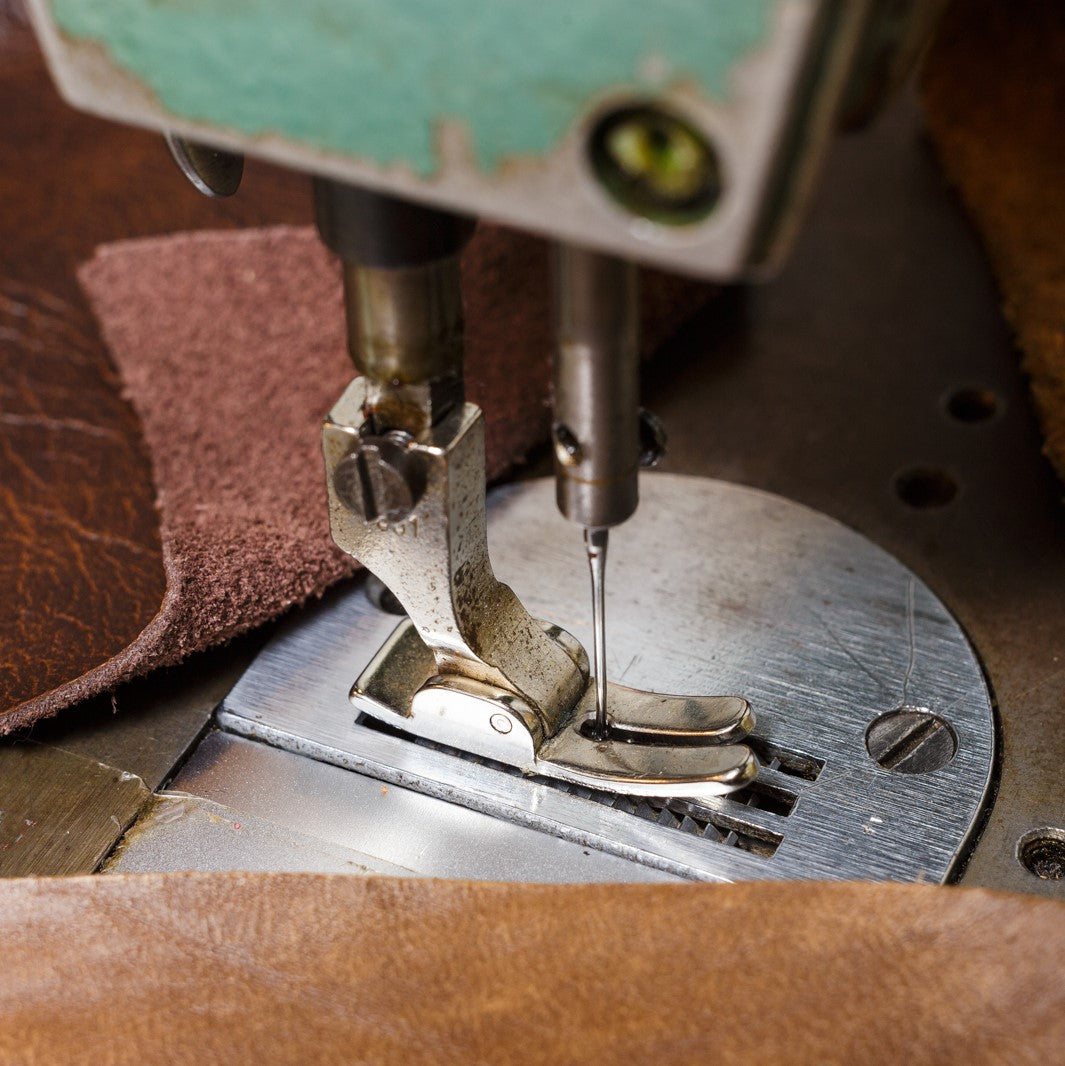
A fashionable corduroy becomes design-house upholstery through finishing and support. The face fabric establishes the look, but the back and finish determine how confidently an upholsterer can cut, stretch, seam, and attach it to a frame.
Performance chemistries such as Crypton, Nanotex, and silicone-based repellents can be applied to help resist stains, oils, and odors. They're not interchangeable, and they don't turn every corduroy into a commercial textile. Ask whether the treatment changes the hand, affects the nap, or limits future cleaning methods. A finish that makes the fabric feel coated or stiff has missed the point.
Choose the backing with the furniture
Acrylic latex backing can stabilize the ground and reduce unwanted stretch. Knit backing provides support while retaining more flexibility, which can matter on shaped cushions and curved arms. FR backing addresses fire-performance requirements where applicable, but it can also alter hand, thickness, and tuft-binding behavior. Premium upholstery needs the backing matched to the frame, not added as an afterthought.
Custom sourcing introduces practical considerations. European and domestic mills may require minimum order quantities, and dye-lot tolerances can fall in the 4% to 8% range when a color is developed or repeated. Custom development lead times typically run 8 to 12 weeks, according to the supplied sourcing guidance from this 2026 upholstery trend overview. Build those variables into the project before the workroom schedules cutting.
A good finish protects the pile. A good backing protects the upholstery process. Neither replaces a strong ground weave and a verified performance rating.
For premium sectionals, tight frames, and contract-influenced interiors, ask for flame-performance documentation rather than assuming it exists. Some corduroy upholstery fabrics are sold with 45,000+ Martindale rubs and BS 5852 pass results, but those are product-specific benchmarks, not universal characteristics of corduroy. Specification sheets matter.
How Lewis and Sheron Textiles Brings It All Together
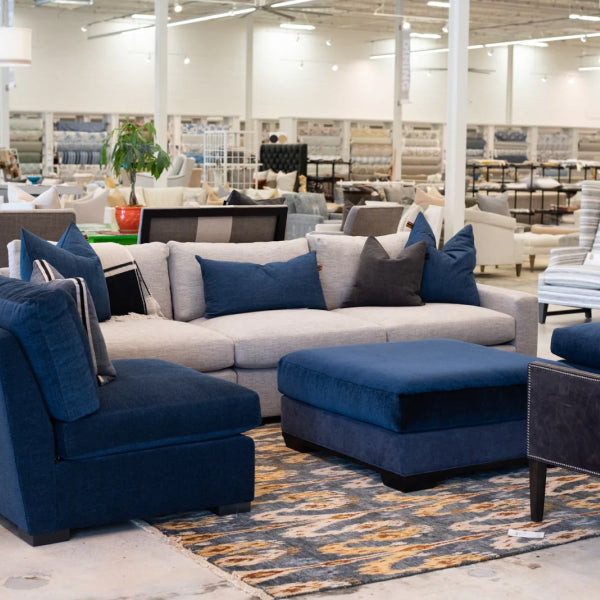
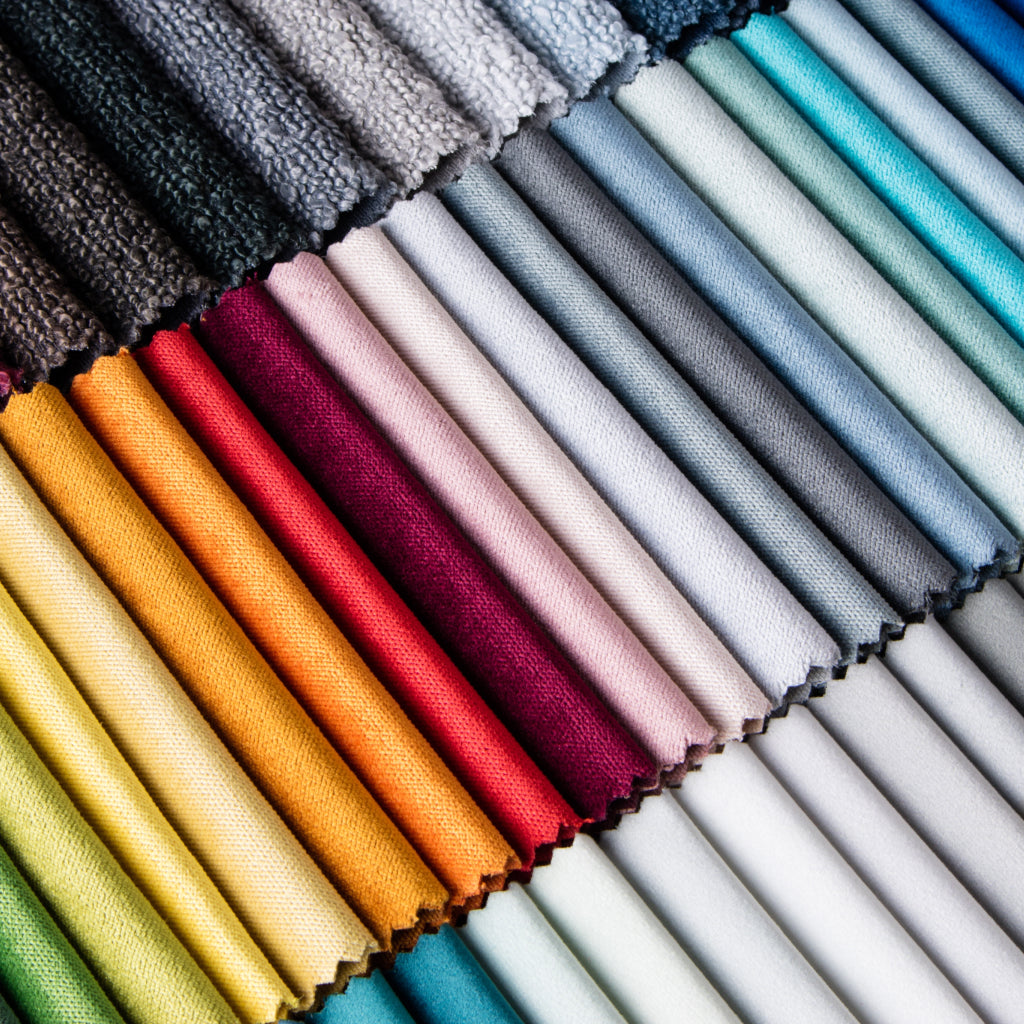
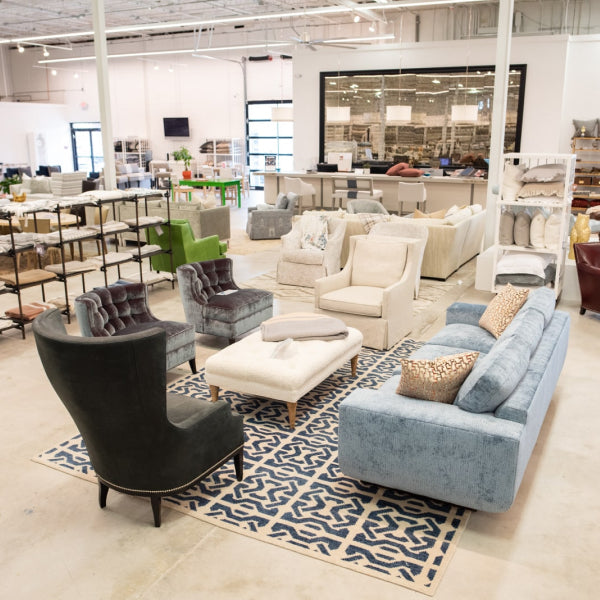
A corduroy decision becomes much easier when someone evaluates the fabric against the actual frame, room, and use pattern. For Atlanta homeowners, interior designers, and buyers searching for custom furniture Atlanta, Lewis and Sheron Textiles provides one route from sample selection to finished upholstery. The Design Center includes in-stock bolts for immediate decorator pickup, while its custom-sourcing program opens access to European mill catalogs and special-order options.
The showroom also supports reupholstery on inherited frames, which is often the right move when the proportions and construction are worth keeping. Before choosing a color, I'd review the piece's frame, cushion configuration, spring support, and seam plan. A beautiful face fabric can't compensate for a weak foundation.
The buying checklist
- Wale count: Select the rib according to the furniture's scale. Medium wale usually gives sofas the best balance, while broad wale makes a stronger statement on chairs and ottomans.
- Abrasion rating: Request the test method and choose a documented rating appropriate to the use. Don't compare Martindale cycles directly with Wyzenbeek double rubs.
- Fiber blend: Use polyester reinforcement when repeated sitting and cushion compression are central concerns.
- Finish: Confirm whether stain, oil, and odor resistance has been added, and inspect whether it changes the hand.
- Backing: Match acrylic latex, knit, or FR backing to the frame, stretch requirements, and applicable safety needs.
- Yardage calculation: Account for nap direction, pattern matching, cushion orientation, repeats, and dye-lot consistency before ordering.
High-quality furniture typically pairs a kiln-dried hardwood frame, premium upholstery materials, and strong joints. Solid hardwoods such as oak, walnut, maple, and teak are recognized for strength and longevity, while one independent guide describes well-built sofas with hardwood frames and high-density foam cushions as capable of lasting 10 to 15 years or longer. This guide to high-quality luxury furniture materials explains why fabric selection should be evaluated alongside construction.
Eight-way hand-tied spring construction is another marker to investigate in premium seating. The method secures each coil in eight directions, using interwoven webbing, steel coils, and eight knots as described by this upholstery construction reference. Custom furniture makers also use heavy-gauge coils tied front-to-back, side-to-side, and diagonally to support comfort, shape retention, and durability, as detailed by this custom furniture capabilities guide.

For clients comparing designer furniture near me, luxury furniture in Atlanta, or premium upholstery across Buckhead, Alpharetta, Roswell, Sandy Springs, and Fulton County, the practical advantage is seeing the fabric beside real materials and furniture forms. Lewis and Sheron Textiles offers in-stock selection, custom orders, made-to-order upholstered furniture, and expert reupholstery, so the recommendation can account for both the textile and the piece it will cover.
Visit Lewis and Sheron Textiles to review corduroy upholstery samples, compare performance constructions, and discuss custom sofas, sectionals, chairs, or reupholstery for an existing frame. Bring your room measurements and furniture photographs, and ask the textile team to specify the wale, rating, blend, finish, backing, and yardage before you commit.