



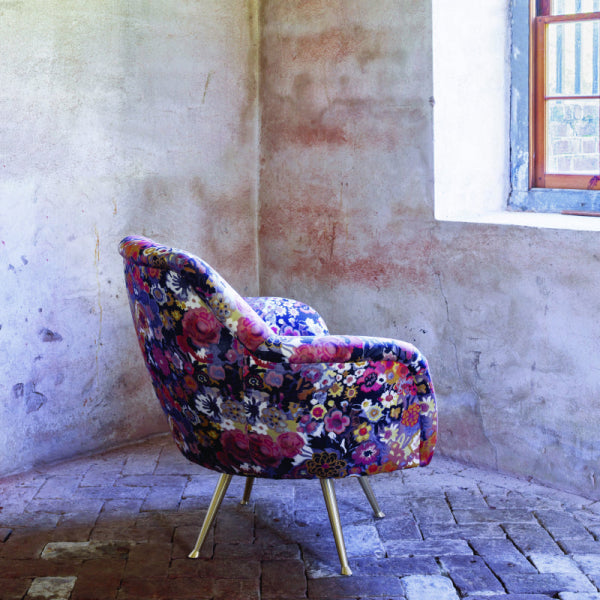
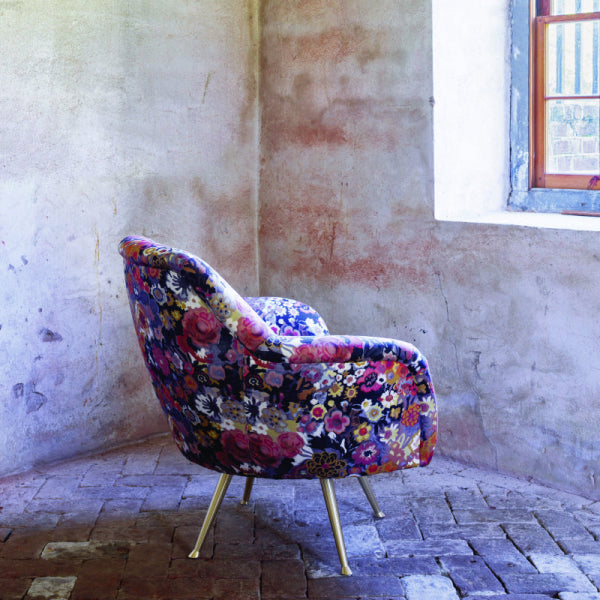






You've found a purple patterned fabric that looks exceptional beside a showroom chair. At home, though, your afternoon light makes it look almost brown, and you're not sure whether those shimmering yarns will survive daily use. Before committing to custom upholstered furniture, you need more than a beautiful swatch.
If your search began with “brocade fabric purple,” the useful next step is to separate construction, color and performance. For homeowners choosing luxury furniture in Atlanta, Buckhead or Alpharetta, that distinction can determine whether a textile becomes a lasting pleasure or an expensive mismatch.
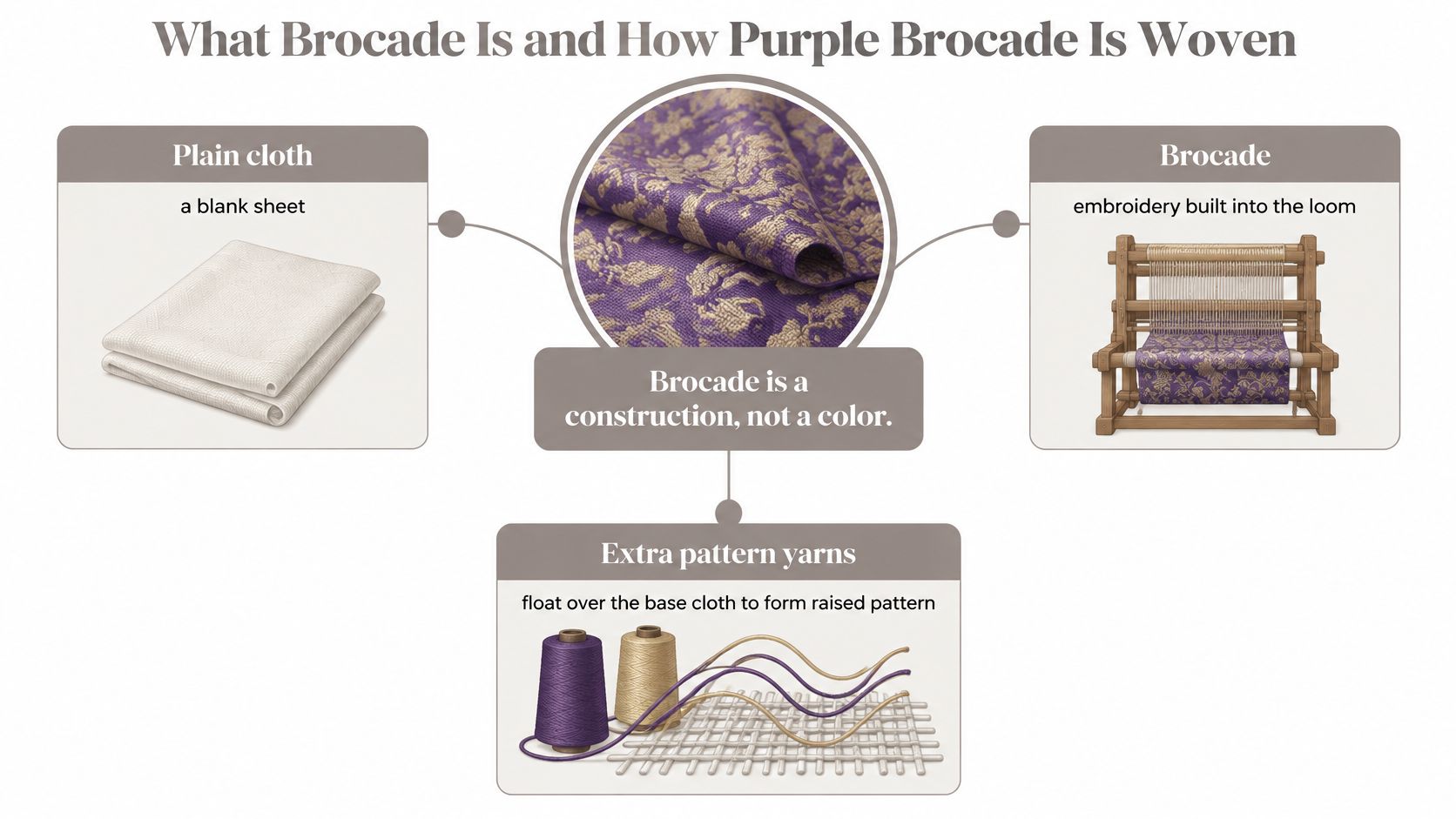
What Brocade Is and How Purple Brocade Is Woven
Brocade is a construction, not a color. Think of plain cloth as a blank sheet and brocade as embroidery built into the loom. That's an analogy rather than a literal description: the pattern is woven into the textile, not stitched onto finished cloth.
Weave comes first. Supplementary weft or warp yarns, controlled by a pattern mechanism, form motifs above the ground cloth. A floral figure might use lustrous yarns floating over a matte background; the reverse can reveal longer floats that need protection from handling or snagging.
Fiber and weight determine the application
Fiber describes what the yarns are made from. Silk offers sheen and a soft drape, often desirable for decorative pillows and formal window treatments. Polyester and polyester blends can offer upholstery-friendly abrasion performance and cleaning options, but neither benefit should be assumed without the specification.
Cotton, linen and rayon blends occupy a broad middle ground, with their behavior determined by the blend and construction. Metallic yarns add glint, but exposed metallic floats deserve particular scrutiny for snagging and abrasion.
- For a chair: Start with a substantial, stable ground cloth that can tolerate upholstery tension.
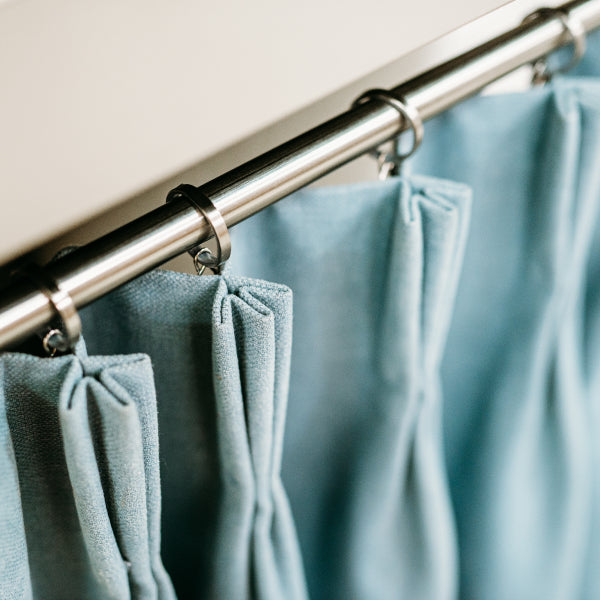
- For drapery: Look for a cloth that folds gracefully rather than projecting stiffly from the pleat.
- For pillows: Consider both the decorative face and how its edges behave at the seam.
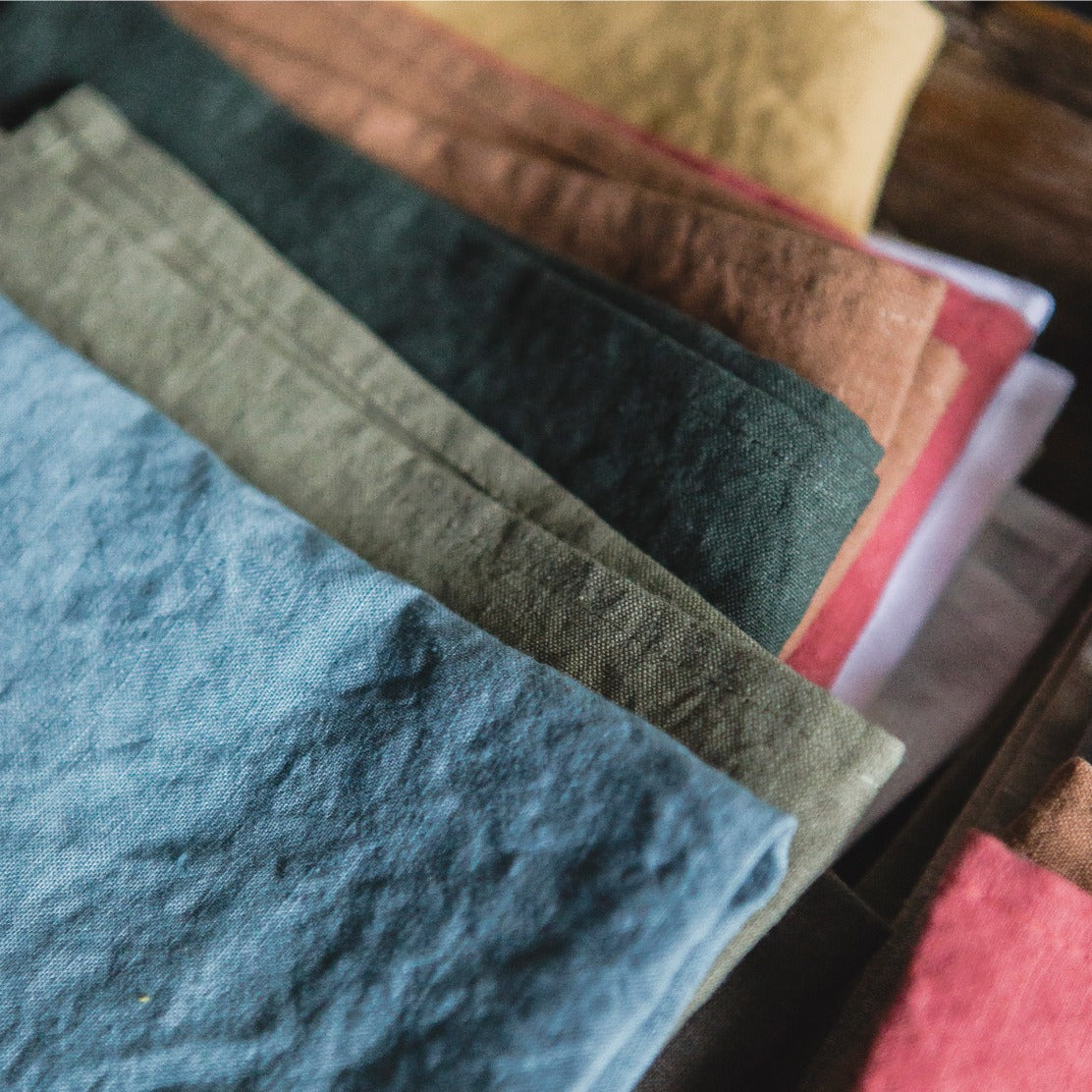
Weight is the final basic distinction, although heavier doesn't automatically mean stronger. Compare our examples of woven fabrics to understand construction, then use the textured fabric tips from Lott's Furniture to consider how a raised surface will function on furniture.
Brocade's heritage lies in exceptionally fine silk, within a Chinese silk-making tradition that the Smithsonian timeline traces to approximately 2700 BCE. Today, a purple brocade is only meaningfully specified when its fiber, base weight and weave are named.
Why Purple Brocade Signals Status and Formality
Say you choose deep purple brocade for a formal dining room. Before adding polished silver or setting the table, the room already feels ceremonial. That response comes partly from the color's history and partly from the visible complexity of the textile.
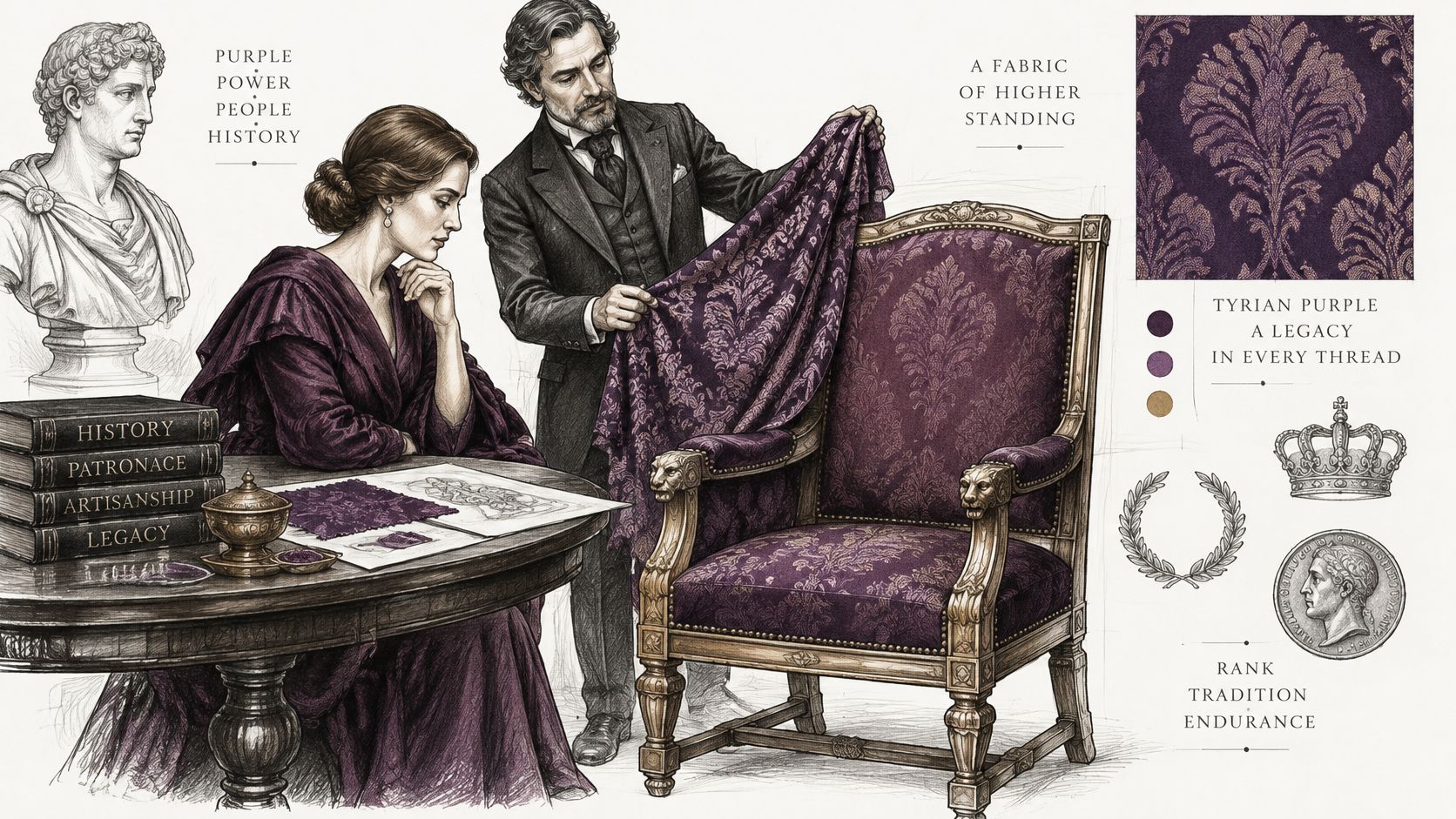
The historical examples are striking. Geyin's history of clothing describes Tyrian purple extracted from murex sea snails, with approximately 12,000 snails reportedly yielding about 1.4 grams of dye, and a 301 CE price edict valuing Tyrian-dyed wool at roughly its weight in gold. The same history describes a 424 CE restriction reserving the deepest imperial purple for the imperial family, and purple fabric under Duke Huan in China's state of Qi rising to more than five times the price of plain fabric.
Translate the history into a room decision
Those are historical circumstances, not modern retail comparisons. Not every purple textile was rare, and a contemporary purple cloth doesn't need an expensive natural dye to carry the color's inherited associations.
Brocade adds another visual cue: the pattern looks worked rather than merely applied. Together, woven relief and saturated purple can make even a modestly sized chair feel important.
Deep plum and aubergine are useful when you want a library, entry or dining room to feel composed and ceremonial. Mauve and lilac soften that effect, especially when paired with pale walls and restrained furniture silhouettes.
Ask whether the room should feel ceremonial or relaxed before choosing how much purple brocade to use.
For statement furniture pieces in a casual family room, containment usually works better than repetition. A brocade chair beside a quiet sofa can feel deliberate; matching brocade across every upholstered surface can feel theatrical.
How Purple Shifts Room Scale, Mood and Light
Purple can change a room's perceived temperature and apparent scale more than its color name suggests. A red-leaning plum feels different from a blue-violet iris, even when both samples are labeled purple. Treat the shade name as a starting point, not a specification.
Begin with undertone. Plum and warmer aubergine shades tend to feel enveloping; grape and iris can feel crisper and cooler. Pink-grey mauve offers a quieter option when you want color without the visual insistence of a saturated jewel tone.
Balance undertone with visual weight
Dark purple across a large upholstered surface can make the surrounding space feel more enclosed. That can be welcome in an oversized room, but heavy on a bulky sofa in a compact sitting room. Large, high-contrast motifs also make the pattern more assertive, while tonal figures allow the furniture silhouette to remain clearer.
Purple shades and how they read in a room
| Shade | Undertone | Visual effect in a room | Best room type |
|---|---|---|---|
| Plum | Red-violet | Warm, rich and enveloping | Formal dining room or library |
| Aubergine | Deep red-blue | Dramatic and recessive, heavy in small rooms | Media room or dining room with good lighting |
| Mauve | Pink-grey | Soft, calm and airy | Bedroom or sunlit lounge |
| Grape | Blue-purple | Lively, graphic and cooler | Living room with daylight |
| Iris (blue-violet) | Cool blue | Crisp and modern, can look flat under LEDs | Entry or modern room with warm lamps |
These are decorating judgments, not promises attached to a color name. The Homestyler guide to using purple provides useful context for considering purple shades alongside warm neutrals and changing light conditions.
Warm evening lamps may emphasize red notes, while some cool LEDs can leave iris looking grey or dull. Daylight direction, surrounding wood and the fabric's reflective yarns can change the result again.
For a bright Roswell lounge or a shaded Sandy Springs library, test the actual cut sample against the intended wall finish. Turn it and tilt it as well as viewing it straight on, because metallic highlights can become distracting from the seat beside a window even when they look subtle from the doorway.
Verify the Specification and Rub Rating Before Ordering
The specification sheet is your buying guide. It allows you to compare fabrics for luxury sofas and custom chairs on something more useful than price or showroom appearance. An attractive sample with missing construction details isn't ready for approval.
Work through the construction details
-
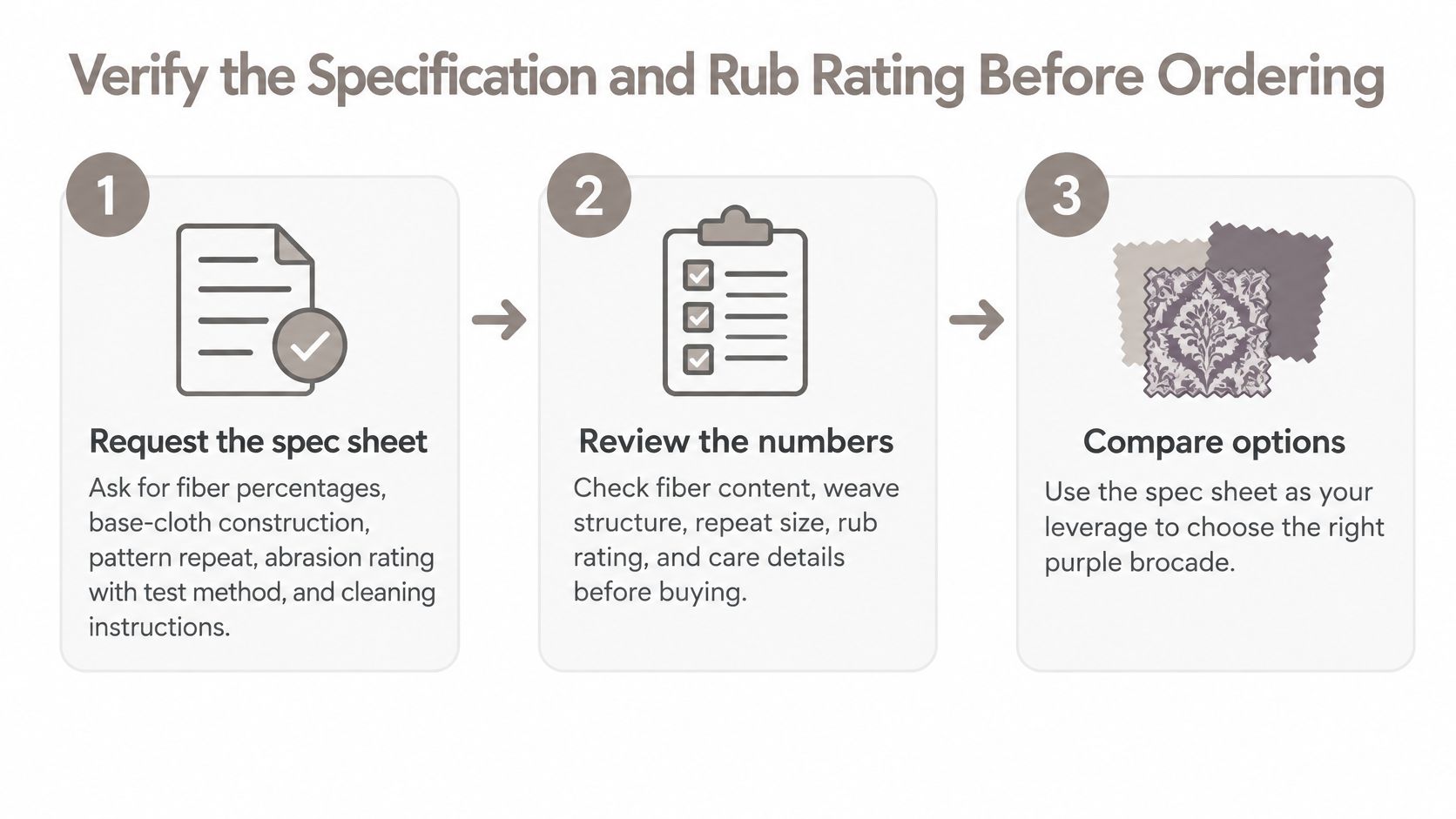
Request the complete specification. Obtain fiber percentages, base-cloth construction, pattern-repeat dimensions, abrasion rating with test method, and cleaning instructions. Don't identify silk or rayon by shine alone: the Michael C. Carlos Museum conservation project illustrates how technical examination, including microscopy and dye investigation, helps establish textile materials and construction.
-
Identify the abrasion test. According to American Leather's rub-test explanation, a Wyzenbeek double rub is one complete back-and-forth movement, while Martindale uses a figure-eight motion. The results cannot be directly substituted.
-
Confirm the repeat and cutting layout. Have the workroom calculate matching allowances for the actual furniture panels. Centered motifs, adjoining cushions and curved chair backs can require different layouts, so there's no universal extra-yardage allowance.
-
Inspect the reverse and proposed backing. Look for exposed floats, then confirm lining or backing compatibility with the mill and upholsterer. A backing should solve a documented construction issue, not conceal an unsuitable fabric.
-
Test an offcut. Ask the workroom to sew a representative seam and inspect slippage, edge fraying and distortion under tension. Include the intended thread, seam allowance and backing in the trial.
-
Match the rating to the application. Use the categories below as a purchasing screen, then review the fabric's other limitations.
Translate the rating into intended use
The following Wyzenbeek categories follow WSC Furniture's upholstered-chair guidance, which places fabrics under 15,000 double rubs in light duty, 15,000 to 30,000 in regular household use, and over 30,000 in heavy-duty or commercial-grade use.
Wyzenbeek rub ratings matched to purple brocade use
| Wyzenbeek double rubs | Use category | Typical placement |
|---|---|---|
| Under 15,000 | Light duty | Decorative pillow or occasional chair |
| 15,000 to 30,000 | Regular daily use | Dining chair or family-room chair |
| Over 30,000 | Heavy duty or commercial grade | High-use sofa, sectional or household with children or pets |
Our guide to fabric abrasion resistance offers further context for comparing upholstery specifications.
Purchase safeguard: A rub rating measures abrasion, not seam strength, stain resistance, colorfastness or protection from pet claws. It's a screen, not a lifespan guarantee.
Best Uses for Purple Brocade in Your Home
A luxurious appearance isn't a performance rating. The silk brocade that makes an exquisite decorative pillow may be a poor choice for a family sectional. Start with how people will use the piece, then select the construction that supports that use.
Conservation findings in the International Journal of Conservation Science describe the vulnerability of metal-and-natural-fiber brocades to environmental fluctuations and improper treatment. Historic textiles aren't interchangeable with new upholstery, but they demonstrate why an unknown metallic construction deserves caution.
Choose the application before the fabric
Purple brocade applications by use case
| Application | Wear level | Sun exposure risk | Construction to request | Verdict |
|---|---|---|---|---|
| Decorative pillows | Low | Moderate | Silk or silk blend with lined back | Ideal, rotate to even out fading |
| Occasional chair | Low to moderate | Low | Heavier base cloth, poly blend | Strong statement piece |
| Formal drapery | Low | High near west or south windows | Lined or interlined, UV-filtered backing | Works well with lining |
| Dining chairs | Moderate | Low | Abrasion-tested blend | Suitable with a verified rating |
| High-use sofa or sectional | High | Moderate | Performance blend with verified rub rating | Only with a rated, performance cloth |
| Metallic-thread brocade, any use | Match to contact frequency | Assess actual window exposure | Confirmed snag and abrasion profile | Accent or low-use pieces only |
The pillow recommendation assumes decorative use. A pillow used as a daily headrest encounters body oils and friction that a display cushion doesn't, so describe that habit when selecting the cloth.
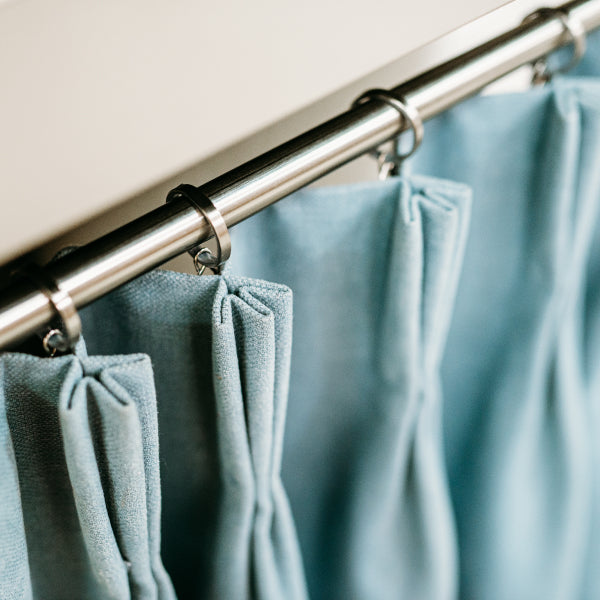
Drapery raises a different issue. Its face fabric may experience little rubbing but substantial daylight exposure. Request a lining system appropriate to the window, and don't assume ordinary lining supplies meaningful UV filtration without documentation.
Look beyond the upholstery face
For premium sectionals and high-quality couches, inspect the furniture underneath the fabric. The Mocluc upholstered-furniture guide identifies frame construction, joinery, cushioning and suspension as separate contributors to quality.
That's also the useful answer to questions about the best luxury sofa brands or how long high-end furniture lasts. A brand name or expensive textile can't establish a service life without knowing the construction, household use and maintenance.
When comparing custom vs mass-produced furniture, customization matters when it lets you coordinate the frame, fabric, cushioning and pattern placement. It doesn't automatically make an unsuitable brocade durable. Heirloom-quality furniture requires a sound foundation and a textile appropriate to its actual role.
Pairing Purple Brocade with Other Materials
Let purple brocade be the hero textile. Supporting materials should either quiet its richness or provide a clear contrast, rather than introduce another surface with equal shine and pattern intensity.
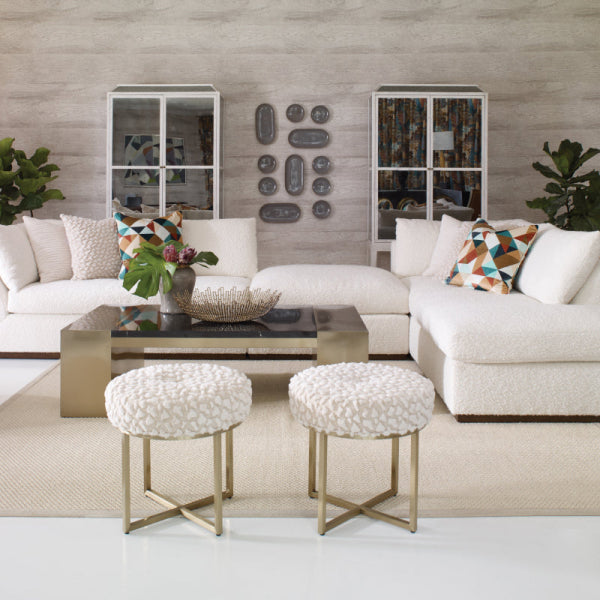
For a Buckhead sitting room, that might mean an aubergine occasional chair beside an ivory sofa and walnut table. In a lighter Alpharetta interior, a mauve brocade cushion could sit comfortably against pale oak and matte linen.
Build a restrained material palette
- Metal: Brass or antique gold can echo warm metallic threads. Brushed nickel and chrome give cooler grape and iris shades a sharper setting. Compare the actual finishes together rather than relying on their names.
- Wood: Walnut and cherry reinforce the warmth of plum. White oak and pale ash can keep mauve from becoming overly sweet or traditional.
- Neutrals: Ivory, greige and warm white provide breathing room around a dense motif. Charcoal can ground deep purple, provided the room has enough contrast elsewhere.
- Texture: Linen, bouclé and matte velvet offer tactile interest without repeating brocade's reflective surface.
- Pattern scale: Pair a broad floral figure with a small stripe or solid. Similar-sized competing patterns often make it harder to appreciate either textile.
Keep the main color palette limited, allowing wood and metal to act as supporting finishes. You don't need to extract every accent color woven into the brocade and repeat it somewhere else.
The most convincing luxury home furnishings schemes don't make every material compete for attention.
For a hypothetical sofa arrangement, use a pair of brocade pillows, a neutral linen cushion and a textured lumbar. If you prefer an odd-numbered grouping, add another quiet solid cushion rather than another assertive pattern. The goal is a considered composition, not symmetry at any cost.
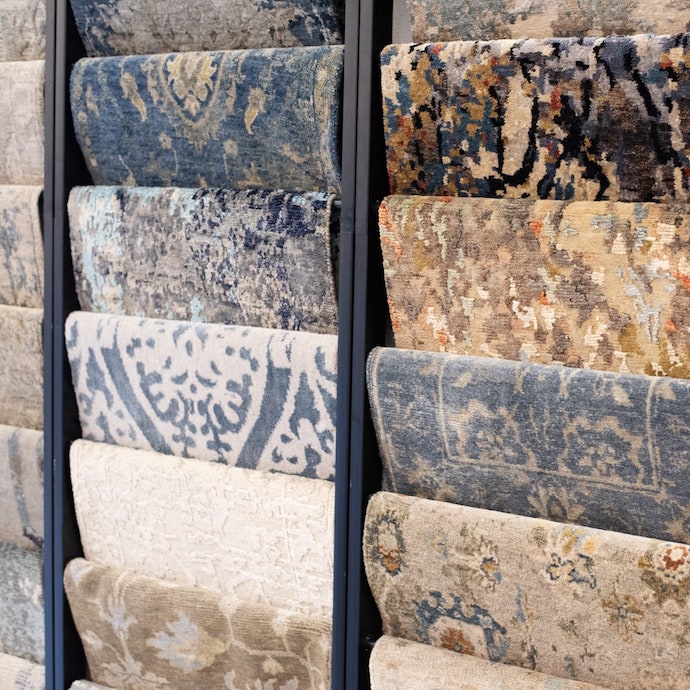
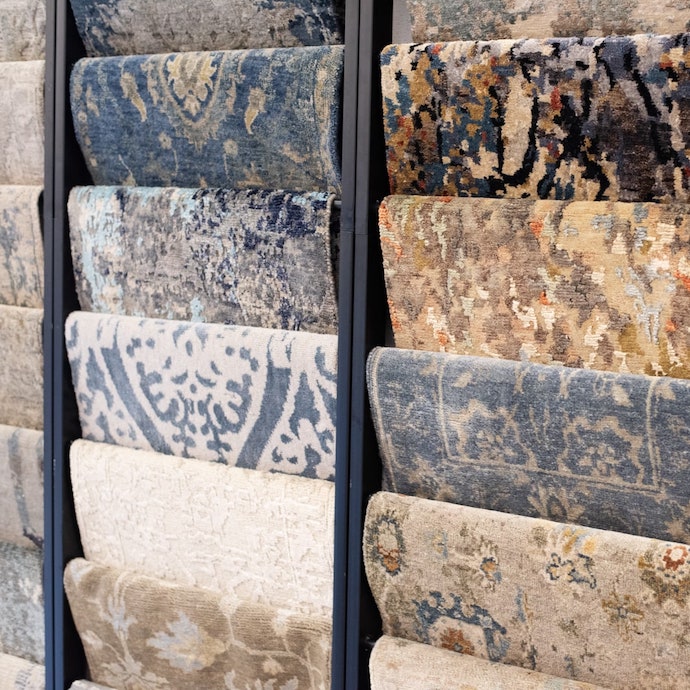
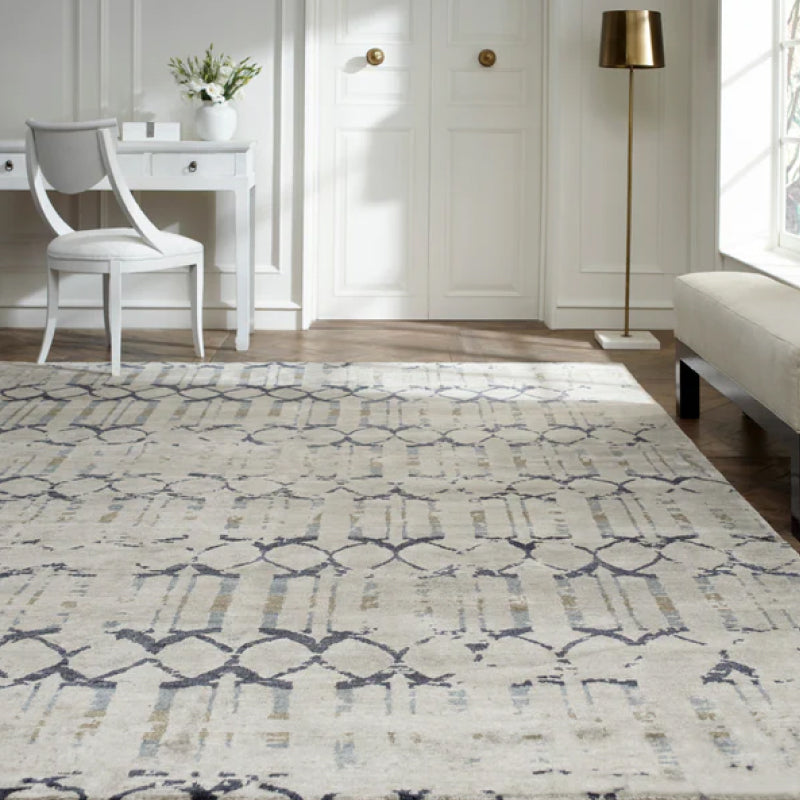
For designers sourcing across Fulton County and North Atlanta, carry the brocade sample alongside the rug, wood finish and trim. “Designer quality” is partly visible in these relationships: motifs have room to read, finishes feel intentional, and custom details support the furniture's proportions.
Caring for Purple Brocade Over Time
Light exposure can cause both color loss and structural damage. A photochemical study of purple colorants documents ultraviolet-driven degradation, supporting a cautious approach to prolonged exposure. The risk is especially important when silk, natural dyes or unidentified colorants are involved.
Don't assume deep purple is fade-resistant because it hides everyday marks. Surface soiling and resistance to light are different properties, and a dark fabric can still develop an obvious exposed-to-shaded contrast.
Establish protective habits
- Manage the window: Position upholstery outside direct sun where possible. For exposed windows, combine appropriate lining with documented UV-filtering measures rather than relying on decorative fabric alone.
- Distribute exposure: Reposition movable cushions so the same face isn't always nearest the glass. Keep a record of the arrangement if the pattern has a directional layout.
- Keep conditions steady: Avoid placing delicate brocade against heating outlets or in spaces with persistent dampness. Silk-and-metal constructions warrant particular care when environmental conditions fluctuate.
- Retain a reference: Store an unexposed cutting away from light. Photograph the installed textile under consistent lighting each season so you can distinguish real change from a different camera exposure.
Our guidance on caring for high-end upholstery can help you organize routine maintenance around the specific textile.
Choose cleaning by composition
Never select steam, solvent cleaning or wet cleaning just because the label says brocade. Obtain the mill's written recommendation and cleaning code, then establish whether it applies to the finished upholstered piece, including its backing, trim and cushion components.
For a fresh spill, lift excess liquid with a clean, absorbent white cloth without scrubbing. Don't add water, detergent or a stain remover until the approved method is known. Blotting is a first response, not permission to experiment with chemistry.
Avoid stain-repellent treatments unless the mill approves them. Seek specialist help for distorted metallic yarns, loose floats or damaged raised motifs, and arrange a conservation review before cleaning an antique textile. Test the proposed treatment on an offcut or concealed area before treating the visible face.
Order a Swatch and Test It in Your Room
Order a swatch before committing to yardage, and request its specification sheet at the same time. This is a more useful next step than collecting more photographs of purple rooms, because you're evaluating the material against your own light and furnishings.
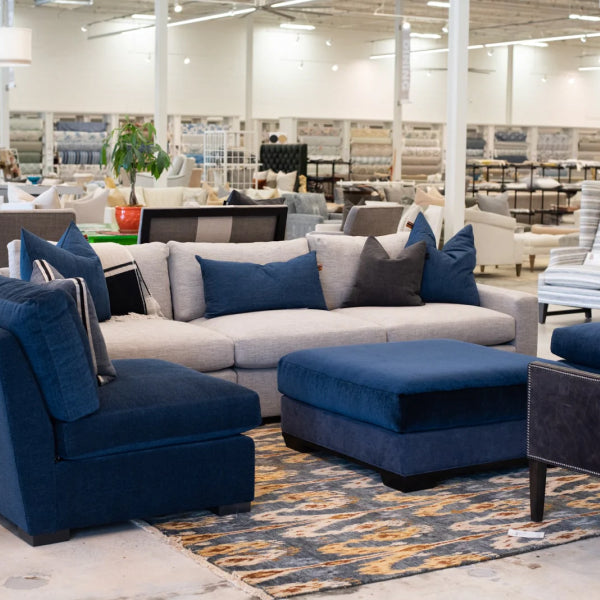
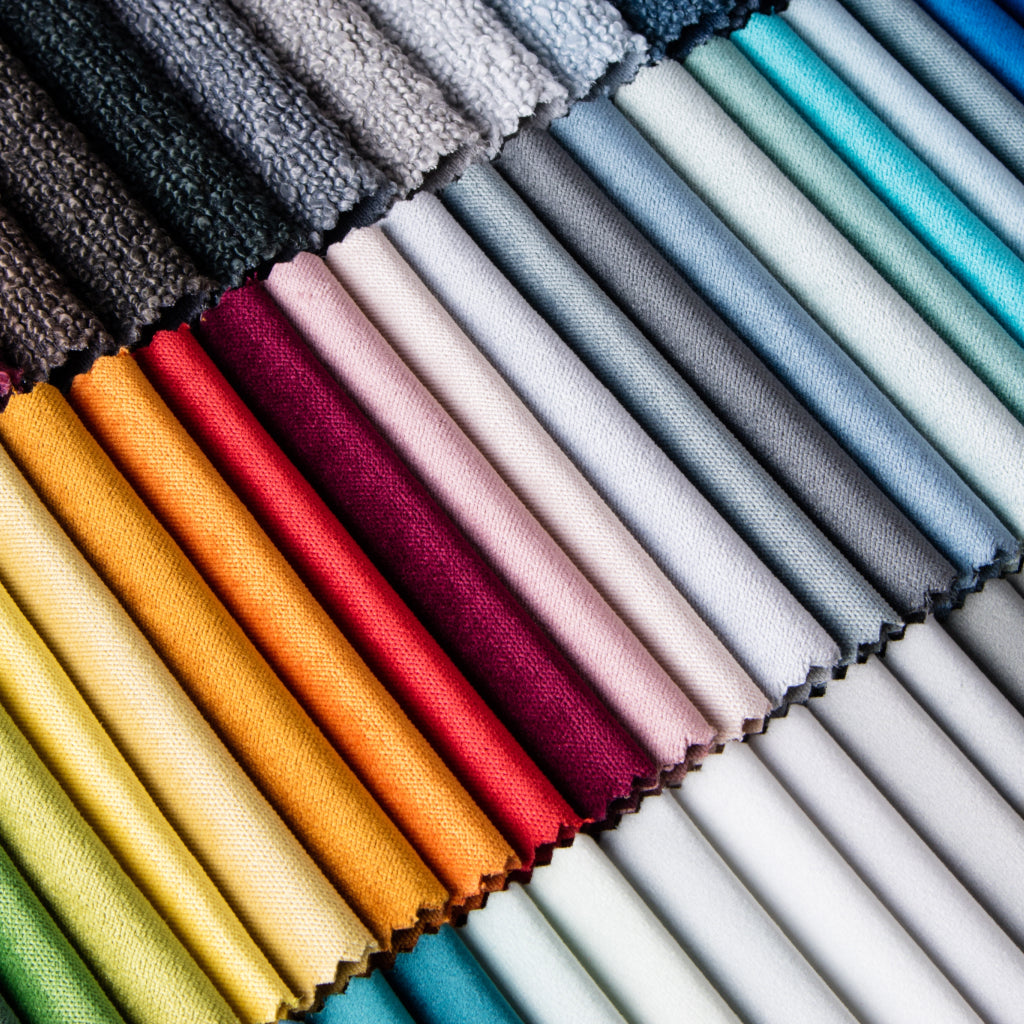
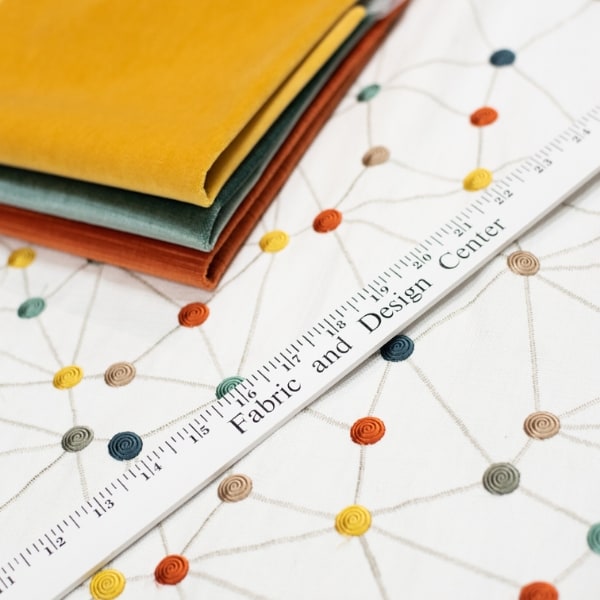
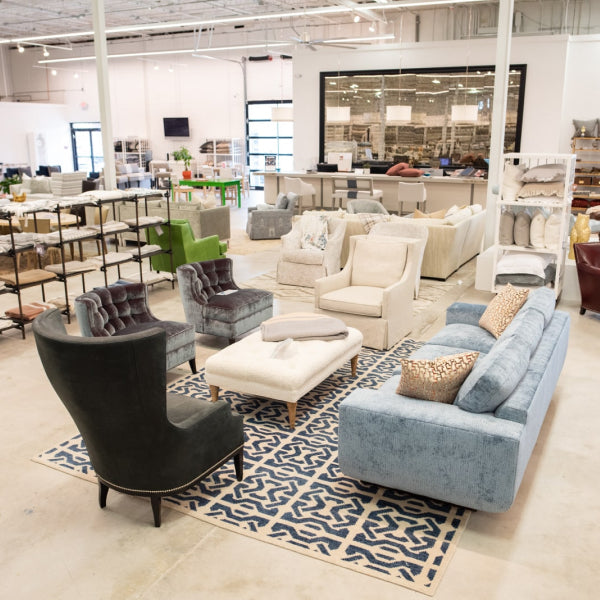
At our Design Center, over 1000 bolts of fabric are on display, and fabric samples are available; a fabric swatch can also be ordered for $2.00.
Make the approval practical
- Identify the sample. Record its fabric name, color and intended application so the workroom evaluates the correct cloth.
- Pin it vertically for drapery or drape it over the proposed seat. Check morning, midday and evening light over several days.
- Bring the materials together. Include the wall color, sofa frame finish, wood, trim and neighboring upholstery.
- Compare shortlisted purples side by side. Reject a shade that only works under showroom lighting.
- Approve the complete specification. Confirm the appropriate abrasion category, repeat allowance, lining and cutting layout before authorizing yardage.
If you're searching for “designer furniture near me,” “custom furniture Atlanta,” or where to buy premium furniture in Atlanta, bring a room photograph and your material samples to the appointment. Approve the fabric when its color remains acceptable throughout the day and its documented performance suits the application. Otherwise, change the shade or construction before cutting.
Lewis and Sheron Textiles offers home fabrics, custom furnishings, reupholstery and custom drapery to help coordinate the textile with the finished piece. Visit Lewis and Sheron Textiles with your room photographs and finish samples to compare purple brocade options and plan an application that suits your home.