



















You've chosen the linen for a pair of pillows or finally settled on drapery fabric, and a pink lace trim looks like the finishing touch. Before you order it, check what happens when that pink gets wet, rubs against pale upholstery, or sits beside a sunny window. A beautiful trim that bleeds onto an expensive ground fabric is the wrong trim, regardless of its price.
For a high-end room, choose by fiber, dye stability, and construction first. Shade comes after the trim has proved it can live where you want to put it.
Choosing Pink Lace Trim by Fiber, Width and Use
For most homes, I'd start with cotton or linen-blend pink lace, using a sample between 1/2 and 1 inch wide to judge pillows, bedding, and drapery accents. That's a starting specification, not a guarantee of washability: the dye, finishing treatment, and weave still need checking.
Lace belongs in a long tradition of refined interiors and dress. The Smithsonian's National Museum of American History dates the rapid development of needle and bobbin lace to the early 16th century, particularly around Venice, Milan, and Flanders, placing today's pink trim within a much older luxury textile tradition.
Match the fiber to the job
Pink lace trim by fiber, width and best use
The widths below are practical sample-selection ranges, not universal manufacturing standards.
| Trim type | Typical fiber | Common widths | Best use |
|---|---|---|---|
| Fine cotton lace | Cotton | 3/8 in to 3/4 in | Pillow edges, bedding trim, light drapery accents |
| Linen-blend lace | Linen with cotton | 1/2 in to 1 in | Bed linens, table linens, pillow cuffs |
| Rayon lace | Rayon | Select to suit the finished tieback or accent depth | Drapery tiebacks and decorative accents |
| Nylon or polyester lace | Synthetic | 1/2 in to 2 in | Upholstery accents and high-contact edges, subject to testing |
| Metallic-thread lace | Metallic thread with cotton or synthetic | 1/2 in to 1 in | Statement pillows and drapery accents on lined panels |
Fiber influences how lace handles moisture, tension, and cleaning. Width controls visual weight, but density matters too: an open floral lace can look lighter than a narrow, tightly stitched braid.
For example, try a 3/8-inch trim at a pillow edge and compare it with 1- to 2-inch lace laid across a hem or tieback. Judge the exposed width, not just the purchased width, because part of the trim may disappear into a seam.
Cotton usually gives a matte, relaxed finish. Linen blends suit textured grounds, while rayon offers drape but deserves greater caution around moisture. Nylon or polyester may suit handled edges, but synthetic content alone doesn't establish snag resistance or colorfastness.
If you're comparing the base cloth as well, the fabric insights from Gates Home Furnishings provide useful upholstery-material context. For construction and pattern vocabulary, consult this guide to different kinds of lace.
Choose contrast without overpowering the fabric
Pale blush works comfortably against white, oatmeal, and natural linen grounds. Saturated rose and fuchsia-leaning shades generally need a more assertive fabric, such as a substantial velvet or strong woven pattern, so the trim doesn't look like a costume addition.
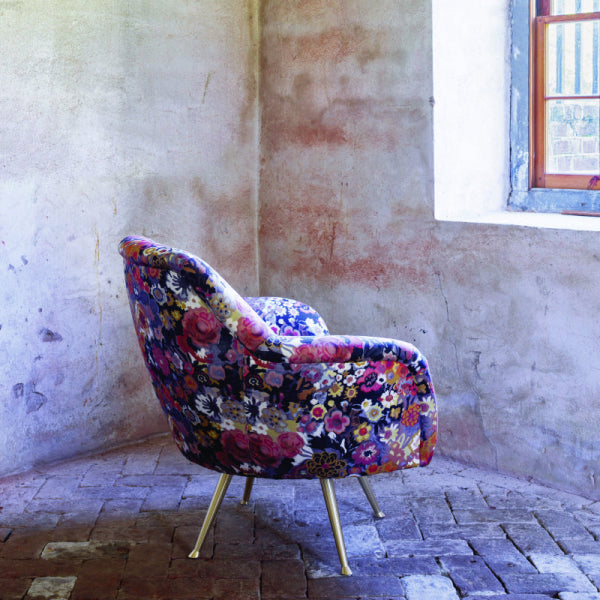
For luxury sofas and premium sectionals, a removable trimmed cushion is often more practical than lace along a seat edge. On custom chairs, a protected back-panel accent offers detail without putting delicate loops directly under hands.
- Buy one dye lot: Reserve enough matching material for the complete project.
- Test a wider drapery sample: Compare the next width up from your first choice at full viewing distance.
- Keep metallics out of daily contact: Use them where fingers, jewelry, and clothing won't repeatedly catch the threads.
How to Test Pink Lace Colorfastness Before Installation
A supplier swatch tells you how a trim looks, not necessarily how the delivered order will behave. Pale blush, vivid rose, and optical pink finishes can react differently to detergent and water, and finishing treatments can change between lots.
Approve the actual lot, not merely the product name. For valuable custom upholstered furniture, test a loose sample against an offcut of the intended ground fabric rather than experimenting on the finished piece.
A practical screening sequence
- Confirm fiber and construction. Ask for the full fiber composition, including decorative threads and backing. Check whether the lace stretches, sheds, or relies on a stiff finish to hold its shape.
- Cut a hidden 10 cm sample, following the sample scale described in AATCC's TM61 guidance. Keep an untreated piece from the same lot as your control.
- Dampen a white cloth and the sample, then rub them together gently. Look for pink transfer; this is a preliminary screen, not a standardized crocking test.
- For trim approved for wet care, wash the sample with mild detergent in cool water, rinse without twisting, and dry flat. Don't use this step to override a dry-clean-only instruction.
- Compare the dry sample with the untreated control under neutral lighting. Wet lace looks darker, so comparing it before it dries can give a misleading result.
- Examine pink-to-white transfer, shrinkage, edge distortion, loss of stiffness, and changes to scallops or motifs. A trim can retain its color yet become unsuitable because it loses its shape.
- Record the result. Photograph both pieces together, measure the finished width, and note the detergent, drying method, and visible changes.
A clean damp-cloth result is permission to investigate further, not proof that lace will survive every cleaning method.
When laboratory testing is worth paying for
AATCC TM61 accelerated laundering uses a 45-minute test designed to approximate the color and surface changes from about five typical hand or home launderings. The laboratory must select temperature, detergent, bleach, and abrasion conditions that reflect the intended care regime.
Ask separately about chlorine exposure. AATCC identifies TM188 for sodium-hypochlorite colorfastness and cautions that its results aren't interchangeable with the chlorine-related sections of TM61.
For an extensive drapery order or pale upholstered suite, documented testing can cost less than removing failed trim and repairing stained fabric. Tell the supplier whether the finished item will be professionally cleaned, hand washed, or handled frequently.
Skip home wet testing altogether for metallic lace, rayon without clear wet-care approval, and antique or sentimental pieces. A textile conservator or experienced cleaner should decide whether sampling is appropriate before moisture touches valuable material.
Measure, Order and Source Pink Lace Trim
A trim sample can match the fabric and still fail at installation if the order is short, the motif lands badly, or the pieces arrive in different shades. Measure the finished attachment path, then check how the supplier sells the lace before calculating yardage.
Convert measurements to inches before calculating. There are 36 inches in a yard, and mixing units can leave you short.
Calculate the finished run
Measure the edge where the lace will sit, not the unsewn fabric blank. For scalloped lace, measure along the straight attachment baseline rather than over the scallop peaks.
For pillow edging, measure the full perimeter. For drapery, include both leading edges and the hem if that is the intended layout; leave out the heading unless it will receive trim. For upholstery, measure the perimeter of the visible panel.
Use this planning formula:
Order calculation: Finished trim run in inches × 1.10 ÷ 36 = planning yardage before rounding.
The 10 percent allowance in these examples covers ordinary cutting and handling. Check motif repeats and corner treatments separately. Deep miters, awkward joins, or symmetrical pattern placement can require extra length.
Yardage by project with a 10 percent allowance
These hypothetical projects round small orders up to the next half yard and the drapery order up to the next whole yard.
| Project | Formula | Allowed total | Order |
|---|---|---|---|
| Pillow edge, 20 in square | (20 × 4) × 1.10 | 88 in = 2.44 yd | 2.5 yd |
| Pillow edge, 18 in square | (18 × 4) × 1.10 | 79.2 in = 2.20 yd | 2.5 yd |
| Lumbar pillow, 22 × 14 in | [2 × (22 + 14)] × 1.10 | 79.2 in = 2.20 yd | 2.5 yd |
| Chair back panel, 24 × 30 in | [2 × (24 + 30)] × 1.10 | 118.8 in = 3.30 yd | 3.5 yd |
| Drapery panel, 96 in long with 50 in hem | [(96 × 2) + 50] × 1.10 | 266.2 in = 7.39 yd | 8 yd |
The quantities cover the installation runs and stated allowance. Add an extra yard to the combined order for a sample and practice joint, rather than cutting those pieces from the installation length.
The square pillow and lumbar pillow have the same perimeter despite their different shapes. Their corners still need separate planning: decide where the lace motif will meet at the closing seam.
Plan placement before buying footage
Lay a sample on the actual fabric and mark its attachment line with removable tailor's chalk. Lace set just inside an edge creates a different finish from lace that projects beyond it.
- Neutral linen pillows: Keep the exposed edge narrow so the fabric remains the main surface.
- Drapery hems: Try a 1-inch sample against the finished panel and account for the portion concealed by stitching.
- Bedding cuffs: Keep the decorative edge away from areas that rub against skin or need aggressive laundering.
- Chair backs: Place lace on a protected outside panel rather than the seat front.
- Statement table runners: Check the underside and joins because both may show when the runner moves.
Before ordering matching pieces, confirm that the supplier can provide the required length continuously. A join hidden at the back of a chair may be manageable; one halfway down a drapery leading edge is difficult to disguise.
Check the selling unit, too. It might mean a cut increment, a packaged length, or another quantity. Never assume one unit equals one yard. Compare the unit price with cut-yardage pricing only after confirming the amount of trim included.
Source for the whole room, not just the trim
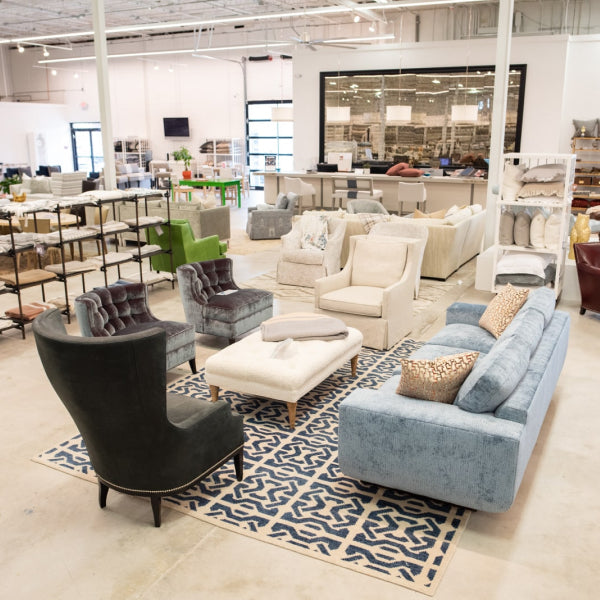
For Atlanta buyers, Lewis and Sheron Textiles offers fabrics, trims, custom furnishings, and design services for coordinating a complete project. Before authorizing a cut, ask for the selected trim's lot number, available continuous length, fiber disclosure, and stock confirmation.
A lower trim price can make sense when the lace lies flat, suits the intended care, and is available in a consistent shade. On expensive upholstery, however, removal and reattachment can cost more than the initial trim. Factor labor and replacement availability into the comparison.
Homeowners comparing luxury furniture in Atlanta, Buckhead, Alpharetta, Roswell, and Sandy Springs can bring upholstery and drapery samples to the same appointment. Room exposure and household use affect which materials are practical; a showroom color match alone does not settle that choice.
Ask purchase-stage questions that reveal quality
A search for designer furniture near me or custom furniture Atlanta should lead to questions about construction as well as appearance. Ask how the trim attaches, whether it can be removed for cleaning, and how a damaged section could be repaired.
The same questions help when comparing luxury sofa brands or custom and mass-produced furniture. Custom work is useful when the maker can adapt trim placement, finishing, and maintenance to the room. Adding lace by itself does not make furniture designer quality.
For high-quality couches and heirloom-quality furniture, appearance alone cannot establish likely service life. Ask about the frame, suspension, upholstery specification, repair access, and replacement materials. These details affect how the piece can be maintained.
Finish the order in this sequence:
- Approve the chosen lot: Test a representative sample before committing to installation.
- Measure each project along its finished trim path and allow for motif placement.
- Place a consolidated order: Include the installation quantity, working allowance, and sampling material from matching stock.
How to Attach Pink Lace Trim Without Puckering
Open lace needs support when its loops could snag or reveal an unsuitable layer underneath. A compatible textile tape, facing, or narrow underlay creates a stable attachment area and controls what shows through the openings.
Support must suit the ground fabric. A stiff tape can spoil the fall of light drapery, while an unsupported stretch lace can ripple along firm upholstery.
Stabilize before sewing
The process overview shows the relationship between support, alignment, gentle stitching, and finishing.
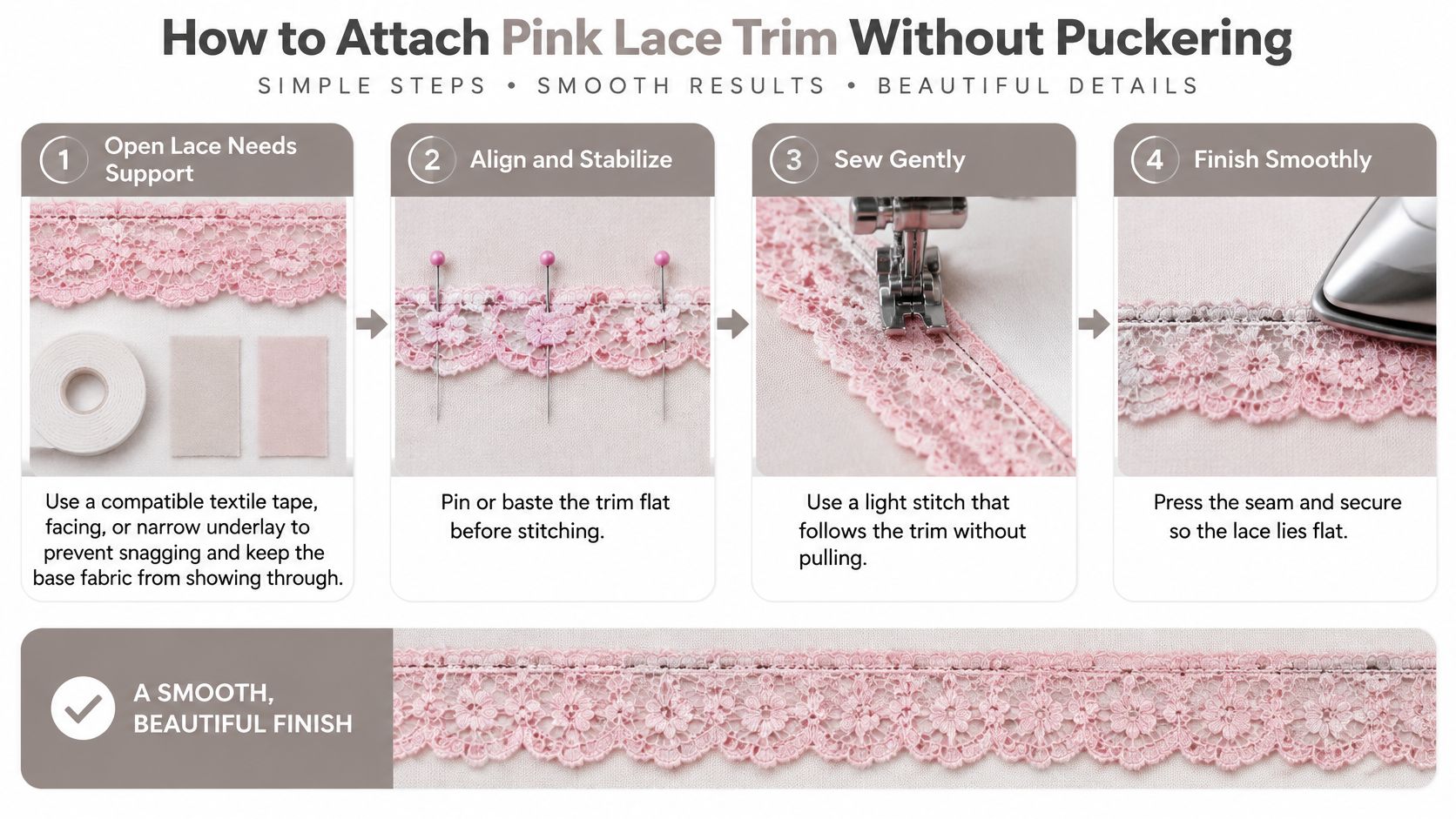
- Measure the finished panel. Mark the actual attachment path and include the planned corner and repeat allowance. Don't stretch the lace to make a short length reach.
- Make a test joint on an offcut using the intended needle, thread, and support. Check the seam from the face before committing to the finished fabric.
- Baste the trim flat. Use fine hand basting or a tested temporary positioning tape that won't leave residue. Avoid adhesive under visible openwork.
- Align the visual repeat before sewing. Start from a conspicuous center or focal point when symmetry matters, then work toward less visible joining areas.
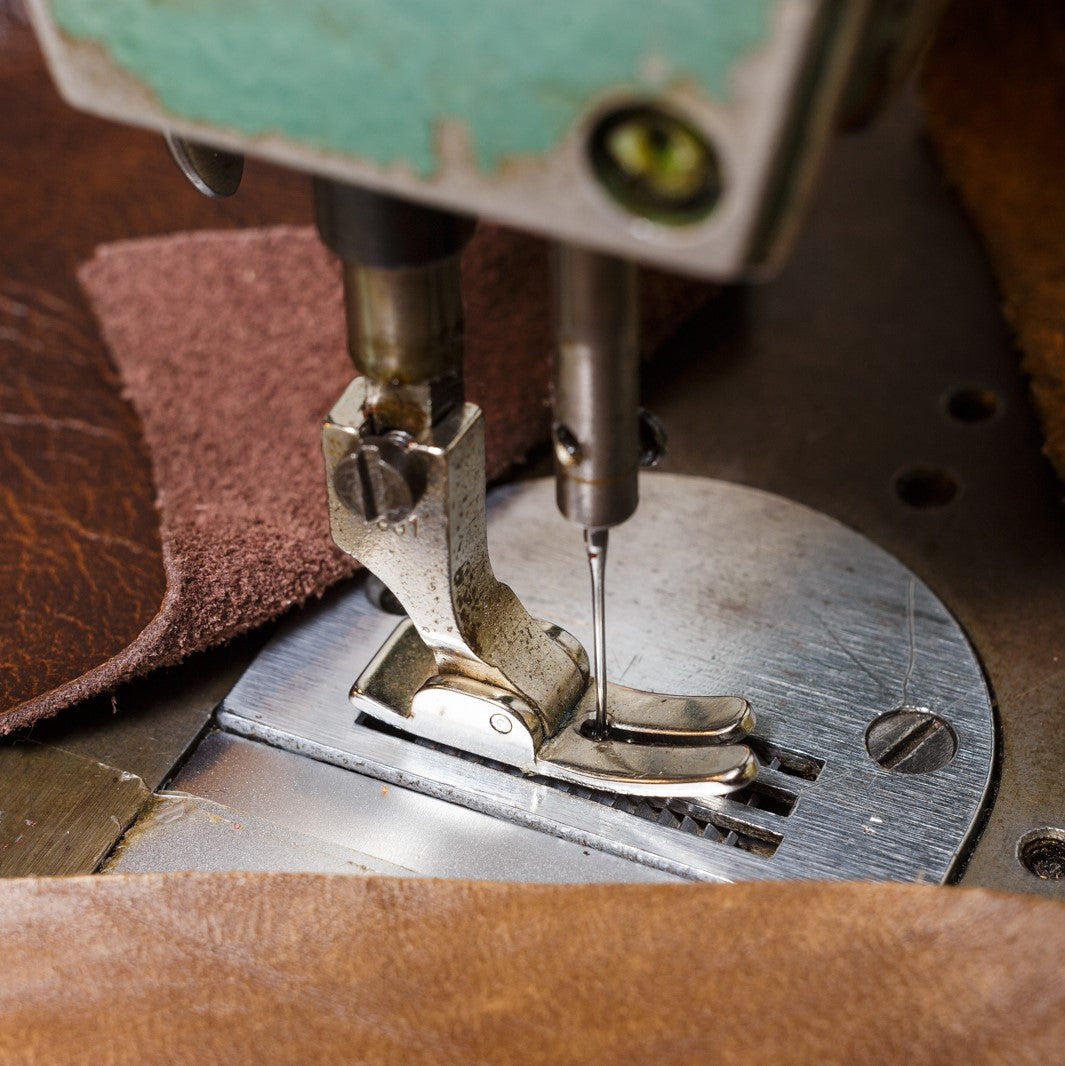
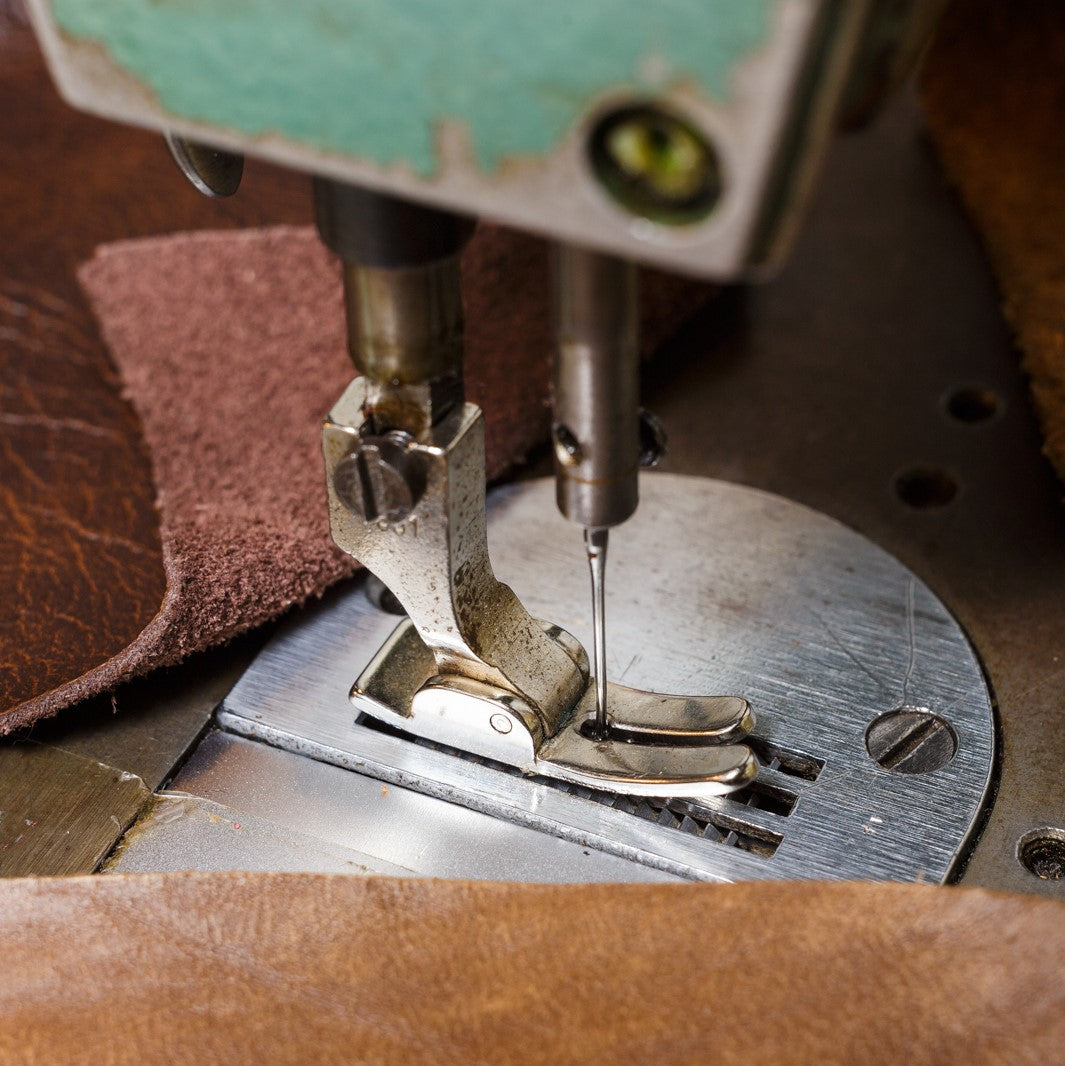
- Sew without pulling. Use a fine, evenly spaced machine stitch or concealed hand attachment through the stable band. Keep stitches from compressing the scallops.
- Test each corner with the lace resting naturally. Miter or ease it where the construction permits; forcing a tight bend produces raised folds or distorted motifs.
- Hide joins away from wear. Avoid sofa arms and pillow corners where fingers and clothing repeatedly catch edges. Secure cut ends without leaving a hard, bulky lump.
- Inspect from normal viewing distance, then under raking light. Look for puckering, waviness, skipped stitches, exposed thread, and uneven pink-to-ground contrast.
Adapt the attachment to the surface
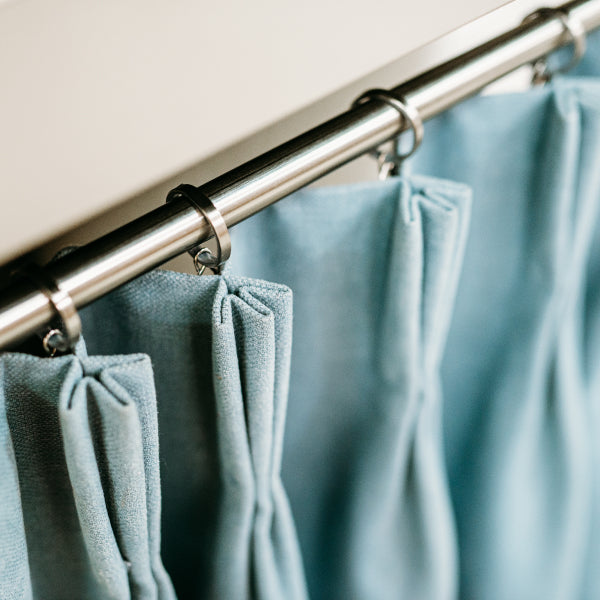
Drapery usually accepts machine stitching along a stable leading edge. Support the panel's weight on the worktable so it doesn't drag against the presser foot.
On pillows, sandwich the trim's attachment band inside the seam with the decorative edge facing inward during assembly. Upholstery often needs a hand-tacked or concealed attachment at the back, with access preserved for future repairs. This trim installation guide provides additional planning context.
Workshop rule: If the seam ripples on the test piece, change the support, tension, or feeding method before touching the finished panel.
The AATCC textile standards distinguish rubbing, water, laundering, light, and dimensional-change testing. For frequently handled or sunlit Atlanta interiors, request results relevant to those exposures; laundering performance alone doesn't prove resistance to friction or daylight.
- Use a fine needle: Match its point to the ground fabric and replace it if it snags.
- Shorten selectively: Reduce stitch length near scallop transitions only enough to follow the shape without perforating the band.
- Let the work rest: Allow the fabric to relax before final inspection, and press only after testing heat on an offcut.
Caring for Pink Lace Trim So It Lasts
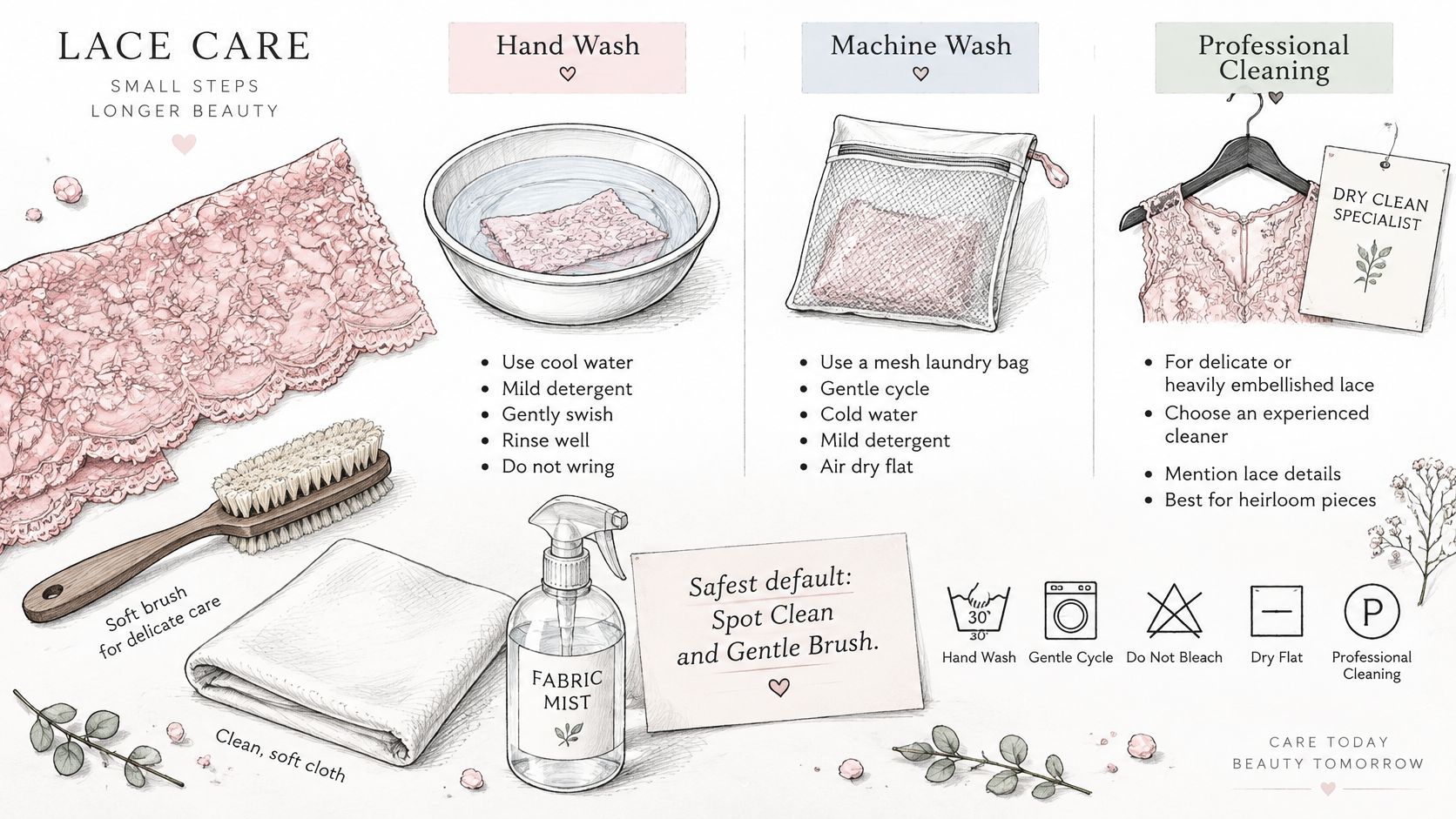
A pale pink trim on a sunny drapery panel may need a different care route from the same lace on a removable pillow. The base fabric's label is only one part of the decision. Follow the most delicate component in the assembly, including the lining, sewing thread, adhesive, and lace.
Care method by pink lace fiber
Use these as conservative starting points, then follow the supplier's instructions. Avoid home wet testing metallic-thread lace.
| Fiber | Hand washing | Machine washing | Professional cleaning |
|---|---|---|---|
| Cotton lace | Cool hand wash only if care instructions permit | Avoid unless care instructions permit; use a mesh bag on gentle | Consider for heavy soiling or unknown dyes |
| Linen-blend lace | Cool hand wash only if care instructions permit; lay flat to dry | Avoid | Preferred for valuable heirloom pieces |
| Rayon lace | Avoid unless care instructions permit | Avoid | Preferred route |
| Nylon or polyester lace | Cool hand wash only if care instructions permit | Gentle cycle in a mesh bag only if care instructions permit | Consider for heavy soiling |
| Metallic-thread lace | Avoid; professional cleaning only | Avoid | Follow the supplier's cleaning instructions |
Protect color and construction
For routine dust, use a soft brush with light pressure. Clean a stain only if the supplier's care instructions allow that method; testing a hidden spot does not make an unsuitable wet-cleaning method safe.
Strong sunlight can shift pink dye. Keep delicate trim away from direct afternoon exposure and rotate movable cushions. When choosing surrounding textiles, consider fabrics designed to resist fading, while remembering that the lace itself still needs suitable care.
For lined panels or mixed-fiber treatments, give the cleaner details about the complete assembly. Tumble Laundry's curtain dry cleaning services are one option to evaluate, but confirm that the service can handle the specific lace and construction.
Judge value over service life
Cleaning frequency and replacement needs matter alongside fiber choice. A trim that needs frequent replacement may create more waste than one that lasts longer, but natural or synthetic content alone does not determine service life.
For luxury home furnishings and statement furniture, ask about fiber content, expected wear, approved cleaning methods, and whether the trim can be replaced or reattached separately.
- Vacuum gently: Use a soft brush on low suction, keeping it clear of loops.
- Keep a care card: Store the approved swatch with the cleaning instructions.
- Plan removable edging: Remove pillow trim before machine washing only when it is designed to come off. Otherwise, choose a cleaning method suitable for the complete cover.
Lewis and Sheron Textiles offers home fabrics, trims, custom upholstery, reupholstery, and drapery services. Bring a fabric sample, finished measurements, and cleaning requirements to Lewis and Sheron Textiles when coordinating pink lace trim with the room.