









A pale linen sofa can look elegant when it arrives in an Atlanta showroom, then look unexpectedly like weak tea after two bright summers beside a west-facing window. The problem usually isn't poor taste or careless housekeeping. It's a mismatch between the fabric's lightfastness, the room's exposure, and the way the furniture is used.
That distinction matters when you're choosing high-end furniture, a luxury sofa, or custom upholstered furniture for a home in Buckhead, Alpharetta, Roswell, Sandy Springs, or elsewhere in North Atlanta. “Fade resistant” describes a measurable performance characteristic, not a promise that fabric will remain unchanged forever. The right decision depends on the fiber, dye method, rating, construction, placement, and care routine.
Why Fabric Color Fades and What Fade Resistant Really Means
Fade resistance is a textile's ability to hold its original hue when exposed to light and other stresses over time. Sunlight is the main concern in bright interiors, but heat, humidity, pollution, oxygen, ozone, and cleaning chemicals can also affect the way a fabric looks and performs. Conservation guidance from the Canadian Conservation Institute's textile care recommendations treats fading as a measurable accumulation of light damage, even when exposure seems mild.
Light contains energetic photons. Those photons can disrupt the chemical bonds in dye molecules, particularly when the dye and fiber chemistry leave the color vulnerable. Oxygen and ozone can accelerate the reaction. The visible result is usually a loss of color depth, but yellowing is different. Yellowing is a shift in tone, often noticed in whites and delicate materials such as silk, rather than a simple reduction in saturation.
Practical rule: “Fade resistant” means slower, more controlled color change. It doesn't mean fade-proof.
The fabric's performance comes from several decisions working together:
- Fiber choice: Synthetics often tolerate sustained light better than many natural fibers, while natural materials can offer softness, breathability, and character.
- Dye chemistry: The way color bonds with or enters the fiber can matter as much as the fiber label.
- Weave and construction: A stable, tightly constructed textile can handle use and tension more gracefully.
- Protective finishes: UV absorbers, coatings, and other treatments may add protection, but they don't replace strong underlying chemistry.
- Room placement and care: A high-rated textile still benefits from shade, rotation, gentle cleaning, and sensible furniture placement.

By the time you finish comparing fade resistant fabrics, you should be able to read a lightfastness rating, compare natural and synthetic fibers, question a finish claim, match fabric to a room, and protect a custom chair or sectional after it arrives. The same practical mindset applies to other long-term home decisions, including this guide to fiberglass door durability and energy efficiency from Breaking Glass Co.
How Fade Resistance Is Measured and Rated
A showroom swatch can suggest how a fabric will look, but it can't reveal how that color will respond to sustained daylight. Laboratories use standardized exposure methods to create a more useful comparison. ISO 105-B02 uses filtered xenon-arc light designed to simulate daylight passing through window glass, while AATCC methods, including TM16, are widely used for textile lightfastness testing. The American Association of Textile Chemists and Colorists continues to list related methods such as TM16.1 and TM16.3.
The test exposes fabric and reference materials to controlled light. Technicians then compare the exposed textile with blue wool standards, which form a numbered scale from 1 to 8. Grade 1 fades very easily. Grade 8 offers the strongest resistance on the scale. The technical explanation of weathering standards and xenon-arc testing describes how this process helps manufacturers compare textiles across fibers and constructions.
The scale has an important detail that shoppers often miss. Each higher Blue Wool number is approximately twice as resistant to light fading as the previous one, so moving from Grade 4 to Grade 6 represents a meaningful performance change, not a minor upgrade. Commercial guidance commonly treats Grade 4 as a minimum acceptable level for upholstery, while interiors with strong light often target Grades 5 to 6 and outdoor textiles may target Grades 6 to 8, as outlined in these fabric specification guidelines.
Lightfastness Ratings Translated to Real Rooms
| Blue-Wool Rating | Approximate Lab Hours | Best Placement |
|---|---|---|
| 1–2 | Not consistently suitable for everyday sun exposure | Decorative pieces in shaded locations |
| 3–4 | Testing varies by method and specification | Low-light rooms, rotated accents, shaded studies |
| 5–6 | Application-dependent exposure testing | Bright interiors with filtered or managed sunlight |
| 7–8 | High lightfastness performance | Strongly sun-exposed interiors and suitable outdoor applications |
Hours aren't interchangeable across every method or product specification. Some AATCC-based commercial references specify 40 hours for woven upholstery, 60 hours for drapery, and 200 hours for coated fabrics, so ask which test method and substrate produced the number before comparing samples. “Solution dyed” describes a manufacturing process, not a rating, and “twice the Blue Wool standard” refers to the scale's performance relationship, not twice the amount of color.
Comparing Natural and Synthetic Fibers for Colorfastness
Fiber labels tell only part of the story. A cotton-linen blend may feel perfect on a custom chair, while solution-dyed acrylic may be the smarter choice for a lake-house porch. The deciding factor is how the fiber, dye, exposure, and furniture use interact.
Natural fibers bring comfort and visual depth, but many rely heavily on dye selection and finishing. Cotton and linen can work beautifully in shaded or moderately bright spaces, especially when the upholstery can be rotated or protected. Wool can offer better light resistance than shoppers expect, while silk remains a delicate choice for rooms where direct sun is limited.
Synthetic fibers often provide a wider performance range. Polyester and acrylic can perform well in demanding interiors, but the manufacturing method matters. In a solution-dyed synthetic, pigment enters the polymer before the fiber is formed, placing color throughout the filament rather than only near its surface. That construction is associated with the strongest lightfastness range in the comparison below.
| Fiber | Typical Dye Method | Lightfastness Range | Recommended Placement |
|---|---|---|---|
| Cotton | Reactive or pigment dyeing | 3–5 | Shaded rooms and accents that can be rotated |
| Linen | Reactive, pigment, or blended dye systems | 3–5 | Filtered-light rooms and occasional chairs |
| Wool | Fiber-reactive and specialty dye systems | Varies by dye and construction | Shaded study or library |
| Silk | Specialty dye systems | Often vulnerable in direct light | Low-light decorative upholstery |
| Polyester | Disperse dyeing | Mid-range to higher performance, depending on construction | Family-room upholstery with managed sunlight |
| Acrylic | Pigment or solution dyeing | Mid-range to high performance | Bright interiors and covered outdoor settings |
| Solution-dyed synthetics | Pigment integrated before fiber formation | 7–8 in strong-performing constructions | Sunrooms, exposed seating, and outdoor cushions |
A wool boucle in a shaded study can deliver texture and warmth without facing the hardest solar conditions. Treated polyester makes sense for a family-room sectional that receives daylight but also needs a refined hand. Cotton-linen blends suit custom chairs when you're comfortable rotating them seasonally. For intense sun, solution-dyed acrylic is usually the more practical specification.
For a deeper look at upholstery performance options, compare performance fabric selection guidance before choosing a designer sofa or statement chair.
How Mills and Finishers Build Fade Resistance Into Fabric
Fabric mills can place color inside the fiber, anchor it at the surface, or add a protective layer that slows exposure. Those processes don't offer the same durability, and a premium price is justified only when the construction matches the room's demands.
Solution dyeing provides the strongest underlying approach for many synthetic applications. The mill adds pigment to the polymer melt before extrusion, then forms the colored material into filaments. Because the color runs through the filament, abrasion or surface wear doesn't expose a completely uncolored interior in the same way a surface print might.
Pigment printing takes a different route. A binder holds pigment at or near the fabric surface. This can create beautiful pattern and color effects, but performance depends on the pigment, binder, substrate, curing, and test result. A label such as “UV protected” doesn't replace a published lightfastness grade.
What the finish can and can't do
Topical UV absorbers, often based on benzotriazole chemistry, can intercept some damaging radiation before it reaches the dye or fiber. Acrylic back-coatings can protect the reverse side of a weave and may support outdoor or coated applications. These treatments have a role, but they're not magic. Washing, abrasion, chemical exposure, and time can reduce the benefit of a surface treatment.
| Process | Where Color Lives | Typical ISO Rating | Best For |
|---|---|---|---|
| Solution dyeing | Throughout the synthetic filament | 7–8 in strong-performing constructions | Outdoor upholstery and intense sun |
| Pigment surface printing | Near the fabric surface, held by a binder | Depends on print and substrate | Decorative patterns with verified testing |
| Topical UV absorber | In a finish near the surface | Depends on base fabric and finish | Added protection where the full system is tested |
| Acrylic back-coating | On the reverse side of the textile | Depends on coating and fabric system | Coated upholstery and selected outdoor uses |
A low-cost printed cotton with a “UV-protected” label may still be unsuitable for a bright Atlanta window seat if the supplier can't provide a test rating. Ask for the ISO or AATCC result, the fiber content, the dye method, and whether the rating applies to the finished upholstery fabric rather than a related substrate.
If you're also comparing stain and moisture technologies, this explanation of Crypton fabric construction and performance helps separate protective finishes from the fabric's basic lightfastness.
Matching Fabric Ratings to Where You Live and Sit
The best fabric rating depends on what happens in the room, not just the room's name. A family room with drawn sheers may be gentler on upholstery than a rarely used sunroom with unobstructed afternoon light. A covered porch has different requirements from an uncovered lake-house cushion because moisture and weather exposure add another layer of risk.
Use the rating as a placement rule:
- ISO 6–8: Choose for south- and west-facing window seats, sunroom sectionals, and uncovered lake-house cushions. Solution-dyed acrylics are especially relevant in these settings.
- ISO 5: Consider for covered porches, east-facing dining chairs, and bright interiors where sunlight is present but moderated.
- ISO 3–4: Reserve for accent pillows, drapery linings, or shaded studies where the piece isn't exposed to strong direct sun.
- Below ISO 3: Keep for decorative use in rooms lit mainly by artificial light.

A practical placement decision tree
- Start with direct light. Does sunlight land on the upholstery during the day? If yes, move toward a higher rating.
- Add use frequency. A daily luxury sectional needs more durable construction than an occasional decorative chair.
- Identify the exposure type. Indoor, covered outdoor, and fully exposed outdoor placements require different combinations of light, moisture, and weather performance.
- Look at the furniture shape. Window-facing arms, tops, cushions, and piping may receive more light than the back of the sofa.
- Plan for shade. Sheers, blinds, drapery, and window film can make a strong fabric choice perform more consistently.
Shopping filter: If the seller can't identify the fabric's lightfastness method or rating, treat “fade resistant” as an unverified description.
Price alone doesn't prove performance. A luxury sofa deserves a fabric selected for its actual solar exposure, not just a beautiful showroom swatch. If a fabric costs less than a decent dinner, it's probably not rated for a sunny spot.
How Premium Construction and Fabric Choice Extend a Sofas Life
A sofa's longevity comes from a partnership between frame, suspension, cushion core, and fabric. A beautiful textile can't compensate for a weak frame, and a well-built frame can't prevent a delicate cover from fading or wearing in a harsh location.
A kiln-dried hardwood frame helps maintain shape and seam alignment. Eight-way hand-tied springs distribute support across the seating area, while a high-resilience foam wrap helps cushions keep their form. When the underlying structure stays stable, the cover experiences less stretching, wrinkling, and chafing at stress points.

Consider a custom sectional placed near a west-facing window. A tightly woven, solution-dyed cover addresses light exposure. Double-stitched seams, welted edges, and zippered cushion covers support repair, cleaning, and even distribution of wear. Rotating and flipping cushions prevents one favored seat from absorbing every hour of sunlight and daily movement.
Furniture quality changes the replacement conversation. High-quality furniture commonly lasts 10 to 25 years, and some pieces can last 30 years or more when built with solid hardwood, premium metal frames, and well-constructed joints, according to this guide to high-quality furniture longevity. Solid wood furniture can last 30 to 50 years or more with care, while cheaper composite pieces often begin failing in 3 to 10 years, as described by this furniture lifespan guide.
The cover should support the frame
Material choice also shapes the ownership experience. One furniture guide places performance fabric at 10 to 15 years, quality woven fabric at 7 to 12 years, velvet or delicate fabrics at 5 to 10 years, full-grain leather at 20 to 30 or more years, and top-grain leather at 15 to 25 years. Those ranges vary with care and construction, but they show why luxury buyers evaluate material grade rather than appearance alone.
For temporary protection during moving, renovation, or seasonal storage, you can browse large sofa covers. A cover won't improve a fabric's inherent rating, but it can help limit dust, handling, and incidental exposure while the room is being finished.
Care Habits That Keep Color Looking New for Years
Care starts the day a new piece arrives. Fade resistant fabrics still benefit from habits that reduce uneven exposure, abrasive dust, chemical damage, and trapped heat.
Rotate cushions weekly when the design allows it. Flip reversible cushions and exchange matching seat positions so one panel doesn't remain in the brightest zone. Vacuum with an upholstery brush to lift grit before it works into the weave and creates abrasion during everyday sitting.
A simple upholstery care playbook
- Manage the light: Use sheers, blinds, or drapery during the strongest afternoon exposure. Clear UV-filtering window films can reduce fading radiation by up to 99 percent without darkening the room, according to the Bemz guidance on lightfastness ratings.
- Leave breathing room: Keep a six-inch gap between drapery and fabric where possible, allowing air to circulate instead of trapping heat and humidity against the upholstery.
- Clean gently: Choose a pH-neutral upholstery cleaner recommended for the fabric. Bleach-based household sprays and strongly alkaline residues can strip or disturb dye, even on a well-rated textile.
- Use seasonal protection: Pull throws, decorative pillows, or movable chairs away from peak afternoon sun when practical. Don't leave one accessory covering only part of a cushion for long periods, since uneven exposure can create visible contrast.
- Treat spills promptly: Blot rather than scrub. Rubbing can spread the mark and roughen the surface, changing how the color reflects light.

A professional cleaning plan should follow the mill's instructions rather than a universal schedule. Some performance fabrics tolerate simple cleaning well, while delicate wool, silk, linen, and specialty finishes need more controlled treatment. This guide to fabric protection for furniture can help you evaluate protective options without confusing stain resistance with lightfastness.
The short version is easy to remember: rotate, ventilate, clean gently, and filter the light. Those habits won't make a fabric fade-proof, but they can help a properly specified textile look consistent for longer.
Sourcing Fade Resistant Fabrics and Custom Upholstery in Atlanta
A successful Atlanta upholstery project begins with the room, not the fabric rack. Bring photos of the space, note whether windows face east, south, or west, and identify the hours when sunlight lands on the furniture. A designer or showroom consultant can then narrow the choices by rating, fiber, dye method, weave, hand, cleanability, and intended use.
Ask to see the documentation behind the claim. A useful fabric conversation should answer four questions:
- What is the lightfastness rating?
- Which test method produced it?
- What fiber and dye process create the color?
- Does the rating apply to the finished upholstery fabric?
Local custom workrooms offer advantages beyond convenience. A custom maker can coordinate frame proportions, suspension, cushion construction, seam placement, and fabric direction instead of forcing a room around a mass-produced silhouette. For a client commissioning premium sectionals or heirloom-quality furniture, that control supports both visual balance and long-term maintenance.
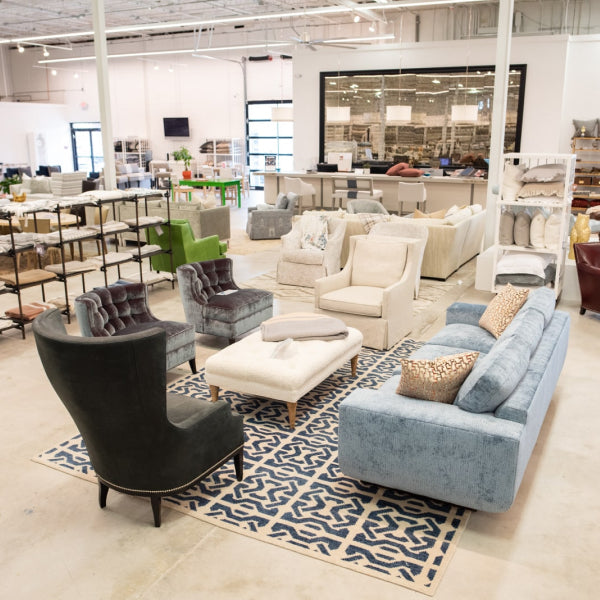
Lewis and Sheron Textiles offers fabric sourcing, custom upholstered furniture, reupholstery, custom drapery, and designer furnishings through its Atlanta Design Center. Its inventory includes textiles from mills such as Kravet, Fabricut, P. Kaufmann, Libeco Home, and Crypton, along with made-to-order American-crafted upholstery from makers including Verellen, Wesley Hall, LEE Industries, and Ambella. Those options make it possible to compare designer furniture materials and select a fabric according to the room's exposure rather than relying on a generic “performance” label.
A well-built custom chair may need a different textile than a high-use family-room sofa. A statement furniture piece in a shaded study can prioritize texture, while a sunny Buckhead sectional should prioritize verified lightfastness and stable construction. The right choice combines rating, fiber, dye method, craftsmanship, placement, and care.
Is fade resistant fabric worth the upgrade? Yes, when the rating and construction are specified together. A sofa purchased today should still look right in 2034, a future-use planning horizon rather than a claim about guaranteed product life.
Visit Lewis and Sheron Textiles in Atlanta to compare fade resistant upholstery fabrics, custom furniture, reupholstery options, and designer textiles with guidance suited to your room's sunlight. Bring your window photos and furniture dimensions, then ask the team to match the fabric rating and construction to the way your home is used.