











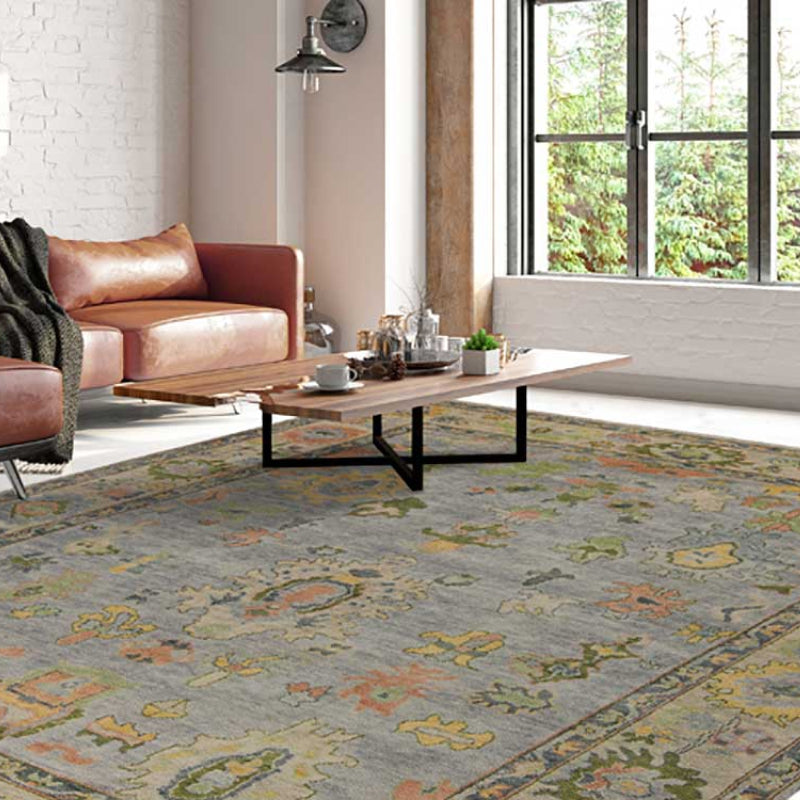
A seam can stay stitched and still fail. Residential upholstery guidance in the AHFA Fabric Standards and Guidelines requires at least 50 pounds of seam strength and 25 pounds of force to produce 6 mm of slippage, because yarns can pull away from the stitching long before thread breaks. That's why fabric gets the attention, but seams decide whether luxury sofas keep their shape or open at the cushion edge.
This guide to the different types of seams judges each construction the way a workroom does, by load, bulk, repair access, and what it signals about custom upholstered furniture. Whether you're commissioning a premium sectional for a Buckhead living room, refreshing an heirloom chair, or choosing custom furniture in Atlanta, you'll know which seams to ask for by name.
The same habit applies beyond furniture. You'd inspect knit quality before buying wool, much as Cashmere Boutique's sweater buying guide advises checking construction, not softness alone. On upholstery, start at the seam line.
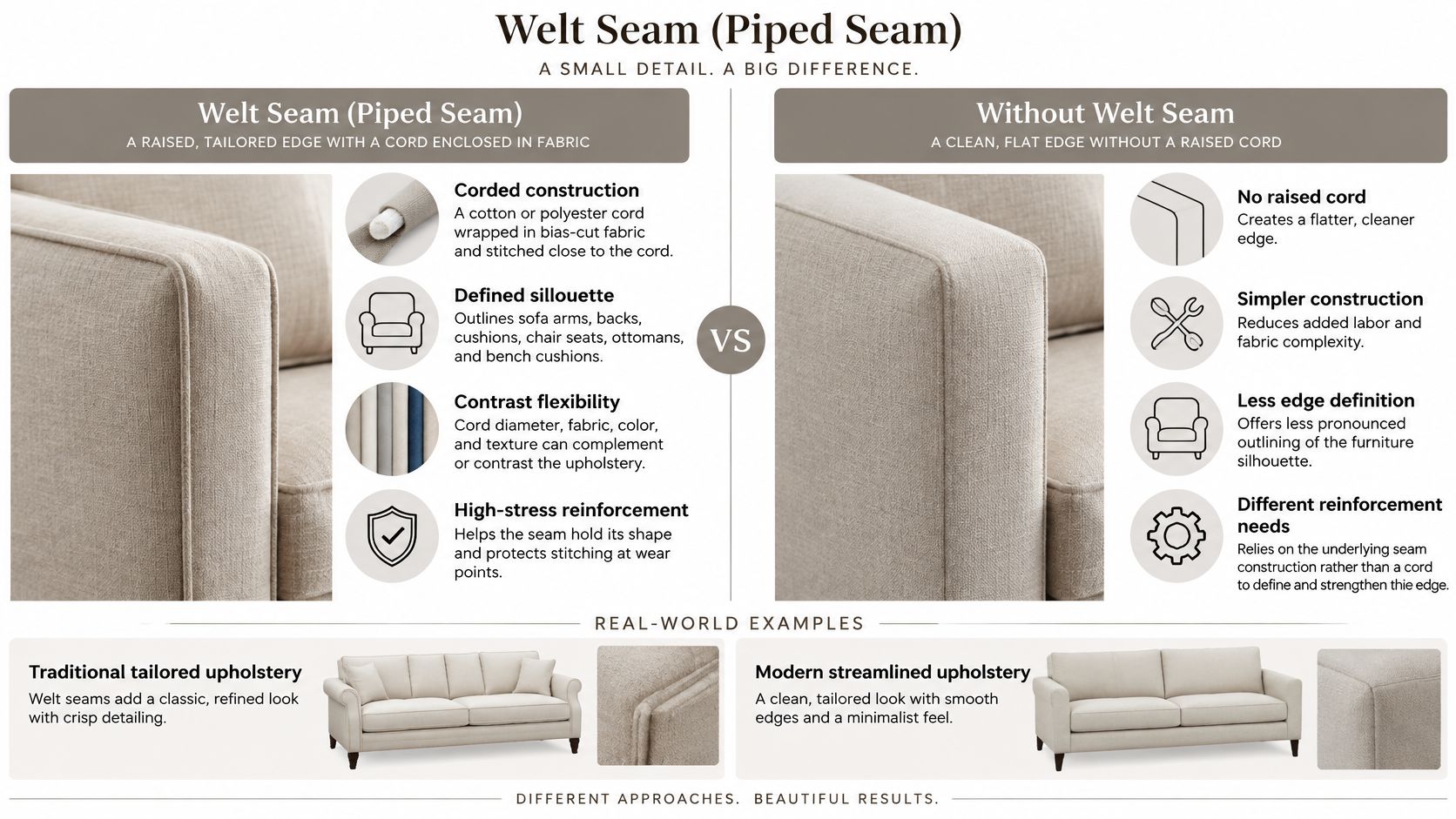
1. Welt Seam (Piped Seam)
A welt encloses cord inside a folded strip of fabric, then locks that raised edge into the seam. The cord holds the line, so arms, backs, and cushions keep a crisp silhouette. It also shields stitching where hands, seat edges, and cushion corners take repeated friction.
This is a signature detail on high-end furniture. Picture a classic English rolled arm sofa with piping following the arm roll, or custom sectionals in Buckhead and Alpharetta with contrast welting in performance fabric or Belgian linen. On reupholstered wing chairs, recreating the original welt preserves the period profile.
What to Specify Before Cutting
- Sample it in your fabric: Ask for a short welt sample, because linen, velvet, and performance weaves wrap cord differently. Our guide to piping on cushions is a useful primer before you approve the look.
- Self-welt versus contrast: Self-welt reads quiet and cohesive. Contrast welt makes the silhouette the decoration.
- Cord thickness: Thin cord suits modern, delicate lines. Thicker cord suits bold traditional frames.
- Replace tired cord: On reupholstery, don't reuse compressed or frayed cord. A flattened welt makes new fabric look old.
Workroom rule: If the welt wavers, puckers, or twists at corners, the cutting or feeding wasn't controlled. A good welt turns corners cleanly without bumps.
I recommend welting where definition and edge protection matter most. Skip it when you want a soft, contemporary edge that disappears into the form.
2. Knife-Edge Seam
Minimal doesn't mean easy. A knife-edge seam pulls two panels taut and joins them in one clean line, creating a sharp edge with no cord and no boxing. There's nowhere for sloppy cutting to hide.
You'll see it on low-profile modern sofas and premium sectionals in Atlanta condominiums and new-build homes, on designer lounge chairs with fitted back cushions, and on throw pillows in Libeco Belgian linen. The look is gallery clean, provided the fill supports the edge instead of rounding it into a pillow sham effect.
Where Knife-Edge Works and Where It Doesn't
Heavy fabric fights this construction. Thick weaves create bulk at the corner, and overstuffed foam pushes the seam off its line. Light to medium upholstery fabrics with a firm, well-shaped insert give you the crisp result people expect from designer furniture.
Loose weaves need a slippage check first. The ISO 13936-2 standard uses a fixed-load method to measure resistance of yarn systems to slipping at a sewn seam and applies to woven upholstery fabrics, stretch fabrics, and fabrics containing elastomeric yarns. A knife-edge cushion in loosely woven linen can grin open at the corners if yarns migrate.
Plan these details early:
- Fabric weight and fill density: Confirm both before committing, because the edge depends on their balance.
- Pattern placement: With a large motif, seam location decides whether the design centers or gets clipped awkwardly.
- Profile choice: Choose knife-edge for an understated seat. Choose boxing when you want a plumper, more structured sit.
3. Box-Cushion Seam (Boxing or Gusset Seam)
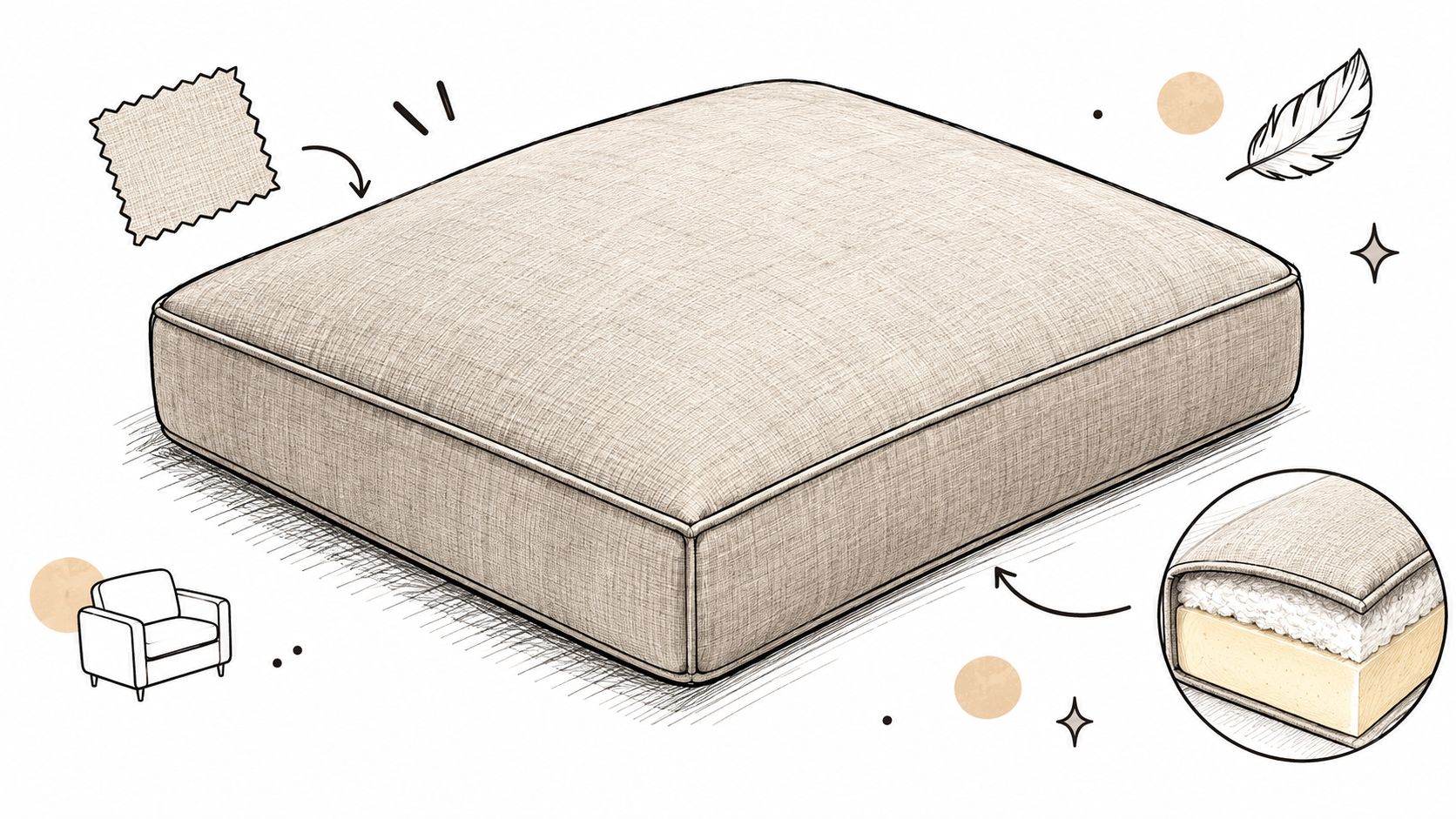
A boxed cushion has a top panel, a bottom panel, and a separate perimeter strip called the boxing or gusset. That strip creates height, so the cushion sits square and substantial instead of pinched. The two seams joining boxing to top and bottom carry the shape.
This is the workhorse of custom upholstered furniture. Families in Sandy Springs and Roswell often choose high-density foam boxed cushions for daily use, dining seats get removable boxed covers in performance fabric, and heirloom armchairs keep their original proportions when old boxed cushions are rebuilt with fresh cores.
Building a Box That Lasts
Abrasion numbers help, but know what they measure. The ACT performance guidelines for woven upholstery abrasion identify 15,000 double rubs for low-traffic or private-space upholstery and 30,000 double rubs for high-traffic or public-space upholstery. A double rub counts one complete forward-and-back movement, so rub count speaks to surface wear, not seam stability.
If you want to understand the construction before ordering, our step-by-step guide to making a couch cushion shows how panels, boxing, and closures fit together.
- Hidden zipper: Ask for one on removable covers, especially with pets or daily use.
- Box depth: Deeper boxing feels plusher. Shallower boxing keeps a clean line.
- Fabric choice: Pick a tightly woven or performance blend for seat cushions that take the heaviest load on the piece.
4. Flat Butt Seam
Every upholstered cover depends on flat panel joins, yet they're the seams buyers overlook. Two fabric edges meet and are stitched so the seam lies flat against the surface. On visible panels, accuracy is everything. A drifting stitch line or mismatched pattern shows immediately.
The terminology behind this simple join is formal for a reason. The ISO 4916:1991 standard divides stitched seams into eight classes based on the number, arrangement, and configuration of material components, with flat seams as Class 4, and it gives each seam a five-digit numerical designation. Quality high-quality couches rely on that shared vocabulary between designer, workroom, and inspector.
What Good Flat Seams Look Like
Look at panel joins on a sofa back in performance velvet, skirt and base panels on custom bench seating in Buckhead or Alpharetta dining rooms, or Belgian linen covers where the seam should sit discreetly along the frame. In each case, the seam shouldn't call attention to itself.
The scale of options explains why specification matters. An IntechOpen chapter on seam classification notes that ASTM D 6193-16 identifies six broad seam types with 220 listed subgroups across its categories. "Flat seam" alone isn't a complete specification.
Ask to see seam placement on a mockup before cutting. Keep pattern direction consistent across joins on stripes and textures. Put unavoidable seams at the back or underside where they'll be least visible and least stressed.
5. Double-Needle Topstitch Seam
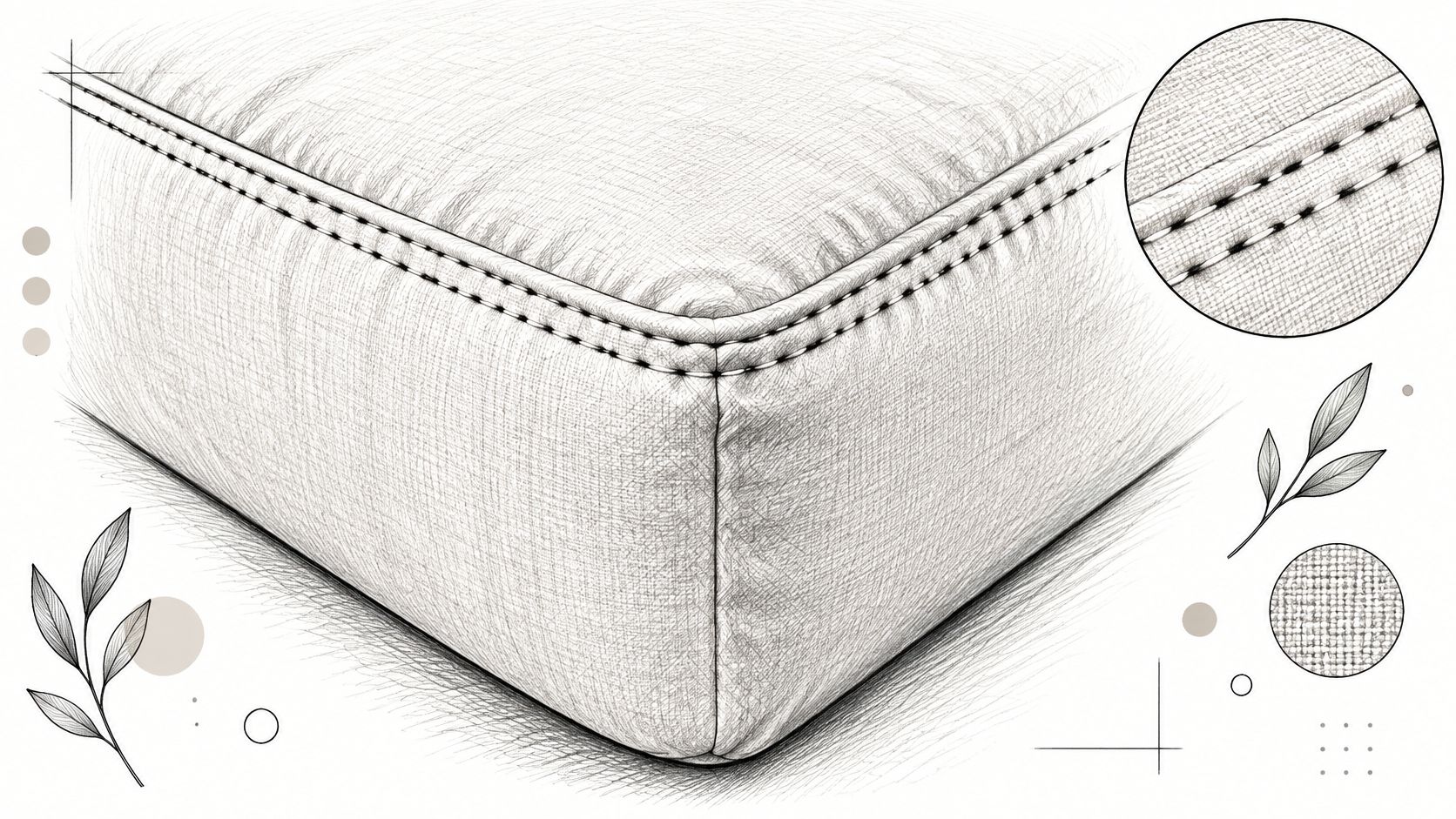
Two parallel rows of surface stitching, spaced a few millimeters apart, serve two purposes simultaneously. They strengthen the seam beneath and create a crisp decorative line on arms, bolsters, cushion fronts, and fitted panels. You get definition without the bulk of piping.
On a custom modern sofa in a Buckhead living room, topstitched arm panels read as quiet tailoring. The same detail works along the front edge of an ottoman in performance fabric or on bench cushions and luxury bedding in Belgian linen. It's a hallmark of well-finished statement furniture pieces that don't rely on ornament.
Thread and Tension Decide the Result
Topstitching exposes every tension problem. Uneven spacing, looping thread, or a row that wanders at a corner tells you the machine setup wasn't dialed in for that fabric. A 2024 Journal of Engineered Fibers and Fabrics study of lockstitch and overlock seams reported seam-strength values ranging from 0.73 to 2.77 N/mm², a reminder that stitch and fabric combinations vary widely in performance.
- Thread weight and color: Specify both. Matching thread whispers, contrast thread becomes a design feature.
- Placement discipline: Limit double topstitching to key lines like arms and cushion fronts so the piece stays balanced.
- Test stitch: Require one on your actual fabric to check spacing and tension before production.
Two straight rows are harder to fake than one. Run your eye down both lines. If they converge, spread, or wobble, keep looking.
6. Hand-Blind Stitched Seam
Some seams shouldn't be seen at all. A hand-blind stitch catches only a few fabric threads at a time, so the thread nearly disappears on the finished surface. It's slow, skilled work, reserved for arm fronts, cushion closures, skirt attachments, and delicate fabrics a machine foot would mark or stress.
You'll find it on heirloom club chairs in Roswell and Alpharetta, on custom sofas where the skirt seam must vanish from floor view, and on antique settees where original handwork deserves preservation. Among the different types of seams, this one most clearly separates heirloom-quality furniture from production upholstery.
How to Judge Invisible Work
Hidden finishing still has measurable neighbors. The ASTM knitted upholstery fabric specification requires minimum resistance to yarn slippage of 111 newtons, or 25 pounds-force, plus a minimum breaking strength of 222 newtons, or 50 pounds-force. Hand stitching can't rescue a fabric whose yarns slide away from every needle penetration.
If you sew, our explanation of how to do a blind stitch shows why the technique takes patience. As a buyer, use these checks:
- Ask directly: Confirm whether critical seams on arms and front edges are finished by hand.
- Inspect hidden areas: The back and underside reveal overall craftsmanship faster than the showroom face.
- Plan lead time: Hand finishing takes longer. Build that into a room update instead of rushing it.
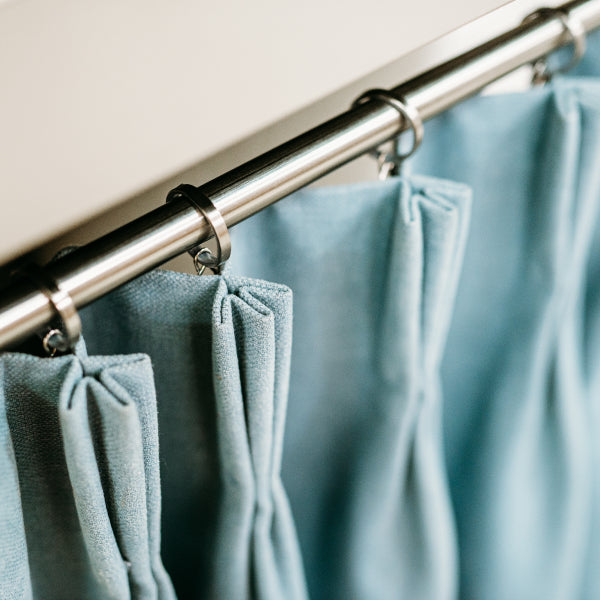
7. French Seam
A French seam is a seam inside a seam. Fabric is stitched, trimmed, folded, and stitched again so raw edges are fully enclosed. Nothing frays, and the inside looks as finished as the outside.
That matters most on lightweight textiles. Lined drapery panels in Belgian linen, luxury bedding and pillow covers, sheers, fine cottons, and table linens all benefit because the interior finish is visible or handled. In luxury home furnishings, French seams signal that someone cared about the side you'd see only when light passes through the drape.
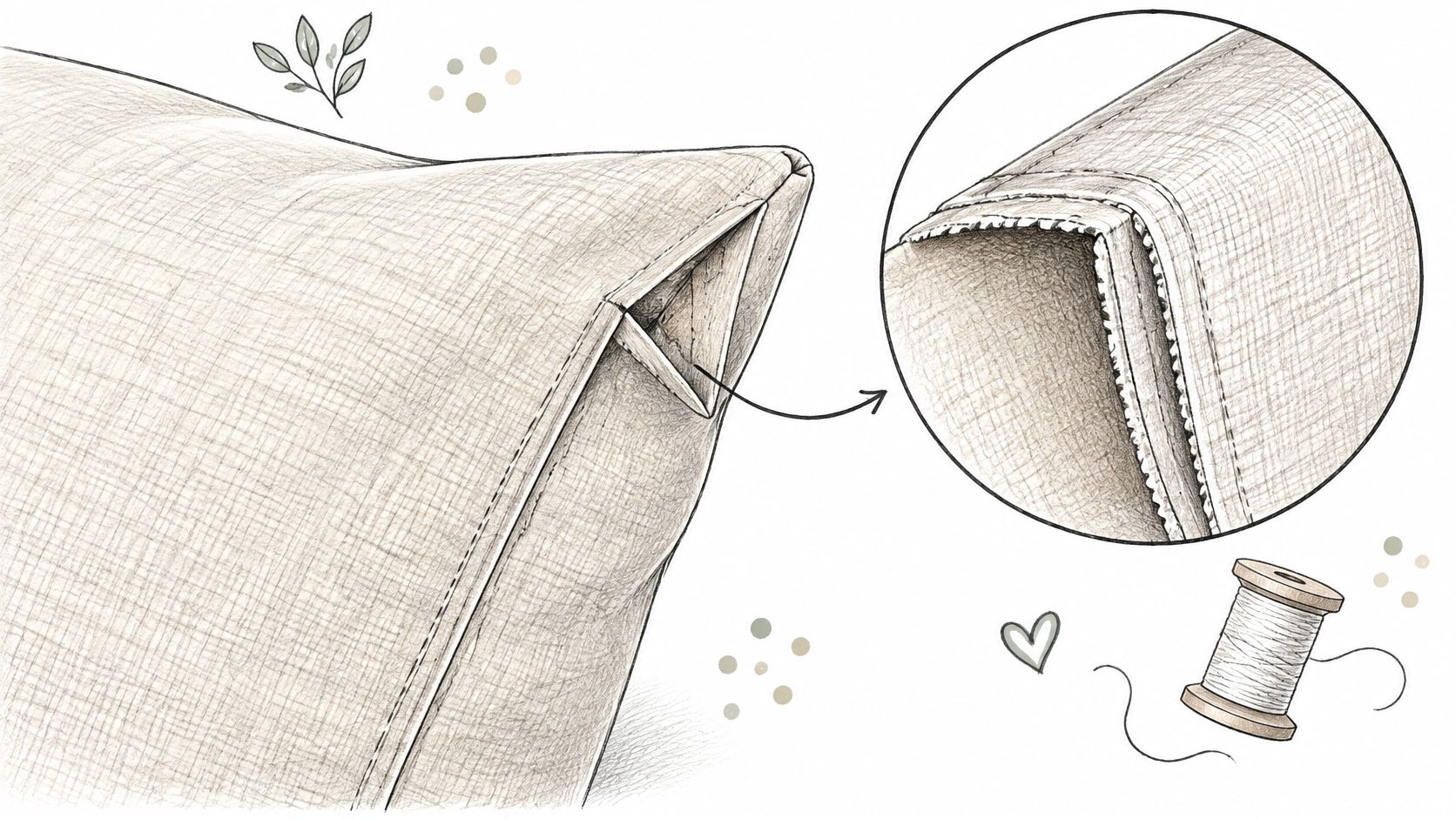
Use It Where Weight Allows
Don't ask a French seam to do heavy upholstery work. Double folding thick fabric creates bulk that won't lie flat, and seat seams need constructions built for load. Reserve French seams for drapery, bedding, and pillow covers in light fabrics.
Repairability is the quiet advantage. Enclosed edges survive laundering and handling without unraveling, so panels stay serviceable longer. The European Environment Agency review of textile repairability reports that in 2025, 3,000 of 3,157 textile items brought to Repair Cafés were successfully repaired, a 95% success rate. Accessible, well-finished construction keeps pieces in that repairable majority.
- Light fabrics only: Choose French seams for linens and sheers, another seam for heavy upholstery.
- Visible interiors: Specify them when lining or translucency will expose the inside finish.
- Trim carefully: Close trimming before the second stitching prevents bulk and stray fibers.
8. Serged (Overlock) Seam
Turn a cushion cover inside out and you'll meet the serged seam. An overlock machine trims the edge and wraps it with thread in one pass, stopping fray before it starts. It finishes cover linings, cushion backs, dust covers, and interior seams on custom frames built in Atlanta workshops.
Hidden doesn't mean unimportant. Unfinished interior edges shed fibers, weaken with cleaning, and make future reupholstery messier. Neat overlocking is one reason luxury furniture in Atlanta workshops can rebuild a piece decades later instead of discarding it.
What the Numbers Say About Overlocking
Construction and thread choices change performance measurably. In one experimental comparison of seam bursting strength, four-thread overlock seams reached a mean bursting strength of 250.3 ± 36.8 kPa, close to flatlock seams at 259.5 ± 45.0 kPa. Overlocking holds its own where edge containment and production efficiency matter.
Upholstery benchmarks pair that stability with abrasion resistance. A Haworth upholstery surfaces resource sets a heavy-duty benchmark of 30,000 Wyzenbeek double rubs or 40,000 Martindale rubs alongside seam-slippage resistance. Ask for both figures, because surface durability alone won't keep a seam closed.
- Ask about interiors: How inside seams are finished reveals the care in the whole build.
- Heavy-use pieces: Choose overlocked interiors for family sofas and dining chairs.
- Inspect before buying: Consistent, tidy interior finishing is a reliable quality indicator.
Seam Types at a Glance
Use this table to compare what each seam contributes to a piece, from visible edge definition to hidden interior finishing. For custom or heirloom upholstery, ask how the seam suits the fabric, the load it will carry, and the finish you expect to see.
| Item | Best Use | Visibility | Durability Role | DIY or Professional |
|---|---|---|---|---|
| Welt Seam (Piped Seam) | Defining cushion, arm, and furniture edges | Visible raised edge; can match or contrast | Reinforces high-stress edges and helps seams hold their shape | Professional recommended for precise fitting |
| Knife-Edge Seam | Minimalist cushions and tailored pillows | Visible, clean flat edge | Less structured; may lose shape sooner than boxed construction | DIY possible with precise cutting and tension control |
| Box-Cushion Seam (Boxing or Gusset Seam) | Supportive, squared cushions with substantial depth | Visible seams where gusset meets panels | Helps cushions retain shape; removable covers can be replaced or cleaned | Professional recommended for accurate gusset construction |
| Flat Butt Seam | Joining upholstery panels on covers, skirts, and backs | Visible but lies flat | Basic seam construction; less reinforcement in high-stress areas | DIY possible; accuracy matters |
| Double-Needle Topstitch Seam | Decorative, reinforced lines on arms, bolsters, and panels | Visible parallel stitching | Reinforces the underlying seam and helps resist fraying | Professional recommended for even stitching |
| Hand-Blind Stitched Seam | Nearly invisible finishes on delicate areas and closures | Nearly invisible | Provides a clean finish; suited to delicate fabrics | Professional recommended; requires skilled handwork |
| French Seam | Lightweight drapery, bedding, and home textiles | Neat on both sides | Encloses raw edges to prevent fraying | DIY possible with careful trimming and sewing |
| Serged (Overlock) Seam | Finishing hidden interior edges, linings, and cushion backs | Usually hidden | Prevents fraying and supports long-term use | Professional recommended; requires an overlock machine |
Choosing Seams With Confidence
Start by matching the seam to the job, not the photograph. Welt seams protect edges and define traditional luxury sofas. Knife-edge seams give modern custom chairs and pillows a sharp, quiet profile. Boxed cushions carry daily sitting, flat seams hold covers together invisibly, and double-needle topstitching adds crisp definition. Hand-blind stitching finishes what machines shouldn't touch, French seams refine lightweight drapery and bedding, and serged seams protect everything you don't see.
Then check the fabric against the seam. A high rub count doesn't guarantee that yarns won't slip at the stitch line, and a beautiful loose weave may need reinforcement, a different seam allowance, or a different placement entirely. Ask for seam-slippage results in the direction the fabric will be loaded, confirm thread and stitch density on a sample in your actual material, and look at corners, curves, and closures under good light. That's how you separate designer quality from mass-produced furniture when comparing designer furniture near me options across Fulton County and North Atlanta.
Don't stop at the cover. Frame joinery carries everything the seams hold, and a BioResources study of beech-wood furniture frames found mortise-and-tenon joints reached an average moment capacity of 204 Nm, compared with 154 Nm for dowel joints. Strong frames, stable fabrics, and correctly chosen seams work as one system. Weakness in any one of them shortens the life of the others.
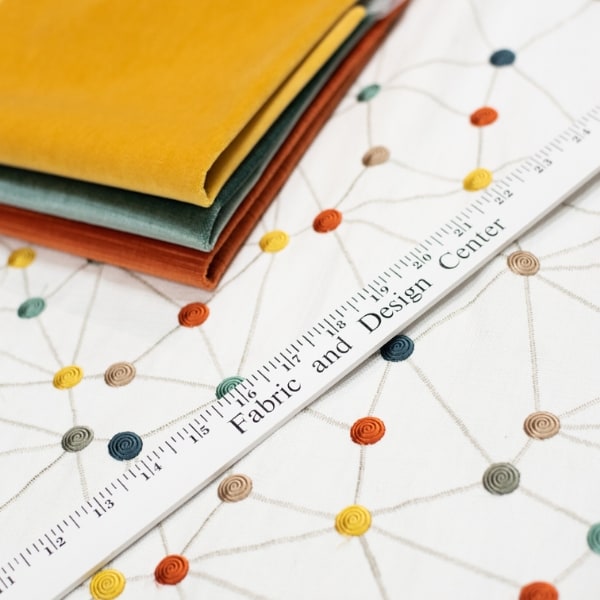
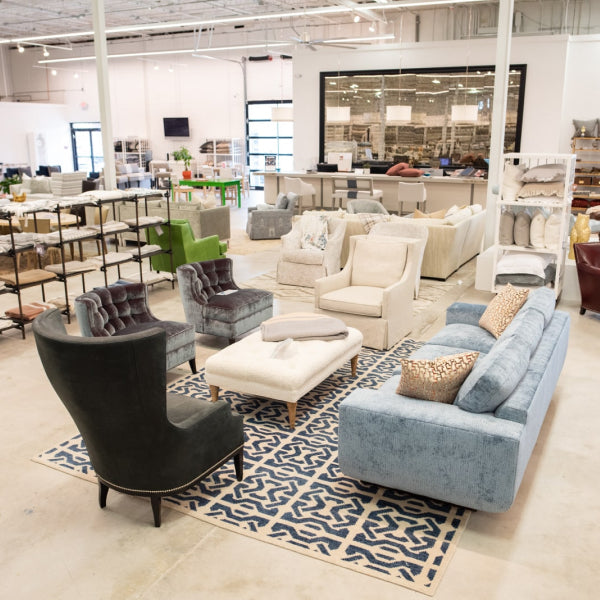
For Atlanta, Buckhead, Alpharetta, Roswell, and Sandy Springs homeowners ready to act on this, Lewis and Sheron Textiles is one relevant option to consider. Our Design Center has over 1000 bolts of fabric on display, and our reupholstery process walks through material selection and design details such as stitching, buttons, and tufting before production begins. We build custom upholstered furniture with American-made upholstery from makers including Verellen, Wesley Hall, and LEE Industries, and our in-house design help is complimentary when you shop with us. Bring a photo of the piece, a fabric shortlist, and your seam questions, and specify each detail before anything is cut.
Bring your seam questions, fabric shortlist, and photos of the piece you love, and we'll help you match welt, boxing, topstitching, and interior finishing to how you'll live with it. Our team can guide fabric selection, reupholstery, and custom upholstery details before production begins, so every stitch is decided on purpose. Visit Lewis and Sheron Textiles to start planning your project today.