











If two velvets look identical on a swatch card, why does one still look crisp on a family sofa after years of daily use while the other shows every sit, spill and sunny afternoon? That gap is where most buyers lose money. They shop cotton velvet vs polyester velvet by colour and softness, then discover too late that abrasion rating, pile construction, moisture behaviour and cleaning limits decide whether a fabric belongs on a daily seat or a decorative one. For high-end furniture in Atlanta, Buckhead, Alpharetta, Roswell and Sandy Springs, fiber is only your first filter.
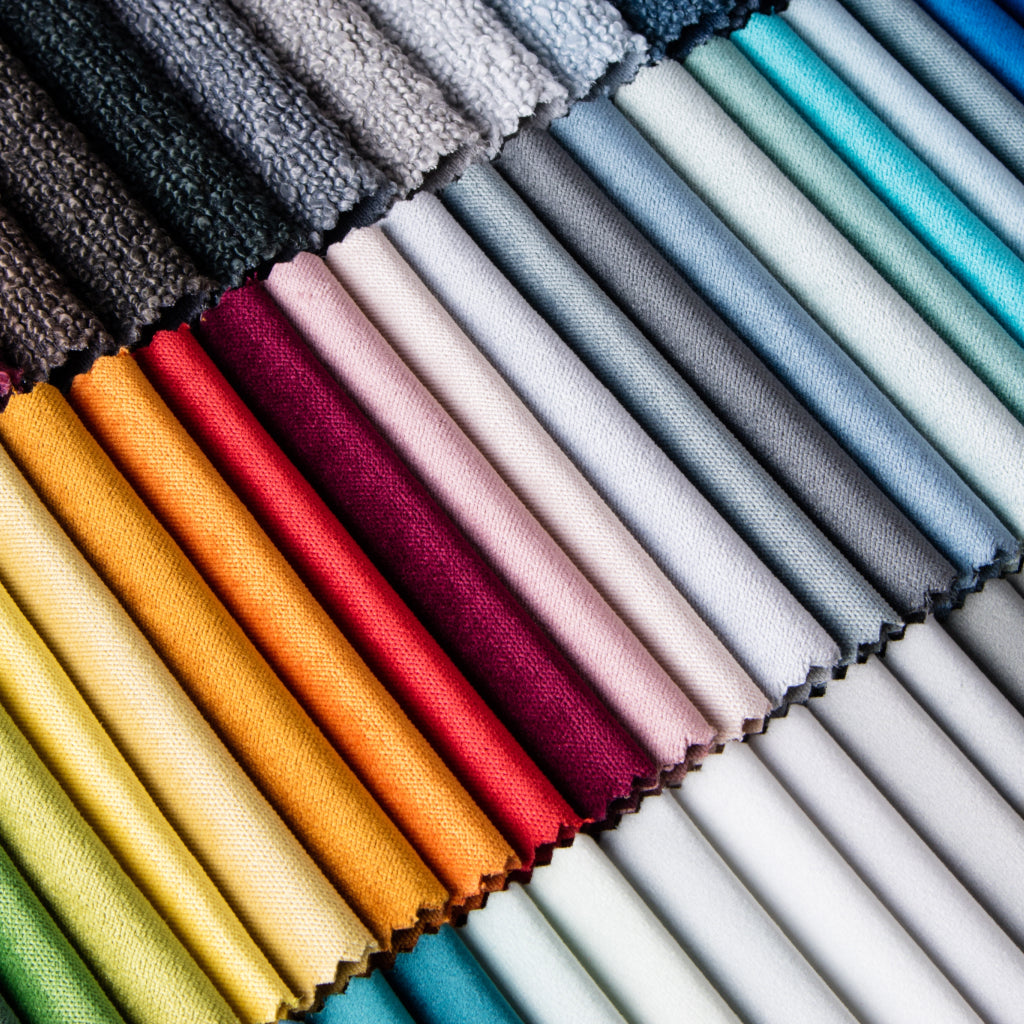
Cotton and Polyester Velvet Side by Side
Here's the verdict you can use today. Cotton velvet suits decorative, low-use pieces where a natural, breathable hand matters most. Polyester velvet is the practical default for luxury sofas, premium sectionals and other high-quality couches that get sat on every day. That's the starting point for custom upholstered furniture, not the final specification.
Cotton velvet vs polyester velvet at a glance
| Criterion | Cotton velvet | Polyester velvet |
|---|---|---|
| Fiber source | Plant-based cellulose | Engineered synthetic fiber |
| Hand and feel | Softer, natural, more breathable | Dense, uniform, consistent pile |
| Wrinkling | Prone to wrinkling | Wrinkle-resistant |
| Ironing heat tolerance | Tolerates higher ironing temperatures | Needs lower heat; excess heat can deform or glaze the pile |
| Best default use | Occasional chairs, headboards, low-use cushions | Frequently used sofas, sectionals and daily seating |
| Main limitation | Maintenance-sensitive, wrinkles | Lower heat limit when cleaning and pressing |
Read the rows in order and a pattern appears. Cotton starts as a plant-based cellulose fiber, so it reads softer and more natural under your hand. Polyester starts as an engineered synthetic, so manufacturers can make its pile dense, uniform and consistent from bolt to bolt. That consistency helps a large sectional look even across every cushion.
Where the Table Stops Helping
Wrinkling and heat separate them in daily care. Cotton wrinkles more easily and needs more attention to keep its pile looking intentional on statement furniture pieces. Polyester resists wrinkles, but you can't press your way out of a problem, because excess heat can deform or glaze its pile.
The table can't settle quality. Two fabrics with the same fiber label can differ sharply in pile density, backing and finish, and those details decide whether you're buying heirloom-quality furniture or a short-lived cover. I wouldn't approve either velvet for custom furniture Atlanta projects until you've handled the actual mill sample and read its full specification.
Why the Same Name Describes Two Different Fabrics
Velvet isn't a fiber. It's a surface structure, a dense, raised pile that can be woven from cotton, silk, rayon, wool, linen or polyester. The Met Museum essay on Renaissance velvet textiles traces a technique developed by at least the 13th century, with Italian and Spanish weavers as major producers during approximately 1400 to 1600, when luxury velvet was most often silk.
That history explains today's confusion. Polyester became commercially important in the 20th century, which let manufacturers produce consistent, colorfast, relatively affordable pile fabric at scale. Cotton followed an older path, as a plant-based cellulose fiber with a softer, more breathable hand. Our guide to choosing well-made cotton fabric for interiors shows why that natural character still appeals for designer furniture.
A Label Is Not a Specification
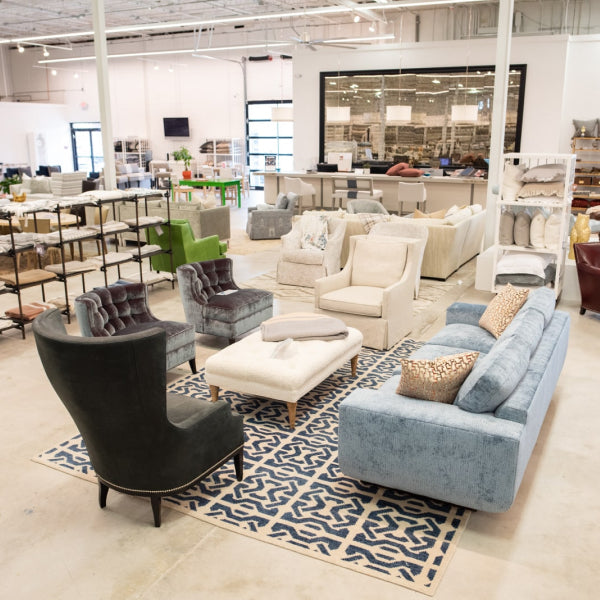
Say you're comparing two luxury sofas in a North Atlanta showroom and both tags say velvet. One can have a tall, loose pile on a light backing, the other a short, dense pile with strong retention on a heavy backing. They won't wear, shade or clean alike.
Treat cotton and polyester as materially different versions of one pile technology. Judge each by construction, not by name. That's the only principle that protects an investment in luxury home furnishings.
How Each Velvet Feels, Breathes and Holds Moisture
The clearest measurable gap is moisture. The velvet fabric types guide gives cotton a commercial moisture regain of approximately 7.0%, often reported near 8.5% under standard conditioning, whereas polyester is approximately 0.4%. Those figures explain what you feel within minutes of sitting down.
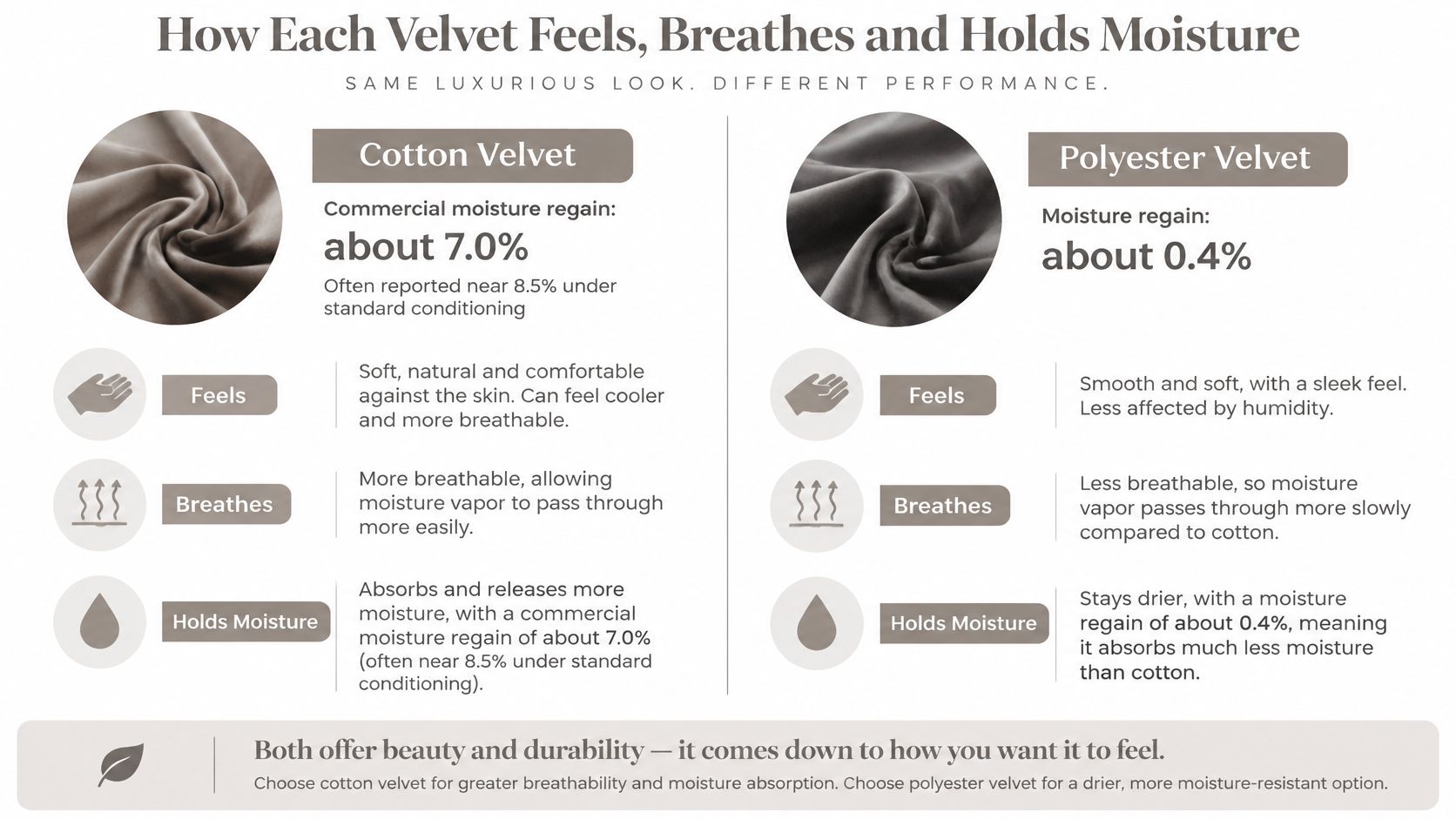
Cotton absorbs and releases ambient and body moisture. That buffering supports its natural hand and reduces the electrostatic tendency that can make synthetic pile cling to clothing. Polyester holds very little moisture inside the fiber, so it dries faster, but it tends to retain perspiration at the fabric and skin interface during long sits.
The fiber that absorbs moisture feels softer, while the fiber that sheds it dries faster.
What That Means in an Atlanta Summer
Picture a warm, humid evening in Sandy Springs. A cotton velvet armchair feels softer and less clammy at first contact because the fiber takes up moisture. A polyester velvet sofa may feel warmer against bare legs over an hour, yet it'll dry faster after you wipe up a spilled drink.
Cotton also gains strength when wet, which matters when a cleaner uses a water-based method correctly. Polyester recovers faster after a damp spill because it hasn't taken much water into the fiber. Neither trait wins on its own.
Match moisture behaviour to how often and how long the piece is used. For custom chairs used briefly, breathability can lead. For a family sectional in Fulton County that hosts movie nights, homework and naps, faster drying usually serves you better.
Durability and Abrasion for Daily Seating
Don't ask whether cotton or polyester is durable in the abstract. Ask what the specific fabric scored, and by which method. Martindale reports cycles, while Wyzenbeek reports double rubs, so a number without its test method tells you almost nothing.
The neutral upholstery guide to lounge chair fabric identifies approximately 20,000 Martindale cycles or 15,000 Wyzenbeek double rubs as generally adequate for a residential lounge chair used daily by one or two people. It puts high-traffic rooms with children, pets or commercial-style use at at least 30,000 Wyzenbeek double rubs. Use those thresholds as your floor when you're specifying luxury furniture in Atlanta homes.
Abrasion benchmarks by room use
| Use case or test | Benchmark | Test method |
|---|---|---|
| Residential lounge chair, one or two daily users | About 20,000 Martindale cycles or 15,000 double rubs | Martindale or Wyzenbeek |
| High-traffic room with children, pets or commercial use | At least 30,000 double rubs | Wyzenbeek |
| Untreated cotton velvet | Commonly 30,000 to 60,000 Martindale, depending on weave | Martindale |
| Treated cotton or polyester velvet | Can exceed 50,000 rubs | Martindale |
| Pilling resistance | Graded on a 1 to 5 scale | ISO 12945 |
| Pile extraction | Assessed for pile security | ASTM D3939 |
Reading the Numbers Like a Specifier
Those ranges should change how you shop. A well-built cotton velvet isn't automatically fragile, and its common range can clear a daily lounge chair benchmark with room to spare. A polyester velvet isn't premium just because it's synthetic. If its backing is weak or its pile pulls out easily, it'll look tired on high-quality couches long before the fiber itself fails.
Ask for three results, not one.
- Abrasion result: Confirm the score and method for the exact sample, not a similar colourway.
- Pilling grade: Look for the score on that 1 to 5 scale, because surface pills make velvet read cheap fast.
- Pile security: Check how firmly the pile is anchored, since loose pile creates bald paths on arms and seat fronts.
The same discipline applies whether you're selecting fabric locally or reviewing an example of furniture tailored to your Chennai villa for how custom pieces are specified around a room. Construction has to match use. Before you commit to custom upholstered furniture, review how polyester upholstery performs in real rooms and compare that profile against the cotton sample in your hand.
I would not approve a velvet for a daily designer furniture near me purchase without the rating printed on its spec sheet. If a seller can't produce it, you're being asked to pay for confidence they haven't earned.
Cleaning Stains Without Damaging the Pile
Velvet pile traps what flat weaves release. Dirt settles between fibers, spills wick in different directions, and pressure from scrubbing bends the pile so the cleaned spot shades differently from the rest of the cushion. Your cleaning options depend on construction and treatment, not fiber name alone.
The documented comparison of velvet upholstery materials notes that treated cotton or polyester velvet may tolerate water-based cleaning and in some cases bleach-based cleaning. An untreated or lower-rated velvet may not, even if it's polyester. That's why the cleaning code matters more than sales talk about easy care.
A Routine That Protects the Pile
- Blot, don't rub. Use a clean white cloth and lift the spill, because rubbing crushes pile and pushes pigment deeper.
- Test on a hidden seam. Apply cleaner where it won't show first, since dyes and finishes can react before the fiber does.
- Brush one direction after drying. A soft clothes brush resets the nap so the spot doesn't catch light differently.
- Vacuum weekly on low suction. Use an upholstery nozzle without a rotating beater bar to remove grit before it abrades the pile base.
- Call a professional for set-in stains. Large or old marks need controlled moisture and extraction, not repeated home attempts.
Cotton absorbs a water-based spill faster, so your first minute matters more. Polyester holds less moisture and dries faster, but a stain still shows if you flatten the pile while it's wet. When you budget professional help for a whole room, it also helps to browse carpet cleaning pricing as a reference for how specialist cleaning is packaged, then get a separate upholstery quote for velvet.
Heat needs the same caution. Cotton tolerates higher pressing temperatures, while polyester needs low heat to avoid glazing, that shiny, flattened look you can't brush out. Our step-by-step guidance on cleaning upholstery fabric without ruining the finish is worth reading before the first spill, not during it.
Request the cleaning code on the spec sheet before you buy luxury sofas or premium sectionals. If the code doesn't fit how your household lives, choose a different velvet.
Sustainability Beyond Fiber Labels
Cotton isn't automatically sustainable because it's natural. Polyester isn't automatically the worst choice because it's synthetic. Both shorthands ignore shedding, lifespan, abrasion and disposal, which is where a velvet's real footprint builds up.
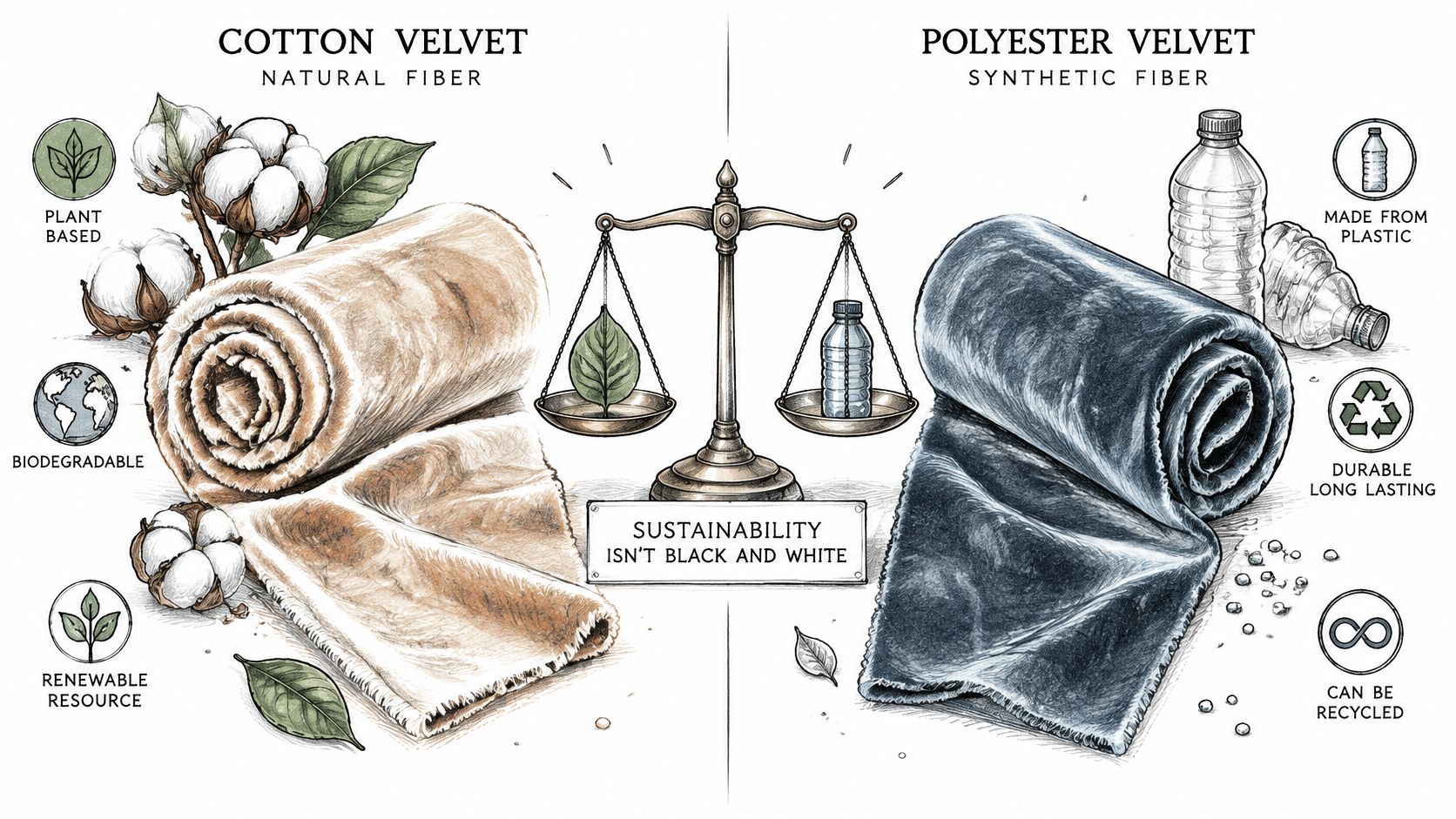
The MDPI review of microfiber release and textile sustainability reports polyester can release approximately 56 to 378 microplastic fibers per gram per wash, while cotton also sheds fibers, about 165 mg per kilogram in one cited assessment. It also describes a 2026 manufacturing study that found substantially lower shedding from tested cotton constructions than from regular and recycled PET. That finding doesn't prove every cotton velvet performs better, because pile, backing and finishing vary.
Persistence Changes the Calculation
Polyester's disadvantage is how long shed fibers last. One fact sheet cited in that review reports little polyester biodegradation in freshwater and roughly 4% in seawater over one month, compared with much higher cotton biodegradation under the same conditions. Recycled polyester isn't zero impact either, since sampled evidence reports higher microfiber release from recycled polyester than virgin polyester.
The buyer's real question: Is a long-lived, rarely washed polyester velvet preferable to a shorter-lived cotton velvet, and how should end-of-life disposal be handled?
Upholstery has a low-wash but high-abrasion life. You don't launder a sofa weekly, but arms, seat fronts and cushions get rubbed thousands of times. Vacuuming and professional cleaning therefore beat frequent laundering for both fibers.
I favour the durable piece bought once. A well-specified velvet on heirloom-quality furniture that stays in a Buckhead or Roswell home for many years usually serves you better than a cheaper piece replaced early, whichever fiber you choose.
Matching Each Velvet to Sofas, Drapes and Cushions
There's no overall winner. The right velvet depends on contact, exposure and cleaning frequency for that specific piece, which is how designers specify designer furniture and custom furniture Atlanta commissions.
Which velvet fits each piece
| Application | Better fit | Reason | Check before buying |
|---|---|---|---|
| Everyday sofa or sectional | Polyester velvet or a treated, well-built blend | Dries faster, holds shape, wrinkle-resistant | Rub rating for the intended traffic |
| Occasional accent chair | Cotton velvet | Natural hand, breathable, buffers moisture | Cleaning code and low-heat care |
| Headboard | Cotton velvet | Breathable decorative use with low contact | Pile density and backing |
| Low-use decorative cushions | Cotton velvet | Soft, natural feel with light use | Seam and pile security |
| Drapery in strong sun | Polyester velvet | Better light resistance | Lining and fabric weight |
How to Use Each Row
For an everyday sofa or sectional, start with polyester or a treated, well-built blend. It dries faster after spills, holds its shape through daily sitting, and resists the wrinkling that makes large cushions look untidy. That's the safer default for busy luxury home furnishings in Alpharetta family rooms.
Cotton earns its place where touch matters more than turnaround. An occasional accent chair in a primary bedroom, a headboard with low abrasive contact, and decorative cushions that get moved rather than sat on all benefit from its breathable, natural hand. You're paying for feel, and you aren't asking the fabric to survive constant friction.
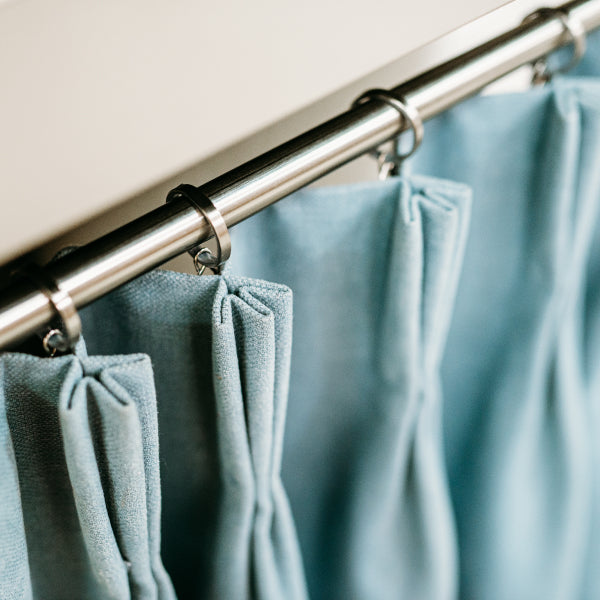
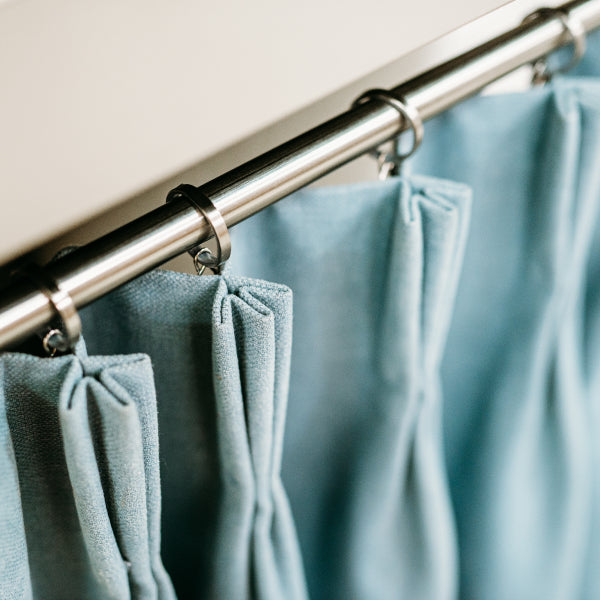
Drapery flips the logic. In strong sun, choose polyester for better light resistance, then confirm lining and weight so the panels hang properly and the face fabric gets protection. A beautiful velvet that fades unevenly across a window wall won't look like designer quality for long.
Blends deserve a serious look. A poly-cotton blend can outperform 100% cotton on durability while keeping some of cotton's character, which makes it useful when a client wants softness on a piece that still gets regular use. Ask for the blend sample alongside both pure options.
Decide by contact, sun and cleaning needs first. Then pick the fiber that fits those conditions and verify the check listed for that row before you order yardage.
What Each Velvet Really Costs Over Time
The yardage price is only your first cost. Polyester's large-scale production often makes it the lower quote, but that quote won't tell you what a sofa costs to own. Fiber, pile density, backing, weight, treatment and finish drive both price and lifespan, so two velvets at similar prices can perform very differently.
Say a strong cotton velvet costs more per yard but carries a documented rating suited to daily seating. Compare it with a cheaper, untreated polyester velvet with a lower rating. The cheaper yardage can become the expensive choice if seat fronts thin early and you pay for reupholstery while the frame still has years left.
Work Out Cost Per Year
- Request price and abrasion together. Get the price per yard for the same sample that carries the rating.
- Divide by expected years in that room. Use the piece's real traffic level, not a showroom guess.
- Add required cleaning costs. Include professional cleaning if the cleaning code rules out home methods.
- Compare cost per year. Judge the options side by side before you judge colour.
Exact pricing varies by mill, quantity and finish, so request a quote rather than assuming one fiber always wins. For high-end furniture meant to be used daily for years, the cheapest quote is rarely the lowest cost.
Confirm the Velvet Spec Before You Buy
Once you've narrowed the fiber, slow down. A disciplined check at sample stage prevents most regrets on luxury furniture in Atlanta, whether you're buying in Buckhead, Alpharetta, Roswell, Sandy Springs or elsewhere in Fulton County.
Your Pre-Purchase Checklist
- Confirm fiber content and treatment. Know whether the velvet is pure, blended, treated or untreated.
- Match abrasion to the room. Use the benchmarks for your traffic level and confirm the test method.
- Check the pilling grade. Record where it falls on the full performance scale.
- Verify pile, backing and finish. Turn the mill sample over and flex it, because a weak backing won't support tight upholstery work.
- Confirm the cleaning method. Read the permitted method on the spec sheet, not on a hang tag summary.
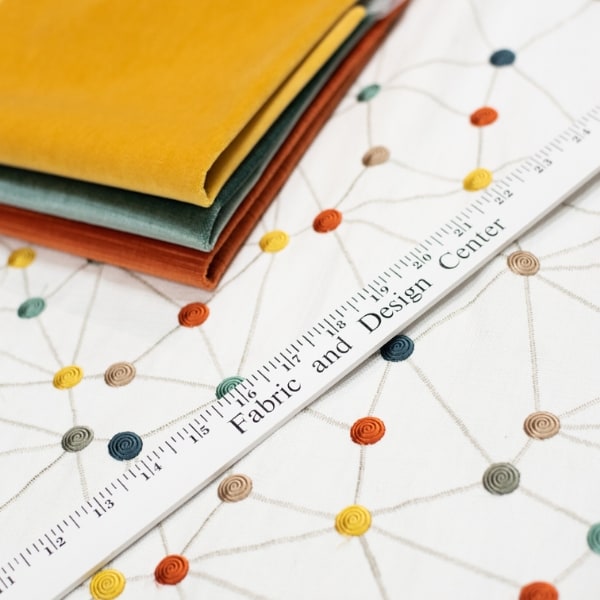
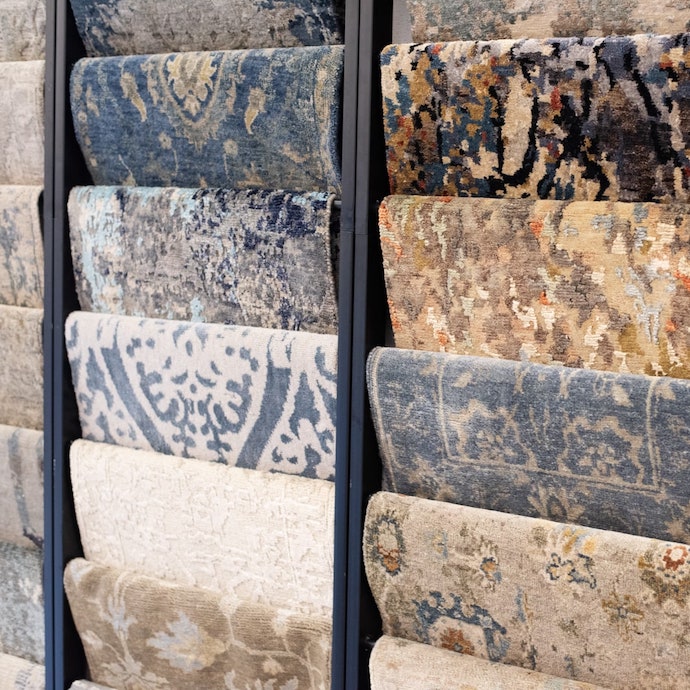
Then live with physical samples. We offer fabric in the groups All, Linen, Performance and Velvet, and fabric samples are available in the Design Center. A fabric swatch can be ordered for $2.00, so you can compare candidates side by side in the room where the piece will go, under morning light, lamplight and the sun that fabric will face.
Bring the verified spec to your upholsterer or designer when you commission custom upholstered furniture. That way the team builds custom chairs, luxury sofas and other statement furniture pieces around a fabric chosen for performance, not a pretty label. We'd rather you spend an extra week with swatches than years brushing pile that was never suited to the seat.
A velvet chosen by specification will outlast one chosen by name. That's how a fabric decision becomes long-term value in high-end furniture.
Visit Lewis and Sheron Textiles to compare cotton, polyester and blended velvets by sample, review their specifications with our team, and choose the right fabric for your sofa, chairs or drapery. Bring your room measurements, traffic expectations and cleaning limits, and we'll help you match a velvet to the piece you plan to keep.