



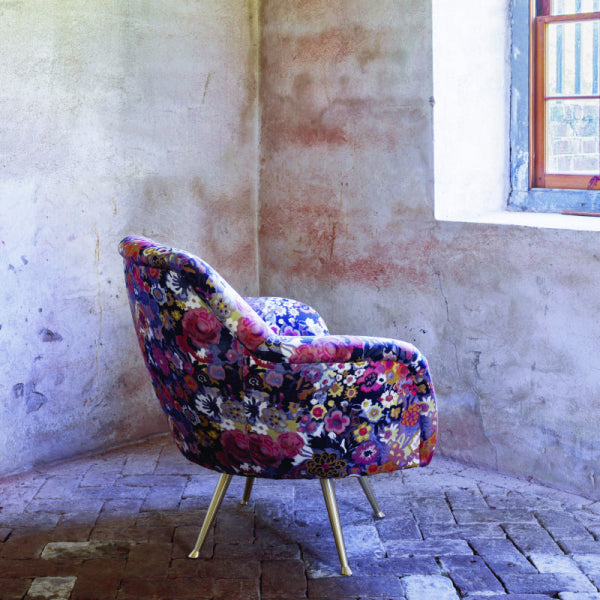
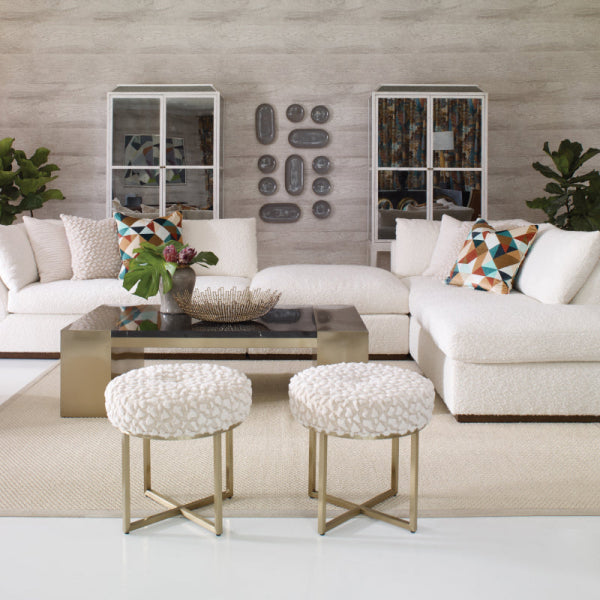





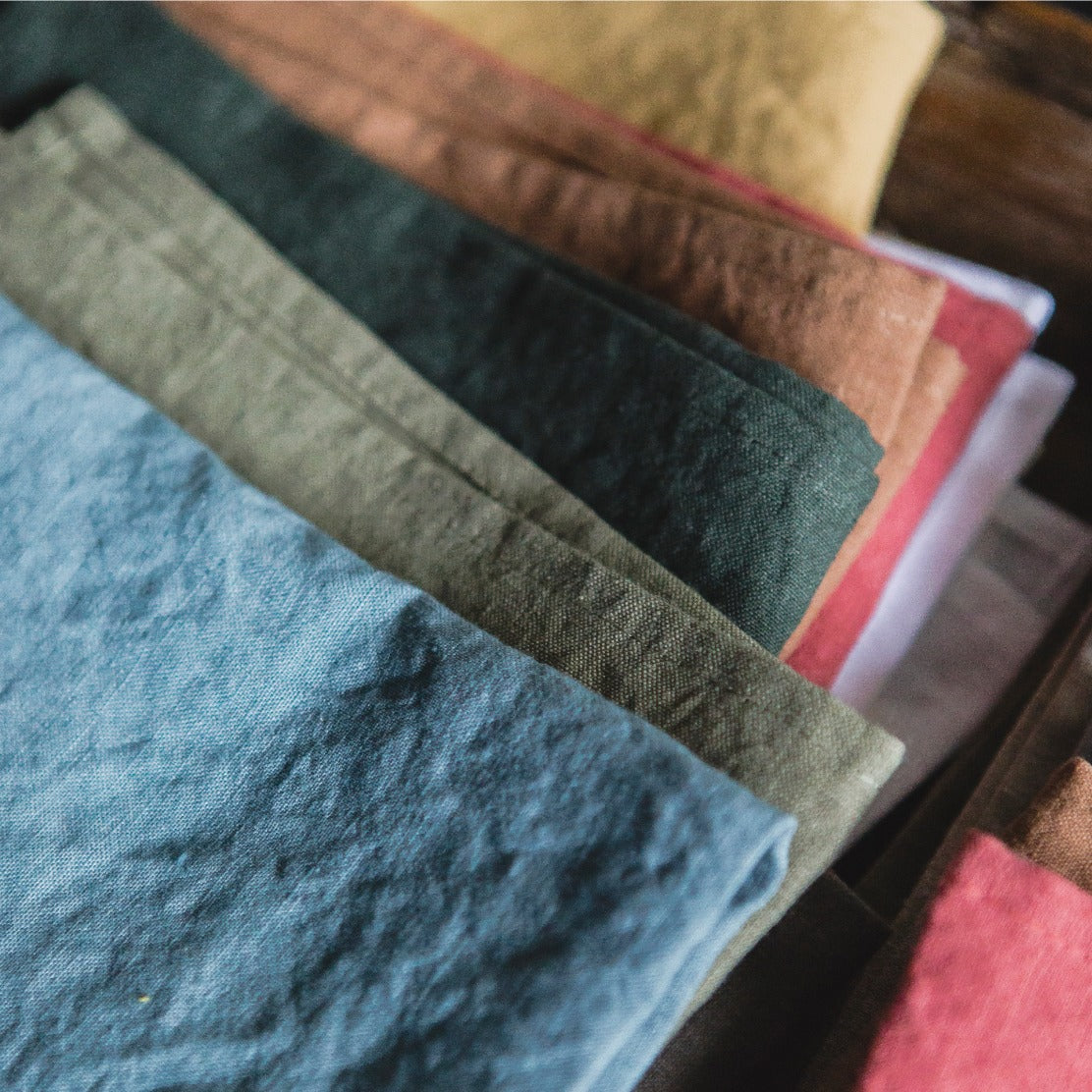

A bright Atlanta sunroom can expose a fabric weakness long before the furniture itself shows any structural problem. The drapery may lose its original depth, an upholstered chair can look washed out near the glass, and outdoor cushions may feel as though they've aged faster than the rest of the home. For homeowners in Buckhead, Alpharetta, Roswell, or Sandy Springs, choosing sun protection fabric by the yard is therefore less about finding a fashionable label and more about protecting a carefully designed interior.
Introduction to Sun Protection Fabric by the Yard
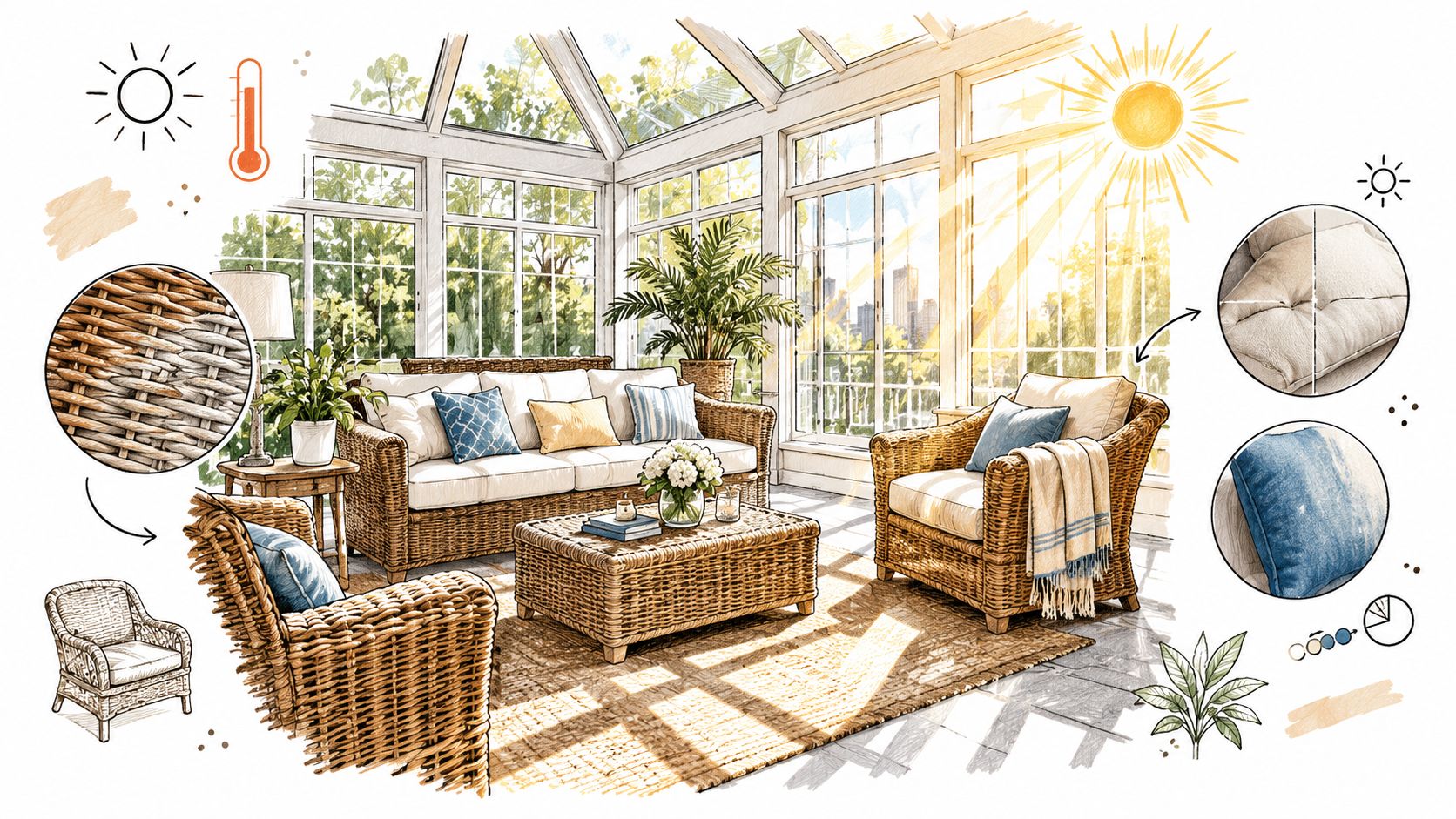
A homeowner might begin with a familiar goal: replace faded cushions, soften a bank of windows with custom drapery, or create a more comfortable covered patio. The first product description that appears may promise “UV-resistant” performance or UPF 50+, but that phrase alone doesn't tell you how the finished textile will behave after cutting, sewing, cleaning, stretching, and years of sunlight.
That distinction matters in luxury interiors. A premium sectional, custom chair, or heirloom-quality sofa deserves a textile selected for its actual environment, not merely its fiber name. The same fabric can perform differently depending on its weave density, openness, finish, weight, and intended use.
Sun protection fabric by the yard can serve several purposes:
- Window treatments: Drapery and shades can help reduce the ultraviolet exposure reaching furniture, rugs, flooring, and artwork.
- Outdoor upholstery: Cushions and seating need a balance of color retention, comfort, abrasion resistance, and resistance to moisture.
- Awnings and shade structures: These applications require construction suited to prolonged exposure and the desired amount of filtered light.
- Custom furniture: A beautifully woven performance textile can preserve the visual character of a designer piece while supporting everyday use.
The fabric's protection isn't a promise floating above the material. It comes from the completed textile construction. A dense weave can block more radiation than an open weave made from the same general fiber family. A finish can change water resistance or hand feel, while stretch or thinning can alter coverage.
Design principle: Treat sun protection as part of the furniture specification, alongside scale, comfort, color, and craftsmanship.
The most valuable purchase is rarely the quickest replacement. It's the yardage that suits the room, the furniture, the maintenance routine, and the level of permanence you expect from a high-end interior.
How UPF Ratings and UV Blocking Really Work
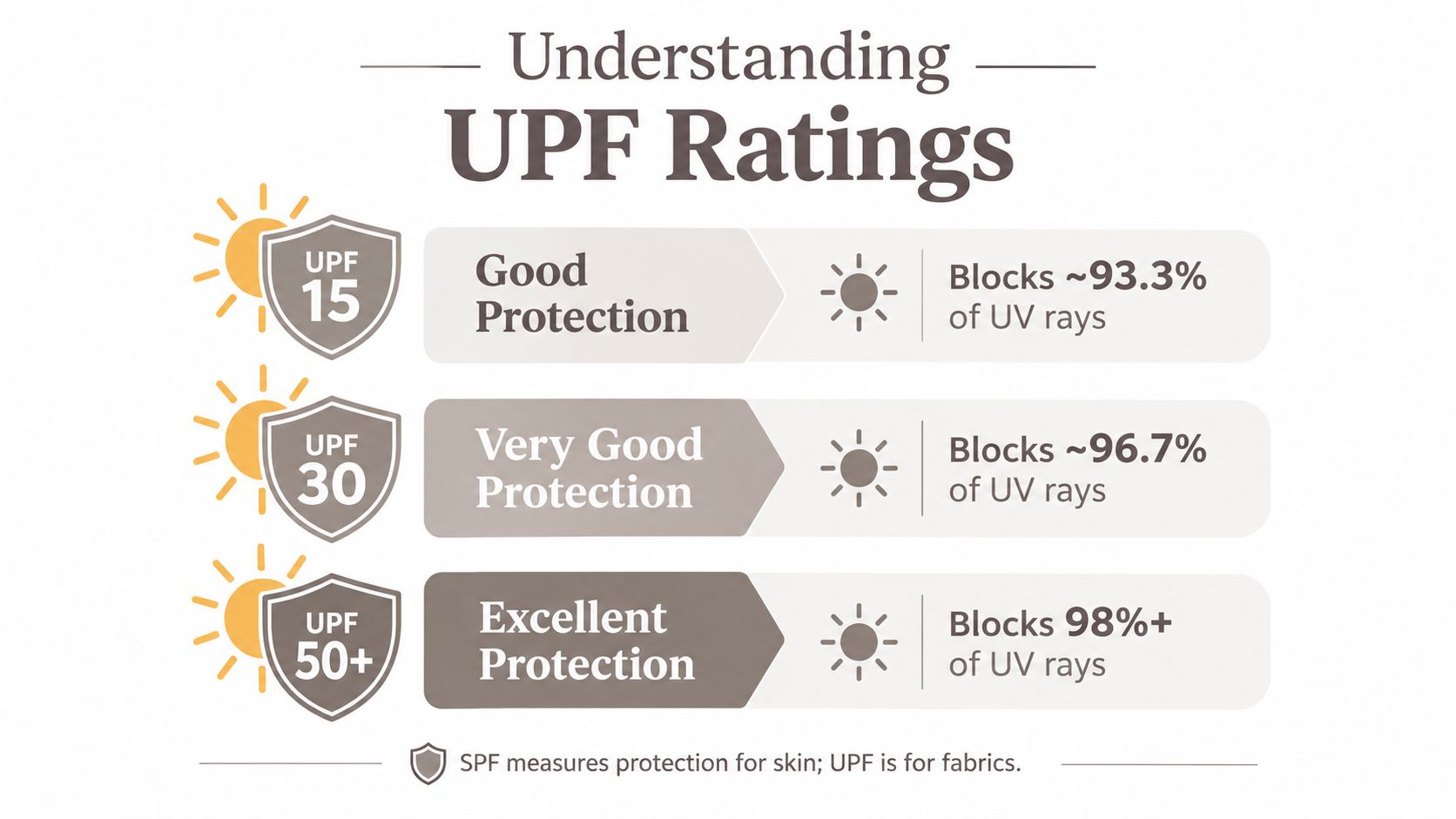
A bright Atlanta room can slowly fade drapery, upholstery, flooring, and artwork. UPF, or Ultraviolet Protection Factor, helps designers compare how much ultraviolet radiation a textile allows to pass through. SPF describes skin products. UPF describes fabric. Its rating applies to the tested textile, not to the fiber named on a sample card.
The rating system offers clear comparisons. A UPF 15 textile blocks about 93.3% of UV radiation, a UPF 30 textile blocks about 96.7%, and a UPF 50+ textile blocks over 98%, according to research summarized in the commercial clothing UV protection study.
Read the label as a starting point
UPF measures how much UV passes through the finished textile. The result depends on weave density, cover factor, thickness, and the spaces within the construction. A high rating can support a confident specification, but the number must match the material being purchased and its intended use.
The Hohenstein explanation of UV textile testing notes that UPF 50+ transmits less than about 2% of UV radiation, while UPF 30 transmits about 3% and UPF 15 transmits about 6.7%. Those figures explain why UPF 50+ may suit strongly exposed rooms. Ask whether the rating applies to the finished textile, how it was tested, and whether the tested construction resembles the drapery, shade, or upholstery application.
Construction controls the result
Standardized methods include AATCC TM 183 in the United States, AS/NZS 4399 in Australia and New Zealand, and EN 13758 in Europe, as described by Hohenstein's textile testing guidance. These methods evaluate the textile itself, rather than assuming performance from its fiber name.
A tightly woven, low-air-permeability textile generally blocks more UV than a thin, open construction. Greater cover factor means fewer gaps for radiation to pass through. Stretch can reduce coverage when the textile becomes thinner or more open under tension.
That distinction matters at the workroom. A relaxed drapery panel will not behave exactly like an upholstery panel pulled firmly over foam. Examine a yardage sample in the way it will be installed, including its tension, lining, and finished orientation.
Research on commercial clothing found that polyester and wool usually provide sufficient UV protection at UPF 30+, while cotton, linen, and viscose often perform poorly, according to the peer-reviewed textile protection research. Natural fibers can still suit a refined interior. Their performance should be judged by verified construction and testing, not assumed from the fiber label alone.
Types of Sun Protective Fabrics and What Makes Them Work
A bright Atlanta sunroom can expose a refined textile to intense daily light. The fabric chosen for a sofa, shade, or drapery panel must therefore do more than carry a fiber label. Its weave, construction, color, finish, and intended installation determine how much protection it can provide.
Dense woven polyester and nylon are often practical candidates for drapery, outdoor cushions, shades, and other applications facing sustained sunlight. When tightly constructed and tested, textiles in these fibers can reach UPF 50+, as described in Hohenstein's overview of UV-protective textiles.
| Fabric Type | UV Blocking Potential | Best Use Case |
|---|---|---|
| Dense woven polyester | Strong potential when tightly constructed and lab tested | Outdoor upholstery, shades, drapery, high-sun rooms |
| Dense woven nylon | Strong potential when tightly constructed and lab tested | Awnings, cushions, and performance-focused interiors |
| Cotton | Highly dependent on weave, color, and finish | Decorative drapery or upholstery when tested for the intended use |
| Linen | Often more open and light transmitting, so performance varies | Design-led drapery and relaxed interiors where filtered light matters |
| Viscose | Often weaker without supportive construction or treatment | Decorative applications requiring careful sample evaluation |
| Blends | Variable, because each component and the weave affect performance | Custom projects where hand feel, appearance, and function must be balanced |
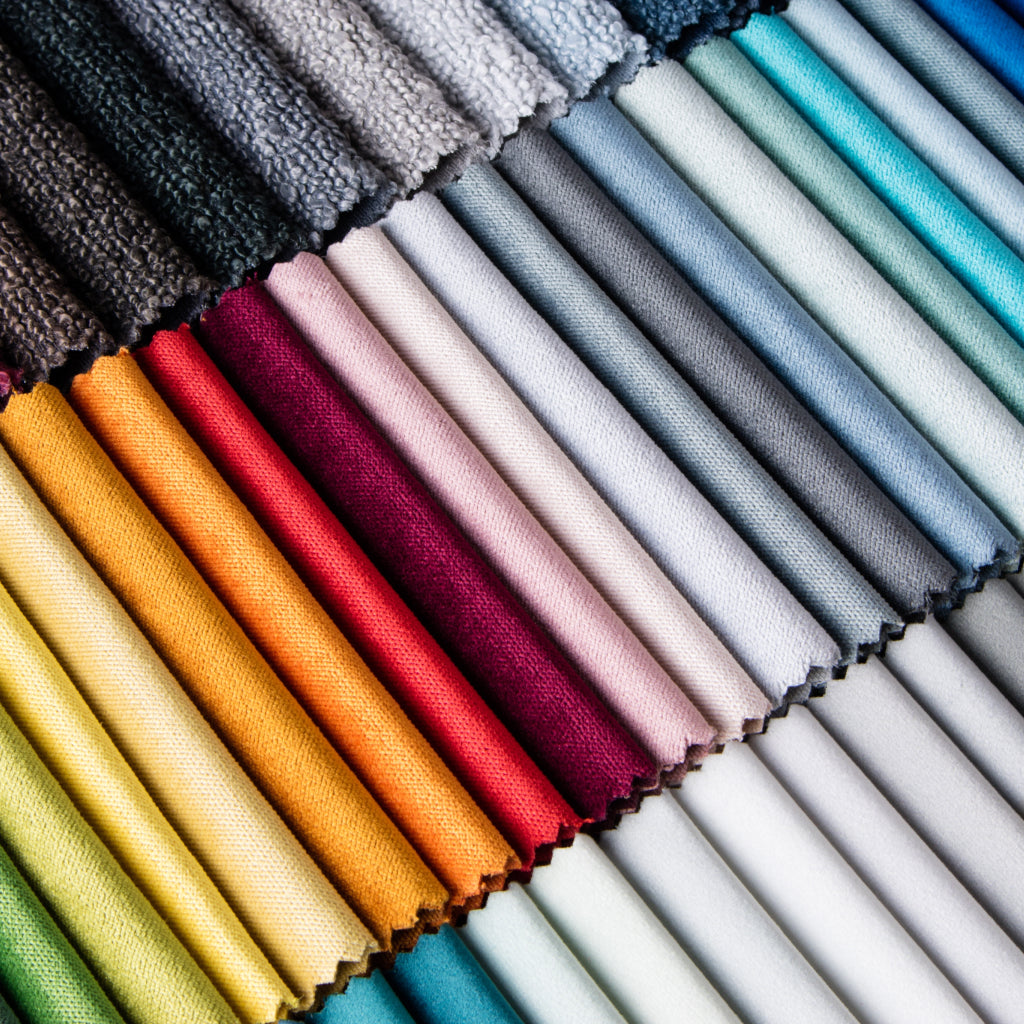
A fiber is only the starting point. A dense polyester can act like a closely spaced screen, while an open linen allows more light through, even when both appear attractive in a finished room. For a luxury sofa in a bright family room, coverage and abrasion performance may take priority. Relaxed Belgian linen drapery may instead prioritize filtered light and atmosphere.
Why color and dyes matter
Color influences how much radiation a textile absorbs or blocks. Research examining 28 white fabrics found that 19 provided less protection than sunscreen with SPF 15, while dyes increased protection considerably, according to the published textile research. Pale yardage can still be the right design choice, but ivory or cream alone does not demonstrate strong UV performance.
Coatings change more than performance
A coating or finish may support water resistance, cleanability, or UV performance. It can also change drape, softness, sheen, and breathability. A firm coated textile may suit an awning better than a living-room curtain, while a supple performance fabric may work well on a custom chair but require a different care routine from a removable outdoor cushion.
Sample rule: Compare the textile in natural light, against the window where possible, and over the furniture form you plan to cover.
Design-conscious buyers in North Atlanta often want protection without a commercial appearance. The best balance comes from matching construction to the room, rather than automatically choosing the heaviest or most heavily treated material.
Durability Maintenance and Long Term Performance
A fabric can leave the mill with excellent performance and still encounter demanding conditions after it becomes a finished furnishing. Cutting, seams, tension, laundering, abrasion, heat, and direct sunlight all affect the textile over time. The original UPF claim is therefore one part of a broader review of construction, installation, and care.
Start with the finished application. Will the fabric be stretched tightly over a seat? Will cushion covers be removed for cleaning? Will drapery stay in direct afternoon sun? Does the manufacturer provide care instructions or testing for the completed construction?
Follow the performance lifecycle
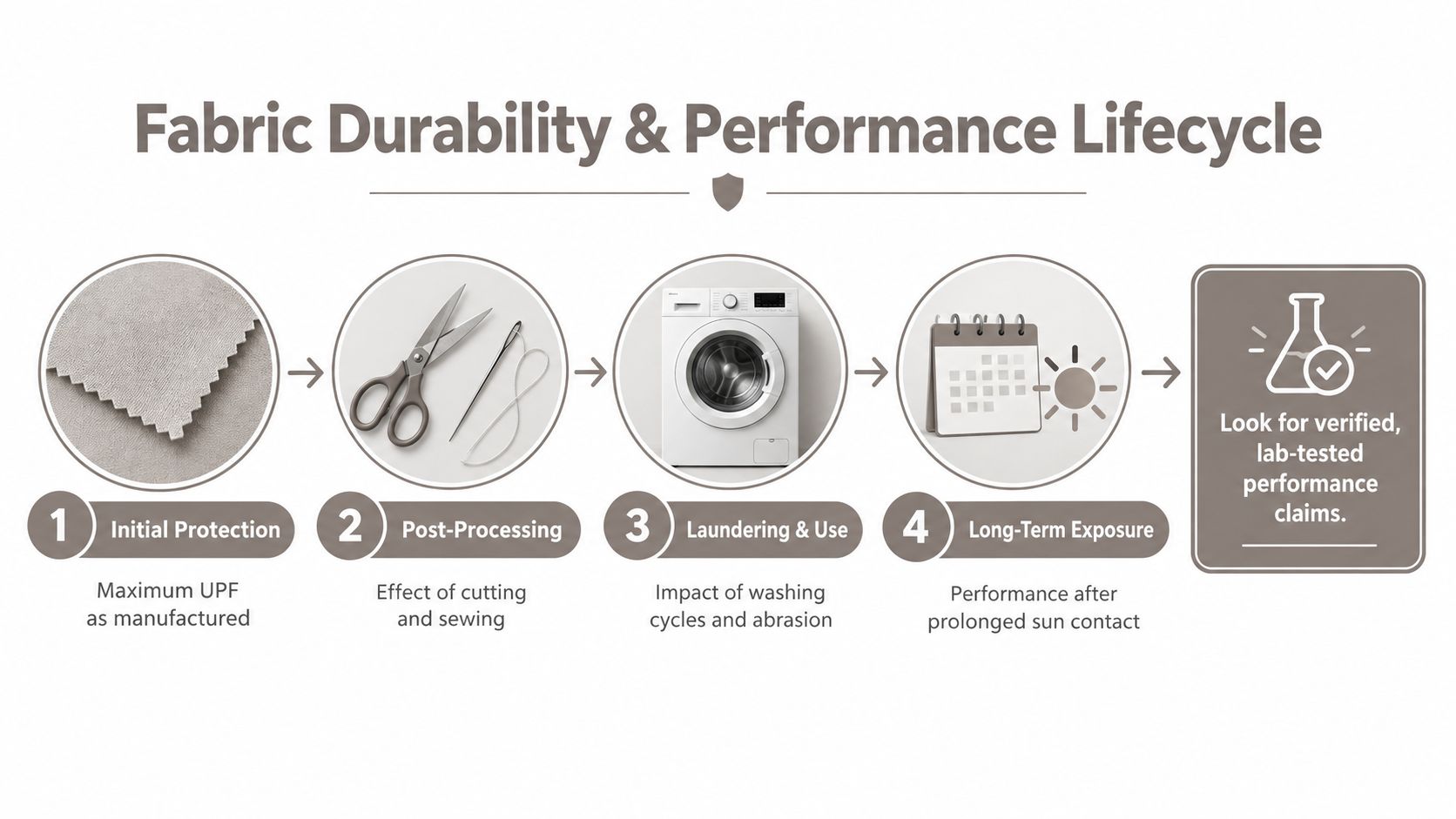
The lifecycle begins with the manufactured textile and changes as the maker cuts, sews, installs, washes, and exposes it to daily use. A dense weave may provide less coverage if the material thins through wear. An elastic or open construction can shift when pulled into place, while repeated cleaning may affect applied finishes.
Stretch deserves close attention on upholstered seating. Excess tension can distort the weave, stress seams, and change the fabric's appearance across a cushion or upholstered panel. Ask how much give the textile has, where it will be pulled, and whether the installer expects the fabric to remain stable after use.
For luxury upholstery, abrasion performance deserves equal attention. The Martindale rub test measures resistance to upholstery wear, with results reported in thousands of rubs or cycles. A common classification places under 10,000 rubs in decorative use, 15,000 to 25,000 in general domestic seating, 25,000 to 40,000 in heavy domestic or light contract use, and 40,000 or more in contract environments, according to Studio Manolo's upholstery guidance. Use the rating as a comparison point, not as a promise that every installation will age identically.
Match maintenance to the room
A formal sitting room may need a different care plan from a busy media room or covered terrace. Vacuuming with an upholstery attachment removes surface dust before it settles into the weave. Prompt attention to spills can reduce the need for aggressive cleaning. Window coverings can lower direct exposure on nearby furniture, and rotating loose cushions can spread wear more evenly.
For a custom chair or premium sectional, ask the upholsterer how the textile will be cut, aligned, and tensioned. For removable covers, confirm whether the maker recommends professional cleaning, gentle laundering, or no washing. Care instructions should fit the household's actual routines.
Lewis and Sheron's guide to fade-resistant fabrics helps distinguish textiles selected for color retention from materials that still require evaluation for their particular installation.
Longevity test: Choose a fabric whose care requirements match how you actually live, not how you hope the room will be used.
A fabric's performance depends on the full furnishing system. Joinery, cushioning, workmanship, installation, and maintenance all influence whether the piece remains suitable for reupholstering, as described in upholstery longevity guidance.
Best Uses for Sun Protection Fabric in Luxury Homes
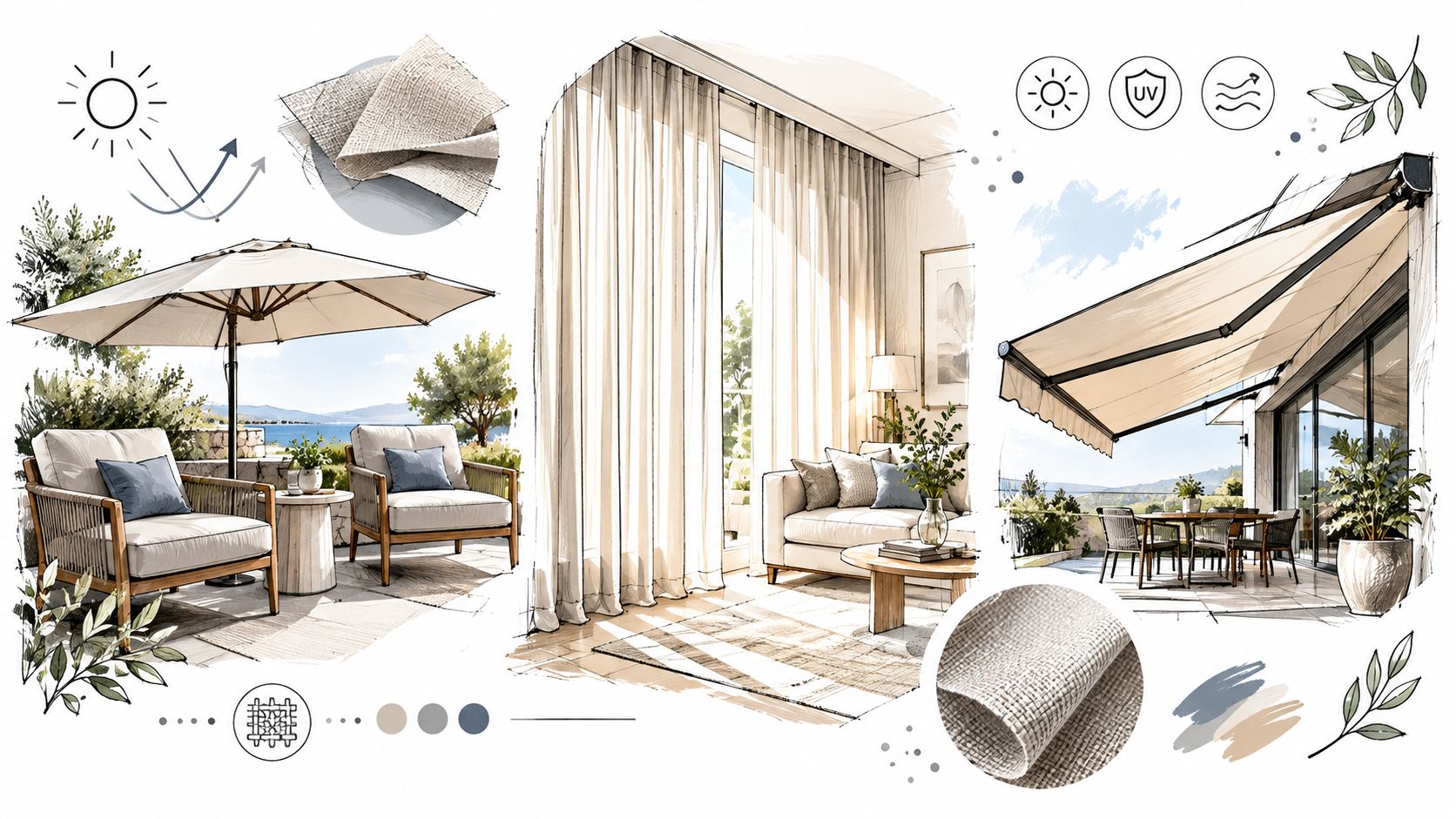
Atlanta homes often need to manage bright light, heat, humidity, and design expectations at the same time. A fabric that works on a covered patio may feel too structured for a refined bedroom. A delicate linen that looks beautiful in a low-light dining room may not be the right choice for a sun-facing sectional.
Outdoor upholstery and cushions
Outdoor seating needs more than UV blocking. Look at abrasion resistance, moisture behavior, cleanability, drying time, and the hand feel against skin. A dense synthetic performance textile can suit a poolside lounge or covered veranda, especially where cushions receive strong light and frequent use.
Use a sample to assess whether the fabric feels inviting enough for a custom chair or premium sectional. Some treated textiles look highly technical, while others have the texture and color depth expected in luxury home furnishings.
Drapery and shades
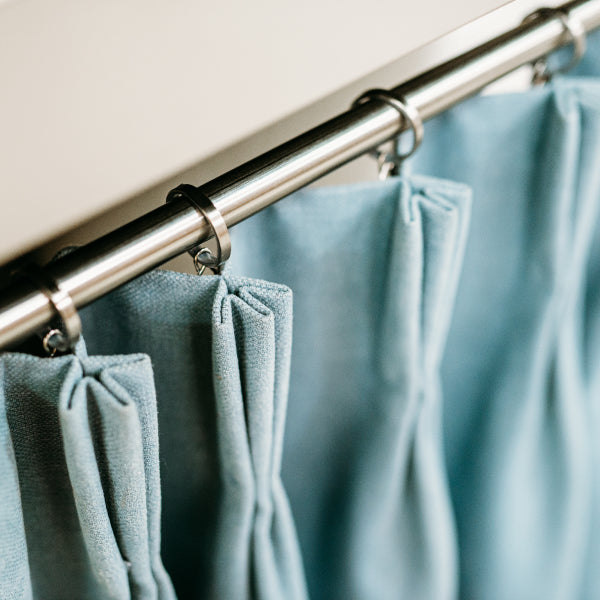
Window treatments need a more nuanced decision. A room may need to preserve daylight and views rather than create a blackout effect. A light-filtering construction can soften glare while maintaining an airy atmosphere, whereas a more opaque shade may suit a television room, nursery, or bedroom.
Consider the relationship between the fabric and the furniture. A curtain that protects a luxury sofa but makes the room feel dim may not deliver the right design outcome. Ask to see the textile backlit, then evaluate its color and texture at different times of day.
Awnings and shade structures
Awnings and pergola covers carry a functional role, so construction and installation matter as much as appearance. Buyers comparing outdoor living plans may benefit from broader planning resources, including this guide to shade structures for Prescott backyards, which illustrates how shade design influences comfort and use.
For humid environments, prioritize a textile and care plan that can handle the installation's moisture exposure. Don't assume that a coating makes a fabric suitable for every outdoor condition. Confirm the intended use, cleaning requirements, and whether the finish changes the textile's breathability or drape.
A unified design language
A well-planned home can use related fabrics across a sunroom, covered porch, and adjacent living room without making every surface match. Start with a central color story, then vary texture and scale. Lewis and Sheron's guide to the best outdoor fabric for cushions offers a useful reference when evaluating cushion-specific requirements.
How to Measure and Buy Sun Protection Fabric by the Yard
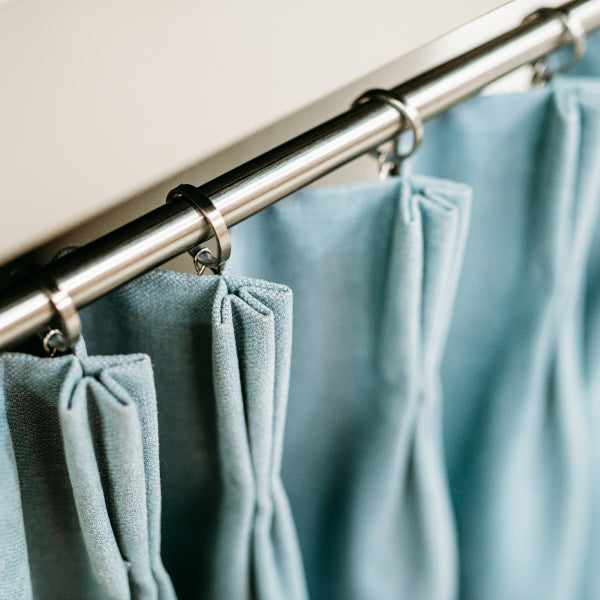
Ordering yardage begins with the finished object, not the bolt. A designer measuring for pinch-pleat drapery needs a different calculation from a homeowner recovering a seat cushion. Pattern repeat, fabric width, seam allowances, directional motifs, and matching requirements can all change the quantity.
Start with the application
For drapery, record the finished rod width, finished length, fullness preference, and return details. Account for hems, headers, pattern repeats, and whether the design must be railroaded or cut in a particular direction. A fabric that looks generous on the roll may require more yardage once pattern placement and matching are considered.
For upholstery, measure each component separately. Include the seat, inside back, outside back, arms, deck, boxing, welt, and any repeated cushions. The upholsterer should confirm the final estimate because frame shape, pattern scale, and fabric orientation can substantially affect cutting efficiency.
Shades and awnings require their own review. Note the finished width and drop, mounting method, seam placement, and desired overlap. Ask whether the fabric is suitable for the structure and whether the finished installation needs lining or reinforcement.
Sample before committing
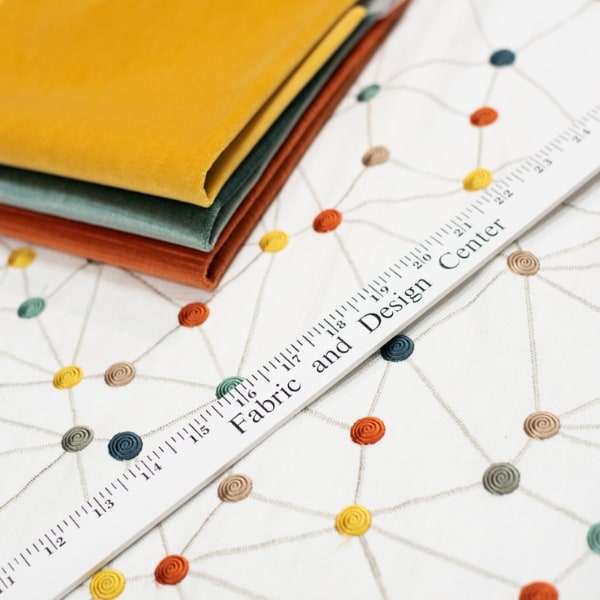
A cut-yardage order should follow a sample review, especially for sun-facing rooms. Place the swatch near the window, view it in morning and afternoon light, and hold it against the upholstery, wall color, flooring, and metal or wood finishes. Check whether the weave looks refined at close range and whether the reverse side is acceptable for a shade or unlined curtain.
Ask the supplier:
- Testing: What UPF method was used, and was the finished textile tested?
- Construction: Is the weave dense, open, stretchy, coated, or laminated?
- Care: Can the fabric be professionally cleaned, washed, or spot treated?
- Durability: What abrasion information applies to the intended upholstery use?
- Availability: Are samples, cut yardage, and larger quantities available under the same specification?
For a practical overview of ordering and evaluating yardage, consult this guide to buying fabric by the yard.
Protect against expensive errors
Confirm the bolt width, usable width, pattern repeat, dye lot, minimum order, and return policy before payment. Order enough from the same dye lot for the complete project, including future repair needs when appropriate. If the fabric will cover a statement furniture piece, have the upholsterer approve the sample before cutting.
Purchasing habit: Keep the approved swatch, care information, test details, and installation notes with the project records.
That small file helps future owners, designers, and upholsterers understand why the textile was chosen and how to maintain it.
Sourcing Heirloom Quality Sun Protection Fabric with Lewis and Sheron
A successful sun-exposed interior project combines textile testing with skilled execution. The fabric must suit the light, but the finished result also depends on accurate measuring, pattern placement, seam design, upholstery technique, lining, hardware, and care.
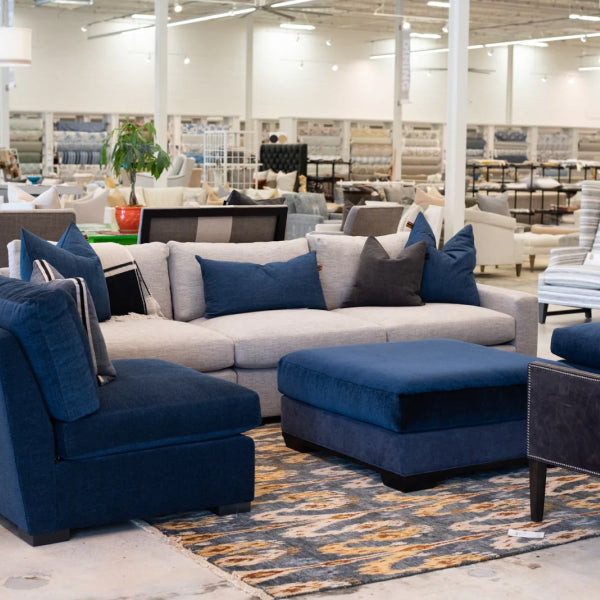
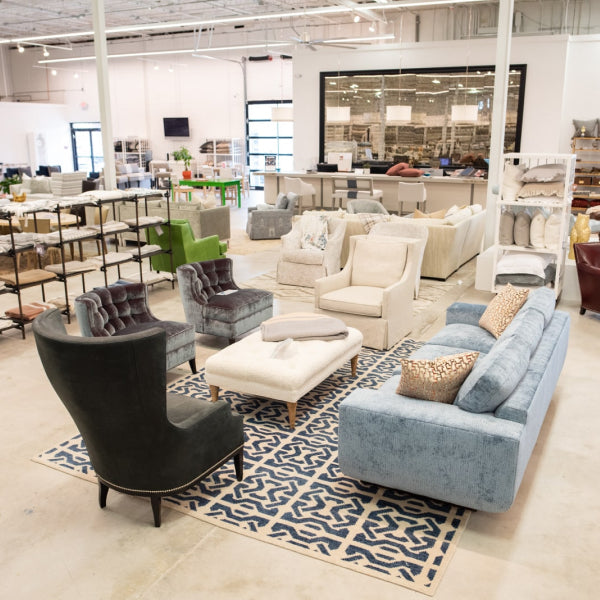
Lewis and Sheron Textiles serves homeowners and designers across Atlanta, Buckhead, Alpharetta, Roswell, Sandy Springs, Fulton County, North Atlanta, and surrounding markets. Its Design Center offers over a thousand in-stock bolts and thousands more cut-yardage options from mills including Kravet, Fabricut, P. Kaufmann, Libeco Home, and Crypton. For furniture, the showroom sources made-to-order American-crafted upholstery from Verellen, Wesley Hall, LEE Industries, and Ambella.
That range supports more than a fabric search. A homeowner can compare a performance textile with a Belgian linen, evaluate a sample against an existing heirloom frame, or coordinate upholstery with custom drapery and rugs. Complimentary in-house design support can help bring those decisions into one cohesive scheme, while expert reupholstery can give a cherished frame a new life.
High-end furniture gains value from thoughtful construction. Guidance on custom solid-wood furniture identifies responsibly sourced hardwoods and joinery such as mortise-and-tenon, dovetail, and tongue-and-groove as methods that support structural integrity and appearance over years of use, as described by Gomez Upholstery's furniture longevity guide. Luxury furniture guidance also frames sofas at 7 to 15 years, wooden furniture at at least 10 to 15 years, and high-end artisan rugs at 15 to 25 years or longer, reinforcing the value of durable materials and skilled craftsmanship in this luxury furniture longevity reference.
Lewis and Sheron Textiles offers performance fabrics by the yard, custom drapery, reupholstery, and made-to-order furniture for interiors that need to look refined while handling real sunlight. Visit Lewis and Sheron Textiles to review samples and collaborate with the design team on a lasting Atlanta home furnishing plan.