






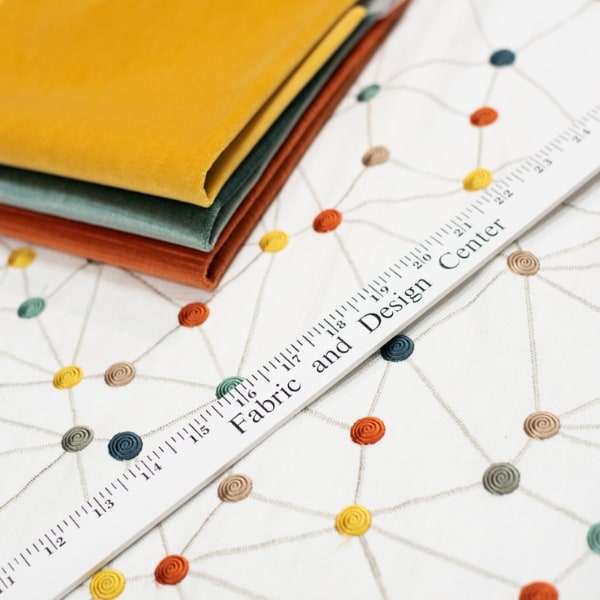
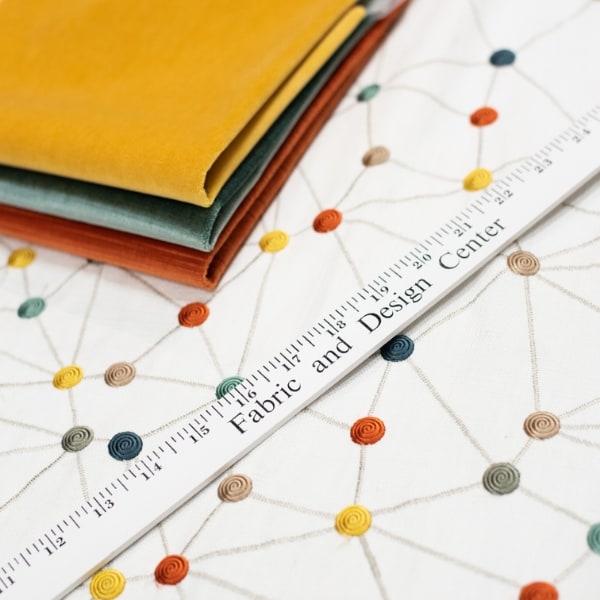






You've found the right color, the dots look perfect, and the swatch seems destined for a custom chair or window treatment. Then someone asks the practical questions: Will the pattern stay aligned after washing? Will the cotton wrinkle, fade, or shrink? Is the fabric refined enough for a luxury sofa, or will it read like a novelty print?
Those questions matter more than the pattern's first impression. Cotton polka dot fabrics are specification decisions, shaped by weave, weight, print chemistry, finishing, furniture construction, and the room where they'll live. The right choice can bring personality to custom upholstered furniture while supporting the durability and polish expected from designer furniture in Atlanta, Buckhead, Alpharetta, Roswell, Sandy Springs, and surrounding Fulton County markets.
Why Cotton Polka Dot Fabric Deserves a Second Look in 2026
A designer walks into Lewis and Sheron with a clipped swatch on a clipboard. She's looking for cotton polka dot fabric that can work in a child's room, yet still look composed on a Verellen chair. Her first instinct is to discuss color. The more useful conversation starts with the base cloth, print method, cleaning plan, and furniture application.
That shift matters because polka dots have moved beyond the narrow category of nursery accents and retro apparel. Historical records place dotted cotton traditions in 19th-century Europe, including sheer cotton fabric with small raised dots produced by a textile company in St. Gallen, Switzerland. The term “polka dot” appeared in print by 1857 in Philadelphia's Godey's Lady's Book, according to this history of the polka dot. The pattern grew from broader textile innovation, including Dotted-Swiss and other evenly spaced spot designs, rather than from one isolated fashion moment.
Practical rule: Treat the dot as the visible result of a textile specification, not as the specification itself.
Cotton gives designers a substantial platform for that decision. One recent estimate places cotton at 39.2% of global textile revenue in 2025, while another values the global cotton fabric market at $47.3 billion in 2025 and projects $72.8 billion by 2034, with a 4.9% compound annual growth rate from 2026 to 2034. These figures come from Grand View Research's textile market analysis, and they help explain why cotton remains important for printed apparel, bedding, drapery, and home furnishings.
Current design direction favors larger, more widely spaced, tonal dots over tightly packed, high-contrast micro-dots. That makes cotton polka dots more adaptable to roman shades, occasional chairs, pillows, relaxed drapery, and statement furniture pieces. Designers evaluating luxury textile trends for upholstery can use that broader movement as a starting point, but the final choice still depends on performance.
Understanding the Weave, Weight, and Print Behind the Dots
Start with the cloth behind the motif. A polka dot printed on a loose plain weave won't behave like the same dot printed on a dense twill, even if both bolts look similar under showroom lighting.
Read the base before the pattern
A plain weave usually gives cotton a crisp, even hand. It can suit drapery, bedding, quilting, and lighter decorative work. Twill and sateen constructions create a denser surface and often provide the visual and physical substance expected from cushions, slipcovers, and selected upholstery applications.
Weight offers a second clue. The weight ranges below are practical specification bands for comparing bolts, not universal performance guarantees.
| Base Type | Typical Weight (oz/yd²) | Best Print Method | Recommended Use |
|---|---|---|---|
| Lightweight plain weave | 4 to 6 | Reactive dye or digital reactive print | Drapery, bedding, apparel |
| Midweight cotton plain weave | 6 to 8 | Reactive dye or digital print | Cushions, pillows, light decorative upholstery |
| Dense twill or sateen | 8 and above | Reactive dye, with appropriate finishing | Slipcovers, structured seats, selected upholstery |
| Soft washed cotton | 5 to 7 | Reactive or pigment print, tested before purchase | Bedding, relaxed drapery, casual accents |
For a deeper vocabulary of plain weave, twill, sateen, and other constructions, consult this guide to examples of woven fabrics.
Understand what the finish changes
Mercerization can help cotton absorb dye more thoroughly, producing richer, cleaner dots. Brushed and washed finishes soften the hand, which may be desirable next to skin or in a relaxed bedroom, but they can also make print edges appear less sharply defined.
Print chemistry is the durability decision many buyers miss. Reactive dye bonds with the cellulose fiber, while pigment sits more on the surface and can be more vulnerable to crocking, the transfer of color through rubbing. Industry guidance describes reactive or digitally printed color as a durable choice for cotton, with wash fastness often around 4 to 5 out of 5 when the process includes proper afterwashing, as explained in this textile printing glossary.
Ask for the print method, not just the fiber content. A label that says “100% cotton” tells you what the fiber is. It doesn't tell you whether a dark dot will retain its clarity after laundering or rub onto a pale cushion welt.
Matching Cotton Polka Dot Fabrics to the Right End Use
The same dot can look delicate on a curtain, playful on bedding, or poorly suited to a seat cushion. End use should determine the base cloth before color enters the discussion.
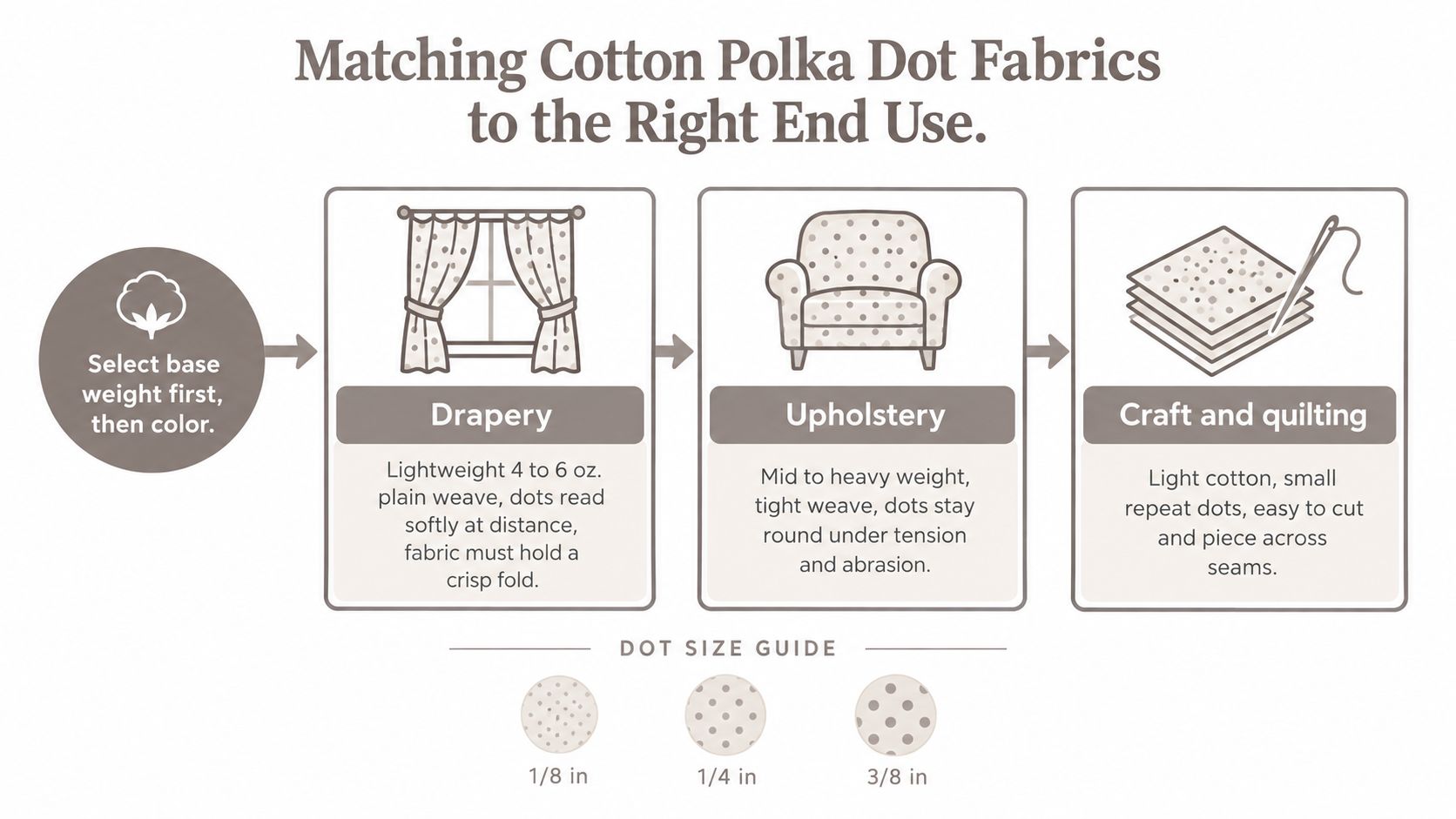
A light plain weave around 4 to 6 ounces per square yard can provide enough body for drapery while maintaining a soft fold. For upholstery, favor a tighter, heavier base because tension across a cushion or chair deck can distort a loose construction. Bedding benefits from a softer cotton that can tolerate laundering, while craft and quilting projects often prioritize clean cutting and predictable piecing.
Match the cloth to the pressure it will receive
Drapery needs fold memory, manageable weight, and a print that remains legible from across the room. A light or midweight plain weave can work well, especially when the dot is intended to read as a soft rhythm rather than a dominant graphic.
Upholstery demands more scrutiny. A dense cotton twill or sateen may hold the dot's shape better under tension than an airy base. Check the intended abrasion rating, seam behavior, and whether the design house recommends the fabric for the exact furniture application. Cotton is comfortable and sewable, but it isn't automatically a performance upholstery textile.
Bedding sits between fashion and furnishing. A soft cotton with a washable finish can feel comfortable against the skin, yet you should still confirm shrinkage and color retention before cutting a duvet cover or fitted panel.
For children's spaces, fabric selection should sit alongside broader safety and comfort decisions. A resource on the safest play mat for babies can help frame that larger environment, even though a play mat and a decorative cotton print serve different functions.
Cushions allow more flexibility because they can be replaced or cleaned more easily than a fully upholstered frame. Still, the insert, zipper placement, seam direction, and pattern repeat affect the finished appearance. For washable upholstery projects, this guidance on washable upholstery fabric provides useful context for evaluating the complete assembly rather than the face fabric alone.
Choosing Dot Scale, Color, and Contrast for Real Rooms
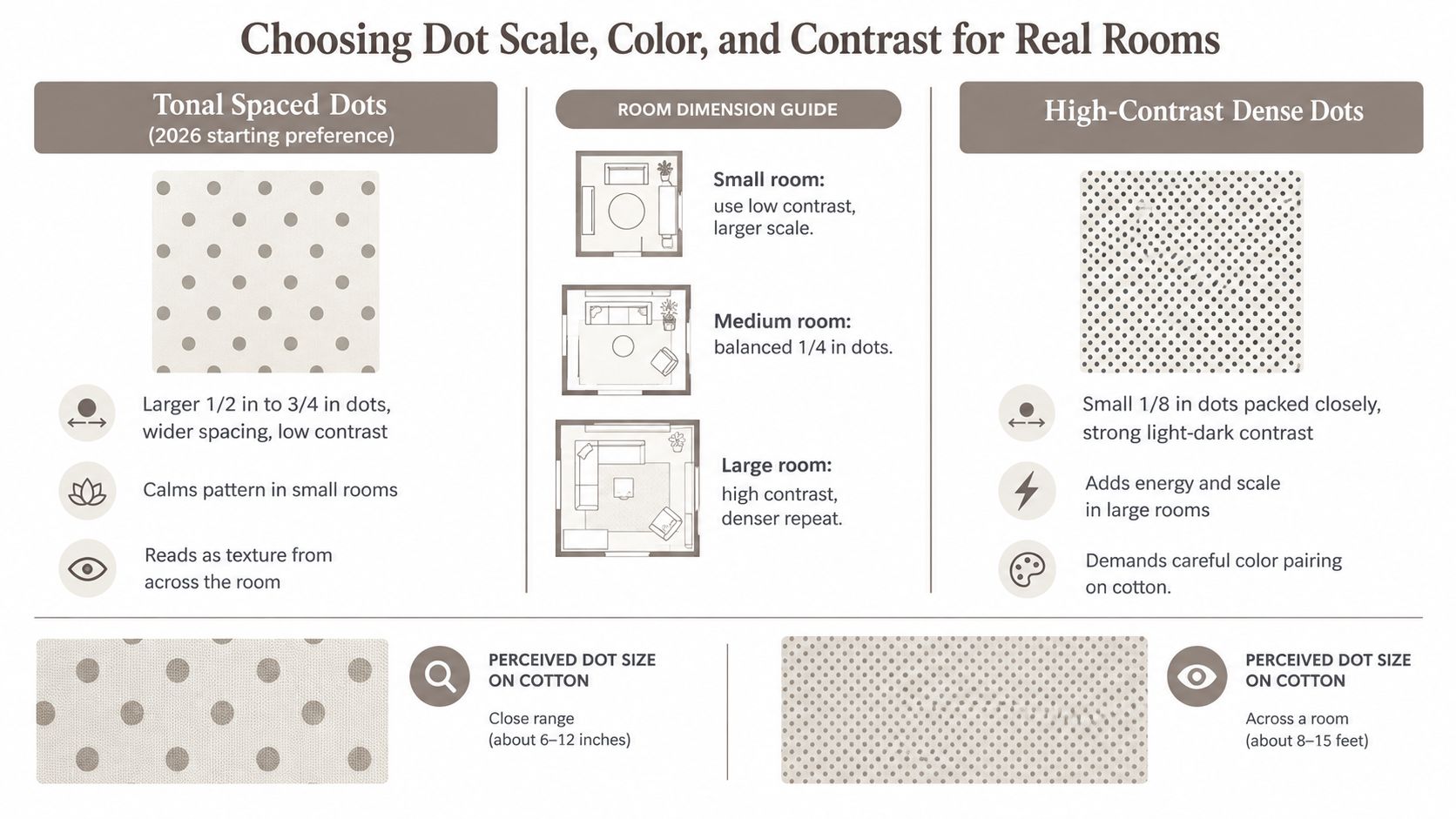
Begin with the current preference for larger, more spaced, tonal dots, then test that direction against the room's sight lines. A pattern that feels calm in a hand-sized memo can become much louder when repeated across a full sofa or a pair of drapery panels.
Judge scale from the doorway and the sofa
Small dots packed closely together create visual energy. They can work in a generous room or on a compact accent, but they may become restless across a large sectional. Larger dots with more space between them often allow the cotton ground to show, making the pattern feel more architectural and less busy.
A one-inch dot might look cheerful on a cushion because the eye sees the whole motif at close range. Across full-height drapery, repeated rows can dominate the wall and compete with millwork, rugs, or artwork. Always view the memo from the doorway, then sit where the furniture will be used.
Use contrast as a volume control
Tonal dots, where the ground and motif sit close in value, tend to behave like texture from across the room. High-contrast dots announce themselves immediately. In a small room, low contrast can preserve visual calm while still adding pattern. In a large room with substantial furniture, stronger contrast can create a deliberate focal point.
Color temperature matters too. Warm dots can reinforce walnut, brass, camel leather, and creamy paint. Cool dots may sit more naturally with gray stone, blue upholstery, nickel, and crisp white trim. Test the fabric beside the actual finish samples, not against a digital color chip.
Durability, Cleaning, and Care for Cotton Polka Dots at Home
Cotton rewards careful preparation, but it isn't dimensionally inert. Prewash or preshrink yardage before cutting whenever the finished item will be laundered. Cotton textile guidance treats shrinkage performance as a distinct technical issue, and pre-shrinking or sanforizing helps stabilize finished dimensions, as outlined in Cotton Incorporated's technical bulletins.
Don't assume every cotton polka dot will shrink identically. The final result depends on the weave, finishing, print process, and washing method. Test a representative piece, then inspect the dot spacing and any planned panel match after drying.
Build care into the specification
| Application | Cleaning Method | Durability Target | Print Retention Tip |
|---|---|---|---|
| Window panels | Gentle laundering when the supplier permits | Stable dimensions and clean folds | Use a tested print and avoid harsh drying |
| Bedding | Launder according to the fabric's care label | Soft hand after repeated washing | Confirm wash fastness before making large panels |
| Removable cushions | Spot clean or professionally clean as specified | Stable seams and low visible wear | Test cleaner on a hidden area first |
| Decorative chair | Vacuum and spot clean | Appropriate upholstery abrasion rating | Use an interliner or backing when recommended |
| Slipcovers | Controlled washing and careful drying | Reliable fit after cleaning | Prewash all yardage before cutting |
Keep south-facing cotton away from unfiltered, intense sunlight when possible. Lining, interlining, shades, and furniture placement can reduce exposure. On high-contact seats, watch for surface fuzzing or pilling, particularly when the cotton has a brushed finish or is blended with other fibers.
Care decision: A washable fabric is not the same as a fabric that can be washed casually. The complete care method belongs in the project specification.
A knit backing or suitable interliner can improve stability on a decorative chair, but it won't transform a lightweight fashion cotton into heavy-duty upholstery. Confirm compatibility with the upholsterer before fabrication, especially when the design requires pattern matching or a firm hand.
Styling Polka Dots With Solids, Stripes, and Texture
A cotton polka dot usually works best as the main pattern in the scheme. Let it establish the rhythm, then support it with solids, restrained stripes, and tactile surfaces that add depth without creating another competing message.
In a living room, a cotton polka dot on a custom chair can sit beside solid linen drapery and a quiet rug. A tone-on-tone matelassé pillow can repeat the sense of relief without copying the motif. A subtle ticking stripe can add direction, but keep its scale and contrast controlled.
For additional guidance on tips for mixing patterns at home, focus on proportion and repetition rather than collecting several unrelated prints. A room feels considered when patterns have different jobs.
Let texture do the supporting work
Bouclé, jute, slubbed silk, Belgian linen, and matte wool can enrich a cotton polka dot without fighting its geometry. Texture is especially effective when the dot already provides visual movement. Choose one dominant pattern, one quiet secondary pattern if needed, and solids that give the eye somewhere to rest.
Living room: Use the dot on one statement chair, a lumbar pillow, or a pair of occasional cushions. Keep the sofa more restrained if the chair is large or highly visible.
Nursery: Favor softer contrast and washable components. Avoid turning every surface into a pattern field. A dotted roman shade with solid upholstery can feel playful without becoming theme-driven.
Formal dining room: Consider a tonal dot on dining chair backs or a restrained drapery panel. Pair it with solid seat fabric, refined wood, and a simple rug so the pattern feels intentional rather than casual.
Compact kitchens are the easiest place to overdo it. Florals, stripes, and dots can overwhelm when cabinets, backsplash, window treatments, and seating all occupy close sight lines. Choose one patterned textile and let the finishes carry the rest.
Sourcing and Customizing Cotton Polka Dot Fabrics at Lewis and Sheron
A practical sourcing conversation begins with the project, not the color wall. Bring the furniture dimensions, intended application, cleaning expectations, lighting information, and a photo of the room. A designer choosing fabric for a premium sectional needs different evidence than a homeowner selecting a yardage for two pillows.
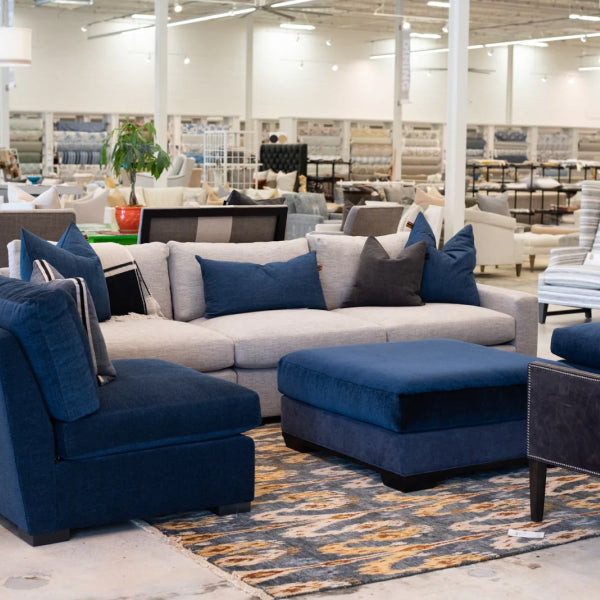
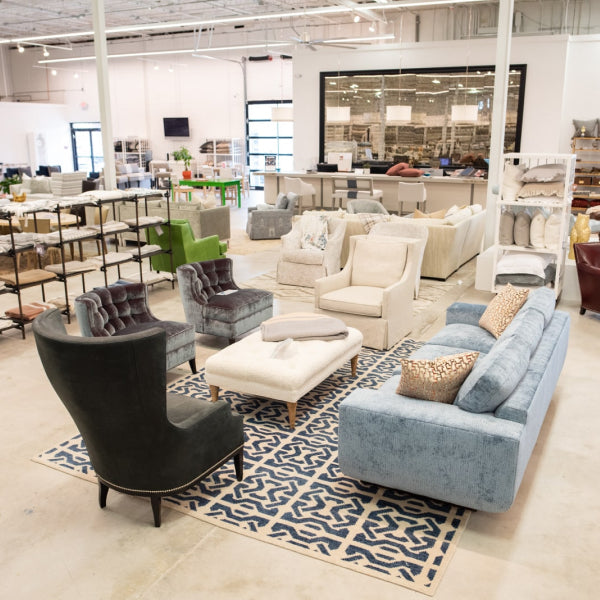
Lewis and Sheron Textiles operates a Design Center with over 1,000 in-stock bolts and thousands of cut-yardage options, including collections from mills such as Kravet, Fabricut, P. Kaufmann, Libeco Home, and Crypton. For a smaller project, an in-stock bolt may allow a straightforward cut-and-ship purchase. For a full room or custom upholstery order, request a memo first so you can assess the hand, scale, and ground color in the actual space.
Move from a stock fabric to a custom print
Custom printing makes sense when the available color is almost right but not quite, or when the room requires a non-standard dot scale. Discuss:
- Color target: Provide paint, rug, wood, or upholstery references rather than relying on a screen.
- Dot scale: Specify the diameter, spacing, and whether the arrangement should feel regular, painterly, or irregular.
- Repeat size: Confirm how the motif repeats across the width and how much fabric the furniture will consume.
- Testing: Request a strike-off or sample before approving production.
- Lead time and minimums: Ask for the manufacturer's current requirements before promising a client a finished date.
For custom upholstered furniture, COM ordering may be possible on frames from Verellen, Wesley Hall, LEE Industries, and Ambella, subject to each maker's current requirements. Confirm whether the line accepts a railroaded cotton print, whether the print must run up the roll, and how the upholsterer will handle pattern matching at seams, inside backs, cushions, and skirts.
A memo sample, a full-width viewing, and a short showroom consultation can prevent an expensive mismatch. Homeowners and designers in Atlanta, Buckhead, Alpharetta, Roswell, Sandy Springs, North Atlanta, and nearby affluent markets can use those checks before committing to yardage for a high-end sofa, custom chair, or heirloom-quality reupholstery project.
Bringing It All Together on Your Next Project
A successful cotton polka dot specification comes down to four decisions made in the right order.
-
Choose the base for the application. A drapery, bedding panel, cushion, and upholstered seat place different demands on cotton. Weave density, weight, finish, and backing should match the pressure, movement, and cleaning the finished piece will receive.
-
Calibrate scale to the room and furniture. A dot that looks balanced on a pillow may dominate a sofa or wall of curtains. View the fabric from both the main seating position and the doorway.
-
Control contrast with adjacent materials. Tonal dots can act like texture, while strong light-dark contrast creates a focal point. Use wood, stone, rugs, metal, and solid upholstery to decide how much visual energy the room can carry.
-
Write care expectations into the specification. Record the print method, prewash requirement, cleaning approach, abrasion guidance, and any interliner or backing recommendation before cutting yardage.
This is the difference between selecting a pretty fabric and specifying a working textile. Cotton polka dot fabrics can support designer furniture and luxury home furnishings when their construction, print chemistry, dimensions, and maintenance profile fit the project. The pattern may be familiar, but the finished result depends on decisions that happen before fabrication.
For a homeowner comparing custom versus mass-produced furniture, or a designer sourcing premium sectionals and statement furniture pieces, the useful question isn't just whether the dots are attractive. Ask whether the cloth will keep its intended character through installation, use, cleaning, and the changing context of the room.
Visit Lewis and Sheron Textiles to review cotton yardage, request fabric samples, and discuss custom upholstery or drapery for your Atlanta-area project. Bring your furniture dimensions and room references so the team can help you evaluate hand, scale, construction, and care before you commit to the cut.