



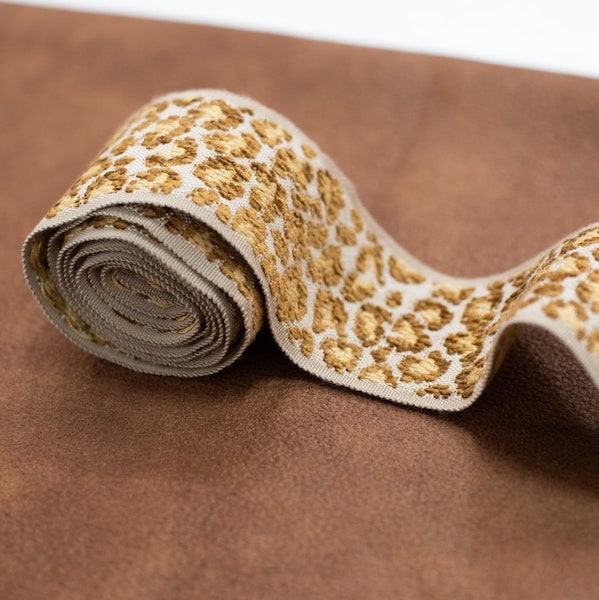
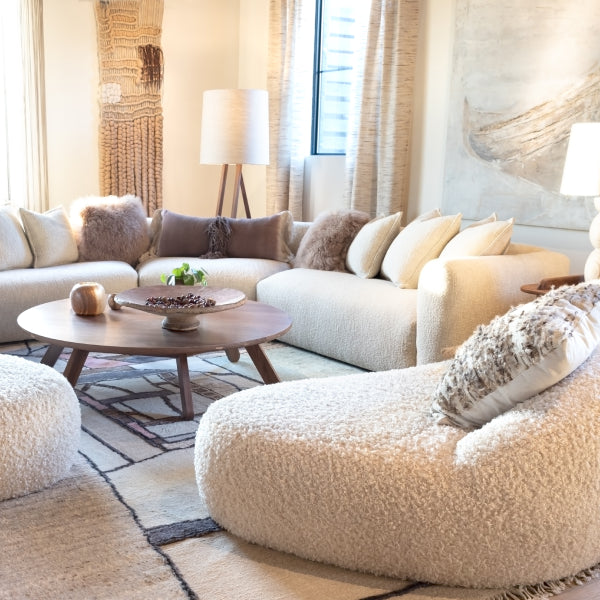
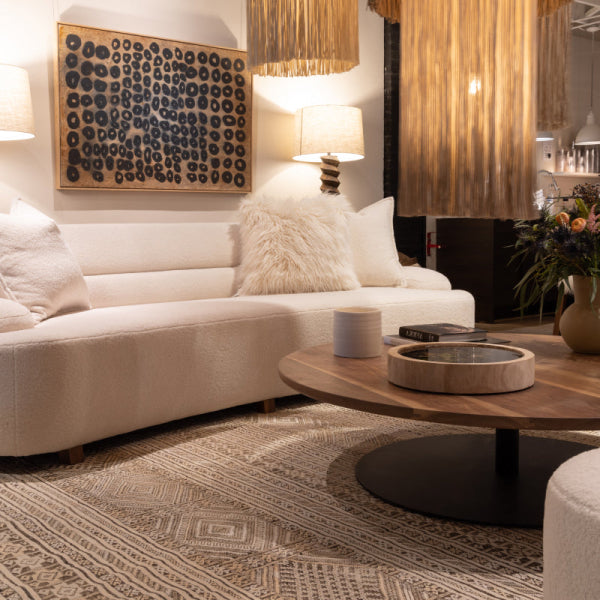
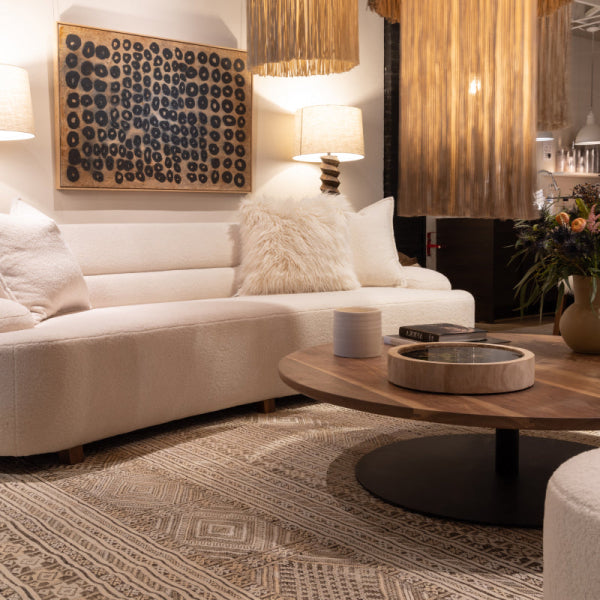
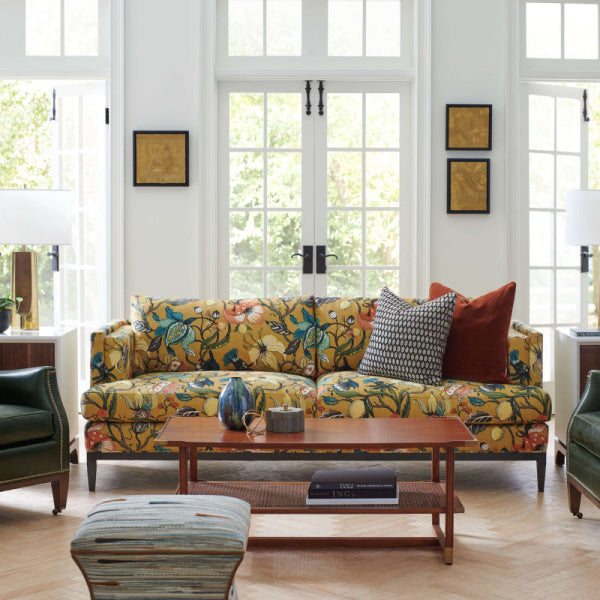








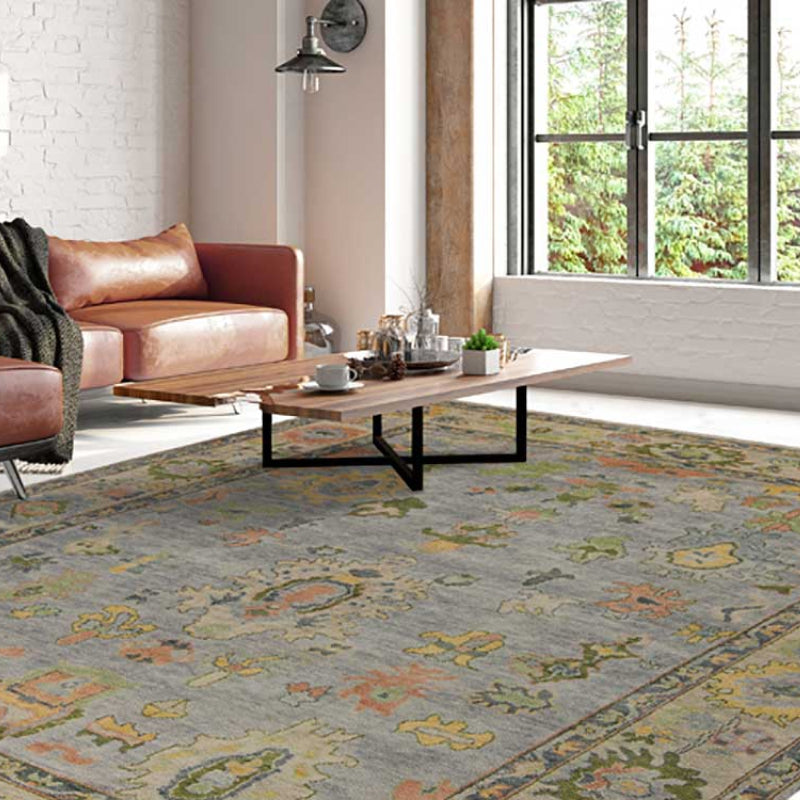
You've chosen the sofa, approved the rug, and placed the statement chairs. Then the afternoon sun reaches across the room, the upholstery starts to fade, and the windows still look unfinished. In Atlanta homes, the right window treatment has to do more than soften glass. It must support the architecture, protect premium furnishings, and look intentional beside luxury sofas, custom sectionals, and heirloom-quality furniture.
Belgian linen drapery panels are compelling because they combine visible material character with practical flexibility. The right weight and construction can diffuse daylight, frame a view, and give a designer room the relaxed refinement that ready-made curtains rarely achieve. The wrong specification, however, can leave a room overexposed, under-private, or poorly proportioned.
Why Belgian Linen Defines High-End Interiors
A Buckhead homeowner furnishing a formal living room often reaches the same decision point. One option is a standard retail panel in a predictable neutral. The other is a custom treatment in Belgian linen, selected by hand for its slub, weight, tone, and relationship to the room's upholstery. The difference isn't only that one costs more. The custom fabric gives the windows a material identity that can stand beside a luxury sofa rather than disappear behind it.
Belgian linen drapery panels belong to a textile tradition rooted in Flanders, where flax cultivation, retting, spinning, and weaving became a major rural industry. The historical record shows that linen was woven into everyday economic life, not reserved only for decorative use. That background helps explain why the fabric remains associated with irregular texture, durable woven cloth, and a hand that becomes more distinctive as the panel hangs.
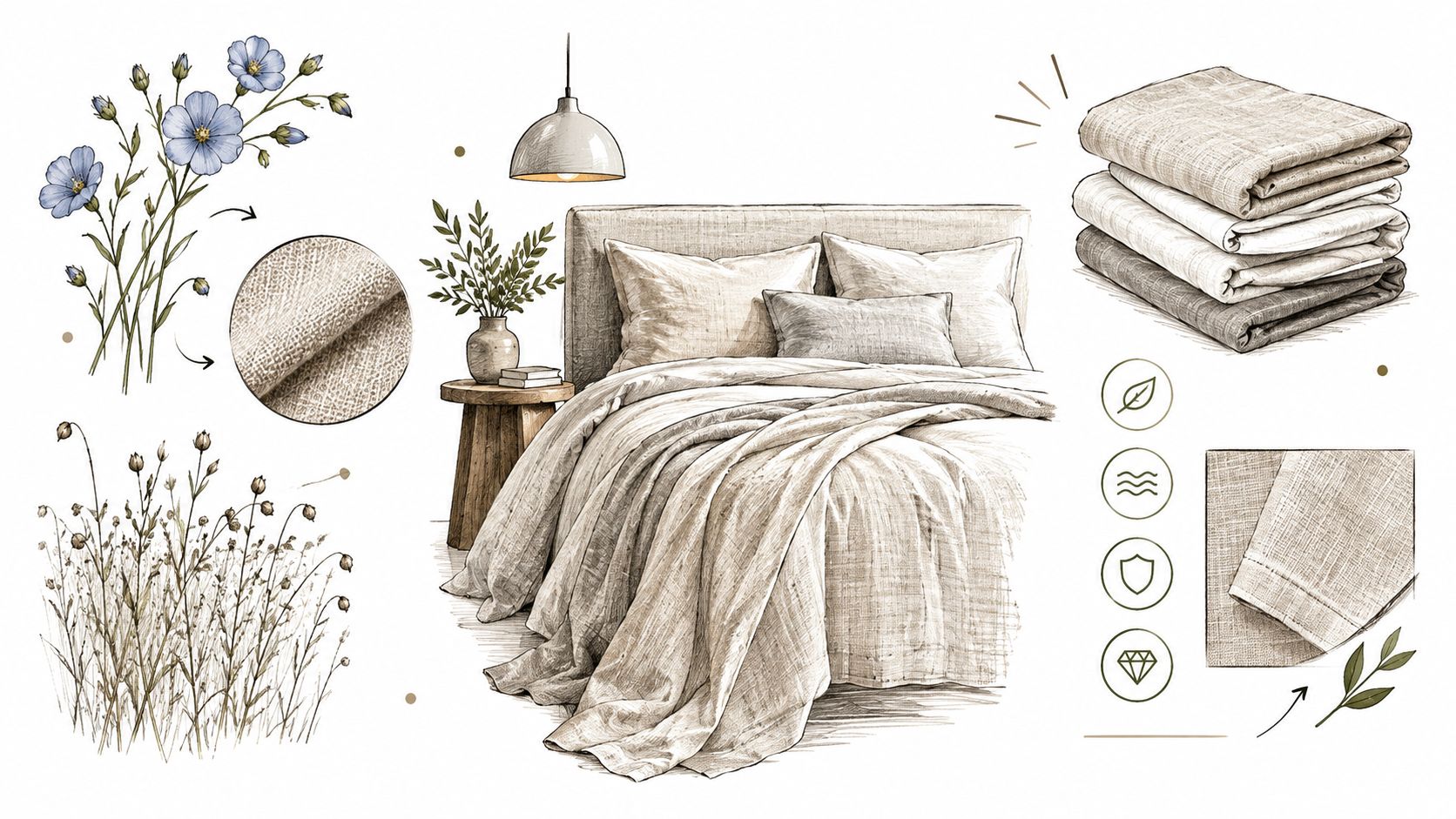
Material character beside premium upholstery
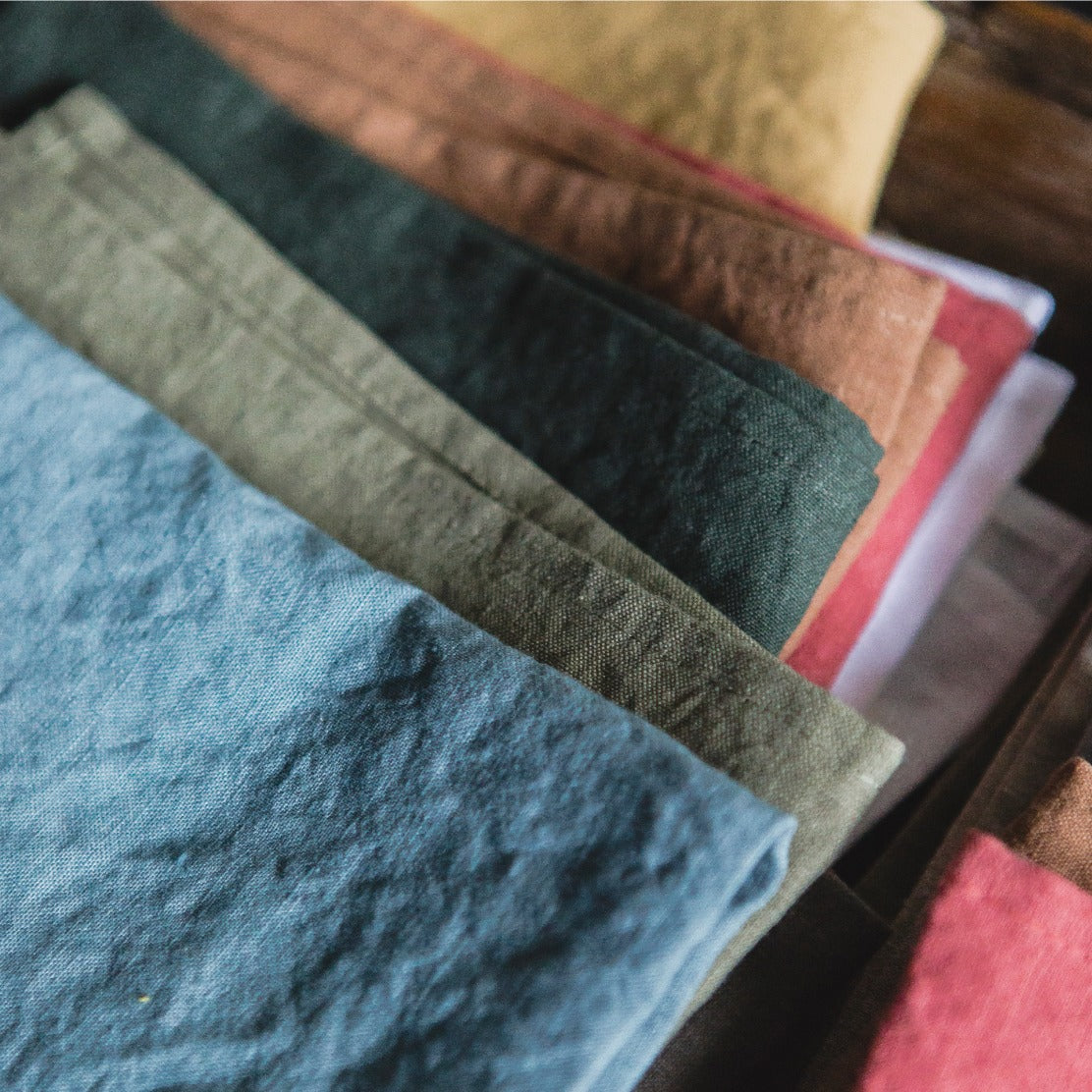
A natural slub can echo the grain of oak, the variation in a hand-knotted rug, or the relaxed surface of a linen-upholstered custom chair. It also prevents a large window wall from feeling overly smooth and anonymous. For a North Atlanta home filled with polished case goods and fitted seating, that irregularity often supplies the necessary softness.
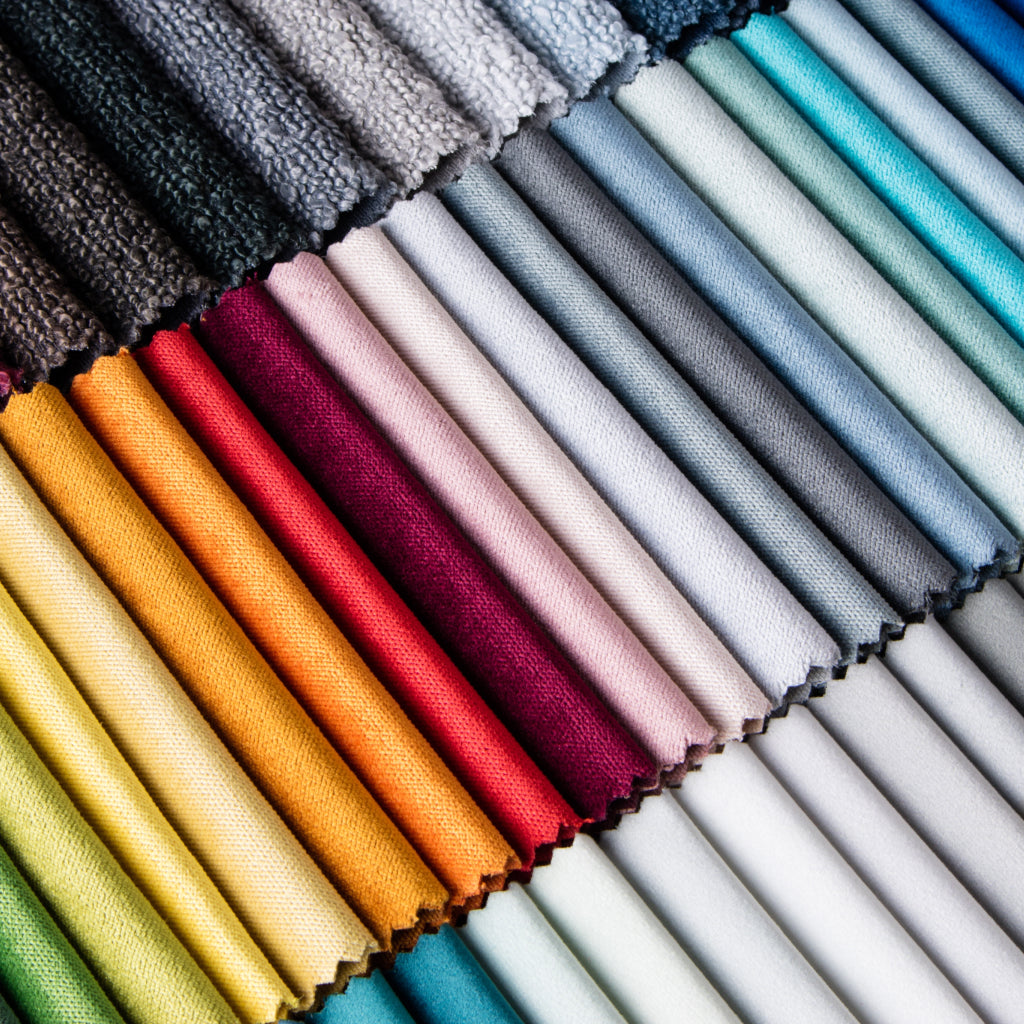
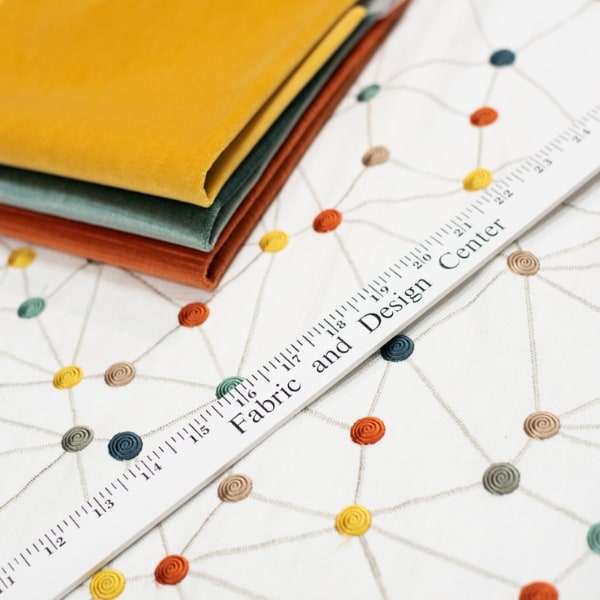
Texture should still be evaluated rather than romanticized. Ask for a full fabric cutting, not only a small swatch, and view it beside the actual sofa or sectional. Linen can read warm, gray, chalky, or faintly golden depending on daylight, wall color, and nearby finishes.
Practical rule: Treat the window fabric as part of the furniture composition. If the drapery is specified after the upholstery, it may look like an afterthought even when the fabric itself is exceptional.
The same principle applies to rooms containing sculptural or spiritual objects. A carefully selected textile background can support a contemplative arrangement, and a resource such as this guide to Buddhist statue interiors can help with proportion, placement, and visual calm. For fabric-specific background, the discussion of Libeco linen offers useful context for buyers comparing Belgian sources and finished textile character.
The Heritage and Manufacturing of Authentic Linen
“Belgian linen” is not a synonym for every pale linen-look curtain. It can describe a tightly concentrated heritage of cultivation, processing, weaving, and quality control, but the exact meaning depends on the product documentation. A buyer should separate fiber content, manufacturing location, and certification or trademark status before accepting a premium price.
Flanders developed a deep linen economy through flax cultivation, retting, spinning, and weaving. By 1840, 71% of households around Tielt were involved in linen production, while more than 65% of Meulebeke's population worked in flax-related activity, according to the historical account at Discovering Belgium. Those figures describe a regional production culture, not a guarantee that every contemporary panel carrying a Belgian reference passed through every stage in Belgium.
What the label should tell you
After World War II, flax shortages made the fiber expensive, and Belgian weavers organized distribution of available raw material among producers. The Belgian Linen trademark was established in 1960, creating a way to distinguish qualifying Belgian linen in international markets. That history gives the label weight, but it doesn't eliminate the need to inspect the finished fabric.
Request these specifications before approving a custom order:
- Fiber content: Confirm whether the cloth is 100% flax linen or a blend.
- Origin statement: Ask whether the flax was cultivated, spun, woven, or finished in Belgium.
- Fabric construction: Record weight, width, weave, thickness, and finishing treatment.
- Color process: Find out whether the shade is yarn-dyed or piece-dyed.
- Performance documentation: Request lightfastness information and care instructions.
A premium panel should be assessed as a finished furnishing material. Fiber provenance matters, yet the final result also depends on the yarn, weave density, finishing, lining, fabrication, and installation. Two fabrics described as Belgian linen may produce different opacity, fullness, shrinkage, and fold memory.
The European supply chain is broader than the name suggests. Belgium remains part of the core fiber-flax region alongside northern France and the Netherlands, so a Belgian designation should be read carefully rather than treated as proof of a single-country production route. For designers and homeowners in Fulton County, that transparency is part of buying designer-quality furniture and textiles. Provenance doesn't replace testing, but it gives the specification a credible foundation.
Performance Characteristics and Light Management
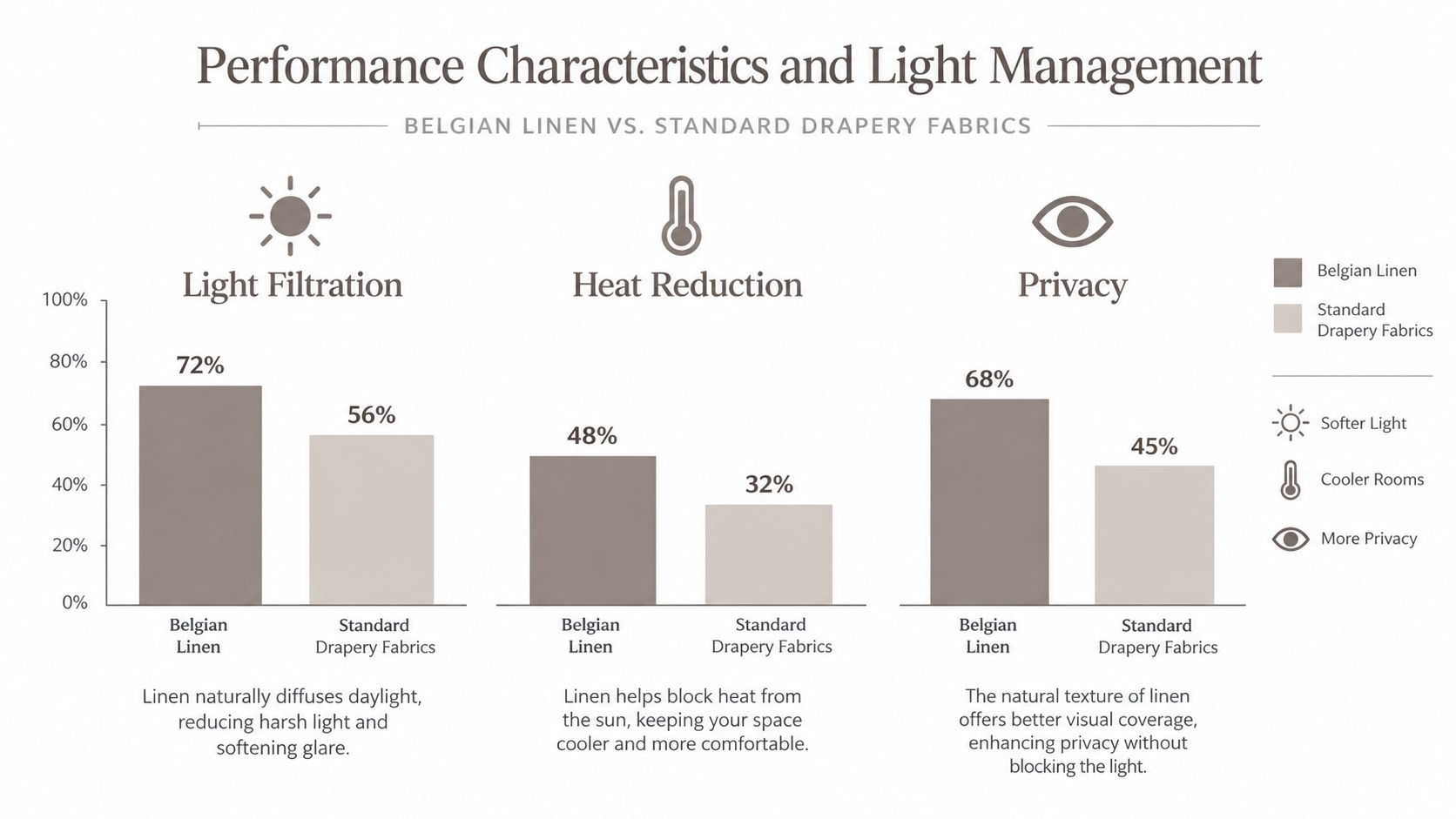
The most common mistake with linen drapery is specifying by appearance alone. A pale, lightweight panel may look beautiful in a showroom and still provide little privacy or solar protection in a west-facing Atlanta room. Areal mass, thickness, color, weave density, lining, and orientation determine how the treatment behaves.
Match construction to exposure
Unlined sheer-to-medium linen preserves daylight and creates a soft, informal atmosphere. It won't provide blackout performance, and nighttime privacy can be limited when interior lights are on. A heavier or darker fabric transmits less ultraviolet radiation than lightweight, pale cloth, but color alone isn't a substitute for a lining.
| Room condition | Practical specification | What it accomplishes |
|---|---|---|
| North-facing room | Lightweight or medium linen | Maintains daylight with gentle diffusion |
| Strong south exposure | Medium-to-heavy linen with lining or interlining | Reduces glare and supports furniture protection |
| West-facing Atlanta window | Substantial lining, interlining, or separate solar shade | Controls late-day heat and UV exposure |
| Bedroom or media room | Blackout lining with carefully sealed edges | Supports darkness and privacy |
| Living room needing flexibility | Linen face fabric with a layered shade | Balances daylight, privacy, and solar control |
A University of Nebraska textile study found that an ultraviolet-absorber treatment applied to linen and other cellulosic fibers caused appreciable strength losses. That makes aftermarket chemical treatment a poor default. Specify the construction first, and ask the mill for its lightfastness method and rating rather than assuming a treatment is harmless.
The need for precision is reinforced by daylighting research. A 2025 study reported useful daylight autonomy variation from approximately 40% to 100% as window layout and visible-transmittance conditions changed, as documented in research on window transmittance and daylighting. The practical lesson is straightforward. “Filters light” isn't a sufficient performance description.
Privacy is a nighttime requirement, not just a daytime fabric quality.
Breathability and moisture absorption can make linen pleasant in a room, but those properties don't create insulation, privacy, or blackout control. For a deeper treatment of blackout planning, consult this window covering advice from South Mountain. Designers comparing drapery with shades can also review Belgian linen Roman shades when a layered treatment is more appropriate than a single panel.
Styling Premium Linen with Luxury Furniture
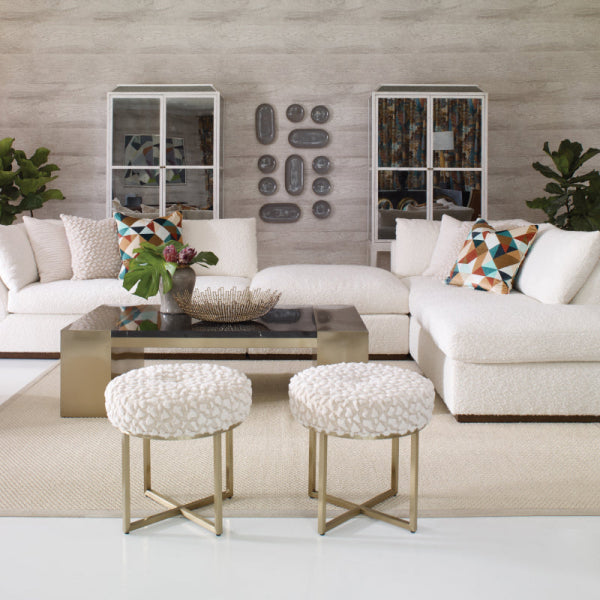
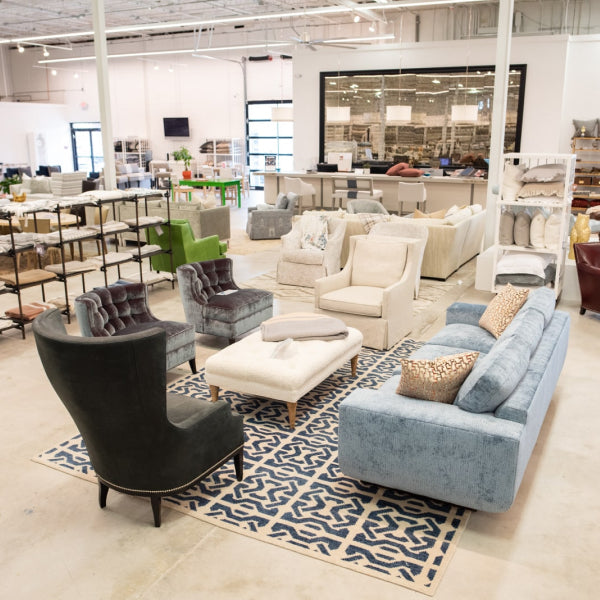
Treat Belgian linen drapery as an architectural finishing material, with the same care given to a luxury sofa, custom millwork, or a stone surface. In an Atlanta living room centered on a substantial sectional, the right panel can soften tall glass, balance the seating's scale, and keep the architecture from feeling overly formal. Beside a leather or performance-fabric couch, linen's natural irregularity adds warmth without introducing another dominant pattern.
Begin with visual weight and proportion. A broad window wall and deep seating call for fabric with enough body to hold the composition together. Lightweight voile may suit a breakfast room, yet it can appear insubstantial beside formal furniture. A medium-weight linen, substantial hem, and carefully selected heading create a more grounded finish. The panel should feel intentional when open, closed, and stacked.
Coordinate texture before color
Surface relationships usually matter more than exact color matching. Warm natural linen works with walnut, travertine, aged brass, and a cream luxury sofa. Cooler gray linen can support painted millwork and contemporary designer furniture. Compare the actual samples together in morning and afternoon light, because undertones shift as daylight changes.
Let the furniture guide the panel's role:
- With a luxury sofa: Repeat its undertone rather than copying its color.
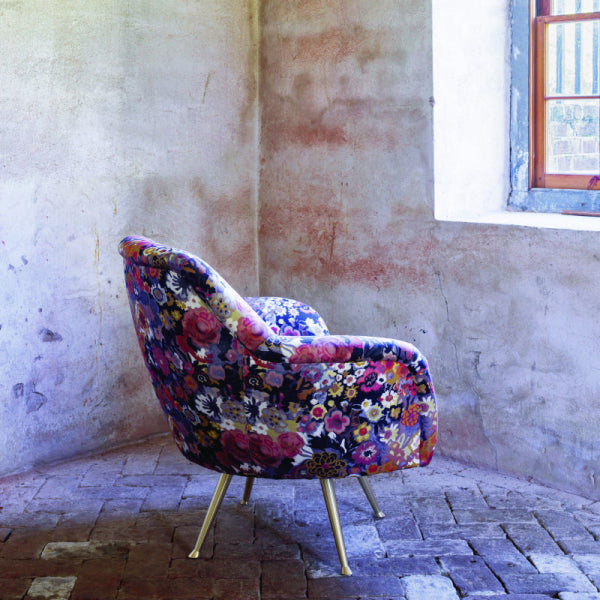
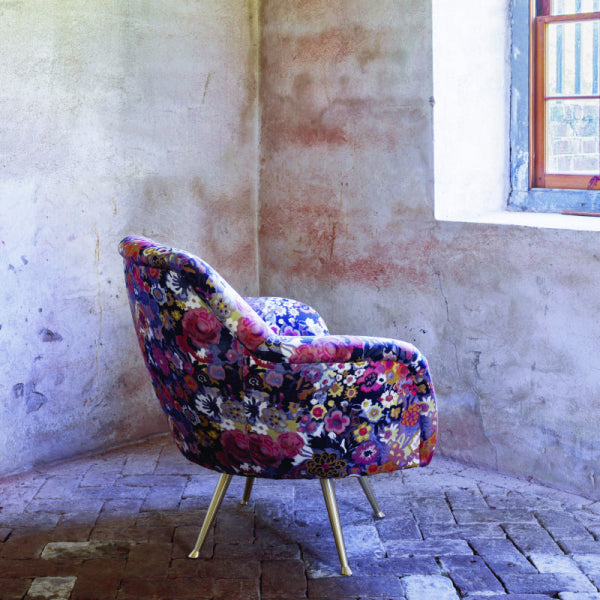
- With a statement chair: Provide a quiet background for the chair's silhouette.
- With a premium sectional: Use sufficient fabric weight and fullness to balance its volume.
- With patterned upholstery: Keep the linen's texture visible while restraining its color.
- With heirloom furniture: Choose a finish that feels natural, not overly processed.
A well-composed Atlanta interior often brings together one strong shape, one tactile textile, and one quieter architectural layer. Belgian linen can provide that third layer while still contributing character. It frames the view, softens hard daylight, and connects the wall plane to the upholstery.
Avoid repeating linen across every surface. Similar weaves and tones on the panels, sofa, and pillows can flatten the room. Keep linen at the window, then add contrast through wool, velvet, leather, wood, or a hand-knotted rug.
Essential Sizing, Fullness, and Header Details
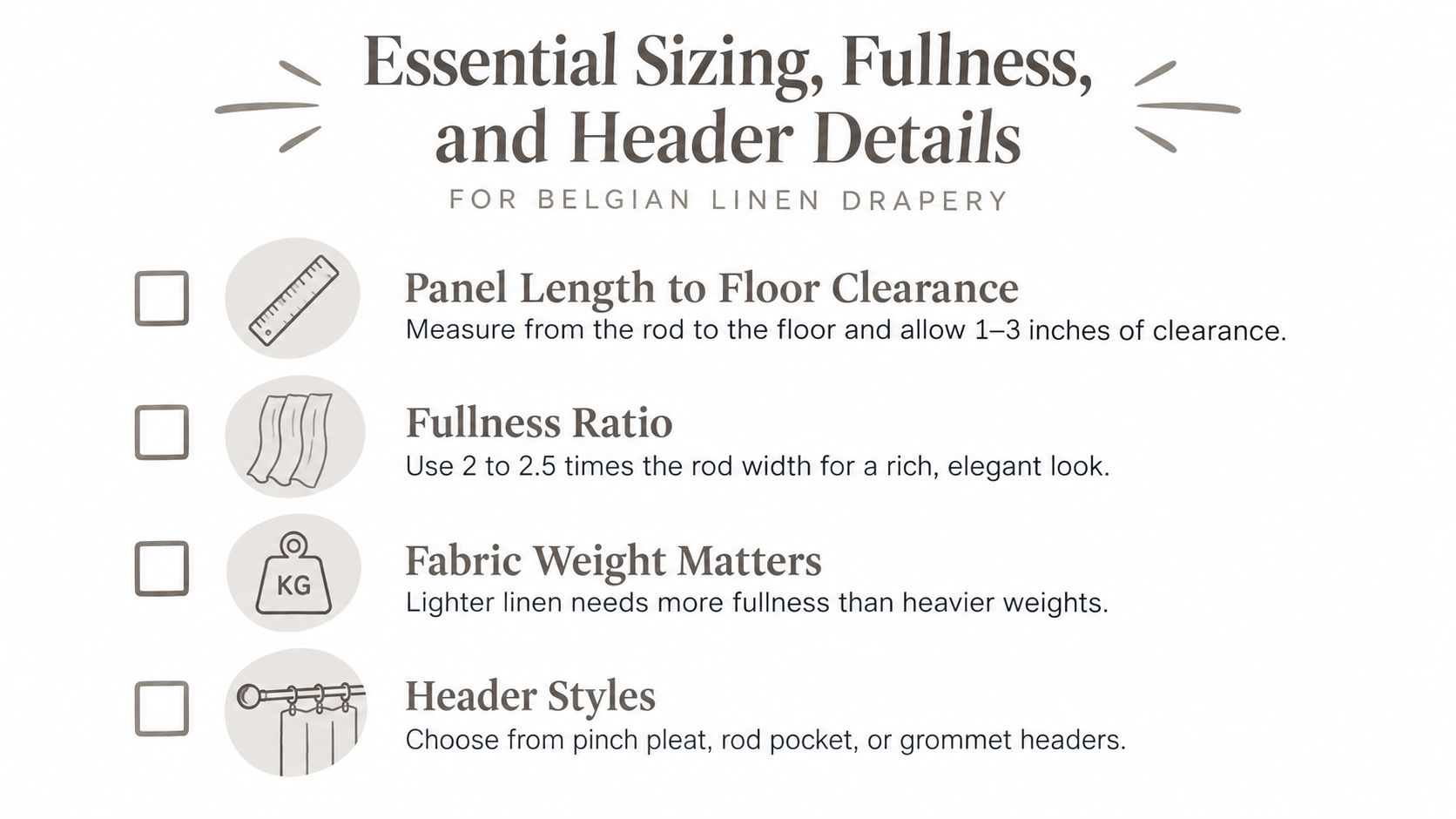
In an Atlanta living room with custom upholstery and tall windows, the panel should be measured as an architectural finish, not fitted to an existing rod by guesswork. Record the finished rod width, stack-back space, window height, trim, sill, floor transition, and obstructions such as handles or radiators. Decide whether the return should turn toward the wall, clear the glass fully, or leave part of the opening covered.
Confirm rod height before setting panel length. A floor break, a clean kiss above the floor, and a relaxed puddle produce distinct effects, and Belgian linen's fold memory makes each one visible. Before fabrication, retain a cut length for testing shrinkage, seam behavior, and the planned cleaning method. That small check can prevent an expensive finish from looking wrong after installation.
Build the heading around the fabric
Fullness determines the panel's appearance when closed and its stack when open. Lighter linen often needs more fabric to look generous, while heavier linen may look refined with less. The weave, fabric width, lining, and heading system all affect the calculation, so the workroom should set the ratio for the actual cloth rather than apply one universal formula. Use the curtain fullness calculator as a planning aid, then confirm the result with the fabricator.
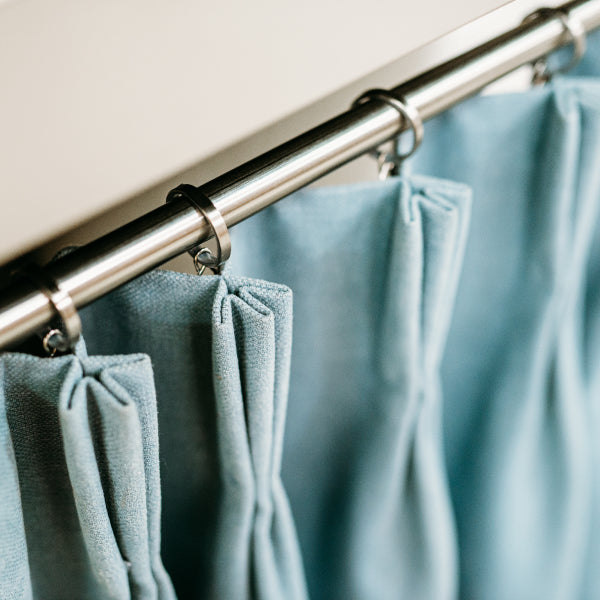
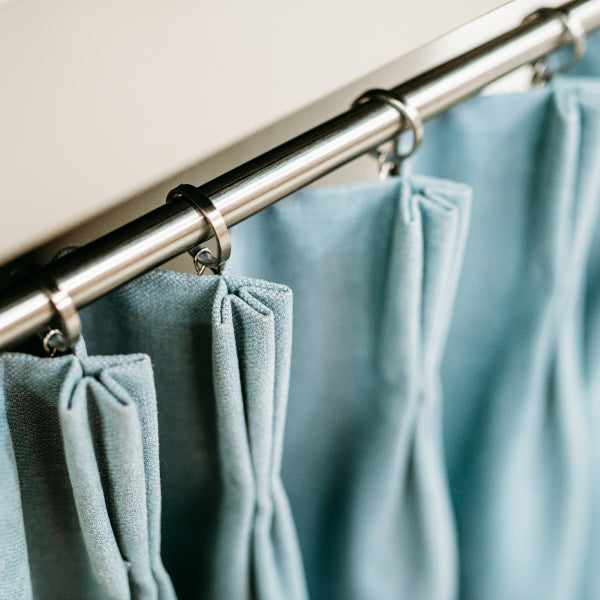
- Pinch pleat: Gives a formal vertical cascade suited to refined rooms.
- Rod pocket: Creates a softer line but moves less conveniently for frequent operation.
- Grommet: Provides a casual contemporary look, with hardware contributing visibly to the design.
- Ripple or wave fold: Requires compatible track hardware and careful stack-back planning.
Heavy linen needs a heading engineered to distribute its weight. Otherwise, even a beautiful face fabric can sag, drag, or lose its rhythm against the furniture and window architecture.
Custom vs Ready-Made: Making the Right Investment
A ready-made panel works well when the window is conventional, exposure is modest, and the room can accept limited choices. It offers speed and a defined price. Width, length, lining, heading, and fabric weight, however, may not suit the opening. That mismatch becomes clear in Buckhead great rooms, older Atlanta homes with irregular windows, and residences with unusually tall or wide openings.
Custom Belgian linen panels require more planning and fabrication, yet they address the details that make window treatments read as architectural finishings rather than afterthoughts. A workroom can coordinate panel widths, set precise hems, add privacy or blackout lining, shape returns, and choose a heading that sits properly beside the furniture. Those decisions matter when the room also contains custom upholstered pieces and statement furnishings.
The invoice is only one part of the investment. A ready-made panel may later need alterations, additional lining, replacement hardware, or complete replacement if the first solution fails. Custom fabrication starts with the room's dimensions and intended use. Its value shows in the fit, daily operation, visual proportion, and protection of furnishings near the window.
Belgium belongs to Europe's core fiber-flax region, alongside northern France and the Netherlands. A 2022 production table reports 77,910 tonnes of flax from Belgium compared with 652,680 tonnes from France, placing Belgian linen within a broader regional supply chain rather than an isolated one. The same source records EU flax-planted area rising from approximately 80,000 to 182,000 hectares between 2014 and 2024, more than doubling during that period. These figures describe agricultural scale and regional context, not the performance of a particular finished curtain. The production comparison appears in the flax overview on Wikipedia.
Before approving a purchase, assess three points:
- Will the panel fit the opening without visual compromise?
- Will its construction provide the required privacy and solar control?
- Will the fabric and heading remain coherent beside the existing furniture?
If any answer is no, the lower initial price may become an expensive interim solution. Custom is not automatically superior, but it is usually the more rational choice for unusual architecture, valuable upholstery, or a room intended to last. In Atlanta's luxury interiors, the right drapery should finish the architecture and support the furniture, not compete with either.
Caring for Heirloom-Quality Drapery
Linen rewards informed care, not casual care. Its low extensibility supports a clean appearance but also increases the risk of permanent creases and dimensional movement. Repeated compression, sharp folding, or careless shipping can leave fold memory at headings, hems, and return edges.
Before purchase, obtain the manufacturer's approved cleaning route. Don't assume that ordinary laundering is safe because the fiber is natural. A professional cleaner may recommend a specific process, and the fabric should be conditioned before final fabrication when shrinkage or dimensional stability is a concern.
A practical maintenance routine
Dust the panels gently and keep operating hardware smooth so the cloth isn't dragged or pinched. Open and close the treatment evenly, especially where a heavy lining adds weight. If a fold becomes pronounced, don't press the fabric aggressively at home. Ask the workroom or cleaner to recommend the correct finishing method.
The care decision also affects environmental value. The CFDA notes that a 2008 European Confederation of Linen and Hemp report attributed nearly 80% of linen's energy and water consumption to washing and ironing, as summarized in its flax and linen materials guide. Longer service life depends on reducing unnecessary washing and following the approved care route.
Before approving panels, verify:
- Fiber and origin: The label clearly distinguishes flax content from blend content.
- Finished specifications: Weight, width, thickness, color process, and lining are documented.
- Fabric testing: A cut length has been evaluated for shrinkage, seams, and cleaning response.
- Installation quality: The heading, fullness, hardware, hems, and returns suit the fabric.
- Room performance: Privacy, glare, UV exposure, and nighttime use have been addressed.
- Care planning: The owner knows who will clean, press, repair, and rehang the panels.
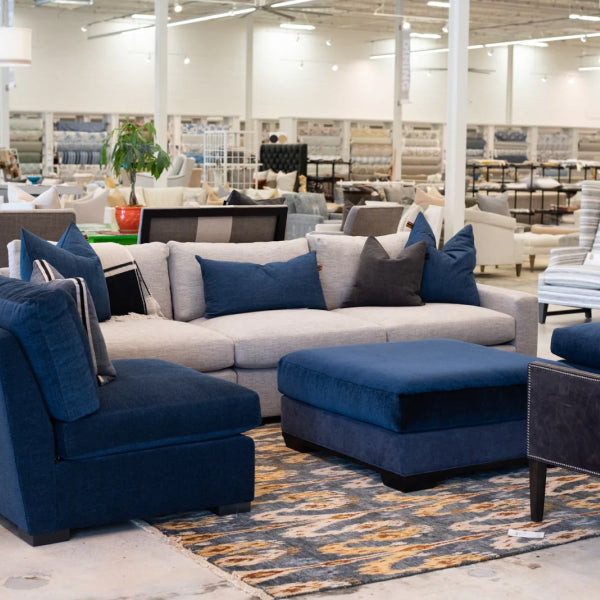
For broader textile-care references, the Pine Country Window Cleaning blog offers related guidance on maintaining fabric surfaces. Lewis and Sheron Textiles provides Belgian linen fabrics, custom drapery, lining options, reupholstery, and made-to-order furniture support for Atlanta homeowners and design professionals who want the window treatment and upholstery specified as one composition.
Visit Lewis and Sheron Textiles to review Belgian linen, lining fabrics, custom drapery, and furniture textiles with an Atlanta design team. Bring your upholstery samples, window measurements, and room photographs so the fabric weight, privacy strategy, and finished proportions can be selected for the space rather than guessed from a catalog.