


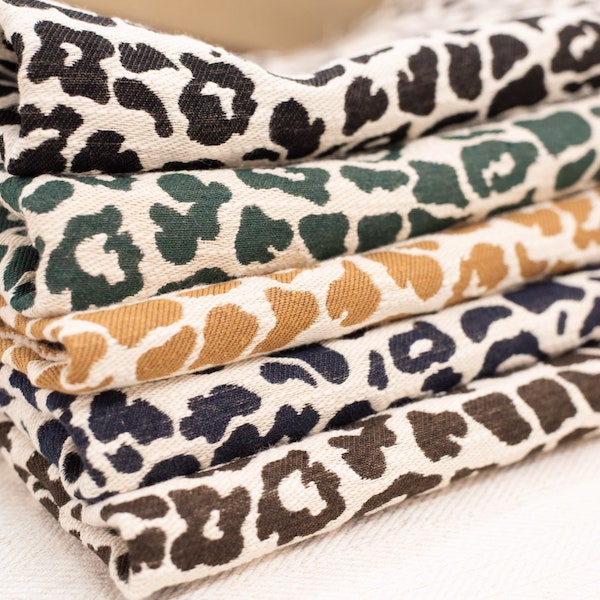
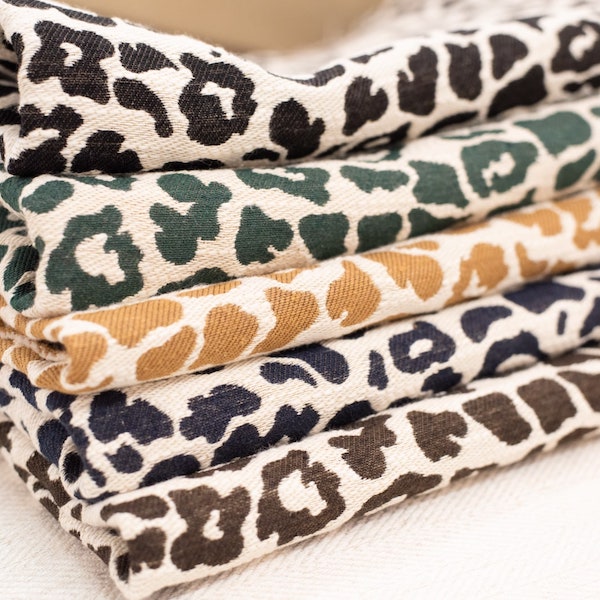
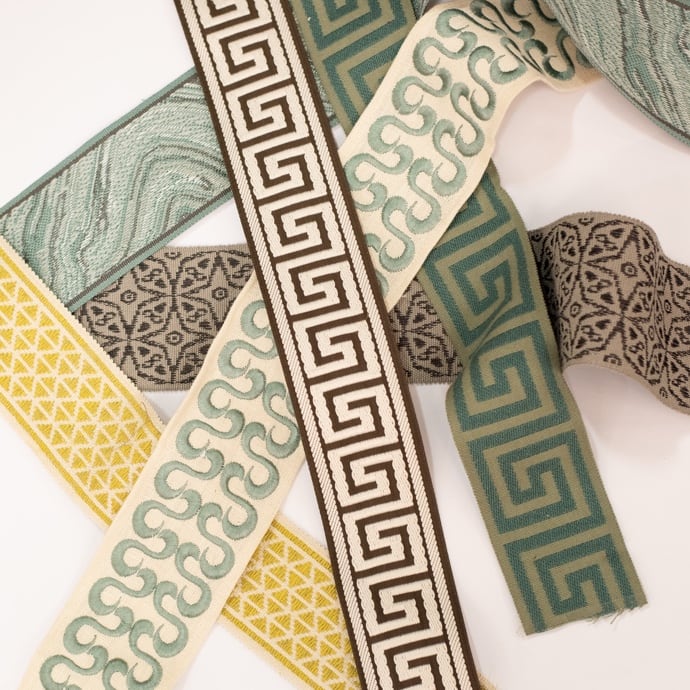

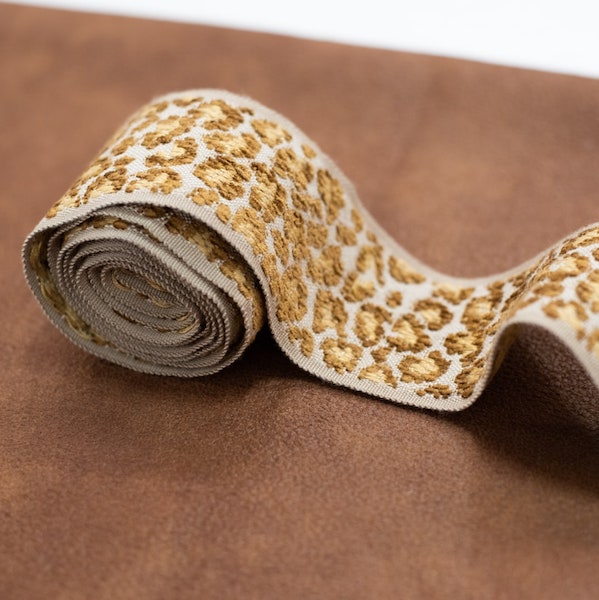
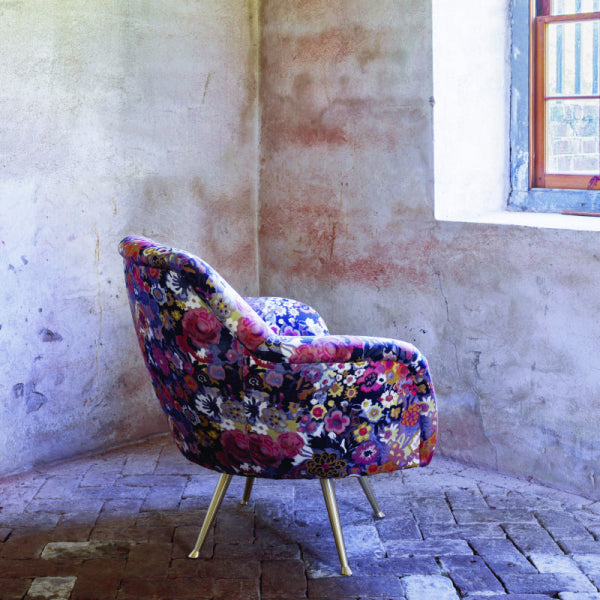
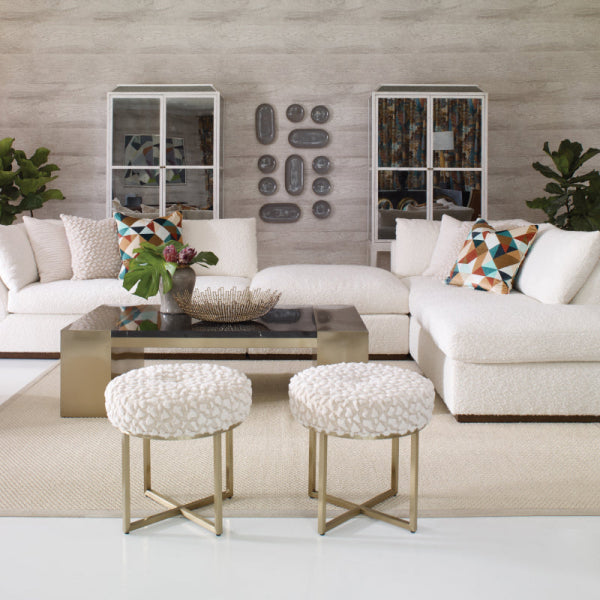




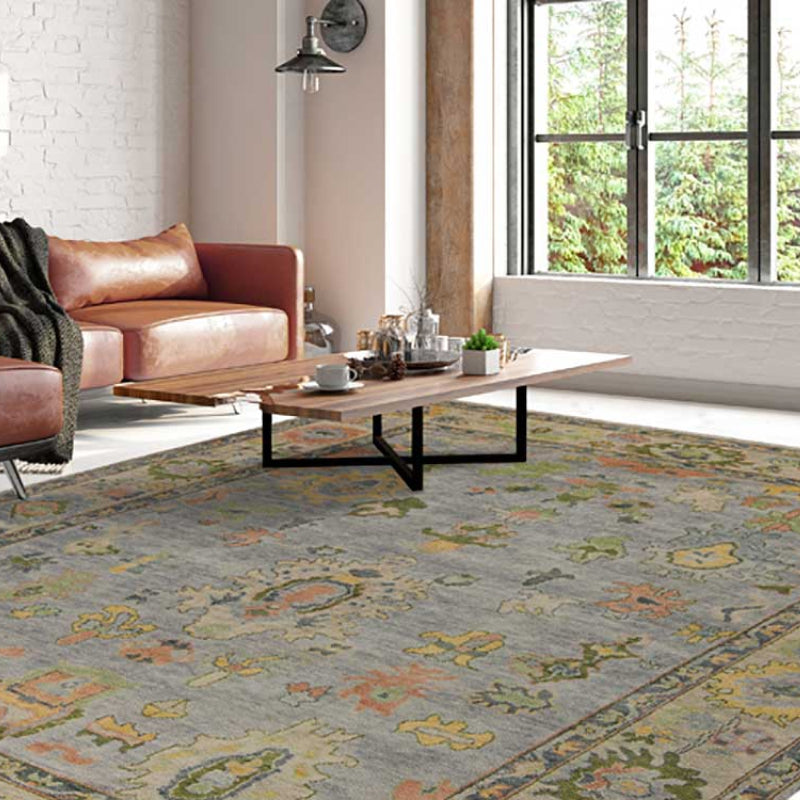
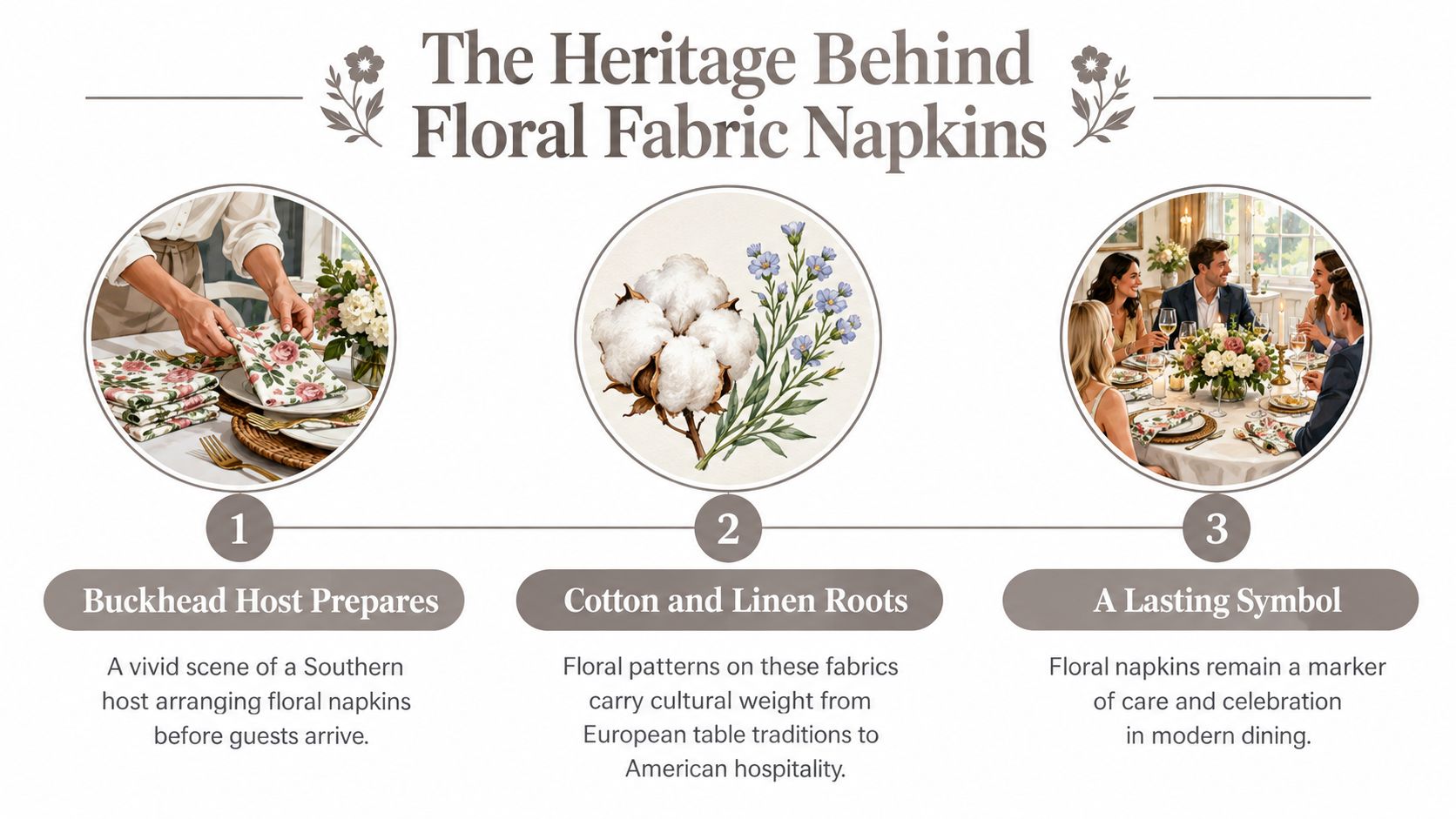
A Buckhead host smooths a floral napkin beside a place card, then turns it once so the pattern sits neatly at the table. That small choice can bring together a room's colors, the feel of its linens, and a much longer textile tradition.
The Heritage Behind Floral Fabric Napkins
A flowering vine on a napkin carries a longer story than its place at dinner suggests. Its design lineage includes Indian chintz, cotton decorated with painted, stained, or woodblock-printed botanical patterns. Portuguese and Dutch traders brought chintz to Europe around 1600, and by 1680, more than 1 million pieces of chintz were imported into England each year, with similar quantities reaching France and the Dutch Republic (history of chintz).
Color and washable cotton helped give these textiles a place in clothing and household interiors. Flowering trees, scattered sprigs, trailing vines, and dense botanical repeats emerged through Indian designs and European adaptations. Those familiar motifs carry the history into present-day table linens.
From imported cloth to domestic tables
Printed cotton spread from garments and wall hangings into household uses, including table linens.
Its popularity also prompted protectionist measures: France prohibited chintz imports in 1686, British restrictions began in 1721 and continued in various forms until 1774, while production in Britain and France became mechanized by 1770 and factory-made European chintz displaced Indian handmade chintz in global markets by 1820 (Europeana's history of chintz). European makers developed ways to reproduce rich colors and detailed prints, helping bring printed florals into wider household use.
For a homeowner browsing an Atlanta design showroom, that lineage offers a useful way to read a fabric. A flowering branch works like a small illustration, with individual details to notice; a repeated sprig or vine can act more like texture. Neither motif alone tells you how the cloth will feel or withstand washing. The pattern is one part of the choice, separate from fiber and finish.
At dinner, floral imagery can also contribute to the mood alongside food and wine. For hosts considering those connections, understanding wine scent profiles offers context for floral aromas, without requiring a literal match between the wine and the napkin's flowers.
Choosing the Right Fabric for the Job
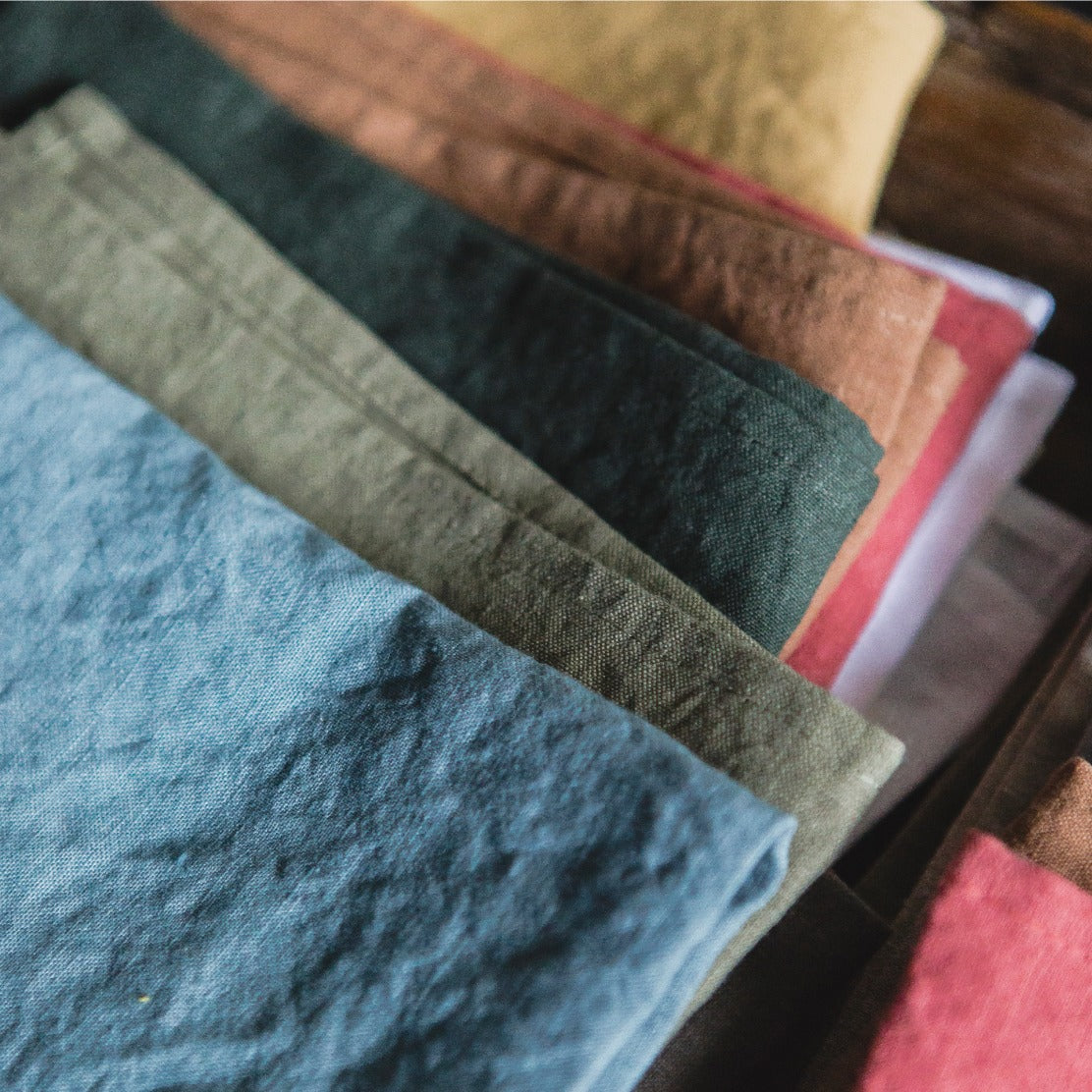
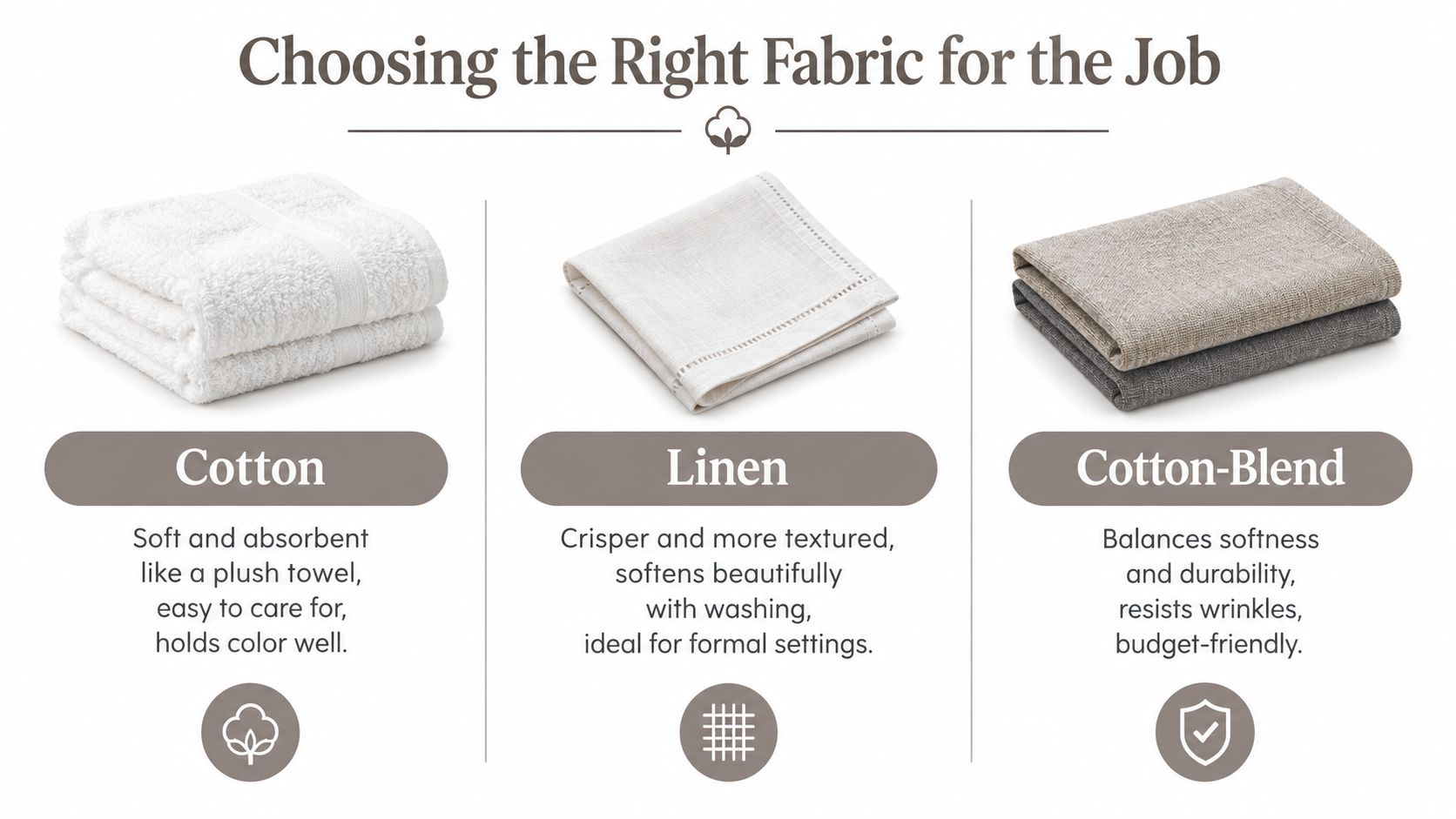
A napkin should feel good in the hand, absorb a spill, and come through laundering in a shape you still want to put on the table. Think of cotton as a soft towel, linen as a crisper handkerchief, and a cotton blend as a compromise between the two. The showroom hand-feel is a useful first impression, but it won't tell you everything about how the fabric performs at home.
Cotton is naturally absorbent and comfortable. Linen is valued for moisture uptake, dimensional character, and rapid drying, and it often softens with washing. Blends can reduce wrinkling or improve dimensional stability, but may give up some absorbency. Fiber content, weave, and finishing all affect the result, so a fabric's appearance alone isn't a reliable guide.
Read the weave and the finish
A dense, tight weave may stand up well to abrasion and repeated washing, but a very compact construction can absorb liquid more slowly than a more open one. If a napkin is mainly for a formal dinner, a crisp hand and defined edge might matter most. For everyday meals, prioritize absorbency and a fabric that feels comfortable after many washes. Textile evaluation has found that increasing cotton content improves absorbency and comfort, while lower moisture regain reduces those qualities (textile evaluation).
Ask whether the fabric is prewashed or dimensionally stabilized. These treatments can help limit shrinkage and distortion, although care should still follow the fabric's specific instructions. Look closely at hems and corners, too. Those areas bear concentrated stress as the napkin goes through wet–dry cycles.
A practical comparison: Weigh a dry sample, saturate it with a fixed volume of water, and weigh it again. The change in mass gives you a simple comparison of liquid uptake. Reweigh the sample after timed intervals to compare drying behavior.
Use the same method for each candidate fabric rather than assuming a vivid print or luxurious hand means the napkin will work well at dinner. For Atlanta homeowners comparing premium textiles, this turns a showroom conversation into a practical decision about how the napkin will be used at dinner.
Matching Pattern Scale to Your Table
Pattern scale means the size of the design, not its color or subject. A floral can be bold because its blooms are large, or subtle because the motif is small and closely repeated. Think about the napkin as part of the whole table: plate size, runner, centerpiece, and the space between place settings all affect how much pattern feels balanced.
A large, high-contrast flower can take over a small breakfast table, especially when the plates and centerpiece are also visually busy. At the other extreme, a tiny ditsy print may lose its character across a long table if it's surrounded by similarly small-scale textures. The solution isn't automatically to choose a quieter print. Instead, decide which element should lead, then keep the other linens more restrained.
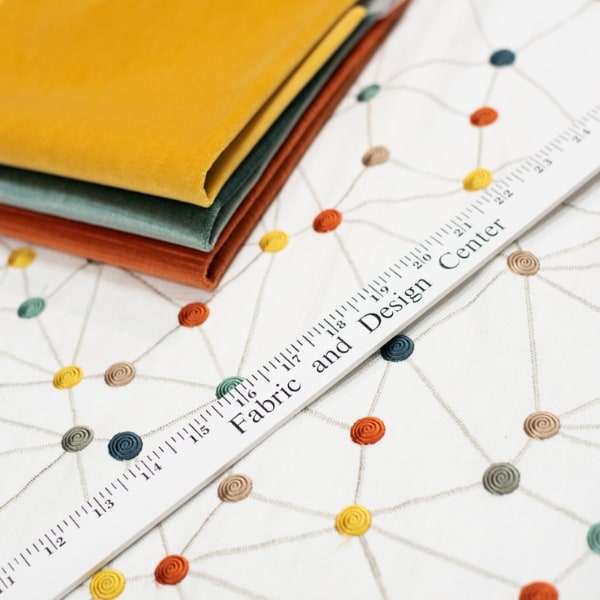
For floral design options, botanical print fabrics can help you compare how different motifs and repeats create distinct moods. When evaluating a fabric in person, look beyond a single cut of the pattern. Find out where the repeat falls, then picture how it will land on each finished napkin. If a flower is meant to sit at a visible corner, the repeat needs to allow for that placement without awkwardly cropping the motif.
| Pattern Scale | Best For | Pair With |
|---|---|---|
| Small | Intimate tables and layered settings | Solid plates, quiet runners, subtle texture |
| Medium | Everyday dining and versatile formal settings | Coordinated solids or simple stripes |
| Large | Spacious tables and statement settings | Plain table linens and understated place settings |
A North Atlanta dining room with a long formal table can support a larger motif more easily than a compact breakfast nook. In either space, bring a sample close to the plates and linens you plan to use. That simple comparison helps you see whether the floral reads as a considered accent or competes with everything around it.
Styling Ideas for Upscale Dining
A polished table doesn't need every surface to carry a pattern. Give each layer a role, then let the floral napkin contribute color and personality without competing with the china or centerpiece.
Three settings, three approaches
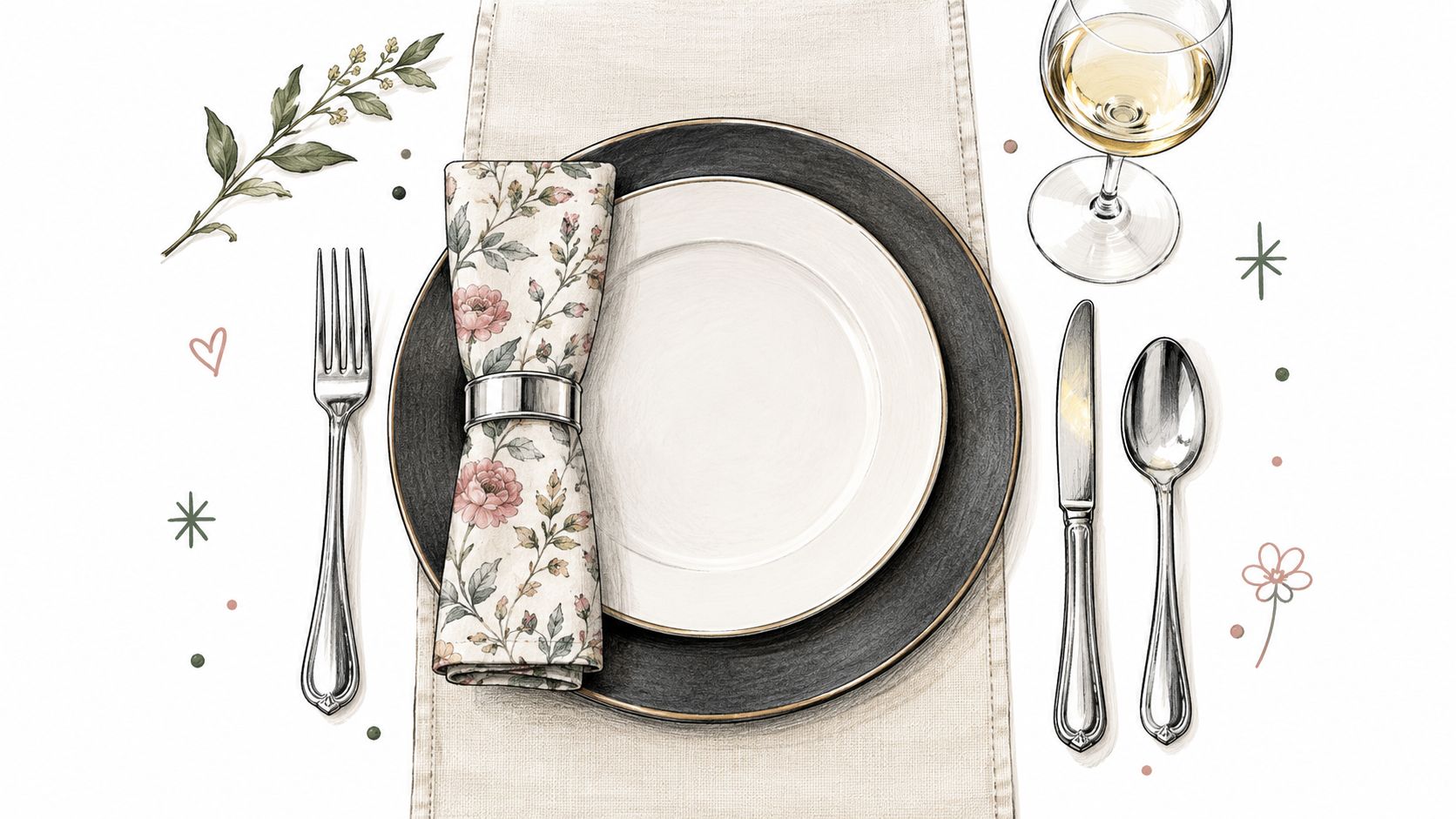
- An intimate dinner for four: Make the napkin the single patterned accent. Place a small-scale floral on a solid charger, with a quiet linen runner and a simple botanical centerpiece. Repeating the floral across each setting gives the arrangement cohesion without crowding a smaller surface.
- A long formal table: Create rhythm by alternating floral and solid napkins, or keep every napkin floral and use plain linens elsewhere. A repeat that reads clearly from one end of the table to the other makes the pattern feel intentional.
- An alfresco Atlanta lunch: Pair a bolder botanical print with stoneware and bright glassware. These simpler, more casual materials give the napkin enough contrast to stand out without making the setting feel overly formal.
A square napkin usually looks composed with a fold that shows one clear area of the print. Before folding the full set, check where the repeat lands on the visible corner. Choose a napkin ring that holds the fabric without pulling hard on the hem or covering the motif. If you're layering handmade details, this guide to styling a hand-printed runner offers ideas for combining printed cloths without losing the table's balance.
Connect the table to the room
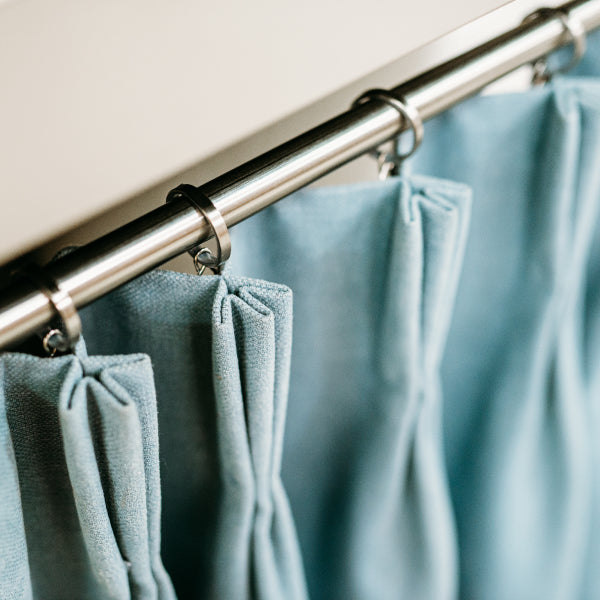
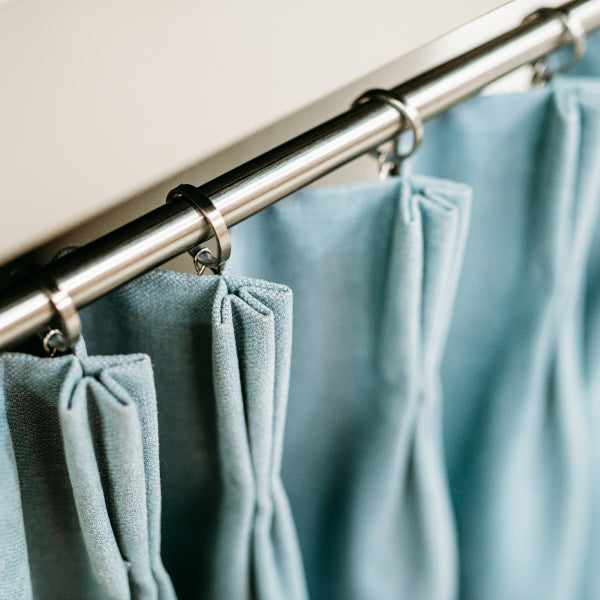
Floral napkins can echo colors in custom drapery or bring a fresh note to a room already grounded by Belgian linen. With heirloom china, choose a print that supports the china's shape and decoration rather than matching every color exactly. That relationship between old and new often feels more personal than a perfectly coordinated set.
For a finished setting, look at the table from a seated position as well as from above. Guests experience the napkin close to the plate, while the full arrangement has to work across the room. A good composition feels connected in both views.
Buying Versus Making Your Floral Napkins
Buying and making solve different problems. A design center or retailer can offer curated fabric, professional hemming, and ready-to-use options. Sewing your own gives you more control over the exact print, size, and palette, but asks you to supply the time and sewing skill.
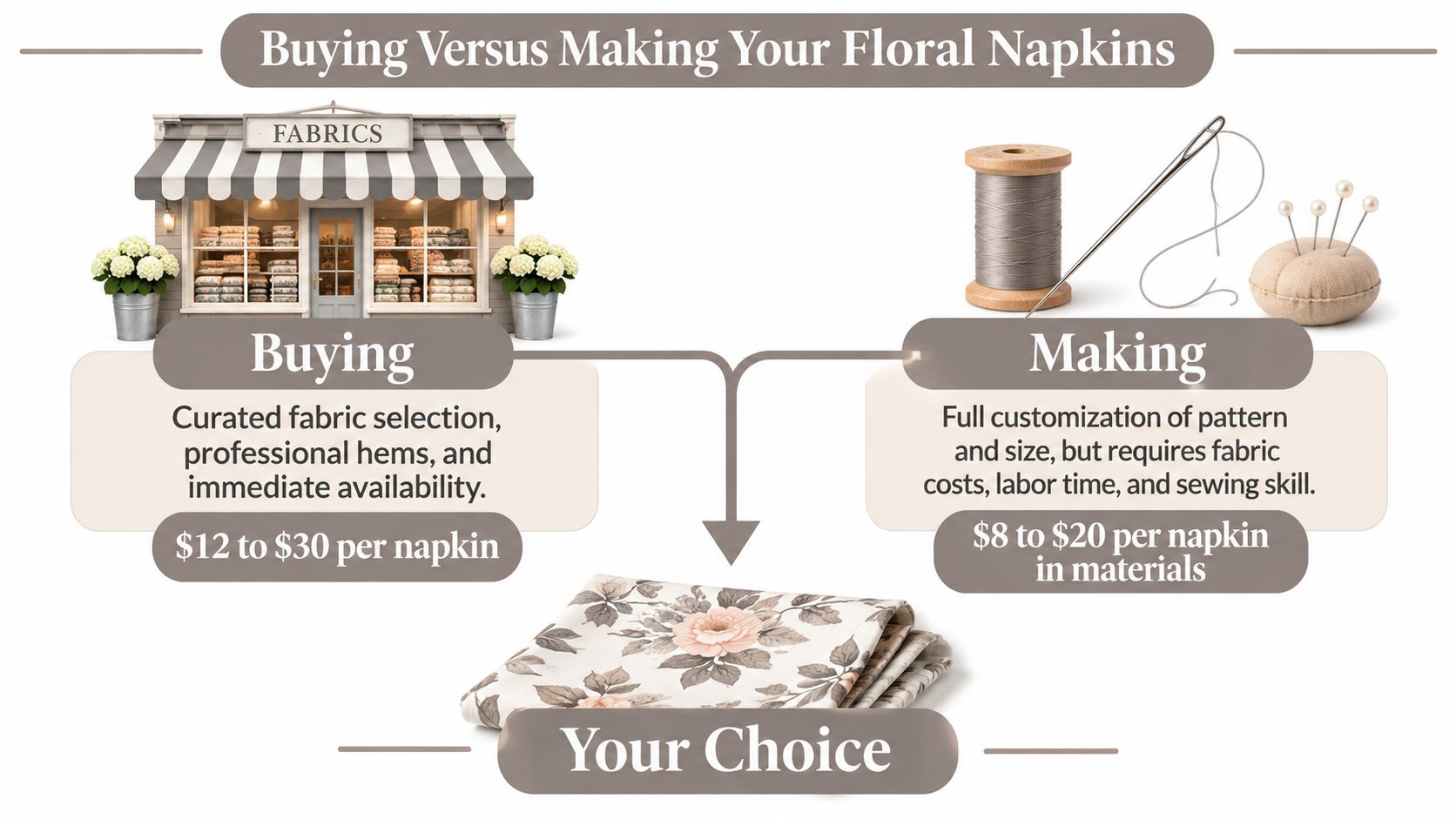
If the napkins need to match a particular room, a fabric-first approach can be worthwhile. Lewis and Sheron Textiles offers floral fabrics for table linens alongside cloth napkin collections, giving shoppers the option to consider both material and finished pieces in one setting. For those sewing at home, this tablecloth-making guide provides another reference for working with fabric and finished table dimensions.
A straightforward DIY route
Start by choosing fabric whose fiber, print, and care requirements suit the way you'll use the napkins. Estimate enough yardage for the full set, then reserve one extra piece for sampling. Prewash the fabric according to its care limits so you can account for shrinkage before cutting.
- Cut with control. Use a rotary cutter and cutting mat to make consistent squares, checking that the print's repeat falls where you want it.
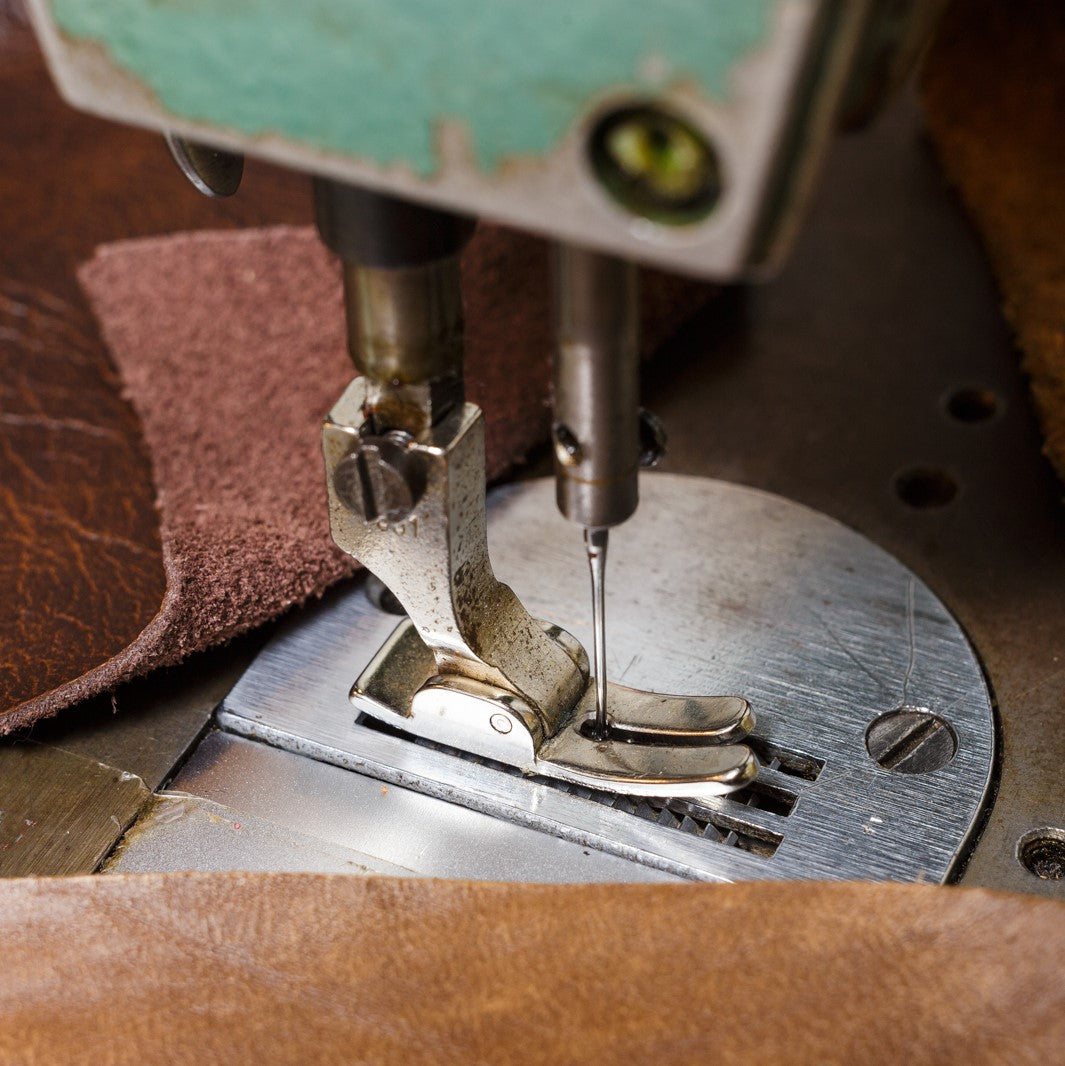
- Finish the edges. Fold each edge twice to form a double-fold hem, then stitch evenly. If the napkins are gifts or need to coordinate with monogrammed linens, consider having a workroom handle the hemming.
- Press before use. Shape the corners and press each napkin for a crisp finish. Test your iron on the spare sample first, especially if the fabric has a delicate print or a care restriction.
For a quick update, buying off the floor may be the simpler route. For a tightly controlled palette or unusual table size, sewing or working with a local workroom can give you more control. The right choice depends on how much customization matters compared with convenience.
Care That Protects Color and Craft
A dark floral beside a pale linen runner makes wash performance matter. Preserving a heritage-inspired print takes the same attention as choosing it, whether you're comparing fabrics in an Atlanta design showroom or caring for a set at home.
Start with evidence behind the word colorfast. Ask the supplier for ISO 105-C06 or equivalent AATCC wash-fastness results. ISO 105-C06 assesses shade change and color transferred to adjacent textiles after controlled washing, using standardized gray scales. For frequent dining use, seek a gray-scale rating of 4 or higher for both measures, especially with saturated greens, reds, and blues (wash-fastness testing).
Fiber content alone cannot predict the result. Cotton and blends may respond differently, and the dye, print, and finish also deserve attention. A comparison between fabrics helps you ask better questions; it cannot guarantee how another floral will wash.
Match the wash to the textile
Use the care label as the recipe for that particular cloth. Ask the supplier to identify its fiber and dye or print type before choosing a routine. For linen-specific guidance, consult these linen care instructions. The table offers cautious starting points; product instructions take priority.
| Fabric and Print | Wash Cycle | Detergent | Drying | Special Note |
|---|---|---|---|---|
| Dark printed cotton | Separate, cold, short cycle if permitted | Mild liquid | Air-dry when practical | Check staining performance before pairing with pale linens |
| Linen floral | Gentle cycle if permitted | Mild liquid | Air-dry or reshape as directed | Smooth hems while damp to preserve shape |
| Cotton-polyester blend | Follow label; limit unnecessary agitation | Mild liquid | Follow label | Do not assume the same behavior as untreated cotton |
Gentler washing also matters for fiber release: a 2025 household microfiber study measured an average of 5,849,943 microfibers per liter across three washing trials, reported lower shedding with cooler water and shorter cycles, although the overall effect was not statistically significant across all variables, and discussed evidence favoring liquid over abrasive powdered detergent.
Detergent concentration, soaking, and washboard use may also increase release, so more intensive cleaning is not automatically better.
For the first wash: Separate heavily colored florals, keep the temperature within the label's limits, and avoid chlorine products that can cause shade loss or uneven fading.
Bringing It All Together at Your Table
Choosing floral fabric napkins is a series of connected decisions. First, choose the role the print will play: a quiet layer beside heirloom china, or a bolder accent that anchors a simpler setting. Then compare fabric by hand-feel, absorbency, weave, and care needs, not just by the color you notice first.
Before committing, use this checklist:
- Match the scale: Consider the table, plates, runner, and centerpiece together.
- Check the construction: Ask about fiber content, prewashing or stabilization, hems, and corners.
- Confirm care: Request wash-fastness information and learn which cycle the supplier recommends.
- Plan the setting: Decide whether the napkin should coordinate with drapery, Belgian linen, or other established pieces in the room.
- Choose a source: Buy finished napkins for convenience, or select fabric for a custom result.
These small linens can make an upscale table feel personal without requiring a complete room redesign. In Atlanta homes, a carefully chosen botanical print can connect everyday meals to a larger interior vision, while careful fabric selection and laundering help preserve its look.
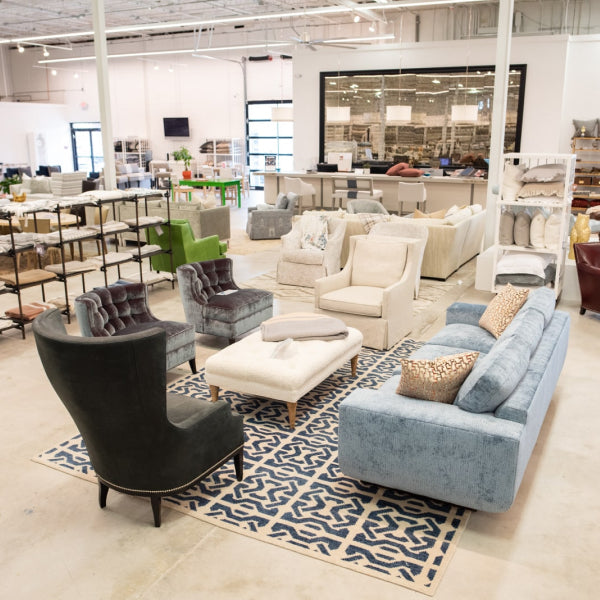
If you're comparing floral fabrics alongside custom upholstery, drapery, rugs, or other luxury home furnishings, visit the Lewis and Sheron Textiles Design Center in Atlanta. Explore its in-stock textiles and custom furnishing services, and talk with an in-house designer about coordinating a napkin fabric with the pieces already shaping your home.