





















The afternoon sun lands across your sofa, the television becomes hard to see, and you pull the curtains closed even though you'd rather enjoy the room. If you're shopping for window treatments in Atlanta, GA, that's a useful place to begin: not with a fabric color, but with what the window needs to do differently.
Why Atlanta Homes Need Thoughtful Window Treatments
In an older Buckhead or Ansley Park home, original wood windows may be part of the room's appeal. Their divided panes, wood profiles, and deep trim can be difficult to replace without changing the character of the space. When sunlight also reaches upholstered furniture, though, it is tempting to treat the glass as the problem.
Replacement isn't always the right first move. Ansley Park preservation guidance says wood windows built before the 1940s commonly used old-growth lumber, which tends to be denser, more rot-resistant, and more dimensionally stable than much modern replacement wood. It also recommends retaining original window designs when they contribute to a historically significant building, including a property's contributing status within a National Register district (Ansley Park window-preservation guidance).
Separate the window from the problem
The same guidance estimates annual savings of approximately $84–$313 from installing new Energy Star-rated windows in an Atlanta home, while noting that historically compatible replacements can cost more than average windows. Those figures cannot tell you whether a particular window needs repair. They do point to a useful distinction: deterioration calls for a different response than excessive glare or unwanted heat.
A sound original window and an unshaded afternoon exposure are separate concerns. Interior treatments, such as lined drapery or shades, can help address privacy, glare, and comfort while leaving architectural material in place.
- Keep the architecture. Check whether a treatment can fit around existing trim and operable sashes.
- Name the problem. A bright television screen calls for a different solution than nighttime visibility from the street.
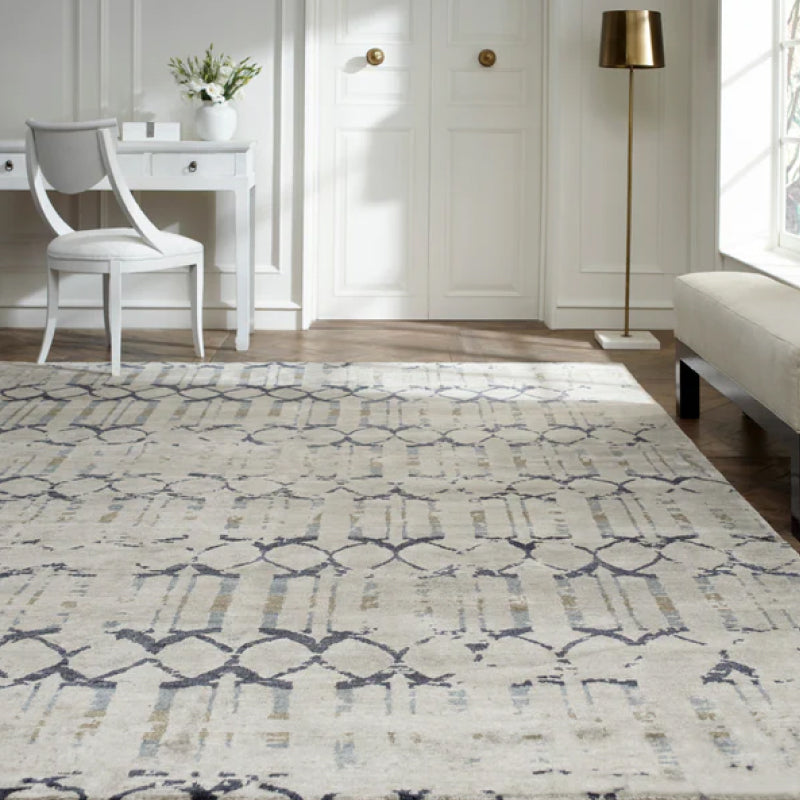
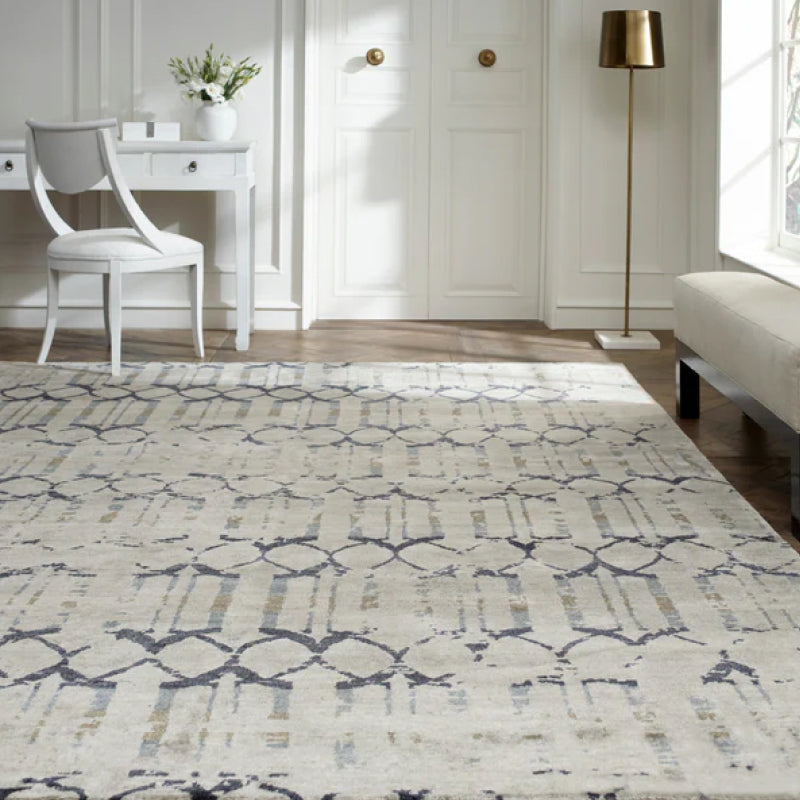
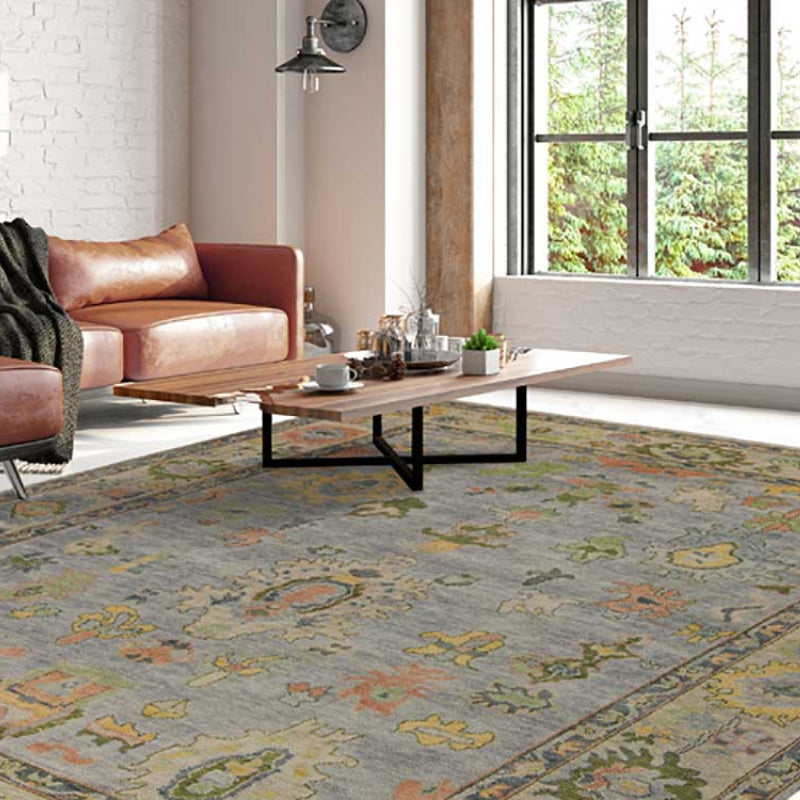
- Consider the furnishings. Rugs, custom chairs, and upholstery can also be affected by the window's exposure.
A pale patch on a cushion may be a sign that sunlight is fading the fabric. Read about protecting fabric from sun fading as you consider what the room needs.
For homeowners investing in high-end furniture, window coverings belong in the same long-term plan. A treatment should suit the home's architecture, work smoothly each day, and make the space comfortable beside the glass.
How Drapery Shades and Blinds Control a Room
Start by deciding how you want to change the light. Do you want to soften it, stop it, or redirect it? That distinction makes a showroom full of samples much easier to explore.
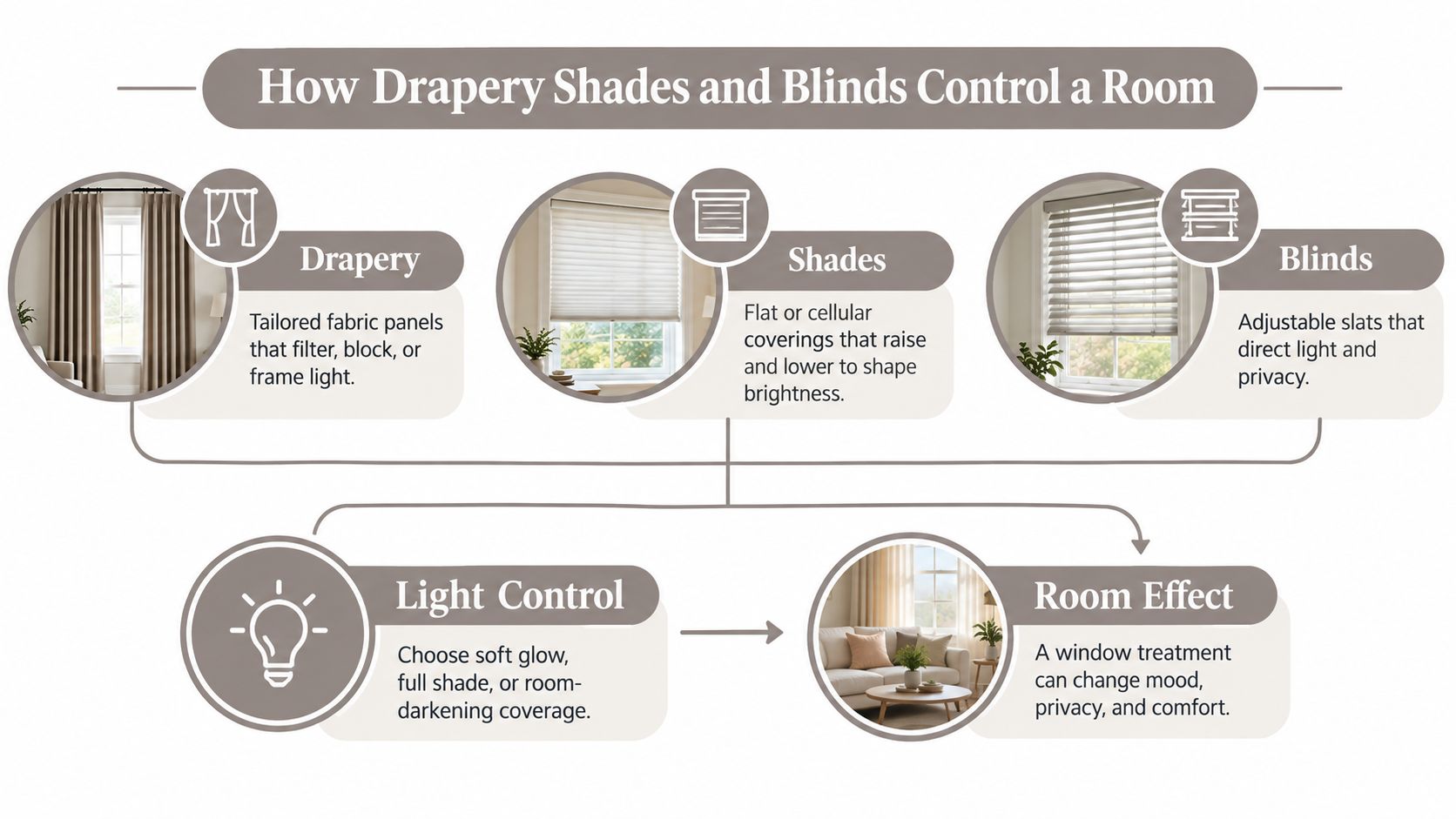
Think of drapery as a coat, a shade as a close-fitting sleeve, and blinds as shutters with tilting slats. Each covers the window differently, so each gives you a different kind of control.
Choose by the adjustment you need
Drapery uses custom-fitted fabric panels to filter, block, or frame light. Stationary panels can finish the sides of a window, but they won't provide complete privacy unless another covering does that job. Traversing panels can move across the opening.
Shades raise and lower as a flat or cellular covering. They're useful when you want a relatively contained treatment close to the glass, though the material and mounting details determine how much brightness remains.
Blinds let you tilt slats rather than uncovering the window. That makes them worth considering when you want to adjust daylight and sightlines repeatedly without raising the entire covering.
- For softened living-room daylight, consider a filtering shade or sheer layer.
- For street-facing bedroom privacy, specify a covering that addresses nighttime visibility, not just daytime brightness.
- For adjustable light direction, compare slatted blinds with shades that only raise and lower.
For a regional comparison outside Georgia, Utah window treatments with Superior Home Improvement provides another window-covering resource. Use it to broaden your questions, rather than assuming a treatment suited to another home will perform identically in yours.
Don't confuse darkness with insulation
Blackout describes light blocking, not proven thermal performance. A dark room doesn't necessarily have a highly insulating window assembly.
Atlanta attachment modeling distinguishes cellular shades, roller shades, and interior window panels, with different heating and cooling outcomes. The numerical comparison appears in the exposure table below, where it can support an actual selection rather than becoming a general savings promise.
Ask what the product is designed to control: light, sightlines, heat transfer, or a combination.
Interior window panels also deserve their own category. They're retrofit attachments, not another name for fabric drapery, and shouldn't be presented as interchangeable products.
Fabric Lining and Hardware That Survive Georgia Sun
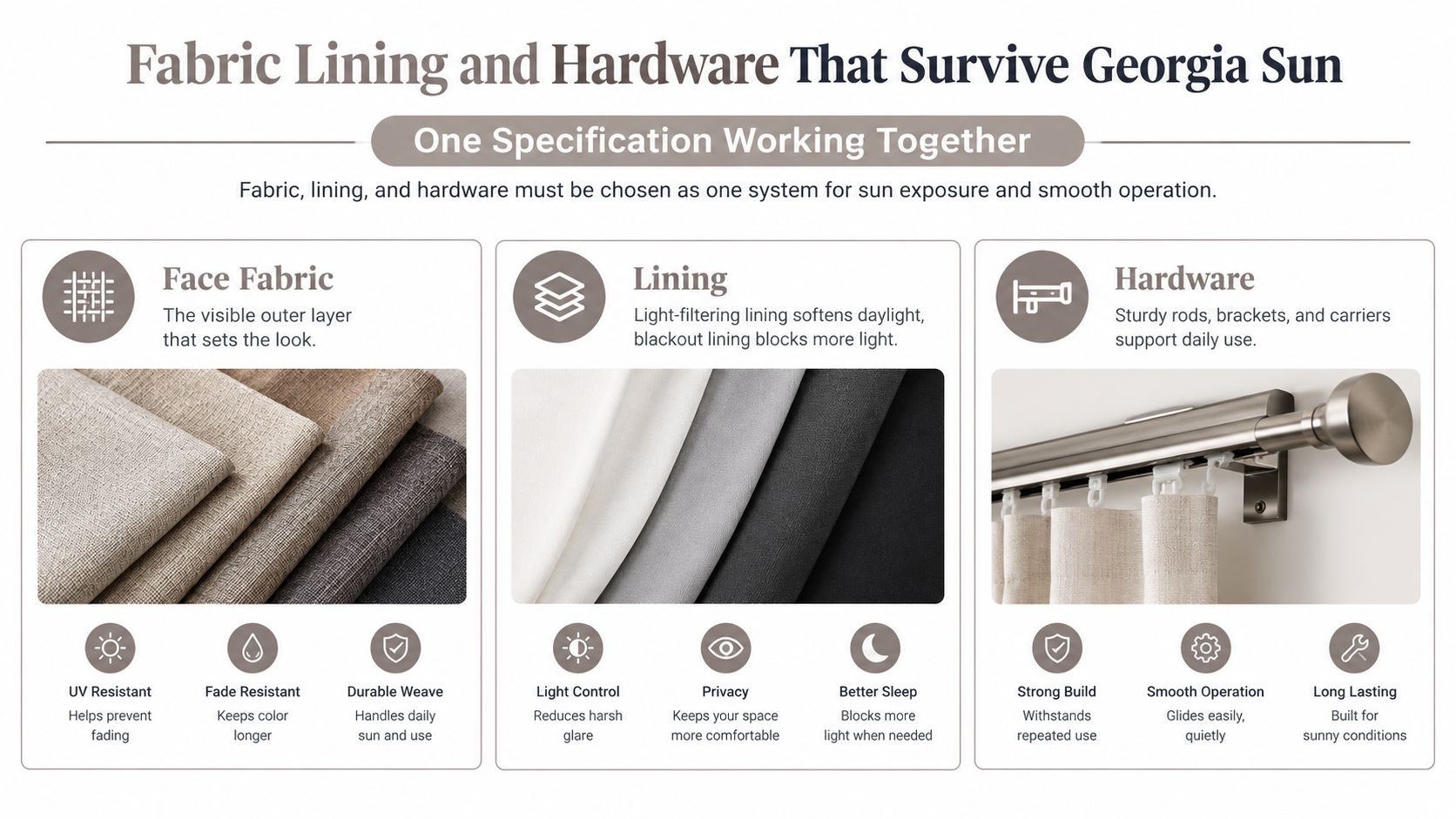
A south- or west-facing window can fade a drapery panel while afternoon sun makes the room uncomfortable. In an Atlanta home, the right specification starts with the window's exposure and existing glass, then pairs fabric, lining, and hardware to suit daily use. Lining, construction, and hardware should be specified together.
A darker fabric may cut glare, but it can also leave a room dim when the sun shifts. Compare how the treatment looks in daylight, not only under showroom lighting.
Understand what the glass already does
Solar heat-gain coefficient, or SHGC, describes how much solar radiation passes through glazing. A Georgia residential field study recorded an average window SHGC of 0.28, compared with a prescriptive requirement of 0.30. 119 of 122 observed installations complied, and more than 90% of observations fell between 0.25 and 0.30 (Department of Energy Georgia residential field study).
Those figures are a reminder to assess existing glass before promising that decorative drapery will change a home's energy performance. Newer glazing may already limit solar gain, so controlling direct sun and glare could matter more than adding heavier fabric. For older homes, preserve the character of historic wood windows while considering how the treatment fits around the existing sash and trim.
Visible transmittance, or VT, refers to visible light passing through the glazing. Reducing light can ease glare, though an overly dark room may require more electric lighting. A technical review of glazing and shading performance discusses this trade-off.
Build the specification from the inside out
Light-filtering lining softens daylight; blackout lining is designed to block more of it. Interlining adds a layer and creates a fuller hang. Ask about any expected temperature or noise-dampening effects, but don't treat them as tested ratings for the finished drapery.
A lightweight face fabric may need lining for the panel to hang as intended. Compare samples together in natural light, and consult this guide to the role of drapery lining in custom treatments.
- Face fabric and lining. Review both sides of the combination, including the view from outside.
- Openness or opacity. Ask how much daylight remains and whether the fabric provides the privacy the room needs.
- Fullness and hem weight. Have the workroom show how the panel will gather when open and hang when closed.
- Hardware duty. Match rods, brackets, and carriers to the finished panel and how often you plan to move it.
Stationary hardware suits panels that stay in place. For drapery you'll close each evening, check that the traverse mechanism moves comfortably with the finished fabric. A panel that is difficult to operate won't provide practical control of sun and privacy.
Measuring and Installing Without Losing the Window
Before choosing a mounting position, operate the window. Turn the casement crank, raise the sash, and open any nearby door. A treatment can look neat when the room is still and get in the way as soon as you use the opening.
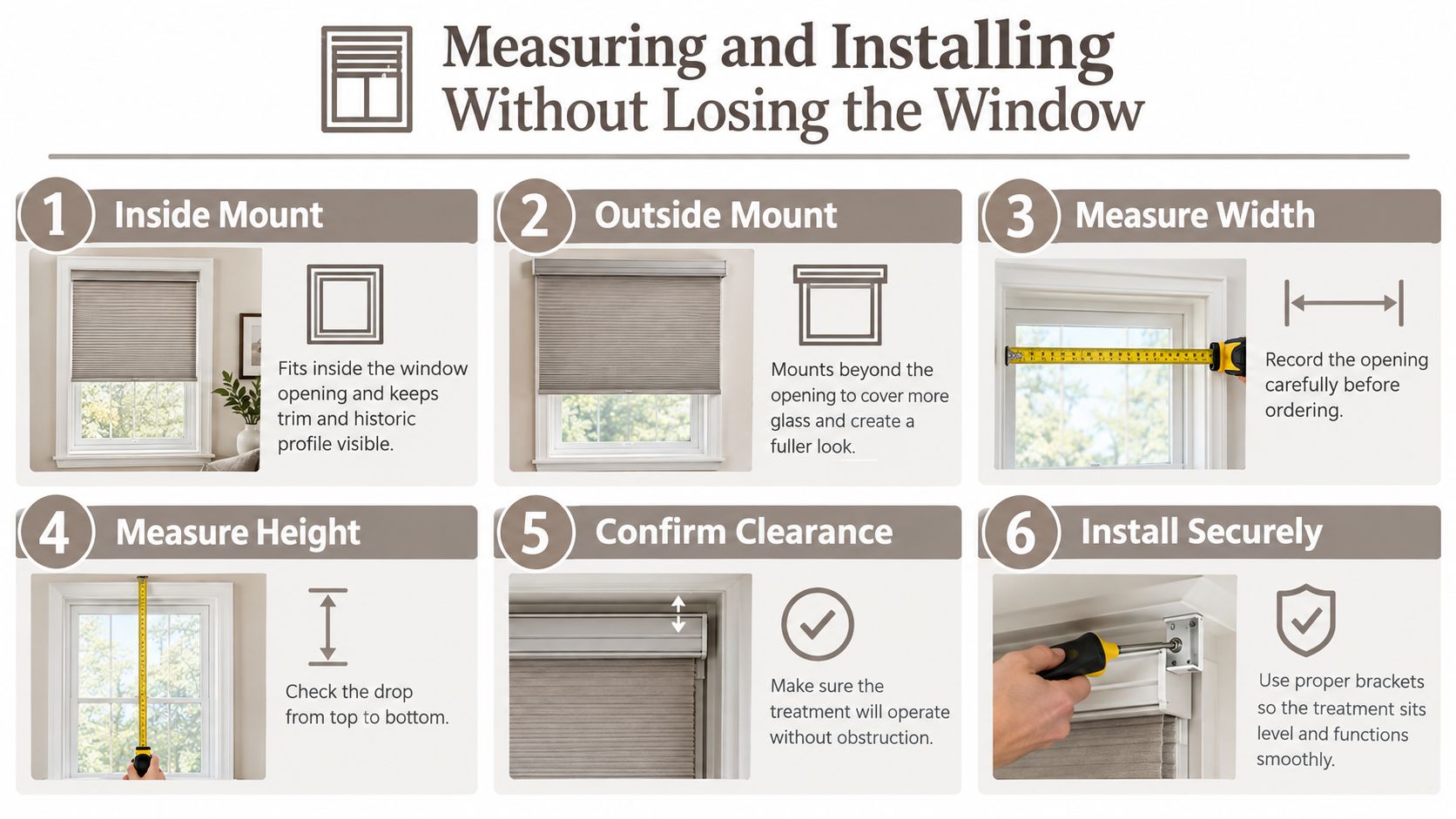
Inside mounting fits the covering within the window opening, keeping historic trim visible. Outside mounting extends beyond the opening, providing more overlap but requiring care around the trim and surrounding architecture.
Measure for movement as well as coverage
An inside mount needs enough depth for the selected product. Older jambs can be out of square, much like a frame that has shifted slightly over time. A measurement across the center alone may not reflect the full opening.
- Record width at several heights. Let the fabricator apply any product ordering deductions instead of estimating them yourself.
- Check the complete drop. Decide whether the treatment should end at the sill or floor, and note the point from which it will hang.
- Measure available depth. Account for handles, locks, projecting trim, and room for a raised shade.
- Test clearance. Confirm that sashes, casements, and doors can operate with all proposed layers in place.
Use this guide to measuring windows for shades to prepare. Before ordering, agree with the installer on who will take and confirm the final measurements.
Respect daylight and historic openings
Atlanta housing standards generally require exterior-facing transparent or translucent glazing equal to at least 8% of a habitable room's floor area. They also generally require an operable portion equal to 45% of the required window area, unless another approved method provides adequate light and ventilation (Atlanta minimum housing standards).
Preservation planning guidance calls for original window and door openings not to be blocked or enclosed in whole or in part. If the property is regulated, ask the installer to confirm which requirements apply. Decorative mounting choices are not the same as preservation approval.
Installation checkpoint: The finished treatment should work with the opening, not require you to stop using it.
A shade close to the glass can pair with drapery that stacks clear of the sash. Motorization is an option for reach, accessibility, or regular daily operation, not a requirement for every custom treatment.
Which Treatment Fits Each Atlanta Exposure
For a west-facing living room, start with the hours when you occupy it. If late glare makes the sofa uncomfortable or washes out the television, prioritize an adjustable solar-control layer. Decorative side panels can then provide the softness you want without becoming the only defense against the sun.
A concrete arrangement is a solar shade with stationary drapery panels that clear the sash. Check the selected shade's nighttime privacy separately; a material chosen for daytime view-through shouldn't be assumed to conceal an illuminated room.
Match the primary layer to the complaint
South-facing rooms call for a balance between useful daylight and unwanted solar gain. Bedrooms need a different test: evaluate the proposed treatment after dark, with interior lights on, as well as during sleeping hours.
In a street-facing historic room, keep the original opening visually understandable. Avoid a composition that conceals the architectural proportions just to make the window appear larger.
Modeled Atlanta Savings by Window Attachment
| Attachment | Heating savings | Cooling savings | Best local use |
|---|---|---|---|
| Cellular shades | 17.6% | 10.4% | Consider when thermal performance and a compact covering are priorities |
| Roller shades | 13.9% | 6.4% | Consider for straightforward adjustable coverage |
| Interior window panels | 28.0% | 25.6% | Evaluate as a more substantial retrofit rather than a decorative fabric layer |
All figures are modeled Atlanta results from the Department of Energy window-attachment comparison, not guaranteed household bill reductions.
The comparison shows why popularity shouldn't substitute for specification. Lined drapery may still be the right decorative and privacy layer, but it shouldn't inherit a thermal claim established for another attachment.
Know when interior coverings aren't enough
A warm-climate simulation combining double glazing, a 1-meter exterior overhang, and a 20% window-to-wall ratio reported 16.55% lower annual energy consumption while maintaining adequate daylight (warm-climate building-performance simulation). That result applies to the combined simulated design, not an Atlanta utility-bill guarantee.
Exterior shading intercepts direct sun before it becomes indoor heat. Interior coverings remain especially useful for controlling glare, privacy, and appearance after light reaches the glass.
If inspection identifies a genuine replacement need, Home Pro's Remodeling & Repairs offers a resource to help you find the right replacement window materials. Keep that construction decision separate from selecting the room's decorative layers.
How to Choose an Atlanta Window Treatment Provider
The right provider should be able to explain how a treatment will fit the opening, function in the room, and protect the window's character. Ready-made panels offer established sizes and finishes. A workroom can tailor fabric, lining, dimensions, and hardware to a historic jamb, shallow recess, or casement handle.
Compare responsibility before comparing samples
Ask who measures, who makes the treatment, and who installs it. Find out how the provider handles a mismatch between the plan and the actual window. Historic trim and operating hardware can limit where brackets go, so the person measuring should understand the installation.
- Fabric access. Compare available cloth with special-order options, and review lining choices alongside the face fabric.
- Construction. Ask where the work is made and what custom options are available.
- Installation. Confirm how brackets will be secured without damaging or obscuring original trim.
- Written details. Get the lining, hardware, finished dimensions, fabrication timing, and sash clearance in writing.
Contractor selection in another trade offers a useful parallel. Savera Wood Floor Refinishing's resource on how to find a reliable flooring contractor in NY highlights the value of clarifying responsibilities before work begins. Apply the same care here: make fit and installation responsibilities explicit.
Coordinate the room without buying everything again
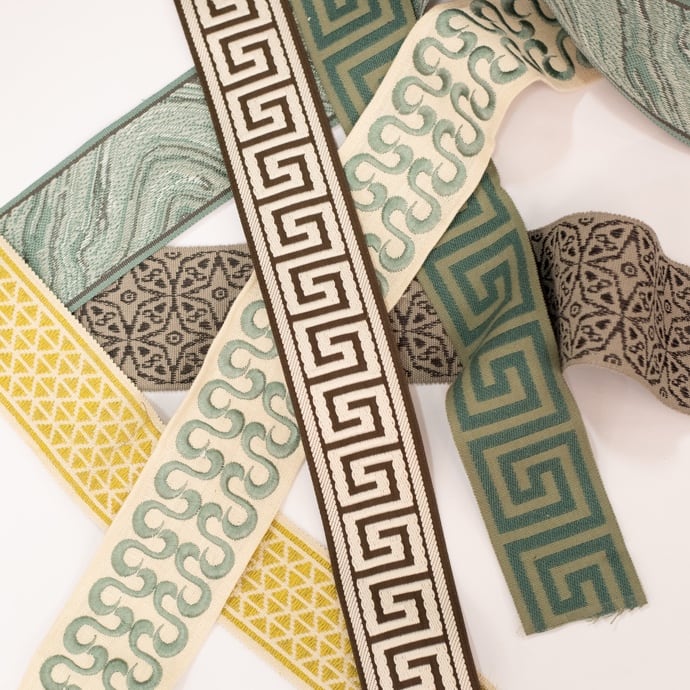
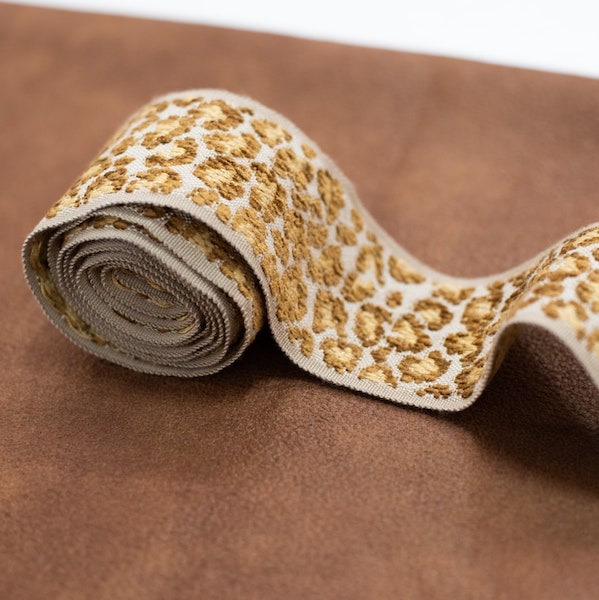
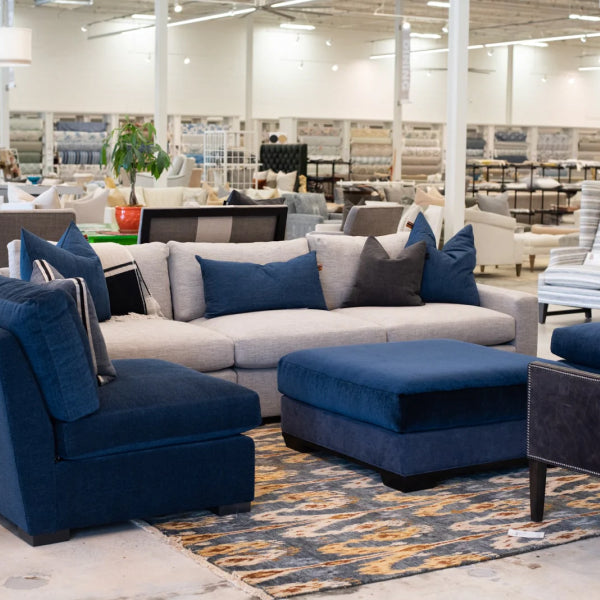
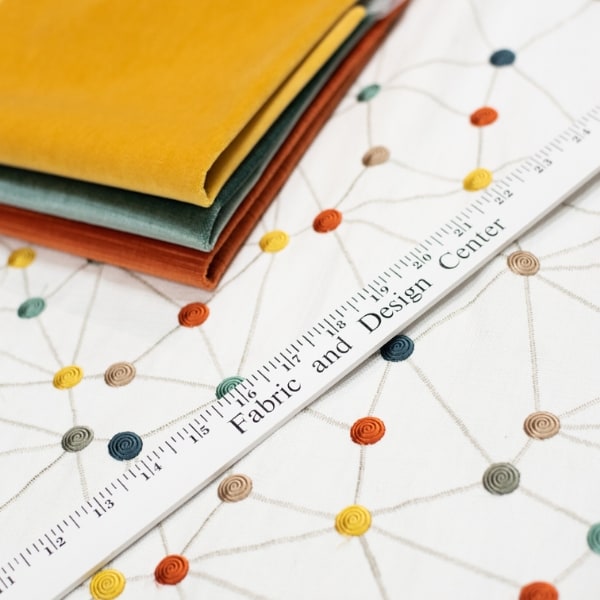
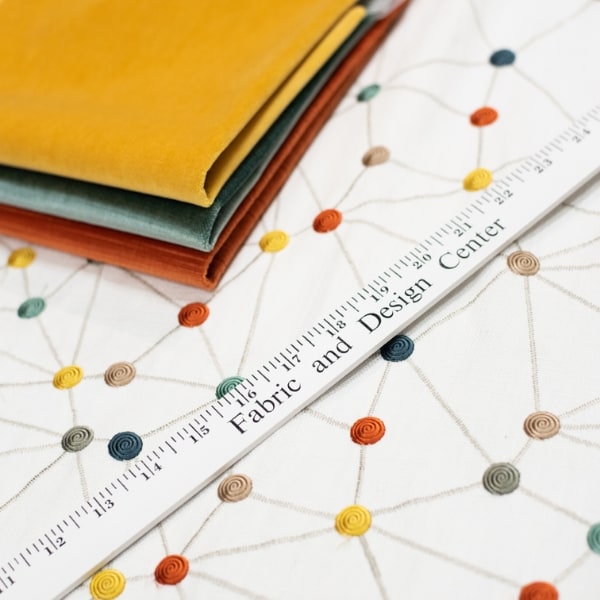
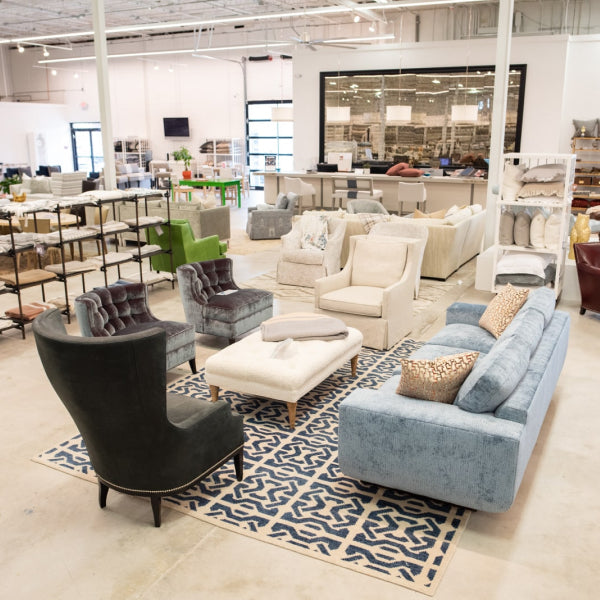
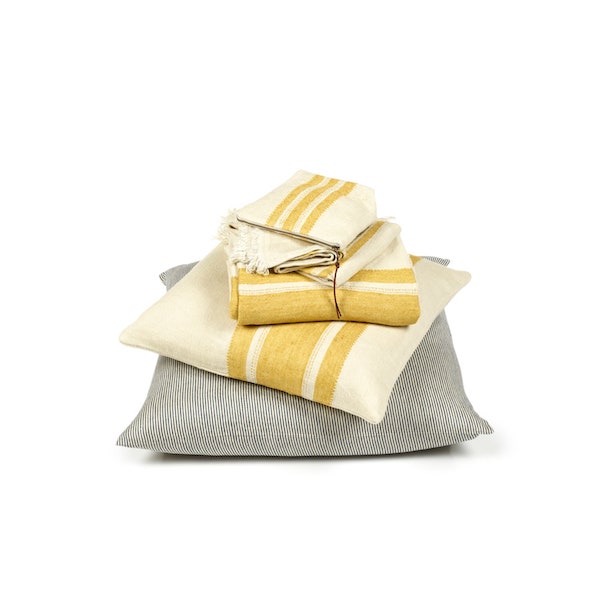
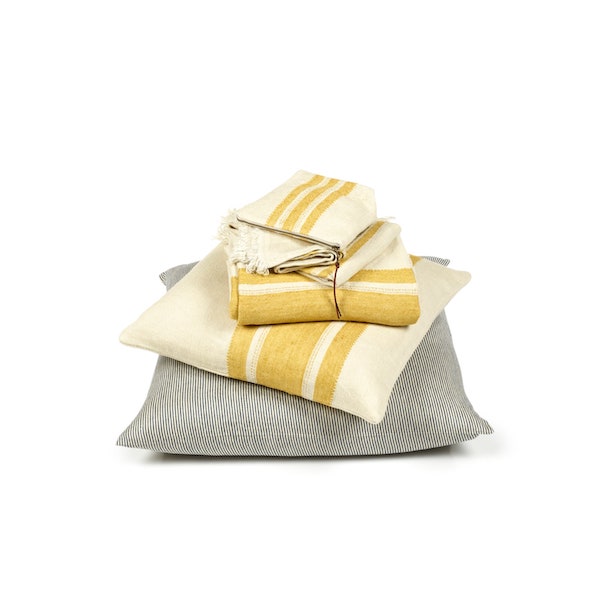
Lewis and Sheron Textiles is an Atlanta option with a history dating to 1944 and a Design Center carrying more than a thousand in-stock bolts. Its cut-yardage choices include Kravet, Fabricut, P. Kaufmann, Libeco Home, and Crypton. The business also offers custom drapery and in-house design help when shopping, along with custom upholstery and reupholstery options associated with Verellen, Wesley Hall, LEE Industries, and Ambella.
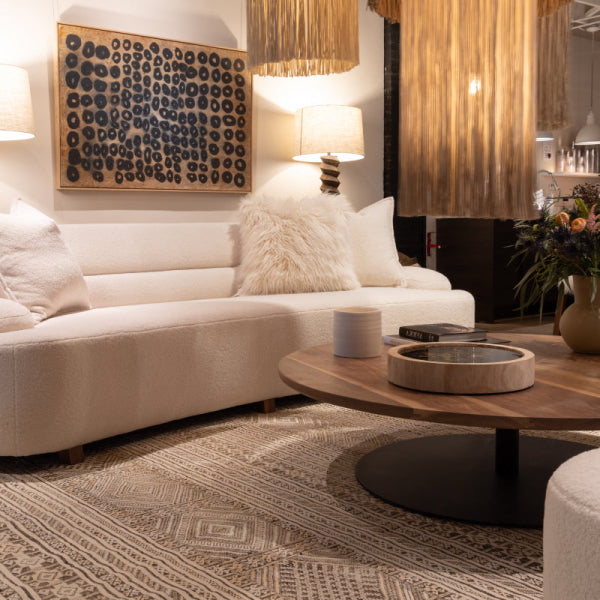
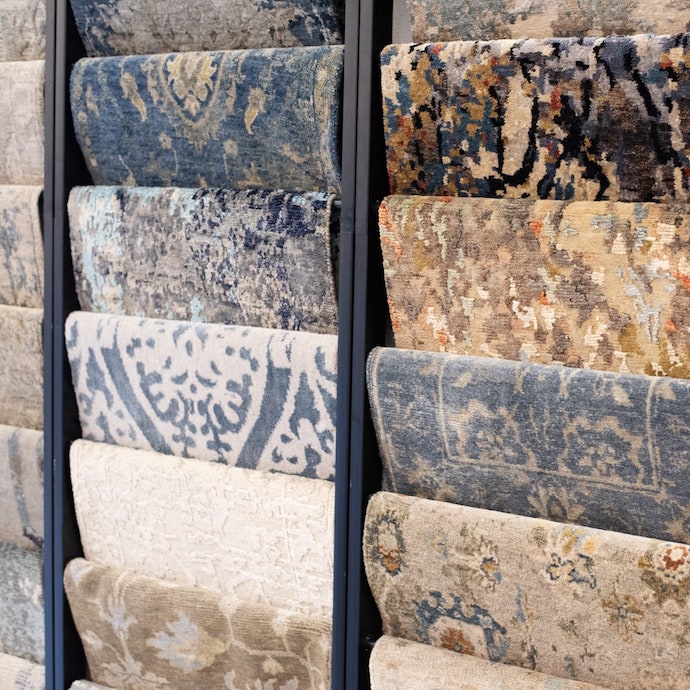
A provider's fabric and design support can help connect window treatments with the furnishings you already own. Bring upholstery or rug samples when comparing cloth, and ask how the selected color may appear in strong afternoon sun. A close match in the showroom can read differently beside a bright window.
For a useful reference on evaluating upholstered-furniture construction, see this upholstered-furniture specification guide. Keep the window project's own requirements at the center of the appointment: operation, light control, privacy, preservation, and a clear written scope.
Your Next Step for Custom Atlanta Window Treatments
A sunny living room can look comfortable in the morning, then become hard to use by afternoon. Before a workroom visit, photograph each window in daylight and at dusk. Include the full wall, so the designer can see the trim, nearby furniture, and space available for drapery to stack.
Note which direction each window faces and what happens there during a normal day. Describe the problem plainly: direct sun falls on the reading chair, the bedroom feels exposed after dark, or a curtain catches on a handle. These details help connect fabric and mounting choices to how the room works.
Bring the room you intend to keep
Bring a fabric cutting, rug sample, or paint chip, along with details from furnishings you plan to keep. These references are more useful than a pile of unrelated inspiration photos. They help the designer coordinate without assuming that you want to replace the room.
For homeowners and designers across Fulton County, North Atlanta, and nearby communities, a focused appointment can help keep separate purchases from feeling disconnected. New furniture is not required for a considered window treatment.
- Bring visual evidence. Include daylight and dusk photos, plus a full-wall view.
- Identify moving parts. Note any double-hung sash, casement crank, or door that must remain accessible.
- Bring material references. Add upholstery, paint, and rug samples if available.
- Set priorities. Say whether privacy, glare control, darkness, architectural visibility, or easy daily operation matters most.
Before arranging time with the in-house design team, browse the showroom's drapery cloth, linings, and related furnishings. Use the complimentary shopping consultation to narrow the options, then ask whether an on-site measurement is needed. A photograph can show the room, but it cannot confirm every clearance around a historic window or operating hardware.
Leave with an order you understand
Off-the-floor textiles may suit a quick update to one window. Made-to-order drapery takes more planning, but can address exact fit, coordinated upholstery, and long-term use.
Leave with a written specification, not just a photograph of a fabric you liked.
Keep the appointment focused: confirm the window remains usable and its trim visible, approve the face fabric and lining together, and decide whether a shade belongs beneath the drapery. Before authorizing fabrication, check that the paperwork names the mounting arrangement, operating method, hardware, and who is responsible for final fit.
Lewis and Sheron Textiles offers decorative fabrics, custom drapery, furnishings, and complimentary in-house design help when shopping. Bring window photos and room samples to the showroom, then ask the team to review fabric, lining, and mounting options for your Atlanta home.