
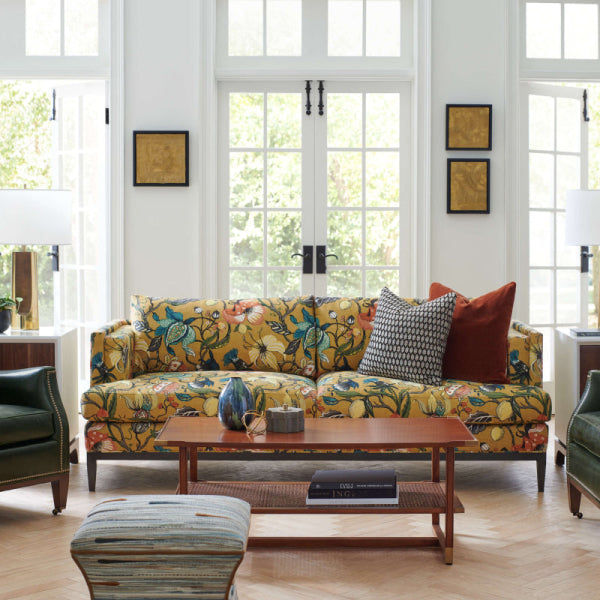
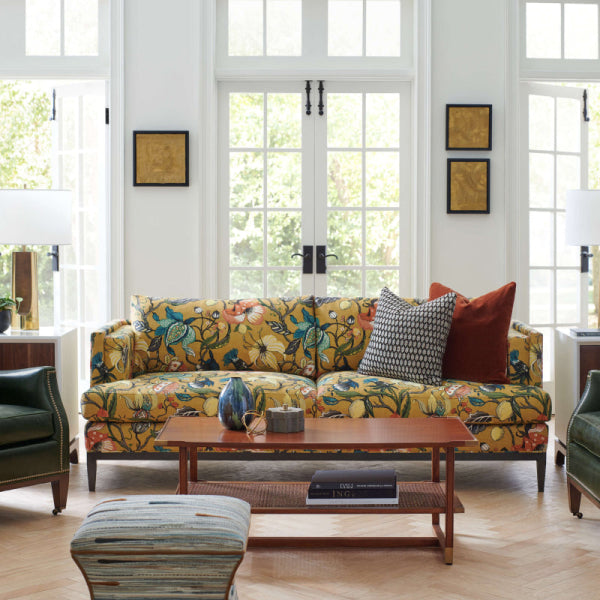
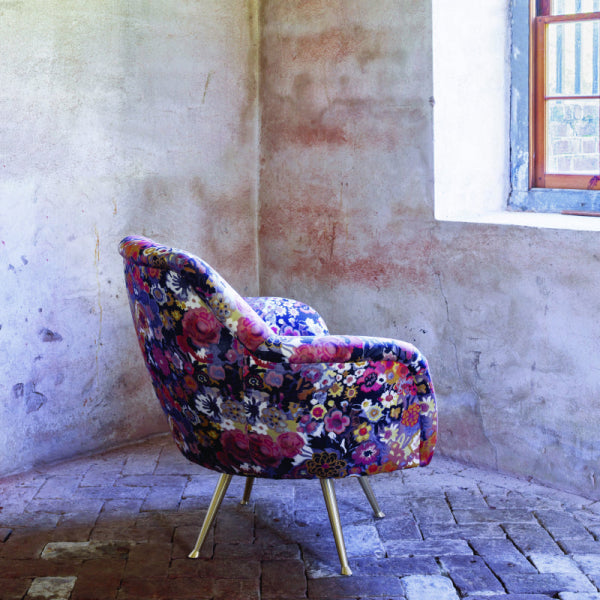
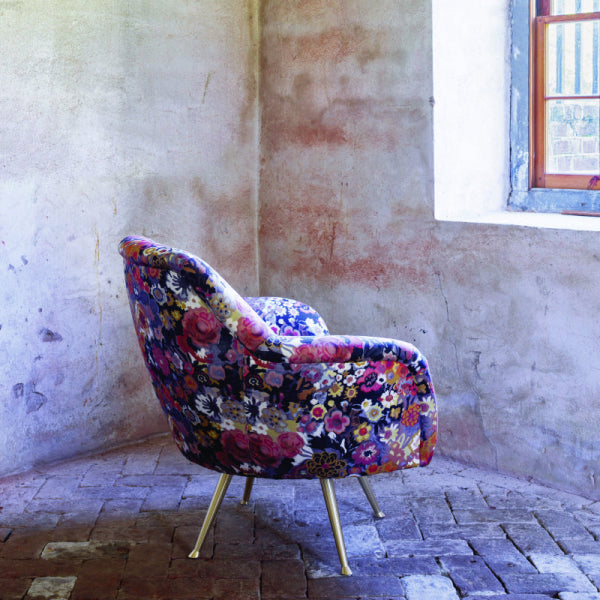








The most common advice for choosing non toxic upholstery fabric sounds effortless: skip synthetics, pick 100% organic cotton or linen, and look for a "non-toxic" hangtag. That advice fails buyers every day. A raw flax fiber can leave the farm completely natural and still arrive on your sofa coated in fluorinated stain repellents, bound to a polyurethane backing, and stapled over foam treated with chemical additives.
Evaluating a cut swatch in isolation misses how a piece of furniture lives in your home. Whether you're commissioning custom upholstered furniture for a Buckhead living room, comparing the best luxury sofa brands in Alpharetta, or reupholstering a favorite reading chair in Roswell, safety is a whole-piece question. The visible weave works alongside the dyes, finishes, backing, cushion foam, barrier layer, and adhesives underneath.
Durability belongs inside that same safety conversation. A lightly finished fabric that pills, stains permanently, or wears thin in a high-use Sandy Springs family room forces early replacement, bringing fresh adhesives, new foam, and avoidable textile waste back into your space. Evaluating luxury home furnishings properly means reading both the chemistry paperwork and the mechanical wear data before a single yard gets cut.
What Non-Toxic Upholstery Fabric Really Means
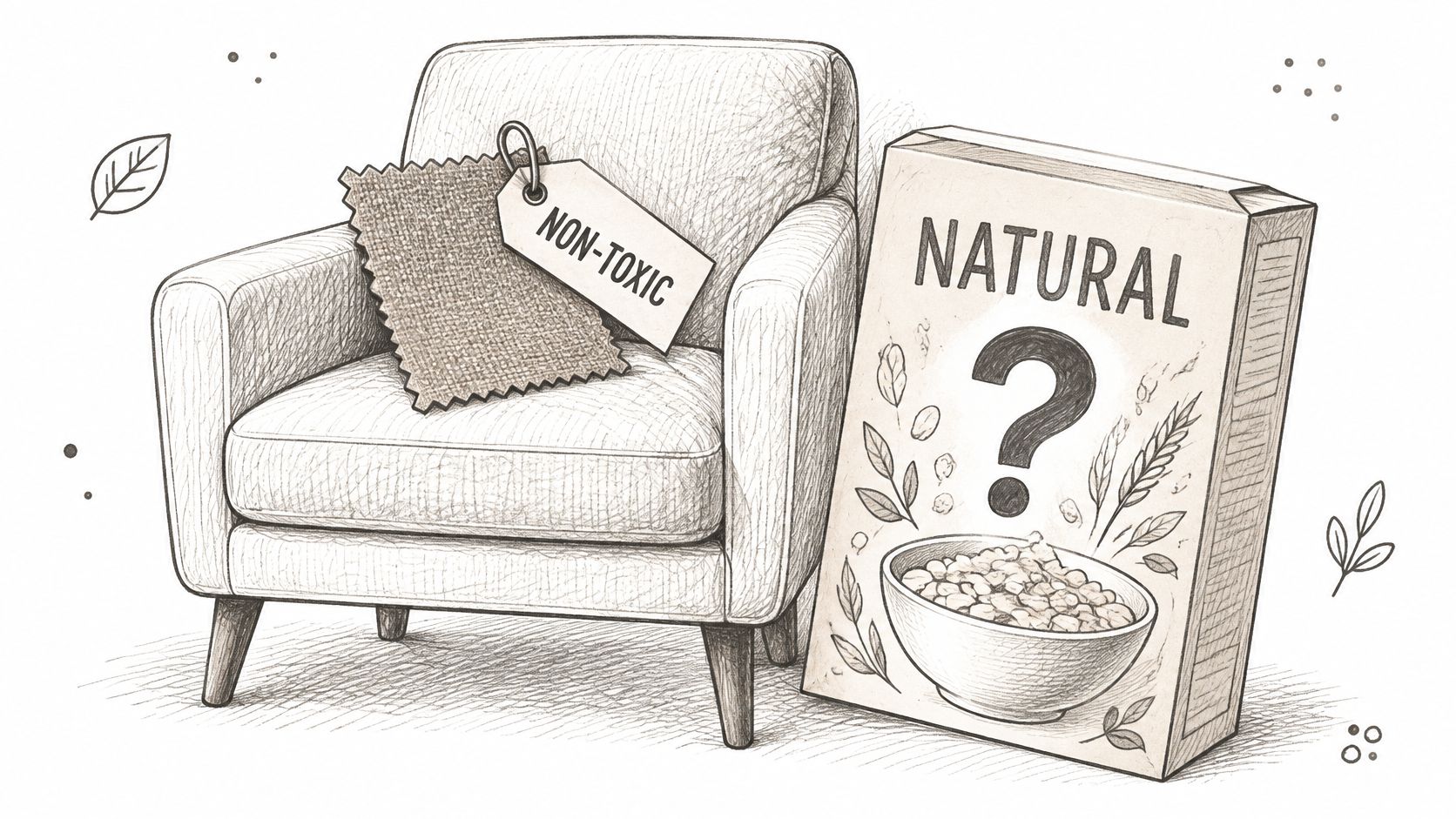
No federal agency enforces a single legal definition of "non-toxic" on upholstery textiles. A mill or furniture showroom can print that phrase on a sample book without proving that the finished yardage passed restricted-substance testing. Shopping by hangtag alone works much like grabbing a cereal box because the front says "natural" while ignoring the ingredient panel on the side.
To see what's sitting in your living room, trace every layer that touches the air or your skin. A completed sofa or chair is a layered system, and each layer can introduce its own chemical profile:
- Base fibers and dyes: Natural and synthetic yarns both pass through scouring, bleaching, and dyeing baths that can leave behind heavy metals or residual processing agents.
- Topical finishes: Stain guards, water repellents, wrinkle-resistant coatings, and antimicrobial sprays sit right on the surface where hands, bare legs, and pets rest.
- Fabric backings: Many woven textiles receive a PVC or polyurethane acrylic back coating to stop seams from fraying and prevent cushion fill from poking through.
- Interior construction: Cushion foam, wood adhesives, decking fabrics, and fire-blocking barriers sit beneath the cover and influence indoor air quality long after delivery.
Fire Compliance and Chemical Safety Are Separate Questions
Homeowners shopping for luxury sofas and high-quality couches often assume a legally compliant piece is automatically free of chemical treatments. Federal rules work differently. According to the CPSC upholstered furniture FAQ, federal proposals shifted away from open-flame ignition as far back as 1997 and focused in a 2007 proposal on reducing fire deaths and injuries while minimizing reliance on flame retardants. Modern federal rules measure whether components resist smoldering, not whether the textile carries added stain repellents, antimicrobial finishes, or specific dyes.
Real-world lab screening shows why marketing language can't replace test records. In 2024, Mamavation and Environmental Health News tested furniture swatches and found indications of PFAS in 71% of tested furniture swatches, or 30 of 42 samples, including products marketed as non-toxic or flame-retardant-free.
Working definition: Non-toxic upholstery fabric means a finished textile with current, independent restricted-substance testing, written disclosure of finishes and flame-retardant status across the piece, and enough abrasion resistance to stay in service for years.
Fiber origin alone never settles the question. An untreated synthetic can carry fewer chemical concerns than a heavily coated linen, which is why serious buyers across Atlanta and Fulton County look past "natural" claims to third-party certifications.
Certifications That Verify Chemical Safety
Showroom tags stack acronyms side by side as if they all measure the same thing. They don't. One label screens fabric for restricted chemicals, another measures airborne emissions from an assembled chair, and a third confirms smolder resistance without certifying chemical safety at all.
| Standard or Label | What It Verifies | What It Does Not Prove | Where It Applies |
|---|---|---|---|
| OEKO-TEX STANDARD 100 | Restricted substances across the finished textile, including dyes, finishes and accessories | Emissions-free, biodegradable or universally chemical-free status | Fabric and trims; home textiles tested under Product Class IV |
| GREENGUARD | Chemical emissions and indoor air quality of the finished product | Restricted-substance content of every textile component | Finished furniture and upholstered products |
| TB117-2013 (smolder resistance) | Assembled furniture resists ignition from smoldering sources, tested with cover fabric, barrier and filling | Chemical safety of the fabric or whether flame retardants were used | Residential upholstered furniture manufactured, imported or reupholstered from June 25, 2021 |
| California SB 1019 label | Whether the product contains or does not contain added flame retardants | Safety of other chemicals such as PFAS or dyes | Upholstered furniture covered by the law |
| BIFMA e3, Version 4.0 | PFAS prohibited in certified products at all levels | That every fabric labeled performance or natural is PFAS-free without checking the version | Furniture sustainability certification |
| Organic, natural or recycled claims | Origin of the fiber, when backed by documentation | Finishes, dyes, backings, foam or adhesives | Fiber labels only |
Reading Textile and Air-Quality Labels in Order
Start with OEKO-TEX STANDARD 100 when evaluating yardage. Per the OEKO-TEX STANDARD 100 overview, the standard tests the complete textile (including dyes, finishes, and accessories) against a restricted-substance list covering formaldehyde, heavy metals, perfluorinated compounds, and alkylphenol ethoxylates, with criteria reviewed at least annually. Home upholstery falls under Product Class IV, while items worn directly against bare skin face stricter tiers, a distinction illustrated clearly in SEYANTE's textile safety guide for spa buyers. Always check that the active certificate number covers the exact article and colorway you're ordering, because a dark dye lot can use different chemistry than a pale neutral.
Next, look at GREENGUARD, which addresses a separate exposure pathway. As explained in Pure Upholstery's certification breakdown, GREENGUARD focuses primarily on chemical emissions and indoor air quality rather than testing every individual textile additive, and neither GREENGUARD nor OEKO-TEX alone automatically proves that the fabric, foam, backing, thread, and frame share one unified chemical profile. If you're ordering custom furniture in Atlanta, confirm whether a certificate covers the fabric bolt by itself or the entire assembled piece.
How Smolder Rules and Fiber Claims Fit In
Federal flammability compliance belongs in its own bucket. Under the CPSC federal upholstered furniture rule (16 C.F.R. Part 1640), California's TB 117-2013 smolder-resistance standard took effect nationwide on June 25, 2021, covering residential upholstered furniture manufactured, imported, or reupholstered from that date forward. The rule requires a permanent compliance label, yet it neither requires nor prohibits flame-retardant chemicals.
Understanding how the test runs helps you ask sharper questions. According to EPA documentation on TB 117-2013, the test exposes a small mock-up assembly (cover fabric, barrier materials, and filling) to a lit cigarette. Most fabrics pass without added flame retardants, and a fabric that doesn't pass on its own can still be used over an interior fire-blocking barrier layer. For buyers commissioning premium sectionals or custom chairs, that means asking whether compliance comes from the weave itself, an interior barrier, or a chemical treatment.
Fiber-origin claims sit at the bottom of the verification ladder. "Organic," "natural," and "recycled" describe how a yarn began its life, not what a finishing mill sprayed onto the bolt afterward.
Before accepting any safety claim on a showroom tag, pin down three facts: what specific hazard was tested, whether the test covered the swatch or the finished piece, and which layers remain untested.
Natural Fibers, Blends and Synthetics Compared
Think of upholstery construction like buying a car: the fiber is the engine that sets base strength, breathability, and hand feel, while the dye and finish act like the paint and clear coat that determine much of the surface chemistry. You can't judge the surface chemistry by opening the hood to see if the yarn came from a plant or a polymer.
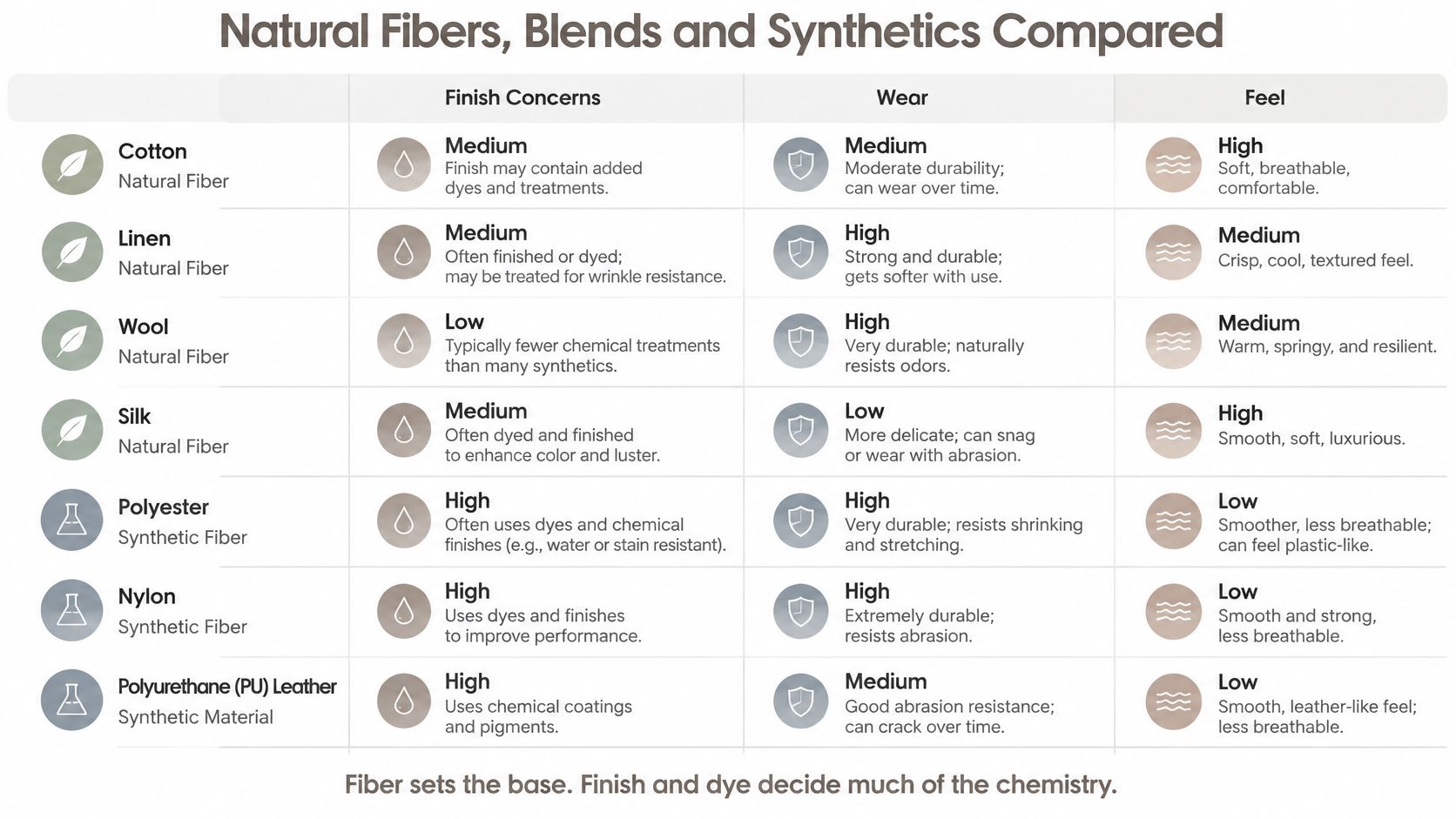
| Fiber | Finish and Chemistry Concerns | Wear and Abrasion | Care and Cleaning | Best Fit |
|---|---|---|---|---|
| Linen | Dyes and optional stain or water finishes | Moderate; heavy, tight weaves wear better | Vacuum and spot clean; water marks possible | Statement chairs and lower-contact sofas |
| Cotton | Dyes and any wrinkle or stain finishes added | Moderate; canvas-weight cotton is sturdier | Some covers washable; check the care label | Casual seating and slipcovers |
| Wool | Insect-resistance treatments and finishes; mill-applied flame retardants possible | Good; naturally resilient fiber | Professional cleaning and spot treatment | Living room sofas and high-use seating |
| Hemp | Mill-applied softening, bleaching, or dye finishes | Good in coarse weaves | Vacuum regularly and spot clean gently; professional clean for heavy soil | Low-traffic pieces where a plant fiber is the priority |
| Recycled polyester blends | Coatings, dyes and optional stain finishes | High | Easy to clean; often washable covers | Family rooms and children's spaces |
| Solution-dyed performance synthetics | Check mill disclosures for PFAS or barrier coatings | High | Easy to clean | Pets and heavy daily use |
| Natural-synthetic blends | Driven by each base fiber and mill finish | Set by the weaker fiber in the weave | Follow the weaker component's care | Balanced durability and feel |
Three Patterns That Catch Buyers Off Guard
First, a plant or animal fiber never guarantees an untreated textile. Linen and cotton can carry the exact same stain repellents or water-resistant finishes as polyester, and wool frequently leaves the mill with mothproofing or insect-resistance treatments. Reviewing our guide to natural upholstery fabrics alongside mill spec sheets helps you separate fiber traits from chemical treatments, much like when you compare eco-conscious clothing materials via The Green Living Guy and look past fiber names to processing impact.
Second, modern synthetics earn a place in healthy homes when their finish chemistry is documented. Solution-dyed synthetics lock pigment inside the polymer before the yarn is extruded, which improves fade resistance and cleanability without heavy surface dyes. Recycled polyester blends also stand up well to daily friction, though you still need written confirmation on backings and topical repellents.
Third, fiber blends tend to inherit the wear flaws of their weaker ingredient. Say you pick a loose linen-cotton blend for a heavily used sectional. The looser flax slubs can abrade or pill along seat edges where a tight, heavy cotton canvas or dense wool weave would hold crisp for years.
Matching the Weave to Real Rooms
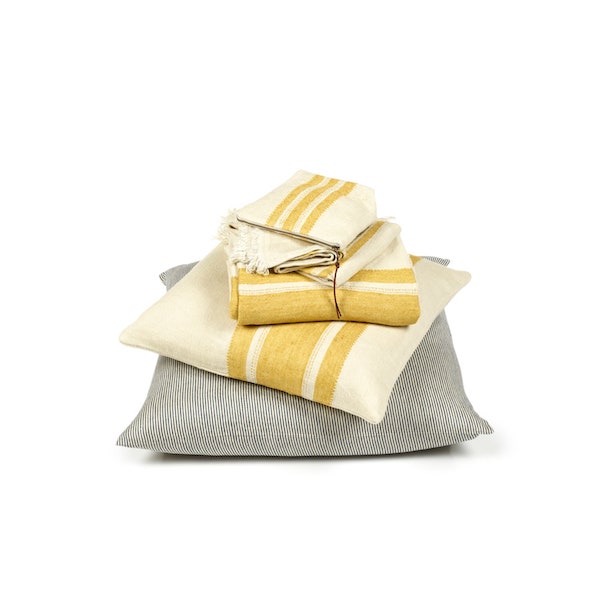
Context settles most debates between natural and synthetic options. A formal Buckhead sitting room centered around statement furniture pieces or an architectural lounge chair handles heavy Belgian linen gracefully because contact is lighter and spills are rare.
Flip the scenario to a busy North Atlanta family room with toddlers, golden retrievers, and nightly movie marathons. Tightly woven wool or certified solution-dyed performance synthetics hold their structure and clean up without harsh spot solvents.
Pick the fiber for how the room actually gets used, then verify the finish chemistry in writing.
Matching Abrasion Ratings to Your Room
Chemical safety and mechanical longevity are tied together. When an under-rated fabric goes onto a heavily used couch, friction shreds the surface yarns early, releasing airborne fiber dust into the room and leaving bald patches along armrests and piping. Replacing a worn cover years ahead of schedule multiplies cost, adhesives, and landfill waste.
Before comparing two swatches, check their scores against the woven upholstery benchmarks set by the Association for Contract Textiles abrasion guide:
| Use Case | Wyzenbeek Double Rubs | Martindale Cycles | Typical Pieces |
|---|---|---|---|
| Low-traffic or private space | 15,000 | 20,000 | Bedroom chairs, formal sofas, accent pieces |
| High-traffic or public space | 30,000 | 40,000 | Family-room sofas, dining chairs, hospitality seating |
Why You Can't Convert Between Test Methods
The two standard laboratory machines do not measure wear the same way. Wyzenbeek (ASTM D4157) drags an abradant back and forth in a straight line across the fabric and counts double rubs, while Martindale (ASTM D4966) rubs the fabric in a figure-eight multidirectional pattern and reports cycles. Because the motion, tension, and wear mechanics differ, you can't mathematically convert a Martindale score into a Wyzenbeek equivalent. Compare fabrics only within the same test method and identical testing setup.
Watch out for isolated marketing boasts like "100,000 rubs" printed with no context. Without the test method, the abrasive substrate (cotton duck versus wire screen), the applied pressure, and the defined failure point (two broken yarns versus noticeable shade change), a giant rub count tells you very little about real service life.
Four Checks Beyond the Abrasion Number
High abrasion scores won't rescue a fabric that fails in other ways on designer furniture. Ask the showroom or workroom for four additional performance details, or review our full fabric abrasion resistance breakdown before finalizing yardage:
- Seam slippage: Loose weaves can pull apart along zippered cushions and welt cords even when the flat face scores well.
- Pilling resistance: Short staple fibers ball up under denim friction, making a luxury sofa look tired inside its first year.
- Colorfastness: Strong southern sunlight pouring through Atlanta sunrooms fades weakly dyed textiles, especially dark blues and charcoals.
- Cleanability code: Knowing whether a fabric accepts water-based cleaners (W), solvent cleaners (S), or both (WS) prevents accidental water rings and keeps harsh chemical spotters out of your home.
Apply the tiers practically. A daily-use sectional in an Alpharetta bonus room belongs solidly in the high-traffic tier (30,000 Wyzenbeek double rubs or 40,000 Martindale cycles), whereas a formal bedroom slipper chair used a few evenings a month sits comfortably in the lower band.
PFAS and the Stain-Resistance Trade-Off
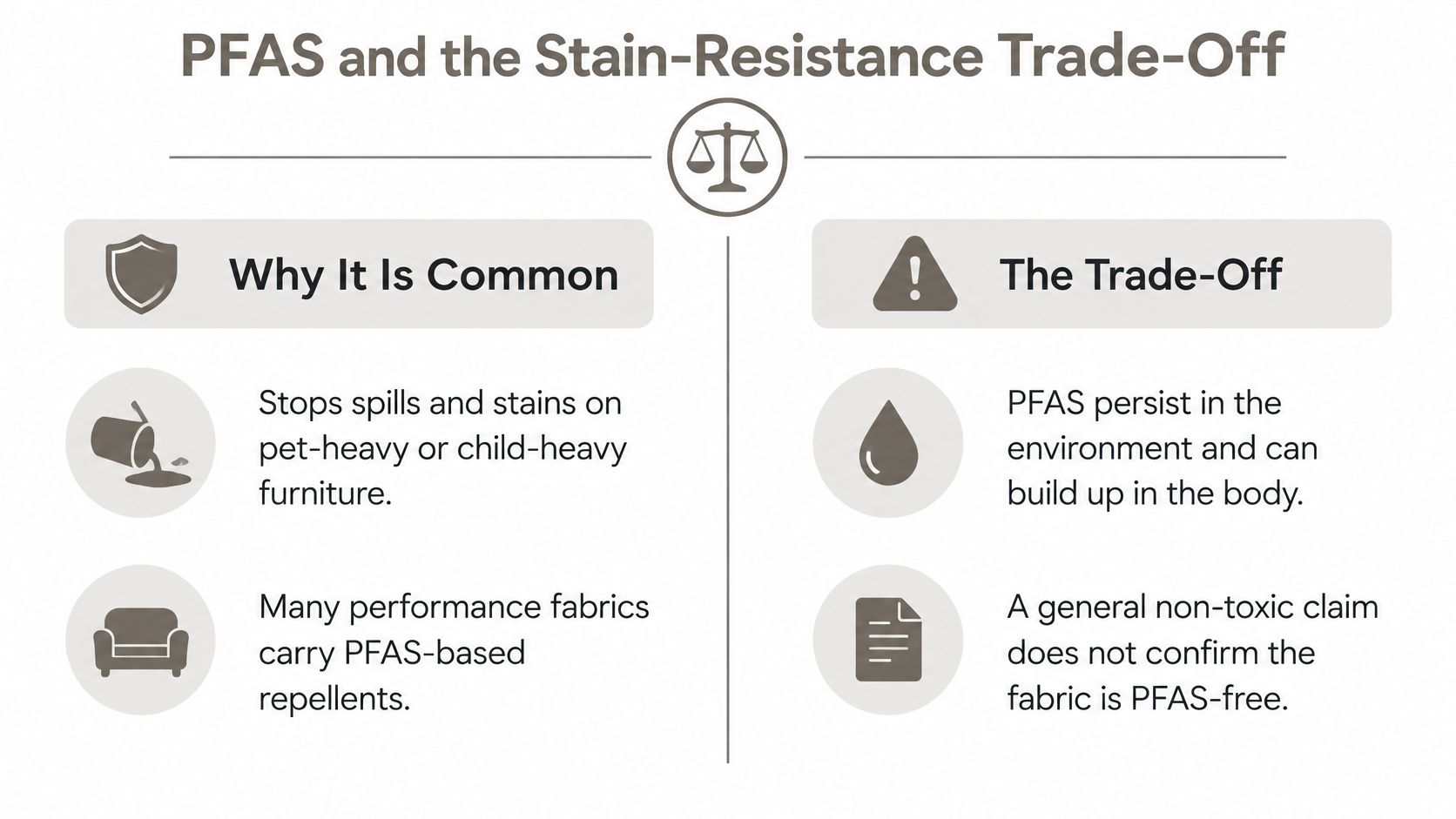
Fluorinated stain repellents became standard across upholstery for one simple reason: they work impressively well against red wine, coffee, muddy paws, and grease. Busy households wanted pale sofas that shrugged off messes, and PFAS (per- and polyfluoroalkyl substances) delivered effortless beading on both synthetic and natural textiles.
That convenience now carries well-documented health and regulatory scrutiny. In 2024, the Chemical Insights Research Institute of UL Research Institutes detected 5 of 20 analytically targeted PFAS in the upholstery fabrics it studied, showing that fluorinated compounds can turn up even when a swatch isn't aggressively pitched as stain-proof.
How Standards and State Laws Are Shifting
Independent standards and state legislation now give buyers clear benchmarks to ask about. According to the EPA summary of the BIFMA e3 furniture sustainability standard, Version 4.0 prohibits PFAS in certified products at all certification levels, tightening earlier or specified thresholds that allowed less than 100 parts per million in a homogeneous material, with separate limits of 10 ppm for PFOS and 25 ppm for PFOA. Always ask which certification version applies rather than accepting a generic "certified" badge.
Legislation is pushing mills to reformulate as well. As detailed in a Morgan Lewis legal analysis, California's 2025 PFAS restriction covers upholstered textiles and requires manufacturers to use the least-toxic alternative when eliminating regulated PFAS. That requirement raises a smart question for homeowners and interior designers: what chemical replaced the fluorinated coating, and has that substitute been evaluated for both human health and long-term wear?
Testing the Least-Treated Assumption
Skipping every protective finish sounds automatically virtuous until real life hits a pale couch. Picture a light oatmeal linen sofa placed over a cream wool rug in a Roswell home with two young kids. Without a fluorine-free protective plan, a documented abrasion rating, and a realistic maintenance routine, spills sink deep into the yarn. Frequent heavy spot-cleaning brings its own chemical exposure, and permanent staining pushes families to reupholster or replace the piece far too early.
Smart spill management blends material selection with practical habits. You can compare non-fluorinated mill finishes in our guide to fabric protection for furniture, choose mid-tone heathered weaves that disguise everyday wear, or layer throws and find washable waterproof sofa protection from Casamé Home for pet zones and movie nights.
The least-treated textile isn't automatically the lowest-impact choice if stains or friction cut its lifespan short. A verified fluorine-free performance fabric or dense, cleanable wool that looks sharp for decades spares your home from premature replacement and keeps heirloom-quality furniture out of the landfill.
Choosing Fabric for Heirloom and Custom Pieces
Even the cleanest, best-documented textile can't save a weak frame. Buyers comparing custom vs mass-produced furniture often wonder how long high-end furniture lasts and what makes furniture "designer quality." The answer sits underneath the fabric: kiln-dried hardwood rails, reinforced corner blocks, and tight joinery built to survive multiple reupholstery cycles rather than stapled, glued composite frames that wobble and fail after a few seasons.
That structural check comes first in our workroom. In our reupholstery process, our experts assess the furniture's condition, including structure, fabric, and detailing, before recommending work. With over 75 years of expertise in fabric and furniture serving Atlanta homeowners, we see every week how dramatically the hidden bones decide whether a piece deserves an investment-grade textile.
Evaluating Every Layer Beneath the Cover
Once a frame proves sound, treat the interior build with the same scrutiny you apply to the outer yardage. Every layer affects both comfort and indoor air quality:
- Suspension and webbing: Heavy jute or sinuous steel springs and eight-way hand-tied coils hold cushion geometry without sagging, reducing uneven stress on your cover fabric.
- Padding and cushion fill: Request low-emission, flame-retardant-free foam or natural latex wrapped in clean fiberfill so hidden cushions don't undercut a carefully certified fabric.
- Barrier layer: Decide upfront whether smolder compliance comes from the cover textile itself or an interior barrier cloth, and record that choice on the work order.
- Tailoring details: Our reupholstery process includes steps for material selection and design details such as stitching, buttons, or tufting before production begins, letting you plan seam stress points and cleanability before a needle touches the fabric.
Reupholster or Replace Two Real-World Cases
Compare two common projects brought in by homeowners across Sandy Springs and North Atlanta. Say you inherit a solidly built 1960s hardwood armchair whose springs have sagged and whose vintage velvet is threadbare. Because the hardwood joinery is intact, stripping it down to the frame, rebuilding the springs and cushions with clean materials, and wrapping it in a documented, high-abrasion textile gives you a true heirloom piece built for decades more use.
Now contrast that with a recent, mass-produced glued-frame sofa whose armrests already creak and whose back rail flexes when you sit down. Putting premium, certified upholstery fabric over a failing carcass wastes both yardage and labor. That piece is a far better candidate for replacement with bench-made custom upholstered furniture built on a hardwood frame.
When ordering a custom sofa or commissioning reupholstery in Atlanta, ask for spare yardage (at least a yard or two) to store away from light for future arm-cap repairs, and have the maker log the frame, barrier, foam, and fabric mill in writing. That paper trail travels with the furniture into its next chapter decades from now.
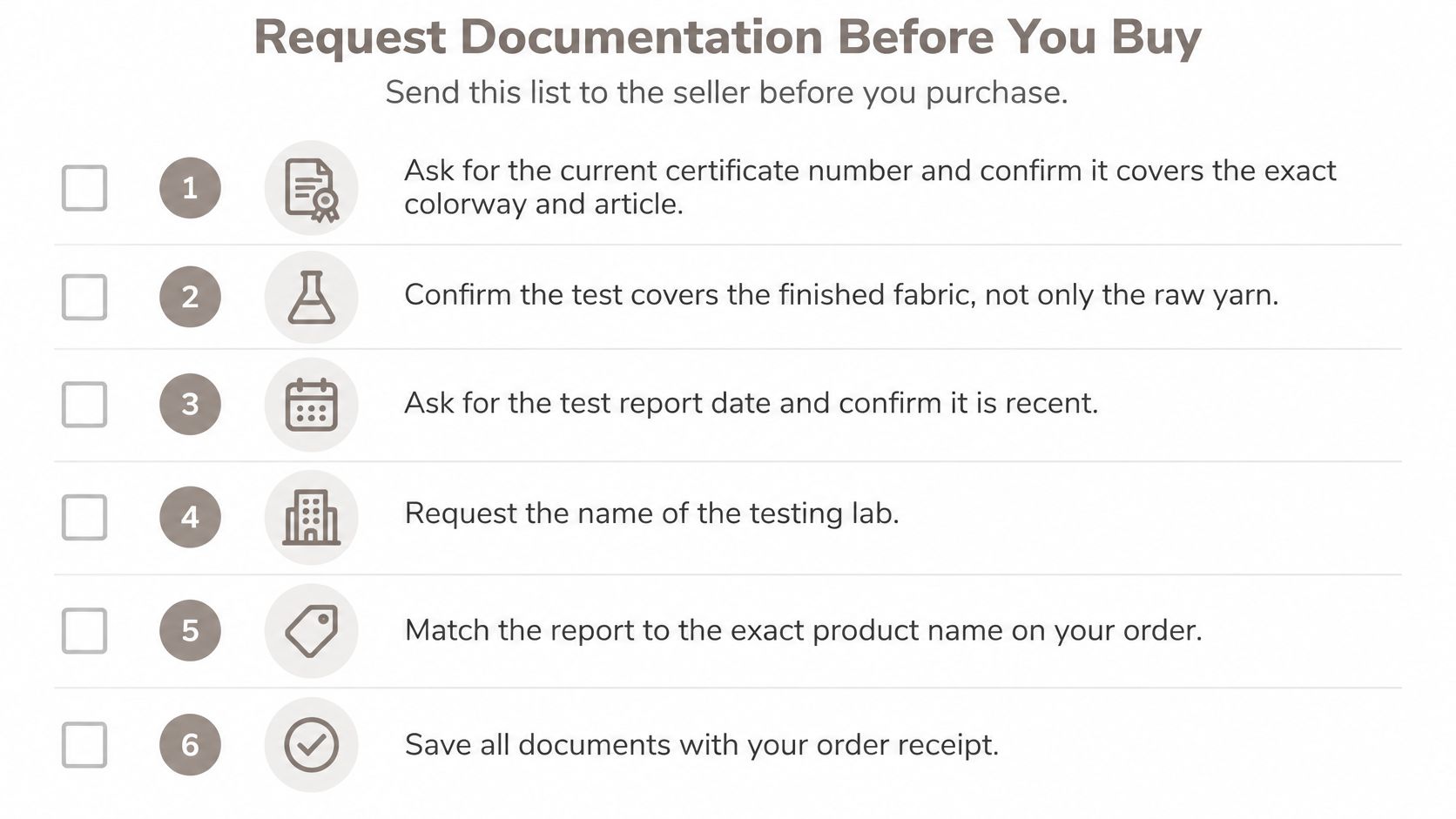
Request Documentation Before You Buy
Walking into a showroom or searching for designer furniture near me feels much simpler when you bring a concrete written checklist. Instead of accepting vague assurances that a fabric is "safe" or "clean," email these seven questions to the furniture maker, showroom, or workroom before placing a deposit.
Seven Items to Confirm in Writing
- Verify the exact certificate number. Ask for the current certification ID and confirm it covers your exact article name and colorway, not just a related fabric from the same mill.
- Clarify the test scope. Confirm whether the report covers only the raw yardage, the finished coated textile, or the completed assembled sofa or chair.
- Screen for topical treatments and backings. Ask plainly whether the bolt carries fluorinated stain resistance, antimicrobial sprays, or a PVC or polyurethane back coating.
- Confirm flame-retardant status across every layer. As highlighted in EPA guidance on flame retardants in upholstered furniture, furniture can expose households to flame retardants used in textile, plastic, and foam components. Inspect the California Senate Bill 1019 label on finished pieces to verify whether added flame retardants are present, and request written confirmation covering the fabric, foam, backing, and barrier layers.
- Request TB 117-2013 compliance details. Don't stop at "yes, it complies." Ask whether smolder resistance comes from the cover weave itself, an interior barrier layer, or a chemical additive.
- Match the abrasion method to the room. Request the exact test standard (Wyzenbeek or Martindale), abrasive substrate, and rating, then verify it meets the traffic level of your space.
- Archive the build record. File the invoice, mill name, colorway, certificate numbers, and internal cushion specs together so any future upholsterer knows exactly what sits inside the frame.
Test Swatches Where You Actually Live
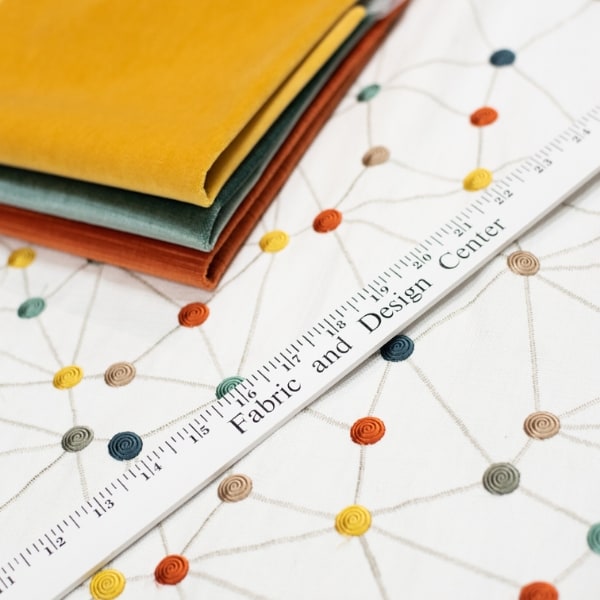
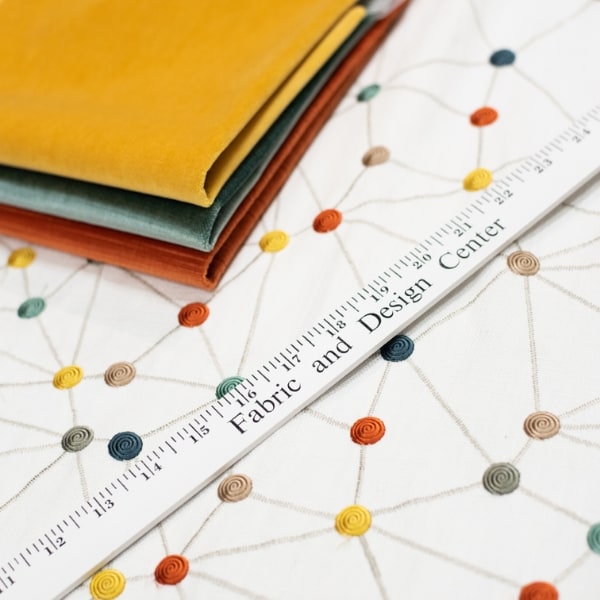
Paperwork narrows your shortlist, and daylight finishes the decision. Fabric samples are available in our Design Center, making it easy for homeowners and interior designers across Atlanta, Buckhead, Alpharetta, Roswell, and Sandy Springs to bring top contenders home before committing to full yardage.
Lay each sample over an existing cushion in morning and late-afternoon light to check true color undertones. Place it beside your rug to judge texture contrast, rub a clean damp cloth lightly across an inconspicuous corner to check for water spotting, and see how easily pet hair vacuums off the weave. Ten minutes of real-world testing alongside verified chemical and wear paperwork takes all the guesswork out of choosing a safer, longer-lasting textile.
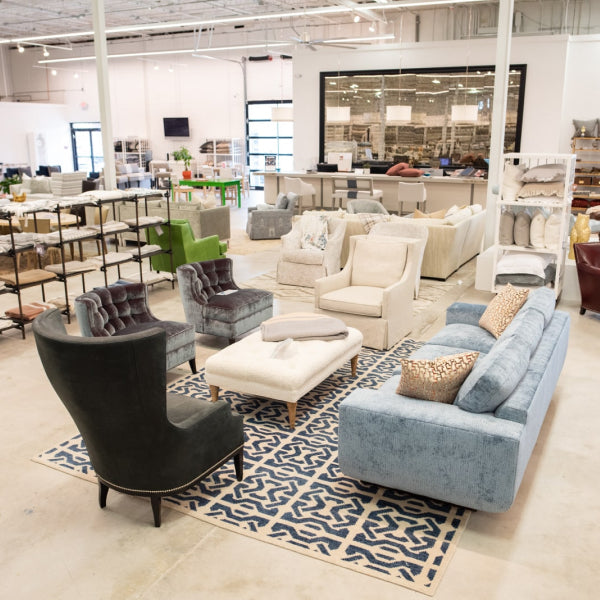
To buy premium furniture in Atlanta or get help sourcing documented, durable, non-toxic upholstery fabrics for custom sofas, statement chairs, or heirloom reupholstery, our team is ready to walk you through every mill specification in person. Visit Lewis and Sheron Textiles or stop by our Atlanta Design Center to explore certified performance textiles, Belgian linens, and American-made custom upholstery with complimentary guidance from our in-house designers.