



























A Buckhead homeowner notices a shallow dip in an inherited settee and a small tear near one tufting button. The obvious question is whether to repair the damage, replace the fabric, or start looking for a new sofa. The better first step is to pause and examine the piece. Antique upholstery repair begins with understanding what's failing, because a worn cover can hide a sound seat, while a tidy surface can conceal weakened webbing or a shifting spring foundation.
That distinction matters whether you own a family heirloom, a designer statement chair, or a luxury sofa that anchors a carefully furnished room. A piece's value isn't only its fabric or silhouette. Its frame, padding, springs, fasteners, and earlier repairs may all carry useful information, and changing them without a plan can alter how the furniture looks and sits.
Museum conservators approach upholstery as part of a historic object, not a covering to replace. A conservation project at the Los Angeles County Museum of Art documented furniture carefully, researched its history, and used stable, reversible materials where possible, demonstrating why examination should come before stripping and re-covering (LACMA upholstery conservation project). The same habit helps homeowners make better decisions: look first, record what you find, then choose the work.
When an Antique Sofa Needs More Than a Throw Blanket
A sagging seat or a torn seam can make an antique look like it needs a quick cosmetic fix. But a throw blanket only hides what you can see. It can't support a failing seat foundation, and covering the problem may delay the inspection that would reveal what the furniture needs.
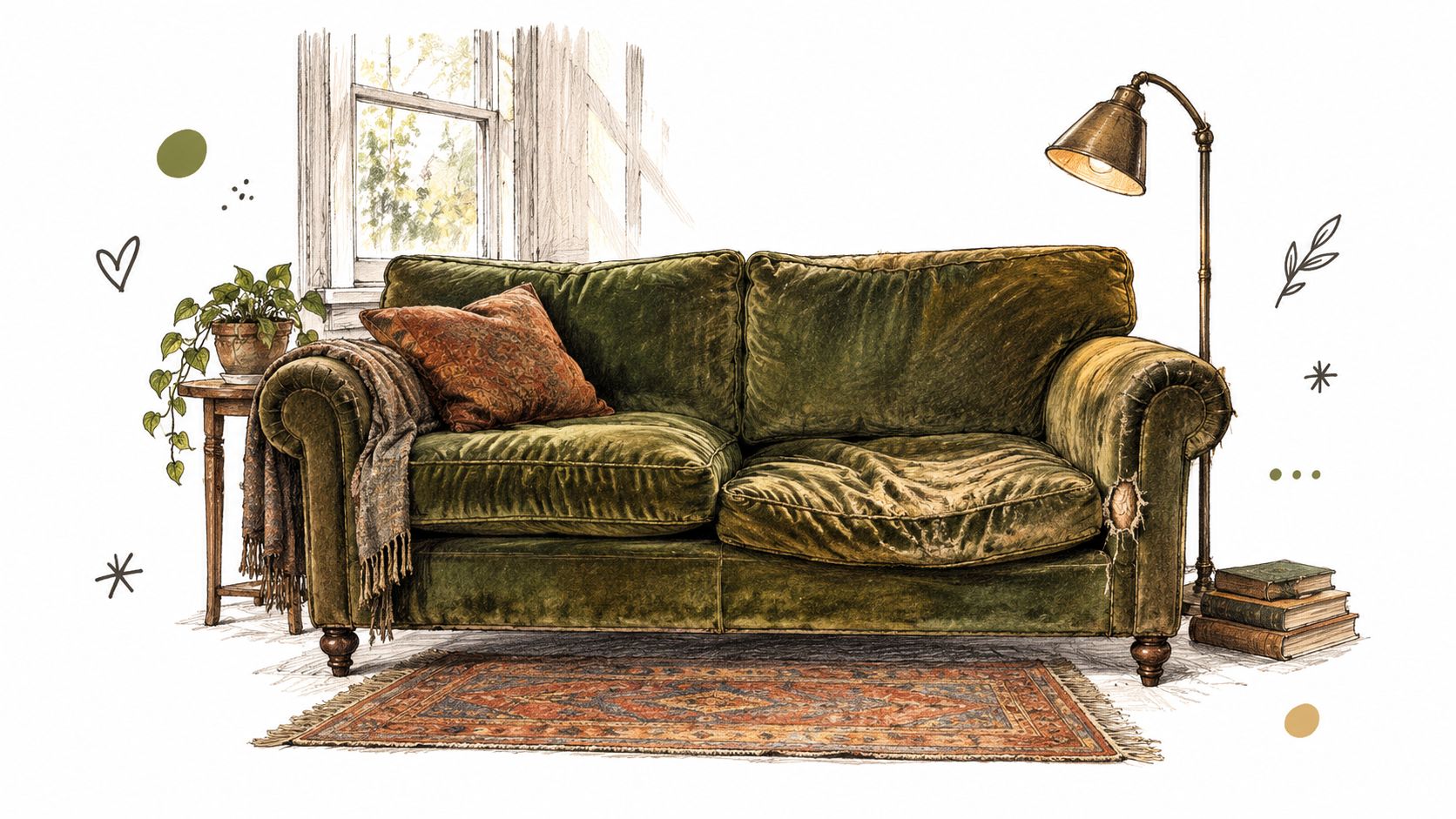
A settee may look presentable from across a room yet feel unusually low or uneven when someone sits down. That can point to stretched webbing, loose springs, displaced stuffing, or damage to the frame, rather than a problem with the visible fabric. Other clues include a cushion that won't hold its shape, dust or mustiness around old stuffing, fading concentrated on the sun-facing side, and seams pulling near buttons or piping.
A quick at-home inspection
With the piece empty and stable, check these areas without pulling fabric or removing tacks:
- Seat feel: Press gently across the seat. Notice whether one area sinks, feels unusually hard, or shifts.
- Underside: Look for sagging straps, loose threads, detached material, or previous repairs. Use a light rather than probing the layers.
- Fabric and seams: Check for brittle areas, splits, fraying, loose buttons, and damage around the edges.
- Frame: Gently test whether the arms or legs wobble. Don't force a joint that feels loose.
- Smell and debris: Note musty odors, falling stuffing, or dust that returns after surface cleaning.
Practical rule: Record what you see before moving or cleaning anything. A few clear photographs can help a specialist understand the problem without disturbing the upholstery.
If you find a tear but the seat remains firm and the frame stable, the work may be limited. If the seat dips, the springs shift, or stuffing escapes, ask for a structural assessment before choosing fabric. Early attention doesn't guarantee a simple repair, but it gives you a clearer choice between preserving the original construction and rebuilding it.
Repair, Restoration, and Reupholstery Explained
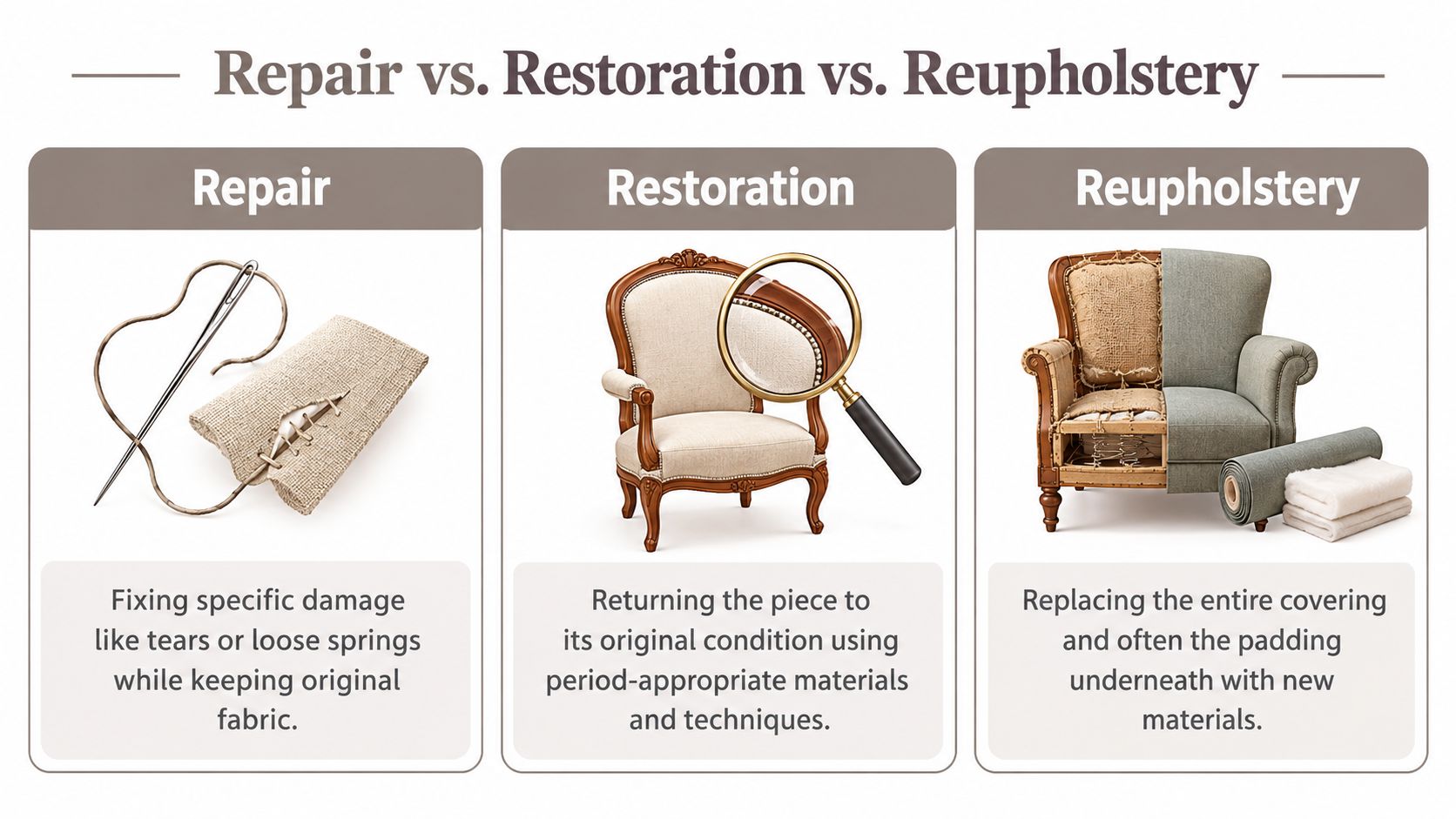
The words repair, restoration, and reupholstery describe different scopes of work. If you ask only for “new upholstery,” a specialist may interpret that as permission to remove layers you hoped to preserve. Start the conversation by describing the damage and asking what treatment would address it.
Repair addresses a localized problem, such as a loose seam, a small tear, or a spring that needs attention, while retaining the rest of the upholstery where feasible. Restoration takes a broader, evidence-led approach. The aim is to stabilize and recover a historically credible appearance while retaining sound original materials and choosing compatible methods.
Reupholstery usually means removing the existing covering and applying new fabric, often with new padding or other components. That can be appropriate for a well-loved chair that needs renewed daily comfort, but it isn't automatically the right answer for an heirloom with historically meaningful layers.
Let the object guide the scope
Period materials can help explain why a seemingly simple fabric choice may have consequences. Horsehair cloth, woven from horses' tails and manes, was widely used in late-eighteenth- and early-nineteenth-century furniture. Eighteenth-century moiré developed its distinctive watered look when heat and pressure were applied to woven fabric. Knowing what materials and shapes belong to a piece can help a restorer distinguish a sympathetic update from a covering that changes its character (upholstery conservation and historical materials).
A museum-quality chair may call for close documentation and preservation of surviving evidence. A family heirloom used every day may justify selective replacement of worn components, provided the work is recorded and doesn't damage sound original material. In either case, ask about the treatment before discussing color: what will stay, what will change, and why?
A reproduction fabric can help restore a period silhouette, while a modern textile may better suit daily use. Neither choice is right in every case. The important question is whether the plan respects the frame, the seat shape, and any evidence that should remain.
The Hidden Anatomy Inside an Antique Seat
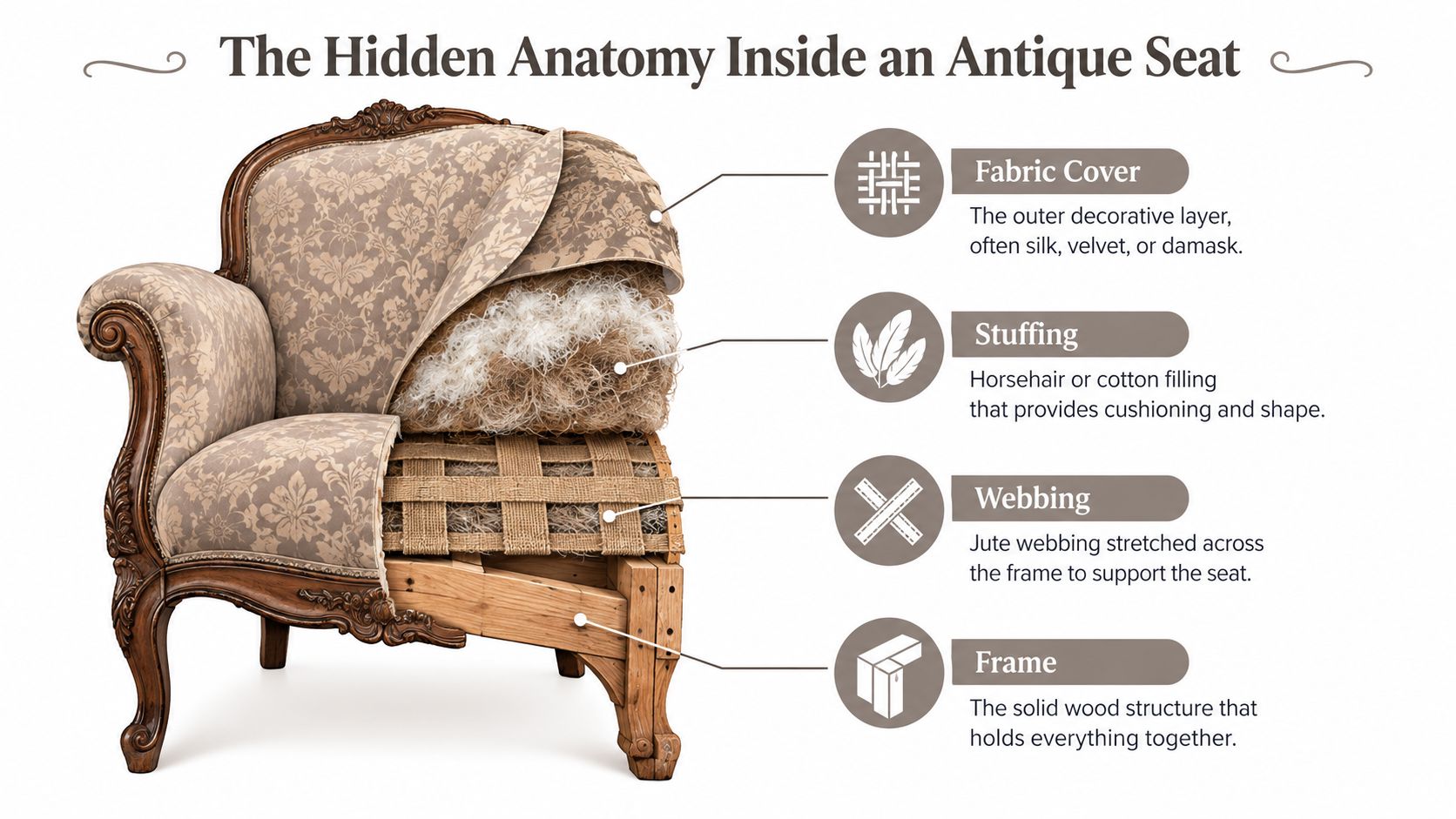
The fabric you touch is only the outside of an upholstered seat. Beneath it may be a series of layers that support the sitter and shape the furniture. Their materials and arrangement can affect comfort, silhouette, and the evidence available to someone repairing the piece later.
Read the seat from the frame upward
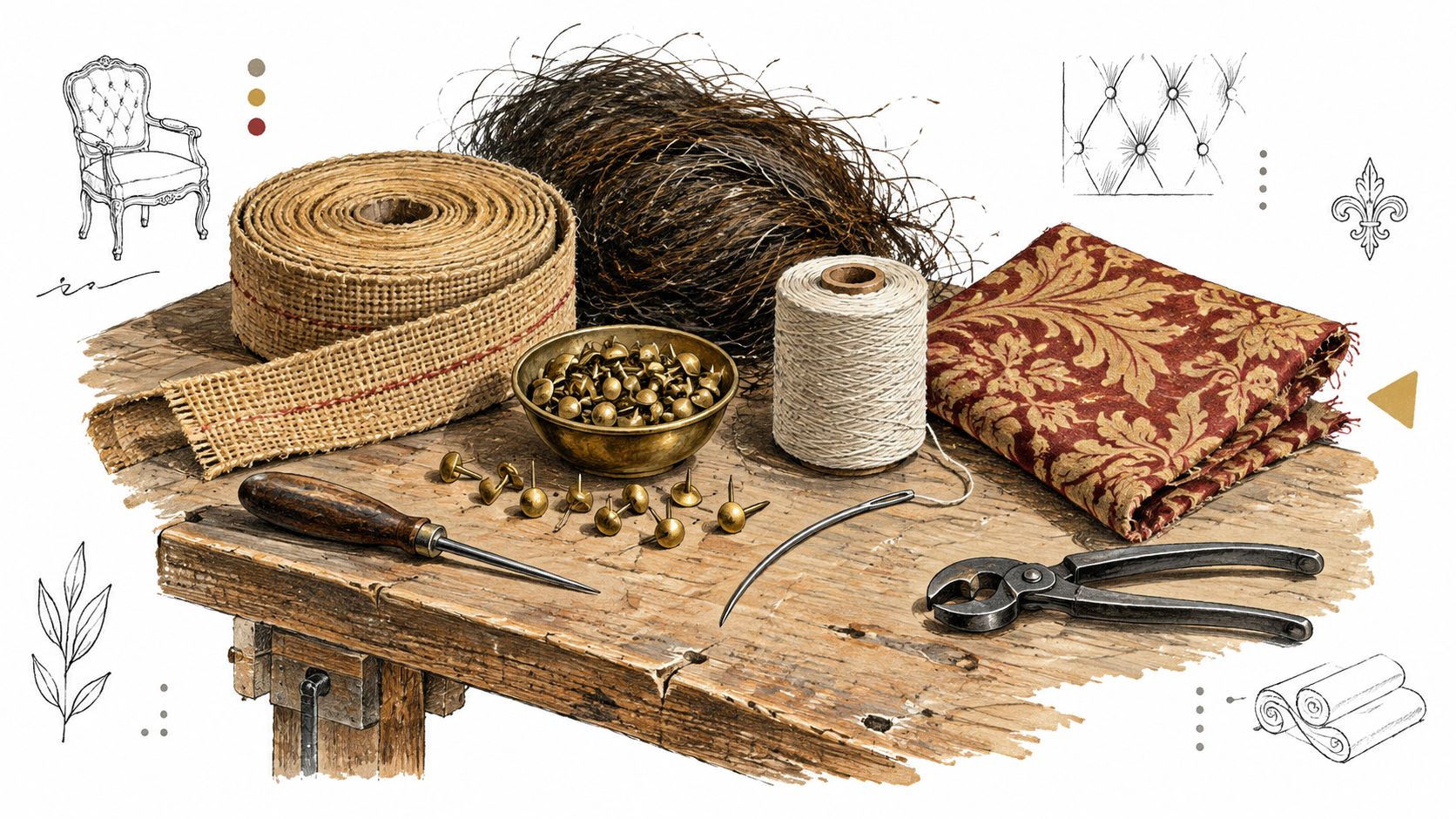
Start with the wooden frame, which anchors the seat and carries its load. Across the rails, webbing creates a supportive base; older seats may use jute or another natural fiber. Springs, when present, attach to the support system and help shape the seat's rise and give. Above them, layers of animal hair, cotton batting, or other stuffing provide cushioning. Scrim or interlining can separate and contain those materials, while the show cover forms the visible surface. Trims and fastenings complete the edges.
That structure varies by piece and period, so don't assume that every antique chair contains the same stack. A specialist should examine the actual construction before promising to reproduce it or replace it. For readers curious about spring construction, this overview of eight-way hand-tied furniture offers useful context.
A Museum of Fine Arts, Boston, project shows why looking beneath the visible cover matters: the green silk velvet was a later cover, with two earlier green layers still below it, including fragments of original satin-weave silk. The work used a new custom-woven green damask while retaining the original upholstery filling materials (MFA upholstery project photographs). Removing every layer at once would have discarded evidence of the chair's earlier appearance and construction.
A seat is a system, not a cushion. Changing its support or padding can change the shape of the whole piece.
Ask the restorer to identify what each layer does and which parts can stay. If the frame is sound but the support is failing, the answer may be a targeted structural treatment rather than a complete rebuild. Careful documentation helps you and future owners understand what was preserved, removed, or added.
Materials and Period-Appropriate Techniques
A historically sympathetic repair doesn't mean refusing every modern material. It means selecting materials for the piece's condition and use, and explaining how each substitution will affect the original structure, feel, and shape.
Traditional upholstery may include jute webbing, animal hair, linen scrim, and coil springs. These materials can often be retained when they're stable and safe to use. If a foundation is missing or can't support the seat, a conservator may add a separate support rather than forcing fragile historic materials to do more than they can.
Museum practice offers a useful example. At the Museum of Fine Arts, Boston, conservators built custom inner wood frames to fit original seat frames, installed new webbing, retained original springs, and tied the springs vertically to reduce pressure on the upholstery above (MFA upholstered-furniture conservation). Jefferson's chair conservation also used shaped, semi-rigid polyethylene foam as a stable substitute for missing traditional foundations. These cases show that a modern component can support conservation goals when it's carefully chosen and documented.
Match materials to the way you'll use the furniture
For a museum-level artifact, close fidelity to surviving construction may take priority. For a family chair used often, a reversible hybrid can sometimes protect original evidence while making the seat more practical. Ask whether a new support can be isolated from fragile historic layers, whether the original shape will remain, and whether the materials can be removed later without damage.
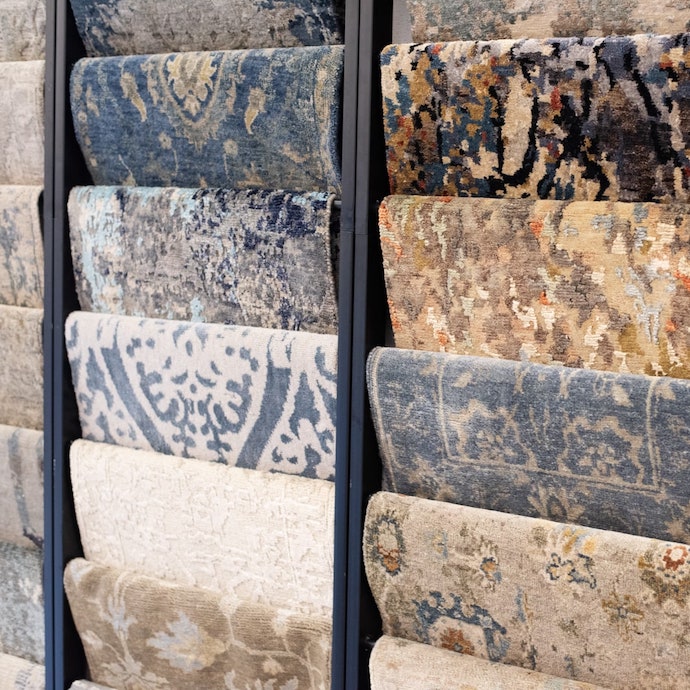
A custom-woven silk or damask may suit a formal heirloom. A durable modern fabric may be a better choice for a busy household, especially when the piece is meant to function as a high-end furniture centerpiece rather than sit untouched. This guide to fabric choices for antique chairs can help you compare appearance and use before choosing a cover.
Care doesn't end when the chair leaves the workroom. The National Park Service identifies relative humidity above approximately 65% as a mold risk and a contributor to corrosion in springs and tacks; below approximately 40%, textile fibers can become brittle. It recommends avoiding direct sunlight and keeping display illumination below 50 lux, with stable conditions near 50% relative humidity as a practical target (National Park Service guidance for upholstery and environmental care). Keep the piece away from direct sun and heating or cooling vents, and avoid abrupt environmental changes.
Caring for the Piece After the Repair
A repaired sofa can still deteriorate if it returns to a harsh environment. Atlanta's humid summers and bright southern light make placement and indoor conditions worth considering, especially for silk, aged webbing, and seats with hidden metal parts.
A common mistake is to focus on the new fabric and assume the care problem has been solved. But repaired furniture often combines old fibers with new thread, lining, or padding. When moisture changes unevenly, seams and attachment points can experience tension; moisture can also encourage corrosion on hidden springs and tacks. The National Park Service's recommended environment and light guidance, described above, provides a practical standard to discuss with your restorer.
Make placement part of the repair plan
- Keep the piece out of direct sunlight. Use blinds, curtains, or a different furniture position to limit fading and fiber damage.
- Avoid vents and windows. Sudden changes in temperature or humidity can stress mixed old and new materials.
- Watch the room, not just the season. A room that feels comfortable can still have damp corners or very dry air.
- Clean gently. Follow the restorer's advice for the specific fabric, and don't apply products to old upholstery without checking their suitability first.
YouTube tutorials and fabric-store kits can help with straightforward projects, but they can't replace an examination of an antique's hidden layers. A DIY repair may tighten the cover while leaving a failing support underneath, or introduce materials and fasteners that complicate future treatment. For conservation-grade work, the question isn't only whether you can sew a seam. It's whether you can identify what should remain untouched.
Why DIY Repair Is Riskier Than It Looks
An antique seat can look like a manageable weekend project. The difficulty is that the visible cover doesn't tell you how the structure was built, which layers are original, or where a replacement part might change the seat's shape.
Replacing old webbing with synthetic strips without checking the original arrangement may alter how the seat sits. Wrapping existing horsehair in a thick modern foam layer can raise or soften the profile. Driving staples into original frame rails can pierce historic material and make later work harder. And if nobody photographs the underside or records the layers before dismantling, future owners may lose clues about earlier construction and repairs.
The risk is often hidden in the method
Colonial Williamsburg notes that fabric remnants in tack holes and nail-hole patterns may reveal clues even after repeated reupholstery. The Museum of Fine Arts, Boston, warns that repeated tacking can damage margins and erase information about past treatments (Colonial Williamsburg conservation and preservation guidance). Those details are easy to overlook when a project is judged only by its finished appearance.
Conservation practice favors minimal intervention, reversible methods, and fewer new metal fasteners where possible. That doesn't mean every owner needs museum treatment. It does mean you should understand what a proposed method might remove or damage before approving it.
Before taking anything apart: Photograph the underside, labels, visible fabric layers, tack lines, springs, and stuffing. Don't pull out loose material until a specialist has had a chance to assess it.
The larger decision is whether the furniture is meant for display, occasional use, or everyday seating. A high-end sofa in a busy family room may need a stronger support plan than a rarely used statement chair. A restorer should explain the trade-offs clearly, including which original materials can remain and what changes will affect comfort or silhouette.
Good antique upholstery repair depends on judgment as much as hand skills. If the piece is valuable to your family or important to the room's design, a professional assessment can help you avoid a shortcut that's difficult to reverse.
Cost and Timeline Expectations for Atlanta Homeowners
A quote for antique upholstery repair depends on the work required, not just the amount of fabric. A local seam repair and a full sofa restoration are different projects, even when both involve the same textile. Ask for a written scope that separates fabric, structural work, padding, springs, trim, and documentation.
A single dining-chair seat may need limited repair, while a lounge chair can require a full cover and padding rebuild. A high-end sofa or sectional may need a broader assessment of the frame, support system, cushions, and finish. Without examining the furniture and confirming the materials, a specific price range or timeline wouldn't be reliable. For a practical overview of the variables that affect a quote, see this guide to reupholstery costs.
What can change the estimate
- Fabric selection: Specialty, custom-woven, or hard-to-source textiles may require additional sourcing and coordination.
- Structural work: Rebuilding support, stabilizing a frame, or addressing springs adds work beyond sewing and covering.
- Detailing: Piping, tufting, trim, and shaped sections require careful fitting and finishing.
- Historic documentation: A plan to photograph, label, and retain original layers takes time but helps preserve the piece's record.
- Availability: Made-to-order upholstery and custom textiles may affect scheduling. Confirm lead times before setting a delivery date.
Local consultation can also make it easier to coordinate fabric selection and workroom details without shipping an heirloom out of state. For Atlanta homeowners comparing custom upholstered furniture, designer furniture, or a new luxury sofa, consider the full scope: how the piece is made, what can be customized, and whether the finish suits the room and how you live.
Don't compare quotes by total alone. Confirm what each includes, whether original material will be retained, and what happens if the restorer finds hidden damage after opening the seat. A clear scope helps you plan around the actual work rather than an optimistic estimate.
Hiring Checklist for the Right Restorer
A good first consultation should feel like an examination. Bring photographs of the furniture and the damage, then explain how you use the piece: daily seating, occasional use, display, or a room where children and pets set the terms. Ask the restorer to describe what they would inspect before recommending repair, restoration, or reupholstery. In museum practice, treatment starts after condition is recorded; the same order protects an heirloom at home.
A capable restorer works like a conservator: stabilize first, document always, intervene only where the piece needs it.
Questions that reveal the process
| Question to ask | Why it matters | Good answer to listen for |
|---|---|---|
| Will you photograph the piece before disassembly? | A visual record preserves information about construction, wear, repairs, and condition. | “Yes. We'll document the visible upholstery and underside before work begins.” |
| Can you retain original layers when they are sound and significant? | Preserving stable material can protect the piece's history and shape. | “We'll assess each layer and explain what can stay before removing anything.” |
| Which attachment methods will you use? | New fasteners can damage old frames and limit later repairs. | “We'll choose methods that minimize new damage and explain how reversible they are.” |
| Where do you source period-appropriate textiles? | Fabric affects the look, feel, and historical character of the finished piece. | “We can discuss suitable options, including custom or historically compatible fabrics.” |
| Can you coordinate with my interior designer? | A shared plan can align color, scale, trim, and the room's other furnishings. | “Yes. We can review the design direction and samples together.” |
| How do you confirm lead time for custom work? | Textile and furniture availability can affect scheduling. | “We'll verify current availability and timing before you approve the work.” |
Treat vague answers as part of the condition report. If a restorer cannot say what they will photograph, which layers they hope to keep, or how they will attach new material to an old frame, the plan may be more cosmetic than conservative.
Be cautious if a quote arrives without a fabric discussion, documentation plan, or explanation of the proposed structural work. An aggressive schedule can also be a warning sign if it leaves little room for inspection, material sourcing, or careful finishing. Conservation-minded repair is slower at the front because decisions made before disassembly are hard to undo later.
A consultation at Lewis and Sheron Textiles can bring fabric and furniture decisions into one conversation. The Atlanta showroom has offered expert reupholstery and complimentary in-house design help since 1944, pairing made-to-order American upholstery with practical guidance on what should be preserved. For homeowners in Atlanta, Buckhead, Alpharetta, Roswell, and Sandy Springs, that creates a place to discuss an heirloom's condition alongside the room it needs to serve.
Ask to review fabric options against the furniture's shape and intended use, then talk through what should be preserved before the work starts. Whether you are planning a repair for a custom chair, updating a designer statement piece, or comparing custom furniture in Atlanta with mass-produced alternatives, the same principle applies: understand the structure before deciding on the finish.
Visit Lewis and Sheron Textiles to explore premium fabrics, custom upholstery, and reupholstery services for heirloom furniture. Bring photographs of your piece and discuss its condition with the team before choosing a treatment, so the repair plan can respect both its history and your home's needs.