





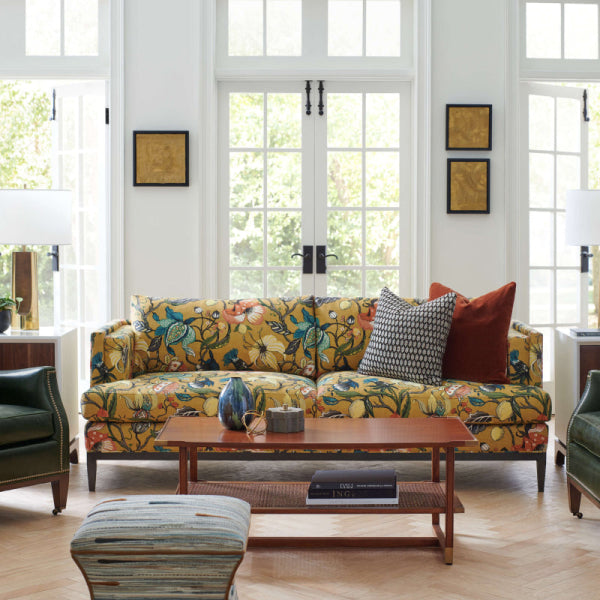
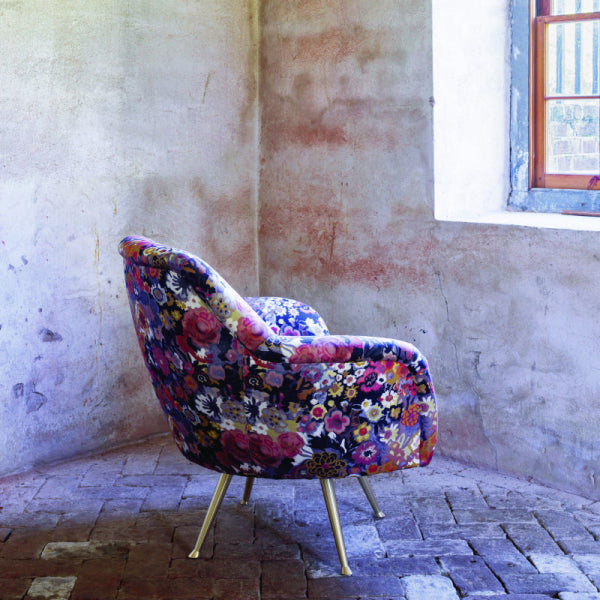













You've found them at an estate sale in Buckhead, or inherited them from a gracious Atlanta dining room. The frames are beautiful, the upholstery is tired, and the price of restoration makes you pause. Before choosing a luxury fabric or searching for a designer furniture showroom near me, determine whether the chairs need a cosmetic refresh, structural repair, conservation, or a carefully balanced combination of all three.
Antique upholstered dining chairs can become statement furniture pieces in a formal dining room, breakfast room, or North Atlanta home, but their value isn't limited to appearance. Joinery, upholstery layers, fasteners, stuffing, comfort, safety, and documented repairs all affect whether a chair deserves museum-minded treatment or a more practical custom upholstery plan.
Evaluating the History and Construction Clues
A worn chair in a Buckhead estate sale can be misleading. The fabric may look old, yet the frame may have been repaired repeatedly. Conversely, a chair with newer upholstery may retain an important period frame. Judging age from the visible cover alone is one of the costliest mistakes a buyer can make.
In Britain, upholstered seating became especially significant during the 18th century, as greater prosperity, domestic comfort, and protection from cold drafts encouraged more elaborate forms. Encyclopaedia Britannica's history of upholstery describes the upholstered chair as a distinctly European development that reached an influential form in 18th-century England. Some examples were heavily padded, positioned close to the sitter, and designed with wings that helped shield the body from drafts.
Read the chair beneath the cover
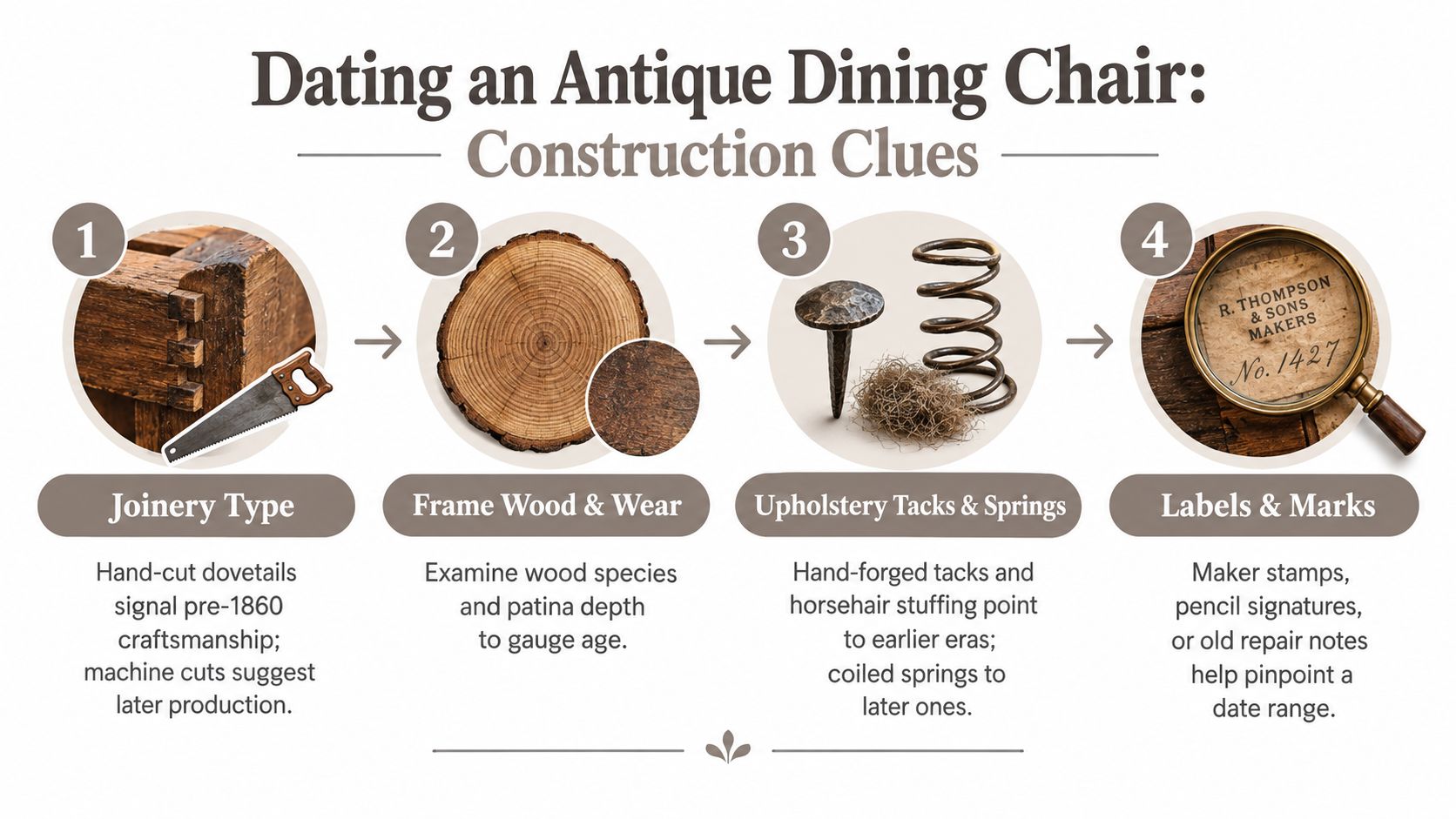
By the mid-20th century, foam rubber and plastic-based materials changed upholstery construction. Earlier chairs are more likely to contain layered systems involving fabric, linen, webbing, stuffing, and numerous fasteners. Later work may rely on industrial foam and synthetic components, which can change both the chair's profile and the appropriate restoration method.
Look closely before anyone removes a tack:
- Fasteners: Hand-applied nails, tacks, and old nail holes can reveal successive upholstery campaigns.
- Foundation layers: Linen, webbing, stuffing, and spring construction help distinguish traditional work from later rebuilding.
- Frame evidence: Examine joints, rail shapes, leg turning, underside construction, labels, pencil notes, and old repairs.
- Material transitions: Industrial foam or plastic-based components may point to later intervention rather than original construction.
A Philadelphia Sheraton dining chair documented by the Ohio Historical Society dates approximately to 1810–1820 and has turned and reeded legs, a square back, and an upholstered seat extending over and beneath the front rail. That kind of construction detail is more useful than a faded floral cover when assessing an antique dining chair.
For a visual overview of upholstery proportions and finish choices, the Giorgi Bros. Furniture style guide offers a useful design reference. For restoration fundamentals, this guide to restoring antique furniture is a practical companion.
Assessing Preservation Versus Modernization
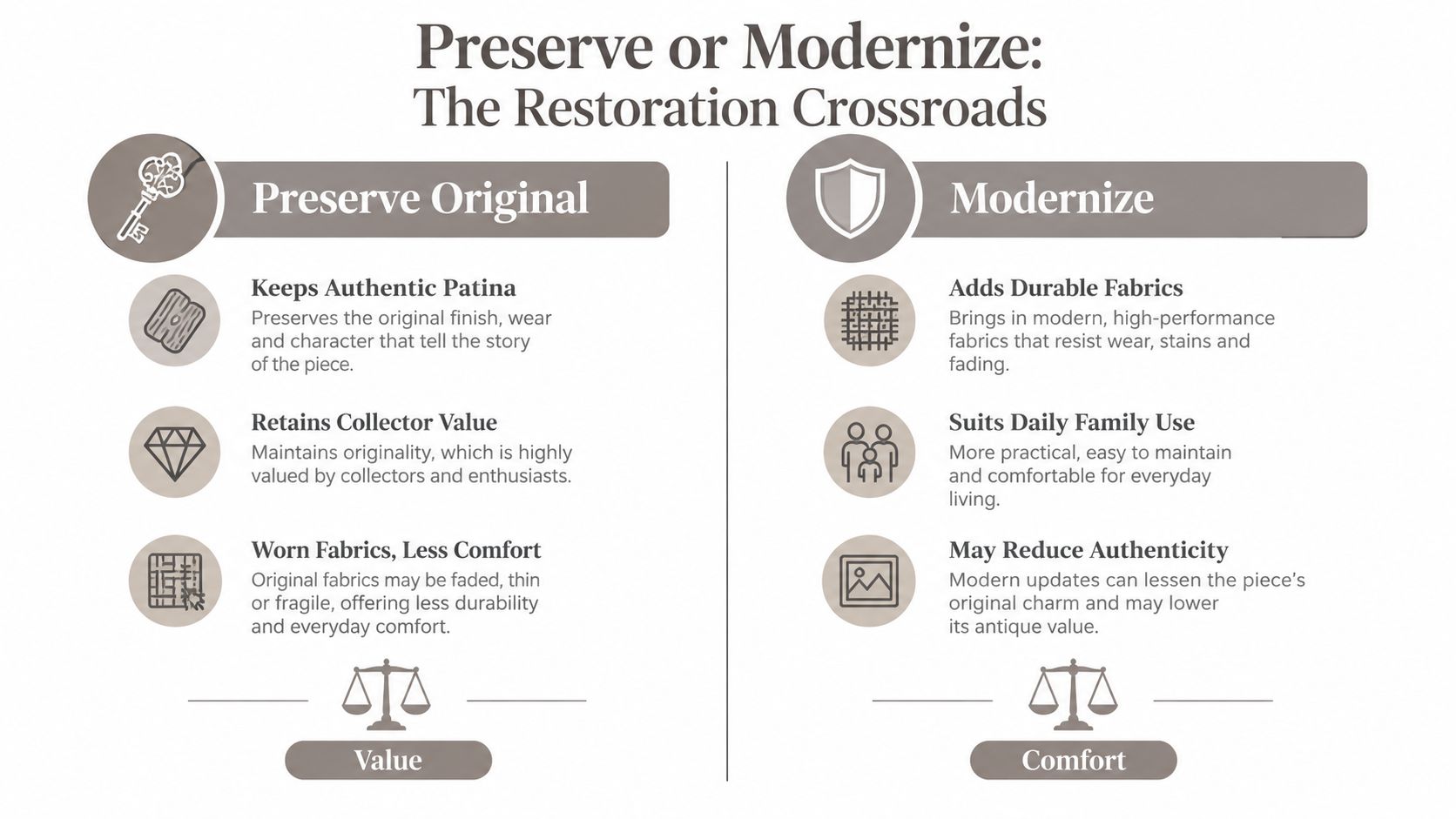
The central decision isn't whether a chair looks better with new fabric. It's whether the chair's historical evidence, structural needs, and intended use justify preserving original materials, introducing modern components, or combining both approaches.
Winterthur's documentation of a side chair from Alexander Hamilton's dining-room set illustrates why antique upholstered dining chairs rarely have simple histories. The chair was made around 1795–1805, acquired by Winterthur in 1952, and later reupholstered with historically appropriate fabric. The museum records traditional upholstery practice in the 1950s, including nails for webbing, tacks for linen, and brass nails for decoration.
That approach differs from the low-intervention methods conservators increasingly adopted beginning in the 1980s. Rather than driving new fasteners into weakened seat rails, conservators could preserve the visual character of upholstery while limiting additional damage. Winterthur's museum documentation shows why repair history deserves as much attention as original style.
Make the decision by use, not sentiment alone
A museum-significant chair may need minimal intervention, original stuffing retained where possible, and reversible work. A family heirloom used for long dinners may justify selective rebuilding, provided the restorer documents what was removed and why. A decorative antique intended for occasional entertaining can accept more modern performance materials, although thick foam can alter seat height, silhouette, and period character.
| Priority | Usually favors preservation | Usually favors modernization |
|---|---|---|
| Historical evidence | Original fabric, stuffing, fasteners, and profile remain significant | Existing materials are extensively degraded or undocumented |
| Daily comfort | Sound original suspension and padding can be retained | Collapsed padding or altered seat geometry needs correction |
| Appearance | Patina and period texture matter most | A cohesive designer interior requires a new textile |
| Future care | Reversible intervention is essential | Contemporary barrier, filling, or decking systems are required |
Practical rule: The best restoration preserves the chair's identity while making its intended use safe and realistic.
Before moving a fragile set from an estate, coordinate with specialists experienced in moving heirlooms and antiques. A sound frame can still suffer damage from careless handling, especially when old joints and repaired rails are already under stress.
Documenting the Chair Before Restoration Begins
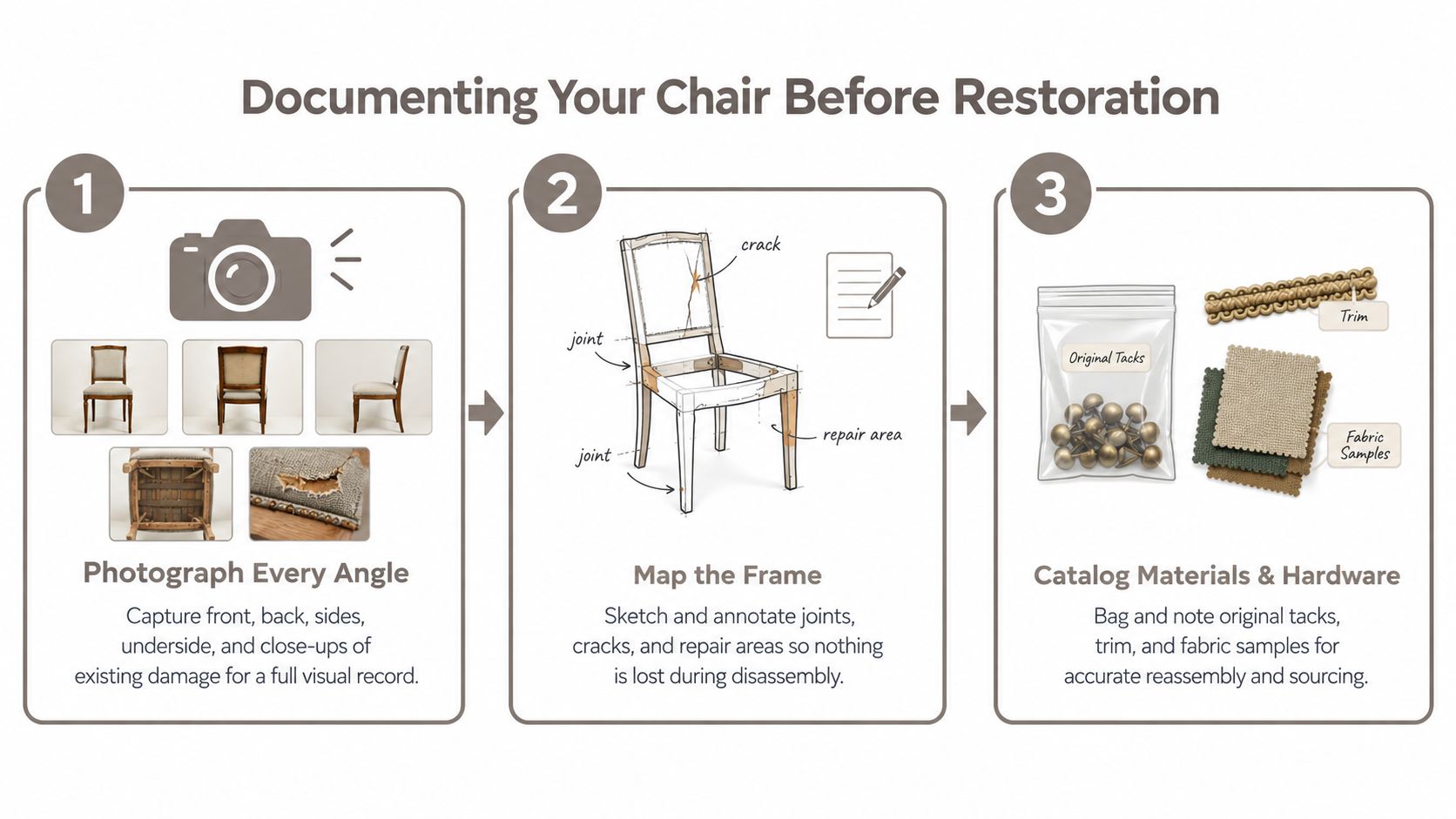
The most responsible restoration starts with a camera, notebook, measuring tape, and patience. Removing the fabric immediately may produce a clean-looking project, but it can destroy maker marks, original proportions, repair evidence, and clues to historic upholstery technique.
Begin with photographs of the front, back, sides, underside, legs, rails, trim, labels, damage, stains, and loose joints. Use consistent lighting and include close-ups of every area that might disappear during disassembly. A simple file naming system can connect each image to a chair number and location in the dining room.
Preserve evidence layer by layer
Map the chair before removing anything. Sketch the frame, mark loose joints and cracks, note where trim begins and ends, and record the direction of fabric grain. Then remove upholstery sequentially, retaining representative samples from each layer instead of treating every discarded material as rubbish.
A useful restoration record includes:
- Condition photographs: Capture the complete chair and close-ups of damage before intervention.
- Material map: Identify fabric, trim, tacks, labels, webbing, springs, stuffing, and decking.
- Layer samples: Bag and label representative pieces from the outer cover, foundation, and padding.
- Frame assessment: Test joints, inspect rails, check wobble, and note old repairs or altered holes.
- Treatment proposal: Record objectives, proposed materials, rejected alternatives, and how the work can be reversed.
Assess odor, contamination, old finishes, webbing tension, spring condition, stuffing integrity, and evidence of pests before specifying treatment. A chair with beautiful horsehair may still require selective rebuilding if the suspension has collapsed. A chair with modern foam may need replacement if the material has failed, but its removal should still be documented.
The Western Australian Museum conservation guidance recommends preserving original material wherever possible and replacing it only when critically necessary. It also supports retaining removed components, using original holes where feasible, avoiding unnecessary new nail holes, and selecting stable materials such as linen, polyester, or polyethylene instead of unstable jute in appropriate conservation applications.
Understanding Fabric Performance and Safety Codes
An antique dining chair used for weekly dinners faces concentrated edge wear, seam stress, spills, cleaning products, sunlight, and shifting body weight. Select the textile for that working condition, not only for its pattern or fiber name. A loose weave, weak backing, or poorly matched construction can fail while the chair still looks carefully maintained.
Read the specification sheet, then assess how its testing relates to this particular seat. Under the Wyzenbeek method, one double rub is a complete back-and-forth cycle. The sample is held in a frame and rubbed with ACT-approved #10 cotton duck in both warp and weft directions. Testing ends when two yarn breaks or noticeable wear appears.
The Association for Contract Textiles identifies 15,000 double rubs and 30,000 double rubs as separate reference levels. It also cautions that results above 100,000 double rubs have not been shown to reliably predict longer fabric life. These figures are documented in this explanation of fabric specification sheets.
Judge the textile on the finished chair
Ask the upholsterer to examine five practical factors before ordering yardage:
- Weave and fiber content: A tight construction may resist abrasion differently from a loose, expressive weave.
- Seam behavior: Check seam slippage, fraying, snagging, and pattern alignment, especially around corners and welts.
- Maintenance: Confirm suitable cleaning chemistry, stain response, and whether the finish can tolerate regular dining use.
- Light exposure: Review colorfastness if the room receives strong Atlanta sun.
- Visual scale: Place the stripe, repeat, or motif on the actual seat and back before cutting.
Fabric performance cannot compensate for a distorted foundation. Confirm that joints and suspension are stable, preserve sound original stuffing where practical, and rebuild collapsed areas selectively. The upholsterer should develop the new pattern from the existing cover so the restored profile remains proportionate rather than oversized or unnaturally rigid.
Luxury design often requires a compromise. A historically correct textile may offer the right hand and appearance but less tolerance for spills, while a technically stronger fabric may alter the chair's character. Discuss that trade-off with an Atlanta upholsterer before approving the material. A double-rub figure is not a years-of-service guarantee.
Navigating Legal Compliance and Restoration Risks
A chair restored for private use may face different requirements when it is sold or relocated. In the United States, 16 C.F.R. Part 1640 covers TB 117-2013 smolder resistance for cover fabric, filling, barrier, and decking materials, along with a compliance label. Ask the restorer to identify the compliant materials, explain the barrier and filling system, and confirm whether the completed chair will carry the required label when applicable.
TB 117-2013 evaluates the smolder resistance of individual upholstered-furniture components rather than the fire behavior of a fully assembled chair. Covered components include the outer cover, filling, barrier, and decking. The standard can be met without flame-retardant chemicals, as explained in The Consumer Product Safety Commission's upholstered-furniture guidance.
A compliant component does not guarantee a safe, durable, comfortable, or well-crafted chair. The CPSC rule documentation for TB 117-2013 clarifies the limits of labels and specification sheets. They do not establish the chair's overall fire performance or the quality of its restoration.
Before approving a proposal, get clear answers on these points:
- Cover system: Which fabric, backing, and seam treatment will be used?
- Filling and barrier: Which materials provide the required smolder resistance?
- Labeling: Will the finished chair receive the applicable compliance label?
- Restoration sequence: Will the frame, joints, and suspension be stabilized before the fabric is tightened?
- Material stability: Are the trim, adhesives, backing, and padding suitable for the intended use?
International resale or relocation requires separate review. UK guidance generally addresses cigarette, match, and ignition resistance for upholstered furniture and replacement covers. Atlanta homeowners moving inherited chairs abroad should confirm the destination's rules before restoration, since a compliant domestic specification may not satisfy another jurisdiction.
Restoration can also compromise heritage value. Replacing sound horsehair or spring construction with thick foam, stretching fabric over an unstable frame, or choosing unstable trim can shorten the chair's useful life. Require photographs, material records, and notes on any concealed changes. That documentation preserves a clear record for future owners and keeps safety work accountable without disguising original construction.
Selecting Premium Fabrics and Trims in Atlanta
An inherited set can look right at an Atlanta dining table and still fail in daily use. Start by reading the room's architecture, wood tones, table scale, rug, window treatment, and statement furniture. Decide whether the chairs should settle into a quiet composition or carry the room's main pattern. That choice guides both fabric and trim.
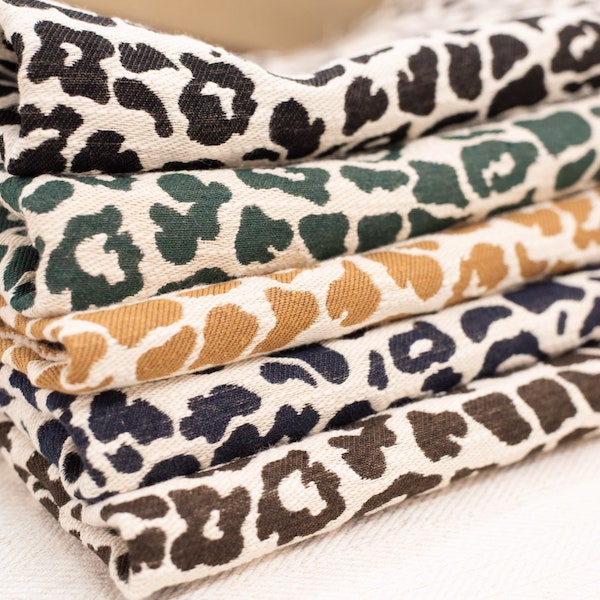
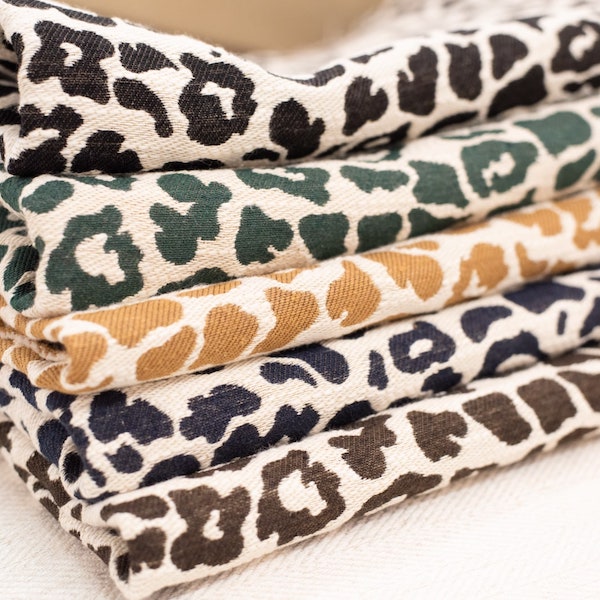
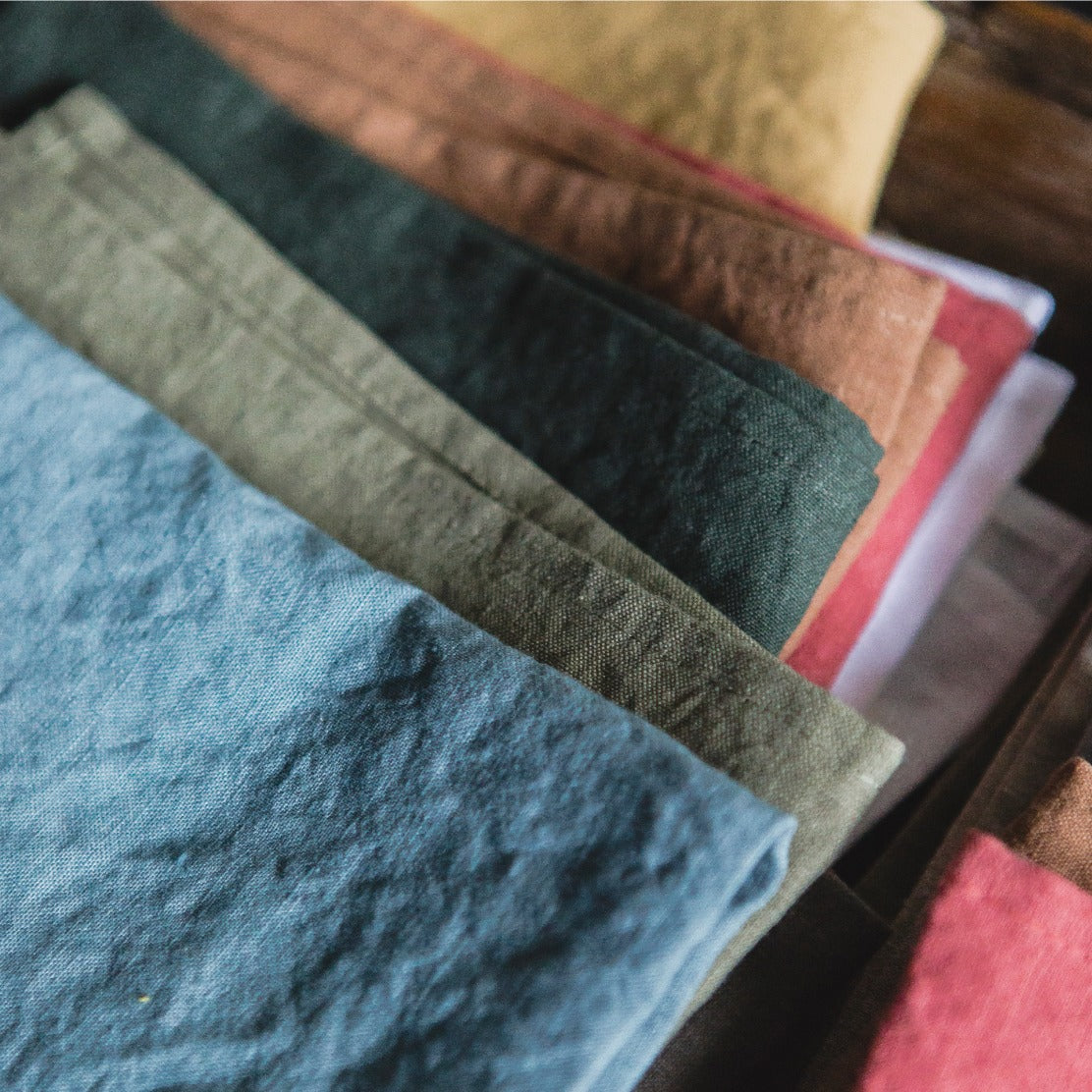
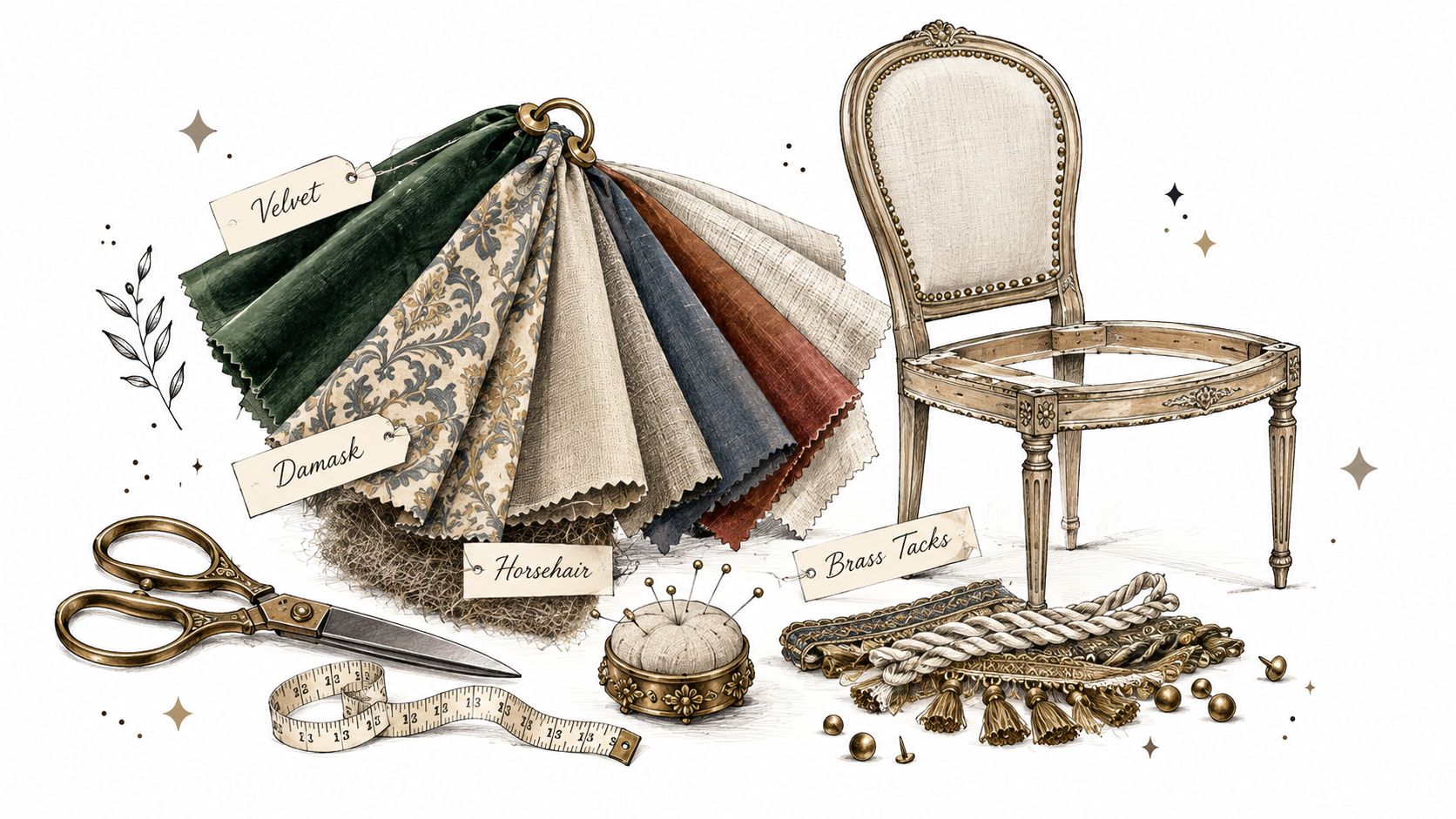
A Buckhead heritage property may suit Belgian linen, a restrained stripe, or a tactile woven textile that respects the room without copying its past. In Alpharetta or Roswell, expressive velvet, patterned cotton, or a coordinated mix can make traditional chairs feel current. The decision should balance period sensitivity, tactile quality, cleanability, and visual distinction, while allowing for the chair's construction and intended use.
Build the textile scheme deliberately
Take samples into the dining room, not just the showroom. View them in afternoon light against the wood finish, wall color, table edge, and rug. Sit with the sample nearby and handle it as you would during a meal. A fabric that looks refined can feel too delicate, slippery, or difficult to maintain once the chairs are in regular rotation.
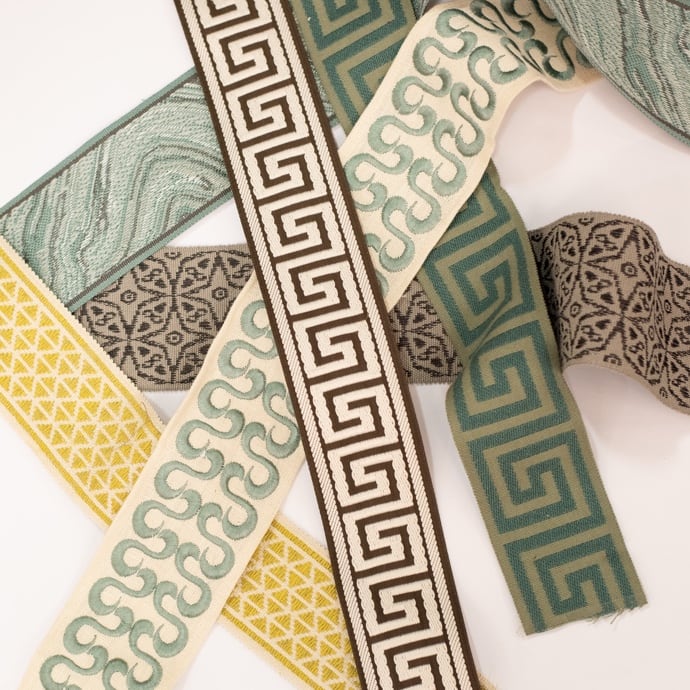
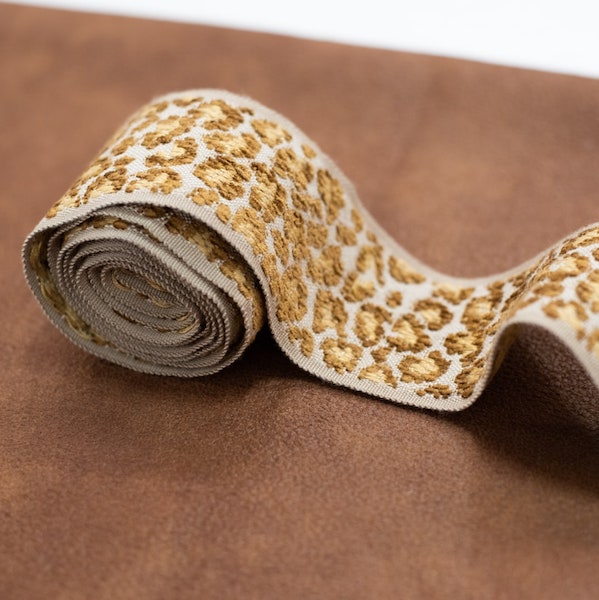
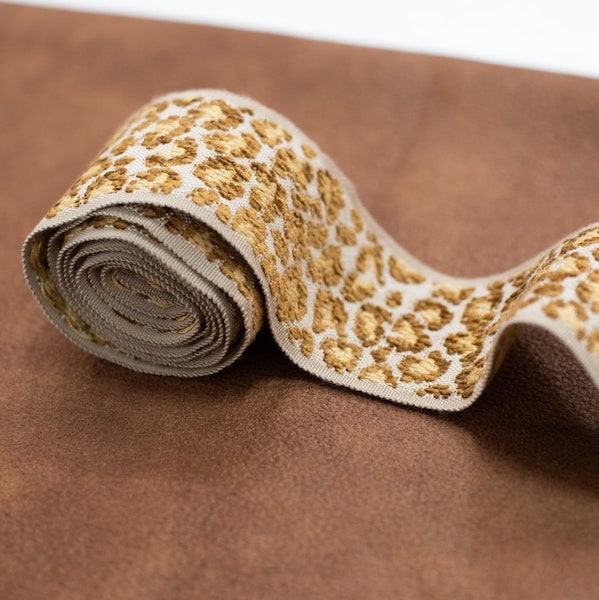
Evaluate the trim as part of the chair's construction. Gimp, braid, piping, and tape can clarify the outline, conceal a fastening edge, or overpower delicate carving. A formal chair may carry decorative trim, while a light Sheraton profile usually benefits from a quieter scale and sheen.
Use this working sequence:
- Set the visual direction: Choose quiet heritage, refined luxury, or a bold designer accent.
- Test the textile: Check its hand, reverse, pattern repeat, stripe direction, and motif placement against the existing cover.
- Match the frame: Coordinate trim scale and sheen with the woodwork and chair profile.
- Review performance: Ask about seam slippage, snagging, cleaning, colorfastness, and abrasion suitability.
- Confirm the specification: Reconcile the fabric, lining, padding, and trim with the chair's documented restoration plan and applicable safety requirements.
Homeowners comparing fabric for antique chairs can judge textiles against construction, not color alone. Atlanta's affluent design market provides access to premium linens, velvets, cottons, performance blends, and curated trims. That range rewards disciplined sampling and a clear decision about whether historical character or everyday resilience receives priority.
Finding Expert Custom Upholstery Services
Antique restoration demands more than a fabric installer. The right professional can inspect the frame, test joints, assess springs and webbing, preserve useful original material, and explain where modernization will change the chair's profile or historical value.
That's especially important when antique upholstered dining chairs must work in a real dining room. A conservator may prioritize minimal intervention, while a custom upholsterer may need to improve comfort and compliance for regular family use. The best result comes from discussing those priorities before work begins, not after the chair has been stripped.
Choose local expertise with design depth
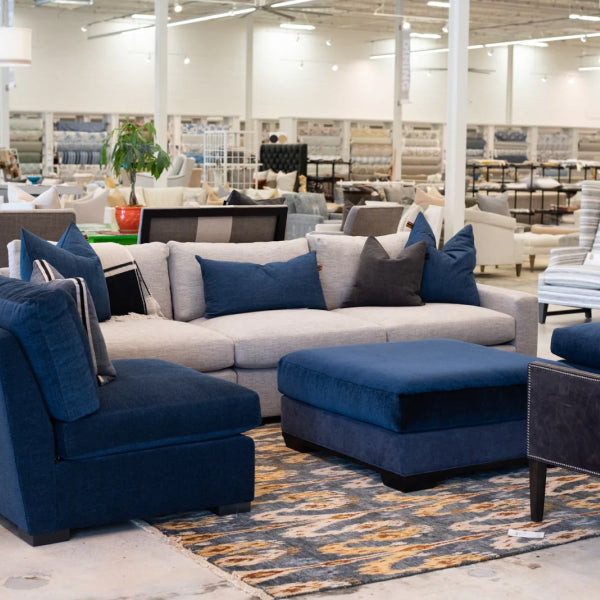
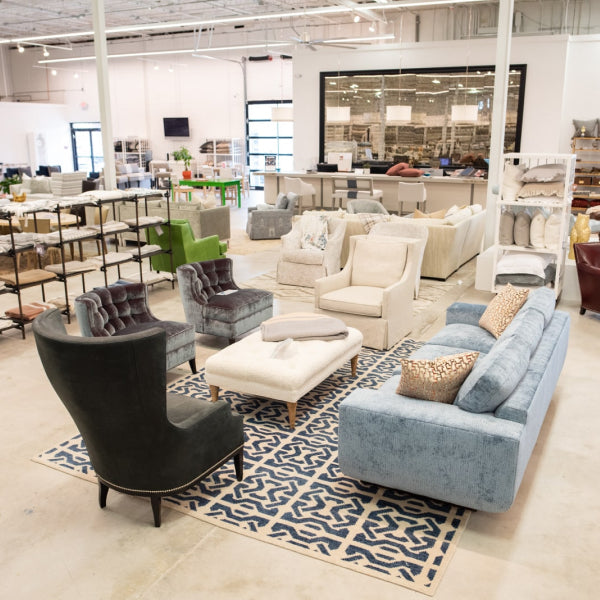
Atlanta homeowners in Buckhead, Sandy Springs, Fulton County, and surrounding North Atlanta markets should look for a partner who can coordinate restoration with the broader interior. A showroom connected to custom upholstered furniture, designer textiles, rugs, trims, and made-to-order seating can help ensure the restored chairs don't compete with luxury sofas, premium sectionals, or other high-end furniture.
A complimentary design consultation can be useful when the project includes more than one chair or room. Bring photographs, measurements, fabric samples, and any ownership or repair history. A specialist can then help compare a conservation textile with a more durable contemporary option, review custom chair proportions, and plan a cohesive setting.
For practical evaluation criteria, use this guide to upholstery services in Atlanta. The goal isn't merely a new appearance. It's an heirloom-quality furniture result with stable structure, appropriate comfort, documented intervention, and a finish that belongs in your home.
Lewis and Sheron Textiles offers premium upholstery fabrics, custom furnishings, expert reupholstery, trims, Belgian linens, rugs, and complimentary in-house design support through its Atlanta Design Center. Visit Lewis and Sheron Textiles with photographs of your chairs to review a restoration-minded fabric and custom furniture plan for your dining room.