









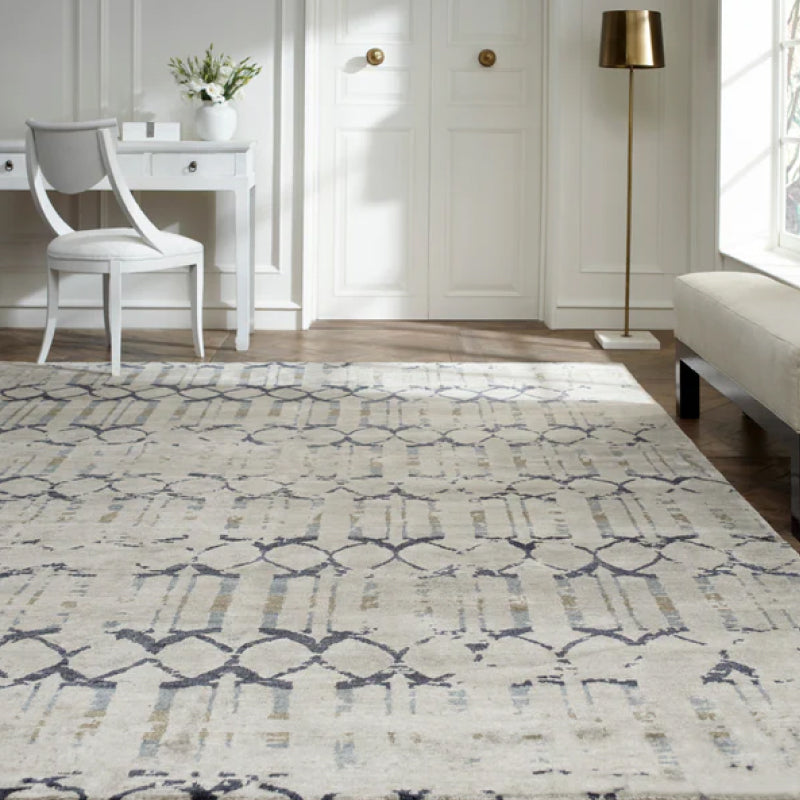
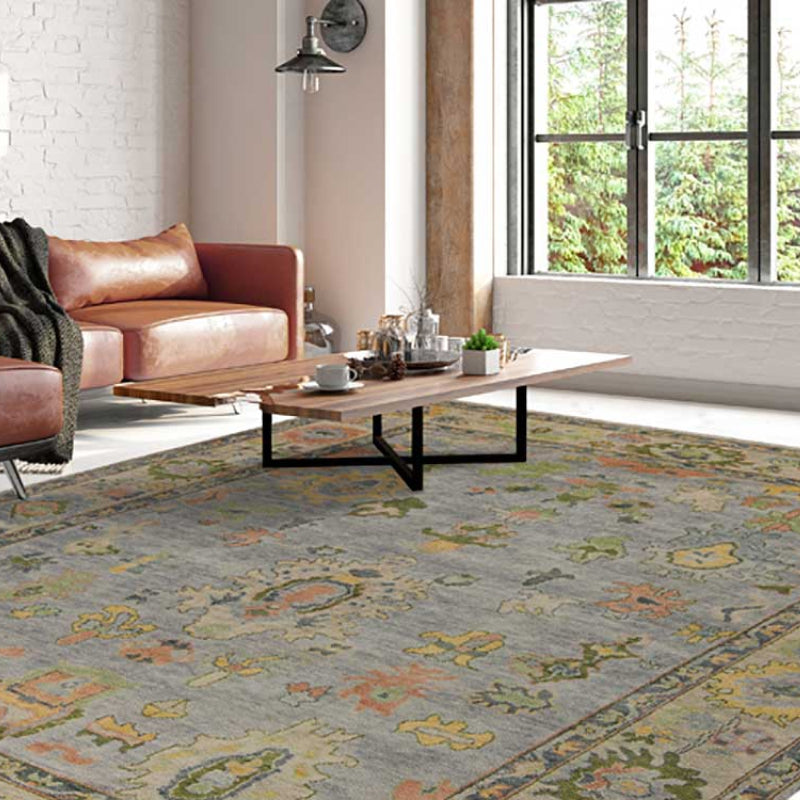
The most popular advice about botanical print fabrics is also the least useful: choose the pattern you love, then worry about performance later. That approach produces beautiful samples and disappointing rooms. In a luxury sofa, premium sectional, or custom chair, the fabric's fiber content, pretreatment, dye chemistry, construction, and exposure to sunlight matter as much as the motif itself.
Atlanta homeowners face demanding conditions. Bright windows, active family rooms, entertaining, and long-term expectations expose weak textiles quickly. If you're specifying botanical print fabrics for high-end furniture or luxury home furnishings, treat the textile as a technical component of the design, not a decorative afterthought.
The Enduring Legacy of Botanical Print Fabrics
Botanical print fabrics aren't a seasonal indulgence. They're one of the few decorative languages that can move from a historic Buckhead home to a contemporary Alpharetta residence without looking forced.
Their history begins with Asian textile traditions and the movement of imported chintz and floral cottons into Europe during the 17th century. Trade introduced botanical motifs to European consumers, where the patterns became so influential that local manufacturers began copying them by the mid-18th century. One historical account dates local European production of printed floral fabric to around 1759. This history of floral fabrics shows why botanicals should be understood as an established design vocabulary rather than a passing print category.
Industrialization broadened their reach. A historical summary reports that textile production increased tenfold during the Industrial Revolution, allowing machine-printed chintzes to enter more homes and reach a much wider audience. In the 1860s, William Morris's 1861 textile work helped make botanical patterning a permanent feature of interiors and furnishings, particularly through wallpapers and coordinated decorative textiles. The Fabric Company's botanical print fabric guide for sewists offers a useful practical reference for understanding how these motifs behave in finished textile projects.
Why the pattern still feels current
Botanical motifs have unusual cultural familiarity. An academic article on botanical illustration and surface pattern design cites a survey in which 71 of 77 respondents, about 92.2%, owned something botanically influenced. The same survey found that 44% owned botanical interior-decoration items such as wallpaper, furniture, or fabrics, while 60% owned botanical home accessories. The academic discussion of botanical illustration and surface pattern design connects that familiarity with the long continuity of botanical imagery in decorative culture.
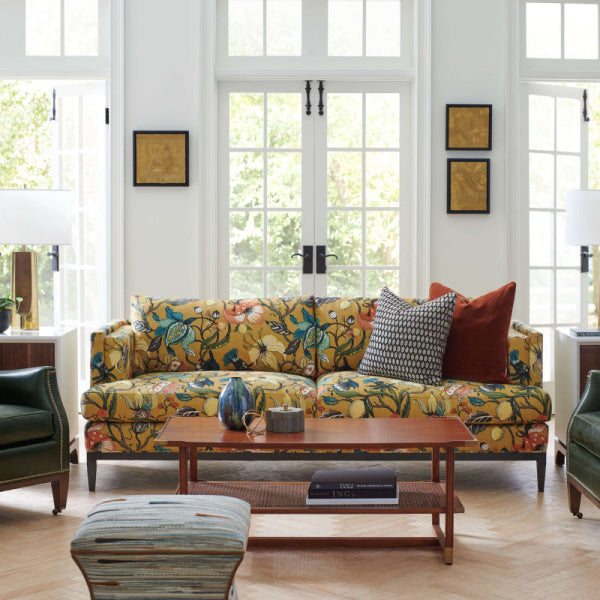
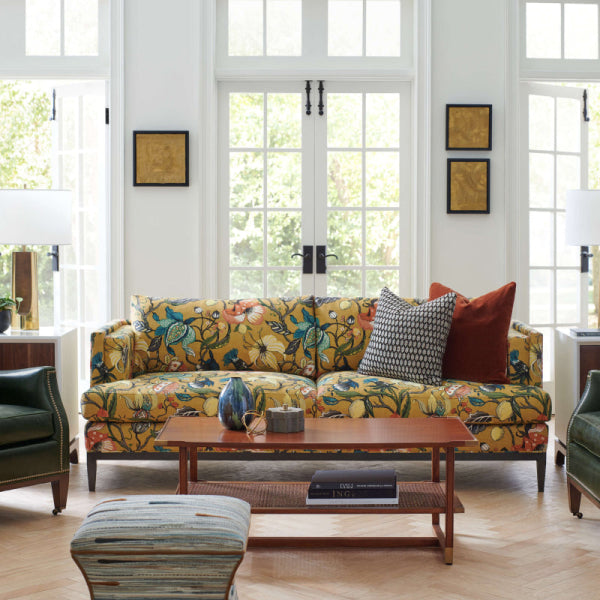
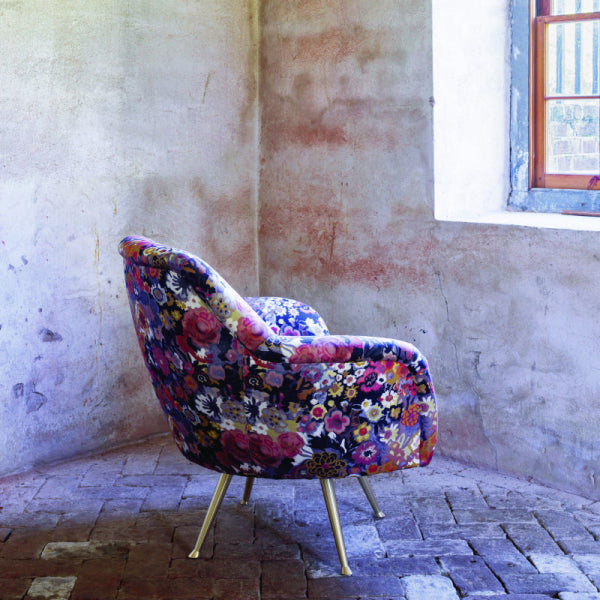
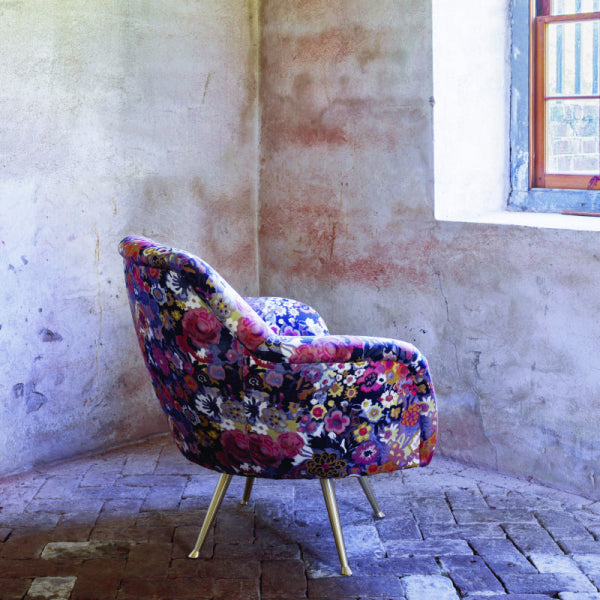
For a designer interior, this familiarity creates flexibility. A restrained fern on a linen blend can soften a custom chair. A dark-ground heritage floral can give a library or formal sitting room visual authority. A large, painterly leaf can turn a premium sectional into a statement furniture piece without relying on novelty.
Design position: Choose the botanical pattern for its relationship to the architecture, not because it happens to appear in a current trend forecast.
That distinction matters in Atlanta, where affluent homeowners increasingly want interiors with permanence. A botanical fabric can support an heirloom-quality room, but only when the scale, construction, and performance match the investment.
Evaluating Substrate Chemistry and Print Durability
A botanical motif printed on the wrong substrate is a liability. The same design can perform very differently on cotton, linen, a treated cellulosic, or a high-performance synthetic because the fiber accepts, holds, and releases color according to its chemistry.
Eco-printing has genuine appeal. Plant material creates irregular marks and organic variation, while contact printing can reduce reliance on synthetic dyes and wastewater. Yet “natural” doesn't mean automatically durable. A 2025 review found that bio-mordants can improve wash fastness from poor ratings around 2–3 to acceptable ratings of 4–5 under ISO-style assessment, but lightfastness remains a central weakness because flavonoid- and anthocyanin-based colors photodegrade more readily under ultraviolet exposure. The 2025 review of natural dye and bio-mordant performance supports a cautious approach to sun-heavy applications.

What pretreatment changes
Direct plant contact alone isn't an adequate specification for a luxury upholstery project. Fiber pretreatment prepares the substrate to receive color, while a compatible mordant helps fix the pigment to the fiber. Without those steps, a fabric may look compelling on the worktable but show premature change after cleaning, handling, or prolonged light exposure.
A 2025 study reported that tannic-acid pretreatment and mordanting produced cotton colorfastness values of 5 for washing and 4–4.5 for water and perspiration. The authors described the printed fabrics as long-lasting when dyed correctly. Separate findings cited in the same research indicate that alum improves the bonding of natural plant dyes to cotton, increasing washability and print permanence. The study of pretreatment, mordanting, and botanical eco-prints on cotton makes the practical conclusion clear: processing determines serviceability.
For Atlanta rooms with strong southern or western exposure, ask for testing rather than reassurance. Specify light, wash, and rub testing appropriate to the intended use. A fabric intended for a decorative cushion can tolerate more variation than one covering a frequently used luxury sofa.
A useful resource for comparing options is this guide to fade-resistant fabrics for interior applications. Use it as a starting point, then request the actual technical information for the selected textile.
Match the fabric to the exposure
- Low-light sitting rooms: Eco-printed botanicals can work well when the room receives limited direct ultraviolet exposure and the piece is treated as decorative upholstery.
- Bright living rooms: Favor engineered prints, treated cellulosics, or high-performance synthetics with documented lightfastness.
- Drapery near sunny glass: Use lining and interlining strategies alongside a textile selected for light exposure. The lining protects the room from heat and helps reduce direct stress on the face fabric.
- High-use seating: Prioritize abrasion performance, cleanability, seam stability, and pattern placement before choosing an artisanal surface effect.
The right question isn't whether a botanical fabric is beautiful. It's whether the substrate and finish are appropriate for the job.
Mastering Pattern Scale and Color Proportions
Pattern scale determines whether botanical print fabrics look composed or chaotic. A print that feels elegant on a sample can become visually aggressive across a sofa, while a delicate motif can disappear on a large premium sectional.
Start with the furniture dimensions, then consider the room. A small repeat suits a compact custom chair, skirted ottoman, or pair of accent pillows because the motif remains legible without competing with the piece's proportions. A medium repeat is more versatile. It can coordinate a lounge chair, roman shade, or settee while preserving enough visual movement for a room with substantial architectural detail.
Large repeats require confidence and space. Oversized leaves or florals may overwhelm a narrow occasional chair, especially if the design's focal flower lands awkwardly across the back or seat. On a grand custom sectional, however, the same scale can create the visual anchor a large family room needs.

A practical selection sequence
- Measure the furniture first. Record the visible width, height, seat depth, cushion configuration, and any repeated panels. Don't approve a large repeat until you know how much of the motif the upholsterer can preserve.
- Identify the pattern's focal points. A flower, bird, leaf cluster, or branch may need to sit in a specific location. Confirm whether the fabric supports a centered layout, railroaded application, or directional treatment.
- View a full-width sample. A small memo hides scale, negative space, and color distribution. Ask to see enough yardage to understand how the pattern repeats across a cushion or curtain panel.
- Compare the textile with the architecture. Elaborate moldings, paneled walls, stone floors, and strong rugs already create visual information. In those rooms, a quieter botanical may provide better balance than another dominant pattern.
For additional guidance on combining motifs, review this resource on mixing patterns in home décor. The objective isn't to make every pattern match. It's to establish hierarchy.
Control color intensity
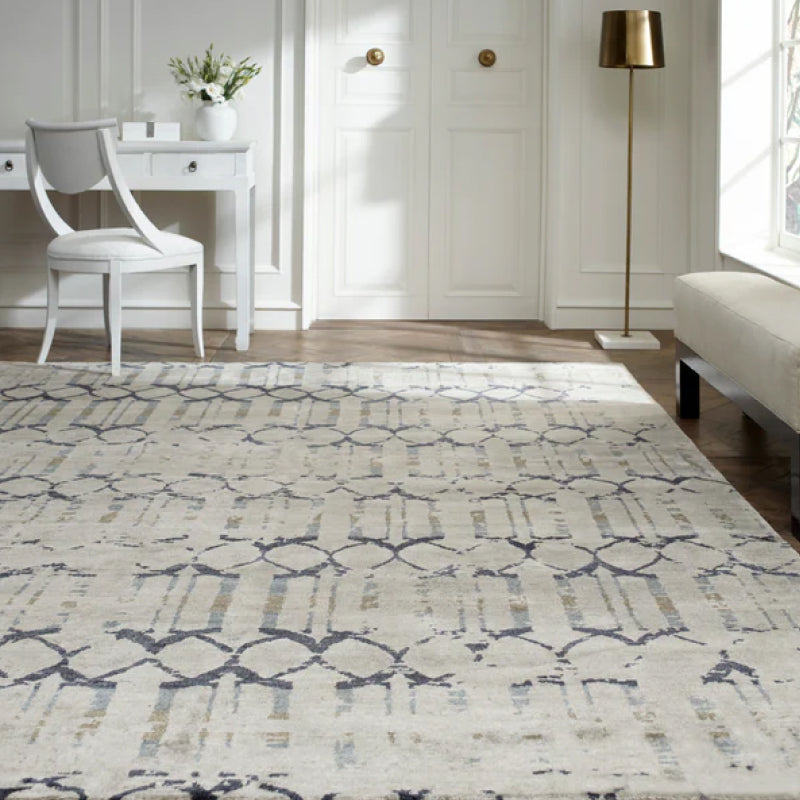
Color proportion matters as much as scale. Select a dominant botanical color, a supporting color, and a quieter ground. Then vary intensity rather than introducing unrelated hues. A deep green botanical on a warm neutral ground can connect to a rug, while a muted blue-gray leaf may bridge upholstery and drapery without competing with artwork.
Practical rule: A statement fabric should lead the room, not force every other surface to become equally expressive.
Strategic Applications for Drapery and Upholstery
Drapery, upholstery, and pillows place different demands on botanical print fabrics. Treating them as interchangeable applications is how costly mistakes happen.
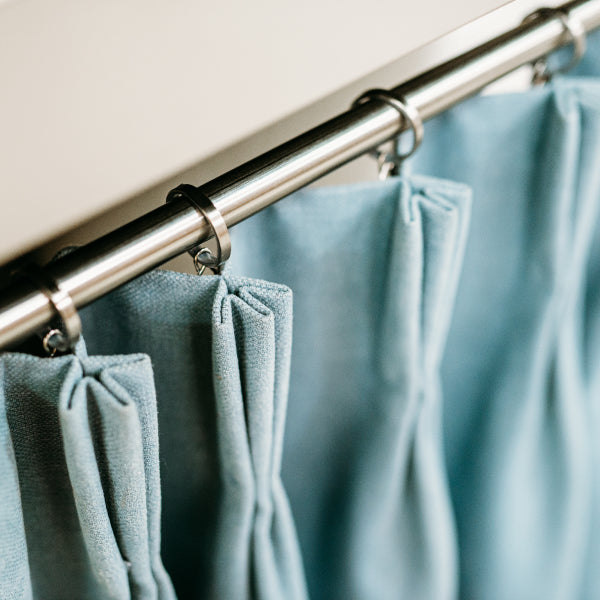
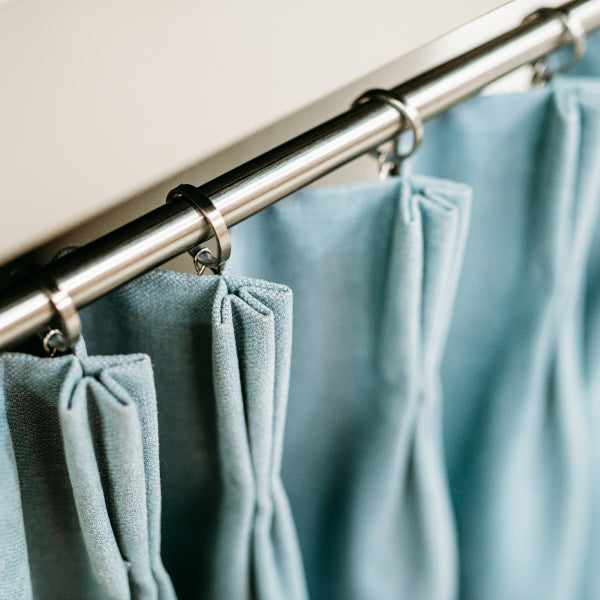
Drapery offers the most forgiving route for a delicate botanical. Panels hang vertically, receive less physical contact than seating, and can introduce substantial pattern without committing an entire room to printed upholstery. The risks are primarily light exposure, pattern matching, fullness, and installation. A designer must account for where the repeat lands across each panel, particularly when windows sit side by side.
Upholstery is less forgiving. Seat cushions compress, arms receive contact, and corners experience tension. A beautiful printed linen may be suitable for decorative seating but inappropriate for a heavily used family-room sofa unless it has the required performance characteristics.
Compare the applications before ordering
| Application | Main performance concern | Best botanical strategy |
|---|---|---|
| Custom drapery | Light exposure and panel matching | Use a controlled repeat, proper lining, and a fabric tested for the room's exposure |
| Luxury sofa or sectional | Abrasion, seam stress, cleaning, and cushion movement | Specify a performance-supported textile with careful motif placement |
| Custom chair | Contact wear and scale | Use a medium or small repeat unless the chair has generous proportions |
| Accent pillow | Handling, inserts, and zipper stress | Use botanicals as a concentrated color and pattern moment |
| Decorative bolster | Shape retention and directional layout | Reserve distinctive branches or leaf clusters for tailored placement |
Cushions are where many homeowners should begin. A botanical pillow can introduce the desired pattern while protecting the budget and preserving flexibility. Once the palette proves itself, the same family of color can move into custom upholstered furniture or window treatments.
Design for maintenance
Ask how the fabric should be cleaned before approving it. Natural dyes can be sensitive to pH, and inappropriate cleaning products may shift color. High-end furniture deserves a written care plan, including vacuuming, spot treatment, professional cleaning expectations, and whether removable covers can be serviced.
For hospitality-style use or a busy North Atlanta household, I'd rather specify an engineered botanical with reliable maintenance characteristics than a fragile eco-print on a heavily used sofa. Reserve the most irregular, artisanal effects for pieces where their uniqueness can be appreciated without subjecting them to constant abrasion.
The strongest room often uses contrast: a durable botanical on a statement chair, a quieter solid on the main sofa, and a related print in drapery or pillows. That approach creates rhythm without making every surface compete.
Pairing Premium Textiles with Heirloom Furniture
A premium botanical fabric cannot compensate for a weak frame. Specify the furniture construction first, then choose a textile that can withstand use, be serviced, and remain worth re-covering.
High-end furniture commonly uses kiln-dried solid hardwood, including maple, oak, or walnut. Drying wood to approximately 6–8% moisture content helps limit warping, twisting, and cracking over time. One industry guide estimates solid hardwood frames at 15–25 years or more, compared with 5–10 years for particleboard or softwood construction. This guide to high-end furniture construction explains why the frame deserves the same scrutiny as the fabric.
Mortise-and-tenon or dovetail joints, reinforced corner blocks, and hand-tied springs separate carefully engineered furniture from disposable construction. Hand-tied springs distribute weight evenly and recover their shape over thousands of use cycles. Custom-built solid wood furniture can routinely last 30–50 years with proper maintenance, as described in the guide to luxury furniture materials and craftsmanship.
Construction determines whether the textile is worth the investment
A botanical fabric with a nuanced surface needs a frame that will not twist, a deck that will not sag, and cushions that can be serviced. Otherwise, the owner pays for a premium appearance while accepting mass-market mechanics.
| Construction Tier | Frame Material & Joints | Expected Frame Lifespan | Ideal Botanical Fabric Pairing |
|---|---|---|---|
| Basic mass-produced | Engineered wood or softwood with simplified joints | 5–10 years | Inexpensive decorative print, not a major investment textile |
| Solid hardwood premium | Kiln-dried maple, oak, or walnut with reinforced joinery | 15–25 years or more | Durable botanical print selected for the room's exposure and use |
| Custom heirloom | Solid wood with mortise-and-tenon or dovetail joints and reinforced corners | 30–50 years with proper maintenance | Premium botanical textile with planned reupholstery and serviceability |
Material quality also determines long-term value. Solid wood, leather, and high-quality metals remain durable choices because well-made materials can improve with time or avoid visible deterioration. This guide to identifying high-quality furniture sets a useful standard for judging both furniture and textiles.
Upholstery still has a finite service life. One guide estimates well-maintained upholstery at approximately 7–15 years overall. Leather, microfiber, and high-performance synthetics may last 10–15 years, while linen and untreated cotton may show wear in 5–7 years. Cushions are estimated at 8–12 years, even when the frame lasts several decades. This upholstery longevity guide reinforces the right ownership plan: reupholstery is part of responsible specification, not proof that the original purchase failed.
Sourcing Custom Botanicals in Atlanta
Mass-produced retail options are convenient, but they rarely solve the full specification problem. You need to see the actual ground color, understand the repeat, confirm the fiber content, assess the hand, and determine whether the fabric suits a sofa, sectional, chair, drapery panel, or decorative pillow.
That's why Atlanta homeowners should use a professional design center or trade showroom for high-consideration purchases. In Buckhead, Alpharetta, Roswell, Sandy Springs, and the broader Fulton County market, the right resource can connect the textile to the furniture mechanics, room exposure, trim, rug, and installation plan.
What professional sourcing adds
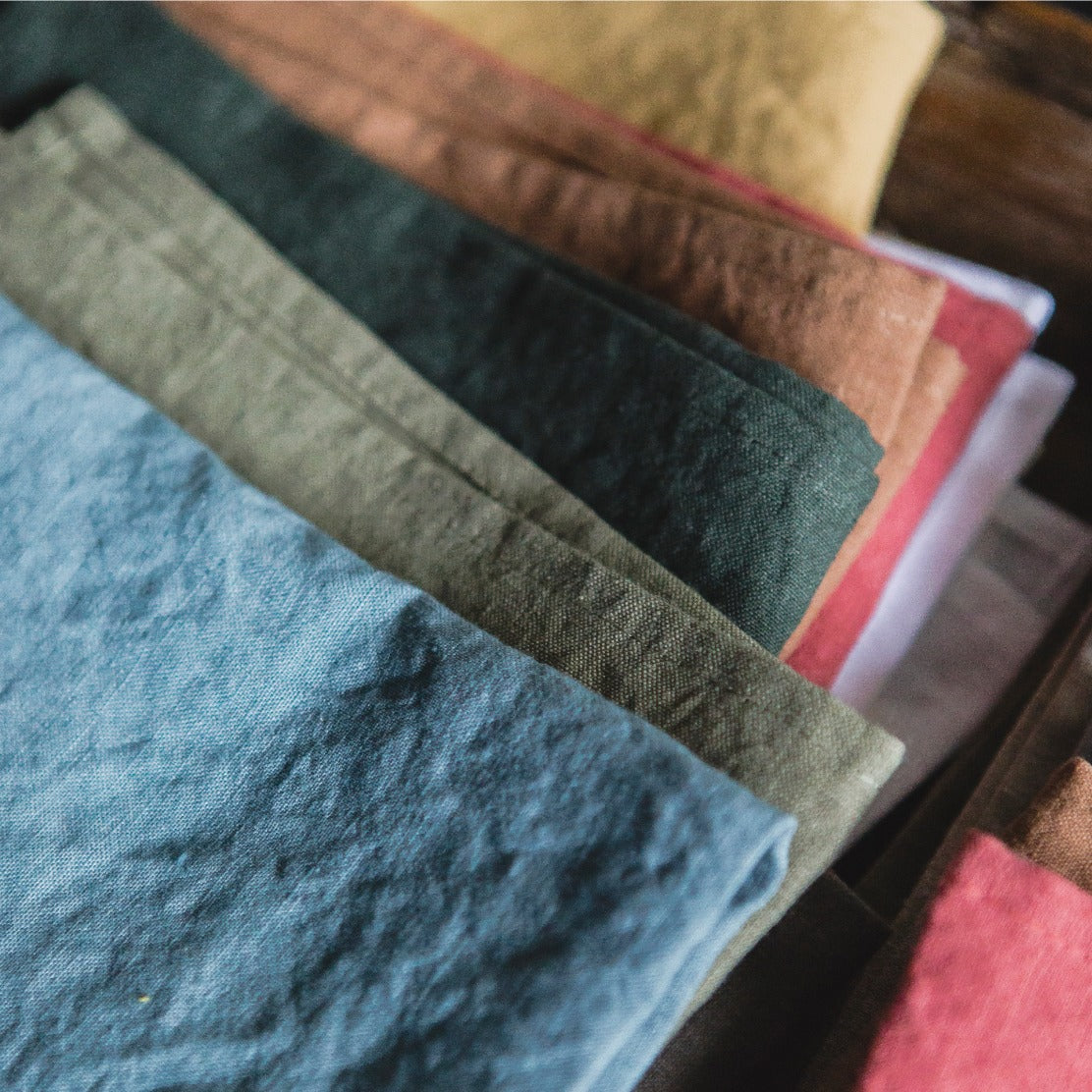
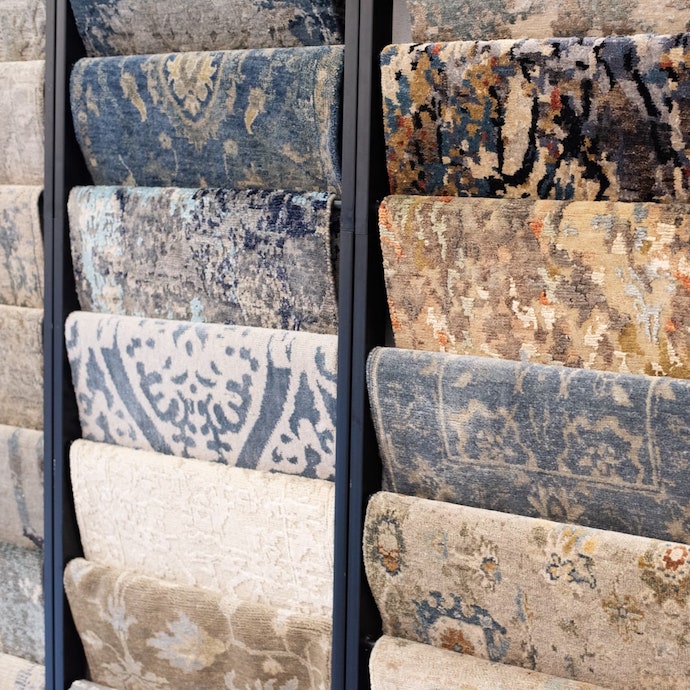
A designer can pull from extensive cut-yardage collections rather than limiting the room to what happens to be available on a retail shelf. That access matters when you're searching for a particular botanical scale, a quieter ground, a more refined green, or a fabric that coordinates with Belgian linen, a hand-knotted rug, or existing artwork.
Professional guidance also protects against ordering errors. A showroom team can help you evaluate:
- Pattern direction: Confirm whether the design works vertically, horizontally, or only in a particular orientation.
- Repeat and quantity: Determine how much fabric the upholsterer or workroom needs after allowing for matching and motif placement.
- Application: Separate textiles suited to custom drapery from those appropriate for high-use upholstery.
- Construction compatibility: Match the fabric to cushion style, welt, trim, nailhead, and frame silhouette.
- Restoration strategy: Decide whether an heirloom chair needs reupholstery, structural repair, or a complete redesign.
Custom printing can also be relevant when the right motif exists conceptually but not in the required color, scale, or repeat. This fabric printing service resource provides useful context for considering how a custom surface might support a specific interior direction.
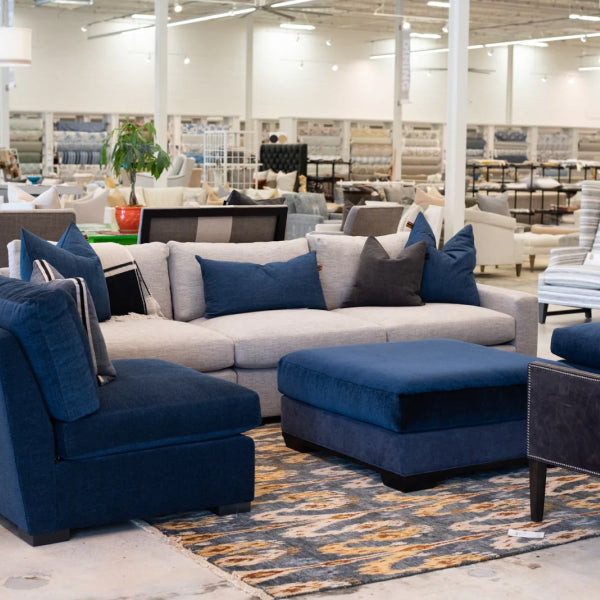
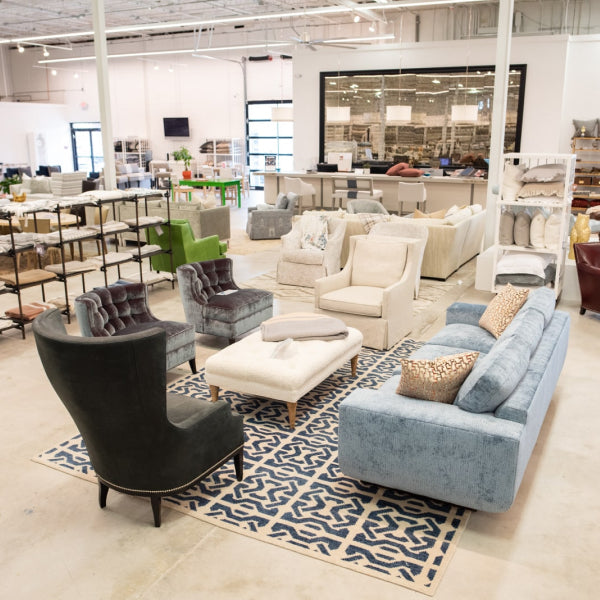
Lewis and Sheron Textiles serves Atlanta with a Design Center offering over a thousand in-stock bolts and thousands more cut-yardage options from mills including Kravet, Fabricut, P. Kaufmann, Libeco Home, and Crypton. Its services include made-to-order American-crafted upholstery, custom drapery, expert reupholstery, trims, pillow forms, rugs, and complimentary in-house design support when shopping.
The advantage of this model isn't access to more patterns. It's the ability to coordinate the textile, furniture, construction, and installation as one decision. That's how a botanical print becomes part of an enduring room instead of an isolated decorative purchase.
A decision-stage buyer searching for luxury furniture in Atlanta, designer furniture near me, or custom furniture Atlanta should bring measurements, room photographs, window orientation, and the intended use of each piece. Visit with a clear brief: which furniture needs to perform, which surfaces can be decorative, and how long you expect the room to serve your household.
Lewis and Sheron Textiles offers botanical print fabrics, custom upholstery, reupholstery, made-to-order furniture, and drapery for homeowners building lasting interiors. Visit Lewis and Sheron Textiles to review premium textiles with in-house design support and develop a botanical furnishing plan suited to your Atlanta home.