


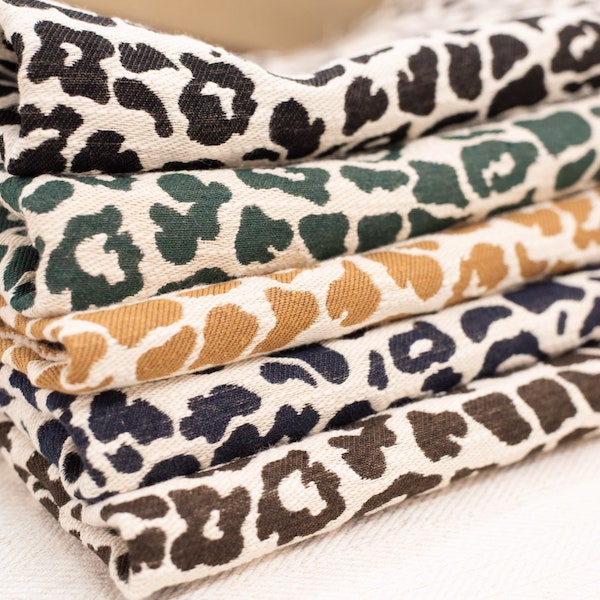
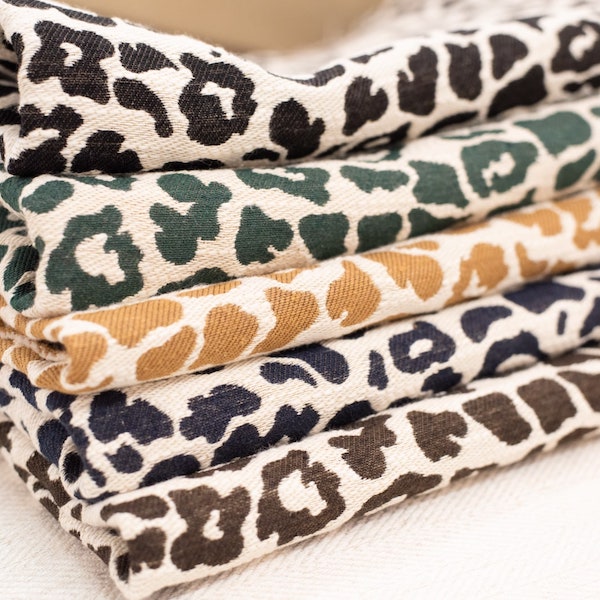

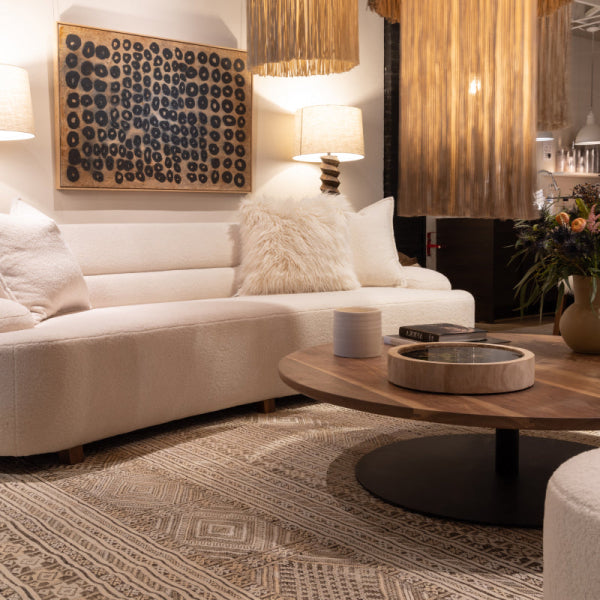
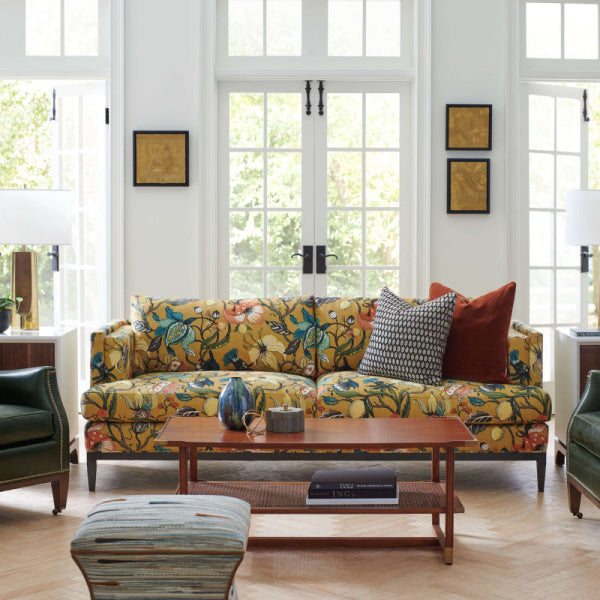
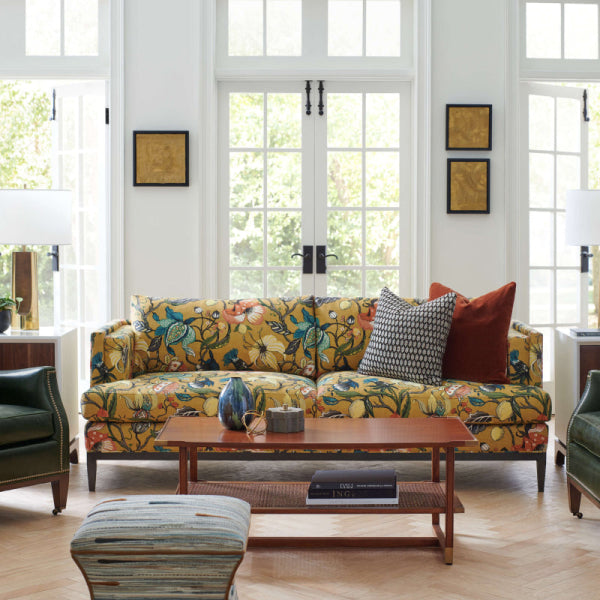
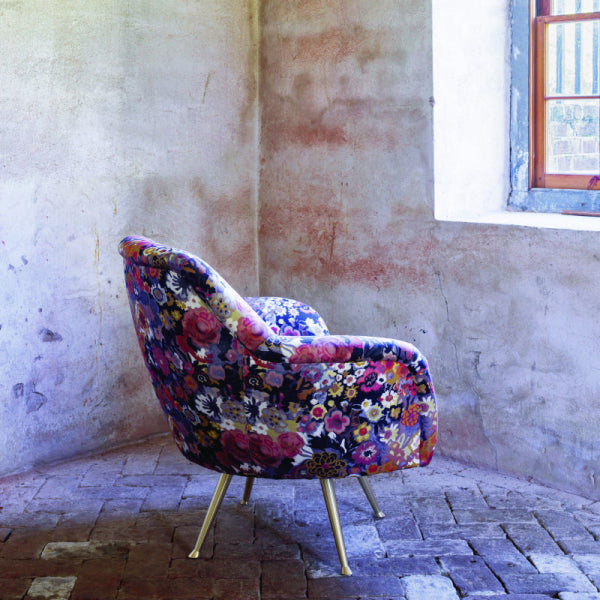
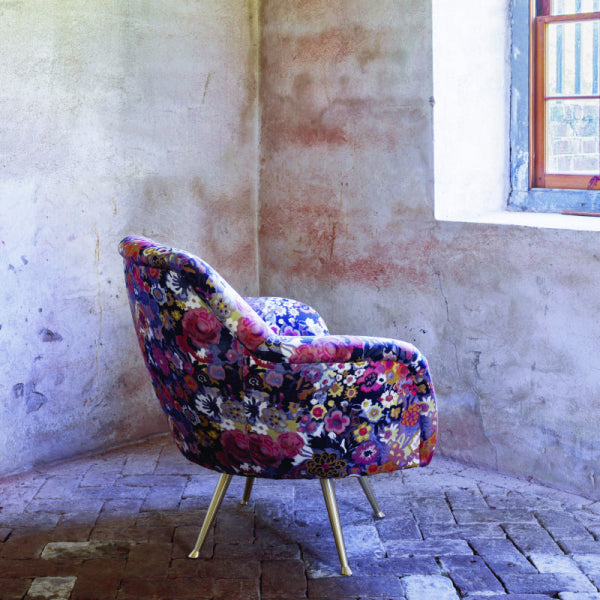
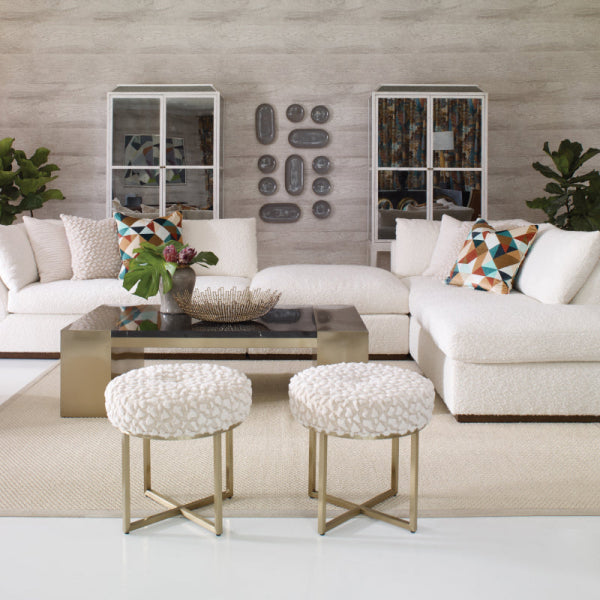
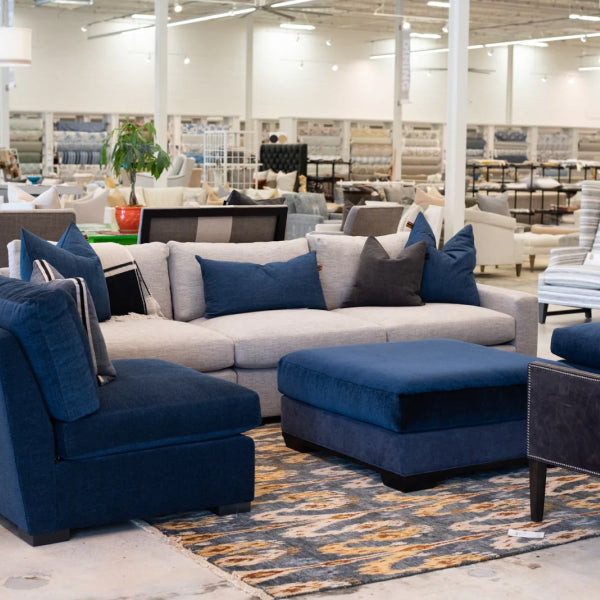

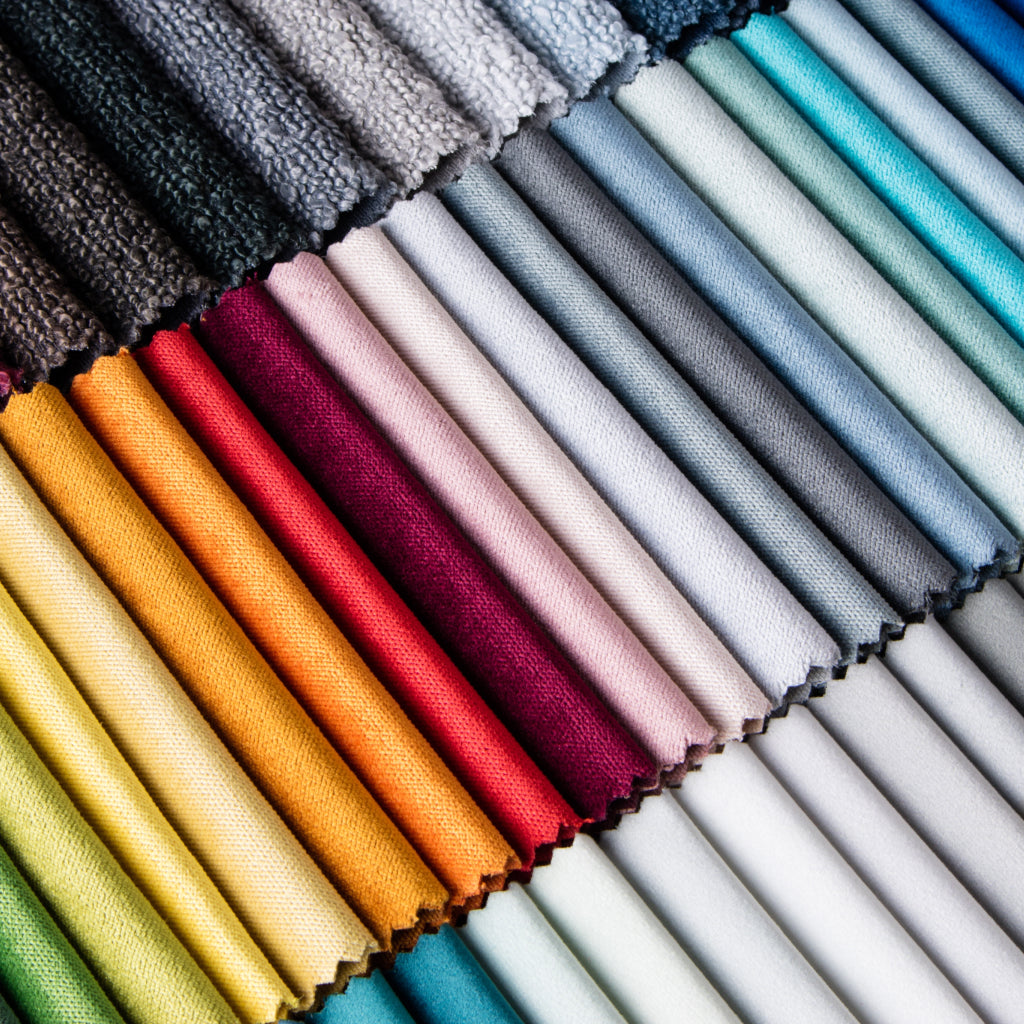

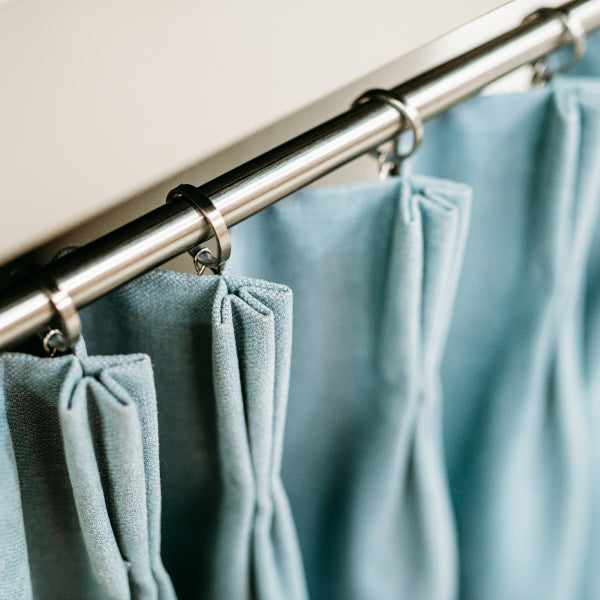
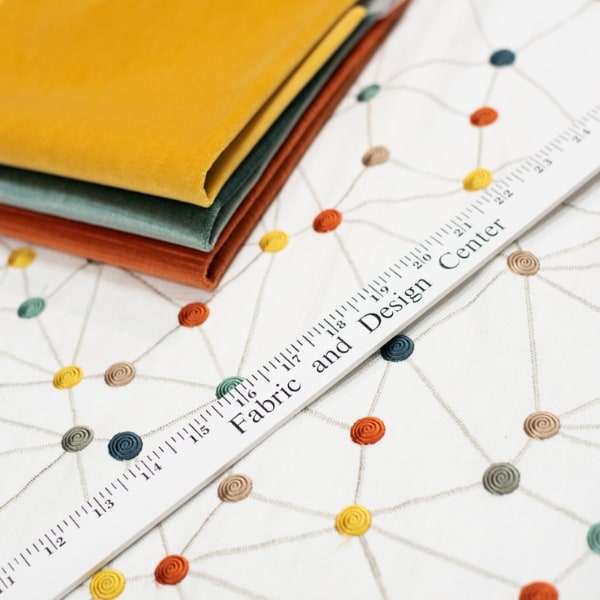




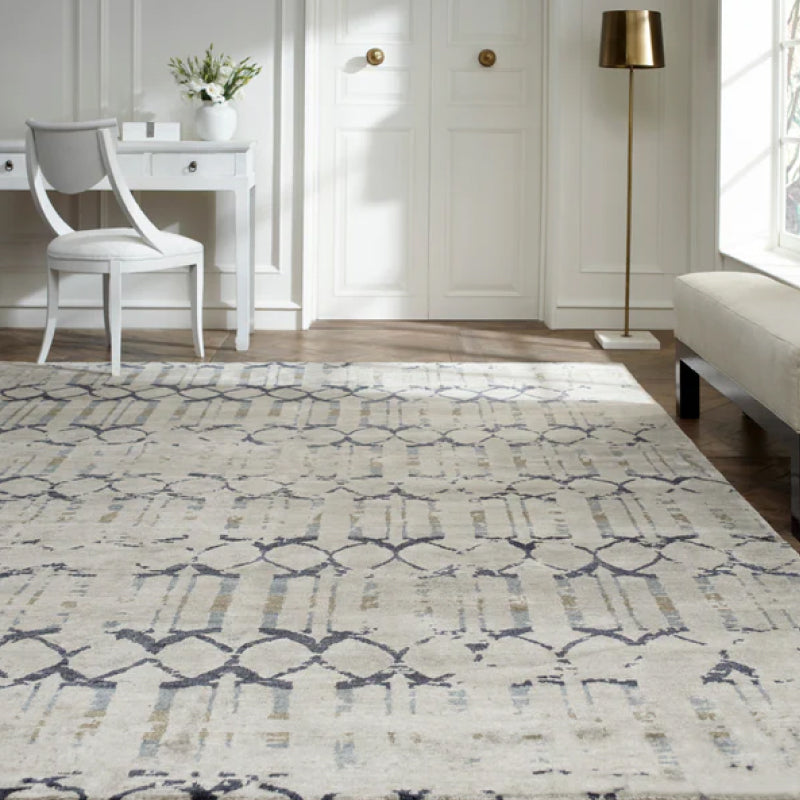
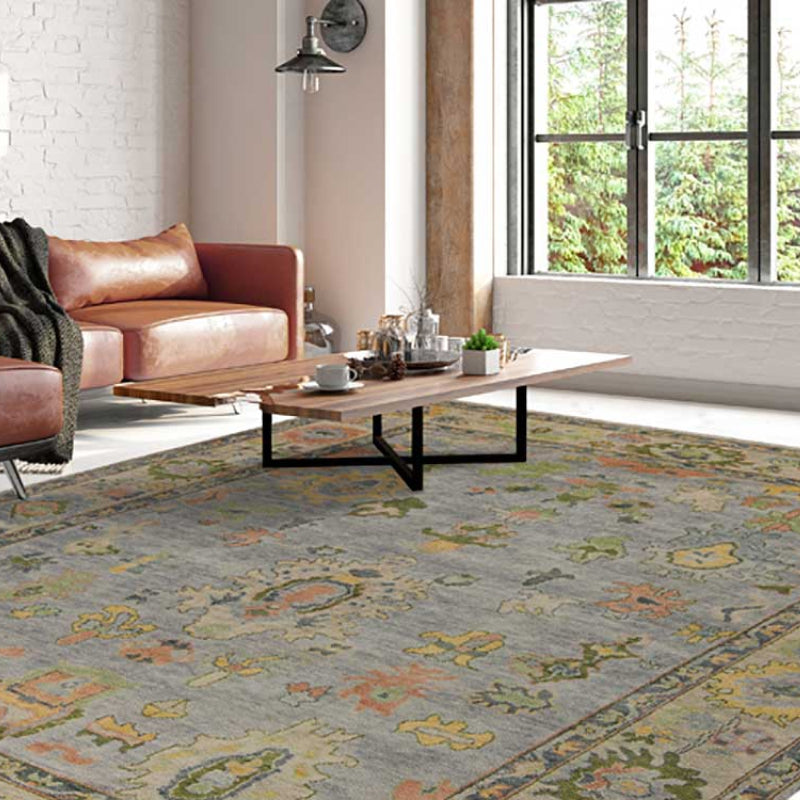
You've found the sofa shape. The room has its palette. The millwork, rug, and lighting all make sense. But the fabric still isn't right.
That's the point where many luxury interiors lose their edge. The piece is custom, yet the upholstery is a compromise. The drapery is beautifully made, yet the pattern scale feels borrowed from another room. For a homeowner in Buckhead, Alpharetta, Roswell, or Sandy Springs investing in high-end furniture, that gap matters. In a carefully layered home, the textile can't feel generic.
A professional fabric printing service solves a very specific problem. It gives you control over pattern, color, and scale in a way off-the-bolt fabric rarely can. For custom upholstered furniture, statement chairs, designer drapery, and heirloom-caliber pieces, that control isn't indulgent. It's often what makes the room coherent.
The Unmatched Elegance of Custom Printed Fabrics
Custom printed fabric belongs in serious interiors because it closes the distance between concept and finished room. When a client wants a soft geometric on a luxury sectional, a large botanical on dining chair backs, or a restrained stripe for drapery that aligns with existing trim and wall color, standard inventory often comes close but not close enough.
That's why modern printing matters. Textile printing isn't a novelty category. It's a mature part of the furnishing supply chain, and the market scale reflects that. The textile printing market was estimated at $5.53 billion in 2024 and is forecast to grow to $7.20 billion by 2030 according to Wikipedia's textile printing overview. For interiors, that matters less as a headline and more as proof that custom production now sits on a stable, global manufacturing base.
A well-run fabric printing service can produce textiles for:
- Custom upholstered furniture that needs a pattern at the right proportion for arms, cushions, and deck
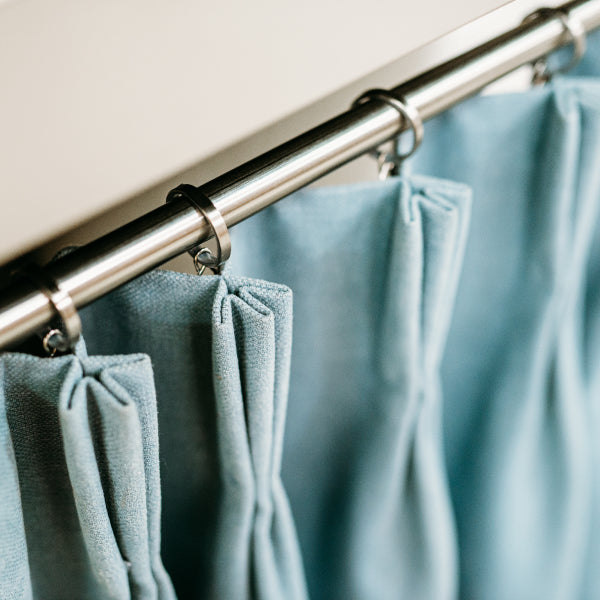
- Luxury drapery panels where repeat and fall must feel architectural
- Designer accent pieces such as ottomans, benches, and pillows that need distinction without visual noise
Custom print works best when the fabric doesn't try to impress on a hanger. It should come alive on the furniture.
The strongest projects use printing with restraint. Not every room needs a maximal surface. Sometimes the most expensive-looking outcome is a custom print in a muted palette, placed on a beautifully built frame with proper upholstery work and disciplined pattern matching.
Choosing Your Canvas The Right Fabric Foundation
The print gets attention first. The base cloth decides whether the finished piece feels refined after years of use.
For luxury sofas, custom chairs, and premium sectionals, the right question isn't “What prints well?” It's “What performs properly in this exact application?” Upholstery, drapery, and pillows each ask something different from the fabric. A handsome print on the wrong ground can feel stiff, flatten the color, or wear poorly in daily life.

Start with end use
A family room sofa in North Atlanta doesn't need the same foundation as drapery in a formal Buckhead dining room. For upholstery, you're balancing structure, touch, and surface durability. For drapery, drape and light response often matter more than abrasion. For decorative pillows, you have more freedom because the stress is lower and the scale can be bolder.
Use this sequence when selecting a base fabric:
- Define the job first. Upholstery, drapery, headboard, bench cushion, and pillow all behave differently.
- Decide how polished or relaxed the room should feel. Crisp cotton reads differently from slubby linen or plush velvet.
- Think about maintenance early. Sunlight, pets, children, and regular cleaning all change the right answer.
- Test the hand-feel before approving the print. A beautiful image on a disappointing cloth still feels disappointing.
What each common fabric does well
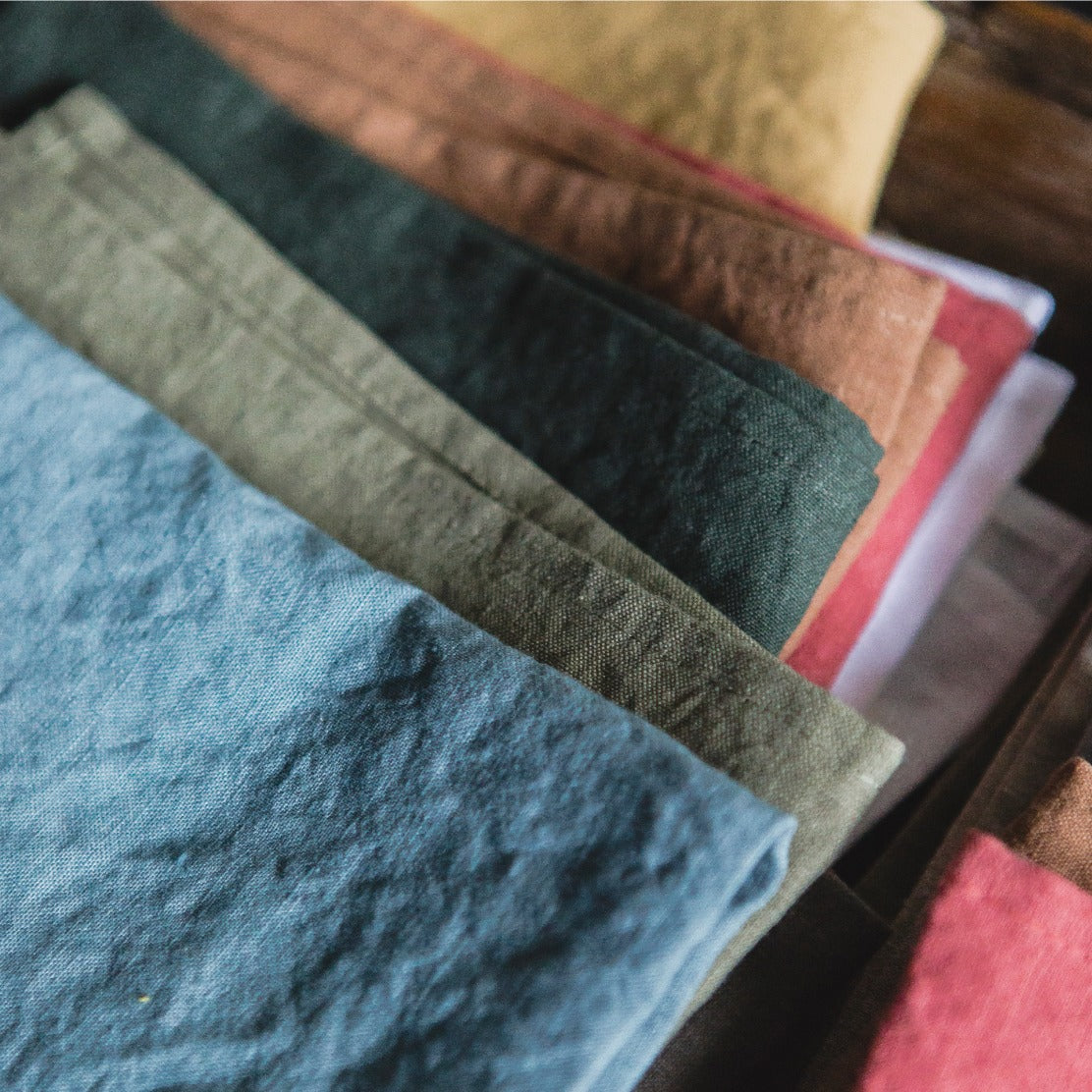
Cotton is dependable and familiar. It usually takes print well and offers a comfortable, natural hand. For upholstered pieces, it can feel welcoming and grounded, especially in rooms that want softness rather than sheen.
Linen brings character. It has an irregularity that many designers love because it prevents a printed design from feeling too slick or overprocessed. It's often excellent for drapery and elegant occasional upholstery, particularly when a room needs movement and texture.
Polyester and polyester-rich grounds have practical advantages, especially in active spaces. They can hold color with impressive clarity and often suit homes that need easier day-to-day performance. That makes them useful for high-quality couches, family sectionals, and decorative applications where longevity matters as much as appearance.
Velvet sits in its own category. Printed velvet can be dramatic and beautiful, but it requires careful judgment. The pile changes how color is read, and some patterns become muddier than they appeared on screen. It's often best reserved for statement furniture pieces where depth and richness are part of the brief.
Practical rule: Choose the cloth for the room first, then choose the print method that respects that cloth.
Comparison at a glance
| Fabric Type | Best For | Durability | Print Vibrancy | Hand-Feel |
|---|---|---|---|---|
| Cotton | Everyday upholstery, pillows, casual tailored pieces | Good for many interior uses | Strong and balanced | Soft, natural, familiar |
| Linen | Drapery, refined occasional seating, relaxed luxury rooms | Strong fiber with a more natural lived-in character | Elegant, slightly softened by texture | Cool, textured, airy |
| Polyester | High-traffic upholstery, performance-minded interiors, some decorative applications | Very durable in many interior settings | Often very vibrant | Smoother, more engineered |
Don't ignore weave structure
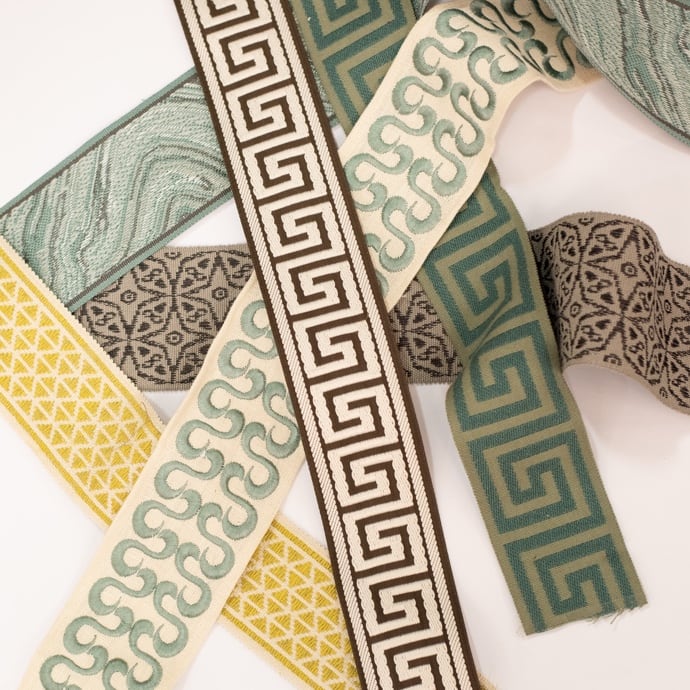
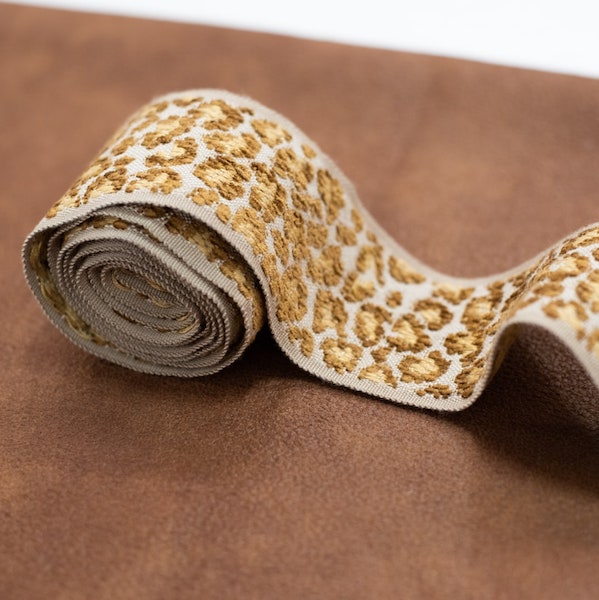
Not every patterned textile needs to be printed. Some designs are better woven in from the start. If you're comparing a printed motif with a woven alternative, The Sofa Cover Crafter's jacquard guide is a useful refresher on how jacquard differs in character and construction. That distinction matters when you want pattern with depth rather than surface imagery alone.
For ordering and planning, it also helps to review how fabric is bought by the yard. Printed custom work is far smoother when you already understand widths, repeats, and how upholstery consumption differs from drapery consumption.
Translating Vision into a Print-Ready Design
A strong print file isn't about software expertise. It's about discipline. The design has to survive enlargement, repetition, upholstery cutting, and the character of the base cloth.
The easiest way to think about it is this. Artwork for fabric should behave like architectural drawings. If the underlying file is sloppy, the finished result may still look acceptable at first glance, but every weakness becomes obvious once it's scaled across a sofa back or repeated down a drapery panel.

What a print-ready file needs
For most interior projects, the file should have clean edges, consistent color areas, and a repeat that connects invisibly. If a motif is meant to tile, the join has to disappear. If it's a panel print, the proportions must already account for the dimensions of the intended piece.
A sound submission usually includes:
- A high-quality master file such as layered artwork or a production-ready export
- Clear repeat information if the pattern has a repeating design
- Final scale direction so the print isn't guessed at by the production team
- Color references tied to physical standards, not only a laptop screen
- End-use notes so the printer knows whether the fabric is for upholstery, drapery, or accents
Why interior files need more care than apparel files
A dress can move, gather, and conceal. A sofa can't. Upholstery exposes every proportion issue. If a stripe grows too wide, it can distort the shape of the frame. If a floral is too small, it may read as visual static from across the room.
Design principles used by interior professionals can help here, especially when pattern is competing with trim, flooring, art, and case goods. Domicile Construction's interior design guide is a useful reference for thinking through balance, rhythm, and emphasis before the file ever goes to print.
Match the artwork to the print process
The process matters because not every ink system behaves the same way on every fiber. For cellulosic fabrics, reactive digital fabric printing follows a practical workflow of pre-coating, printing, steaming, and washing, which allows the ink to chemically bond with and penetrate the fibers rather than sitting on the surface, as shown in this reactive digital fabric printing demonstration. That's one reason it's often well suited to long-life interior applications where cracking and fading are a concern.
A print file isn't finished when it looks good on screen. It's finished when it holds its character at full scale on the actual cloth.
A final note from practice: simplify before you print. Intricate details can be beautiful, but they don't always improve a furnishing textile. Rooms usually benefit from clarity more than complexity.
Mastering Color Matching and Pattern Scale
Most expensive fabric mistakes come from two decisions made too casually. One is approving color from a screen. The other is approving a pattern without seeing it at the intended scale.
Both errors are avoidable, and both are costly when the fabric is headed for custom upholstered furniture.

Screen color is only a suggestion
A monitor emits light. Fabric reflects it. That difference changes everything, especially with muted neutrals, warm whites, layered greens, and complex blues. The same file can feel cool on one screen, muddy on another, and elegant in print once it lands on the actual cloth.
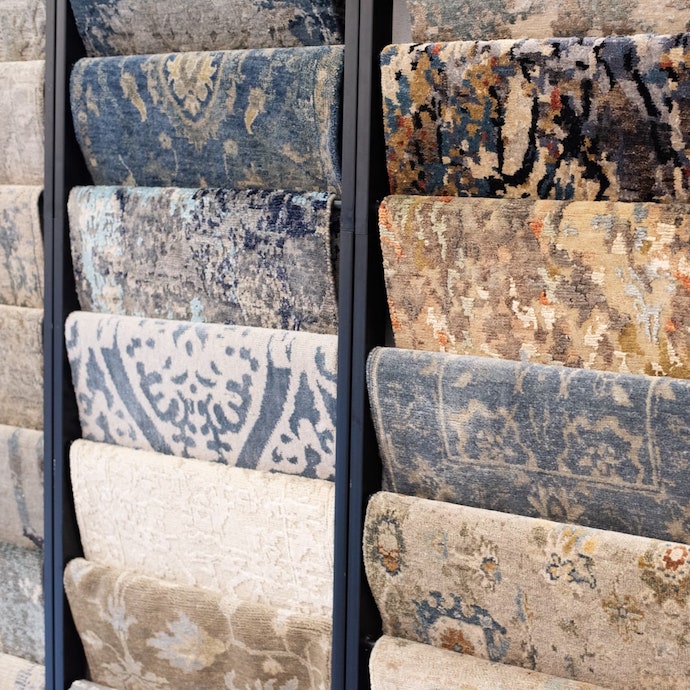
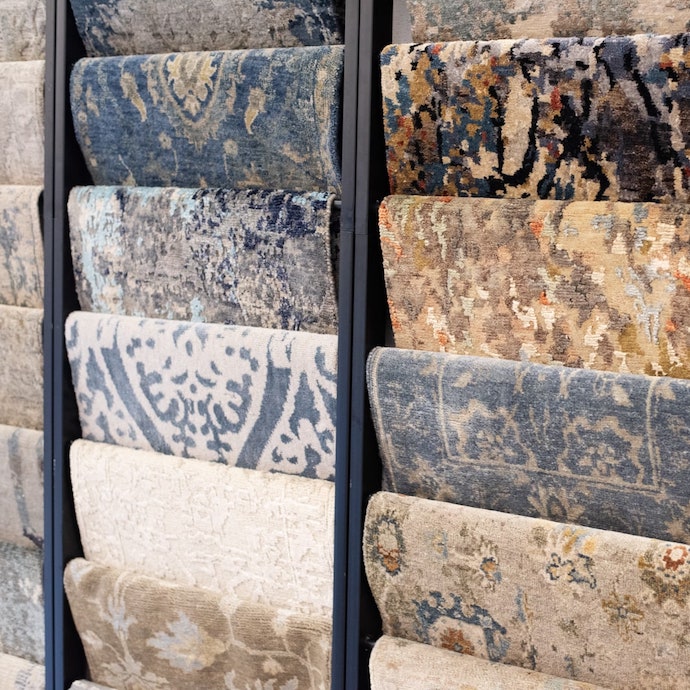
That's why physical references matter. Pantone books, mill swatches, paint chips, wood samples, and rug snippets help anchor the decision in the room itself. Affluent homeowners often know this instinctively when selecting stone or cabinetry. The same discipline should apply to fabric.
Order the strike-off. Always. A small proof is far less expensive than remaking yards of the wrong color.
Scale determines whether the design feels custom
Pattern scale has to fit the object. A motif that charms on an 8-inch swatch can become chaotic on a long sofa. The reverse is also common. A large-scale print that reads beautifully on drapery may fragment awkwardly across seat cushions and arm panels.
Consider the furniture form:
- Large sofas and sectionals can handle broader repeats, especially in open-plan rooms where the piece is viewed from a distance.
- Dining chairs and occasional chairs often benefit from more compact patterning, particularly when the frame has curves or exposed wood.
- Pillows and bolsters can carry either very small motifs or one bold oversized element, depending on whether they're supporting or punctuating the room.
A practical approval method
Before final approval, print the pattern on paper at full or half scale and place it against the piece. Tape it to the back of a chair. Drape it over the front rail of a sofa. Step away. Sit down. Revisit it in morning and evening light.
Use this short checklist:
- Check viewing distance. A living room print is rarely experienced from six inches away.
- Check furniture interruptions. Tufting, welting, seams, and cushions will break the design.
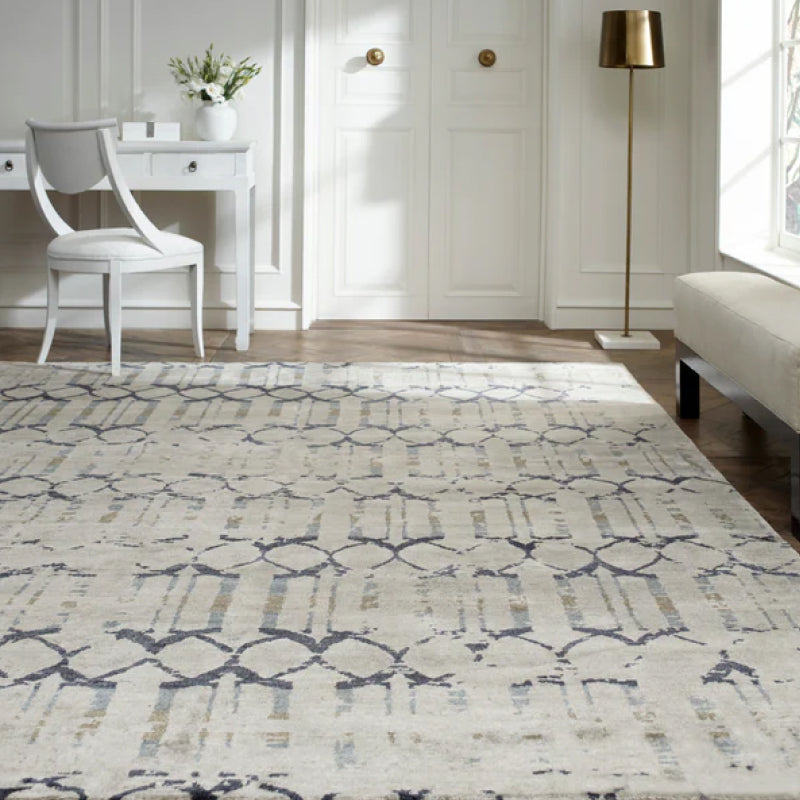
- Check room competition. Rugs, wallpaper, and drapery may already be carrying the larger visual rhythm.
The rooms that feel effortless usually aren't accidental. Someone calibrated the scale carefully.
Planning Your Project Yardage Minimums and Timelines
By the time the artwork is approved, the practical questions become sharper. How much fabric should you order? Will the printer accept a short run? How much extra is sensible for matching, testing, and insurance?
A custom project either proceeds calmly or descends into chaos. Good planning protects both the budget and the finish quality.
Why custom runs are more accessible now
Modern digital production changed the economics of custom fabric. The global digital textile printing market was valued at $4.8 billion in 2025 and is projected to reach $12.6 billion by 2034, implying an 11.3% CAGR, and in that same outlook dye sublimation held a 38.4% share, according to The Cannata Report's digital textile printing market outlook. For interiors, the practical takeaway is straightforward: the industry has moved toward more flexible, detailed, on-demand production than older analog workflows allowed.
That doesn't mean every printer handles tiny orders the same way. Some are set up for sampling and boutique runs. Others prefer larger commitments. Ask early, before the room schedule depends on assumptions.
Yardage planning for furniture
Upholstery consumption depends on the frame, cushion count, repeat size, railroad requirement, and whether pattern matching is critical. A bench seat and a skirted club chair don't consume fabric the same way, even if the visible surface area looks similar.
A sensible planning approach looks like this:
- Get the upholsterer's estimate first. They know where extra fabric disappears.
- Add for pattern matching. Large repeats and directional designs usually require more.
- Set aside reserve yardage. It's wise to keep some back for future repairs, a matching pillow, or a seat recut years later.
For drapery, fullness, heading style, and repeat alignment drive the calculation. For pillows, waste can still be meaningful if the motif needs to be centered precisely.
Build time for approvals, not just production
Clients often ask how long the printing itself takes. The more useful question is how long the whole sequence takes. Sampling, strike-offs, color revisions, final approval, printing, finishing, shipping, and workroom scheduling all sit in the timeline.
If the project includes upholstery fabrication or drapery sewing, coordinate the print order with the workroom services process. The fabric arriving a week too late can matter more than a fast print date promised at the start.
The longest custom projects usually aren't delayed by printing. They're delayed by late decisions.
The strongest luxury interiors are rarely rushed. They're sequenced well.
Collaborate with Our Atlanta Design Experts
Most homeowners don't need to become textile technicians. They need someone who can look at a room, touch the fabric, assess the furniture form, and catch the problems before anything goes into production.
That's particularly true in high-consideration projects. A custom chair for a Buckhead study, a premium sectional for a Sandy Springs family room, or drapery for a Roswell renovation all involve choices that can't be reduced to a digital mockup alone.

What expert guidance changes
An experienced design team narrows the field quickly. They can tell when a linen base will undercut the crispness of a geometric, when a polyester option is the better fit for a high-quality couch in daily use, or when a pattern should be enlarged before it hits a large sofa body.
That kind of editing matters because luxury furniture isn't judged only by beauty. It's judged by composure over time. The finished piece should still feel right after the room has been lived in, cleaned, and rearranged.
A capable in-house team usually helps in several ways:
- Material selection. They match the base cloth to the application instead of forcing one favorite fabric across every project.
- Artwork refinement. They spot repeat problems, weak scale decisions, and color conflicts before printing.
- Project coordination. They keep the printer, upholsterer, and client aligned so the workroom isn't left improvising.
Why this matters in custom upholstery
Furniture magnifies mistakes. A dining chair might forgive a slightly awkward motif placement. A long sofa won't. The larger the piece, the more visible the planning becomes.
That's one reason custom interiors benefit from coordination with an upholstery specialist. For anyone considering a rework of an existing heirloom piece or the build-out of a new one, this overview of Atlanta custom upholstery workroom services is useful background on how fabrication and textile decisions come together in practice.
The local advantage for Atlanta clients
For clients in Atlanta, Buckhead, Alpharetta, Roswell, and surrounding neighborhoods, local collaboration removes guesswork. You can compare fabrics in person, test colors against real materials, and assess whether a print feels elegant or overdone in the context of your room.
That's especially valuable for buyers seeking designer furniture near me, custom furniture Atlanta, or luxury furniture Atlanta level quality. At that end of the market, what matters isn't just exclusivity. It's judgment. The difference between a statement piece and an expensive mistake is often a series of small corrections made before production begins.
Creating Your Legacy with Custom Textiles
A fabric printing service is most useful when it serves permanence, not novelty. For luxury homes, the point isn't to chase fashion. It's to create textiles that belong to the architecture, the furnishings, and the way the household lives.
Much of the public conversation around printed fabric still centers on apparel or promotional use. That leaves a real gap for interiors, where durability, hand-feel, and cleaning performance matter just as much as appearance, as noted in this discussion of the missing guidance for home-interior fabric printing. For heirloom-quality furniture, that distinction is decisive.
There's also a broader principle at work. The pieces people keep are usually the ones made with intention. The same mindset shows up in other preservation trades. If you've ever looked into how specialists preserve your wedding dress, you've seen the same idea in another form. Material choices matter most when sentiment and longevity meet.
Custom textiles let a room say something specific. Not louder. More clearly.
If you're ready to create custom printed fabric for upholstery, drapery, or a one-of-a-kind furniture piece, Lewis and Sheron Textiles offers the fabric library, design support, and custom furnishing expertise to help you bring it together with confidence.