
















You've invested in the bed. The headboard is upholstered properly. The lamps are scaled well. There's a handsome bench at the foot, a custom chair in the corner, maybe even drapery that reaches the floor.
And yet the room still feels unfinished.
That usually comes down to one missing layer. Not art. Not another pillow. Not a throw casually draped over a chaise. It's the rug. In a luxury bedroom, the rug isn't an accessory. It's the surface that quiets the room, warms it, and visually connects every piece so the space feels designed rather than assembled.
I see this constantly in Atlanta homes, especially in Buckhead, Alpharetta, Roswell, and Sandy Springs. Homeowners buy high-end furniture, premium sectionals for adjacent sitting rooms, custom upholstered furniture, and statement furniture pieces with real presence, but then underspec the bedroom rug. The result is a room with expensive objects and no foundation. That's the difference between a room that photographs well and one that feels complete.
The best area rug for bedroom design is the one that does three things at once. It fits the bed correctly, feels exceptional underfoot, and belongs with the rest of your luxury home furnishings. If it fails one of those tests, it's the wrong rug.
The Foundational Piece for Your Luxury Bedroom Sanctuary
A refined bedroom should feel composed the moment you walk in. The bed anchors the architecture, but the rug anchors the experience. Without it, even heirloom-quality furniture can seem disconnected from the room.
That matters more in luxury interiors because the furnishings are doing more visual work. A custom upholstered bed, a designer chair by the window, a custom bench, and carefully chosen case goods need a common ground plane. The rug creates that plane. It softens transitions, absorbs visual noise, and gives the room weight.
Why the rug matters as much as the furniture
If you're shopping for high-end furniture, designer furniture near me, or custom furniture Atlanta, you're already thinking beyond quick purchases. You care about craftsmanship, scale, material, and longevity. Your rug deserves the same scrutiny.
A bedroom rug should be treated the way you'd treat a luxury sofa or custom chair. It needs to support the room stylistically and functionally. It also has to hold its own beside other premium pieces without looking temporary.
A bedroom without the right rug often feels larger on paper and colder in person.
What a well-chosen rug changes
The right rug does more than add softness. It reshapes how the room reads.
- It grounds the bed: The bed stops floating and starts feeling integrated.
- It improves proportion: Nightstands, benches, and accent seating relate to one another more naturally.
- It adds finish: Texture at floor level makes millwork, upholstery, and lighting look more intentional.
- It supports timeless style: A good rug ages with the room instead of dating it.
That's why the best area rug for bedroom planning starts at the floor, not with decorative accessories. In elevated interiors across North Atlanta and Fulton County, the rug is often the move that turns a good bedroom into a memorable one.
Finding the Perfect Fit Rug Sizing and Placement Rules
You can spend five figures on a bed, case goods, and lighting, then lose the room with one undersized rug. I see it constantly in Atlanta bedrooms that should feel refined and expensive. The rug is treated like an accessory, and the entire composition suffers for it.
The right size gives the room authority. The wrong size makes even excellent furniture look disconnected.

Start with the bed, then size for comfort around it
In a luxury bedroom, the rug should support the bed, nightstands, and the experience of stepping out of bed onto something substantial. Lowe's bedroom rug guidance is useful here because it reinforces a rule designers use every day. Leave enough rug around the bed for a comfortable barefoot landing, keep the front legs of major pieces anchored, and avoid pushing the rug so close to the walls that it reads like fitted carpet. Their recommendations also support the standard sizes I specify most often, including 8' x 10' for many Queen rooms and 9' x 12' for many King rooms, as outlined in Lowe's area rug buying guide.
That is the baseline. Custom rooms with oversized nightstands, a bench, or a sitting area often need more.
The sizes I recommend most often
These are the dimensions that usually create the right proportions in bedrooms with well-scaled furniture.
| Bed size | Best rug size | Why it works |
|---|---|---|
| King | 9' x 12' | Gives the bed visual weight and leaves enough rug exposed on the sides and foot |
| Queen | 8' x 10' | Supports the bed properly and keeps the room from feeling skimpy |
A simple test helps. If the rug is close to the width of the mattress, it is too small.
Placement options that hold up in real rooms
Some layouts look acceptable in photos and weak in person. These are the placements that consistently work.
- Full coverage under the bed: Best for primary suites with a complete furniture plan. This is the strongest choice and the one I recommend most often.
- Two-thirds under the bed: Works well when you want coverage underfoot and beneath a bench, without committing to a larger rug.
- Runners on either side: Useful in tighter rooms, secondary bedrooms, or layouts where a large area rug would fight the architecture.
- Smaller rug at the foot: Decorative only. It will not ground the room the way a properly scaled area rug will.
For a helpful secondary perspective, I like these Central Florida rug tips from Slone Brothers Furniture. The advice aligns with what good showrooms and experienced designers already practice. Correctly proportioned rugs almost always need more scale than clients expect.
Measure the room like a designer
Do not buy from memory. Tape the full rug outline on the floor, place your nightstands and bench within that boundary, and walk the room.
Then compare your layout with this detailed best rug size for bedroom guide. It is especially helpful if your bedroom includes asymmetrical nightstands, a chaise, or a reading corner that shifts the visual center of the room.
In a refined bedroom, the rug should read as a permanent furnishing, not a temporary patch of softness. Size it with the same discipline you would use for a custom sofa or designer chair, and the whole room settles into place.
Choosing the Right Fiber and Pile for Bedroom Comfort
Once the size is right, the next decision is feel. At this point, many buyers get distracted by marketing terms and miss the material that will perform best over time.
My view is simple. If you want the best area rug for bedroom use in a luxury setting, start with wool and only move away from it if your household needs dictate otherwise.

Why wool remains the standard
Wool is the industry-standard material for bedroom rugs due to its superior pile density, which provides thermal insulation and softness underfoot. Unlike cotton, which flattens quickly, wool maintains its density and resists soil accumulation, making it the gold standard for longevity and tactile comfort in low-traffic, high-comfort environments, according to this material overview.
That tracks with what I see in real interiors. Wool has presence. It doesn't just feel softer. It looks richer because the pile holds up.
How the main materials compare
Not every fiber belongs in a bedroom. Some are better for utility spaces, hallways, or layered casual rooms.
| Material | Best for | My take |
|---|---|---|
| Wool | Primary bedrooms, refined interiors, long-term use | Best overall choice |
| Nylon or polyester | Practical households needing easier value decisions | Viable, but less soulful |
| Jute or seagrass | Layering, texture-forward rooms | Better as an accent than the main bedside landing |
| Cotton | Casual spaces, temporary use | Too prone to flattening for a luxury bedroom |
If your room already includes designer furniture, high-quality couches in an attached sitting area, or custom upholstered furniture, wool keeps the bedroom in that same material language. It doesn't feel like the one compromise in an otherwise considered home.
Pile height and the door problem
This is the issue most rug guides ignore. Plush rugs are appealing in theory, but bedroom doors don't care about theory.
A key usability concern is rug thickness. Some modern low-clearance doors won't swing cleanly over rugs thicker than 1/2 inch, and that creates a daily annoyance that no amount of softness can justify. The same source also notes a growing gap between comfort-focused recommendations and practical guidance on door function, along with the use of rug pads to preserve cushion while reducing effective height, discussed in this article on bedroom rug challenges.
If the bedroom door scrapes the rug, the rug is wrong. Comfort never excuses bad function.
My recommendation by household type
Choose based on how the room is used.
- For a formal primary suite: Wool, low to medium pile, restrained pattern.
- For homes with pets or children: Consider a lower-pile performance option if anxiety about spills will keep you from enjoying the rug.
- For layered, textural bedrooms: Use a natural-fiber base only if bare-foot comfort isn't your first priority.
- For doors with tight clearance: Keep the pile modest and let the pad provide additional softness.
Luxury isn't just plushness. Luxury is getting softness, durability, and daily usability right at the same time.
Matching Your Rug to Your Bedroom Design Aesthetic
A bedroom rug should either establish the room's tone or support it. It should never argue with the furniture.
That's the mistake I see when people shop rugs in isolation. They fall for a pattern, a trend color, or a showroom vignette that has nothing to do with their own home. In a well-designed bedroom, the rug participates in a larger composition that includes upholstery, wood finishes, bedding, lighting, and the architectural envelope.

Let the room decide the rug's role
In some rooms, the rug should be quiet. In others, it should act as the statement furniture piece on the floor.
If your bedroom already includes a dramatic headboard, sculptural lighting, or bold wallcovering, choose a rug with subtle movement and controlled color. If the upholstery is structured and neutral, a patterned rug can bring the room to life without adding clutter.
The luxury market in Atlanta rewards cohesion
This matters even more in affluent Atlanta homes where buyers are already investing at a high level. Luxury home furnishings in Buckhead and Roswell are purchased with an average transaction value of $8,500 to $12,000 per statement piece, and 72% of buyers choose items for designer quality certification and long-term value over price, according to the 2026 Luxury Furniture Consumer Behavior Survey coverage here.
That tells you exactly how luxury buyers think. They're not assembling random objects. They're curating rooms with staying power.
Three aesthetic directions that work beautifully
- Soft neutrals with texture: This is the most timeless route. Think tonal variation, not flat beige.
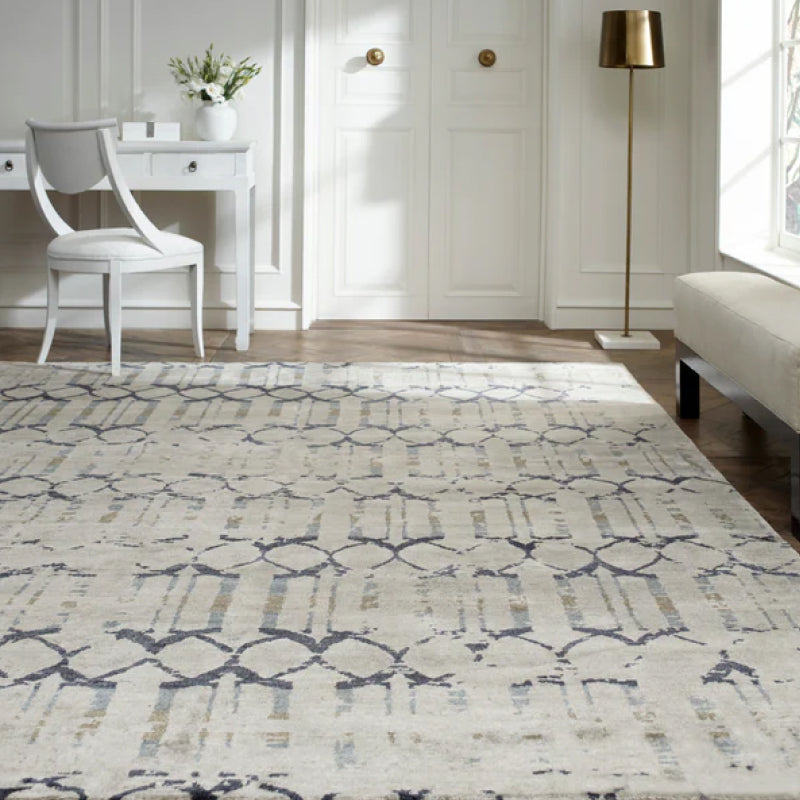
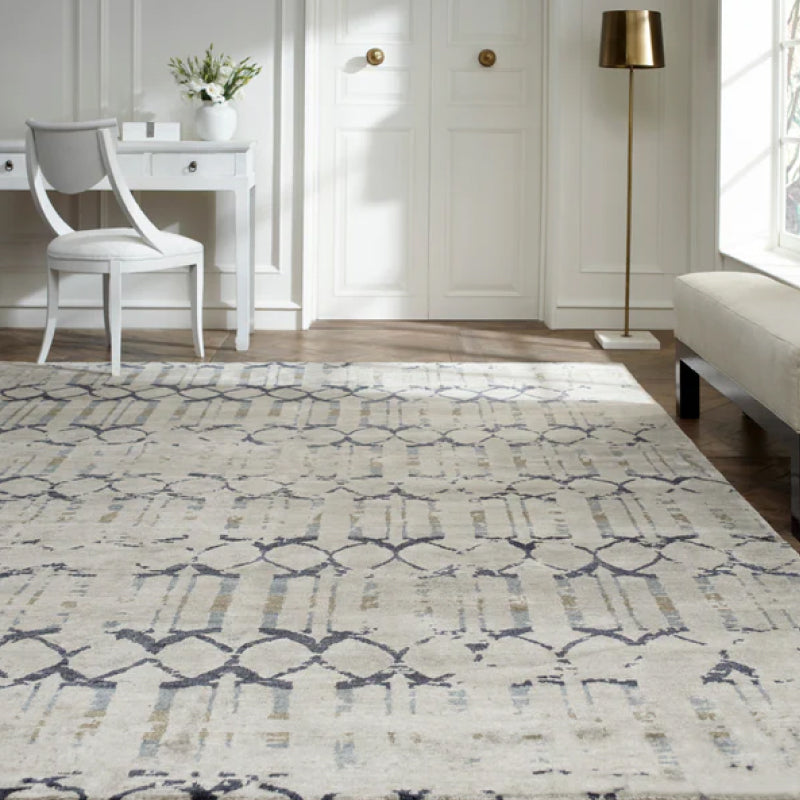
- Gray and ivory patterns: A strong option when you want movement without noise. If you want references for that palette, these gray and ivory rug options are useful for seeing how contrast can stay elegant.
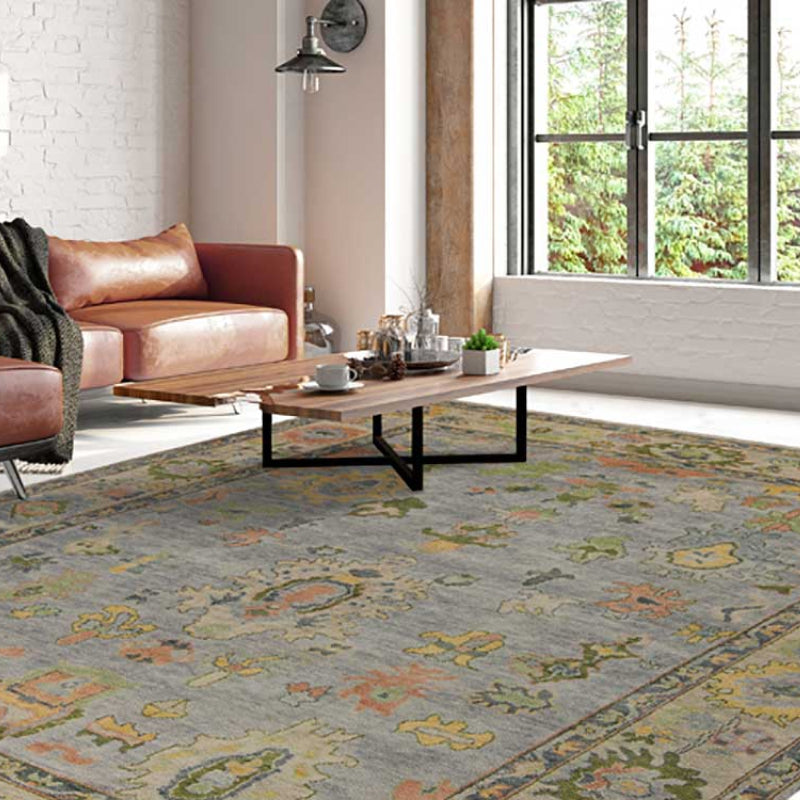
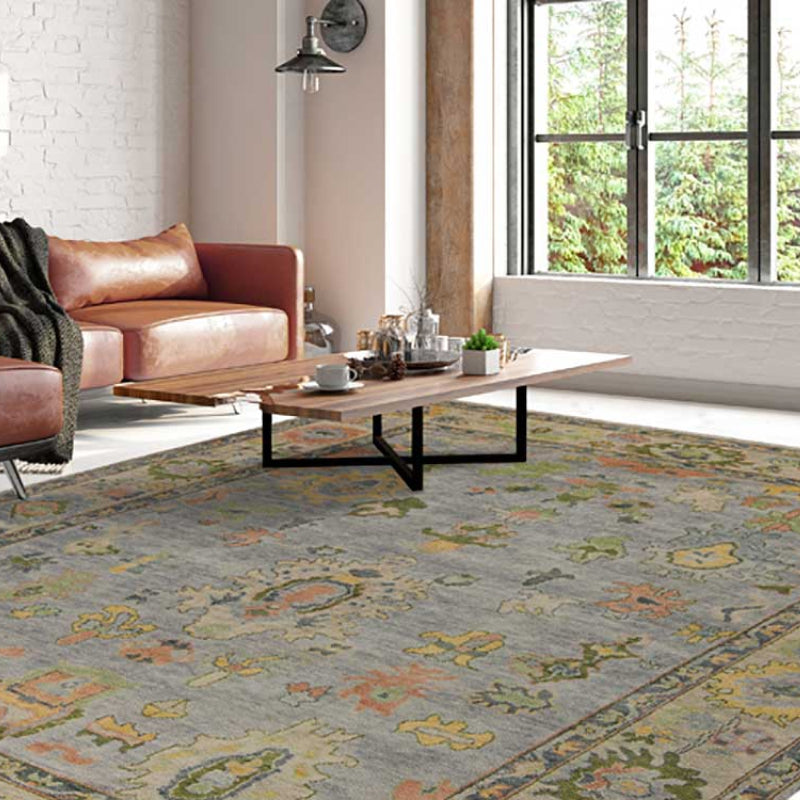
- Muted statement rugs: Ideal in bedrooms with restrained furniture silhouettes and quiet bedding.
A rug should make the rest of the room look better. If it only calls attention to itself, it's not doing enough design work.
Match the rug to the furniture vocabulary
If your home features premium sectionals, luxury sofas, custom chairs, or other designer furniture near me caliber pieces, your bedroom rug should carry that same level of restraint and finish. A rug with a crude pattern, overly shiny yarn, or trend-heavy coloration weakens the room instantly.
The best results usually come from repetition. Repeat a tone from the drapery. Echo the warmth of the wood finish. Support the lines of the bed rather than competing with them. That's how the bedroom starts to feel intentional, layered, and expensive in the right way.
Heirloom Quality Hand-Knotted vs Machine-Made Rugs
If you're furnishing a serious home, this decision is as important as choosing custom vs mass-produced furniture. A hand-knotted rug isn't just a nicer version of a machine-made rug. It's a different category of object.
That distinction matters when you care about longevity, material integrity, and the kind of interiors that hold up year after year.

Why craftsmanship changes everything
Machine-made rugs are built for access and speed. Some are visually attractive. Few have the depth, nuance, or durability of a true hand-knotted piece.
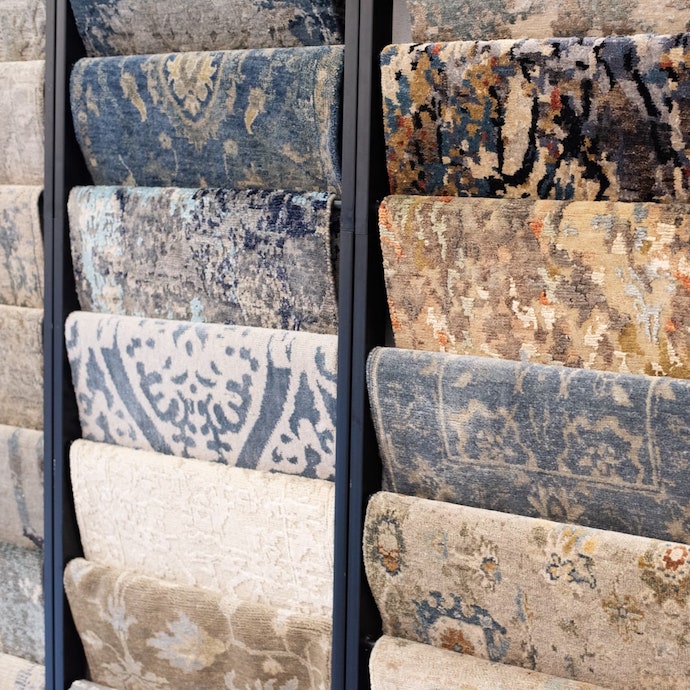
Hand-knotted rugs show the maker's hand. The pattern has subtle variation. The texture has life. The materials are usually better. In a bedroom with high-end furniture, custom upholstered furniture, and refined details, that level of craft reads immediately.
Use furniture standards as your benchmark
Luxury buyers already understand this logic in upholstery. High-end furniture in the Atlanta luxury sector that meets heirloom-quality standards must pass a 10,000-cycle compression test on seat cushions and a 5,000-cycle abrasion test on fabric surfaces, with only 18% of mass-produced furniture meeting those thresholds, according to the 2025 durability standards report cited here.
The same mindset applies to rugs. The hand-knotted piece isn't better because it's more romantic. It's better because it's built with a level of labor and material seriousness that mass production usually doesn't match.
A quick comparison that matters in real rooms
| Type | Best quality signal | What to expect |
|---|---|---|
| Hand-knotted | Visible craft, natural variation, stronger long-term value | The best choice for heirloom-minded interiors |
| Hand-tufted | Better than basic machine-made, but not equivalent to hand-knotted | Acceptable, but not my first choice for a primary bedroom |
| Machine-made | Price and convenience | Fine for temporary or lower-priority spaces |
Buy the rug the same way you'd buy a custom chair. Look at the construction first, then the pattern.
When hand-knotted is worth it
If you're creating a bedroom around luxury home furnishings, not just filling square footage, hand-knotted is worth your attention. It complements the values behind custom furniture Atlanta searches and the broader desire for heirloom-quality furniture that won't feel disposable in five years.
For a closer look at the construction differences, this guide on what hand-knotted rugs are is worth reading before you buy.
My opinion is blunt. In a primary bedroom with investment furniture, a machine-made rug often looks like the one shortcut in the room.
Protecting Your Investment with Rug Pads and Proper Care
Once you buy a quality rug, protect it properly. This isn't optional. Rug pads and care habits determine whether the rug matures gracefully or starts looking tired far too early.
A rug pad does three jobs at once. It keeps the rug from shifting, adds a layer of cushioning, and protects both the rug and the floor from unnecessary wear. In bedrooms, where comfort matters, the pad is part of the experience, not an afterthought.
Rug pads you should never skip
A good pad improves how the rug feels every single day. It also helps preserve the structure of the rug by reducing friction and drag.
Choose your pad based on the room's realities.
- For hard flooring: Use a pad with grip so the rug stays in place.
- For a lower-pile rug: Add a cushioned pad to improve softness underfoot.
- For door-clearance issues: Select a slimmer pad so the door can move freely.
- For valuable hand-knotted rugs: Use a high-quality pad to reduce stress on the foundation.
The spill issue luxury buyers worry about most
Expensive rugs make people nervous, especially in homes with children, pets, coffee cups, or a nightly glass of wine near the bed. That concern is justified. A 2025 consumer study found that 67% of expensive rug owners in bedrooms experienced permanent damage from common spills, yet only 8% of content provides brand-specific cleaning instructions or post-spill recovery timelines for premium mills like Kalaty or HRI, according to this bedroom rug care discussion.
That number should change how you think about care. Don't wait until something spills to decide what to do.
The care routine I recommend
Act quickly, and stay controlled.
- Blot immediately: Use a clean, dry cloth. Press. Don't rub.
- Check the fiber first: Wool and performance synthetics respond differently.
- Avoid over-wetting: Saturation can push the spill deeper.
- Use maker-specific guidance when available: Premium rugs often need more specialized care.
- Call a professional for serious spills: Especially on hand-knotted wool rugs.
Good care starts before the accident. Know the fiber, the pad, and the cleaning method before the rug enters the room.
If you want a practical reference point, this guide on how to care for wool rugs is a useful place to start.
The best area rug for bedroom use is one you can live with confidently. Protection and care are part of that confidence.
Bring Your Vision to Life with Atlanta's Design Experts
Choosing the best area rug for bedroom design comes down to four decisions. Get the size right. Choose the right fiber. Match the aesthetic to the room, not the trend cycle. Buy the best construction your home deserves.
That's exactly how discerning buyers approach upscale home furnishings in Atlanta. They don't ask what's cheapest. They ask what will still look right years from now. They ask what makes something feel custom. They ask how long high-end furniture lasts, and whether a piece has enough integrity to belong in a finished home.
The same standard should apply to your rug.
In Buckhead, Alpharetta, Roswell, Sandy Springs, and the broader North Atlanta market, the strongest interiors are the ones that feel cohesive from the ground up. The rug isn't an isolated purchase. It's part of a larger design language that might also include custom upholstered furniture, high-quality couches, custom chairs, and other luxury home furnishings chosen for longevity and distinction.
If you're weighing custom vs mass-produced furniture, comparing the best luxury sofa brands, or searching for luxury furniture Atlanta and designer furniture near me, apply that same level of discernment here. A bedroom rug should support the room with the same confidence as every other major piece.
A well-selected rug doesn't just finish the bedroom. It enhances the entire home.
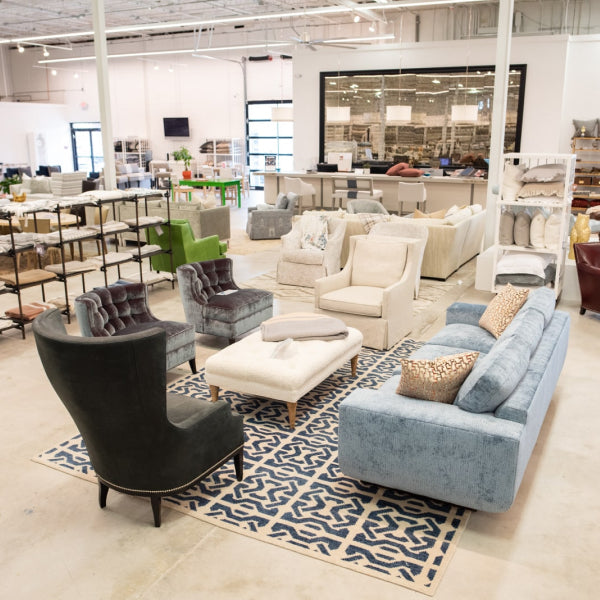
If you want help choosing a rug that belongs with your furnishings, visit Lewis and Sheron Textiles. Their Atlanta Design Center offers premium hand-knotted rugs from Kalaty and HRI, custom furnishings, thousands of fabrics, and complimentary in-house design guidance when you shop, so you can build a bedroom that feels cohesive, timeless, and worthy of the investment.