


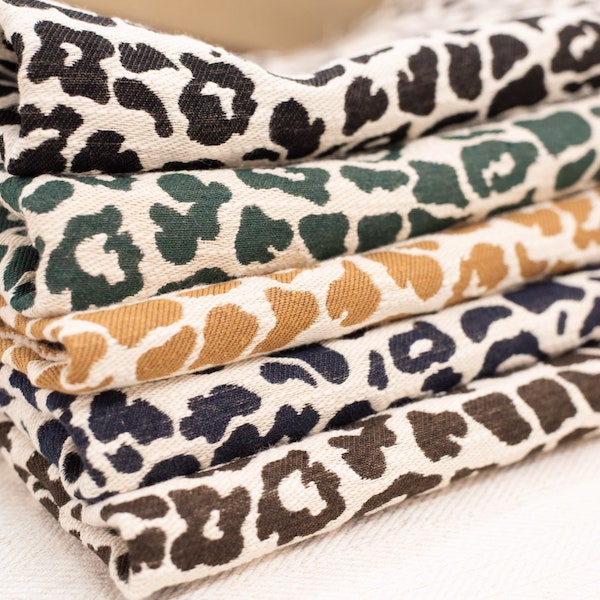
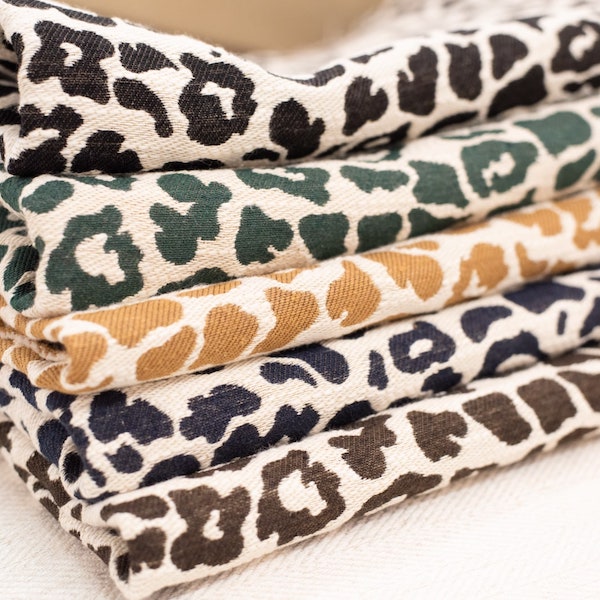
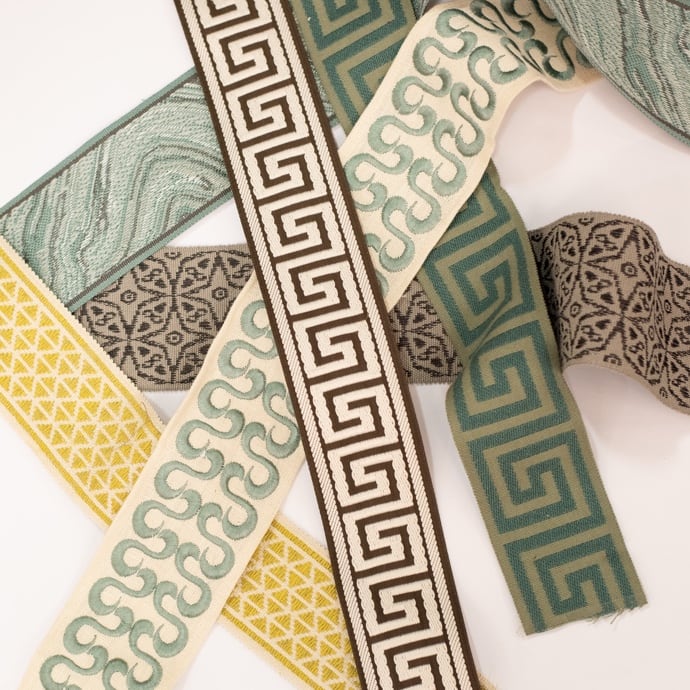

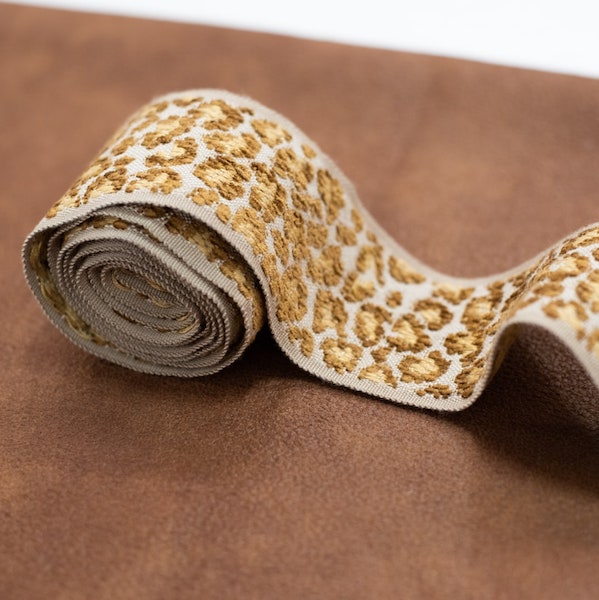








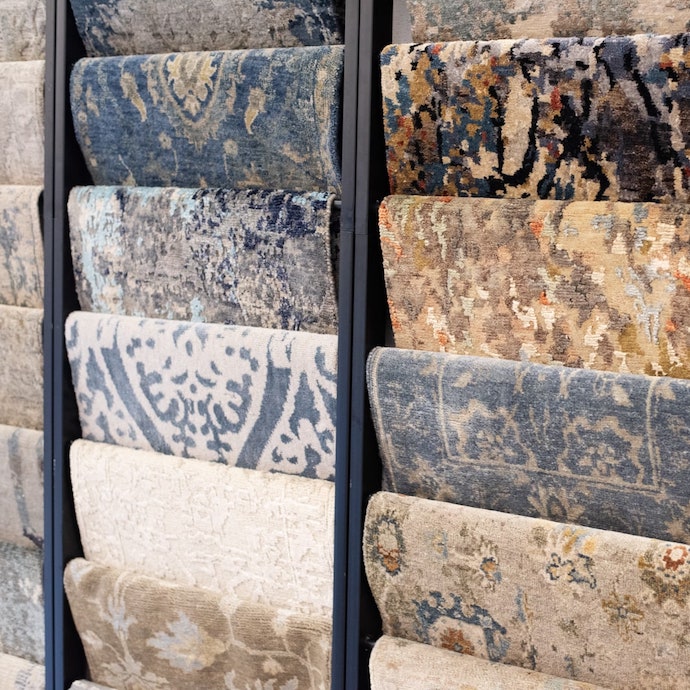
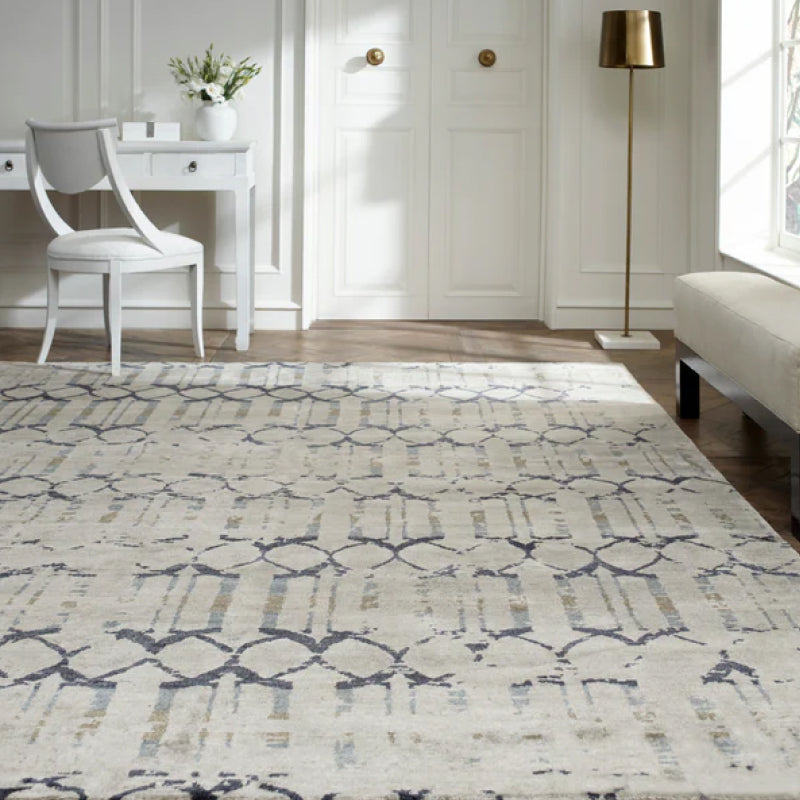
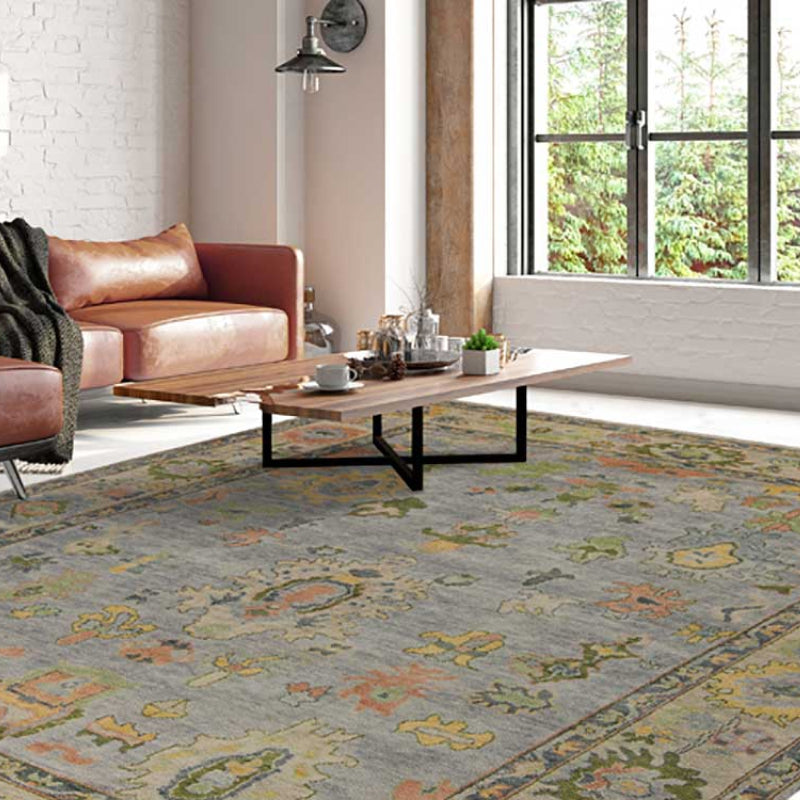
Most advice about polyester upholstery is dated. It treats polyester as the fallback fabric you choose when you can't afford linen, wool, or leather. That's lazy thinking, and in luxury interiors, it's often wrong.
If you're furnishing a primary residence in Atlanta, Buckhead, Alpharetta, Roswell, or Sandy Springs, the main question isn't whether polyester sounds glamorous. The question is whether the fabric performs, holds its color, suits the room, and protects the investment you're making in high-end furniture. In many cases, premium polyester does all four better than natural fibers.
That's why serious designers still specify it for luxury sofas, premium sectionals, custom chairs, and other statement furniture pieces. The right polyester upholstery doesn't read cheap. It reads refined, resilient, and well chosen. For affluent homeowners who want designer furniture that still looks composed after daily use, that matters more than material snobbery.
Rethinking Polyester for Luxury Home Furnishings
Polyester's reputation was built on the worst versions of it. Flat texture. Artificial sheen. Weak hand. Mass-produced furniture trained people to confuse a cheap application with a cheap material.
That mistake costs buyers money. A beautiful sofa that can't tolerate sun, friction, or regular life isn't a luxury purchase. It's a delicate object with a short runway.
Modern polyester upholstery belongs in the same conversation as other high-end materials because it can be engineered for performance. It resists mildew, stretching, and shrinkage, and it's widely used in upholstery because it can deliver a clean silhouette over time without asking for precious handling. That's exactly what many clients want from high-quality couches and custom upholstered furniture.
Why Atlanta buyers should care
Atlanta homes get used. Family rooms in Sandy Springs aren't museum spaces. Roswell living rooms often have strong natural light. Buckhead clients want polished rooms, but they also expect their luxury home furnishings to function.
That's where premium polyester earns its place.
Polyester upholstery isn't impressive because it's synthetic. It's impressive when the mill, weave, finish, and application are right.
If you're shopping for luxury furniture in Atlanta or searching for designer furniture near me, stop asking whether polyester is “good enough.” Ask whether the fabric was specified intelligently. There's a world of difference between commodity upholstery on a mass-produced sofa and a designer-grade polyester on a custom frame.
The standard I recommend
For decision-stage buyers weighing custom vs mass-produced furniture, I recommend judging polyester upholstery by three things:
- How it feels. The hand should feel refined, not plasticky or stiff.
- How it wears. It should suit the traffic level of the room and the habits of the household.
- How it fits the design. Texture, color depth, and drape matter as much as technical performance.
That's the shift. In designer home projects across North Atlanta and Fulton County, polyester isn't a compromise by default. Used correctly, it's a strategic material.
Decoding Premium Polyester Upholstery
Premium polyester upholstery is to standard polyester what full-grain Italian leather is to corrected-grain commodity leather. Same category. Completely different result.
At the low end, polyester can look shiny, feel flat, and age poorly. At the high end, it becomes an engineered upholstery textile with depth, softness, structure, and performance that make sense for custom furniture Atlanta buyers who are spending carefully and expecting longevity.

Polyester is hardly a fringe material. Polyester fiber accounted for approximately 57% of all fiber manufactured worldwide in 2023, according to Textile Exchange's Materials Market Report 2024. That scale exists because the material is durable, affordable, and highly useful in performance upholstery.
What separates premium from mass-market
Start with the yarn and weave. Better polyester fabrics use finer, stronger construction and more thoughtful surface design. That's what gives a fabric a softer hand, a more convincing texture, and a cleaner drape on a sofa arm or cushion deck.
Then look at the finish. Strong polyester upholstery doesn't rely on a flimsy afterthought coating to seem practical. It's often built for abrasion resistance, stain management, and fade resistance from the beginning.
A few quality signals matter more than marketing language:
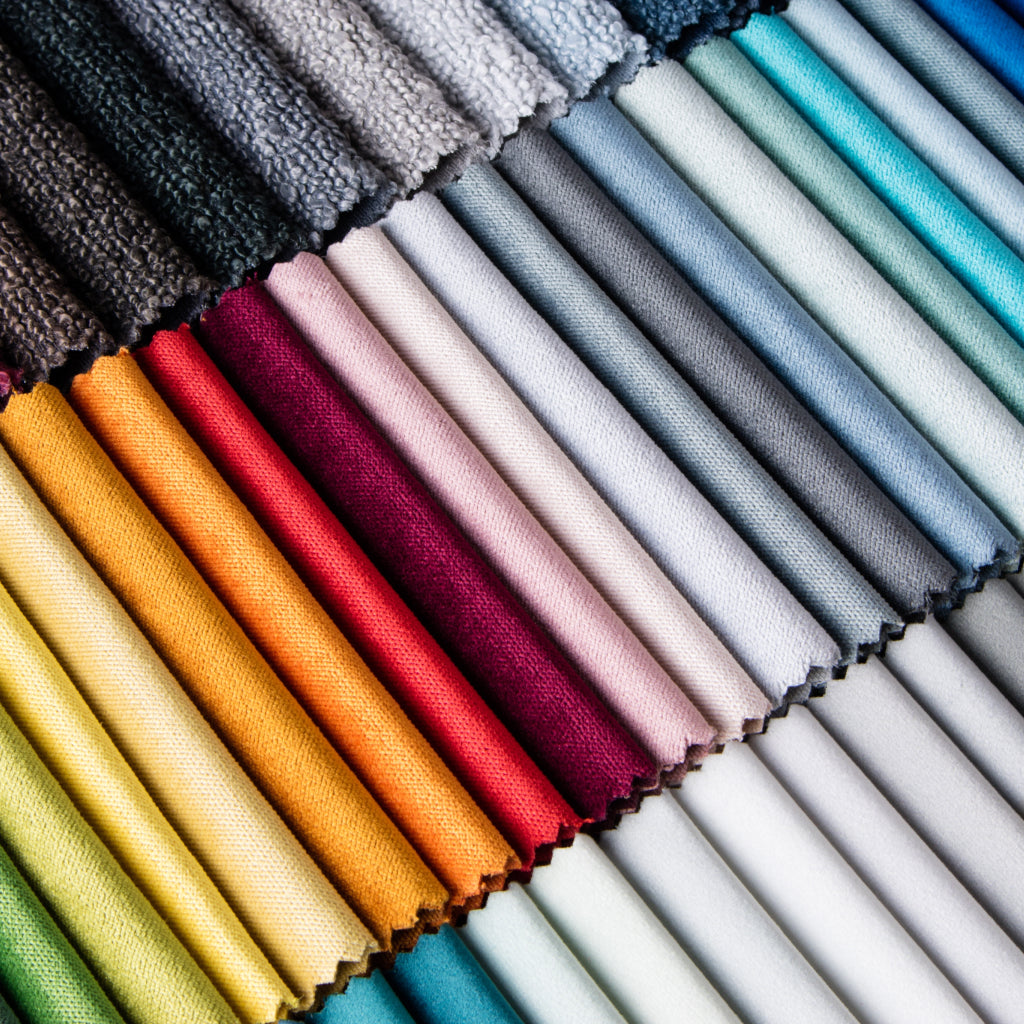
- Refined texture. Look for bouclés, velvets, chenilles, and woven plains with dimension.
- Controlled sheen. Good polyester shouldn't glare under daylight or lamps.
- Dense, stable construction. The fabric should feel substantial without feeling hard.
- Purpose-fit use. A fabric for a formal sitting room isn't the same fabric I'd specify for a family sectional.
Forms worth knowing
Not all polyester upholstery looks or feels the same.
- Microfiber can create a brushed, suede-like finish that works beautifully on custom chairs and bespoke high-end furniture.
- Blends often balance the look of natural fibers with the resilience of synthetic performance.
- Recycled polyester appeals to buyers who want a more considered material story without giving up practicality.
If you're also weighing other practical luxury materials, this guide on choosing a faux leather sofa is worth reading because it frames another category where quality varies dramatically by construction, not just by label.
The label matters less than the execution. “Polyester” alone tells you almost nothing about whether the upholstery belongs on designer furniture.
For affluent homeowners sourcing custom upholstered furniture, that distinction is everything.
The Performance Metrics of Designer Quality Polyester
A luxury sofa shouldn't just look composed on delivery day. It should still look convincing after years of people sitting in the same corner, sliding across the seat cushion, and leaving it in front of windows. That's where performance metrics stop being technical trivia and start becoming buying criteria.

What double rubs actually mean
For upholstery, abrasion testing matters. To achieve contract-grade performance, polyester upholstery fabrics must exceed 50,000 double rubs on the Wyzenbeek test, as noted in this guide to choosing the best performance fabrics and supported by Chita Living's explanation of upholstery standards.
That threshold is especially useful for buyers comparing custom vs mass-produced furniture. Contract-grade doesn't mean the piece will feel commercial or institutional. It means the fabric has a meaningful wear buffer, which is exactly what you want on a premium sectional in a household where the room gets active use.
A simple rule works here:
| Use case | What I'd look for |
|---|---|
| Formal room with light use | Texture and appearance first, then durability |
| Main family seating | Strong abrasion performance and cleanability |
| Custom chair in a sunny corner | Fade resistance and stable color |
| Statement sofa with pets or children | Contract-grade abrasion plus realistic maintenance |
The metrics clients tend to ignore
Abrasion is only one part of the story. Pilling resistance is separate. A fabric can wear well and still develop surface pills under repeated friction. That matters on seat edges, chaise corners, and tight custom chairs where clothing rubs the same area daily.
Fade resistance also deserves more scrutiny than buyers give it. In Atlanta and North Atlanta homes with large windows, colorfastness isn't a side note. It determines whether that refined taupe, olive, or ivory still looks intentional after extended light exposure.
Why coatings and finishing matter
Some designer-grade polyester upholstery uses advanced protective systems such as Crypton and related moisture-resistant technologies. In the luxury furniture space, these coatings can block 99.9% of bacteria and resist liquid penetration for up to 72 hours, according to the Buckhead area furniture profile on Houzz.
That doesn't mean every performance finish is worth the upcharge. It means you should ask whether the protection is integrated into a serious upholstery fabric or applied to a mediocre one.
Practical rule: Buy performance that preserves the design. If the fabric looks overfinished, overly slick, or lifeless, it's the wrong fabric no matter what the spec sheet says.
Designer quality isn't one metric. It's the combination of abrasion performance, color stability, surface behavior, and visual integrity.
Polyester Upholstery for Elegant Family Living
Affluent households don't need furniture that behaves like it belongs in a showroom. They need furniture that survives children, guests, pets, takeout, and weekends without making the room look defensive.
That's why polyester upholstery works so well in elegant family spaces. It can deliver the refined look people want from luxury sofas and premium sectionals while still tolerating normal life far better than many delicate natural fabrics.
Where polyester helps most
Polyester performs well in rooms where furniture has to do real work. It resists moisture, holds shape, and doesn't punish you for sitting on it every day. For custom upholstered furniture in a media room, family room, or open-plan living area, that's a major advantage.
I especially like it for:
- Sectionals used daily. Deep seating and repeated use call for fabrics that won't sag visually.
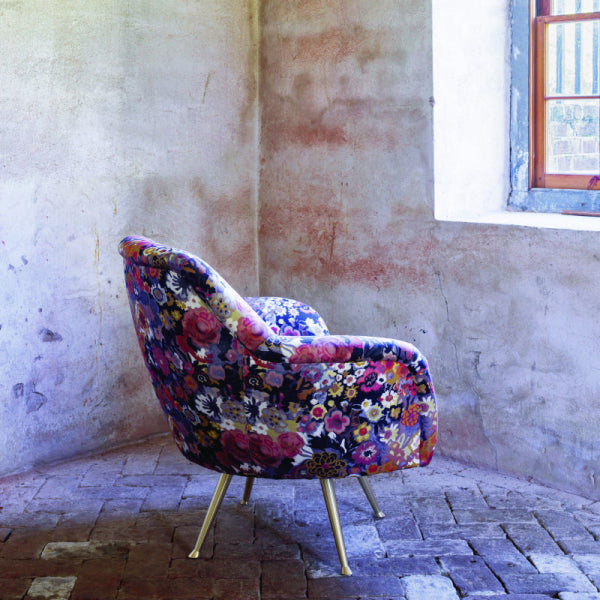
- Custom chairs in multipurpose rooms. Accent seating gets moved, turned, and leaned on more than people expect.
- Light-toned upholstery with active households. You still need common sense, but premium polyester gives you more margin for error.
The trade-off you need to respect
Polyester isn't magic. It's hydrophobic but also lipophilic, which means it doesn't eagerly absorb water-based spills the way some natural fibers do, yet it can attract and retain oily stains more readily than fibers like cotton. That's why prompt cleaning matters, as explained by Fiber-Seal's performance fabric guidance.
The practical response is simple. Don't scrub frantically. Blot, use mild soap and water, and deal with oily residue immediately.
If you want a broader fabric primer before narrowing down upholstery options, this overview of fleece polyester fabric is useful for understanding how differently polyester can behave across applications.
If your household uses the room hard, polyester upholstery is often the grown-up choice. You get beauty without the anxiety.
My verdict for homes with kids and pets
For most family clients, I'd choose a well-made polyester or polyester blend over a precious natural fiber on the primary sofa. Not because natural fibers aren't beautiful. They are. But because a living room should be livable.
Use common sense when selecting color and weave. Avoid overly loose constructions if claws are a concern. Choose texture that disguises minor disruption rather than exposing every mark. And if you want the room to stay elegant, prioritize fabrics that look intentional even when the house is in motion.
That's what designer practicality looks like.
Comparing Polyester and Natural Fibers for Custom Furniture
The wrong comparison is “polyester versus luxury.” The right comparison is polyester versus specific natural fibers in specific rooms.
Linen, cotton, and wool each bring something beautiful to custom upholstered furniture. They also each ask for something in return. Linen offers character and breathability. Wool brings depth and resilience. Cotton can feel familiar and soft. But none of them wins every category.

Where polyester clearly wins
In the custom upholstered furniture market, polyester blends account for approximately 35% of material selections for premium sofas, partly because they can maintain color vibrancy for over 10 years under UV exposure, surpassing the 5 to 7 year fade threshold common in many untreated natural fibers, according to Splendid Furnishings in Atlanta.
That matters in real homes. A sofa in a bright Roswell sitting room or a pair of custom chairs near large windows in Alpharetta needs more than visual appeal on day one.
Here's how I think about the tradeoffs:
| Material | Strongest advantage | Most important caution |
|---|---|---|
| Polyester | Durability, fade resistance, easier maintenance | Can feel warmer and less breathable |
| Linen | Airy texture and elegant natural irregularity | Wrinkles, stains, and wear need more tolerance |
| Cotton | Soft hand and approachable comfort | More absorbent and less forgiving |
| Wool | Rich hand, excellent character, refined look | Usually better for lower-risk settings and specific aesthetics |
Where natural fibers still earn their place
If the room is formal, climate is controlled, and the client values tactile irregularity over easy maintenance, natural fibers can be exactly right. I still specify linen and wool where the visual language demands them.
But on high-quality couches that need to function every day, polyester often gives you the smarter balance. It can mimic the softness or visual texture buyers want while reducing the maintenance burden.
The better decision framework
Ask three questions before you commit:
- Is this piece decorative or heavily used?
- Will the room get strong sun?
- Do you want a relaxed natural hand or a cleaner, more stable appearance?
If the piece is a statement furniture piece that won't see much traffic, natural fibers may justify their extra care. If it's a custom sofa meant for actual living, premium polyester frequently delivers stronger long-term value.
That doesn't make it more “luxurious” in some abstract sense. It makes it better suited to the job.
Sourcing and Styling Premium Polyester in Atlanta
An elegant room doesn't depend on natural fibers alone. It depends on texture, proportion, color restraint, and upholstery that suits the architecture. Premium polyester can absolutely meet that standard in Atlanta homes if you source it with discipline.
What to shop for in person
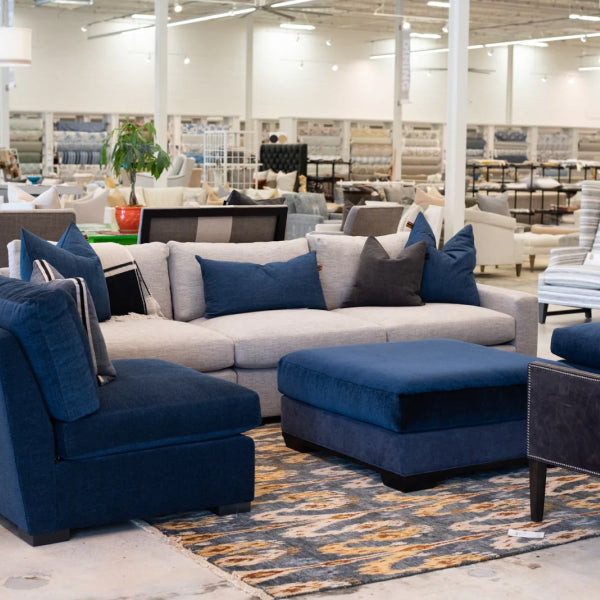
When clients search for custom furniture Atlanta, luxury furniture Buckhead, or designer furniture near me, they often focus too much on silhouette and not enough on fabric behavior. That's backwards. A strong frame in the wrong upholstery is still a weak purchase.
Use this checklist when you shop:
- Touch the fabric under different light. Some polyester looks rich in a showroom and flat in daylight.
- Study the weave closely. Better fabrics have more visual nuance and less obvious synthetic shine.
- Ask how the texture will age. Bouclé, velvet, chenille, and structured plains all wear differently.
- Look at the seam areas. Premium upholstery should support crisp seams on arms, cushions, and skirts.
A practical reference for this stage is this guide on how to choose upholstery fabric, which helps buyers evaluate performance and suitability before placing a custom order.
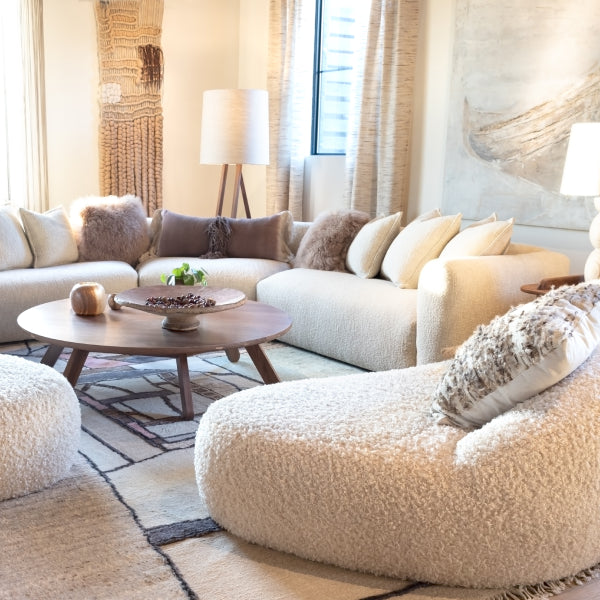
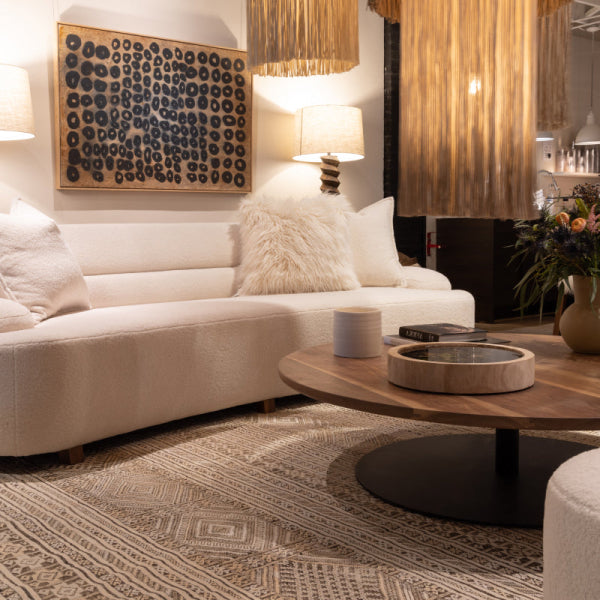
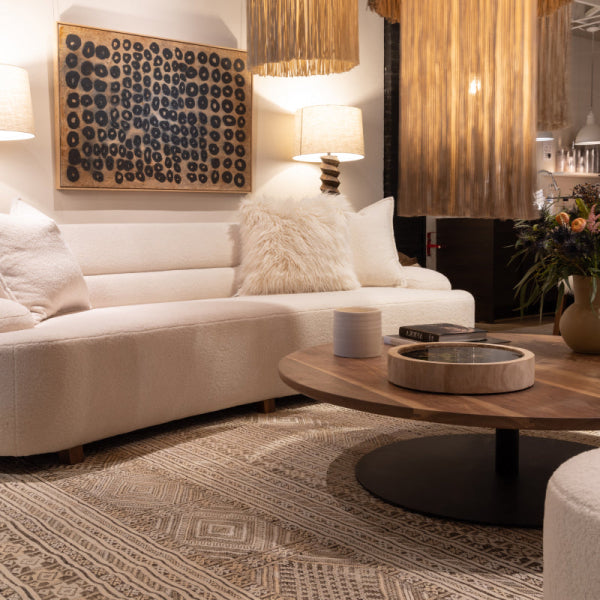
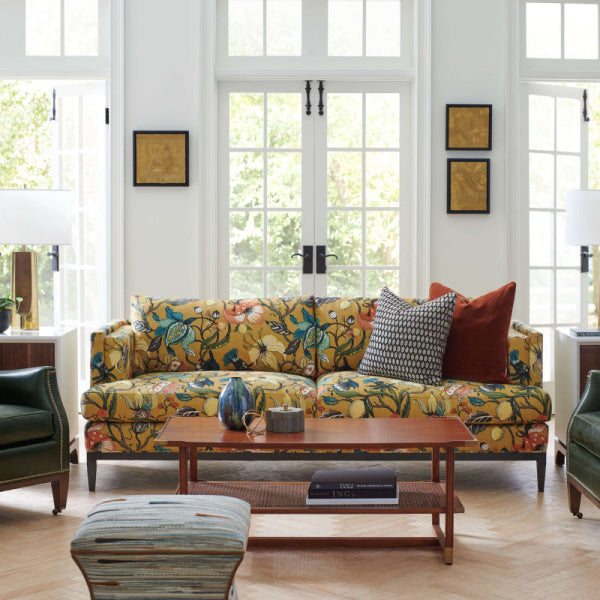
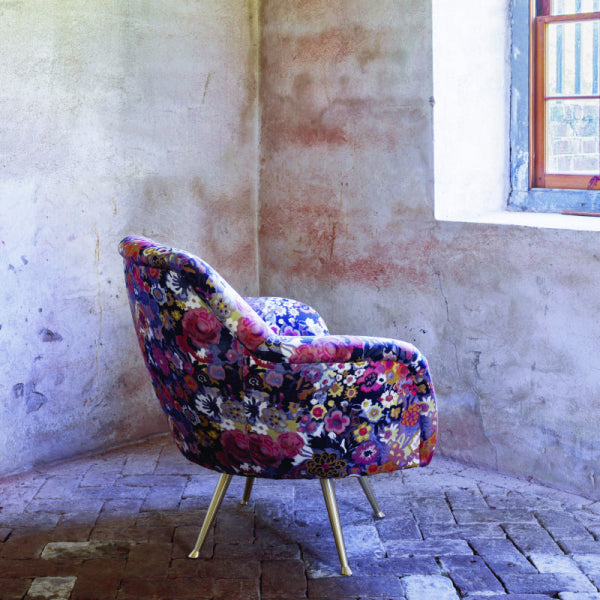
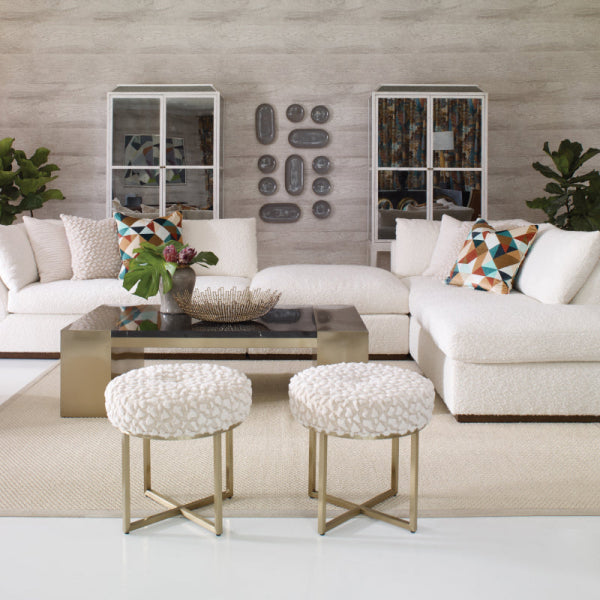
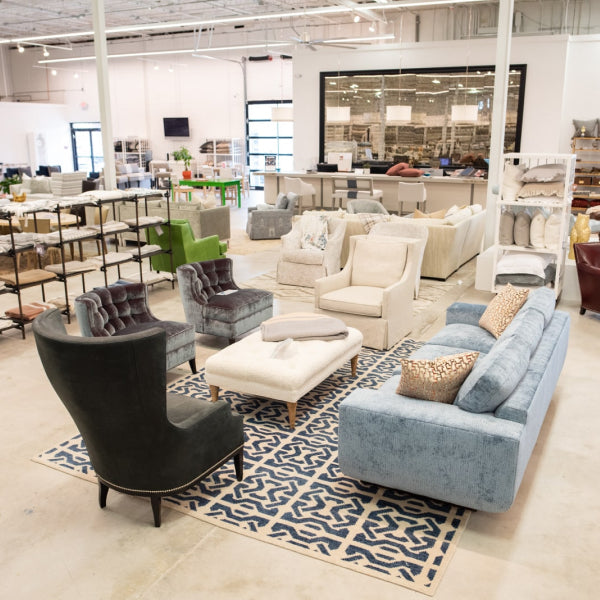
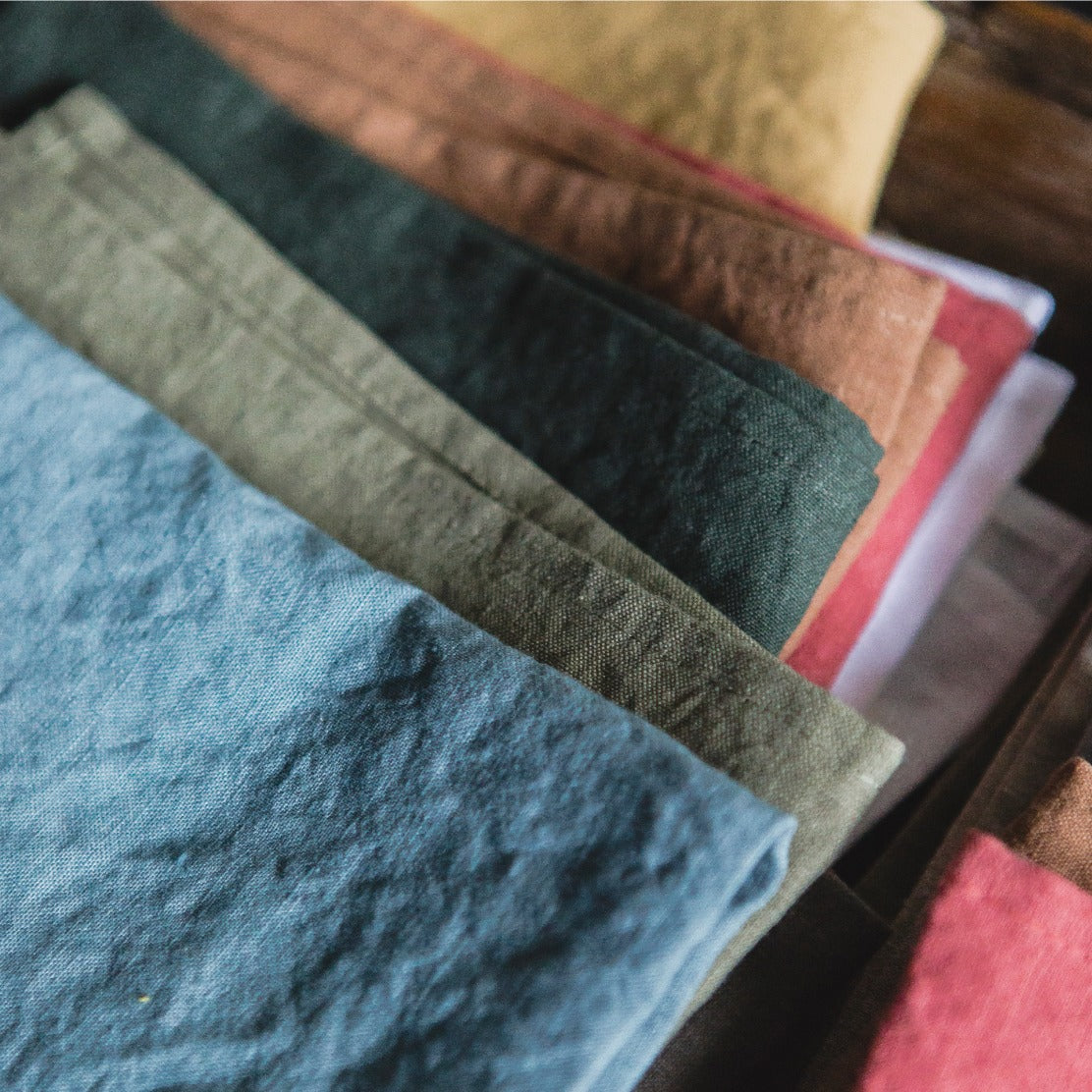
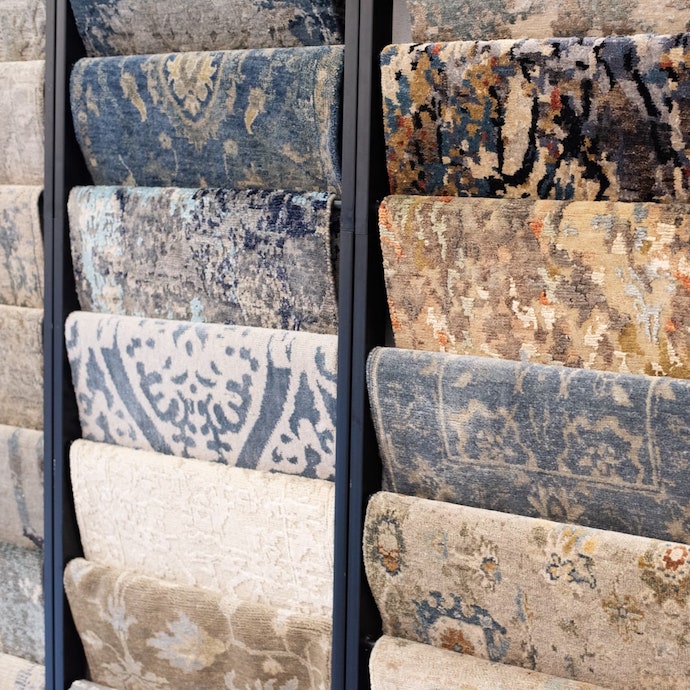
This styling direction is easier to understand visually:

How to make polyester look expensive
Polyester looks refined when it has one of two qualities. Either it has convincing texture, or it has disciplined simplicity. What never works is trying to fake luxury with a loud sheen or overworked pattern.
I'd use it in these ways:
- Velvet on a sculptural sofa for a dressier Buckhead living room
- Textured woven polyester on a premium sectional for a Sandy Springs family room
- Refined performance blend on custom chairs for an Alpharetta breakfast room
- Bouclé-style polyester on accent seating where you want softness without fuss
If you're sourcing locally, Lewis and Sheron Textiles offers upholstery fabrics, custom furnishings, reupholstery, and access to mills such as Kravet, Fabricut, P. Kaufmann, Libeco Home, and Crypton through its Atlanta design center and showroom.
Expensive-looking upholstery rarely announces itself. It sits quietly in the room, supports the shape of the piece, and lets the design carry the attention.
What I'd avoid
Skip any polyester upholstery that feels slippery, overly thin, or aggressively stain-treated to the point that it loses softness. In luxury home furnishings, touch matters. So does visual calm.
The right polyester doesn't imitate a cheaper version of linen or wool. It succeeds on its own terms.
Your Partner for Heirloom-Quality Furniture in Atlanta
If you're investing in designer furniture for a primary residence, polyester upholstery should be evaluated the same way you'd evaluate any serious material. Look at the hand. Look at the construction. Look at how it will live in the room. Ignore the old prejudice.
That approach matters even more in high-consideration purchases like luxury sofas, custom upholstered furniture, premium sectionals, and statement furniture pieces. The fabric isn't a secondary decision. It shapes how long the piece stays beautiful, how often you have to worry about it, and whether the purchase still feels wise years later.
For Atlanta, Buckhead, Alpharetta, Roswell, Sandy Springs, and surrounding North Atlanta clients, the smartest path is usually a guided one. Sit in the furniture. handle the fabrics. Compare a textured polyester to a linen, a wool blend, and a performance velvet in the same light. Ask what the material will do, not just what it's called.
That's also the difference between custom and mass-produced furniture. Mass-market buying asks you to accept a fixed answer. Proper design work asks better questions about scale, use, tailoring, maintenance, and long-term fit.
If you want heirloom-quality furniture, don't confuse heritage with fragility. A piece can be refined, custom, and worthy of a beautiful home while still being practical enough for daily life. In many rooms, premium polyester is exactly what makes that balance possible.
Frequently Asked Questions About Polyester Upholstery
Does polyester upholstery feel hot
It can. While polyester is known for its low absorbency, that same property can reduce breathability and trap heat in warm climates. That's a real consideration in the Southeast. Premium mills now offer cool-touch polyester blends with moisture-wicking technology, which is one of the most useful innovations for Atlanta-area homes, as noted by The Fabric Outlet's discussion of cotton vs. polyester for upholstery.
If a room runs warm, I'd avoid dense, non-breathable polyester on the primary lounging piece unless the fabric has a more advanced comfort profile.
How do I prevent pilling on a new sofa
Start by selecting a tightly constructed upholstery fabric with a refined surface, not a loose or fuzzy weave that invites friction damage. Then think about use. Seat edges, chaise corners, and favorite cushion spots get the most rubbing from denim, throws, and repeated movement.
Pilling is partly a fabric issue and partly a lifestyle issue. Rotate cushions if the design allows it, avoid rough throws, and don't assume high abrasion performance automatically means low pilling.
Is polyester upholstery good for luxury sofas
Yes, if it's premium polyester and the design intent is right. I'd gladly use it on high-end furniture when the piece needs durability, color stability, and easier maintenance. I would not use a shiny, flat, low-grade polyester on a designer sofa and pretend the result is elevated.
Luxury comes from the total specification. Frame, cushion fill, tailoring, and fabric all have to align.
Should I choose polyester or a natural fiber for custom furniture
Choose by room and use, not ideology. For a formal piece with lower wear, a natural fiber may be exactly right. For a daily-use sofa, custom chair, or family sectional, polyester often makes more sense.
The better question isn't which category sounds more prestigious. It's which fabric supports the life of the piece.
Can I mix polyester and natural fibers in the same room
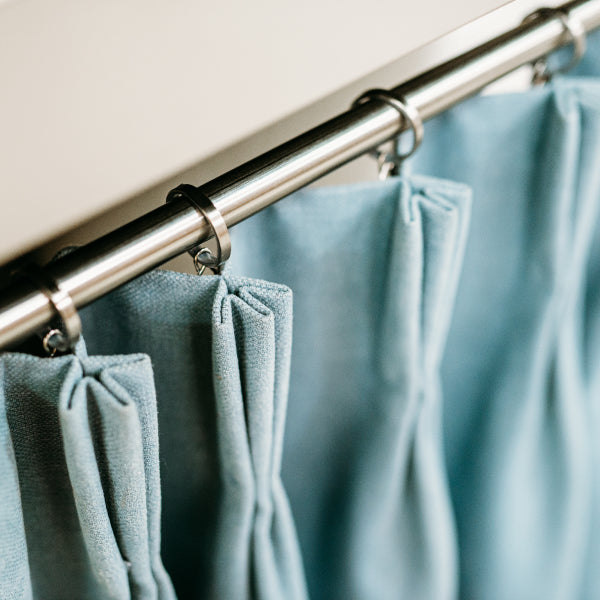
You should. That's often how a room gains depth. Use polyester upholstery on the hard-working seating, then bring in linen drapery, wool rugs, or natural accent textiles for variation.
A room with all one fiber family can feel flat. A room with intentional contrast feels designed.
Is recycled polyester a serious option for designer interiors
Yes, if the mill and construction are strong. Recycled content doesn't automatically mean better texture or better style, but it can be part of a well-specified upholstery story. Judge it the same way you'd judge any other fabric. By hand, finish, weave, and how it performs in the room.
What makes furniture feel designer quality
The answer is rarely a single material. Designer quality comes from proportion, tailoring, cushion architecture, fabric selection, and how the piece relates to the home. Polyester upholstery can absolutely support that standard when it has restraint, texture, and proper performance credentials.
If you're selecting upholstery for a luxury sofa, custom chair, or made-to-order sectional, Lewis and Sheron Textiles offers access to premium fabrics, custom furnishings, reupholstery, and in-house design support for Atlanta-area homeowners and design professionals who want materials chosen with long-term value in mind.