












A well-made wingback chair often reaches this moment. The frame is still sound. The silhouette still has presence. But the seat fabric has thinned, the arms show years of use, and the chair that once anchored a Buckhead library or a Sandy Springs sitting room now feels tired rather than distinguished.
That's usually when clients start weighing a simple recover against a deeper restoration. In the luxury furniture world, that's the wrong comparison. A wingback isn't just another occasional chair. Done properly, it becomes one of those statement furniture pieces that can stand beside designer furniture, luxury sofas, and custom upholstered furniture without looking like a compromise. It can also outlive a surprising amount of mass-produced furniture that looked good only on a showroom floor.
The Enduring Allure of a Reimagined Wingback Chair
In many Atlanta homes, the wingback is the piece nobody wants to give away. It may have belonged to a parent, come from an estate purchase in Roswell, or sat for years in a formal room in Buckhead waiting for someone to see its potential again. Even when the upholstery is dated, the chair often still has what matters most: shape, scale, and character.

A wingback also carries design history in a way few other chairs do. The piece first emerged in late 16th-century England, designed to trap heat from fireplaces. By the Queen Anne period, from 1702 to 1714, fully upholstered versions had become staples in aristocratic interiors, and the form later migrated to America in the 1800s, where it established itself as a lasting part of historical upholstery design, as detailed in Chairish's history of the wingback chair.
Why the form still works
The reason the wingback still reads as timeless is simple. It has architecture.
The high back creates vertical presence. The wings frame the sitter and give the chair a sense of enclosure. The profile feels substantial enough for traditional interiors, yet crisp enough to work with refined modern rooms, especially when upholstered in a disciplined fabric rather than a novelty print.
A restored wingback doesn't need to match everything in the room. It needs to hold its own against the room.
That's what makes it relevant for buyers searching for luxury furniture Atlanta, custom furniture Atlanta, or designer furniture near me. In a market crowded with premium sectionals and high-quality couches, a reimagined wingback offers something rarer: a custom chair with history already built in.
A restoration, not a patch
High-end clients usually regret one thing. They waited too long and treated a worthy chair like a quick fix. New fabric alone won't solve bad padding, stretched foundations, or clumsy tailoring. A proper commission treats the chair like heirloom-quality furniture in the making.
That's why the right approach is less about rescuing an old seat and more about creating a bespoke piece for the next chapter of the home.
DIY Project or Professional Commission
A wingback chair looks manageable until the upholstery comes off. Then the complexity shows itself. Tight inside wings, curved outside panels, shaped arms, and the relationship between the seat and the front rail all have to be rebuilt in the right order.
DIY tutorials can be useful for understanding the anatomy of a chair. They're far less reliable as a roadmap for a luxury result. If you're curious about the basics, a piece like this DIY upholstered chair overview can help you see what the process involves. It also makes clear how much can go wrong once pattern placement, tension, and finish details come into play.
Where DIY falls short
The biggest problem isn't enthusiasm. It's false economy.
The most common failure point in upholstered chairs is the fabric itself, not the frame. Data shows 68% of upholstered chair failures in the past year stemmed from fabric wear rather than structural issues, particularly in high-stress areas such as curved seats and arms where poor material choice and application accelerate breakdown, according to this wingback upholstery discussion.
That matters because wingbacks place unusual demands on fabric. The wings curve in more than one direction. Seats take concentrated abrasion. Arms absorb oils, pressure, and repeated contact. If the upholsterer doesn't account for those stress points, the chair can look finished on delivery and tired far too soon.
What a professional commission protects
A professional upholsterer isn't just attaching new fabric. They're protecting proportion, value, and comfort.
Consider the difference in outcomes:
- Pattern control matters: On a wingback, even a subtle stripe can drift visibly if the inside wing doesn't align with the seat and back.
- Curves require judgment: A fabric that behaves beautifully on a bench cushion may pucker on a shaped wing.
- Details reveal the work: Welt, skirts, arm fronts, and deck transitions tell you immediately whether the chair was rebuilt by a craftsperson or merely covered.
Practical rule: If the chair has strong bones, historical value, or exceptional lines, treat it like a commission, not a weekend project.
For a mass-market side chair, experimentation may be harmless. For a meaningful wingback in a North Atlanta home, amateur work can strip away the very qualities that made it worth keeping.
Choosing Fabrics for Timeless Design and Durability
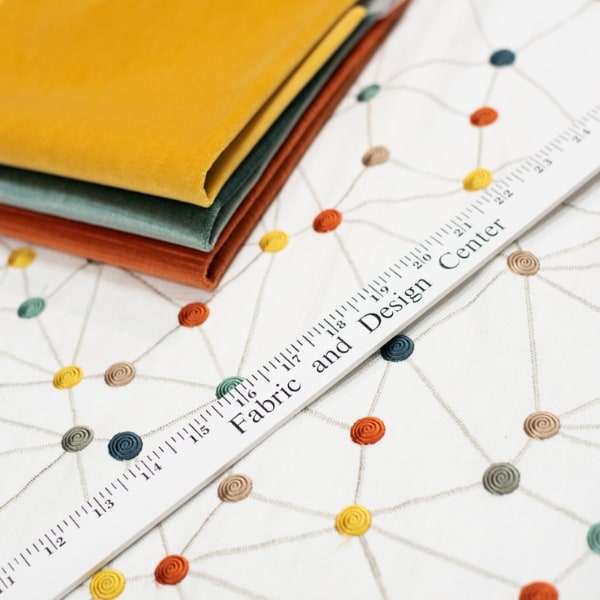
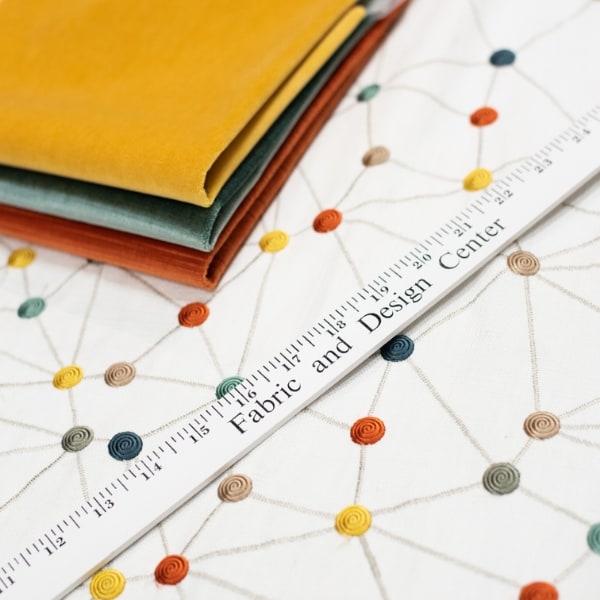
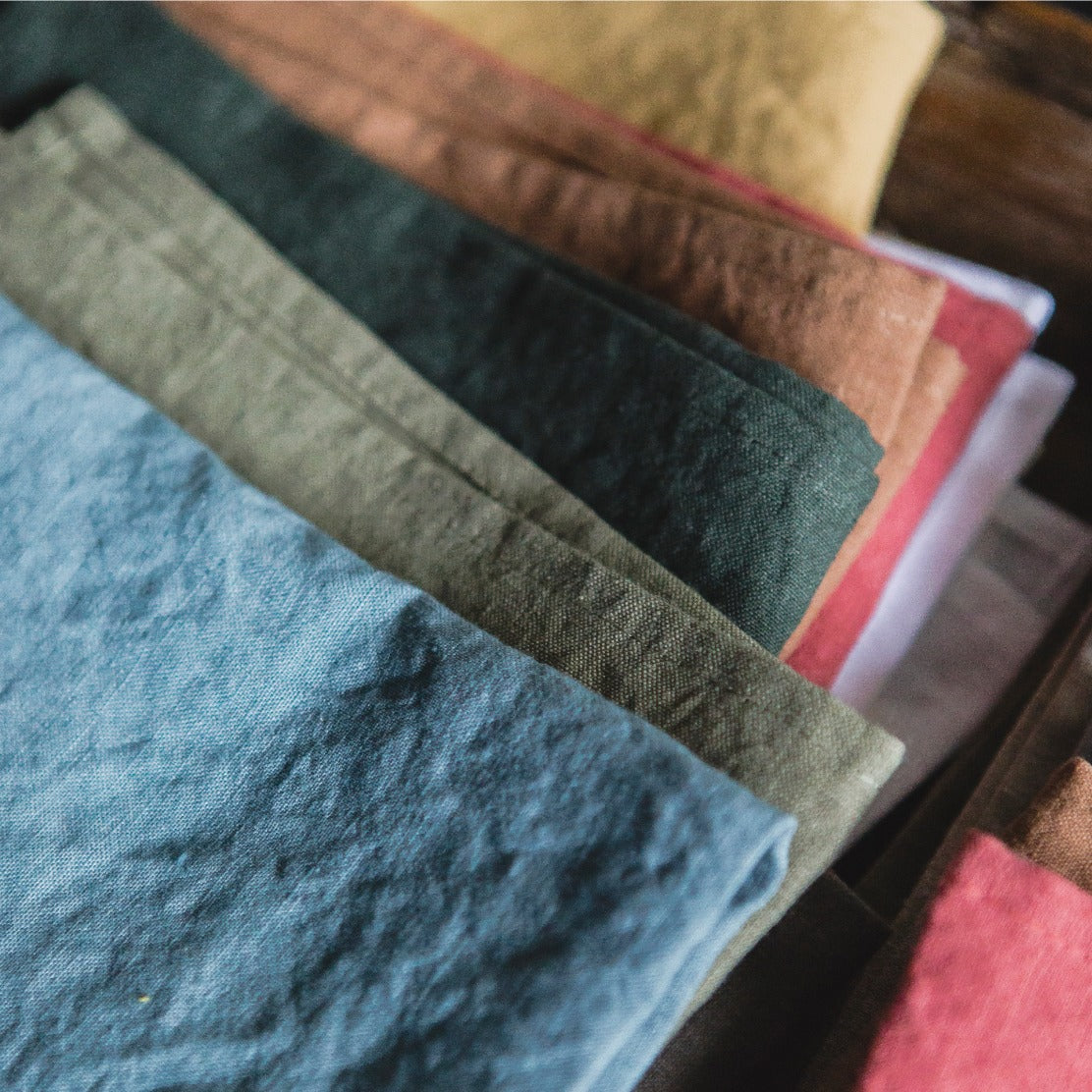
Fabric selection decides whether wingback chair upholstery feels refined or merely updated. In designer furniture, material choice isn't a decorative afterthought. It determines how the chair wears, how the shape reads, and whether the piece belongs with luxury home furnishings or looks disconnected from them.

Start with the life the chair will live
A formal wingback in a Buckhead sitting room can support a different fabric choice than a reading chair in an Alpharetta family space. That sounds obvious, but many expensive mistakes happen because buyers choose by color first and use second.
For a practical framework, this guide on how to choose upholstery fabric is a useful reference. If you want a broader primer on how to select the right furniture fabric, that resource also helps clarify the relationship between appearance, maintenance, and use.
Four materials I consider first
Each of these can work beautifully on a wingback. The right answer depends on shape, room, and expected wear.
| Luxury Fabric Comparison for Wingback Chairs | |||
|---|---|---|---|
| Fabric Type | Aesthetic | Durability (Wyzenbeek Rating) | Best For |
| Velvet | Saturated color, soft luster, formal depth | Ask for the mill's rating before specifying | Libraries, formal living rooms, statement chairs |
| Linen Blend | Dry hand, relaxed refinement, tailored texture | Ask for the mill's rating before specifying | Transitional spaces, bedrooms, serene reading corners |
| Performance Fabric | Clean finish, broad color range, practical elegance | Ask for the mill's rating before specifying | Family rooms, homes with children, frequent use |
| Leather | Structured, classic, patina over time | Not typically expressed with a Wyzenbeek rating in the same way as woven fabrics | Studies, dens, masculine interiors, legacy pieces |
Match scale to the chair
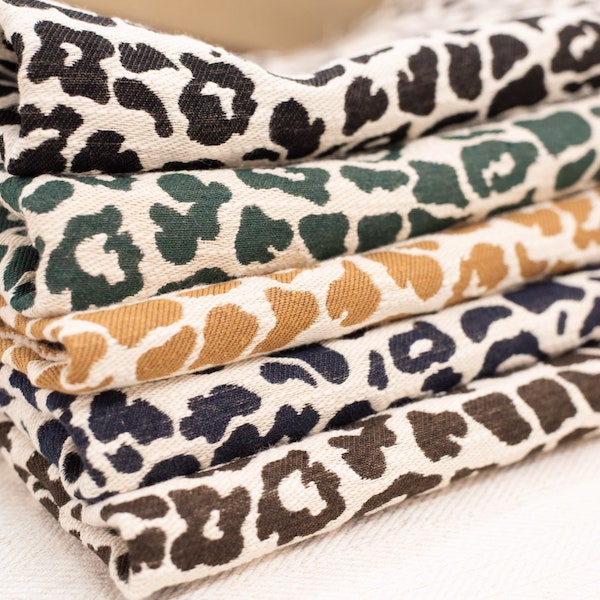
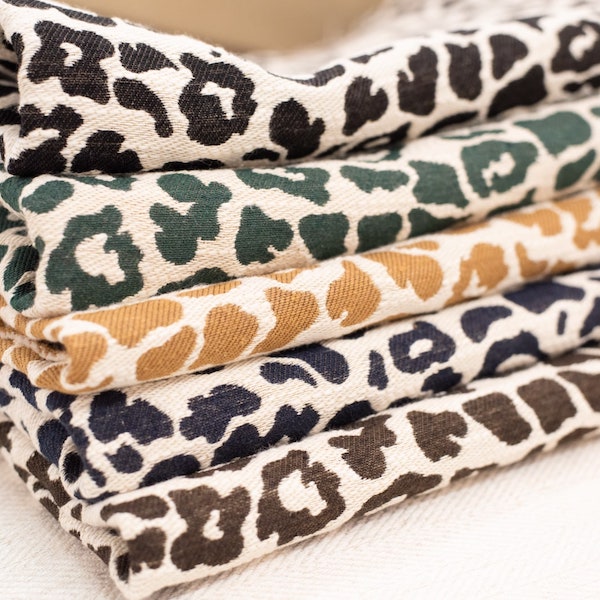
Large motifs often look exciting on the bolt and awkward on the chair. Wingbacks break fabric into many panels, and every panel changes how a pattern reads. A broad floral may lose its rhythm across the inside wings. A stripe can work, but only if the upholsterer can maintain discipline across the seat, back, and arms.
Smaller weaves, controlled geometrics, textural solids, and quiet jacquards tend to age better. They respect the chair's shape rather than competing with it.
If you want the form of the chair to lead, choose a fabric with depth instead of noise.
Modern performance fabrics on traditional frames
Many online guides stop too soon. A traditional wingback and a modern performance textile don't always behave the same way as old-school cottons or classic linens. Some low-stretch fabrics resist the curves of the wings and can create a bridged look if they aren't tensioned correctly.
That doesn't mean performance fabrics are wrong. It means they need an upholsterer who understands how to marry material to structure. Crypton can be excellent in a high-use room. Libeco linens can look extraordinary in quieter settings. But each asks for a different hand.
Don't ignore finishing details
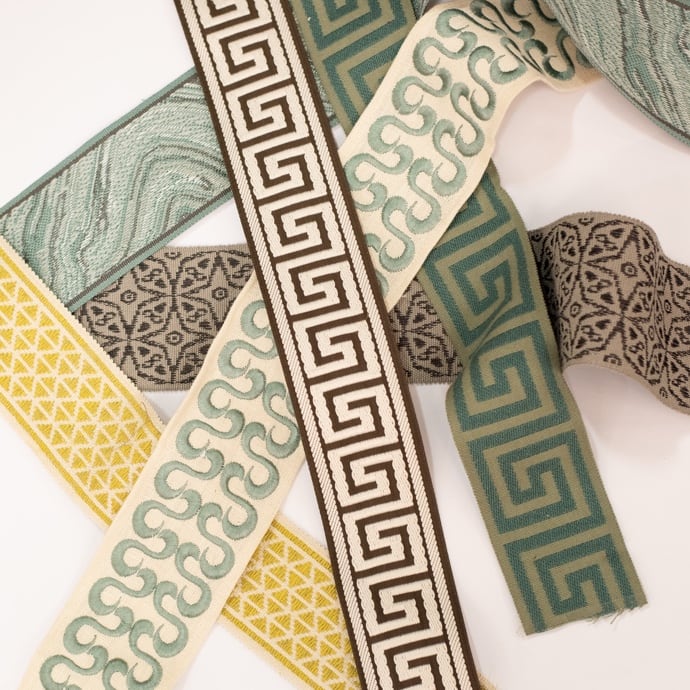
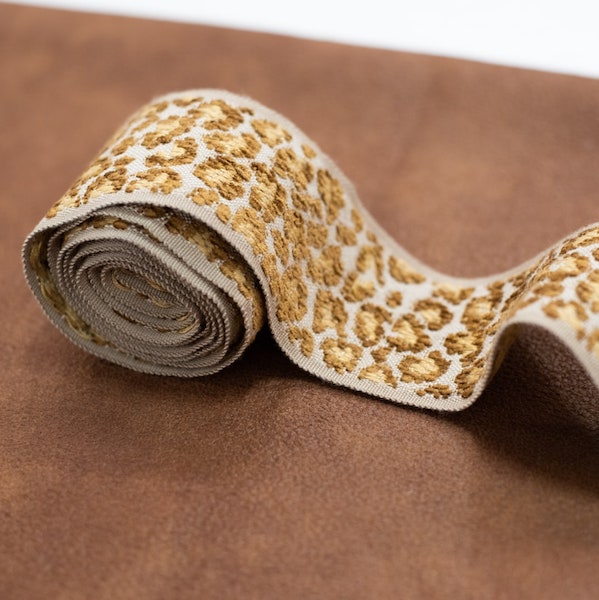
Fabric sets the tone, but trims complete the chair. A contrast welt can sharpen the profile. A self-welt finish often feels cleaner and more architectural. A bullion fringe may suit a traditional room, while a plain skirt or exposed leg can make the piece feel fresher.
When clients ask what makes furniture “designer quality,” this is often the answer. Not one dramatic decision. A series of restrained, correct ones.
Beyond the Fabric What Lies Beneath Matters
A wingback can have gorgeous fabric and still be disappointing if the interior hasn't been rebuilt properly. High-end furniture earns its reputation below the surface. That's true of luxury sofas, premium sectionals, and custom chairs alike.
The foundation separates heirloom work from decorative work
The best custom upholstered furniture still relies on disciplined construction. Premium American makers such as Verellen and Wesley Hall typically use 8-way hand-tied coil spring systems, delivering a 25 to 30 year lifespan, compared with 5 to 7 years for mass-produced foam-only units, according to this Buckhead upholstery and furniture reference on Houzz.
That gap explains why one chair feels supportive and graceful for years while another goes flat and unstable. Springs distribute weight differently. They recover differently. They also allow a seat to feel resilient rather than dead.
What to inspect before new fabric goes on
An upholsterer restoring a serious piece should evaluate more than the visible cover.
- Frame integrity: Hardwood joints need to be checked for looseness, old glue failure, and movement.
- Seat foundation: Springs, webbing, and deck construction determine comfort long before fabric enters the conversation.
- Padding profile: Good padding should support the body while preserving the intended lines of the chair.
- Edge definition: Arms, wings, and front rails need crisp shaping. Soft edges can make an expensive fabric look careless.
A proper rebuild often includes refreshing batting and cushion composition so the chair sits as well as it looks. That's especially important when the goal is to place the finished piece among other high-quality couches and designer furniture in an edited room.
Traditional shape, modern materials
One of the more technical challenges in wingback chair upholstery is adapting contemporary fabrics to older silhouettes. Traditional frames were often built with assumptions about how fabric would stretch, fold, and recover. Some newer materials are less forgiving.
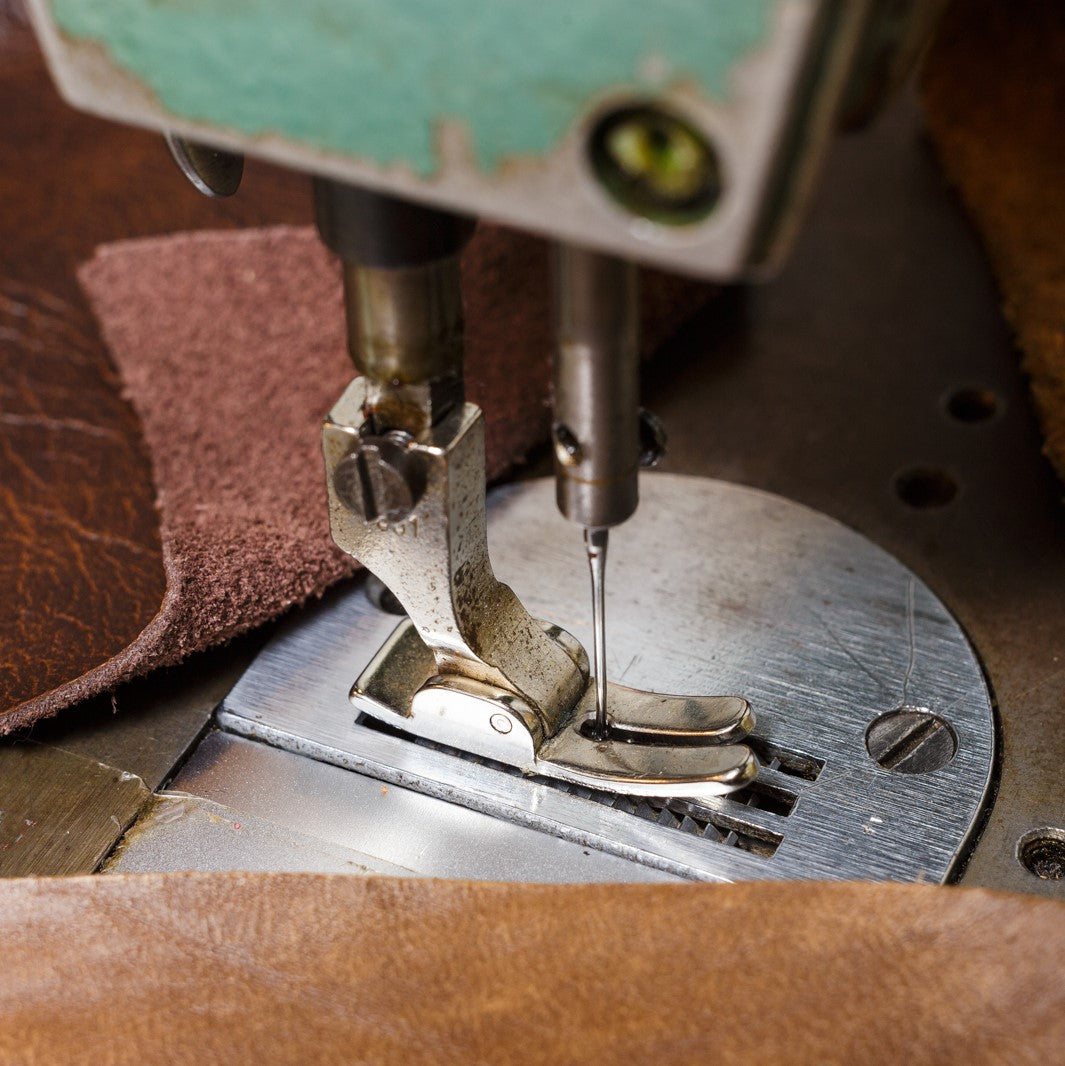
That's why stitching, seam placement, and thread choice matter. For anyone who wants a clearer sense of the craftsmanship involved, these upholstery sewing tips and techniques offer a useful look at how needle, thread, and handling affect the finished result.
A beautiful textile can't rescue a weak foundation. A strong foundation can make even a restrained textile feel exceptional.
That's the difference between re-covering and restoration. One changes appearance. The other restores performance.
Estimating Cost and Timeline for Your Project
By the time a client is seriously considering wingback chair upholstery, the first practical questions are usually cost and timing. Those are fair questions, and the right answer starts with transparency.
What the base investment looks like
The average cost to reupholster a wingback chair is about $1,021, made up of roughly $671 in labor and $356 for about 7 to 8 yards of standard fabric, based on documented upholstery projects summarized in this wing chair pricing breakdown. More complex work and premium materials can increase that total significantly.
That benchmark is useful because it frames the project accurately. A wingback isn't a slipcover job. It's labor-intensive, material-heavy upholstery with shaped components and exacting finish work.
For readers comparing costs, this article on how much reupholstery costs is also worth reviewing before you request proposals.
What changes the final number
Two chairs can look similar and price very differently. The variables are usually visible once the upholsterer evaluates the piece in person.
- Fabric choice: Standard upholstery fabric prices very differently from premium velvet, Belgian linen, leather, or performance textiles.
- Condition of the chair: If the padding, springs, deck, or joints need work, the scope increases.
- Detail level: Tufting, contrast welt, skirts, nailhead work, and matched patterns all demand more labor.
- Pairing projects: Some efficiencies can exist when two chairs are done together, but only if their needs are similar.
How to think about timing
A realistic schedule includes consultation, fabric selection, yardage confirmation, workroom queue, upholstery labor, and delivery. In the luxury market, the fabric decision often takes longer than the labor because clients want the choice to be right, not merely fast.
That's similar to other finish-heavy home updates. If you've ever used a planning tool like this cabinet painting estimation resource, you know that the visible line item rarely tells the whole story. Preparation, condition, and level of finish shape the project as much as the surface treatment itself.
The best upholstery timelines build in room for decisions. Rushed fabric choices are expensive.
For Atlanta, Buckhead, Alpharetta, and surrounding markets, it's smart to begin before a room renovation reaches the final styling stage. A custom chair should enter the room as a deliberate design element, not as an afterthought.
Styling Your Reupholstered Wingback Chair in Your Home
Once the chair returns, the design question changes. It's no longer whether the piece was worth restoring. It's where it should lead the room.

In a classic Buckhead or Sandy Springs interior
A wingback upholstered in a deep velvet, crisp linen blend, or quiet patterned weave can sit beautifully near a fireplace, between bookcases, or opposite one of the room's luxury sofas. In these homes, the chair often works best as a counterpoint to the larger seating pieces.
A well-scaled floor lamp, a small drinks table, and one excellent pillow are usually enough. Too many accessories make the chair feel decorated rather than composed.
In Alpharetta or Roswell homes with a lighter hand
A different approach suits newer homes and transitional spaces. Here, a wingback in Belgian linen or a disciplined performance fabric can soften a bedroom corner, anchor a reading niche, or bring shape to a room dominated by straight-lined case goods and premium sectionals.
The beauty of a restored wingback is that it contributes form as much as color. It can be the sculptural element in a room without shouting for attention.
As a statement furniture piece
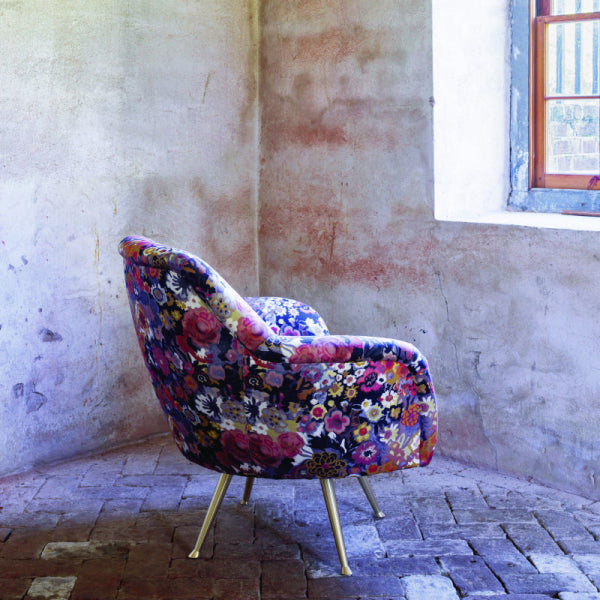
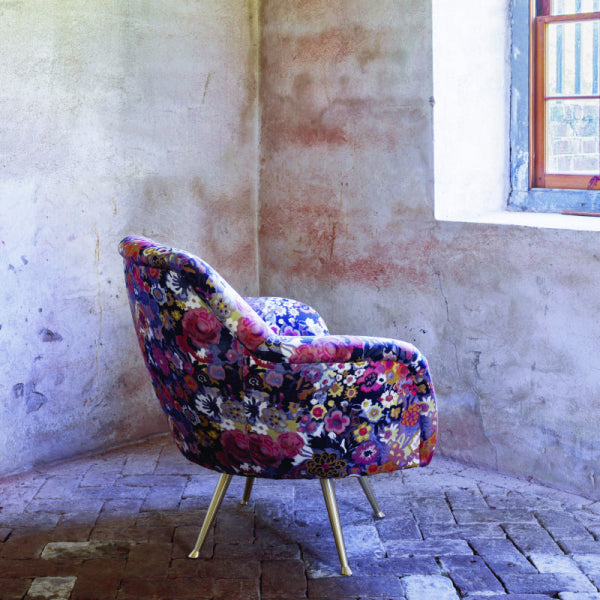
Some chairs should lead. A bold botanical, a refined plaid, or a saturated jewel tone can make the wingback the room's focal point, especially in a formal living room or entry sitting area.
Three styling moves tend to work:
- Let the chair contrast the sofa: If your main upholstery is quiet, the wingback can carry more personality.
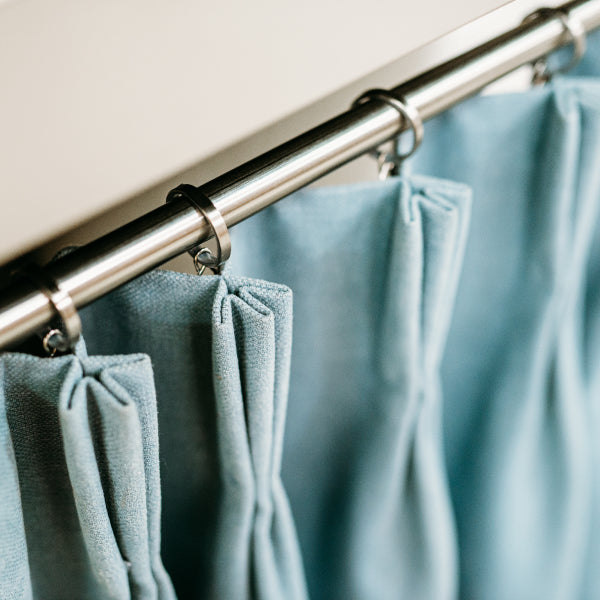
- Repeat one tone elsewhere: Echo the chair's color in art, drapery trim, or a pillow so it feels intentional.
- Keep nearby pieces disciplined: Clean side tables and restrained rugs help the chair hold center stage.
The most successful rooms don't treat the wingback as filler. They let it function like designer furniture should. Distinctive, confident, and fully integrated.
Begin Your Custom Upholstery Journey in Atlanta
A wingback chair deserves serious treatment because it asks more of the craft than many other pieces do. The lines are unforgiving. The curves test fabric choice. The comfort depends on construction that no one sees once the chair is complete.
That's why heirloom-quality restoration belongs in the same conversation as custom upholstered furniture, designer furniture, and other high-consideration purchases for the home. Buyers in Atlanta, Buckhead, Alpharetta, Roswell, Sandy Springs, Fulton County, and North Atlanta aren't merely looking for another seat. They're looking for quality that lasts, individuality that isn't cookie-cutter, and pieces that can stand beside the best luxury sofa brands without apology.

Questions worth asking before you commit
A good quote should answer more than price. It should tell you how the chair will be handled.
- Ask about the foundation: Will the upholsterer inspect springs, webbing, joints, and padding before finalizing the scope?
- Ask how fabric will be applied: This matters especially if you're considering velvet, Crypton, Libeco, leather, or a directional pattern.
- Ask what finish details are included: Welt, trims, cushion treatment, skirts, and leg refinishing all affect the final look.
- Ask who is guiding the material selection: The best results come from pairing an excellent frame with an appropriate textile, not just a fashionable one.
Why material access matters
For luxury projects, the finished chair is only as good as the options available to you at the selection stage. Access to reputable mills and a broad range of textiles makes better design possible. So does guidance from people who understand how fabrics from houses like Kravet, Fabricut, and Libeco behave once they leave the showroom and wrap a complex frame.
That combination of product range and informed advice is what turns a worn family piece into heirloom-quality furniture again.
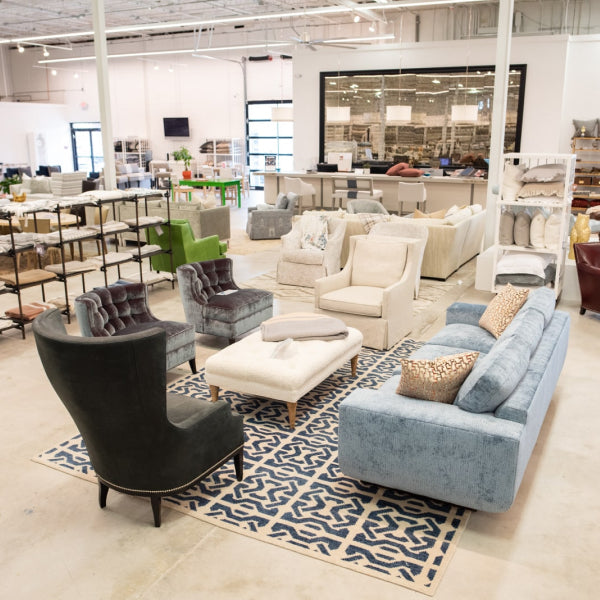
If you're ready to restore a wingback with the care it deserves, Lewis and Sheron Textiles offers Atlanta homeowners and designers access to premium fabrics, custom furnishings, and expert guidance from its Design Center. Bring in photos, room dimensions, or the chair itself for a complimentary consultation, and get clear answers on fabric selection, construction, finish details, and what it takes to create a piece that belongs among the finest interiors in Buckhead, Alpharetta, Roswell, Sandy Springs, and beyond.