


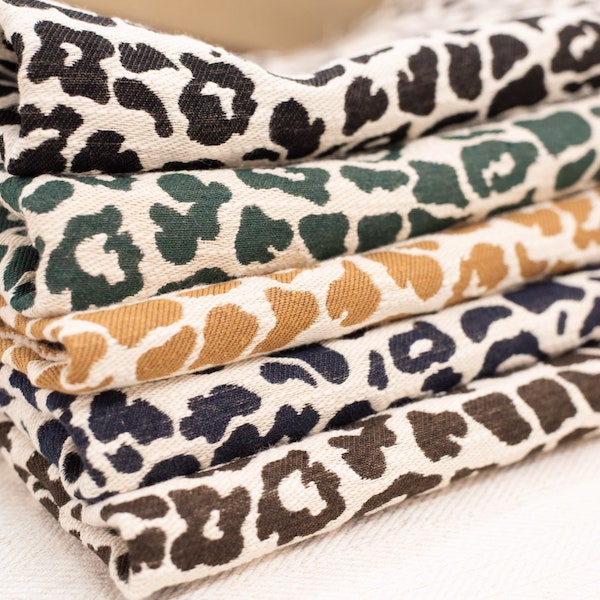
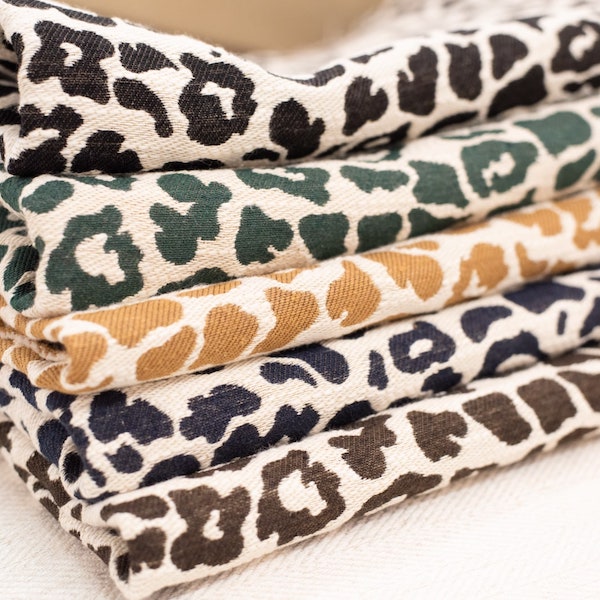
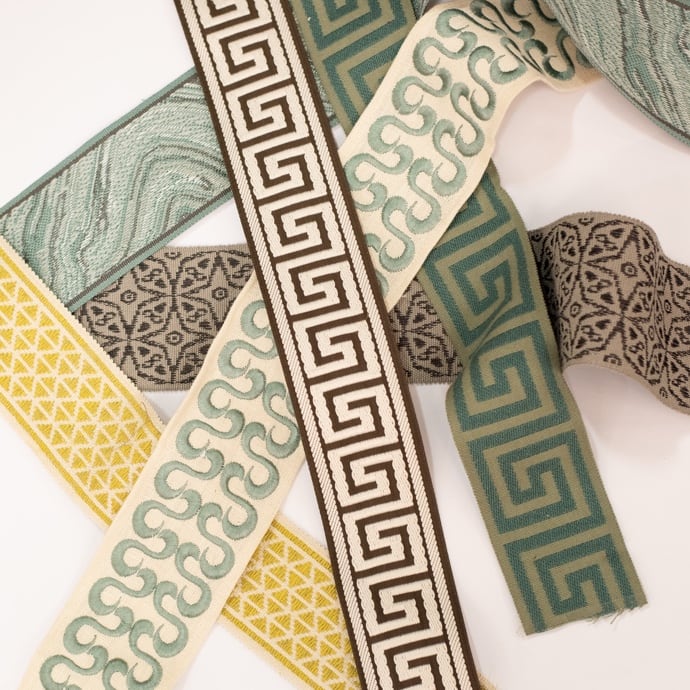

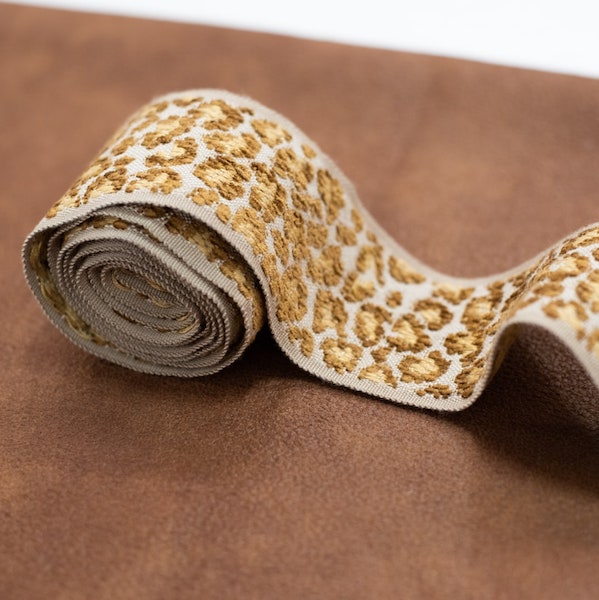
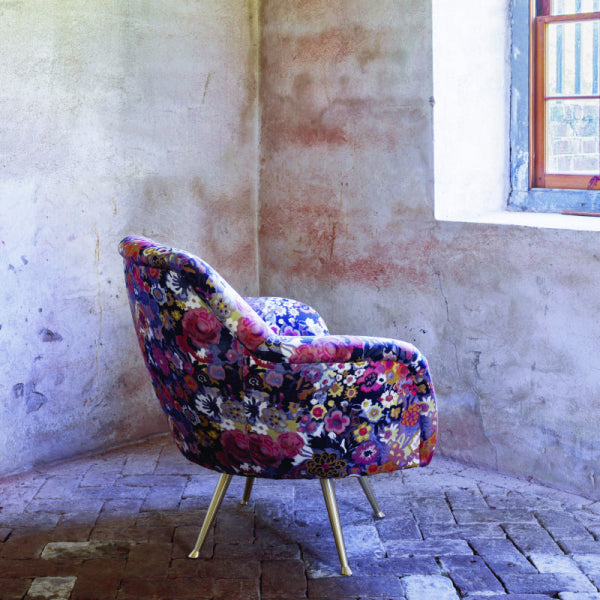









The chair is beautiful from across the room. Up close, the story changes. The seat fabric is threadbare, the arms show wear, and the color no longer belongs anywhere in your home.
That's where many Atlanta homeowners get stuck. You want to preserve the character that made the piece worth keeping, but you also want something you can live with. For a family heirloom, a designer accent chair, or a hard-won flea market find headed for a Buckhead living room or an Alpharetta study, the right fabric for antique chairs can turn a tired frame into one of the most compelling statement furniture pieces in the house.
Giving a Cherished Heirloom a New Beginning
A client usually starts with one sentence. “I love the chair, but I don't know what to do with it.”
Sometimes it's a carved side chair inherited from a grandmother. Sometimes it's a library chair with superb bones but fabric that has long since faded past charm. In homes across Atlanta, Buckhead, Roswell, and Sandy Springs, these pieces often sit in a corner because the owner is afraid of ruining them with the wrong update.
That hesitation is healthy. An antique chair isn't just another decorating project. It asks for a better decision than a quick recover from a chain workroom or a mass-produced slipcover approach used on high-quality couches or premium sectionals.
The good news is that reupholstery can be an act of preservation, not erasure. A well-chosen textile can respect the chair's age, sharpen its silhouette, and give it a new role in a modern room. It might become the jewel-toned reading chair in a North Atlanta den, the tailored occasional chair in a designer foyer, or the contrast piece that gives a room of luxury sofas and custom upholstered furniture some tension and depth.
If you're sorting out whether to restore, conserve, or fully reupholster, this guide on how to restore antique furniture is a useful companion. The opportunity is this. You're not just replacing old fabric. You're deciding how an heirloom-quality chair will live in your home now.
Balancing Historical Accuracy with Modern Durability
The biggest mistake is thinking you have only two options. One is strict historical accuracy, suitable only for formal display. The other is modern practicality, which leaves the chair looking overbuilt and oddly generic.
That's a false choice.

Decide how the chair will actually be used
A chair in a formal sitting room can tolerate a more delicate textile and stricter historical language. A chair beside the fireplace, in a bedroom corner, or near a family room conversation area needs different priorities.
Ask three practical questions:
-
Daily use or occasional use
If someone will sit in it most days, durability matters as much as beauty. -
Collector's piece or household piece
A rare chair may justify a more conservative approach. A family piece used in real life usually benefits from selective modernization. -
Design anchor or background support
Some chairs should read like jewelry. Others should unobtrusively support custom furniture Atlanta interiors without stealing focus from rugs, drapery, or artwork.
What to preserve even when the fabric changes
Historical integrity isn't only about the face fabric. It lives in the profile, seat height, padding depth, spring tension, arm shape, and edge finish.
Practical rule: If the chair's outline changes, the piece loses more character than most owners expect.
That's why silhouette preservation matters. Industry best practices explicitly warn that altering the overall shape is a costly mistake. While contemporary fabrics like Crypton offer longer wear cycles and stain resistance, the goal is to apply these high-performance textiles while maintaining the original frame's joints and silhouette, a frequent failure point where the chair looks “new” but loses its antique integrity, as discussed in this guide on choosing the right fabric for reupholstering furniture.
Where modern materials help and where they hurt
Modern performance fabrics can be excellent on antique frames. They're especially useful when the chair will sit in an active household where spills, sun exposure, and repeated use are real concerns. That makes them relevant not only to antique seating, but to anyone comparing custom chairs with mass-market designer furniture near me searches and wondering what separates durable luxury home furnishings from disposable pieces.
Still, some applications fail badly.
What works:
- Tight tailoring that follows the original lines
- Moderate hand and structure so the fabric doesn't puddle or sag
- Controlled cushioning that supports the old form rather than inflating it
What doesn't:
- Over-stuffing a slim antique back until it looks swollen
- Overly stiff textiles that fight the frame
- Bulky foam substitutions that flatten detail at corners, rails, and edges
A successful antique reupholstery job shouldn't announce itself as “updated.” It should make the chair look as though it has always belonged in the room.
For luxury homeowners in Roswell or Sandy Springs, the best result usually sits in the middle. Honor the chair's bones. Improve its livability. Keep the shape disciplined. That's the point where old furniture begins to feel current without becoming anonymous.
A Guide to Fabric Fibers and Weaves
Choosing fabric gets easier once you stop asking, “What's the prettiest swatch?” and start asking, “What does this fiber and weave ask the chair to become?”

Historically, material choices were much narrower than they are now. Horsehair in satin and damask weaves was the primary material for antique chair upholstery in the New England Empire Period, circa 1815 to 1840, due to its exceptional durability. The same historical record notes that natural fibers such as cotton, linen, and wool remained consistent across the 18th and early 20th centuries, with upholstery relying exclusively on natural fibers before synthetics were introduced, according to the University of Rhode Island research on historic upholstery fabrics.
Start with the hand of the cloth
The “hand” is how a fabric feels and behaves when you fold it, pinch it, and pull it over a curve. Antique chairs usually reward fabrics with enough body to upholster cleanly, but not so much rigidity that they resist the frame.
Think of it this way:
- Linen behaves like a crisp shirt. It's breathable, structured, and historically sympathetic.
- Velvet acts more like brushed light. It changes tone as the pile moves and gives carved frames dramatic depth.
- Damask carries pattern within the weave itself, which makes it elegant without relying on loud print.
- Brocade is more ornate and more formal. It suits chairs that are meant to be read, not merely used.
- Silk is refined and luminous, but it asks for a protected placement.
- Wool is one of the most practical choices. It has resilience, warmth, and a long tradition in upholstery.
Antique Chair Fabric Comparison
| Fabric Type | Aesthetic & Feel | Durability & Care | Best For |
|---|---|---|---|
| Linen | Crisp, dry hand, understated elegance | Strong natural fiber, can wrinkle, likes tailored upholstery | Neoclassical and lightly formal chairs |
| Velvet | Plush, directional pile, rich color depth | Needs attentive cleaning and placement | Statement chairs and jewel-box rooms |
| Damask | Woven pattern, formal, reversible character | Stable and decorative, benefits from skilled pattern placement | Empire, traditional, and formal parlor seating |
| Brocade | Raised pattern, opulent presence | Heavier cloth, decorative rather than casual | Showpiece antique chairs |
| Silk | Smooth, lustrous, refined | Delicate and best protected from harsh sun and friction | Low-use accent seating |
| Wool | Warm, resilient, textural | Strong performer for regular use | Library chairs, occasional seating, practical luxury |
Match the fabric to the chair's architecture
A carved French-style frame can carry more visual richness than a restrained Empire silhouette. A balloon-back chair often looks better in a fabric with fluid drape. A sharp, architectural frame benefits from a cloth with cleaner structure.
That's why fabric for antique chairs should be chosen in relation to line, not just color. A dramatic brocade on a modest frame can overwhelm it. A plain linen on a carved show chair can undersell the object.
For clients who want softness without using real fur accents or who are coordinating a chair with layered textiles in a luxury room, these tips for ethical luxury faux fur are worth reading. The same principle applies in upholstery. Surface texture only looks luxurious when the material has depth, finish, and discipline.
When modern blends make sense
Not every heirloom belongs in a museum-like setting. If the chair will sit near children, pets, or a frequently used breakfast room bay, modern blends and performance textiles can be smart choices, provided they don't distort the shape.
A practical selection process looks like this:
-
Study the frame first
Delicate chairs need supple cloth. Broad club-style antiques can accept denser fabrics. -
Choose the role second
Decorative chairs can carry fragile beauty. Everyday chairs need a stronger workhorse textile. -
Then compare swatches in daylight
Indoor showroom lighting flatters almost everything. Sunlight tells the truth.
If you want a broader look at practical upholstery options before narrowing down period fit, this guide to the best fabric for chair upholstery is a strong place to compare everyday performance with visual character.
Understanding Pattern Scale and Performance Ratings
A beautiful fabric can still be wrong for the chair. Usually the failure comes from one of two things. The pattern is too large for the frame, or the fabric's durability doesn't match how the piece will be used.

Pattern scale decides whether the chair feels refined
Antique chairs often have smaller seats, narrower backs, tighter arms, and more visual interruption than contemporary luxury sofas or premium sectionals. That means pattern repeat matters more than many buyers expect.
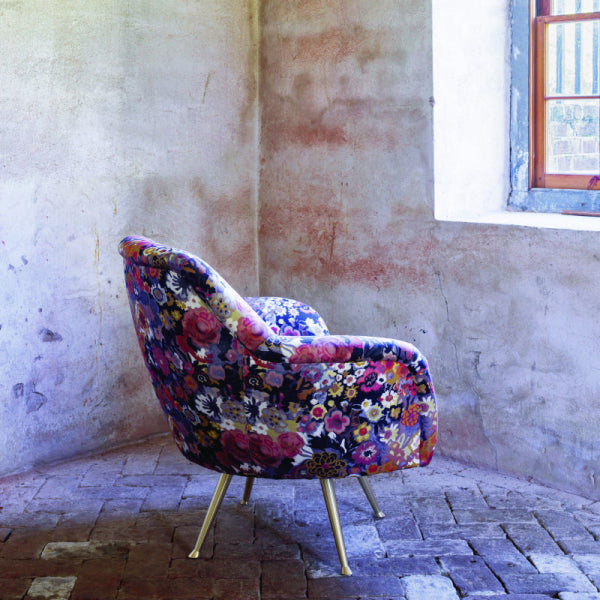
A large-scale botanical or geometric can work on a wing chair with generous surfaces. On a petite side chair, the same fabric may cut awkwardly at the crest rail, lose its motif on the seat, or make the chair feel visually top-heavy.
Use this rule of thumb:
- Small chairs look best with restrained repeats or texture-led fabrics
- Medium chairs can handle modest motifs with careful centering
- Large chairs give you room for bolder repeats and more theatrical layouts
Don't judge a patterned fabric from the memo sample alone. Ask to see enough of the repeat to understand what will happen across the full chair.
Performance ratings need context
The phrase many clients hear is double rubs. It's a durability measure tied to abrasion testing. The important practical point isn't to chase the highest number in every case. It's to choose a rating appropriate to the chair's life.
The available guidance in the upholstery space distinguishes decorative use from everyday residential use, and it also notes demand for high-rub-performance fabrics at 15,000+ double rubs for modern durability needs in active homes, particularly when owners still want to preserve the antique silhouette, as noted in the earlier discussion of performance-focused reupholstery concerns.
Here's how that translates in practice:
-
Decorative chair in a formal room
Prioritize beauty, drape, and authenticity over aggressive performance specs. -
Bedroom chair or occasional reading chair
Look for a balanced fabric that feels refined but won't wear prematurely. -
Daily-use family piece
Push performance higher, but keep the weave and cushioning compatible with the frame.
What makes a fabric feel designer quality
Designer quality isn't one feature. It's a combination of visual depth, clean finishing, stable weaving, thoughtful backing, and a believable relationship between the cloth and the furniture form.
A cheap fabric often reveals itself in three ways:
- the repeat looks muddy,
- the color lacks depth,
- the hand feels papery or artificially slick.
A better fabric has enough richness to support the room around it, whether that room includes custom upholstered furniture, statement furniture pieces, or other heirloom-quality furniture. On a fine antique chair, quality shows at the seams, on the curves, and in how the textile settles after upholstery. If it looks strained or flat after installation, the problem often began at fabric selection.
Calculating Yardage and Selecting Tailored Details
Yardage is where many antique chair projects go sideways. Owners buy based on a generic estimate, then discover too late that the chair's curves, outside back, arm panels, and matching requirements demand more fabric than expected.
That problem gets worse with patterned or textured textiles.
Why standard estimates fail
A simple dining seat is one thing. An antique chair with a shaped crest, rolled arms, tight corners, and a separate cushion is another.
One common rule of thumb is 0.5 yards for a simple seat, but that rule fails for antique frames. Enthusiasts choosing whimsical or textured fabrics such as woven jacquards often need significantly more cut yardage because pattern matching matters, and because a sharp cut edge can ruin the vintage look, as explained in this upholstery yardage discussion.
A better way to estimate
Use a frame-by-frame approach rather than a generic furniture formula.
-
Count every upholstered surface
Inside back, outside back, seat deck, cushion faces, boxing, arm fronts, arm tops, and dust cover areas all affect yield. -
Check the repeat before you commit
Large or directional patterns often force extra cuts so motifs land in the right place. -
Plan for turning and tailoring
You need enough fabric to wrap edges cleanly and avoid skimpy finishing. -
Add room for errors and future repairs
Antique work is less predictable than factory furniture. Having reserve cloth can save a project later.
When a chair has unusual shaping, I'd rather see extra fabric on the shelf than a nearly finished piece with no way to match a missed panel.
The details that elevate the chair
Fabric is only part of the result. Trims and finishing details decide whether the chair feels restored or merely recovered.
Consider:
- Self-welt for a neat, quiet edge
- Contrast welt for definition on carved or painted frames
- Gimp or braid when a period look calls for a decorative finish
- Buttons only when they fit the original language of the chair
- Skirts and fringe with caution, since they can either complete the piece or date it badly
The best fitted detail is the one that looks inevitable on that frame. If a trim draws more attention than the chair itself, it's too much.
Working with Custom Upholstery Experts in Atlanta
The fabric can be perfect and the project can still fail in the workroom. Antique upholstery is technical work. It asks for judgment about springs, padding, edge build-up, wood movement, and proportion. That's why high-consideration buyers searching for custom furniture Atlanta or designer furniture near me should treat the upholsterer as carefully as they treat the textile.
In affluent Atlanta neighborhoods like Buckhead and Alpharetta, luxury homeowners prioritize heirloom-quality furniture and premium sectionals that can hold up to everyday use while maintaining a designer aesthetic, specifically choosing materials and textures that age well, as noted in this piece on modern furniture preferences in Atlanta-area homes.
What to ask before handing over the chair
A qualified upholsterer should be comfortable discussing more than fabric application.
Ask questions like:
- Have you worked on antique frames with original shaping?
- How do you preserve the chair's silhouette during rebuilds?
- Do you document what's inside the chair before replacing materials?
- Can you match period-appropriate details such as seams, welts, or button placement?
- How do you handle loose joints or frame repairs before upholstery begins?
The answers matter because antique chairs often need coordination between structural repair and upholstery. Treating them as separate problems can produce a beautiful outside wrapped around an unstable inside.
Why DIY often disappoints
DIY efforts usually fail in the invisible places. The seat crown ends up wrong. The outside back puckers. The foam is too thick. The arms lose definition. The finished chair may look passable in a photo, but in the room it no longer reads as an antique.
A valuable chair doesn't need enthusiasm. It needs restraint, measurement, and a workroom that knows when not to modernize.
For homeowners in Roswell, Sandy Springs, Fulton County, and North Atlanta, professional collaboration is the safer route when the piece has sentimental, decorative, or monetary value. If you're comparing providers, this overview of the best upholstery services in Atlanta can help you judge who understands antique work versus who mainly handles straightforward modern recovers.
That distinction matters. The same shop that does acceptable work on high-quality couches might not be the right fit for a carved nineteenth-century armchair.
Your Atlanta Destination for Fabric and Furnishings
A successful antique chair project rarely depends on one decision. It's the result of several good decisions made in sequence. The right fabric. The right scale. The right durability. The right tailoring. The right hands in the workroom.
That's why discerning homeowners and interior designers in Atlanta tend to value a design resource that can support the whole process, especially when they're also furnishing a room with luxury sofas, designer furniture, premium sectionals, custom chairs, rugs, and drapery. A chair doesn't live alone. It has to belong to the room around it.

For antique seating, that means access to fabrics with different hands, patterns, and performance levels. It also means seeing materials in person, because luxury home furnishings are tactile decisions. The difference between “good enough” and “designer quality” often shows up in the weave density, finish, and color depth you can only judge at arm's length and in natural light.
It also helps to work with a source that understands the full spectrum of interiors. Some clients are restoring a single heirloom. Others are building a complete room in Buckhead or Sandy Springs and want one antique chair to act as the bridge between old architecture and new custom upholstered furniture. The needs are different, but the standard should be the same. Quality over convenience. Fit over trend. Longevity over shortcuts.
If you're investing in statement furniture pieces or trying to decide where to buy premium furniture in Atlanta, the strongest results usually come from places that respect both craftsmanship and customization. That's what separates lasting interiors from rooms built around whatever happened to be available fastest.
For homeowners and designers who want exceptional fabric for antique chairs, custom upholstered furniture, and heirloom-quality furnishings in Atlanta, Lewis and Sheron Textiles offers a rare combination of depth and service. Their Atlanta Design Center brings together premium in-stock fabrics, cut-yardage options from respected mills, expert reupholstery, custom drapery, and made-to-order American-crafted furniture, all backed by complimentary in-house design help when shopping. If you're in Buckhead, Alpharetta, Roswell, Sandy Springs, or anywhere in Fulton County and North Atlanta, it's a smart place to start when the goal is a room that feels bespoke, enduring, and distinctly your own.