



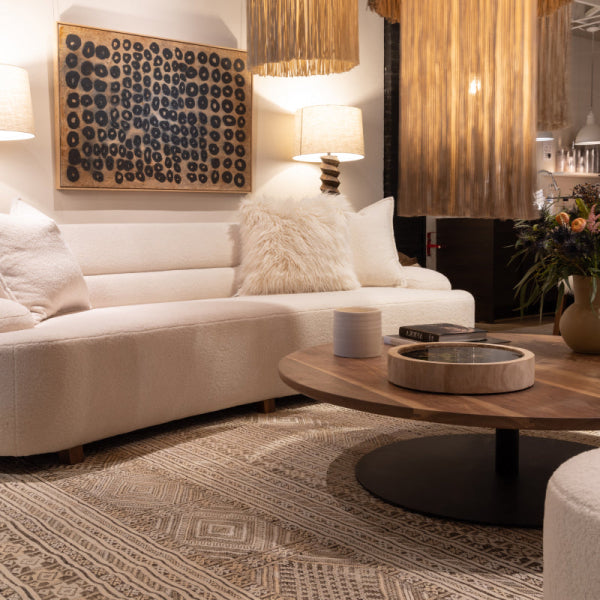
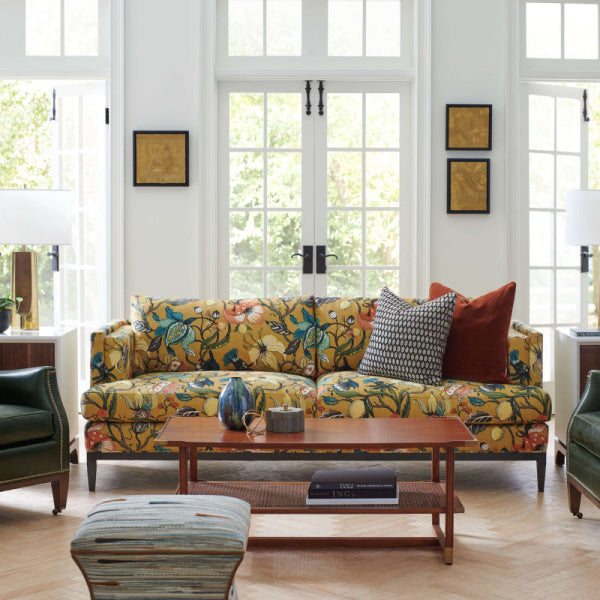









You've already done the expensive part. You chose the custom sofa, invested in the rug, selected the lighting, and maybe even upgraded to premium sectionals or high-quality couches that suit the room. Then the living room still feels unresolved.
That's usually the end table problem.
I see it constantly in luxury interiors across Atlanta, Buckhead, Alpharetta, Roswell, and Sandy Springs. A homeowner buys beautiful primary pieces, then drops in an accent table that's either too small, too trendy, too flimsy, or unrelated to the architecture of the room. The result is subtle, but damaging. The room loses polish. The seating group looks less intentional. Expensive furniture starts reading as disconnected furniture.
A well-chosen traditional end table fixes that fast. Not because it's old-fashioned, but because it brings order, craftsmanship, and permanence to a space that may otherwise feel overdesigned or underfinished. The best traditional end tables don't just hold a lamp or a drink. They anchor the edge of a seating arrangement, add visual authority, and introduce the kind of detail mass-market furniture rarely gets right.
If you're shopping for luxury furniture in Atlanta, or searching for designer furniture near me because your room is close but not complete, this is the category worth slowing down for. End tables are small pieces with outsized impact. Choose well, and they make your sofa look better, your layout work harder, and your living room feel finished for years, not for one trend cycle.
The Finishing Touch Your Luxury Living Room Is Missing
A client in Buckhead once had everything right except the pieces at the ends of the sofa. The room had a custom-fitted sofa, a handsome rug, strong drapery, and lighting that belonged in the house. But the side tables were light, generic, and forgettable. They looked like placeholders.
That one mistake flattened the room.
As soon as we replaced them with traditional end tables in a richer wood tone, with more substance and better proportion, the room settled. The sofa looked more expensive. The lamps looked intentional. The whole seating group gained structure. Nothing else changed.
That's why I push clients to stop treating end tables like an accessory purchase. In a luxury living room, they're not filler. They're part of the architecture of the furnishing plan. A good traditional table gives the eye a stopping point. It frames upholstery. It adds craftsmanship where modern seating can sometimes feel too broad, too smooth, or too visually quiet.
Traditional end tables work best when they act like companions to the seating, not decorative objects floating nearby.
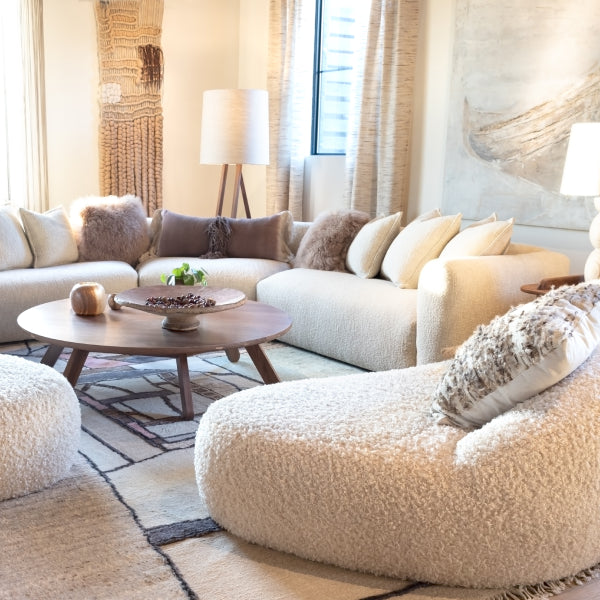
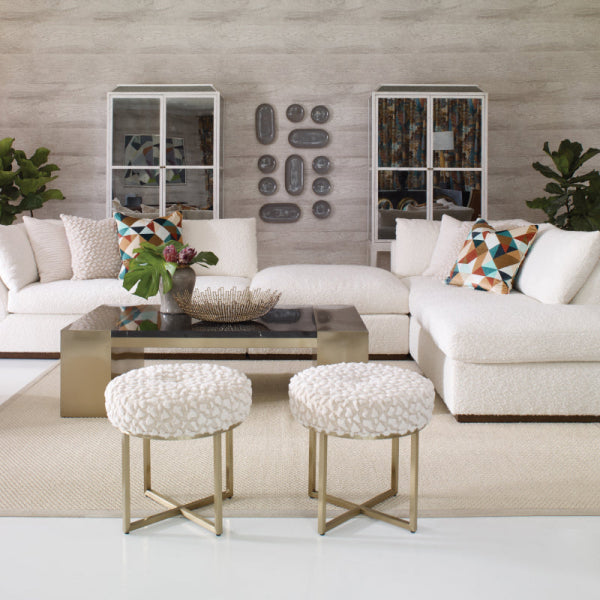
This matters even more in homes built around premium sectionals, custom upholstered furniture, and deep modern sofas. Those larger silhouettes need contrast. They need a piece with detail, shape, and presence beside them. That's where traditional furniture earns its place.
If you want heirloom-quality furniture, don't ignore the smallest case pieces in the room. A great end table can do what a throw pillow never will. It can add permanence. It can add grace. It can make the room feel collected instead of purchased.
Decoding the Language of Traditional End Table Styles
Most buyers know when they like a traditional table, but they can't always explain why. That's a problem when you're shopping for high-end furniture or discussing options with a designer. You need a vocabulary.
Traditional end tables aren't one look. They're a family of looks. Once you know the visual language, your decisions get much easier.

Queen Anne for softness and grace
If your room feels heavy, Queen Anne is often the answer. This style is recognized by graceful curved legs and a lighter, more fluid silhouette. It softens a room with substantial upholstery and brings refinement without looking stiff.
Choose this direction when your sofa has a skirt, rolled arms, or a gentler profile. It also works beautifully when you want a feminine note in a room with heavier woods or strong architectural trim.
Chippendale for drama and detail
Chippendale has more edge. It's more carved, more assertive, and usually more decorative. If you like pieces that feel collected and commanding, this is a strong lane.
Use it carefully. A Chippendale-inspired table beside a very busy sofa can feel crowded. But beside a precisely crafted custom chair or a clean-lined luxury sofa, it creates tension in the best way. It says the room has personality.
Federal for restraint
Federal style is what I recommend to clients who want traditional furniture but hate fussiness. The lines are cleaner. The ornament is controlled. You may see delicate inlay, balanced proportions, and a sense of precision rather than flourish.
This is one of the smartest choices for transitional homes in North Atlanta. It bridges classic architecture and modern upholstery without forcing either one to compromise.
Hepplewhite for elegance without weight
Hepplewhite tables tend to feel airy. Tapered legs and geometric shaping make them ideal when you want a traditional note that won't visually crowd a room. They're especially useful in spaces where the seating is deep or substantial and you need something elegant at the perimeter.
A quick way to narrow your choice:
| Style | Best for | Overall effect |
|---|---|---|
| Queen Anne | Softer rooms, curved upholstery | Graceful and warm |
| Chippendale | Collected interiors, bold accents | Decorative and formal |
| Federal | Transitional luxury spaces | Tailored and disciplined |
| Hepplewhite | Lighter visual compositions | Elegant and refined |
One historical point matters here. Traditional end tables developed in close relationship to seating layouts and room symmetry, and even when furniture became more simplified in the mid-century modern era from the 1940s to the 1970s, the basic role stayed the same beside sofas and chairs, as noted in this furniture-history overview of mid-century modern end tables.
That continuity is why these styles still work. They were never random decorative pieces. They were designed to complete a seating group.
Choosing Heirloom-Quality Materials and Finishes
If you want designer quality, start with what the piece is made of and how it's built. Style matters. Construction matters more.
Too many end tables look traditional from across the room and disappoint the second you get close. The finish is flat. The hardware feels light. The joinery is crude. The drawer drags. That's not luxury home furnishings. That's styling bait.
Traditional end tables are usually defined by construction and proportion, not just ornament. Industry guidance describes them as favoring rich woods, curved legs, inlaid tops, decorative hardware, and drawer storage that adds function without taking up more floor space, as outlined in this end table construction guide.

The woods worth paying for
Mahogany, cherry, and walnut remain the benchmark because they age with dignity. They carry depth in the grain, take finish beautifully, and develop character instead of merely showing wear. In a serious room, that matters.
By contrast, tables made to imitate those woods often look acceptable on day one and tired not long after. The difference is especially obvious next to custom upholstered furniture, premium sectionals, and statement furniture pieces. Once the seating is good, weak case goods stand out immediately.
Details that separate designer furniture from mass production
Look for these signs of quality:
- Substantial top construction that doesn't feel hollow or flimsy when you touch it.
- Drawers that glide cleanly and close without rattle.
- Hardware with weight and finish integrity, not bright, lightweight pieces that look swapped in at the last minute.
- Inlay or veneer work used decoratively, not as camouflage.
- Legs and aprons with crisp shaping, especially on more formal traditional silhouettes.
Practical rule: If the table only impresses you from six feet away, keep shopping.
A finish should also work with the room, not fight it. If your home has hardwood floors, coordinate the wood tone rather than trying to force an exact match. Undertone matters more than sameness. If you're unsure how sheen and stain interact with existing flooring, Savera's floor finish recommendations are a useful reference point for understanding finish character.
Reclaimed and antique-inspired character
Some clients want a cleaner traditional table. Others want visible age, patina, and a sense of history. Both can work. What matters is honesty in the finish. Distressed should feel earned, not factory-manufactured.
If you're drawn to warmer, storied wood surfaces, this look at a reclaimed wooden side table is a helpful example of how texture and age can add substance without feeling rustic.
My advice is simple. Buy the table that improves with time. Skip the one that peaks under showroom lighting.
Mastering Scale and Proportion for Modern Luxury Seating
At this point, a common mistake is made.
They buy a traditional end table they love, place it next to a deep custom sofa or a modern sectional, and suddenly the table looks either stranded or suffocated. The issue usually isn't style. It's proportion.
Traditional end tables are typically sized to relate directly to seating. One major home-furnishings guide notes that they usually stand 18 to 28 inches tall with a common width of 14 to 24 inches, and that they should sit close to sofa arm height, often around 25 inches for a standard sofa, according to this end table sizing guide.

Height matters most
If the table is too low, it feels apologetic. If it's too high, it looks clumsy and is annoying to use. The right height lets someone sitting down reach naturally for a book, a lamp switch, or a drink without adjusting their posture.
That's why I tell clients to begin with the arm height of the sofa or chair. Don't begin with the table. Begin with the seating.
For modern luxury seating, this matters even more because many sofas are deeper, broader, and visually heavier than older silhouettes. A delicate traditional table can still work, but only if the height relationship is disciplined.
A traditional table beside a contemporary sofa should look intentional, not accidental. Height is what makes that happen.
Visual weight matters just as much
A narrow-leg table can disappear beside a broad-arm sectional. A cabinet-style end table can overwhelm a trim chair. You're balancing mass, not just dimensions.
Use this quick pairing guide:
| Seating type | Better traditional table choice | What to avoid |
|---|---|---|
| Deep modern sofa | Table with stronger top, drawer, or apron presence | Spindly legs with no visual substance |
| Premium sectional corner | Rounded or lighter traditional profile | Bulky cabinet form that crowds the angle |
| Custom lounge chair | More delicate legged table | Thick blocky table that dominates |
| Tailored luxury sofa | Federal or Hepplewhite style | Over-carved piece with too much ornament |
The smartest way to mix old and new
If your sofa is modern, let the end table bring the detail. If your seating is already formal, keep the table quieter. You want contrast, not competition.
That's why classic forms often work beautifully in contemporary interiors. They add shape, wood tone, and hand-finished character that many newer upholstered pieces lack. Done right, the pairing feels layered, not themed.
For a broader look at building rooms that stay relevant beyond a single furnishing cycle, this piece on creating a timeless living room is worth reading.
What I recommend in real projects
In Buckhead and Alpharetta homes, where living rooms often have larger footprints and more substantial seating, I usually lean toward traditional tables with a little more authority. Not oversized. Just credible.
That may mean a thicker top, a drawer, stronger legs, or a table with enough finish depth to hold its own against custom upholstery and large-scale rugs. The mistake is assuming a traditional table must be visually fragile. It doesn't. It just needs to be well-bred.
Practical Considerations for Function and Flow
A beautiful end table that doesn't work in daily life is a bad purchase. Luxury furniture should serve the room, not just photograph well.
For traditional end tables, the key sizing benchmark is height matching. The tabletop should generally sit within 2 inches of the arm height of the adjacent sofa or chair, with common heights around 22 to 26 inches. Typical width runs 12 to 24 inches and depth 18 to 28 inches, based on these end table dimension guidelines.
Decide what the table needs to do
Start with actual use, not style fantasy.
- Lamp duty: If the table will hold a lamp every day, the top needs enough usable surface left over for a drink or book.
- Storage duty: A drawer is worth having if remotes, chargers, reading glasses, or coasters otherwise drift around the room.
- Concealment duty: A cabinet-style traditional table is useful when you want the room to stay calm and uncluttered.
- Display duty: If the table is mostly visual, you can prioritize shape and finish over storage.
Often, at least two of those functions are needed, not one.
Don't waste surface area on ornament
Ornate traditional tables can disappoint. Carved edges, raised galleries, and dramatic shaping may look elegant, but they can reduce practical top space fast. If you use the room daily, choose a table with a flat, usable surface.
That's especially important in family rooms with high-quality couches and premium sectionals. Those rooms get lived in harder. The table should keep up.
Buy for the hand, not just the eye. You should be able to set something down easily without navigating decoration.
Protect circulation
A traditional end table should contribute to flow, not become a collision point. Tables with generous curves or softened corners often work better in active rooms than sharply projecting carved forms.
If the room already has a large coffee table, substantial sofa arms, and accent chairs, keep the end table disciplined. The room doesn't need another object competing for square footage. It needs a functional edge piece that makes the seating more usable.
My rule is simple. If you have to sidestep the table every time you move through the room, it's too much table. The best pieces feel present when you need them and invisible when you don't.
Styling and Pairing Advice for Timeless Interiors
Traditional end tables look best when they create tension with the room in a controlled way. That's what gives an interior depth. If everything matches, the room feels staged. If nothing relates, it feels careless.
The sweet spot is intentional contrast.
The big design challenge, and one most buying guides ignore, is how to keep a traditional silhouette functional beside deeper modern sofas, higher lounge chairs, or sectional corners without making the room feel cramped. That gap in guidance is exactly why so many otherwise beautiful rooms miss the mark, as discussed in this perspective on choosing end tables for real-life use.
When to use a matched pair
A pair of traditional end tables still works beautifully in a formal living room. In Buckhead, that might mean a symmetrical seating arrangement with two lamps and a sofa centered between them. It's classic for a reason. It gives the room balance and calm.
Use matching tables when the architecture is formal, the upholstery is precise, and the room wants order.
When one table is better than two
In a more relaxed Roswell family room or a Sandy Springs den, I often prefer one standout traditional table and one quieter companion piece. That approach loosens the room without abandoning discipline.
You might place a more detailed wood end table next to the primary sofa arm, then use a simpler drinks table or smaller accent table elsewhere. That keeps the room from looking too rehearsed.
Mixing materials without losing the thread
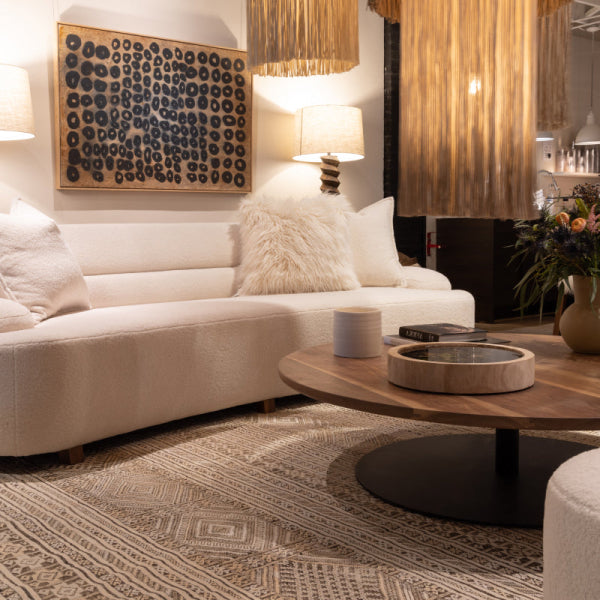
Traditional wood tables pair especially well with modern upholstery in linen, velvet, boucle, or performance fabric because they add warmth and age to cleaner lines. The room feels richer when every piece doesn't come from the same stylistic sentence.
A few pairings I like:
- Custom sofa in a clean silhouette + Federal end table for a refined transitional look
- Deep sectional + lighter Hepplewhite-inspired table to reduce visual heaviness
- Club chair + more decorative carved table to create a moment of intimacy
- Neutral room + dark wood traditional table to give the seating group a backbone
Accessories matter too. If you want a soft glow and a sculptural accent on an end table, you might explore unique selenite décor as a complement to traditional wood and brass finishes.
The best rooms don't feel too correct
That's the point worth remembering. A timeless interior isn't a period room. It's a room with memory, contrast, and restraint. Traditional end tables bring history and permanence. Modern luxury seating brings comfort and relevance. Together, they create the kind of interior people remember.
Find Your Perfect End Table in Atlanta
If you're serious about building a refined living room, don't buy your end tables as an afterthought. Shop for them the way you shop for a sofa. Check the scale. Inspect the finish. Open the drawer. Look at the underside. Ask where it was made. Ask how it will age.
That's especially important if you're searching for luxury furniture in Atlanta, custom furniture Atlanta, or designer furniture near me and you want more than whatever happens to be trending on a showroom floor. Traditional end tables are small pieces, but they reveal everything about quality. Cheap construction hides badly in this category.
For buyers in Buckhead, Alpharetta, Roswell, Sandy Springs, and across Fulton County, the best path is usually one of three options. Find a made-to-order table with the right proportions. Source a distinctive piece with enough craftsmanship to justify its place next to high-end seating. Or revive a family piece that already has character and pair it with new upholstery.

That last option is often overlooked. Reupholstering custom chairs or investing in a new luxury sofa doesn't mean every wood piece in the room should be replaced. Some of the strongest interiors in North Atlanta combine fresh custom upholstered furniture with older case goods that bring weight and memory.
If you're comparing destinations for luxury furniture stores in Atlanta, look for a place that can help you do more than buy a table. You want design guidance, customization options, upholstery expertise, and a real understanding of how case goods and seating work together.
That's how you avoid the expensive mistake of buying a beautiful object that never quite belongs in the room.
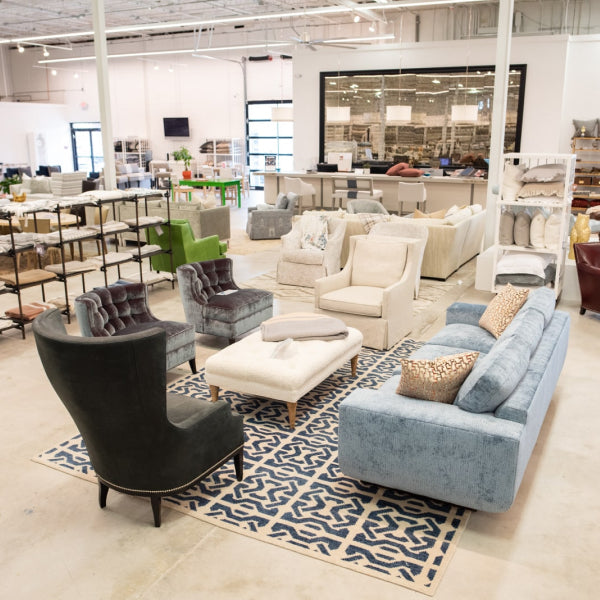
If you're ready to pair heirloom-quality traditional end tables with custom sofas, premium sectionals, or designer upholstery, Lewis and Sheron Textiles is the place to start. Their Atlanta Design Center offers luxury home furnishings, American-crafted custom furniture, expert reupholstery, and complimentary in-house design help, so you can choose pieces that fit your room in scale, finish, and function, not just in theory.