














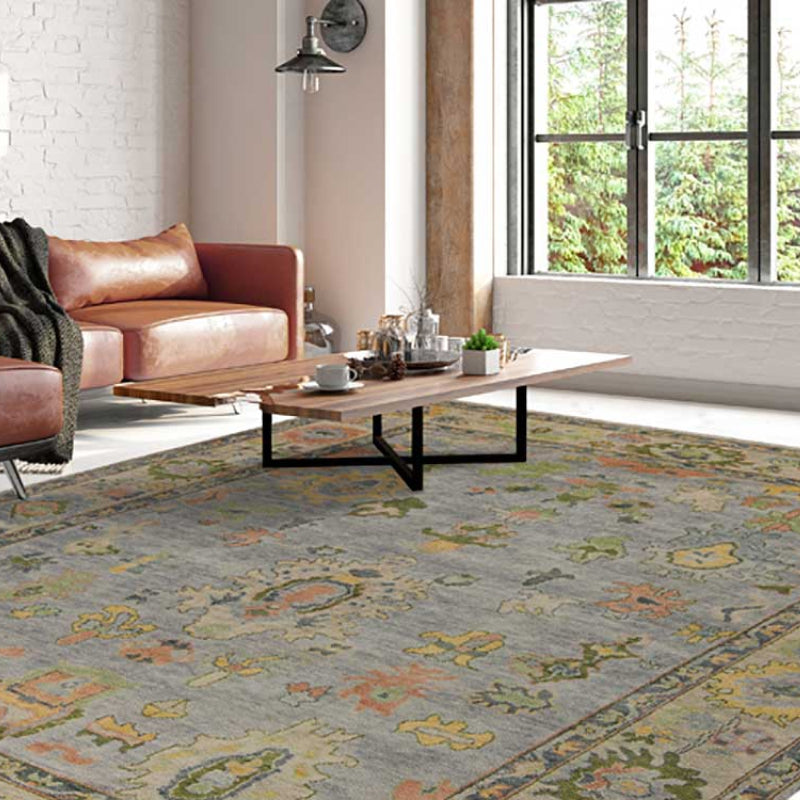
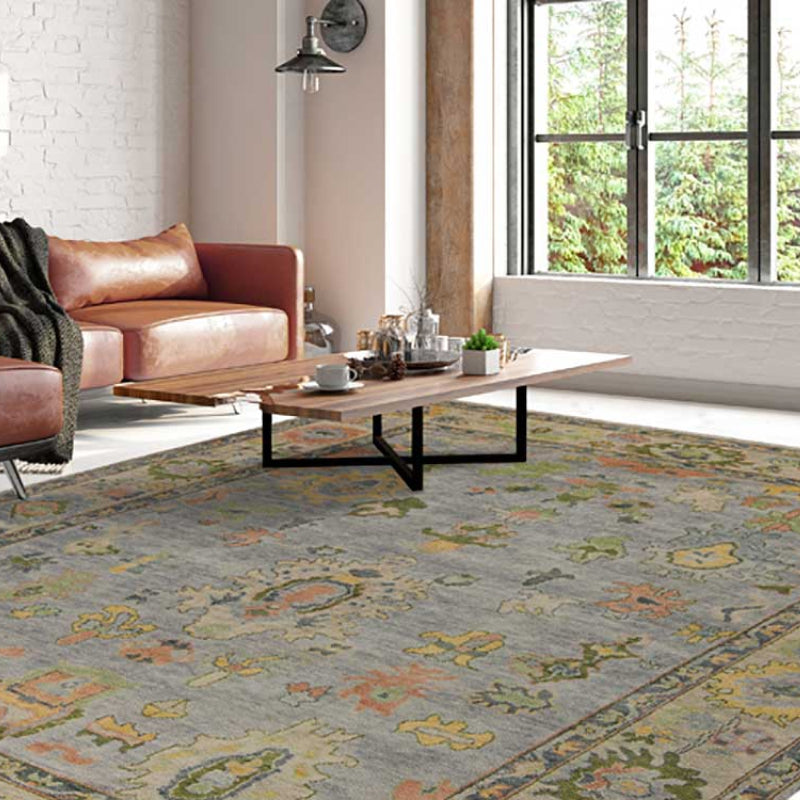
You've bought the beautiful outdoor seating. The teak frames are right, the upholstery looks well-fitted, and the porch finally feels worthy of evening cocktails instead of folding chairs. But the space still reads like furniture on hardscape, not a finished room.
That gap is usually the floor plane.
In Atlanta, Buckhead, Alpharetta, Roswell, and Sandy Springs, outdoor living has become an extension of the house, not an afterthought. A teal outdoor rug can do what side tables and throw pillows can't. It gives the eye a boundary, gives the furnishings a relationship to one another, and gives the whole setting a point of view. Chosen well, it doesn't feel trendy. It feels composed.
Beyond the Patio Set The Soul of an Outdoor Room
A situation I see often goes like this. A homeowner in North Atlanta invests in handsome outdoor pieces, often in warm neutrals, charcoal, or natural wood. The architecture is strong. The furniture is substantial. Yet the porch still feels unfinished because every piece is floating independently.
The right rug fixes that. Not because it adds color alone, but because it establishes the room's center of gravity.
Why teal works in refined outdoor spaces
Teal has more range than most clients expect. In a covered Buckhead terrace, it can read deep and refined against limestone, black metal, and pale upholstery. On a brighter Alpharetta patio, it can soften sun-bleached surroundings and pull the natural elements into the composition, especially when there are mature plantings, pool water, or blue-green views beyond the seating area.
A strong teal ground also helps expensive furniture look intentional. Premium sectionals, custom lounge chairs, and sculptural occasional tables need visual structure under them. Without it, even beautiful pieces can look scattered.
A luxury outdoor room isn't built by collecting attractive objects. It's built by making those objects belong to one another.
What changes when the rug comes first
Designers often talk about layering, but outdoors, the rug is less about layering and more about anchoring. Once a teal rug is in place, the rest of the decisions get sharper.
- Seating feels grouped: Sofas and lounge chairs stop drifting apart visually.
- Materials make more sense: Teak, powder-coated metal, stone, and upholstery all have a common backdrop.
- The palette looks edited: Teal gives you a bridge between warm woods, sandy neutrals, white cushions, and darker accents.
If you're looking for additional patio composition ideas, Vinson Fine Furniture patio design offers a useful perspective on building an outdoor setting that feels visually complete rather than merely furnished.
The difference between decorated and designed
On a Roswell screened porch or a Sandy Springs pool terrace, the rug often determines whether the space feels decorator-ready or architecturally integrated. That's the standard worth aiming for. A good outdoor room should feel as settled as your living room, even if children come through wet from the pool or guests move chairs around all weekend.
That's why I don't treat a teal outdoor rug as a finishing accessory. I treat it as the piece that tells every other piece where to live.
What Makes an Outdoor Rug Truly Luxury Grade
A luxury outdoor rug earns its place after a full Atlanta summer. It keeps its color, dries without trouble, cleans up well after entertaining, and still looks appropriate beside tailored furniture instead of reading like a pool accessory.
That standard starts with construction.
Start with fiber, then ask how it was colored
Outdoor rugs in teal are usually made from polypropylene, polyester, acrylic, or recycled performance fibers for a reason. These materials handle sun, moisture, and frequent cleaning far better than absorbent natural fibers. The more important question is how the color was built into the rug.
For a saturated teal, solution-dyed fibers are usually the better specification because the pigment is introduced before the fiber is formed. That gives the color a stronger chance of holding up through UV exposure, rain, and routine abrasion. By contrast, fibers dyed later in the process can lose richness sooner, especially on open patios and pool decks. Sunbrella's fabric performance guidance is useful here because it explains why solution-dyed construction matters in outdoor settings.
If teal is the feature you are paying for, dye method belongs near the top of the checklist.

Luxury grade shows up in the finish
Many outdoor rugs can survive outside. Fewer have the finish quality to support a refined furniture plan.
On a well-designed porch in Buckhead or a covered terrace in Alpharetta, the rug has to do more than resist weather. It needs a controlled weave, crisp pattern definition, and enough body underfoot to hold its own against teak, powder-coated aluminum, cast stone, or fully upholstered outdoor seating. If the surface looks flat, plasticky, or overly shiny, the whole room loses credibility.
Here's what I check before I approve one:
| Quality marker | Why it matters in practice |
|---|---|
| Color consistency | Teal should read as intentional across the full field, not uneven or chalky after exposure |
| Defined pattern | Borders, geometrics, and woven texture should stay crisp instead of blurring with wear |
| Hand and texture | The rug should feel substantial enough to belong with premium seating |
| Moisture performance | It should dry reasonably well and avoid holding dampness in shaded areas |
| Ease of care | Regular maintenance should fit real use, including pollen, spills, and heavy traffic |
Backing and edge finishing matter too. A clean, secure edge helps the rug keep its shape, and a well-made backing affects how the piece sits on hard surfaces. These are small details until the rug starts curling, shifting, or looking tired before the furniture does.
Why better rugs cost more
The premium is usually tied to fewer weak points. Better raw materials, better color application, better finishing, and a more convincing hand all show up over time.
That matters even more in homes where the outdoor room functions like a second living room. For active households, best rugs for high-traffic areas is a useful companion read because the same wear questions apply outside, just with weather added to the equation.
A well-made teal outdoor rug should age with the furniture around it. That is the standard I use when sourcing through Atlanta showrooms and workrooms, and it is what separates a decorative purchase from a foundational design piece.
Sizing and Placement A Designer Framework
You step onto a newly furnished patio. The sofa is excellent, the teak has presence, the upholstery is perfectly fitted, and the teal rug underneath looks like an afterthought. In practice, that one sizing mistake can make a substantial outdoor investment feel pieced together.
I treat rug sizing as floor planning, not decoration. The rug sets the footprint of the room, and the furniture should read as if it belongs to that footprint from the start.
How to read the space first

Start with the architecture. A deep covered porch in Atlanta can handle a generous rug because columns, fireplaces, and ceiling lines already create a strong envelope. A small terrace or balcony needs tighter editing, but the rug still has to hold the furniture grouping together.
Measure the seating plan before you shop. I want the rug to answer the furniture, not the edge of the slab. Centering to the concrete pad instead of the actual arrangement is one of the fastest ways to make a well-furnished outdoor room feel slightly off.
Placement rules that hold up
A few standards work across almost every project:
-
Let the rug anchor the main seating group
If the space has a sofa and lounge chairs, the rug should sit under the primary pieces in a way that reads intentional. A coffee-table-only rug rarely looks finished. -
Match the rug to the visual weight of the furniture
Deep seating, broad arms, and substantial frames need more floor coverage. Slim café pieces can tolerate a smaller format because the furniture mass is lighter. -
Use one placement logic throughout the grouping
If the front legs of the sofa sit on the rug, the chairs should usually do the same. Consistency matters more than rigid formulas. -
Allow for real movement
In dining areas, chairs should remain on the rug when pulled out. In lounge areas, traffic should pass around the grouping without constantly catching the rug edge.
Scale affects pattern too. A tight geometric or border can look disciplined on the right size rug, but fussy on one that is undersized. If you're pairing teal with other prints on cushions or drapery panels, the same proportional thinking used in mixing patterns in home decor applies outside as well.
A well-sized rug makes the furniture look settled. An undersized rug makes every piece seem as if it drifted inward.
Room-like outdoor zones
This matters even more on larger patios where one hardscape has to do several jobs. A teal outdoor rug can separate a conversation area from a dining area or poolside perch without adding screens, planters, or visual clutter.
I usually break the layout into three working zones:
- Conversation zone: The rug should contain the sofa, chairs, and central table as one coherent sitting room.
- Breathing room around the perimeter: Leave visible flooring so the architecture still has presence.
- Dining zone: The rug must support the table and chairs in use, not just in their pushed-in position.
In Buckhead and Sandy Springs projects, the best results usually come from going a size larger than the client first expected. That extra margin gives custom seating room to breathe and keeps the arrangement from feeling compressed.
Common mistakes that cheapen the look
| Mistake | Result |
|---|---|
| Using a rug like a mat | The arrangement feels temporary and disconnected |
| Centering to the slab instead of the furniture | The layout looks subtly misaligned |
| Choosing size by color preference alone | The rug reads as accent, not structure |
A teal outdoor rug earns its place when it gives the furniture a believable footprint and the patio the calm, composed feel of a true outdoor room.
Styling a Teal Rug with High End Furniture
A client in Buckhead may invest in a custom sofa, solid teak lounge chairs, and performance upholstery that can handle Atlanta humidity, then undercut the whole composition with a rug chosen as an afterthought. The room never looks finished. A teal rug works best when it is selected as part of the furniture plan, because it controls how the upholstery, frame finish, and accessories read together.
Teal has range. It can cool heavy wood tones, give pale cushions more presence, and bring depth to outdoor rooms that would otherwise feel flat under strong daylight. In a luxury setting, that range matters more than novelty. The rug should support the furniture's lines and materials, not ask for attention on its own.

Pairing teal with premium upholstery
The best pairings usually come from contrast with restraint.
- Ivory, oyster, and flax cushions: Teal gives light upholstery definition, especially on open patios where bright sun can wash out subtle fabric color.
- Teak, ipe, and walnut-toned frames: The cool cast of teal offsets warm wood and keeps the palette from turning overly golden.
- Blackened steel or charcoal aluminum: Teal softens hard architectural lines and makes metal furniture feel more residential.
I also watch undertone carefully. A blue-heavy teal reads crisp and precise beside charcoal frames and limestone. A greener teal sits more comfortably with natural teak, garden views, and softer woven textures. That distinction is small on a sample and obvious once the rug is spread under a full seating group.
Choosing pattern with intention
Pattern needs to answer the furniture, not compete with it.
For a modern terrace, I prefer restrained geometry, broken stripes, or tonal patterning with low contrast. Those choices keep the floor quiet enough for sculptural sectionals, slab dining tables, and strong architectural lines.
For a traditional porch, teal can carry a lattice, a soft botanical, or a formal repeat without feeling heavy. The room gains detail, but the furniture still leads.
For a collected coastal scheme, the strongest rugs usually have some visual movement rather than a sharp, high-contrast motif. That approach works well with woven seating, linen-look performance fabrics, pale woods, and handmade ceramic accents.
The goal is simple. The rug should make the furniture look better made.
Building a disciplined palette
Outdoor rooms look expensive when the palette is controlled. Three good materials and one strong color story will outperform a mix of competing finishes every time.
| Teal rug direction | Furniture and accent pairing |
|---|---|
| Deep blue-teal | Cream upholstery, dark bronze accents, walnut-toned woods |
| Green-leaning teal | Sand cushions, natural teak, olive plantings, woven textures |
| Muted washed teal | Soft gray upholstery, pale stone, brushed metal, coastal accessories |
If you want to combine a patterned rug with striped pillows or printed outdoor fabrics, mixing patterns in home decor offers a useful framework. The same rules apply outside. Vary the scale, repeat at least one color across materials, and let one pattern lead while the others stay quieter.
Where expensive rooms lose their polish
The common mistake is treating the rug like a finishing accessory. In a well-designed outdoor room, it is a foundational textile.
I set the order this way on most Atlanta projects. Rug first. Upholstery second. Accent pattern third. Accessories last. That sequence keeps a porch in Alpharetta or a covered terrace in Roswell from feeling pieced together, especially when the furniture is custom or semi-custom and every finish carries more visual weight.
The Lewis and Sheron Advantage Custom and Curated
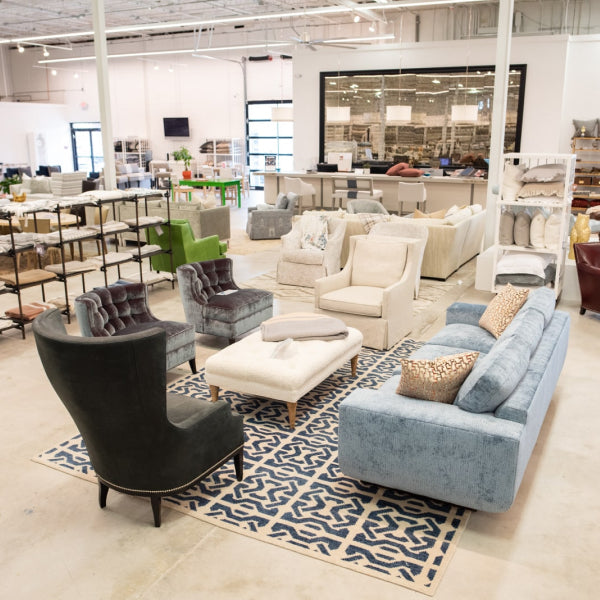
A client walks into the showroom with finish samples from a Buckhead loggia, a tear sheet for custom seating, and photos of blue-green stone around the pool. At that level, a teal outdoor rug is no longer a generic accessory. It has to relate to architecture, upholstery, and light, and it has to hold its color and presence once everything is installed.
That is where a curated textile house earns its keep.
Mass retail tends to flatten the decision. Colorways are simplified to appeal to the widest audience. Sizes are standardized. Patterns are designed to offend no one. That approach works for quick porch updates. It falls short in outdoor rooms built around custom furniture, custom-made cushions, and hardscape materials that already carry real visual value.
Why off-the-shelf options hit a ceiling
The limitation is usually not durability alone. It is specificity.
A limestone terrace in Sandy Springs can make one teal read crisp and architectural, while the same rug turns muddy against warmer travertine. If you are pairing the rug with hand-finished teak, bronze lighting, or performance upholstery in a custom cut, small shifts in undertone and texture become expensive mistakes. Proportion matters too. A long veranda, clipped pool pavilion, or deep screened porch rarely fits standard rug dimensions as cleanly as a catalog suggests.
That is why I prefer to review rugs the same way I review fabric. Side by side. In natural light. Against the actual materials.

What a curated textile house changes
Lewis and Sheron offers an advantage that online filtering cannot. You can assess a teal rug in context, with access to fabrics, trims, finishes, and designer guidance in the same decision cycle.
That changes the outcome in several practical ways:
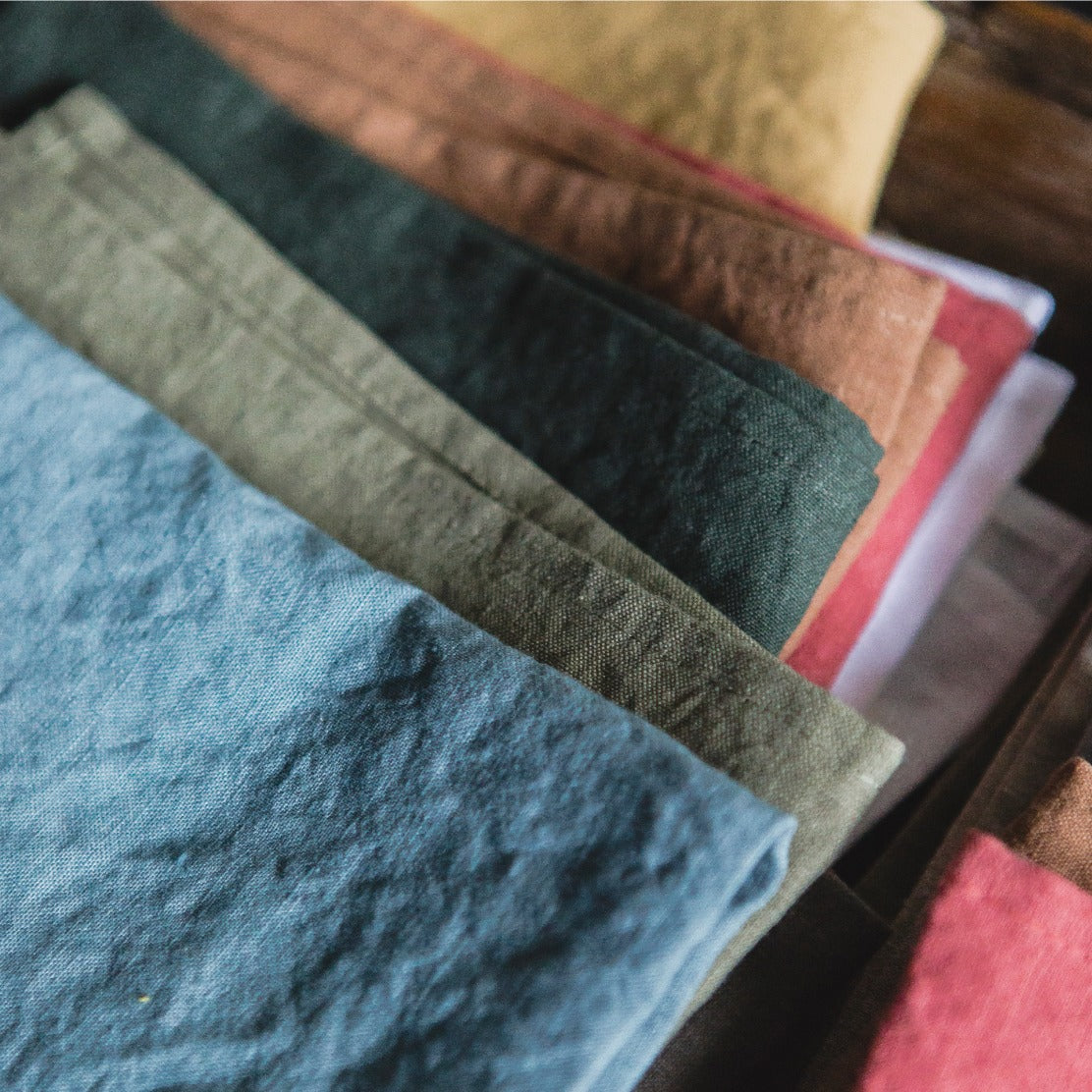
- Color gets judged accurately: Teal can skew blue, green, gray, or jewel-toned depending on the surrounding materials and daylight.
- Texture is part of the decision: The weave can either support refined furniture lines or make the whole setting feel more casual than intended.
- Scale gets corrected early: Pattern repeat, border width, and room proportions can be evaluated before an ordering mistake lands on site.
- Custom options become realistic: If the room needs a less common size or a more specific finish, a showroom with design resources can help solve for it.
For Atlanta homeowners investing in custom furniture, that process protects more than the rug purchase. It protects the larger room plan.
Why this matters in Atlanta
Our market has a wide range of outdoor conditions. Covered porches in Roswell live differently from sun-exposed patios in Alpharetta. Pool terraces with stone underfoot ask different questions than screened rooms with painted brick and soft seating. A rug that looked acceptable on a product page can shift fast once it meets Georgia light, pollen, humidity, and the surrounding material palette.
Clients making higher-end selections usually understand this indoors. They compare wool, linen, performance fabric, and trim before anything is fabricated. Outdoor rooms deserve the same discipline. Lewis and Sheron brings that designer mindset to the rug decision, which is one reason the finished space feels composed instead of assembled from separate purchases.
If your outdoor room includes natural stone, the surface under the rug deserves equal attention. This guide to protecting travertine investment is a useful companion read. For clients comparing textile performance across indoor and outdoor applications, Lewis and Sheron's advice on how to care for wool rugs also helps frame what long-term material stewardship looks like.
A well-chosen teal outdoor rug should feel intentional from the first walkthrough. In the right showroom, with the right context, it does.
Protecting Your Investment Care and Longevity
A teal outdoor rug earns its keep after the install day excitement wears off. In Atlanta, that means handling pollen, red clay, summer humidity, and the occasional hard rain without losing the polish that made it right for the room in the first place.
Care starts with placement. A rug on a covered porch in Buckhead will age differently than one fully exposed beside a pool in Alpharetta. The better the rug and the more thoughtful the furnishing plan, the less sense it makes to treat maintenance as an afterthought.
Routine care that protects the finish
The goal is consistency, not fuss.
Brush off leaves, pollen, and grit before they settle into the weave. Rinse spills promptly so oils, wine, or sunscreen do not set in the heat. If the rug needs a fuller cleaning, hose it down, use a mild soap solution, and let it dry completely before it goes back under furniture.
That last step matters more than many homeowners expect. Moisture trapped under any rug can discolor the rug backing, mark the surface below, and create a stale smell that undermines the whole outdoor room.
Where rugs lose years of life
Wear usually comes from small habits repeated over a season.
Furniture legs that grind dirt into one area will abrade fibers faster than weather alone. Planters without proper drainage can keep one section damp for days. Shaded corners collect organic debris, and that debris holds moisture against the face and underside of the rug.
Rotation helps, especially on patios with uneven sun exposure. So does lifting the rug occasionally to check what is happening underneath, particularly over stone and tile. If your teal outdoor rug sits on travertine, this guide to protecting travertine investment is a useful companion because the floor and the rug should be maintained as one system.
Set expectations at the right level
Outdoor rugs are made for exposure. They are not meant to stay frozen in showroom condition. Even a well-made piece will soften in color and show wear over time, especially in high-traffic seating areas and open sun.
That is not a failure. It is material reality.
The standard I set for clients is simple. The rug should continue to anchor the furniture plan, keep its color relationship to the upholstery, and age cleanly rather than look neglected. Owners who already care for finer interior textiles will recognize the same discipline in this wool rug care guide for long-term fiber stewardship. The routine differs outdoors, but the principle holds. Better pieces respond well to informed care.
A luxury outdoor room never depends on one purchase. It depends on every piece being chosen well, maintained properly, and allowed to mature with the setting.