






















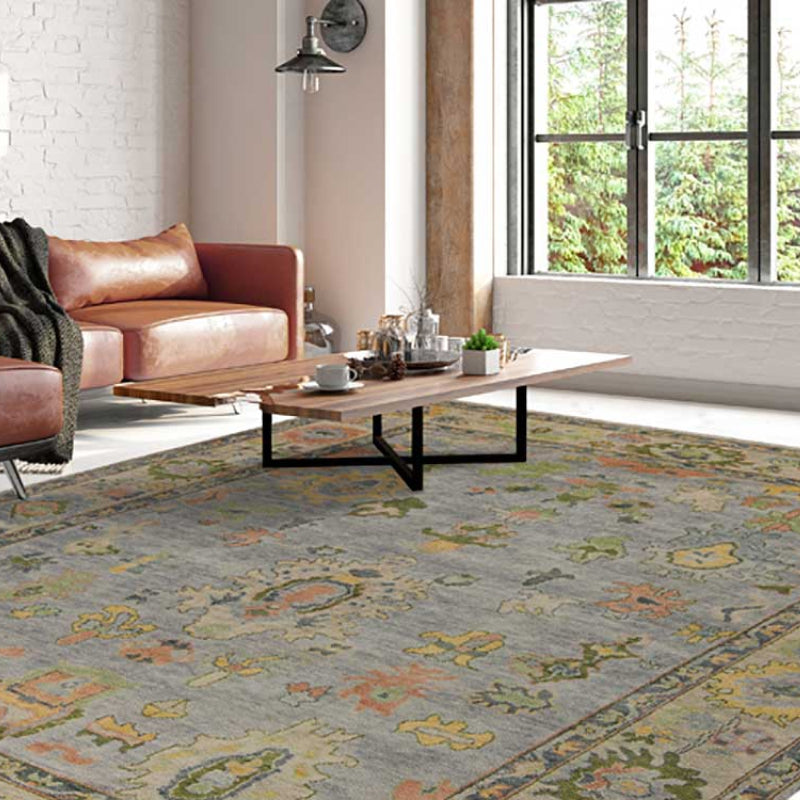
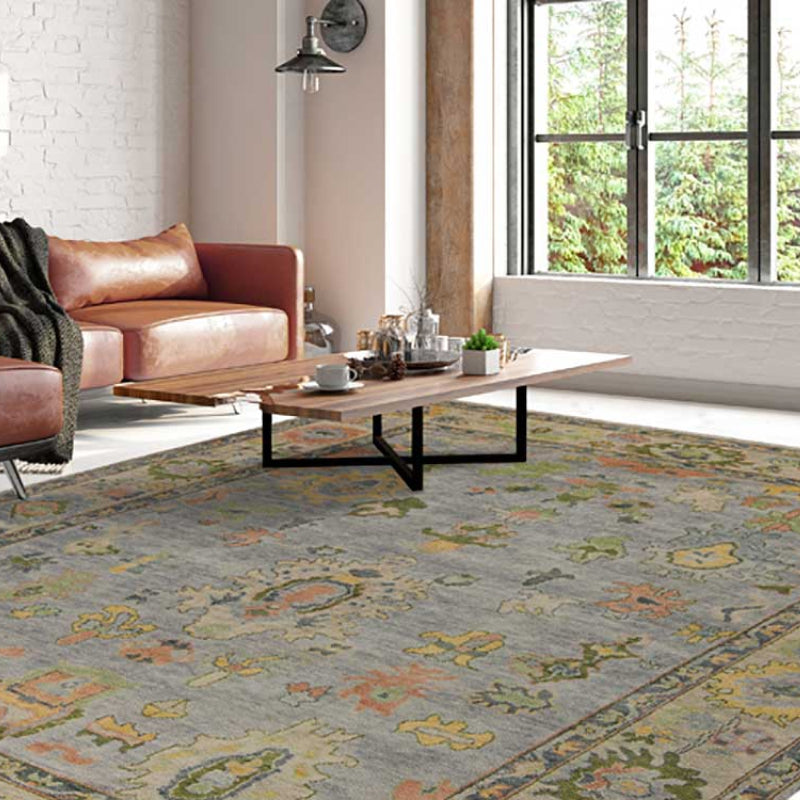
So, you've invested in a beautiful wool rug. Smart move. Now, how do you keep it looking incredible?
It’s simpler than you think. Forget complicated routines. If you can vacuum gently, blot spills instantly, and rotate it twice a year, you’ve mastered the essentials.
That’s it. That’s the secret. This simple rhythm respects the wool’s natural strength, preventing grit from grinding down the fibers and stopping stains in their tracks. Get this down, and you’ve handled 90% of what it takes to keep your rug looking like a masterpiece for years.
The Art of Preserving Your Wool Rug
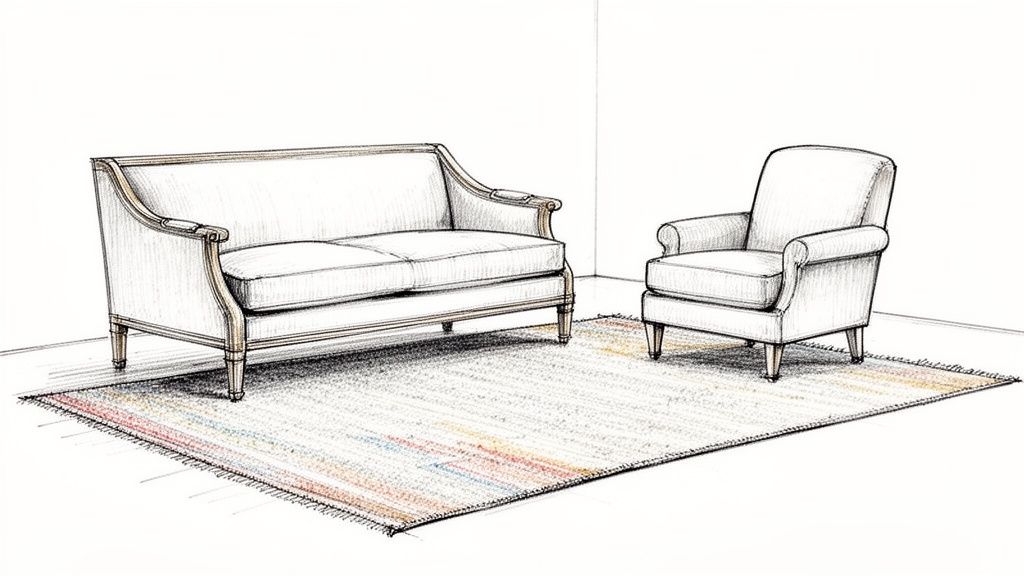
A fine wool rug isn't just a floor covering—it's the anchor of your room, a piece of handcrafted art you live with every day. It’s an investment in timeless design, much like a classic Wesley Hall sofa or a stunning Verellen armchair from our Buckhead showroom.
And like any masterpiece, it demands the right care to last a lifetime.
But we’re not talking about harsh chemicals or time-sucking chores. This is about a gentle, consistent approach that protects the natural lanolin and delicate fibers making wool so resilient and luxurious. It’s about working with the material, not against it.
Your Weekly Wool Rug Care Checklist
To make it even easier, here’s the entire routine in a quick-glance checklist. Stick to this simple schedule, and you’ll prevent the kind of buildup that leads to premature wear.
| Care Task | Frequency | Why It Matters |
|---|---|---|
| Vacuum (Beater Bar Off) | 1-2 Times Weekly | Removes 80-90% of surface dirt that acts like sandpaper on fibers. |
| Spot Check for Spills | Daily | Catches accidents early, making them easier to remove before they set. |
| Rotate the Rug 180° | Every 6 Months | Ensures even wear from foot traffic and sunlight, preventing faded spots. |
| Professional Cleaning | Every 1-2 Years | Deep cleans and removes embedded grime that vacuums can't reach. |
This rhythm of care is the secret. It's not about doing a lot at once; it's about doing a little, often.
Understanding the Investment
There's a reason wool rugs are a cornerstone of high-end interior design in Atlanta. They command over 30% of the area rug market in North America, prized for their natural durability, stain resistance, and timeless beauty.
Proper care is what separates a rug that becomes a family heirloom from one that wears out in a decade. A simple weekly vacuuming, for instance, can remove 80-90% of surface dirt, stopping the abrasive wear that cuts a rug's life short.
This guide breaks down the essentials—the rhythm of routine care, how to react to spills, and when to call the experts. It’s the foundational knowledge every discerning homeowner in Buckhead, Roswell, or Milton needs to protect their investment.
A great rug does more than tie a room together; it tells a story of quality and craftsmanship. Caring for it ensures that story continues for years, becoming part of your home’s legacy.
The Foundation of Timeless Design
The moment a hand-knotted rug enters your home, its story begins. To truly appreciate its artistry, it helps to understand the difference a hand-knotted rug makes.
Think of your rug as the foundation for your other luxury furniture—whether it’s a set of Lee Industries chairs or custom upholstery featuring designer fabrics from our Atlanta fabric showroom. Protecting it ensures the entire design vision remains cohesive and beautiful for the long haul.
The Right Way to Vacuum and Maintain Your Wool Rug
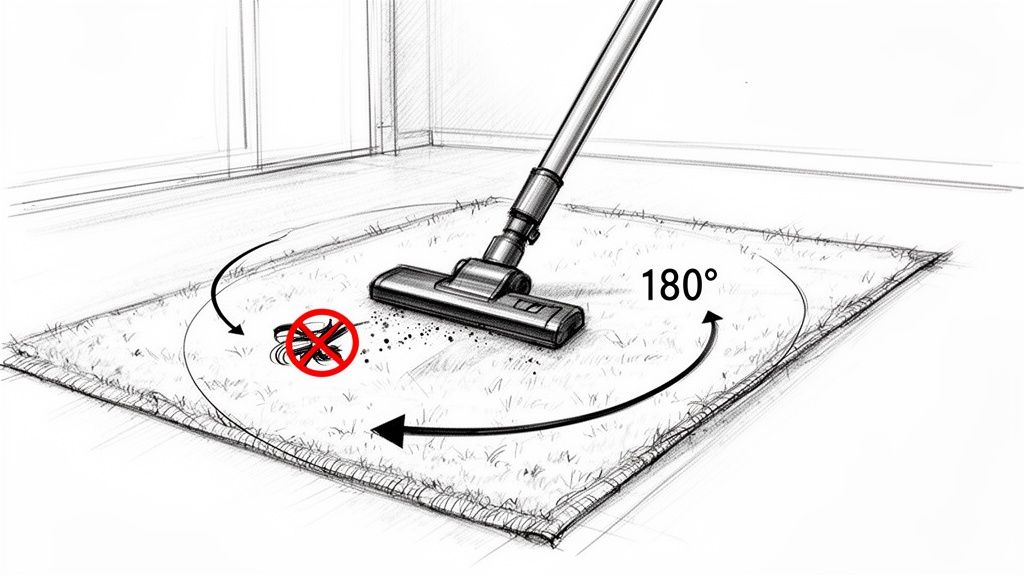
Let’s get one thing straight—not all vacuuming is created equal. Using the wrong machine on a beautiful wool rug is a fast track to destroying its lush, hand-knotted pile.
That aggressive beater bar? The one that works wonders on synthetic carpets? It will chew up and fray the delicate wool fibers of your treasured piece. Think of it like using a sledgehammer to hang a picture. Wrong tool. Wrong job.
Your new best friend is the suction-only setting. This is non-negotiable.
Mastering the Vacuum
The goal is simple: lift dirt out, not grind it in. A beater bar yanks and tears at wool fibers, causing them to fuzz and wear out prematurely. It’s especially brutal on the fringe, which can get sucked in and unraveled in seconds.
Here’s the simple, correct approach that designers across Atlanta use to protect their clients' high-end furniture investments:
- Disable the Beater Bar: If your vacuum has a rotating brush, turn it off. If you can't, raise it to the highest setting so it doesn’t touch the rug.
- Use the Right Attachment: A bare floor head or upholstery attachment is your best tool. They rely on pure suction to gently pull up dirt without abrading the fibers.
- Go with the Grain: Vacuum in the direction of the pile. Run your hand over the surface; one way will feel much smoother. Go that way. This keeps the fibers lying flat and uniform.
- Tackle the Fringe Carefully: Never run the main vacuum head over the fringe. Use an upholstery tool to gently suction away dirt, always pulling away from the rug.
This gentle method is more than enough for regular upkeep. For our clients with luxury furniture in Marietta or East Cobb, this is the first piece of advice we give.
The Power of Rotation
Beyond vacuuming, the single most effective maintenance trick is rotation. It’s beautifully simple and incredibly effective. Just like the fine designer fabrics on a Lee Industries chair need protection from the sun, so does your rug.
The Georgia sun is strong. A rug in a bright Buckhead room will get more light on one side, causing its vibrant colors to fade unevenly. Foot traffic carves worn-down pathways while other areas remain pristine.
Rotating your rug 180 degrees every six months is the secret to graceful aging. It ensures every part of the rug gets its fair share of sunlight and foot traffic, promoting uniform wear and color consistency.
This simple act prevents one area from looking tired while the rest looks new. It’s a small effort for a massive return, ensuring your rug remains the stunning centerpiece of your room—not a cautionary tale of sun damage.
Handling Spills and Stains with Confidence
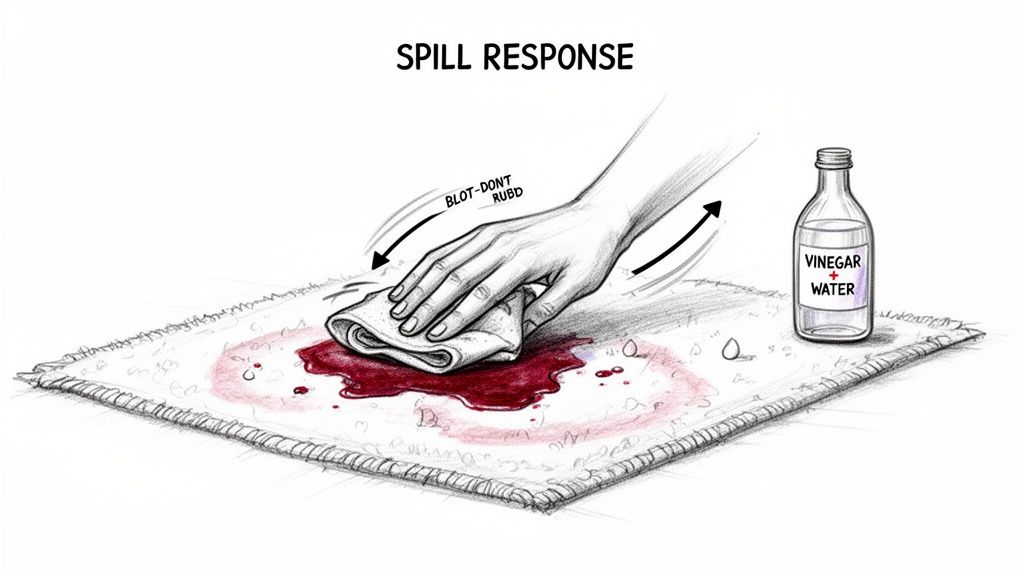
It’s that heart-stopping moment: a glass of red wine tips, coffee splashes, or muddy paws make a grand entrance.
Panic is the enemy of a beautiful wool rug.
Fortunately, wool is nature’s own performance fiber. Thanks to a waxy coating called lanolin, spills bead up for a precious few moments. This gives you a critical window to act before a mishap becomes permanent. Here’s your emergency response plan.
The Golden Rule: Blot, Don’t Rub
First things first: blot, never rub. Rubbing grinds the liquid deeper into the pile, tangles the fibers, and permanently damages the texture. It’s the fastest way to turn a simple spot into a fuzzy, faded disaster.
Instead, grab a clean, dry, white cloth (to avoid dye transfer) and press firmly. Work from the outside of the stain inward to keep it from spreading. Keep switching to a dry section of the cloth to lift as much liquid as you can. You’ll be stunned how much this absorbs.
Your Go-To Stain Removal Toolkit
You don’t need harsh chemicals. In fact, most store-bought carpet cleaners are too aggressive for wool. They strip away the natural oils, leaving fibers dull and brittle. The best solutions are the simplest.
For most common spills—wine, coffee, juice—this homemade solution is a miracle worker:
- Mix one part white vinegar with two parts cool water.
- Lightly dampen a clean cloth with the solution.
- Gently blot the affected area.
- Finish by blotting with another cloth dampened with plain cool water to rinse.
For tougher, oily stains, a small drop of clear, pH-neutral dish soap in cool water is your best bet. Follow the same blotting process. Always test any solution on an inconspicuous spot first, like under a sofa.
Speed is your greatest ally. A stain addressed within minutes is 80% more likely to be fully removed than one left to sit for even an hour. Keep a small "spill kit" with white cloths and your vinegar solution for quick access.
Tackling Specific Spills
Different spills require slightly different approaches. Here’s a quick guide for some of the usual suspects you might encounter in your Roswell or Cumming home.
- Red Wine & Coffee: After blotting, use the vinegar-and-water solution. The mild acidity helps break down the tannins that cause staining.
- Mud & Dirt: Let it dry completely. Seriously. Trying to clean wet mud just smears it deeper. Once it’s dry, gently break up the large pieces and vacuum the debris.
- Pet Accidents: Blot as much as you can. Then, use your vinegar solution—it’s excellent at neutralizing ammonia and discouraging your pet from returning to the spot.
- Grease or Oil: Immediately sprinkle the spot with cornstarch or baking soda to absorb the oil. Let it sit for an hour, then vacuum it up. For more persistent issues, helpful guides on using baking soda for carpet stains and odors can offer additional tips.
Remember, the goal is always to be gentle. You're coaxing the stain out, not attacking it. While these methods are fantastic for wool, other materials require different care. For advice on another popular texture, see our guide on how to clean a faux fur rug.
When to DIY and When to Call the Professionals
Routine vacuuming is maintenance. A periodic deep clean is restoration.
Over time, even the most meticulously kept rug in a Buckhead high-rise or a quiet Alpharetta home accumulates deep-seated grit that the best vacuum can’t touch. This is where the real work of preservation begins.
Knowing the difference between a simple refresh and a full-blown restoration is key. A light at-home cleaning can work now and then. But I’m not talking about those clunky rental machines—those are designed for synthetic fibers and will strip the life right out of your wool.
Instead, a gentle at-home deep clean is a very specific process.
Gentle At-Home Refreshment
For smaller area rugs that just need a boost, here’s a safe, DIY approach. The trick is to do this on a sunny, low-humidity Atlanta day when your rug can air-dry properly.
- Start with a thorough vacuuming. Vacuum the rug on both sides, using a suction-only setting.
- Use cool water and a mild soap. Mix a tiny amount of clear, pH-neutral soap with cool water. Lightly dampen a clean, white cloth and gently blot the entire surface. Never saturate it.
- "Rinse" with a clear water blot. Follow up by blotting with another cloth dampened with only cool, clear water. This lifts away soap residue.
- Let it air dry completely. Lay the rug flat in a well-ventilated area, away from direct sunlight. Use fans to circulate air and flip it periodically to ensure both sides dry evenly.
This can revive a tired rug, but it’s no substitute for professional care. Think of it as a touch-up, not a full treatment.
The Telltale Signs You Need a Pro
So, when is it time to call in the experts? Ignoring these critical signs can lead to irreversible damage.
A professional deep clean isn’t a luxury; it’s an essential part of stewarding your investment. For our clients from East Cobb to Buckhead, we recommend this service every 12-18 months to keep colors rich and fibers resilient.
Keep an eye out for these indicators:
- Stubborn, Deep-Set Stains: If gentle spot cleaning isn’t working, stop. Pushing it further can permanently set the stain or cause dyes to bleed.
- Persistent Odors: Lingering smells from pets or spills are a clear sign that contaminants have penetrated deep into the rug’s foundation.
- Overall Dinginess: If the colors seem muted and the pile looks flat even after vacuuming, it’s holding onto layers of fine dirt that are dulling its appearance.
- Water or Smoke Damage: These are emergencies. They require immediate, specialized attention to prevent mildew and permanent odor.
For comprehensive care, knowing when to consult expert area rug cleaning services is crucial.
The gold standard for professional cleaning is immersion washing, a controlled, gentle process where the rug is submerged to flush out dirt from the very foundation of the weave. Trusting a professional ensures your exquisite piece—whether it’s anchoring a room with a Wesley Hall sofa or complementing designer fabrics from our Atlanta showroom—remains vibrant for decades.
Long-Term Preservation and Seasonal Storage Tips
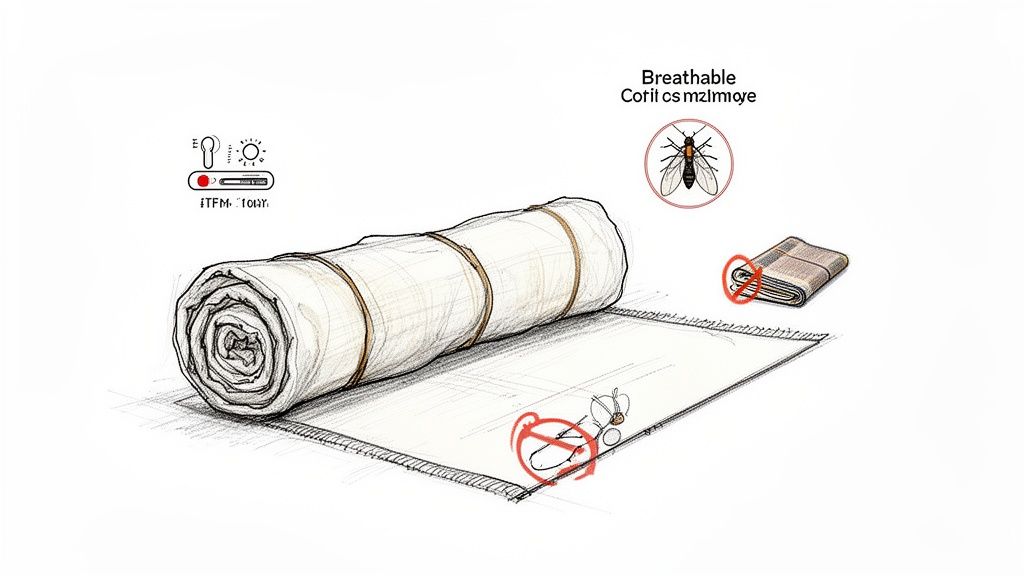
Properly storing a wool rug is every bit as important as cleaning it. You can't just fold it up and toss it in the attic. That's a surefire recipe for permanent creases, mildew, and unwelcome pests.
This is the kind of insider knowledge we share with designers in our Lewis and Sheron Trade Program. We want to make sure the beautiful textiles they source from our Atlanta fabric showroom are protected for the long haul. It all comes down to creating the right environment for those natural wool fibers.
The Cardinal Rule: Roll, Never Fold
Let's get this out of the way first: folding a wool rug is a cardinal sin. Folding creates deep creases that can permanently break the rug’s foundation and crush the pile. Over time, those folds become weak points that are nearly impossible to reverse.
Always, always roll your rug.
To do it right, roll it with the pile facing inward. This protects the delicate fibers. Roll it as tightly and evenly as you can, keeping the edges aligned so they don't get bent. A perfectly rolled rug is the critical first step.
Wrapping It Right: The Best Materials for Protection
Once rolled, your rug needs to breathe. Avoid plastic at all costs. Wrapping a wool rug in plastic is like sealing it in a Ziploc bag—it traps moisture, which is a disaster in the humid Atlanta climate. This leads to mildew, rot, and a musty smell you'll never get rid of.
Instead, reach for one of these breathable options:
- Muslin or Cotton Fabric: A clean cotton sheet is an excellent choice. It lets air circulate while keeping dust away.
- Tyvek Wrap: This is what the pros use. It's water-resistant but also breathable, offering top-tier protection.
Secure the wrapping with fabric ties. Just don't tie them so tightly that you leave dents in the pile.
Think of storage as putting your rug into a state of suspended animation. The goal is to protect it from light, moisture, and pests, so it emerges looking exactly as it did when you put it away.
Creating the Ideal Storage Environment
Where you store the rug is just as critical as how you wrap it. Basements and attics are out of the question. Their wild swings in temperature and humidity are a death sentence for natural fibers.
The ideal storage space is cool, dark, and dry. A climate-controlled unit or a well-regulated interior closet is your best bet. A stable environment with 45-55% relative humidity is non-negotiable to prevent damage. You can learn more about the factors influencing the global carpet and rugs market to see why quality care is so important.
Finally, always store the rug off the floor, either on a shelf or raised on blocks. This ensures air can circulate all the way around it. Store it horizontally to avoid stress on one end. Follow these steps, and when you're ready to unroll your masterpiece, it’ll be just as stunning as the day you first laid it down.
Your Wool Rug Care Questions Answered
Over the years in our Buckhead showroom, we’ve heard every question imaginable from designers and homeowners. From shedding worries to furniture dents, a few concerns pop up more than others.
Let's clear the air and give you the straightforward answers you need.
Can I Use a Steam Cleaner on My Wool Rug?
Hard no. It’s one of the most common—and most damaging—mistakes we see.
Wool fibers and high heat are mortal enemies. A steam cleaner blasts hot, pressurized water deep into the rug, which can cause the delicate wool to shrink and felt. You’ll lose that iconic soft texture for good. The intense heat can also make dyes bleed, creating a muddled, irreversible mess.
Stick to cool water. Leave the deep cleaning to professionals who use controlled washing techniques—a service we often recommend to our design clients from Roswell to Forsyth County.
What Is the Best Way to Deal with a Shedding New Wool Rug?
First, don't panic! Shedding is completely normal for a new wool rug. It’s not a defect; it's the rug settling in and releasing excess fibers leftover from the weaving process. Think of it like breaking in a new pair of leather shoes.
This "fuzzing" phase can last a few months. Your best course of action is to vacuum it regularly—once or twice a week is perfect. Just be sure to use a suction-only setting. This gently lifts away the loose fuzz without aggressively pulling at the rug’s foundation.
Be patient. Resisting the urge to use a powerful, abrasive vacuum is key. The shedding will naturally slow down on its own, revealing the dense, beautiful pile beneath.
How Can I Protect My Wool Rug from Furniture Marks and Dents?
Heavy, gorgeous furniture, like a solid Ambella console or a substantial Wesley Hall sofa, will inevitably leave impressions. Here, prevention is your best friend.
Use high-quality furniture coasters under the legs. It’s a simple, non-negotiable step. They distribute the weight evenly, preventing the legs from crushing the delicate wool fibers.
If you’ve already got a few dents, you can often revive the pile with this little trick:
- Place an ice cube directly in the dent and let it melt completely.
- The cool water helps the compressed wool fibers plump back up.
- Once it's melted, blot the spot dry with a clean, white towel. Don’t rub.
- Finally, use your fingers or a soft brush to gently fluff the pile back into place.
Rotating your rug also does wonders. It prevents permanent marks from setting in—a practice we strongly encourage for anyone investing in luxury furniture in Atlanta.
Are Wool Rugs a Good Choice for Homes with Pets?
Yes, surprisingly, they are an excellent choice. Wool's natural properties make it incredibly resilient and well-suited for life with furry family members.
The secret weapon is lanolin, the waxy coating on wool fibers that provides a fantastic first line of defense against spills. It causes liquids to bead up, giving you time to clean up accidents before they soak in. Wool is also incredibly durable, and its natural crimp allows the fibers to bounce back beautifully.
When pet accidents happen, act fast. Blot thoroughly, then use a solution of equal parts white vinegar and cool water. This mixture is brilliant for neutralizing odor and cleaning without harsh chemicals.
Plus, wool's ability to trap airborne dust and dander can even help improve your home's indoor air quality. It's a smart and stylish choice for discerning pet owners throughout North Georgia.
At Lewis and Sheron Textiles, we believe a fine rug is the soul of a room. Step inside our Buckhead showroom and you’ll understand why we’ve been Atlanta’s destination for exquisite furniture and fine fabrics for decades. From the handcrafted lines of Verellen and Wesley Hall to the curated textures of Lee Industries, every piece tells a story of quality, comfort, and design mastery. Explore our collections and discover the perfect designer fabrics for your next project, or learn more online at lsfabrics.com.