









Buying fabric by the yard can feel like learning a secret language. But it really just boils down to one critical rule: get your measurements right before you fall in love with a textile.
Whether you’re an interior designer planning a project in Milton or a homeowner ready to breathe new life into a beloved Wesley Hall sofa, knowing your numbers is everything. This guide cuts through the noise and gives you the confidence to walk into our Atlanta fabric showroom and make the perfect choice.
Your Fabric Buying Guide: From Overwhelmed to Empowered
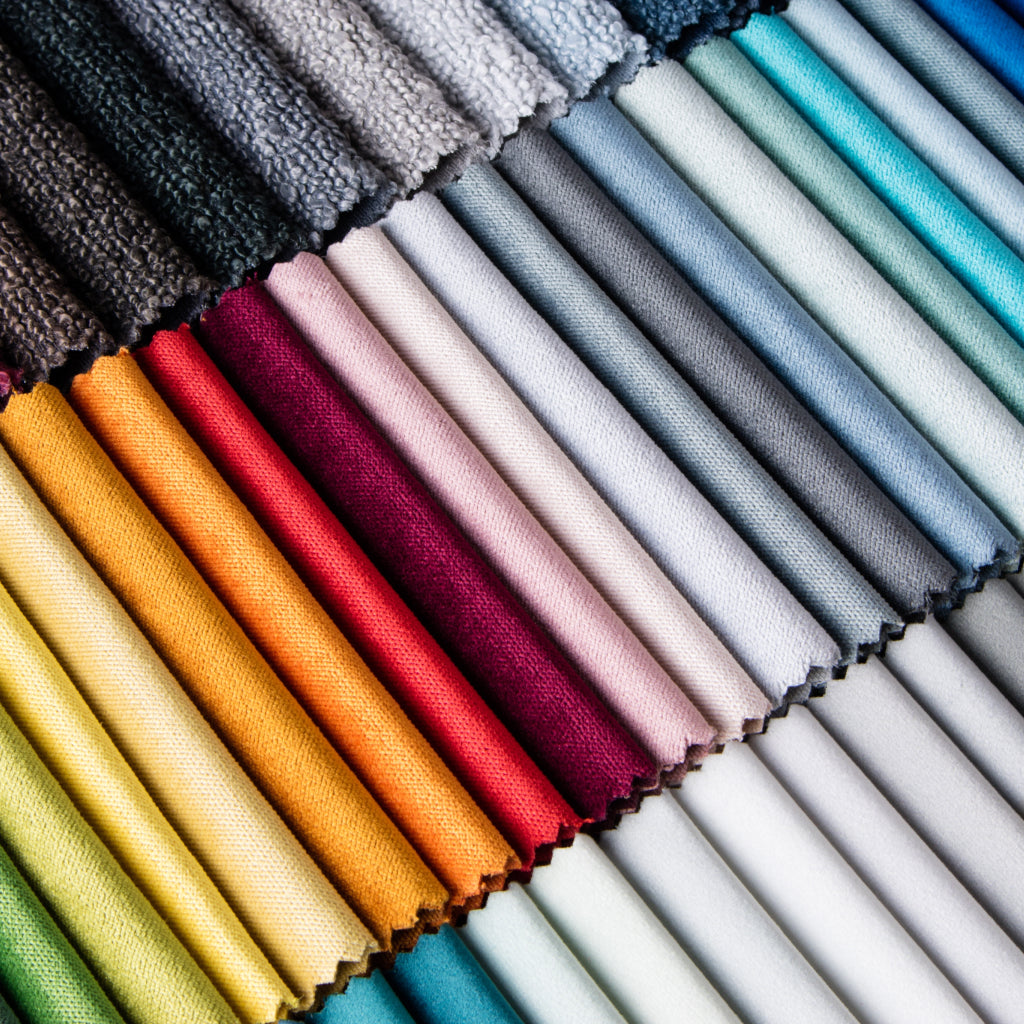
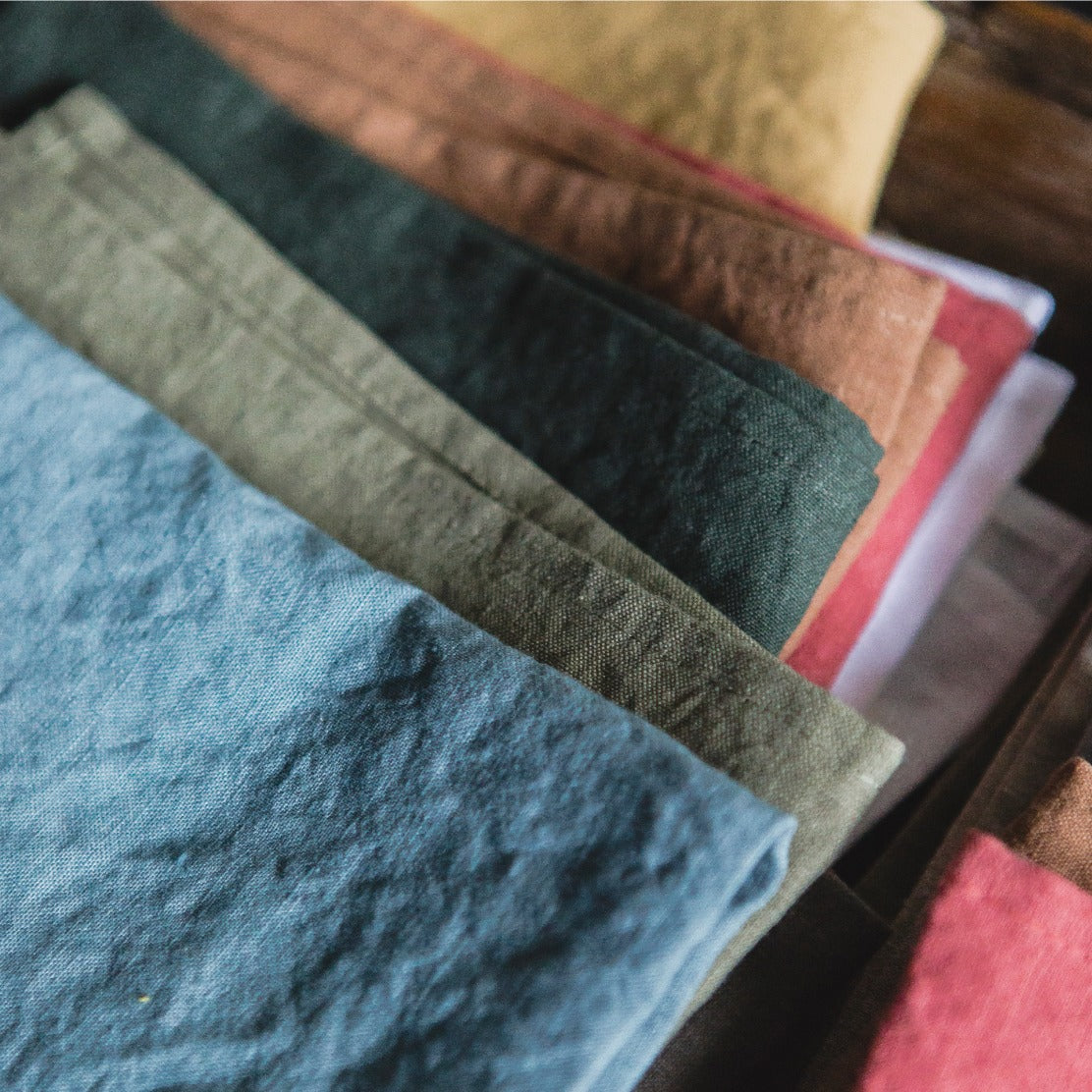
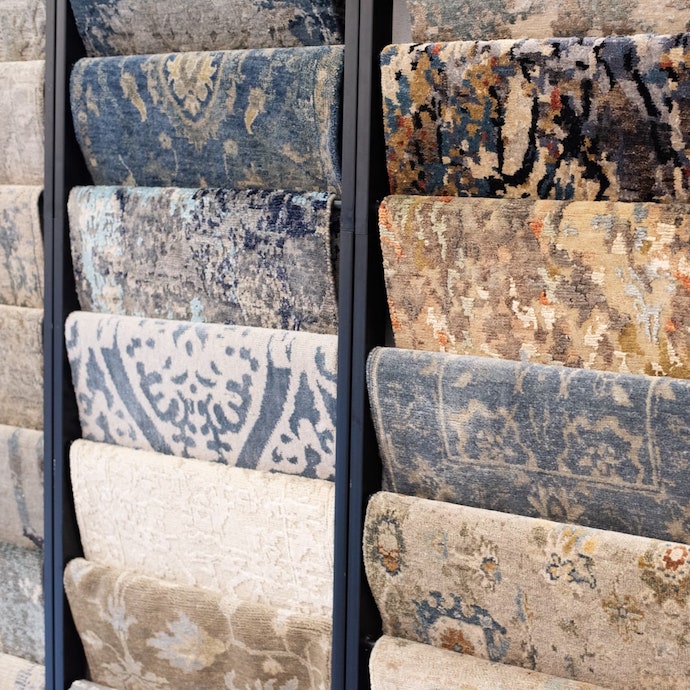
A fabric showroom should feel like a candy store for designers—not a final exam. Rows of exquisite designer fabrics, textures begging to be touched, and colors that could completely redefine a room in Buckhead or Roswell. It’s an inspiring experience.
But that inspiration can quickly turn to hesitation. How much do I need? What if I buy too little? Or worse, way too much?
Forget the guesswork. Learning how to buy fabric by the yard is a skill. And like any skill, all it takes is a little insider knowledge to master.
This isn’t just about covering a chair; it’s about making a smart, confident investment in your home’s story. The global textile market is booming, and North America leads the charge in high-quality home textiles. The market is projected to hit USD 274.78 billion by 2025 (Fortune Business Insights). This trend points to a clear preference for timeless, custom-cut fabrics over mass-produced alternatives. People are choosing quality that lasts—a sentiment we see every day in our Buckhead showroom.
We built this guide to give you the practical, no-fluff steps to:
- Measure your projects accurately, from a simple throw pillow to a complex custom upholstery job.
- Understand the crucial details, like fabric width, pattern repeats, and dye lots.
- Choose the right fabric for your piece, ensuring it’s as durable as it is beautiful.
We work with seasoned designers from the Lewis and Sheron Trade Program and discerning homeowners from Alpharetta to West Paces Ferry. Their secret? They always come prepared. They know the difference between an amateur DIY project and a professional-grade result is all in the details.
By the end of this guide, you won’t just know how to calculate yardage—you’ll understand why certain choices are critical for achieving that flawless, high-end finish. You'll be selecting fine fabrics with the assurance of a seasoned pro.
Ready to trade analysis paralysis for decisive action? Let's demystify the process. For more inspiration, you might enjoy our guide on the best places to find upholstery fabric. Now, let’s get you ready to create something extraordinary.
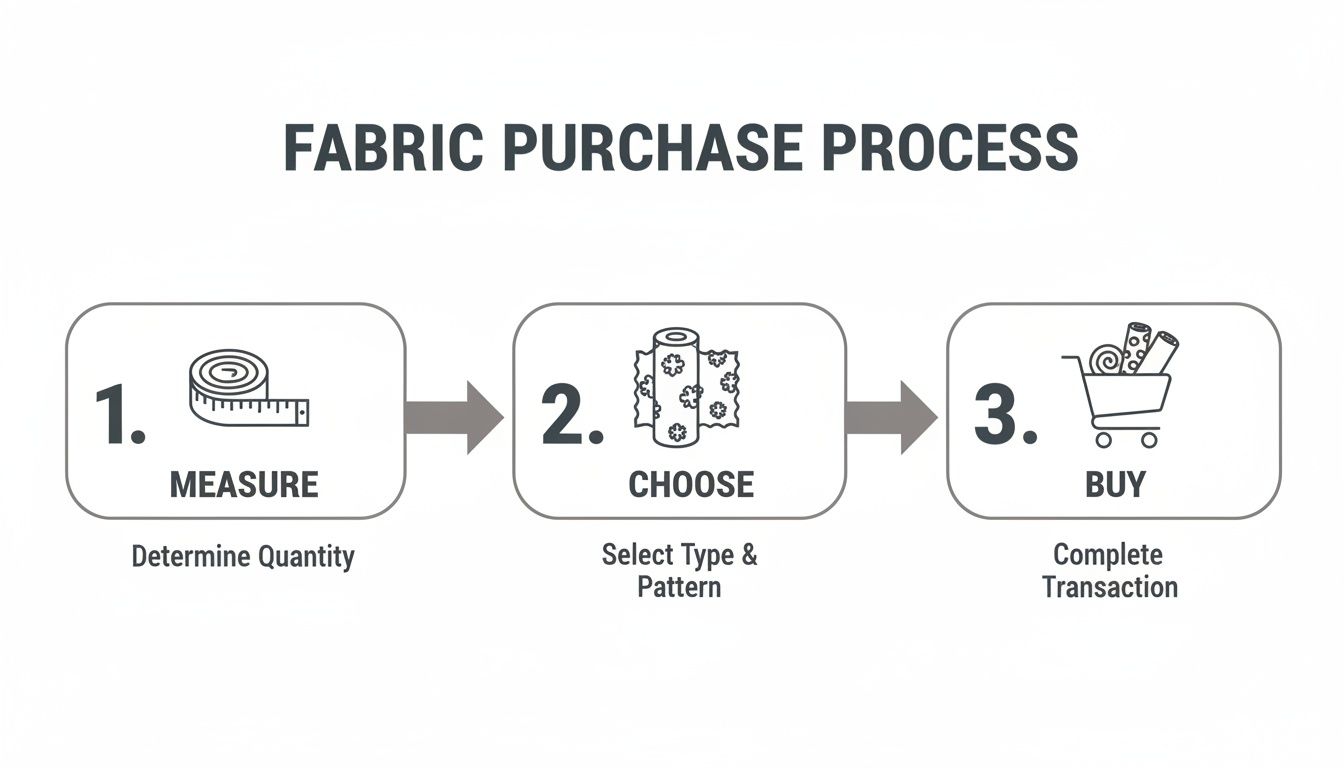
Measure Twice, Buy Once: Nailing Your Fabric Yardage
Let's talk about the single most important step in any fabric project: getting your measurements right. It’s the difference between a project that comes together flawlessly and one that ends in a last-minute, panicked trip back to the store. Whether you’re reupholstering a classic Lee Industries chair for a client in Roswell or making a few custom pillows for your home on Collier Rd, a tape measure and simple math are your best friends.
Don’t let the numbers intimidate you. It’s more about being thorough than being a math genius.
Starting with the Basics
Every project, no matter how complex, breaks down into simple shapes. A pillow is a square. A seat cushion is a rectangle. A drapery panel is one long piece. Start by measuring the length and width of every component you need to cover.
Here’s where experience comes in: always add extra. A few inches on each side for seam allowances and hems is non-negotiable. For upholstery, you have to account for the fabric needed to wrap around the frame and be stapled securely underneath.
One of the most common mistakes we see is measuring only the visible surface. For that truly professional, custom look on an upholstery project, you must factor in the depth of the cushions and the fabric needed to pull, stretch, and secure. It’s the secret to a piece that looks designer, not DIY.
Once you have your measurements, sketch them out. Imagine arranging the pieces on a bolt of fabric. This quick visual trick helps you find the most efficient layout and ensures you don't waste an inch of that exquisite textile you found in our Atlanta fabric showroom.
The Most Overlooked Detail: Pattern Repeat
This is where expert-level knowledge really pays off. If you’ve chosen a solid color, your initial calculations are probably close. But if your heart is set on a gorgeous print—a bold floral, a classic stripe, or a sophisticated geometric—you absolutely have to account for the pattern repeat.
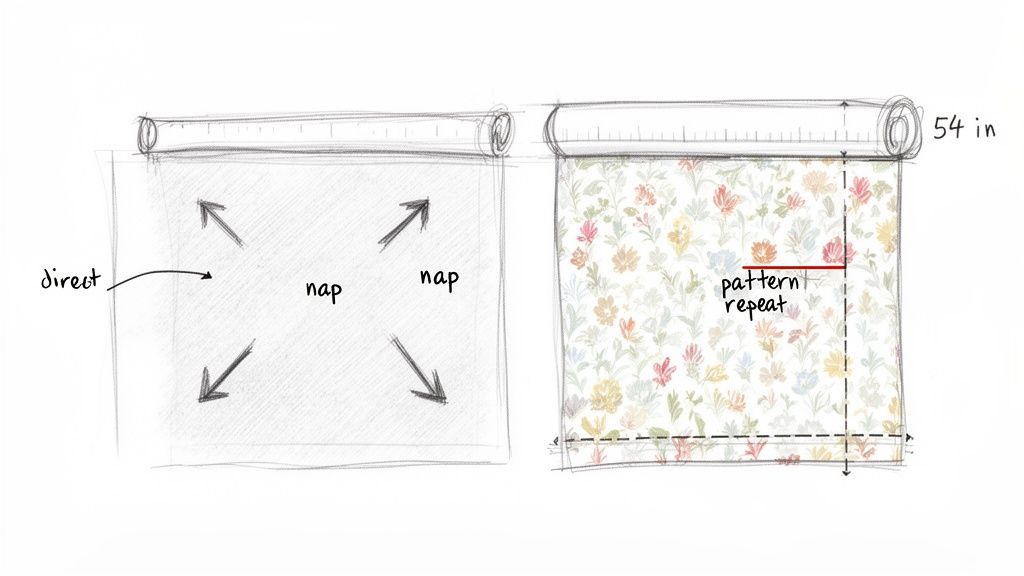
So, what is a pattern repeat? It’s the vertical distance from the start of a pattern to where it begins again.
It matters because for a project to look polished and high-end, the pattern needs to align perfectly across every seam. Picture a Wesley Hall sofa with mismatched stripes or a floral chopped in half from one cushion to the next. That one detail can throw off the entire piece.
To make sure your patterns match, you'll need to add the length of one full pattern repeat for each separate piece you cut.
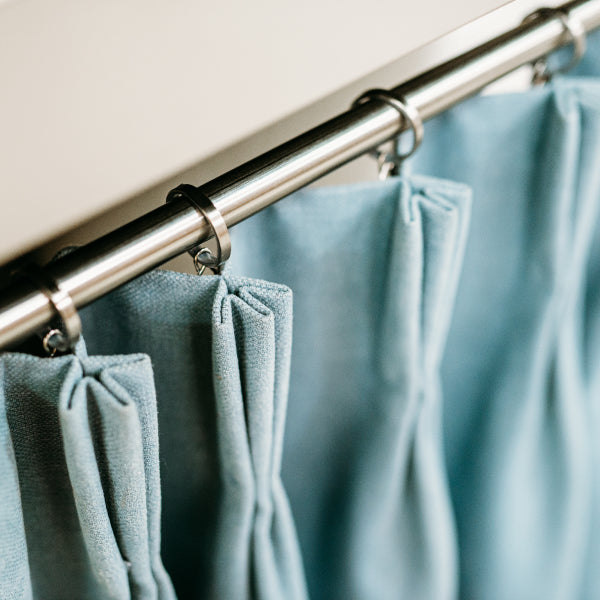
- For Curtains: Every panel has to start at the exact same point in the pattern. For more on this, our guide on how to measure windows for curtains is a great resource.
- For Upholstery: The pattern on the back of a chair should flow seamlessly into the seat cushion and the front. This takes careful planning and extra fabric.
A Real-World Example: Calculating for a Patterned Fabric
Let’s walk through a common scenario. Imagine you're making two drapery panels for a home in East Cobb. Your finished panels need to be 90 inches long. The designer fabric you've chosen has a 27-inch vertical repeat.
- First, divide the finished length by the pattern repeat: 90 / 27 = 3.33.
- You can’t use a fraction of a repeat, so always round up. You’ll need 4 full repeats for each panel.
- Calculate your new cutting length: 4 repeats x 27 inches = 108 inches. This is how long each piece must be cut to guarantee the pattern matches.
- Finally, get your total yardage. Two cuts of 108 inches is 216 inches total. Divide by 36 (inches in a yard), and you get 6 yards.
If you had only used your initial 90-inch measurement, you would've bought just 5 yards. That one extra yard is the key to a professional, cohesive result. It’s this attention to detail that our Trade Program members and top Atlanta interior designers depend on. It’s not just crunching numbers; it’s honoring the integrity of the design.
Decoding Fabric Width, Nap, and Pattern Repeat
So, you’ve got your yardage. Now for the fun part—the part that separates a good project from a great one. You have to get to know the fabric's personality. Not all bolts are created equal, and three details—width, nap, and pattern repeat—are the technical trifecta that can make or break your design.
Mastering these is the kind of insider knowledge we share with designers in our Buckhead showroom every day. It’s the difference between a custom piece that looks good and one that looks absolutely exquisite, like something you’d see in a Verellen or Ambella catalog.
Why Fabric Width Is a Game Changer
Most home décor fabrics come in a standard 54-inch width. It’s the industry go-to for a reason—it’s versatile and works for most upholstery and drapery projects. But when you step into the world of luxury textiles, widths can vary.
You might find a stunning Belgian linen that’s 60 inches wide or more. Why does that matter? A wider bolt can be your secret weapon for a cleaner aesthetic and better efficiency.
- Fewer Seams: For a large piece, like a king-sized headboard for an East Cobb home or a sprawling Wesley Hall sofa, a wider fabric might mean a single, seamless panel.
- Less Yardage: You can often fit more pattern pieces side-by-side across a wider bolt, a smart way to maximize your budget without skimping on quality.
On the flip side, some specialty fabrics might come in a narrower width. Always, always check the width before finalizing your yardage. It’s a small detail with a huge impact.
The Nuance of Nap
Ever run your hand across velvet and noticed it feels buttery smooth one way and a little rough the other? That’s nap. It’s the raised, directional pile you find on fabrics like velvet, chenille, and corduroy.
Think of it like petting a cat—smooth from head to tail, but you’ll ruffle some fur going the other way.
This directional texture reflects light differently. If you accidentally cut one piece with the nap running up and the adjacent piece running down, they’ll look like two completely different shades. It’s a rookie mistake that immediately signals an amateur job.
The professional standard is to have the nap run down the piece, so it feels smooth when you run your hand from top to bottom. For seating, this means the nap should brush smoothly from the back of the cushion toward the front. This simple rule ensures a consistent, luxurious look.
Before you make a single cut, stand back and look at the fabric. Brush your hand across it. Figure out which way the nap runs and mark the back of every piece with an arrow pointing in the same direction. It’s a little step that guarantees a uniform finish that speaks to quality craftsmanship.
Revisiting the Almighty Pattern Repeat
We touched on pattern repeat when calculating yardage, but it’s so critical it deserves a second look. The repeat isn’t just about buying extra fabric; it’s about the art of placement.
For a large-scale floral or bold geometric, where the pattern lands on a chair back can dramatically change the final look. You want the most stunning part of the design to be the focal point, not awkwardly cut off. Many designer textiles have intricate designs, and understanding how they'll lay out is essential. If you want to see how pattern and texture play together, these examples of woven fabrics are a great place to start.
While it's more common in bedding, understanding thread count can also give you a better sense of how the density and feel of different textiles are measured, adding to your overall fabric knowledge.
Ultimately, decoding these details is about having control over your project. It’s how you take a beautiful textile and turn it into a perfectly executed piece of design. Whether you're selecting luxury furniture in Atlanta or sourcing fine fabrics in Alpharetta, these are the details that elevate your project from simply finished to truly refined.
Don't Skip These Final Checks: Samples and Dye Lots
You've done the math, figured out the repeat, and you're ready to buy. But before you hit "purchase," let's talk about two final checkpoints professional designers never skip. Getting these right is the difference between a project you love and a costly mistake.
I'm talking about ordering samples and understanding dye lots. Honestly, skipping these is a mistake you only make once.
Let's be real: waiting for a sample feels like a delay. But the color you fell in love with on your phone? I guarantee it will look completely different in your Alpharetta living room's morning sun than it does under the warm evening lamps in your Buckhead den. A screen can't show you the texture, the feel, or the true weight. You have to get it in your hands and see it in your space.
This is hands-down the most important—and most overlooked—step. A fabric sample is your reality check. It’s the only way to know for sure that the textile you adore online is the one you’ll still adore when it’s covering your custom Wesley Hall sofa.
Why a Physical Sample is a Game-Changer
When your sample arrives, bring it home. Don't just glance at it—live with it for a day or two. Hold it up to your walls, drape it over the chair it's meant for, and watch it throughout the day.
- Morning Light: See how the color reads in bright, natural sunlight.
- Afternoon Shade: Notice how the tones shift as the light softens.
- Artificial Light: Check its appearance under your lamps at night.
This simple act prevents so many expensive surprises. It validates your choice and gives you the confidence to move forward, knowing the final result will be exactly what you pictured.
The Insider Secret: Dye Lots
Okay, the sample confirmed it's "the one." Now for one last piece of crucial insider knowledge: the dye lot.
Think of a dye lot as a fabric's unique fingerprint. It's a number assigned to a specific batch of fabric dyed together in the same vat. Manufacturers are fantastic, but tiny variations in temperature, dye, or timing can create subtle differences between batches.
These differences might be invisible on their own. But place two fabrics from different dye lots side-by-side? The color shift can be jarring. For the interior designers in our Trade Program sourcing fine fabrics for a project in Forsyth County, ordering from a single dye lot is second nature. For a homeowner, it’s a priceless tip.
This is exactly why you must order all the fabric you need for a project at the same time. If you buy five yards today and realize next month you need one more, that new cut will almost certainly come from a different bolt—and a different dye lot. That one extra yard could throw off the entire look of your beautiful furniture piece.
This focus on getting it right the first time aligns with a bigger shift we're seeing. People are tired of disposable goods. Consumer trends show a major move toward durable, long-lasting products, with the market growing 6.8% annually (Smart Fabrics Market Report). Smart shoppers are investing in performance fabrics, making sure their custom pieces will last for years.
When you order from our Atlanta fabric showroom, we handle this for you. We make sure your entire cut comes from a single bolt, guaranteeing perfectly consistent color from end to end. It’s a small detail that makes a world of difference.
Bringing Your Vision to Life at Lewis and Sheron
Alright, you’ve done your homework. You know your measurements, you've wrapped your head around pattern repeats, and you've sworn an oath to never skip a sample. Now comes the best part: making it all happen.
At Lewis and Sheron, we’re more than just a store; we’re your creative partner. This is where careful planning turns into stunning reality. It’s one thing to read about buying fabric by the yard, but it’s a completely different experience to feel the bolt in your hands.
The In-Store Advantage
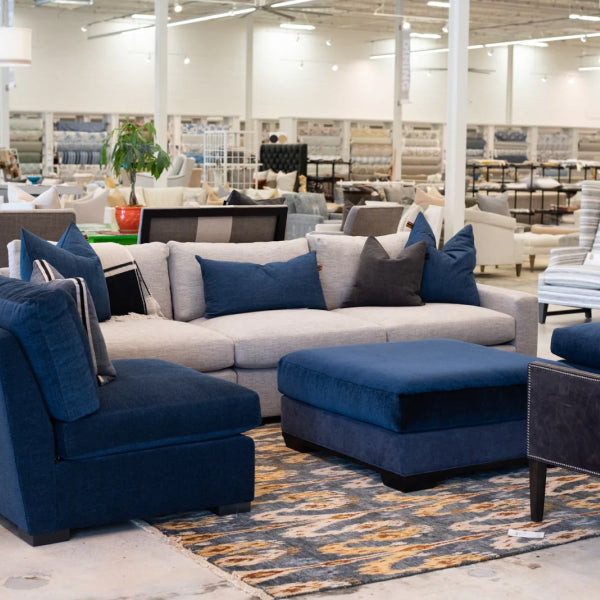
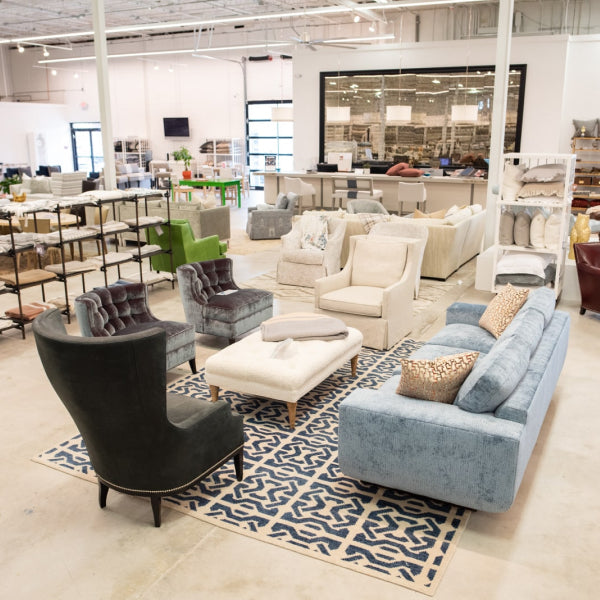
Step inside our Buckhead showroom and you’ll understand why Lewis and Sheron has been Atlanta’s destination for exquisite furniture and fine fabrics for decades. You can touch, feel, and drape thousands of designer fabrics. Nothing beats seeing how a heavyweight Belgian linen catches the light or feeling the soft hand of a chenille for yourself.
Our team can cut your yardage right from our in-stock bolts while you wait. It's immediate and incredibly gratifying. Find what you love, and take it home the same day.
For designers and homeowners from Marietta to Forsyth County, this instant access is a total game-changer. It cuts out shipping delays and gives you absolute certainty in your choice.
Special Orders, Handled with Expertise
Have your heart set on a specific textile from a premium mill like P. Kaufmann or Fabricut? We’ve got you. We'll handle the special order from start to finish, ensuring every single yard comes from the same dye lot for perfect color consistency.
This is where our decades of experience really come into play. We manage the logistics so you can focus on design. This seamless service is a cornerstone of our Lewis and Sheron Trade Program, providing Atlanta's interior design professionals with a reliable, expert resource.
This is the Lewis and Sheron difference. It’s not just a transaction; it’s a collaboration. It's the confidence that comes from having a team of experts in your corner, dedicated to getting every detail right.
Buying In-Store vs Special Order
Deciding the best purchasing path for your project comes down to your specific needs. This table breaks down the benefits of buying our in-stock fabric versus placing a special order.
| Factor | Buying In-Stock at Our Showroom | Placing a Special Order |
|---|---|---|
| Selection | Hundreds of curated, in-stock bolts available immediately. | Access to thousands of textiles directly from top designer mills. |
| Timing | Take it home the same day—perfect for projects on a timeline. | Lead times vary by mill, typically taking a few weeks. |
| Experience | Tactile and immediate. See and feel the exact bolt you're buying. | Based on showroom samples; a fantastic option for specific patterns. |
| Best For | Spontaneous inspiration, quick-turn projects, and confirming color/texture. | Sourcing a very specific fabric or coordinating multiple textiles. |
Whether you need fabric today or are planning a project for next season, we have a purchasing option that will work for you.
Your Personal Design Team
One of the most valuable resources at our Atlanta fabric showroom is one you don't even pay extra for—our complimentary in-house designers.
Think of them as your personal sounding board and expert safety net. They can double-check your math, suggest creative solutions, and help you coordinate your chosen fabric with pieces from our exquisite furniture collections.
Imagine pairing your selected textile with the handcrafted lines of Verellen furniture or the timeless comfort of a Wesley Hall sofa. Our designers make these connections feel effortless, ensuring your vision is cohesive and beautifully executed. They can help you visualize how a fabric will look on a specific frame, from a sleek Ambella console to a plush Lee Industries chair.
Beyond the Bolt
Our services extend far beyond just selling fabric by the yard. We’re here to help you see your project through from start to finish.
- Expert Reupholstery: Breathe new life into a cherished family heirloom or give a modern update to a great vintage find. Our craftsmen are masters of their trade, delivering impeccable results every time.
- Custom Upholstery: Let's work together to create a truly one-of-a-kind piece. You can select a frame from our premium partners and pair it with any fabric in our showroom for furniture that is uniquely yours.
- Nationwide Shipping: Not in the Atlanta area? No problem. We can ship fabrics and custom furniture pieces anywhere in the country, bringing the Lewis and Sheron experience right to your doorstep.
Ultimately, buying fabric by the yard shouldn’t be a stressful chore. It should be one of the most exciting steps in the creative process. Here at Lewis and Sheron, we provide the luxury textiles, expert guidance, and personal touch that turns the task of buying fabric into the art of creating a home you love.
A Few Final Questions, Answered
After decades in our Atlanta showroom, we've learned that it's often the small, nagging questions that hold up a project. You’ve got the big picture down, but those little details are what give you the confidence to pull the trigger.
Think of this as that last conversation with an expert—a chance to clear up final uncertainties before you start creating.
How Much Extra Fabric Should I Really Buy?
This is, without a doubt, the most common question we get. A safe bet is to add an extra 10-15% to your final yardage calculation. This isn't about being wasteful; it's your project insurance.
What does that buffer cover?
- Oops moments: Even pros can make a cutting mistake.
- Pattern matching: It gives you the wiggle room needed to perfectly center a bold floral or align a tricky stripe.
- Future-proofing: A snag or a stain can happen years from now. Having a remnant from the original dye lot is priceless for repairs.
- Bonus accessories: That little extra might be just enough for a matching throw pillow or a custom welt cord to tie the room together.
If you’ve fallen for a fabric with a very large or complex pattern repeat, lean closer to 20% extra. Trust me: it is always better to have a small piece left over than to be a half-yard short and find out your dye lot is gone forever.
Can I Use Any Fabric for Upholstery?
That’s a hard no. A fabric’s beauty doesn't always translate to strength. That delicate linen you saw in a Milton home might look stunning as a curtain, but it would be shredded in months on a family room sofa. You need a textile built for the job.
Always look for fabrics labeled "upholstery grade." The key spec is the "double rub" count. This is an industry-standard test that measures how well a fabric holds up to abrasion—basically, the wear and tear of sitting on it.
For a decorative chair that gets minimal use, a double rub count of 15,000 is fine. But for a hardworking Wesley Hall sofa or a high-traffic Lee Industries chair, you need 30,000 or higher. This ensures your investment will look just as beautiful in five years as it does today.
In our showroom, we often steer clients toward performance brands like Crypton, which masterfully blend a high-end look with incredible durability. It's the best way to ensure the luxury furniture Atlanta loves is actually meant to be lived in.
What Is the Difference Between Railroaded and Standard Fabric?
This is a fantastic, technical question that shows you're thinking like a pro! It all comes down to the direction of the pattern.
On a standard bolt, the pattern runs vertically, "up the roll."
When a fabric is railroaded, you essentially turn the bolt on its side. The pattern runs horizontally across the width of the fabric.
Why does this matter? It's a game-changer for covering large pieces like a long sofa or a wide headboard. Railroading allows an upholsterer to use one continuous piece of fabric across the entire length, eliminating the need for seams. However, it only works if the pattern is non-directional. Imagine a fabric with trees on it—if you railroaded it, the trees would be growing sideways!
If you're planning a large custom upholstery piece, just ask one of our in-house designers. They can immediately tell you if your chosen fabric can be railroaded to get that seamless, high-end look you see on furniture from Verellen and Ambella.
Is It Better to Buy Fabric Online or in a Showroom?
While scrolling online is convenient, there is simply no substitute for experiencing fabric in person—especially for a significant investment. Visiting our Atlanta fabric showroom means you get to see and feel the real thing.
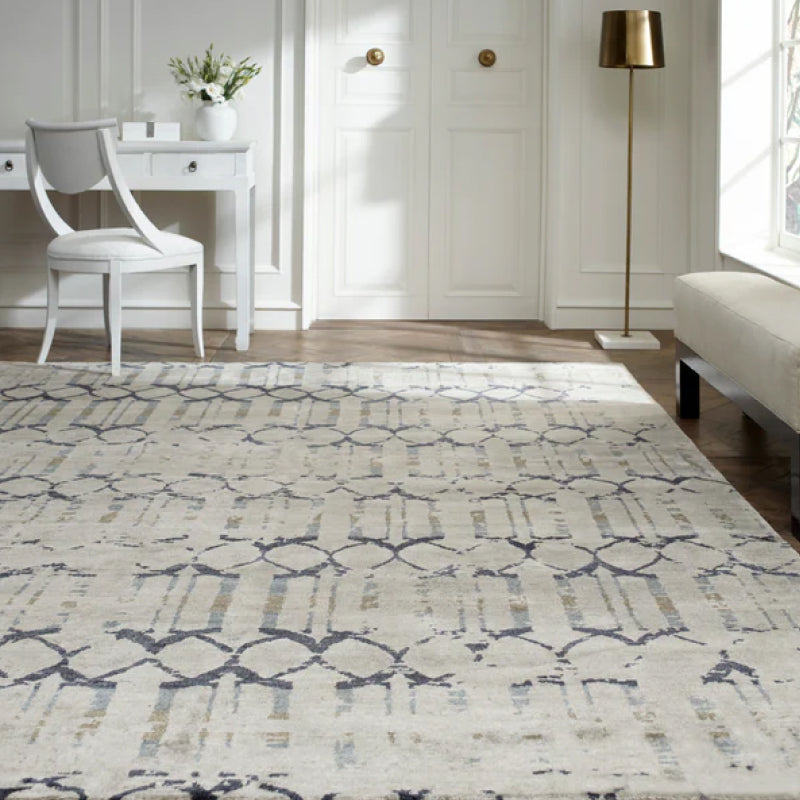
You can physically drape a sample over the arm of a Verellen sofa or hold it up to a Kalaty rug to see how the light hits it and how the colors and textures truly interact. It removes all the guesswork.
Plus, you get instant access to our designers, who can double-check your measurements or suggest an alternative you never would have found online. That in-person confidence, knowing you've made the perfect choice for your high-end furniture, is truly priceless.
Ready to find the perfect textile to bring your vision to life? The team at Lewis and Sheron Textiles is here with the expert guidance and exquisite selection you need. Come visit our Buckhead showroom to explore our collections and let our designers help you get started.