



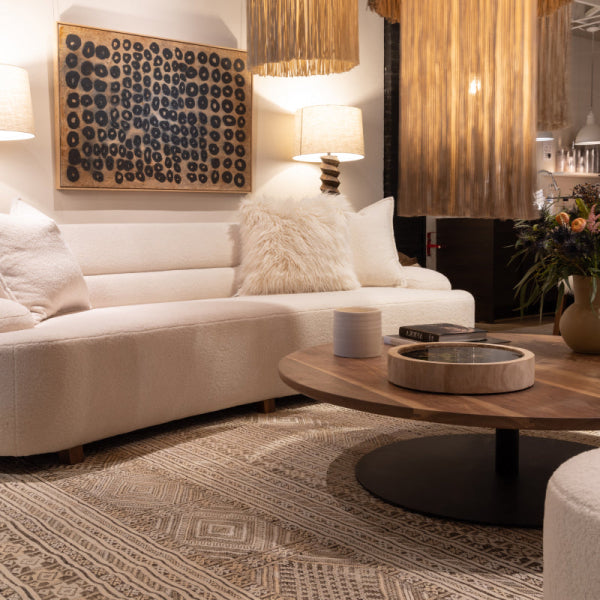
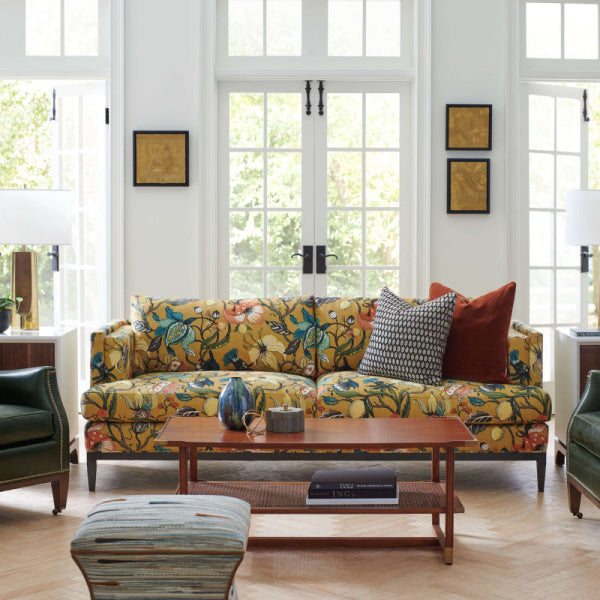








A lot of Atlanta homeowners arrive at the same moment before they ever step into a showroom. They're standing in a Buckhead living room with a tired sofa that still has great bones, or they're furnishing a new space in Alpharetta and want one piece that doesn't look like everyone else's. They want a fabric with presence. They want softness, depth, and that unmistakable light play only velvet gives. They also want it to survive real life.
That's where the search gets complicated. Luxury sofas, premium sectionals, custom chairs, and other high-end furniture pieces often look similar online, but velvet quality varies dramatically once you touch it, sit on it, and live with it. A fabric can photograph beautifully and still disappoint in a busy family room. Another can sound “performance-driven” in marketing copy and still demand more careful maintenance than one might expect.
For discerning buyers in Atlanta, Roswell, Sandy Springs, and the surrounding North Atlanta market, the right velvet isn't just about color or trend. It's about choosing a material worthy of custom upholstered furniture and heirloom-quality furniture. The best velvet upholstery fabric has to do two jobs at once. It has to look elevated enough for designer furniture and statement furniture pieces, and it has to perform well enough that you still love it years later.
The Search for Enduring Luxury in Your Atlanta Home
A common scenario goes like this. A homeowner in Sandy Springs has a formal living room that needs a true focal point, while the family room needs a high-quality couch that feels refined but not precious. At the same time, a chair inherited from a parent or grandparent is too meaningful to discard, yet it needs fresh upholstery to work in the home now. Velvet becomes the obvious candidate because few materials bring the same richness to custom furniture Atlanta clients tend to want.
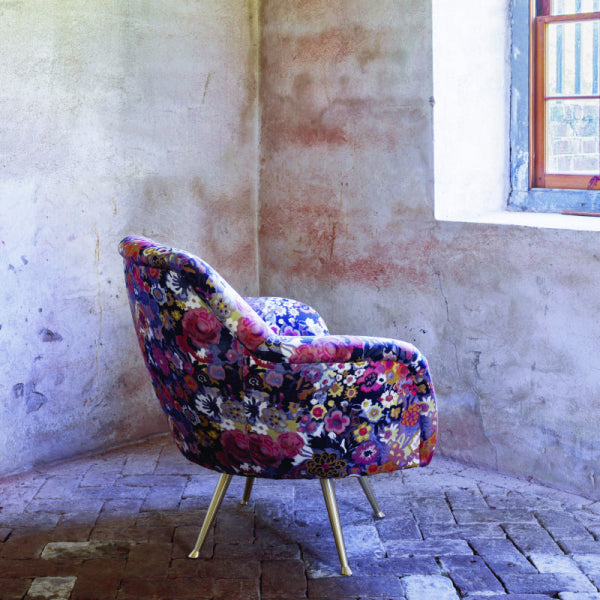
The appeal is easy to understand. Velvet softens architecture, warms up larger rooms, and gives even structured silhouettes a fuller, more finished look. On a curved custom chair, it can make the shape feel sculptural. On a large sectional, it can keep scale from feeling bulky. For luxury home furnishings, that matters.
What buyers are usually balancing
Some clients are choosing between reupholstering a beloved piece and ordering new custom upholstered furniture. Others are comparing best luxury sofa brands and wondering whether a mass-produced sofa can ever deliver the same result as a made-to-order piece. The underlying question is usually the same: what will still look beautiful after years of use?
Here's the practical answer. Velvet can absolutely be a long-term upholstery choice, but only if you evaluate it as a construction material, not just a style statement. The right velvet for a formal sitting room may be the wrong velvet for a media room in Fulton County where kids, pets, and guests use the furniture daily.
Practical rule: Buy velvet the way you'd buy fine cabinetry or stone. Look past the finish first. Judge the structure.
That's especially important when you're shopping for designer furniture near me or comparing luxury furniture Atlanta options. The furniture frame matters. The upholstery workmanship matters. But the velvet itself often determines whether the piece keeps its beauty or starts looking tired long before it should.
Why velvet still wins
Velvet stays at the top of the list for luxury sofas and statement furniture pieces because it offers something flat weaves can't. It gives dimension. It changes with the light. It makes a room feel considered. In Atlanta homes with strong natural light, that shifting surface can be one of the most beautiful parts of the room.
The smartest buyers don't ask only which velvet is prettiest. They ask which velvet deserves a place on furniture they plan to keep.
Decoding Velvet The Difference in the Fibers
Velvet isn't one thing. It's a family of fabrics, and the fiber content changes almost everything you care about, including sheen, softness, resilience, and upkeep. If you think of velvet like wine, the weave is the vineyard and the fiber is the grape. The category may be the same, but the character can be completely different.

Natural velvets
Natural velvets tend to appeal to buyers who want subtlety and depth rather than a slick, highly uniform surface.
- Silk velvet has the most luminous drape and a rich, almost fluid look. It's luxurious, but it's usually chosen for rooms where beauty matters more than hard daily use.
- Cotton velvet feels softer and more relaxed. It often has a gentler, more matte finish that works beautifully in traditional rooms, refined libraries, and lower-traffic spaces.
Cotton still has a place in luxury interiors, but it's not the universal answer. According to this velvet buying guide on Alibaba, solution-dyed polyester or polyester-nylon blends are identified as the safest, most durable picks for heavy-use upholstery, whereas cotton is reserved for low-traffic zones, and high-quality upholstery velvet must spring back greater than 90% within 10 seconds after a firm press to prevent permanent matting.
Synthetic velvets
Synthetic doesn't mean cheap. In upholstery, it often means smarter engineering.
Polyester velvet can be a strong fit for high-quality couches and premium sectionals that need to handle daily use with less visible stress. Nylon blends often feel even more technical and resilient. These are the fabrics many designers choose when the piece has to bridge beauty and routine living.
A few terms help when you're evaluating options:
| Term | What it means in practice |
|---|---|
| Pile | The upright surface fibers that create velvet's soft hand and color variation |
| Nap | The direction the pile lays, which changes how light hits the fabric |
| Recovery | How well the pile lifts back up after pressure |
| Backing | The structural base that keeps the fabric stable on furniture |
A beautiful velvet that doesn't recover well will start looking worn long before the frame does.
If you want a quick visual reference while planning room concepts, Fibers 1 prints for projects can be a useful way to think about how fiber-inspired textures translate across a broader design scheme.
For buyers comparing plush fabrics, it also helps to understand the difference between velour and velvet. The names are often treated as interchangeable in casual shopping, but they perform very differently once upholstery enters the conversation.
What Defines Designer-Quality Velvet Furniture
Designer quality isn't a mood. It's visible in the mechanics of the fabric. When a velvet sofa looks fuller, sharper, and more expensive than a mass-market version, that difference usually comes from density, weight, and how the pile is built to resist collapse.

The mechanical thresholds that matter
A useful benchmark comes from this Atlanta furniture reference, which notes that luxury velvet upholstery from renowned mills like Kravet and Fabricut features a face weight of 28 to 32 ounces per square yard and a thread density of 1,200 to 1,500 threads per inch, and that these are the thresholds that separate designer-quality furniture from mass-produced couches.
That's why two sofas in similar colors can feel completely different. One feels plush, stable, and well-finished. The other feels thinner and less anchored, even before it sees real use.
Another overlooked marker is weight. Hart Design Selection's guide to velvet points out that true upholstery velvet must have a total weight of at least 250 to 300 g/m² to prevent rapid crushing. That matters because velvet doesn't fail only by abrasion. It also fails by flattening.
What luxury feels like in the hand
When evaluating velvet in person, look for these signs:
- Dense surface: Run your hand across the pile. Better velvet feels full, not sparse.
- Clean color shift: Good velvet changes tone with the light in a rich, controlled way rather than looking streaky.
- Stable backing: Stretch the fabric gently on the diagonal. Premium upholstery velvet should show minimal give.
- Substantial body: It should feel like it belongs on furniture, not like drapery trying to impersonate upholstery.
Here's the mistake many shoppers make. They assume softness equals quality. It doesn't. Plenty of soft velvets crush too easily or lack enough structure for custom upholstered furniture.
The best designer furniture fabrics don't just feel lush on day one. They hold their shape after people actually use the piece.
If your room also needs acoustic softness, custom sound solutions by The Drapery Company offer a useful parallel. Velvet's density and surface structure can influence more than appearance alone, which is part of why it feels so enveloping in a finished space.
Understanding Velvet Performance and Durability Specs
If you're comparing luxury sofas, custom chairs, or premium sectionals for different rooms, the most practical spec to understand is abrasion resistance. Its terminology can be technical, but the core idea is simple. A machine rubs the fabric repeatedly to simulate wear. The result helps determine whether the velvet is suited for decorative use, residential upholstery, or commercial traffic.
The rub counts that matter
According to HN Leading's upholstery velvet guide, residential-grade standards require a minimum of 15,000 double rub cycles, while commercial-grade velvet must exceed 30,000+ cycles. The same source states that standard polyester velvet achieves 25,000 to 35,000 cycles, while high-performance varieties can reach 40,000 to 60,000.
That creates a useful sorting system:
| Use case | What to look for |
|---|---|
| Decorative only | Avoid for seating if it falls below upholstery standards |
| Typical residential seating | At least 15,000 cycles |
| Busy residential rooms | Velvet that moves into the stronger performance ranges |
| Commercial or very demanding use | 30,000+ cycles and above |
Why rub count isn't the whole story
Rub count tells you whether the face can endure friction. It doesn't tell you how gracefully the velvet will handle pressure, lounging, or repeated compression in the same seat cushion. That's why buyers shopping for the best velvet upholstery fabric should treat abrasion as one metric, not the only metric.
For family rooms in Roswell or media rooms in North Atlanta, I'd rather see a balanced specification than one heroic number. Good performance comes from the combination of abrasion resistance, pile density, body, and appropriate maintenance expectations.
If you're comparing practical ownership costs over time, understanding CT upholstery cleaning expenses offers a useful outside perspective on the service side of upholstered furniture care. Cleaning is part of ownership, especially with a fabric that rewards proper maintenance.
For a broader look at resilient upholstery options, this guide to choosing the best performance fabrics can help frame velvet against other high-use materials without reducing the conversation to a single spec.
Choosing Velvet for Homes with Pets and Children
One of the biggest myths in upholstery is that velvet is automatically too delicate for real family life. That's outdated thinking. Modern velvet can be an excellent choice for households with dogs, cats, children, and frequent guests, especially when you choose the right fiber and understand what “performance” means.

The myth that causes the most mistakes
Many buyers hear “performance velvet” and assume washable slipcover convenience. That's often wrong. This buying guide on velvet upholstery fabric makes the point clearly: most velvet upholstery is not removable or washable, cleaning codes such as W, SW, and S are critical, and even durable solution-dyed polyester velvets typically require professional cleaning.
That matters because people often choose a fabric for a house with children or pets based on the wrong expectation. Durable and washable are not the same thing. Stain-resistant and machine-washable are not the same thing either.
How to choose more wisely
For active homes, focus on behavior rather than marketing labels.
- Choose the right fiber family: Polyester and nylon-forward velvets tend to be the safer picks when the furniture will see daily use.
- Read the cleaning code before ordering: If you don't know whether the fabric is W, SW, or S, you don't yet know how to live with it.
- Think about the room's use: A formal sitting room and the main TV room don't need the same velvet.
- Expect professional care at times: That's normal with many luxury home furnishings.
“Performance” should tell you how a fabric behaves under use. It shouldn't trick you into assuming home laundering.
For pet owners, texture can also be part of the strategy. Velvet's tight pile often handles everyday pet hair better than looser weaves that embed debris. That doesn't make it maintenance-free, but it can make day-to-day upkeep less frustrating.
If pets are part of the design brief from the start, this guide to pet-friendly upholstery fabric is a good companion read when narrowing down options for a high-quality couch or custom chair.
Styling with Velvet Color Pile and Texture
Velvet earns its place in designer furniture because it changes a room before you add a single accessory. Flat fabrics fill space. Velvet shapes it. The pile catches sunlight, deepens color in shadow, and gives even a clean-lined silhouette more presence.
Why samples matter more with velvet
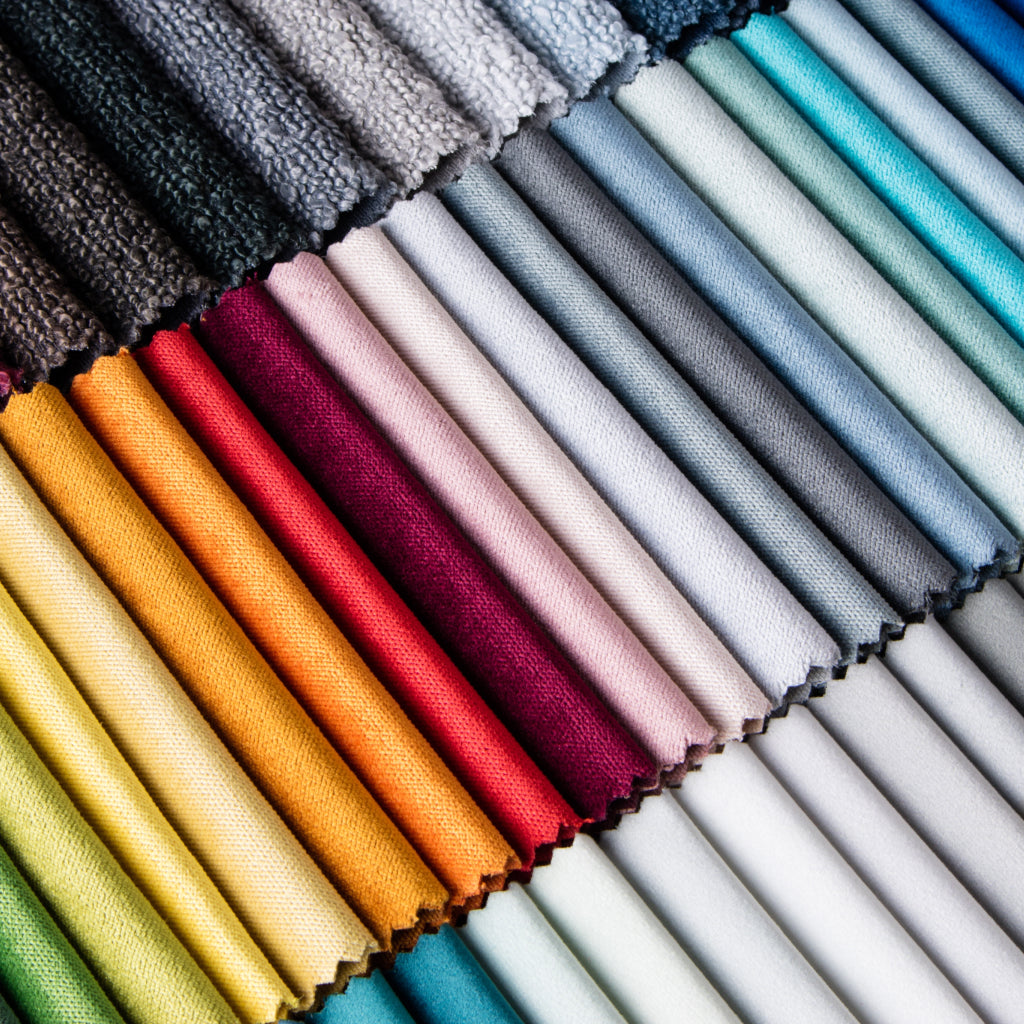
Velvet is one of the few upholstery fabrics that can look dramatically different from morning to evening. A warm taupe can read silvery in one Buckhead living room and much richer in a Sandy Springs den. A navy can swing from almost inky to jewel-toned depending on pile direction and window exposure.
That's why samples aren't optional. You need to see the fabric upright, brushed in different directions, and placed in the room where it will live. Online images flatten exactly the quality that makes velvet special.
Matching color to furniture scale
A few general patterns hold up well in practice:
- Large premium sectionals tend to look strongest in layered neutrals, smoky blues, olive tones, and other colors that let the pile create depth without overwhelming the room.
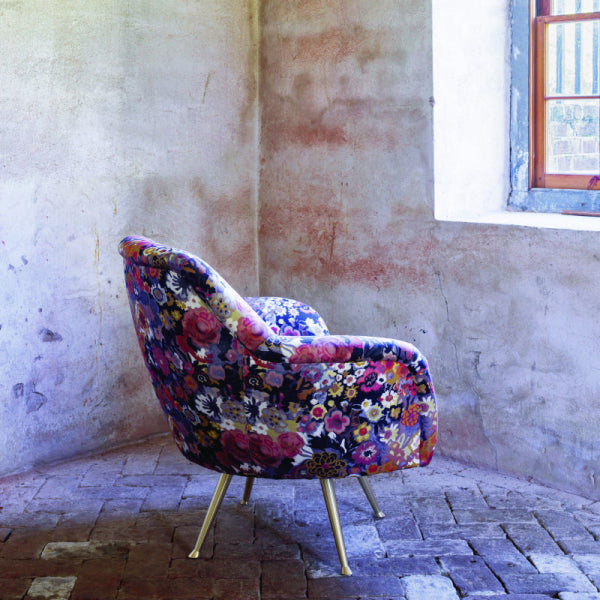
- Custom chairs can carry more adventurous color. Jewel tones, deep rusts, and saturated greens often work beautifully because the smaller scale contains the drama.
- Statement furniture pieces benefit from simple surroundings. Velvet already brings visual movement, so it doesn't need heavy competition.
Texture pairings that work
Velvet looks best when it isn't asked to do everything alone. Pair it with materials that sharpen its softness.
| Velvet element | Best companion |
|---|---|
| Lustrous pile | Crisp linen or Belgian linen |
| Deep color | Natural wood or matte lacquer |
| Soft hand | Leather, stone, or metal |
| Curved upholstery | Tailored trim and cleaner surrounding forms |
Don't choose velvet only by swatch color. Choose it by how the pile behaves in your light.
In luxury home furnishings, texture layering is often what separates a room that feels expensive from one that contains expensive objects. Velvet does that work beautifully. It adds atmosphere without clutter, which is why it remains a favorite for both traditional and more modern custom furniture Atlanta interiors.
Bring Your Custom Furniture Vision to Life in Atlanta
By the time you're ready to buy, the question usually isn't whether velvet is beautiful. It's whether the specific velvet in front of you is right for your room, your lifestyle, and the piece you want to keep. That decision is hard to make from a product thumbnail.

What long-term value looks like
For buyers in Buckhead and Alpharetta investing in premium sectionals and other heirloom-quality furniture, longevity is part of the luxury equation. This Italian luxury interiors reference states that high-end velvet fabrics with a double rub count of 40,000 or higher can maintain their pile integrity and color saturation for 15 to 20 years on premium sectionals when properly maintained.
That's the essential difference between browsing and buying well. A beautiful sofa is easy to find. A beautiful sofa upholstered in velvet that still looks composed years later requires better judgment.
How discerning buyers narrow the choice
The strongest decisions usually come from seeing several things together at once:
- The fabric in person so you can judge color, pile, density, and hand.
- The furniture silhouette because the same velvet behaves differently on a bench seat, a tight back, or a sculptural custom chair.
- The room context including light, pets, children, and whether the piece is for everyday living or occasional use.
- The care reality so the maintenance expectations match the household.
That's especially true for shoppers searching luxury furniture Atlanta, designer furniture near me, or custom furniture Atlanta with purchase-ready intent. At this level, you're not just buying a seat. You're commissioning how the room will feel.
A good velvet selection can enhance a new made-to-order sofa. It can also transform a reupholstered family piece into something that feels current without losing its history. In both cases, the best result comes from touching the fabric, testing the color in person, and choosing with both beauty and use in mind.
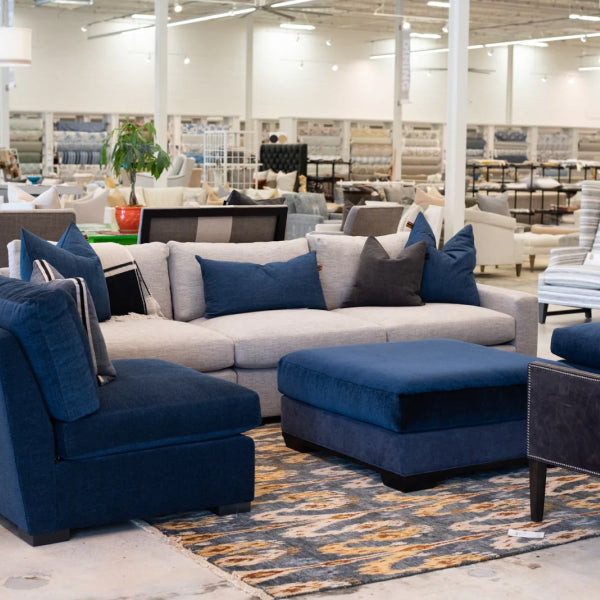
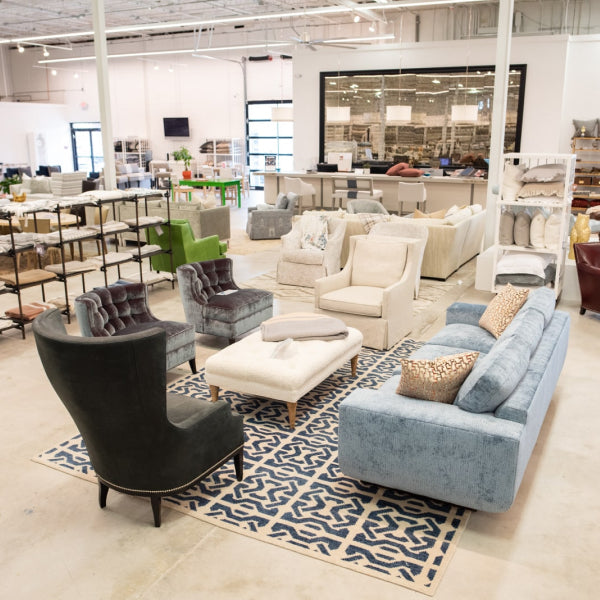
If you're ready to compare velvets in person, explore custom upholstered furniture, or refresh a treasured piece with expert reupholstery, visit Lewis and Sheron Textiles. Their Atlanta Design Center offers premium fabrics, luxury home furnishings, complimentary design help while shopping, and the kind of hands-on guidance that makes choosing the best velvet upholstery fabric far easier.