



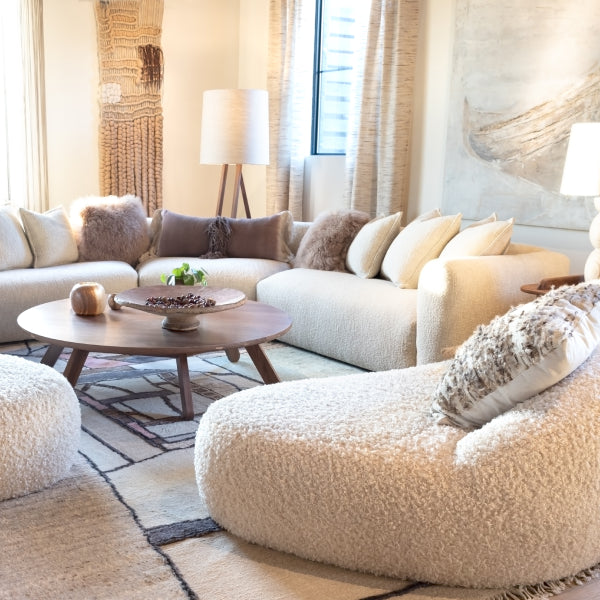
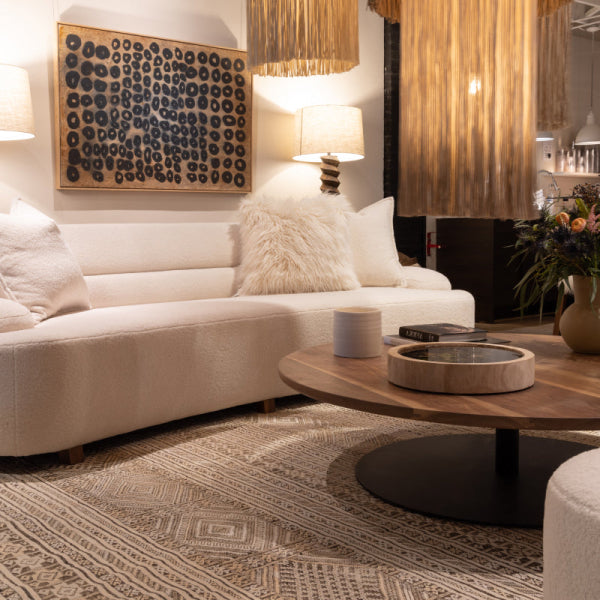
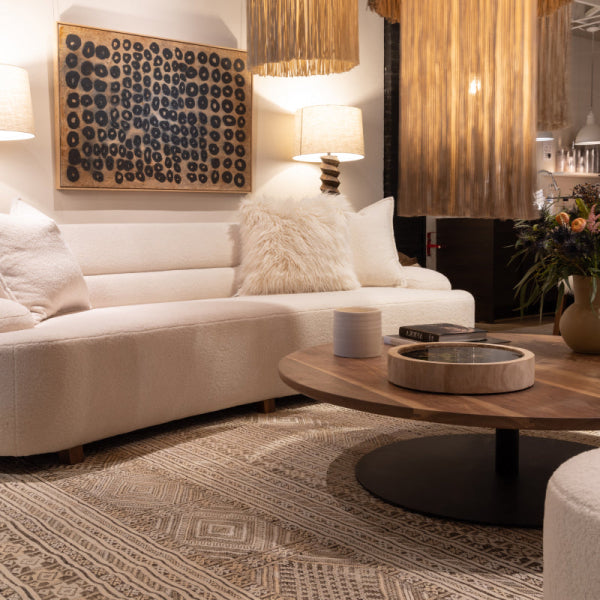
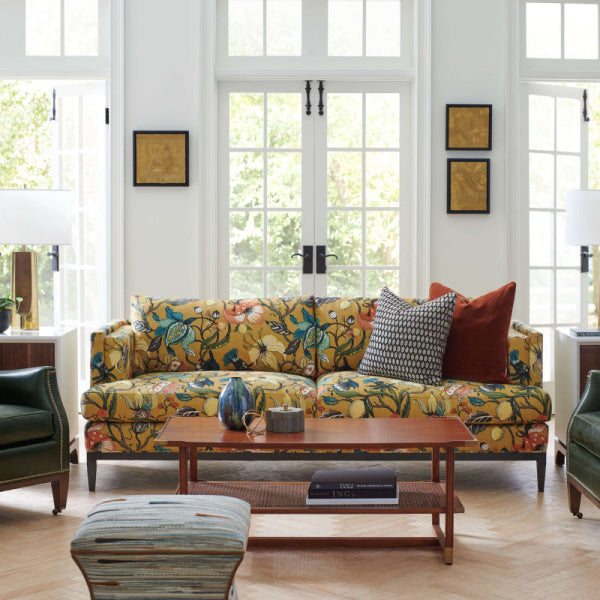
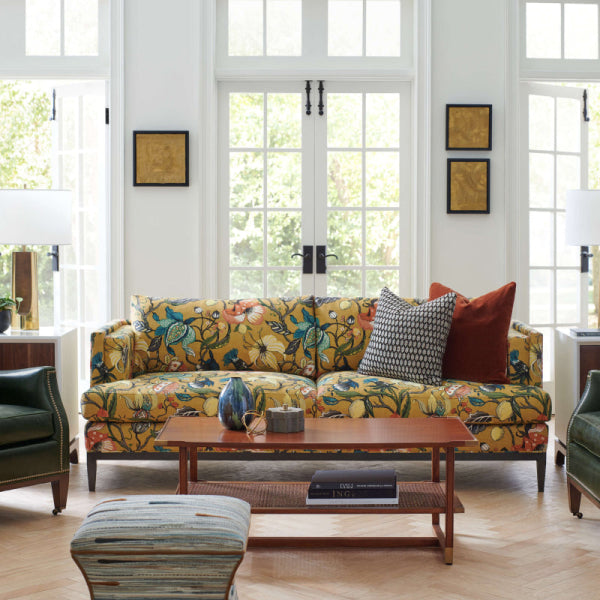
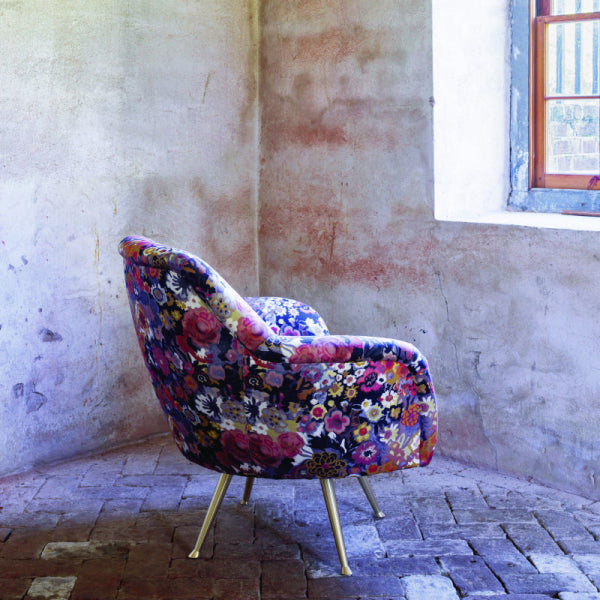








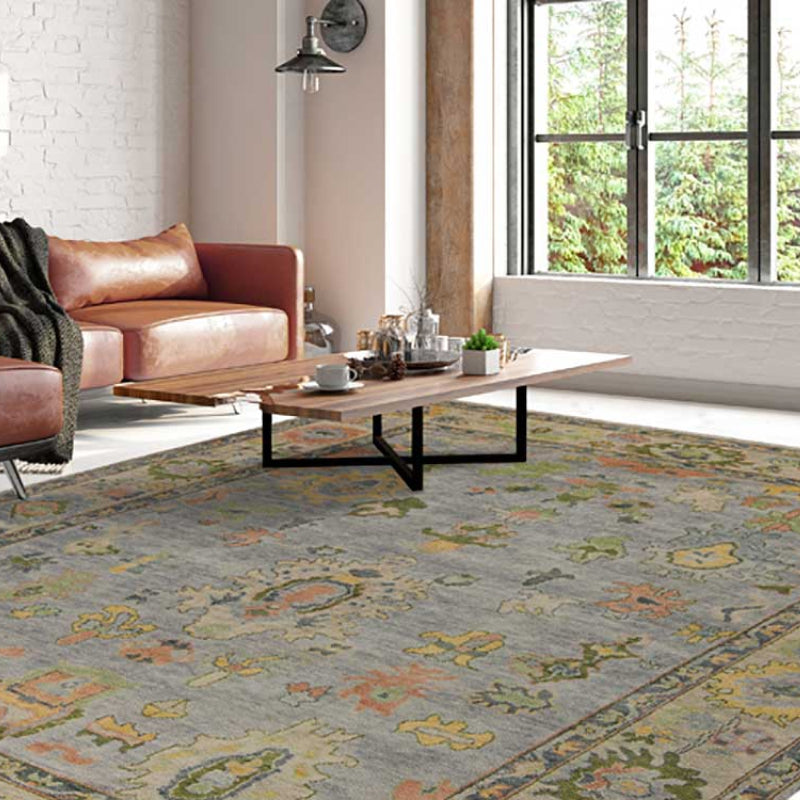
You're standing in a beautiful living room in Buckhead or Sandy Springs. The sofa is exactly right. The custom chairs are upholstered in a fabric you waited weeks to approve. The coffee table has the patina and weight that makes a room feel finished. Then your dog races through after the morning walk, or your cat claims the sunny corner, and suddenly the rug feels like the weak link.
That problem is often solved badly. People buy something “pet-friendly” that looks temporary, flat, uninspired, and disposable. That's the wrong move, especially if you've already invested in high-end furniture, luxury sofas, custom upholstered furniture, and the kind of designer furniture that defines the room.
The best rugs for pet owners aren't cheap placeholders. They're part of the architecture of the space. In Atlanta, Buckhead, Alpharetta, Roswell, and Sandy Springs, I see the same mistake over and over. Homeowners spend serious money on premium sectionals, high-quality couches, and statement furniture pieces, then treat the rug like an afterthought because a dog or cat lives there too.
That thinking costs more in the long run.
A pet-friendly rug can still read as refined, layered, and suited for a luxury interior. It can support heirloom wood, soften the lines of a custom sofa, and handle real life without turning the room into a kennel. It just has to be chosen with more intelligence than “dark color, washable, good enough.”
The End of the Compromise Between Pets and Style
A client restoring a traditional home in North Atlanta once told me she felt trapped between two bad options. Option one was a gorgeous rug that made the room feel complete but left her anxious every time her puppy came inside. Option two was a practical rug that could take abuse but made the entire room feel generic. She assumed that was the trade.
It isn't.
The old idea that pet rugs are temporary has been holding back good rooms for years. If you're building a space around heirloom-quality furniture, restored case goods, Belgian linen, or custom furniture Atlanta shoppers typically gravitate toward, your rug should support that vision, not dilute it. The right piece doesn't just survive pets. It helps the room stay polished while your home gets lived in.
Stop buying rugs like they expire
The disposable-rug mindset is especially misguided in luxury homes. You don't buy a carefully crafted sofa for a quick season. You don't choose designer furniture near me because you want something forgettable. You buy with permanence in mind.
That's why one fact matters. According to a 2025 report by the National Association of Home Builders, 61% of custom furniture designers state that low-pile wool and synthetic blends with stain-resistant treatments can last 8 to 10 years while harmonizing with restored wood and linen, which directly challenges the idea that pet rugs need replacement every few years.
My view: If a rug is meant to anchor a room with restored antiques, custom upholstery, or luxury home furnishings, it should be selected with the same long-term discipline as the furniture.
What affluent homeowners should expect
If you live in Buckhead, Alpharetta, Roswell, or Sandy Springs, you're probably not asking for the cheapest answer. You're asking for the smartest one. You want a rug that can work under a sculptural coffee table, beside custom chairs, and in front of a sofa that was built to last.
That means your rug has to do four jobs at once:
- Handle pet life without looking battered.
- Support the room's palette rather than flattening it.
- Feel appropriate beside luxury sofas and premium sectionals, not like a compromise purchase.
- Age gracefully so you're not replacing it before the room itself evolves.
That's the standard. Anything less is a mismatch.
Choosing Your Foundation The Best Fibers for Durability
Fiber is where pet-friendly performance starts. Not ends. Starts. If you choose the wrong fiber, no amount of styling will save the rug from becoming a maintenance headache.
The practical shortlist is tight. For most luxury homes with pets, I'd focus on wool, nylon, polypropylene, and selected polyester constructions. Each has a place. Each has trade-offs. The right choice depends on whether your priority is elegance, easy cleanup, heavy traffic, or all three.

My ranking for most pet-owning households
If you want the short version, this is how I think about it.
| Fiber | Best use | What I like | What to watch |
|---|---|---|---|
| Wool | Formal rooms, long-term interiors | Resilient feel, elevated finish | Needs thoughtful cleaning |
| Nylon | Busy family rooms, hallways, dens | Strong performer under claws and traffic | Can feel less artisanal depending on quality |
| Polypropylene | Casual spaces, indoor-outdoor use, accident-prone zones | Strong moisture and stain resistance | Less refined underfoot than premium wool |
| Polyester | Softer secondary rooms | Pleasant hand, decent stain resistance | Not my first pick for the hardest-working spaces |
According to the American Home Furnishings Alliance, 72% of pet owners in high-traffic areas prefer synthetic fibers like polypropylene and nylon, while 28% choose natural wool despite its resilience. That preference tells you something important. In the hardest-working rooms, people favor easier cleanup and lower stress.
Wool versus synthetics in a luxury interior
Wool is the classic blazer. Nylon is the performance jacket. Polypropylene is the polished outdoor coat. All can work. You just need to stop expecting one material to do every job.
For formal living rooms, libraries, and sitting areas built around statement furniture pieces or high-quality couches, I still like tightly made wool. It reads richer. It belongs next to handcrafted wood, layered textiles, and custom upholstery.
For great rooms, breakfast-area rugs, family rooms, and active pet zones, nylon and polypropylene are often the more disciplined choice. They don't ask much from you. They recover better from daily life, and they're easier to live with if your dog treats the room as a racetrack.
Don't buy a fiber based on romance alone. Buy the one that matches how the room is actually used.
Where performance textiles fit into the conversation
If you've already embraced performance upholstery, this should sound familiar. Homeowners comparing custom vs mass-produced furniture already understand that material choice changes the ownership experience. The same logic applies underfoot.
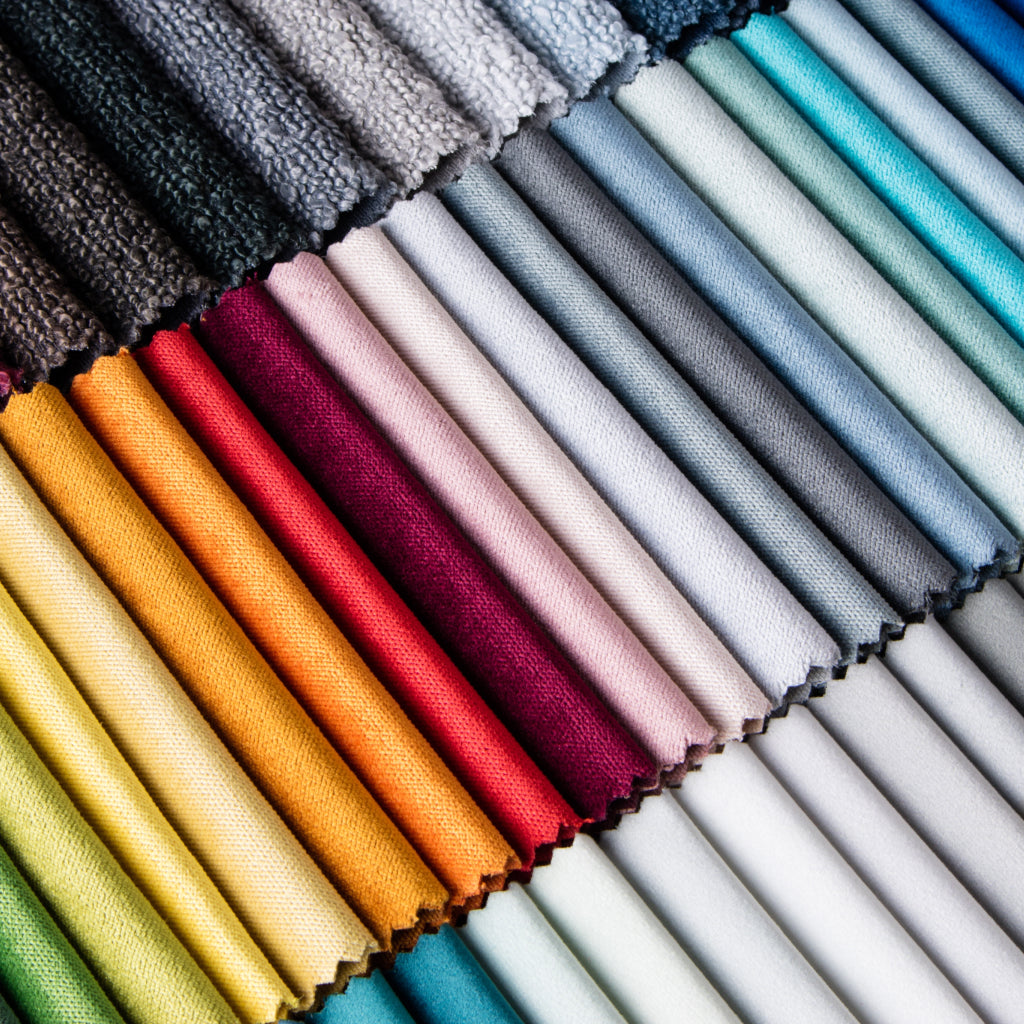
Premium upholstery fabrics such as Crypton and Libeco Home have become shorthand for practical luxury in furnished rooms. Your rug should follow that same standard. It doesn't need to mimic the upholstery, but it should match the discipline behind it.
For especially busy spaces, I also recommend reading this guide to rugs for high-traffic areas. It pairs well with the same decision-making process buyers use when selecting designer furniture and luxury home furnishings built for daily life.
Beyond Fiber Construction Secrets for a Resilient Rug
A beautiful fiber in the wrong construction will fail fast. This misunderstanding often leads shoppers astray. They hear “wool” and assume it's durable. They hear “synthetic” and assume it's easy. Then they bring home a rug with the wrong pile and wonder why it looks tired after one season with a dog.
Construction decides whether claws catch, fur embeds, and edges start to break down.

Low pile wins
This is the easiest rule in the entire category. Choose low-pile or flatweave construction.
Expert benchmarks indicate that low-pile flatweave rugs under 0.5 inches are 3x easier to vacuum and clean, while high-pile shag can trap 40% more particulate matter and fur, according to this pet-friendly rug construction reference. That's not a subtle difference. It changes day-to-day ownership.
A low-pile rug gives pet hair fewer places to hide. It also reduces the chance of claw snags and makes routine vacuuming effective instead of performative.
What construction I'd avoid
I'm blunt about this because people waste money here.
- High-pile shag: It's a fur magnet. It also looks dated faster in pet homes.
- Loose loops: A cat or dog claw can catch and pull before you even notice it.
- Heavy fringe: It may look charming in the showroom. It looks chewed, tangled, or dirty in real life.
- Lightly built tufted rugs for hard-use rooms: Fine in the right setting. Wrong for a busy pet household.
What to buy instead
If you want a rug that belongs in an elegant interior and still handles pets, focus on these construction signals:
- Flatweave or low pile for easy cleaning and cleaner lines.
- Tight weave so claws don't find loose entry points.
- Reinforced edges because edge failure ages a rug quickly.
- Hand-knotted quality when you want longevity, refinement, and a piece that can sit comfortably under serious furniture.
A resilient rug doesn't feel overbuilt. It feels calm. It stays flat, keeps its shape, and doesn't advertise every single pass of paws.
If you're shopping for a room anchored by classic upholstery or a refined sectional, construction matters just as much as color. It's the engineering underneath the style.
Using Pattern and Color to Your Advantage
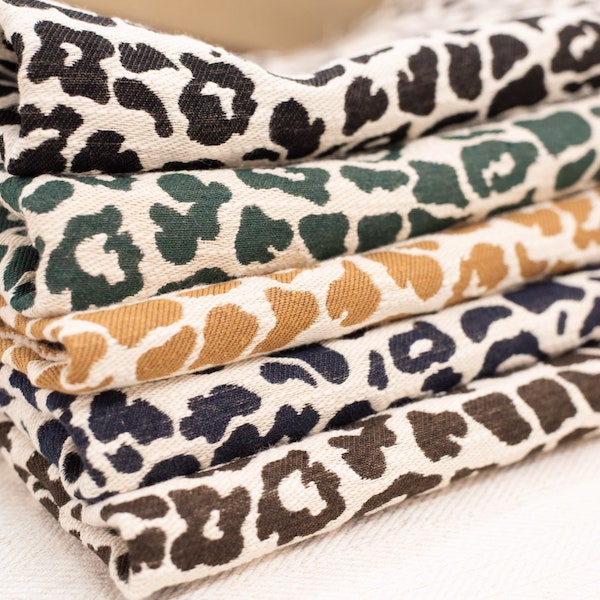
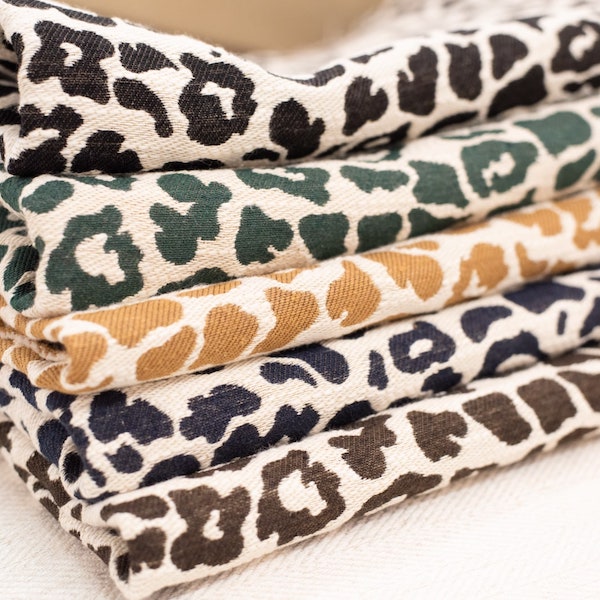
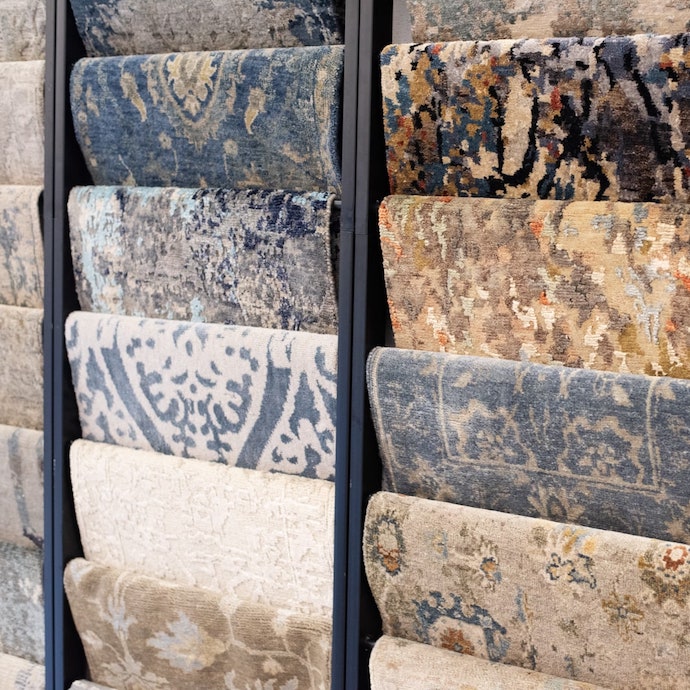
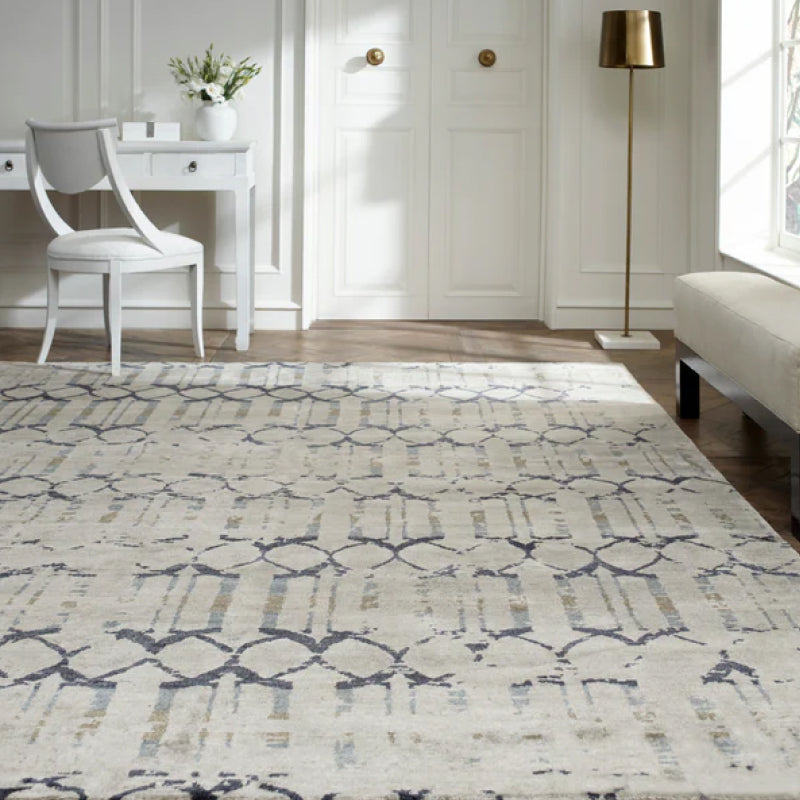
The most elegant pet-friendly rug move isn't a dark solid. It's pattern.
People still think patterned rugs are “too busy” for a polished room, especially in Alpharetta and Roswell homes where clients often want a quieter envelope around custom furnishings. I disagree. The right pattern does more for a room than a plain rug ever will, and it performs better too.

Why solids are the risky choice
Research shows that swirling, irregular, and multi-shade patterns camouflage pet traffic marks and minor stains better than solid-color rugs, where every imperfection is more visible, as noted in this design-focused pet rug guide.
That tracks with what I see in real homes. A solid ivory rug under a clean-lined sofa can look stunning on install day and stressed by the end of the week. A layered pattern in mineral, tobacco, slate, sand, or muted rust keeps the room looking composed between cleanings.
My design rules for pet households
I use pattern as a visual management tool. Not camouflage in a crude sense. Camouflage in a refined sense.
- Choose movement over symmetry. Irregular motifs hide traffic better than strict geometrics.
- Stay within one color family. Variegated shades look elegant and disguise inconsistency.
- Use medium value tones. Very light and very dark solids both make fur and marks more obvious.
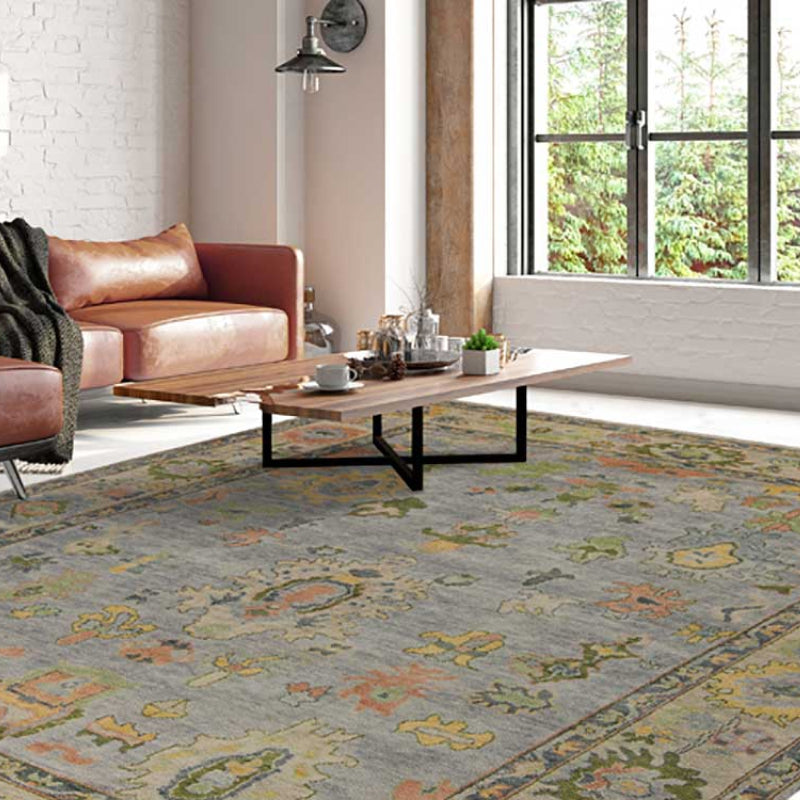
- Let the rug lead the room. In a space with luxury sofas or custom chairs, a patterned rug often acts as the bridge between upholstery, wood finishes, and accent textiles.
A lot of homeowners avoid pattern because they're afraid it will fight the furniture. Usually the opposite is true. Pattern gives the room depth and makes expensive furniture look intentional.
If you're uncertain how to combine motifs without clutter, this article on mixing patterns in home decor is useful. It helps homeowners move beyond safe but bland choices.
The smartest rug in a pet home doesn't hide in the room. It does quiet work while still carrying design weight.
The best colors for designer quality rooms
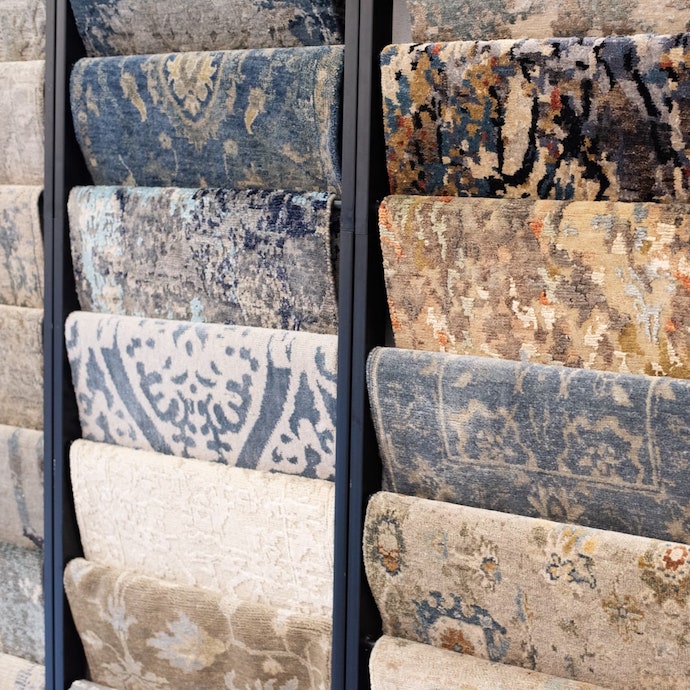
In homes centered on designer furniture and luxury home furnishings, I'd steer you toward nuanced neutrals rather than flat beige. Think heathered taupe, softened charcoal, stone, mushroom, olive-gray, faded blue, and warm clay.
Those tones have enough complexity to absorb daily wear visually. They also pair better with custom upholstery than one-note neutrals. The room feels collected, not decorated in a rush.
Creating a Cohesive Look with High-End Furnishings
The rug has to belong to the furniture story. That's where many rooms fall apart. A homeowner spends carefully on a Verellen sofa, a Wesley Hall chair, or a set of custom pieces designed to avoid the generic look of mass retail, then drops in a rug that has no relationship to scale, finish, or mood.
That mismatch is expensive, visually and financially.

Buy the rug with the same mindset as the sofa
High-quality custom upholstery from makers such as Verellen and Wesley Hall typically lasts 15 to 25 years, significantly longer than mass-produced furniture, according to this overview of durable furniture and rug pairing. If your seating is built for that kind of life span, your rug shouldn't be chosen like a temporary fix.
That doesn't mean the rug must last as long as the sofa. It means the rug should be selected as part of a long-term furnishing plan. Especially for buyers searching best luxury sofa brands, what makes furniture designer quality, or how long high-end furniture lasts, this is the missing layer. Furniture durability and rug durability are tied together.
How I pair rugs with luxury furniture
When a room includes premium sectionals, custom upholstered furniture, or heirloom wood pieces, I look at three things first.
Scale
A too-small rug cheapens even excellent furniture. Front legs floating off the rug makes the room feel disconnected. In larger Atlanta homes, especially open-plan spaces, the rug should hold the seating group together and give the furniture a proper footprint.
Texture
If the sofa fabric has richness, such as linen, velvet, or a performance weave with depth, the rug should complement it rather than compete. That usually means a low-pile rug with visual texture, not thick physical bulk.
Tone
The rug should echo the room's materials. Walnut, oak, brass, plaster, and stone all benefit from a rug palette with some complexity. Flat color rarely does enough.
A pet-friendly rug in a luxury room should protect the furniture investment and complete the visual composition at the same time.
Why this matters in Atlanta's luxury market
In affluent homes, furniture isn't just functional. It's expressive. Buyers looking for luxury furniture Atlanta, custom furniture Atlanta, and designer furniture near me are usually trying to create a room they can't get off the floor of a chain store.
The rug is what keeps that room grounded. It protects expensive upholstery from visual imbalance, softens acoustics, and gives pets a landing surface that doesn't undermine the aesthetic standard you paid for.
Protecting Your Investment Rug Care for Pet Homes
A good rug still needs a routine. Not a fussy one. A disciplined one. The goal is to keep pet hair, dirt, and accidents from becoming permanent history.
The maintenance habits that matter
Start with regular vacuuming on the correct setting. Low-pile rugs respond well to consistent cleaning because debris sits closer to the surface. That's exactly why I prefer them in pet homes. You're removing hair and grit before they settle in and abrade the fibers.
For wool, blot accidents immediately and avoid over-wetting the area. For synthetics, quick spot cleaning is usually more forgiving, but you still want to blot rather than scrub. Scrubbing roughs up fibers and spreads the problem outward.
If you own a wool rug, this guide on how to care for wool rugs is worth bookmarking. It covers the kind of handling details that preserve appearance over time.
Rug pads aren't optional
A study in the Journal of Interior Design found that rugs with non-slip backing or pads, recommended by 89% of designers for active pets, reduced slip-and-fall incidents by 63% in homes with large dogs. That matters for safety, but it also matters for wear. Less shifting means less edge stress, less bunching, and fewer distorted fibers.
Buy the pad that fits the floor and the rug. Don't improvise. A quality pad is part of the rug system, not an accessory.
My practical care checklist
- Vacuum consistently: Frequent light passes beat occasional aggressive cleaning.
- Treat accidents fast: Blot first. Use the correct cleaner for the fiber.
- Rotate when needed: This helps distribute wear in sunny or high-traffic rooms.
- Schedule professional cleaning: A serious rug deserves professional attention, especially in homes with pets.
- Protect feeding zones separately: If your pet's bowls sit near the rug, adding a dedicated layer helps contain the mess. This guide to choosing a pet waterproof mat is a practical companion resource for that smaller but constant problem.
Clean rugs age better than over-cleaned rugs. Consistency beats panic.
The owners who keep rugs looking best aren't the ones scrubbing constantly. They're the ones who establish a sane routine and stick to it.
Your Atlanta Destination for Pet-Friendly Luxury
The right answer is clear. Choose a durable fiber. Favor low-pile, tightly built construction. Use pattern intelligently. Then place that rug in conversation with the rest of the room, especially if you've invested in custom upholstered furniture, high-end furniture, and the kind of statement furniture pieces that define luxury interiors across Atlanta, Buckhead, Alpharetta, Roswell, Sandy Springs, Fulton County, and North Atlanta.
That's how you stop buying pet rugs as throwaway items.
In affluent markets like Atlanta, 87% of homeowners prioritize custom upholstered furniture to avoid cookie-cutter designs, according to this pet-friendly rug market overview. That preference makes expert guidance more valuable, not less. A distinctive room needs a rug chosen with equal care. Especially if you're weighing custom vs mass-produced furniture, comparing premium sectionals, or trying to build a home around heirloom-quality furniture, the rug should support the identity of the space.
What pet owners in luxury homes should do next
Bring the same decision-making standard to rugs that you bring to upholstery, case goods, and lighting.
- If the room is formal, lean toward refined low-pile wool or a strong wool blend.
- If the room is hard-working, choose nylon or polypropylene with disciplined construction.
- If the room needs visual forgiveness, use layered pattern and tonal variation.
- If the home is fully custom, don't settle for a rug that reads mass market.
One more practical note. Beautiful pet-friendly homes also need clean, safe support systems beyond textiles. If you're addressing the full environment, this homeowner guide to safe pest management for pets is a smart resource. It fits the same mindset. Protect the home without creating new problems for the animals living in it.
A luxury room with pets isn't a contradiction. It's a design challenge. And it's completely solvable when you stop shopping for “pet stuff” and start shopping for lasting interiors.
If you're ready to choose a rug that works with pets and still belongs in a polished, high-end interior, visit Lewis and Sheron Textiles. Their Atlanta Design Center offers premium hand-knotted rugs, performance fabrics, custom furnishings, reupholstery, and complimentary in-house design guidance when you shop, making it easier to build a cohesive room around luxury furniture that's meant to last.