



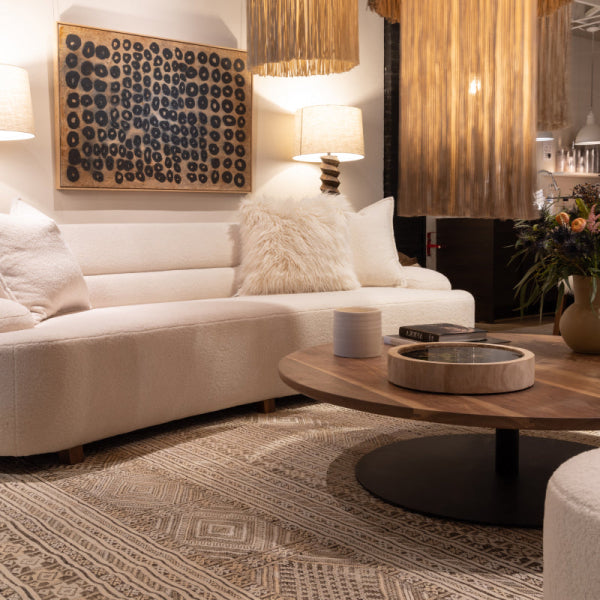
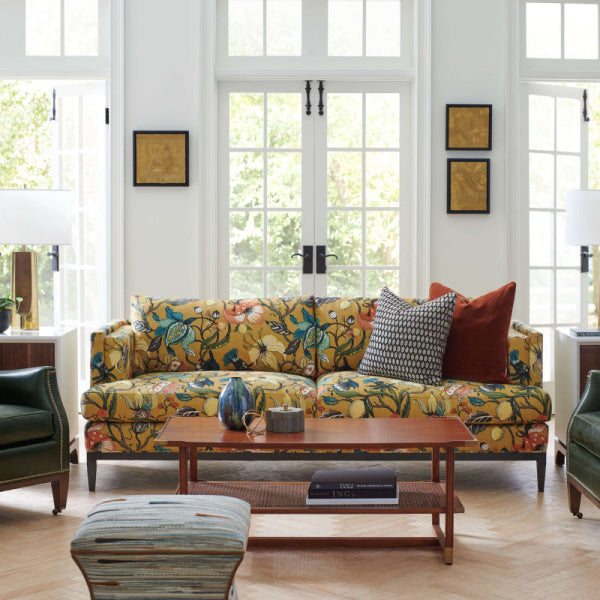








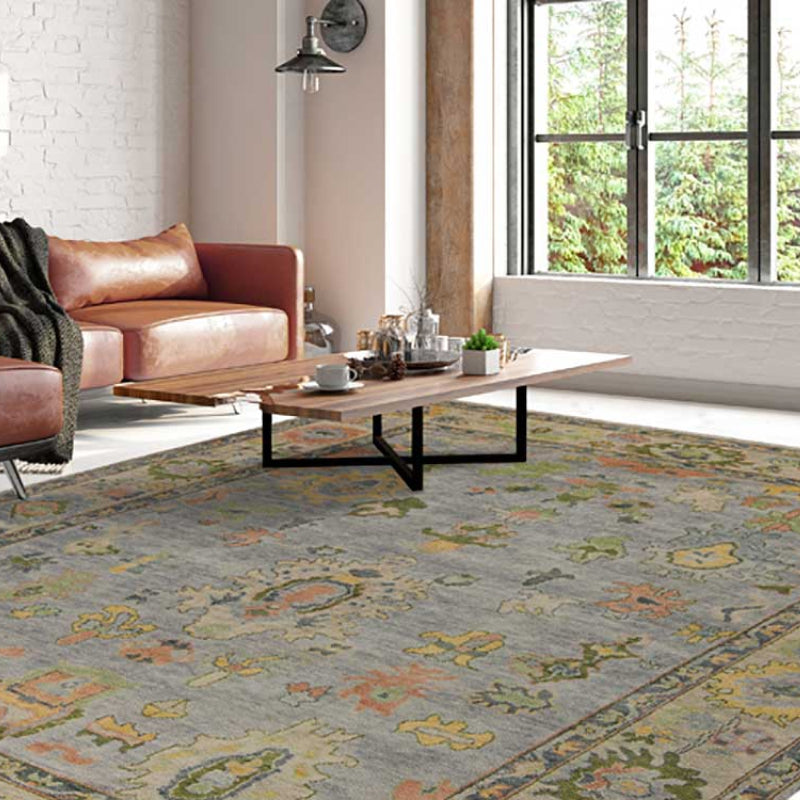
A new linen slipcovered sofa arrives, the cushions are full, the seams are crisp, and the color has that quiet depth only natural fiber can give a room. The same feeling comes with Belgian linen bedding, lined drapery, or a pair of custom chairs finished in a beautiful woven flax. Then the practical question shows up almost immediately. How do you care for it without ruining the very qualities you paid for?
That question matters more in homes where textiles are part of a larger investment. In Atlanta, Buckhead, Alpharetta, Roswell, and Sandy Springs, buyers shopping for high-end furniture, luxury sofas, custom upholstered furniture, and designer furniture near me aren't looking for disposable pieces. They want materials that age well, work hard, and still look refined years from now. Linen can absolutely do that, but only if it's treated like the premium fiber it is.
These linen care instructions are written for that level of ownership. The aim isn't generic laundry advice. It's protecting the look, hand, and long-term value of statement furniture pieces, premium sectionals, high-quality couches, custom chairs, and bedding chosen with real intention.
Embracing the Beauty of High-End Linen
A lot of luxury materials ask you to choose between beauty and function. Linen doesn't. It gives a room softness without looking fussy, texture without heaviness, and a refined finish that still feels relaxed. That's why it works so well across luxury home furnishings, from custom sofas in North Atlanta sitting rooms to understated bedding in a Roswell primary suite.

Linen also earns its reputation on performance. It can absorb 20% of its weight without feeling damp and can keep skin 3 to 5°C cooler than cotton, which helps explain why it remains a staple for bedding, slipcovers, and warm-climate interiors (technical linen performance details). In a city like Atlanta, where comfort and polish have to coexist, that's a meaningful advantage.
Why linen feels expensive
Good linen has visual restraint. It doesn't shout. Instead, it gives you slub, dimension, and movement that flatter both traditional and contemporary interiors. On a custom sectional, that means the upholstery reads as collected rather than overproduced. On bedding, it means the room feels finished even before the decorative layer goes on.
For buyers comparing custom furniture Atlanta options against mass-produced upholstery, linen often becomes the material that makes a piece feel designed rather than merely purchased. A lightweight weave can look airy and architectural, especially when used thoughtfully in drapery, bedding, or layered accents. If you're choosing fabric for that kind of effect, lightweight linen fabric is worth understanding before you commit.
Linen rewards owners who accept one truth early: it isn't supposed to behave like a synthetic performance fabric, and that's part of its value.
The real concern after the purchase
One typically doesn't worry about linen until they own it. Then they notice every spill, every crease, every wash decision. That's a healthy instinct when you're caring for heirloom-quality furniture or designer bedding. The right maintenance preserves character. The wrong maintenance strips it out quickly.
That trade-off is where most linen care advice falls short. Luxury homeowners and interior designers don't need vague reminders to be gentle. They need methods that protect fiber integrity, preserve scale and fit, and keep a major purchase looking intentional in year five, not just week five.
The Art of Washing Your Linen Furnishings
Saturday morning often looks harmless enough. A zipper cover comes off a custom sofa, the bedding goes into the machine, and one routine wash later the piece comes back tighter, duller, or slightly skewed. On heirloom-quality linen, washing is the point where good intentions either preserve the investment or shorten its life.
Temperature is the first control point. The earlier care guidance on wash temperature still applies. Keep water cool to lukewarm, because heat encourages shrinkage, weakens the hand, and can throw off the fit on fitted covers, shams, and slipcovered seating.

That matters more in a luxury interior than it does in everyday laundry. A flat sheet with a little shrinkage is an annoyance. A washable cushion cover that no longer aligns with welting, corners, or the seat deck changes how the whole piece presents in the room.
Start with the label, then assess the tailoring
Care labels matter, but construction matters just as much. Linen behaves one way as a simple duvet cover and another way as a fitted bench cushion with contrast piping and a backing fabric. Water affects shell fabric, stitching, lining, and trim differently, so the safest choice depends on the piece in front of you.
Use this framework before anything goes into water:
- Simple removable covers are often suitable for machine washing if the care label allows it.
- Pieces with lining, welting, trim, backing cloth, or structured seams need more caution because different components can react at different rates.
- Custom-fitted designer upholstery covers usually hold their shape better with spot cleaning or professional cleaning.
- Lightweight or loosely woven linen is often better hand-washed, provided the label permits it.
How to machine wash linen without flattening its character
Machine washing can be perfectly appropriate. It just needs restraint.
- Use cool to lukewarm water.
- Choose a gentle or delicate cycle.
- Use a small amount of mild detergent.
- Do not crowd the drum.
- Wash with similarly light items, not towels or heavy mixed loads.
Agitation is where many expensive pieces lose their refinement. A packed load rubs the surface, stresses seams, and leaves linen looking tired long before its time.
Detergent deserves more attention than it usually gets. The Textile Care Allied Trades Association advises avoiding chlorine bleach on linen and choosing products without optical brighteners or harsh additives that can affect natural fibers over time (linen care guidance from TCATA). For high-end bedding, slipcovers, and decorative covers, I also avoid enzyme-heavy or strongly alkaline formulas unless the manufacturer specifically approves them. They may clean aggressively, but aggressive cleaning is rarely the goal with fine linen.
Stronger washing does not produce finer linen. It produces faster wear.
When hand-washing is the better call
Some linen pieces are worth the extra ten minutes. Embroidered shams, open-weave decorative covers, antique household linens, and any item that feels light in the hand usually benefit from a gentler wash.
A sound hand-wash method is straightforward:
- Fill a basin or tub with cool to lukewarm water
- Add a small amount of mild detergent
- Move the item through the water gently
- Rinse thoroughly
- Press out water carefully without twisting or wringing
Twisting is a common mistake. It strains wet fibers, distorts the weave, and can leave edges and seams slightly out of square.
The trade-off luxury linen asks you to accept
Fine linen is durable, but it is specific. It rewards low heat, light chemistry, and patient handling. Owners who treat it like standard cotton often lose the qualities they paid for first: softness with structure, a clean drape, and that relaxed but neat surface that makes custom furnishings feel collected rather than disposable.
That is a key difference with better linen furnishings. Care is not about fussiness. It is about protecting fit, finish, and visual integrity so a custom sofa, a set of Belgian linen sheets, or a custom-fitted slipcover still looks intentional several years from now.
Drying and Finishing for a Crisp Luxurious Look
Most linen damage doesn't announce itself in the wash. It shows up afterward. A piece comes out of the dryer stiff, overworked, and smaller than it should be. Then the wrinkles set hard, and people blame the fabric when the issue was the finishing method.
Tumble drying linen introduces a high risk of shrinkage and excessive wrinkling. Air-drying is the safest method. If a dryer must be used, select the lowest heat setting and remove items while still slightly damp to prevent over-drying, which sets deep wrinkles and causes unnecessary wear (linen drying guidance from Asket).
Why air-drying wins
Air-drying protects shape because it removes heat from the equation. That matters for everything from Belgian linen pillow covers to larger household textiles like drapery panels and washable slipcovers. Heat contracts fibers. Gentle airflow doesn't.
For most household linen, the best routine is simple:
- Shake the item out immediately after washing to release creases
- Smooth seams, hems, and corners by hand
- Hang on a sturdy line or padded hanger, or lay flat on a clean surface
- Keep the piece out of harsh direct sunlight if color retention is a concern
That small reshaping step is often skipped, but it's one of the details that separates casually laundered linen from linen that still looks structured.
Remove linen from the machine promptly. Letting it sit wet in a crumpled heap makes every later step harder.
If you must use a dryer
Sometimes weather, schedule, or scale makes a dryer unavoidable. That's common with larger bedding pieces or busy household turnover. The answer isn't “never use one.” It's “use one carefully.”
The safe protocol is short:
- Use the lowest heat setting available
- Dry only until the item is slightly damp
- Finish drying on a hanger, rack, or flat surface
- Don't chase bone-dry fabric
That last point matters. Over-drying doesn't make linen neater. It makes it harsher, more wrinkled, and more difficult to finish well.
Ironing and steaming without scorching
A lot of people either over-iron linen or avoid ironing entirely because they think wrinkles are inevitable. Neither extreme is necessary. Linen responds best when the fiber still holds a little moisture.
For a crisp result:
- Remove the item while it's still faintly damp, or mist it lightly with water.
- Use a medium iron or steamer suited to natural fabrics.
- Work methodically, pressing with the grain of the fabric rather than dragging aggressively.
- Let the piece cool fully before folding or placing it back on furniture.
If the linen has fully dried before you get to it, a light spray a few minutes before ironing makes the job easier and reduces the temptation to use too much heat. That's especially useful for bedding, table linens, and drapery headers where structure matters visually.
What luxury owners should watch for
With high-quality couches, premium sectionals, and custom linen accessories, the goal isn't sterile perfection. It's controlled softness. You want a clean surface, a smooth seam line, and enough natural texture that the linen still reads as linen.
That balance is what gives designer furniture its ease. The wrong drying routine strips it away fast.
Treating Stains and Storing Linen Correctly
A stain on linen feels urgent because it is. The people who save linen successfully usually don't use stronger products. They act faster and use less force. That's the difference between preserving a fabric and grinding the problem deeper into the weave.
Stain removal success rates exceed 90% when immediate blotting, not rubbing, is followed by cold water soaking. For oil stains, applying talcum powder or cornstarch for 30 minutes before gentle soap treatment yields 85% clearance. Optical brighteners should be avoided because they can increase fiber breakage risk by 25 to 30% (linen stain care data).

The first minute matters most
When wine, coffee, oil, or makeup lands on linen, don't rub. Rubbing roughs up the surface and spreads the stain through more fibers. Blot with a clean cloth, work from the outside inward, and keep pressure controlled.
That approach feels less dramatic than scrubbing, but it's far more effective. The discipline to slow down is usually what saves the fabric.
The goal is lift, not friction. Linen usually responds better to patience than force.
Quick Linen Stain Treatment Guide
| Stain Type | Immediate Action | Treatment Solution |
|---|---|---|
| Oil | Blot gently without rubbing | Apply talcum powder or cornstarch for 30 minutes, then use gentle soap treatment |
| Coffee | Blot at once | Follow with cold water soaking |
| Wine | Blot at once | Follow with cold water soaking |
| General fresh stain | Blot at once | Cold water soaking before deeper cleaning |
If you're using any specialty stain product, test it on an inconspicuous area first. That's particularly important on dyed linen, washed linen, and any textile with finishing treatments or contrast details.
What to keep away from fine linen
Some common products do more cosmetic damage than good. Optical brighteners are one of them. They may promise freshness or brightness, but on linen they can work against long-term fiber integrity.
Skip these habits:
- Rubbing with a towel because it drives the stain into the yarns
- Using harsh spot cleaners first because they can leave rings or strip color
- Applying bleach-based formulas on premium linen
- Treating the entire item for a small localized stain when a targeted response is enough
For households that invest in designer furniture near me or luxury home furnishings in Fulton County and North Atlanta, this matters because many stains happen on pieces that can't just be replaced with a quick online reorder.
Storing linen so it stays beautiful
Clean linen can still be damaged in storage. The main enemies are trapped moisture, compression, and non-breathable containers. Bedding, table linens, and removable covers should be fully dry before they're folded and put away.
Good storage practices are straightforward:
- Use breathable storage environments rather than sealed plastic
- Choose cool, dry, dark spaces to reduce yellowing and stale odor
- Fold loosely or hang where appropriate to avoid hard-set creases
- Keep delicate linen separate from hardware or sharp trims
If you're packing especially delicate household textiles, the same acid-free materials used for wrapping china can also help buffer folds and reduce abrasion between stored linen layers.
For upholstered pieces and decorative textiles that stay in active rooms, preventive care matters as much as stain response. A practical overview of fabric protection for furniture can help owners decide when a treatment makes sense and when good maintenance is enough.
Caring for Custom Linen Upholstery and Drapery
A linen shirt can be replaced. A custom sofa upholstered in a premium weave, or a set of lined drapery panels fabricated for tall Buckhead windows, is a different category of ownership. The care decisions are different because the stakes are different.

High-quality hardwood frame sofas can last 20 to 25+ years with proper maintenance, which means the upholstery has to be cared for in a way that supports that lifespan rather than shortening it (sofa longevity and construction factors). That's especially relevant when clients are buying luxury sofas, premium sectionals, and heirloom-quality furniture for long-term homes in Alpharetta, Sandy Springs, and Roswell.
Linen on furniture isn't the same as linen in the laundry
The biggest mistake I see is people applying garment logic to upholstery. Upholstery linen lives under tension. It wraps around cushion cores, sits over decking, meets welts and seams, and often carries more exposure to body oil, sunlight, and repeated abrasion than clothing ever will.
That means maintenance should start with in-place care:
- Vacuum with a soft upholstery attachment to remove dust before it grinds into the weave
- Rotate seat and back cushions when construction allows
- Address spills immediately with blotting
- Keep linen away from prolonged direct sun where fading is a concern
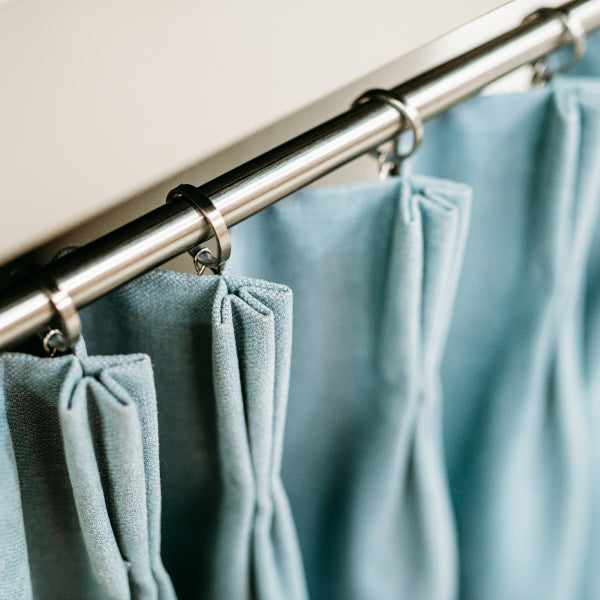
Drapery has its own version of this problem. Dust settles gradually, and sun exposure is constant. Regular light vacuuming and periodic professional attention usually produce better results than waiting for visible soil to build.
Know when to stop doing it yourself
Small spot care is reasonable. Full corrective cleaning on a custom sofa often isn't. If a stain has spread, if there's overall dinginess, or if the piece has mixed materials such as linen with contrast piping or specialty trim, it's time to bring in a professional who handles residential textiles carefully. For homeowners looking for an example of that kind of help, Clean Space SA residential services shows the type of whole-home cleaning support that can complement a broader textile maintenance plan.
Expensive upholstery rarely fails all at once. It loses polish gradually through repeated “quick fixes” that were too aggressive for the fabric.
The same judgment applies to drapery. If the panels are interlined, puddled, or unusually large, amateur cleaning can distort shape and finish. In those cases, preserving fabrication quality matters as much as removing soil.
Protection, maintenance, and replacement cycles
Not every linen upholstery fabric should be treated the same way at the point of purchase. In a formal sitting room, a more natural finish may be perfectly appropriate. In a busy family room, buyers often need to think harder about cleanability, finishing options, and expected traffic.
That conversation is part of what separates what makes furniture designer quality from simple surface styling. Material selection, cushion engineering, frame construction, and maintenance planning all work together. A helpful reference for owners evaluating those decisions is caring for high-end upholstery, especially when comparing custom pieces with mass-market alternatives.
For shoppers sourcing custom furniture Atlanta projects, one local option in that process is Lewis and Sheron Textiles, which offers linen fabrics, custom upholstery, drapery, and reupholstery services as part of a broader design and sourcing workflow. That's useful when the goal is not just to buy a piece, but to maintain or refresh it responsibly over time.
Your Atlanta Partner for Luxury Textiles and Furnishings
Caring for linen well is part housekeeping, part stewardship. The fiber will give you breathability, texture, and a depth of character that many manufactured fabrics never reach. In return, it asks for measured washing, gentler drying, fast stain response, and smarter upkeep when it's used on custom upholstery or drapery.
That matters most when the purchase itself was intentional. Buyers searching for luxury furniture Atlanta, designer furniture near me, custom furniture Atlanta, and high-end furniture in Buckhead, Sandy Springs, Alpharetta, Roswell, and the wider North Atlanta market are usually weighing more than color and silhouette. They're asking how long a piece will last, what makes it feel designer quality, and whether the materials will still look right after real life happens.
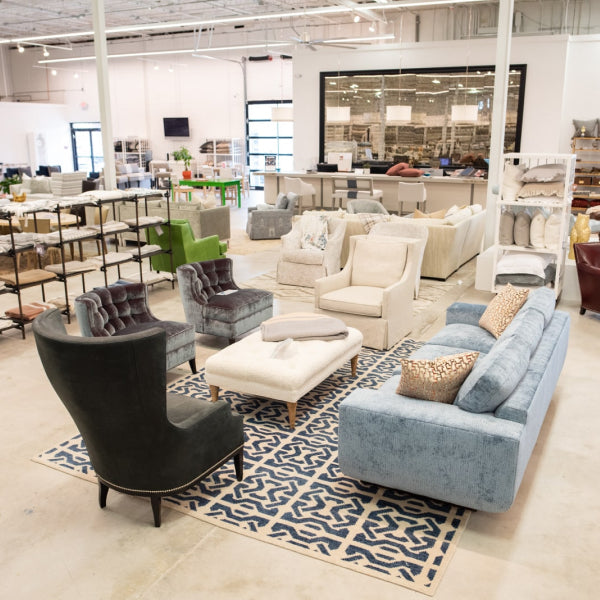
For that kind of buyer, the right textile source isn't just a showroom. It should also be a place where material knowledge, fabrication, and long-term maintenance all connect. That includes sourcing premium Belgian linens and designer fabrics, evaluating custom upholstered furniture from makers such as Verellen, Wesley Hall, LEE Industries, and Ambella, and knowing when reupholstery makes more sense than replacement. It also includes custom drapery, trims, pillow forms, rugs, and in-house design guidance that helps a room hold together visually.
Atlanta homeowners, interior designers, and design-conscious clients in Fulton County often don't need more options. They need better judgment about the options worth buying. Linen care sits inside that same philosophy. Quality over impulse. Longevity over churn. A home that looks composed because the materials were chosen well and maintained with the same level of care.
If you're furnishing a home with linen upholstery, Belgian linen bedding, custom drapery, or other heirloom-minded pieces, Lewis and Sheron Textiles is a practical resource for sourcing fabric, commissioning custom furnishings, and planning reupholstery or design updates with long-term use in mind.