



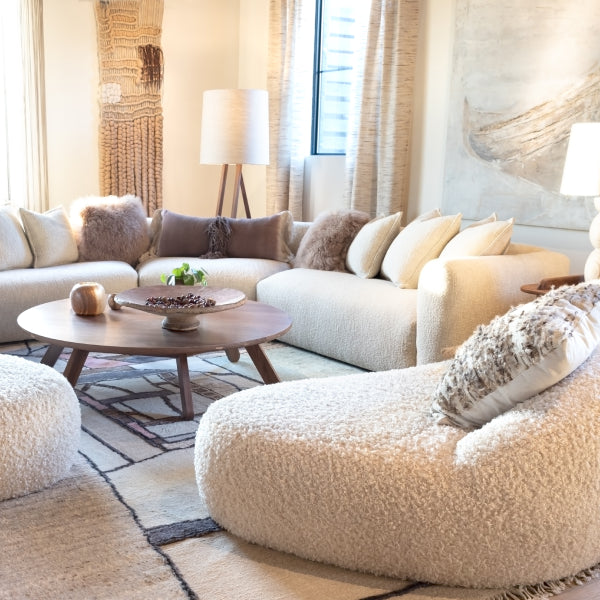
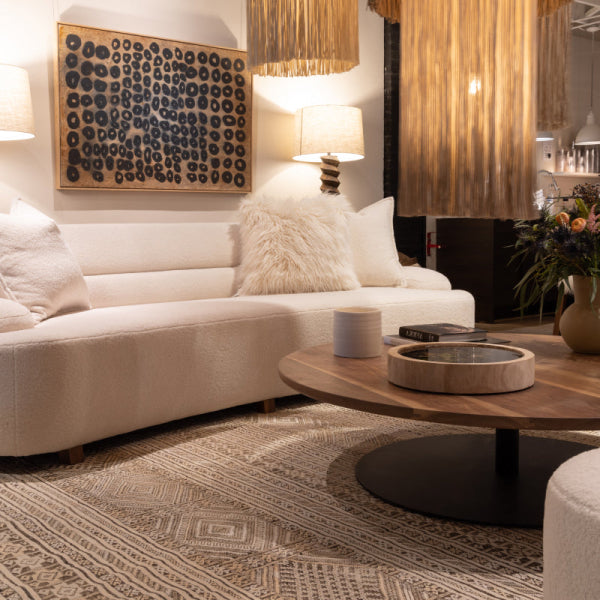
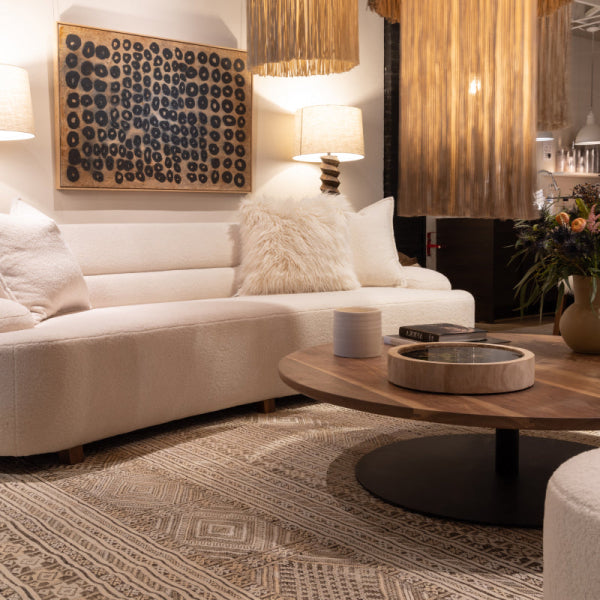
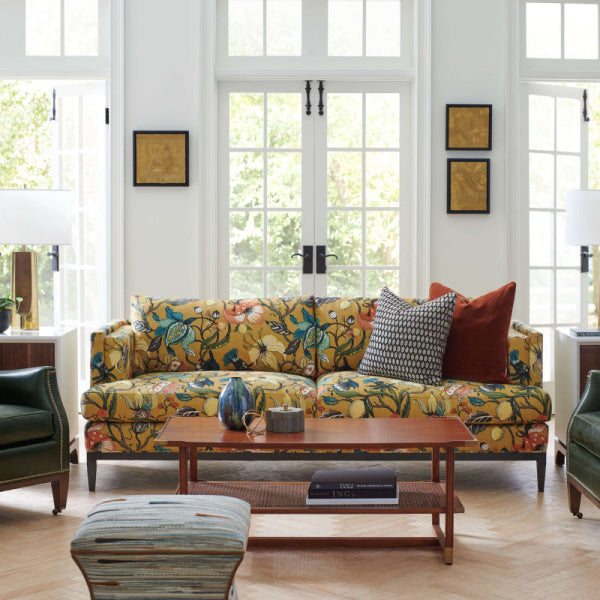
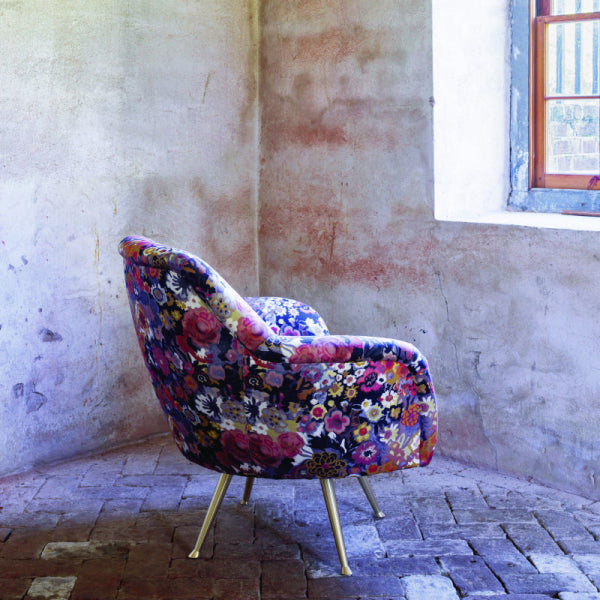
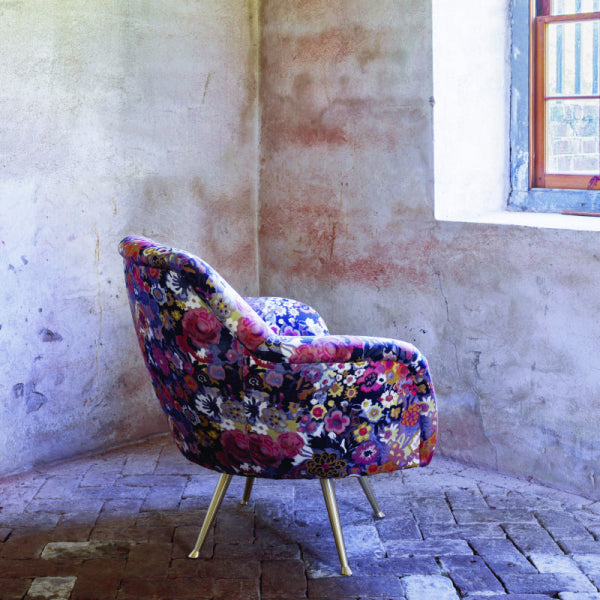
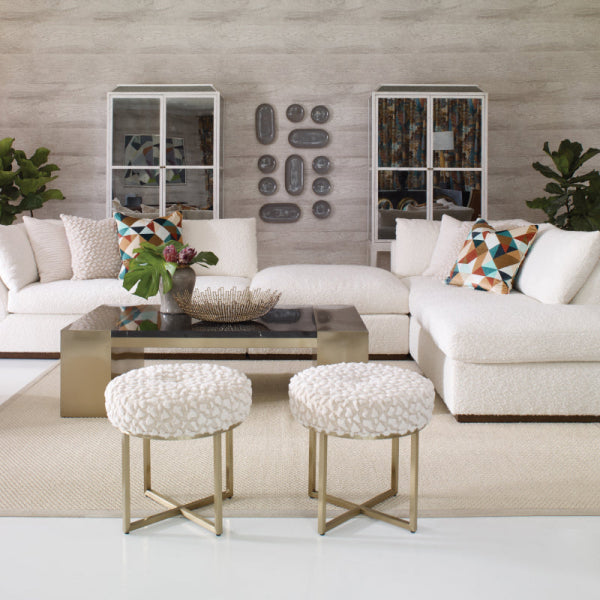
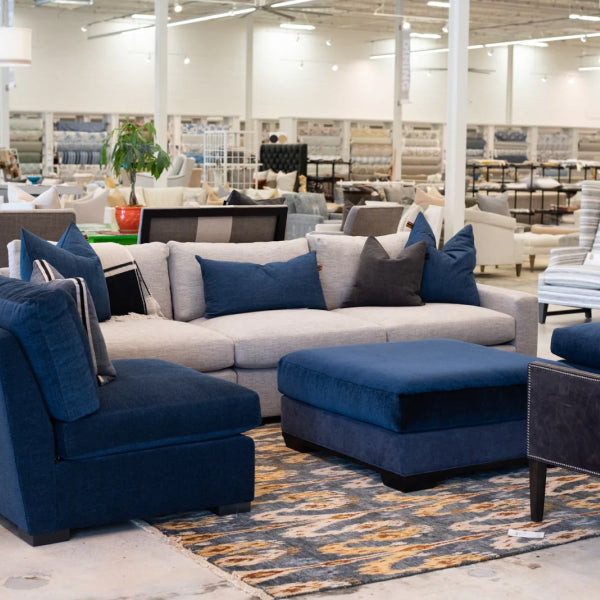








You've selected the sofa. The fabric is right. The silhouette suits the room. The drapery panels fall cleanly. And yet the space still feels a touch unfinished.
That last layer is rarely another large furniture purchase. In high-end interiors across Atlanta, Buckhead, Alpharetta, Roswell, and Sandy Springs, the difference often comes from trim, edge treatment, and how details hold their shape over time. On a custom chair, a pillow flange, or a custom drapery accent, a small structural element can change the entire read of the room.
Wire edge ribbon sits in that category. It is often recognized for its use in seasonal bows and wreaths. In a luxury interior, though, it can function as a disciplined finishing material that adds form, polish, and staying power to custom upholstered furniture and drapery. Used well, it helps a room look intentional instead of merely decorated.
The Final Detail for Statement Furniture Pieces
A common design moment goes like this. A homeowner in North Atlanta invests in a custom sofa for a formal sitting room, or selects premium sectionals for a family space that needs to feel refined without becoming precious. The upholstery is excellent, the scale is correct, and the room still asks for one more move.
Usually, that move is not bigger. It's sharper.
A narrow crisp edge on a lumbar pillow can make a luxury sofa look more architectural. A shaped ribbon accent on a drapery leading edge can make the treatment feel custom rather than catalog. A controlled decorative flourish on a bench pillow can bring definition to designer furniture without adding visual clutter. Those are small decisions, but they're the ones that separate a furnished room from a finished one.
In my experience, clients shopping for custom furniture Atlanta projects often start by focusing on the obvious categories: frame quality, cushion comfort, fabric durability, and scale. They should. But once those fundamentals are solved, trim becomes the language of refinement. It tells the eye where to rest and what to notice.
Why the last detail matters
In luxury home furnishings, finishing details do three jobs at once:
- They clarify shape. A trim can sharpen the profile of a pillow, chair back, or drapery fold.
- They connect materials. Ribbon can bridge upholstery, window treatments, and accent textiles so the room reads as one composition.
- They signal custom work. Bespoke interiors almost always show evidence of deliberate finishing, not just expensive materials.
Homeowners often gather inspiration before they make those final trim choices. If you're comparing room moods and layered finishing ideas, this collection of inspiring decor solutions is useful for seeing how small styling decisions affect the whole space.
A well-made room usually doesn't need more objects. It needs better edges.
That's where wire edge ribbon becomes interesting. Not as a craft-store afterthought, but as a controlled design tool for high-end furniture, custom upholstery, and permanent interior applications.
Understanding Wire Edge Ribbon's Structural Elegance
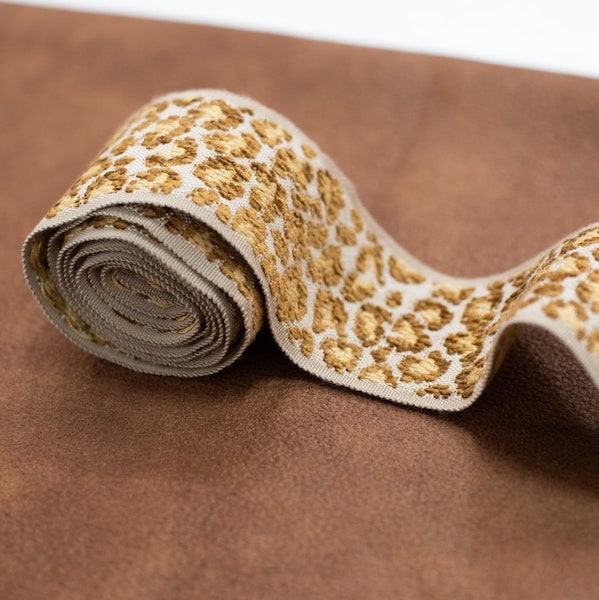
Wire edge ribbon is defined by a thin, flexible wire stitched or woven into one or both edges. That construction lets it hold a structured shape instead of collapsing like ordinary ribbon. In home-decor use, the wire is typically encased with a rolled hem or serger-style stitch, with the stitch placed about 1/4 inch in from the cut edge so the wire is captured securely, as described in the DIY wired ribbon serger method from the American Sewing Guild.

Why it behaves differently
The easiest analogy is couture construction. Boning in a garment is rarely the star, but it's what allows the garment to maintain line and poise. Wire edge ribbon works the same way in textile detailing. The fabric provides finish and color. The hidden wire supplies discipline.
That's the distinction that matters in a luxury interior. Standard ribbon drapes. Wire edge ribbon shapes.
On a statement pillow, that means a flange can stand away from the body instead of going limp. On a drapery accent, it means a contour can remain crisp after handling. On a decorative trim application, it means the detail can be formed once and still look considered later.
Where structure becomes a design advantage
For interior work, the value isn't theatrical volume. It's controlled form retention.
Consider these applications:
- Knife-edge and flanged pillows where the perimeter needs a clean line
- Decorative drapery details that benefit from sculpted edges
- Accent trims on custom upholstered furniture where silhouette matters as much as softness
If you already think carefully about edge definition, you may also appreciate how piping on cushions changes the character of upholstery. Wire edge ribbon belongs in that same conversation. It's another way to tell the eye that the shape is intentional.
Practical rule: Use wire edge ribbon when the detail needs memory. Skip it when the detail should fall softly.
For buyers searching designer furniture near me or sourcing details for luxury furniture Atlanta projects, this is the core distinction. The elegance comes from what the ribbon prevents. Sagging edges, vague outlines, and trim that loses its role in the room.
How to Choose the Right Ribbon for Your Project
Selection matters more than many people expect. In permanent interiors, the wrong wire edge ribbon can look stiff, busy, or oddly informal. The right one can make a custom sectional, drapery panel, or accent pillow feel fully resolved.
A useful rule for refined rooms is that more structure isn't always better. For high-end interiors, wired ribbon can look artificial if the setting calls for softness. It's excellent for sculpted forms, but it may be the wrong choice for high-touch accents such as drapery tiebacks, where hand feel and visual finish matter more than bow volume, as noted in this design-focused discussion of wired ribbon tradeoffs.
Match the ribbon to the room, not the trend
In practice, there are three questions to ask before specifying wire edge ribbon.
First, what is the room asking for visually? A formal Buckhead drawing room may support a crisp, sculpted edge. A relaxed Roswell family room with washed linen upholstery may call for restraint.
Second, how often will the detail be touched? Decorative elements that people handle every day need a different level of softness from pieces that are mainly visual.
Third, what role is the ribbon playing? Outline, accent, or structure. Those aren't the same job.
For homeowners refining a vintage-inspired scheme, this overview of bringing mid-century modern into your home is a helpful reminder that cleaner furniture lines often need quieter trims. Not every elegant room benefits from extra contour.
Wire Edge Ribbon Selection Guide
| Application | Recommended Material | Recommended Width | Key Consideration |
|---|---|---|---|
| Formal drapery accent | Silk-look or fine woven ribbon | Narrow to moderate | Choose a finish that complements the drapery fabric rather than competing with it |
| Pillow flange on a luxury sofa | Velvet or substantial woven ribbon | Moderate | Use enough body to hold the edge cleanly without making the pillow feel rigid |
| Decorative banding on a custom chair | Tightly woven ribbon | Narrow | Keep the profile disciplined so the chair remains tailored |
| Seasonal accent in a permanent room | Textural ribbon with visible shape | Moderate to wide | Best for removable details, not always for year-round upholstery |
| Drapery tieback or high-touch accent | Often unwired is better | Varies | If softness is the priority, skip wire edge ribbon |
What tends to work and what doesn't
- Works well: Ribbon that echoes the upholstery's level of formality
- Usually fails: Ribbon with too much stiffness for the scale of the furniture
- Works well: Matte or nuanced finishes in layered interiors
- Usually fails: Shiny ribbon on heavily textured, understated textiles
- Works well: Purposeful use on one or two focal details
- Usually fails: Repeating the same wired trim across every soft furnishing in the room
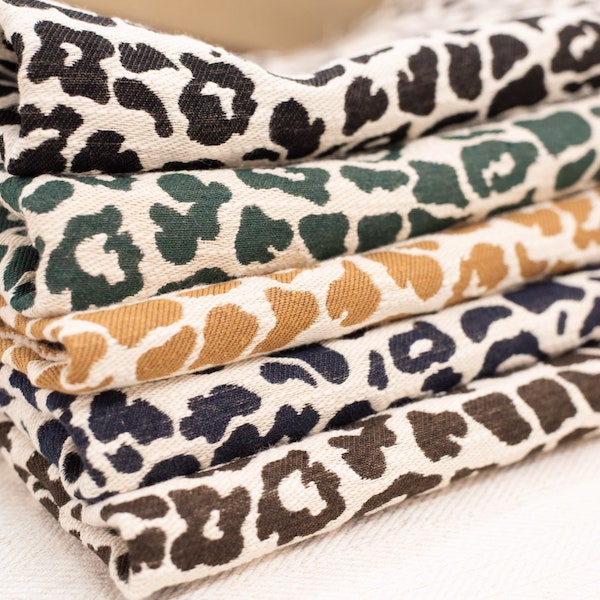
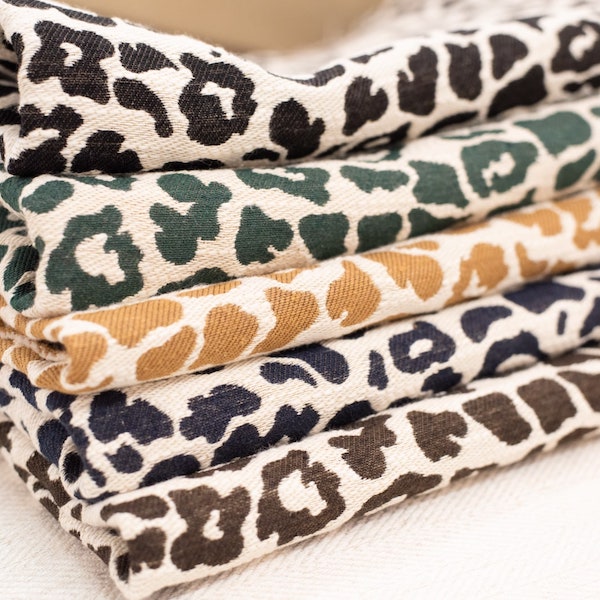
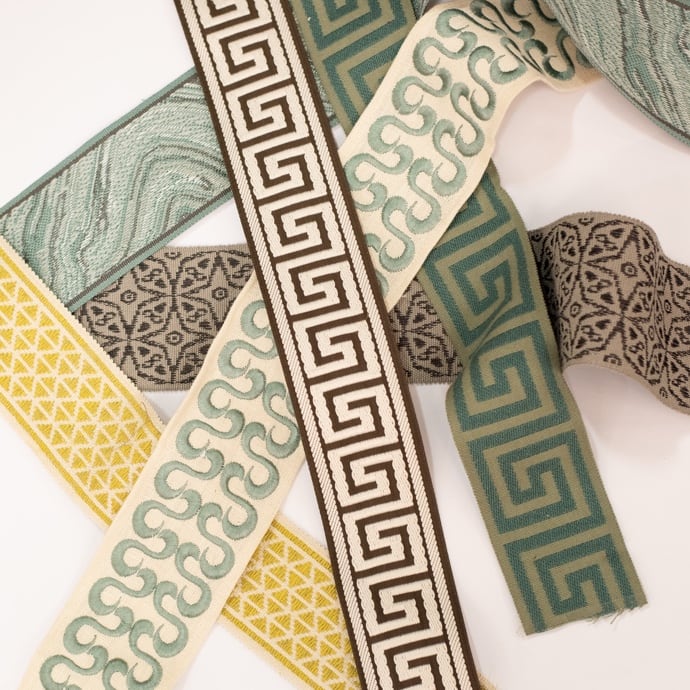
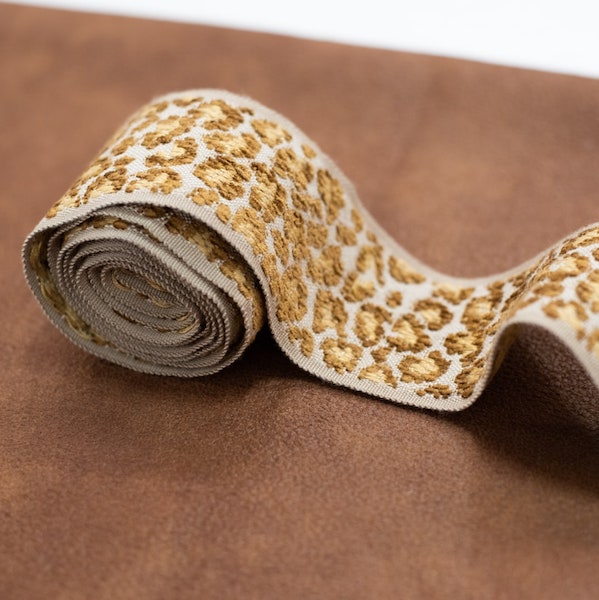
Some sources carry ribbons and flat trims for interiors, including ribbons and flat trims for home projects, but the final decision still comes down to discipline. The trim should support the furniture, not audition for attention.
Applications in Custom Upholstery and Drapery
The most persuasive use of wire edge ribbon isn't on a package or a wreath. It's in a room where every surface has been chosen carefully and one small structural accent sharpens the whole composition.

A precisely appointed living room in Sandy Springs might feature a high-quality couch in a quiet performance fabric, a pair of custom chairs, and full drapery with proper lining. The palette is restrained. The architecture is doing part of the work. In that room, a wire-edged accent on a set of pillows can create a crisp outline that keeps the arrangement from feeling too soft or diffuse.
The structural advantage is simple. The thin wire acts like a flexible frame. It bends easily during forming but resists collapse after shaping, so a finished decorative element such as a pillow flange or drapery pleat retains volume and crisp edges even with daily use and handling, as described in this explanation of how wired edge ribbon holds form.
Upholstery applications that suit luxury interiors
On custom upholstered furniture, wire edge ribbon works best where geometry matters.
A bench cushion on an entry banquette can benefit from a subtle structured edge. A lumbar pillow on a designer sofa can read more polished when the perimeter doesn't wilt. A decorative band on the back of a host chair can provide a controlled accent that ties the chair to nearby drapery or pillows.
These are not loud gestures. They're edits.
In upholstery, wire edge ribbon should shape the detail, not harden the piece.
Drapery applications that feel architectural
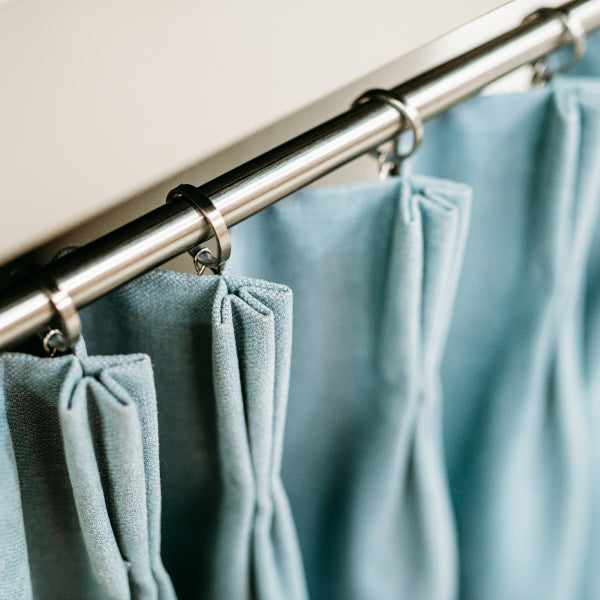
Drapery offers even more refined opportunities. A shaped leading edge, a sculpted fold detail, or a defined accent at the header can bring a custom treatment into sharper focus. This is especially effective in rooms where the window treatment needs to hold its own against substantial millwork, tall ceilings, or large-scale furniture.
Lining also matters. A decorative trim only looks expensive when the drapery beneath it is properly built. If you're evaluating construction quality, this discussion of the role of drapery lining in custom drapes is worth reading alongside any trim decision.
Where the effect is strongest
- Luxury sofas and sectionals: Structured accent pillows that keep a precise edge
- Custom chairs: Narrow decorative applications that echo the chair's architecture
- Window treatments: Sculpted details that hold a repeatable silhouette
- Statement furniture pieces: Finishing accents that make one element feel singular without becoming ornate
In affluent Atlanta homes, that level of control is often what makes a room feel custom. Not excess. Precision.
Professional Installation and Long-Term Care
Wire edge ribbon lasts when it's applied with respect for its construction. It fails early when people treat it like ordinary trim.
In fabrication, a serger or overlock machine can use a rolled-hem stitch to catch both the fabric edge and the wire. That method securely encases the wire, which is why professionals focus on stitching through the fabric base rather than piercing the wire channel itself to preserve structural integrity, as shown in this wire-edged ribbon fabrication method from WeAllSew.
Installation habits that protect the trim
On upholstery and drapery work, placement is everything. The ribbon should sit where it can perform structurally without taking abrasion from every hand, ring, or vacuum attachment that passes by.
A few trade habits matter:
- Sew through the fabric base: Don't stitch into the wire channel if you can avoid it.
- Test the bend first: Shape a short offcut before committing to a visible application.
- Respect the scale: Wide wired trim can overwhelm fine furniture lines.
- Keep corners clean: The cleaner the installation, the more obvious any puckering becomes.
Care that preserves shape
Wire edge ribbon doesn't need aggressive handling. In fact, that's usually what shortens its useful life.
For long-term care, keep these guidelines in mind:
- Re-shape gently by hand. Small adjustments are better than repeated hard bending.
- Avoid crushing storage. If a removable accent is stored flat under weight, the finish can suffer.
- Use cleaning methods suited to the face fabric. The ribbon's textile surface often determines what's safe.
- Inspect high-touch areas. If a detail is near an arm, tieback position, or busy passage, check it periodically.
The goal isn't to force the ribbon back into place. The goal is to preserve the shape it was designed to hold.
For heirloom-quality furniture and custom drapery, that mindset matters. Long-term value often comes from knowing which details need a light hand and which need reinforcement at the workroom stage.
Find Your Perfect Trim at Lewis and Sheron
The right trim is rarely chosen in isolation. It has to answer to the upholstery fabric, the furniture silhouette, the room's architecture, and how the piece will live day to day. That's why wire edge ribbon works best when someone evaluates it as part of the whole scheme rather than as a standalone embellishment.
For buyers comparing custom furniture Atlanta, luxury furniture Buckhead, or designer furniture near me, this is one of the clearest differences between high-end interiors and mass-produced rooms. Premium work considers the finish from the beginning. It doesn't leave the final edge to chance.
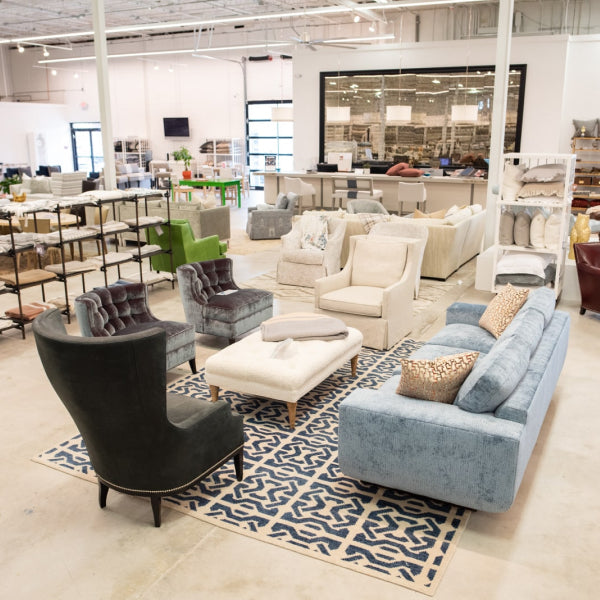
Lewis and Sheron Textiles offers home fabrics, custom furnishings, workroom services, and a broad trim selection in Atlanta, which makes it a practical resource when a project involves upholstery, drapery, and finishing materials that need to coordinate. That's especially useful for homeowners and designers working across multiple rooms or trying to tie a statement sofa, custom chairs, and window treatments into one consistent language.

What to look for in person
When you review trims in a showroom or design center, don't just look at color.
Check these points:
- Edge behavior: Bend the ribbon slightly and see whether it shapes cleanly.
- Surface finish: Make sure the sheen matches the sophistication of the room.
- Compatibility: Compare it directly against upholstery, drapery, and pillow fabrics.
- Use case: Ask whether the detail is decorative, structural, or both.
The broader your furnishing project, the more valuable that coordination becomes. A trim selected for a pillow may also influence how you finish drapery accents, bedding details, or a custom bench.
If you want to explore options for decorative applications, browse this collection of ribbons and flat trims.
If you're refining a room with custom upholstery, premium drapery, or luxury home furnishings, Lewis and Sheron Textiles is a practical place to compare fabrics, trims, and made-to-order options in one setting. For Atlanta-area homeowners and designers, that kind of hands-on selection makes it easier to choose details that will still look right years from now.