












Getting custom drapery right involves more than just a tape measure. It starts with a vision. To measure your windows correctly, you first have to decide on the mounting style and curtain length.
These choices dictate every number you'll write down. This isn't just about covering glass—it's about framing a view and defining the character of your room with exquisite designer fabrics.
The Secret to Flawless Curtains Starts Before You Measure
Before you unroll that steel tape, let’s talk strategy. The difference between curtains that simply hang and drapery that transforms a room lies in these early decisions. This is the secret that top interior designers from Buckhead to Roswell understand implicitly.
It’s all about intention.
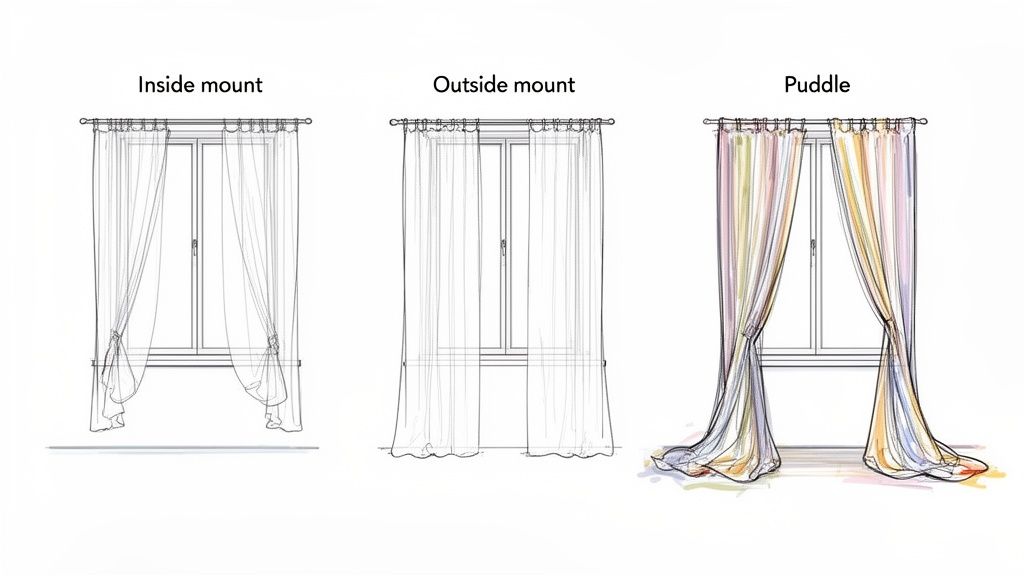
Your first major decision is choosing between an inside and an outside mount.
- Inside Mount: The hardware fits snugly within the window casing. This creates a clean, minimalist look—perfect for modern spaces where the frame itself is a feature. It's a beautifully tailored choice.
- Outside Mount: The hardware is installed on the wall above and beyond the window frame. This is our preferred method for creating drama and height. It makes windows appear larger and grander, a true signature of high-end design you'll find in the finest homes from West Paces Ferry to Milton.
Defining the Drape Length
Next, decide where your curtains will end. This choice dramatically impacts the room’s atmosphere.
The length of your drapery is a design statement. Whether it's a crisp break just above the floor or an opulent puddle, this detail communicates the entire mood of the room. It’s where craftsmanship meets personal style.
Consider these three classic lengths:
- Floor-Length: Curtains hang about a half-inch above the floor. This timeless, tailored look is both elegant and practical. It's a go-to for sophisticated living spaces in Marietta and East Cobb.
- Puddle: The fabric extends one to three inches onto the floor, creating a "puddle" of luxurious material. This style is unapologetically romantic and formal, ideal for making a statement with fine fabrics from our Atlanta fabric showroom.
- Sill or Apron Length: The curtains end either at the windowsill (sill) or just below it (apron). A charming, practical choice for kitchens or any window with furniture directly underneath.
Understanding your window’s architecture is also crucial. Knowing how to paint window frames can ensure the backdrop for your curtains is as flawless as the fabric itself. Once these foundational decisions are made, your measurements will have a clear purpose, guiding you toward a truly custom result.
Mastering Curtain Width for a Luxurious Look
The secret behind stunning, high-end draperies isn't just the fabric—it's the fullness. This is what creates the generous, sculptural folds that separate truly custom window treatments from anything off-the-shelf. It’s that polished, intentional aesthetic you see in the most beautiful homes across North Georgia.
Forget guesswork. Achieving this look is simple math. Too little fabric looks sad and skimpy. Too much overwhelms the room.
This is where Atlanta's top interior designers, many of whom are part of our exclusive Lewis and Sheron Trade Program, really shine. They know getting the fullness right is the difference between a simple window covering and a true design statement—a philosophy that pairs perfectly with the craftsmanship of Verellen furniture or a Wesley Hall sofa.
The Designer's Formula for Fullness
So, what’s the magic number? The industry standard gives us a clear roadmap.
- For a Tailored, Classic Look: A fullness of 2 times (or 200%) the width of your curtain rod is the gold standard. This creates a beautifully balanced drape that’s substantial but not heavy. It’s a perfect choice for living rooms featuring timeless Lee Industries chairs.
- For a Dramatic, Sumptuous Effect: Aim for 2.5 to 3 times (or 250-300%) the rod width. This lavish amount of fabric is ideal for formal dining rooms in Roswell or grand master suites in Milton, especially when using heavier designer fabrics.
This isn't just about aesthetics. Professional fitters recommend curtain panels be cut at 1.5 to 3.0 times the finished window width. Choosing a 3x fullness versus a 2x fullness directly increases the fabric you'll need by 50%—a crucial detail for your budget.
Putting It Into Practice
Let's walk through a real-world example. Imagine you have a large window in your Alpharetta home, and your curtain rod measures 80 inches wide.
-
For a standard, elegant look (2x fullness):
You’ll calculate
80 inches x 2 = 160 inches. This means the total flat width of your curtain panels should add up to 160 inches. -
For a truly opulent feel (2.5x fullness):
Your math is
80 inches x 2.5 = 200 inches. You'd want two 100-inch panels to create that rich, deeply gathered appearance.
Getting the width right is the single most important step for achieving that custom-made look. It ensures your drapes frame the view beautifully when open and provide a sense of luxury and privacy when closed.
This simple calculation ensures your investment in beautiful fabrics from our Atlanta showroom pays off. If you're tackling tricky windows, our guide on window treatment ideas for large windows offers more inspiration.
Perfecting Curtain Length and Mounting Height
Where you hang your curtain rod is just as important as the fine fabrics you choose. One of the most common design mistakes is mounting hardware too low, which instantly shrinks a room. Let's fix that.
Getting this right is a secret that designers from Milton to Alpharetta use to make a room feel bigger and brighter. It’s about framing your view with intention and style.
The Art of Mounting Height
Think of your curtain rod like an eyebrow for the window—when placed correctly, it lifts and defines the whole feature. Mounting a rod right above the frame is a missed opportunity. Aim higher.
Most contemporary design favors mounting hardware 4–12 inches above the top of the window frame. Design professionals in Buckhead and beyond often recommend 8–12 inches above the opening to create that sought-after sense of grandeur.
Choosing the Perfect Curtain Length
Once your mounting height is set, decide on the perfect curtain length. This sets the mood.
- Floor Kiss: The curtain hem hovers about ½ inch above the floor. This timeless choice allows drapes to hang beautifully without collecting dust. It's a favorite look for rooms featuring handcrafted furniture from brands like Verellen or Wesley Hall.
- The Puddle: For a truly luxurious statement, let the fabric pool 2–6 inches onto the floor. This opulent style works best in formal dining rooms or master suites, and it beautifully showcases the richness of the collections in our Atlanta fabric showroom.
- Apron Length: The curtain ends about 4 inches below the windowsill. This is a charming, functional option for kitchens or anywhere furniture sits directly beneath the window.
Getting the length right is only half the battle; you also need to nail the width.
This simple rule ensures your curtains have a luxurious fullness to match their perfect length.
Don't Forget About Stackback
Stackback is the space your curtains take up when fully open. To let in maximum daylight, the rod should extend 6-10 inches beyond the frame on each side. This allows the drapery to rest against the wall instead of covering the glass.
Proper stackback ensures your windows feel as large and bright as possible. It’s a small detail that turns a functional element into a deliberate design choice.
Beyond curtains, understanding installing window privacy film can also enhance your home's aesthetic. Master these key measurements, and you'll achieve a flawless, high-end window treatment.
Common Measurement Mistakes to Avoid
Even the most exquisite designer fabrics from our Atlanta showroom can be ruined by a simple measurement error. This section is your insurance policy. We’ve seen every misstep in our decades serving Atlanta's design community. Let's sidestep them with confidence.
Think of this as insider knowledge from Lewis and Sheron, designed to protect your investment in fine textiles.
Forgetting the Frame and Trim
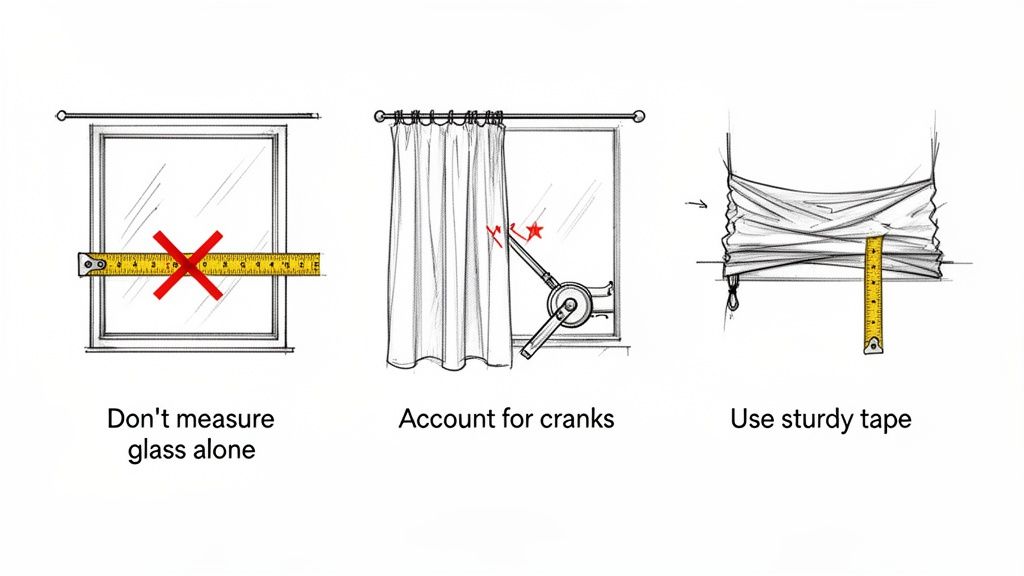
The quickest way to end up with ill-fitting curtains? Measuring only the glass pane. This mistake ignores the window's entire architectural presence. Your measurements must always account for the total width of the window including the frame.
A designer in Buckhead wouldn't dream of it, and neither should you. Measure the full width from the outer edge of the trim on one side to the outer edge on the other.
A flimsy, fabric tape measure is a recipe for disaster. It can stretch and sag, leading to inaccurate numbers. Always use a rigid, steel tape measure—it’s what the professionals in our Trade Program rely on.
Ignoring Obstructions and Quirks
Every window has its own personality—and quirks. Overlooking these details is a classic amateur mistake. Look for anything that might get in the way.
- Window Cranks and Hardware: Do cranks stick out? Make sure your curtain length clears them.
- Deep Sills or Radiators: For apron or sill-length curtains, measure the depth of the sill. Your curtains need to hang freely without catching.
- Uneven Floors or Ceilings: Homes in historic Atlanta neighborhoods have character. Measure the length on the left, right, and center to catch any discrepancies.
Using the Wrong Tools
The final, and most preventable, mistake is using subpar tools. That cheap plastic tape measure can stretch, throwing off your numbers by a crucial half-inch. That small error can mean the difference between curtains that kiss the floor and drapes that look like high-waters.
Always use a sturdy, metal tape measure. It's a non-negotiable tool for any serious design project, especially when you're working with custom upholstery and fine fabrics.
Avoiding these common mistakes ensures your custom project—whether using a stunning textile for a Lee Industries chair or dressing a window—is executed perfectly. It's the Lewis and Sheron way.
When to Call a Professional for Custom Drapery
Measuring for curtains can be a great weekend project. But sometimes, calling an expert is the smartest move you can make. It protects your investment in high-end fabrics and ensures the final look is nothing short of perfection.
For Atlanta’s most discerning homeowners and designers—especially those in our Trade Program—knowing when to call for backup is a sign of wisdom, not defeat. It’s how you ensure that stunning Verellen textile or custom Wesley Hall sofa is complemented by drapery of the same caliber.
When the Architecture Demands Expertise
Let's face it, some windows aren't built for off-the-shelf solutions. Their unique architecture requires precision that goes beyond a standard tape measure.
Consider professional services for:
- Bay or Bow Windows: These multi-angled beauties are tricky. They need complex measurements and specialized hardware to create a seamless, elegant drape.
- Arched or Palladian Windows: Measuring for curved or uniquely shaped windows is an art form. A professional knows how to honor the window’s architectural integrity.
- Extra-Tall or Two-Story Windows: Those grand, soaring windows you see in many Forsyth County and Milton homes? They demand specialized tools and an expert eye for proportion and installation safety.
A professional measurement and installation service isn't just a convenience; it's an insurance policy. It guarantees your vision is executed without a single flaw, turning fine fabrics into a true masterpiece.
The Undeniable Value of a Flawless Fit
The custom window coverings sector is booming. This growth is fueled by bespoke interior spending where a precise, professional measurement justifies the investment. You can explore market insights on the global curtains market to see just how much homeowners value this custom approach.
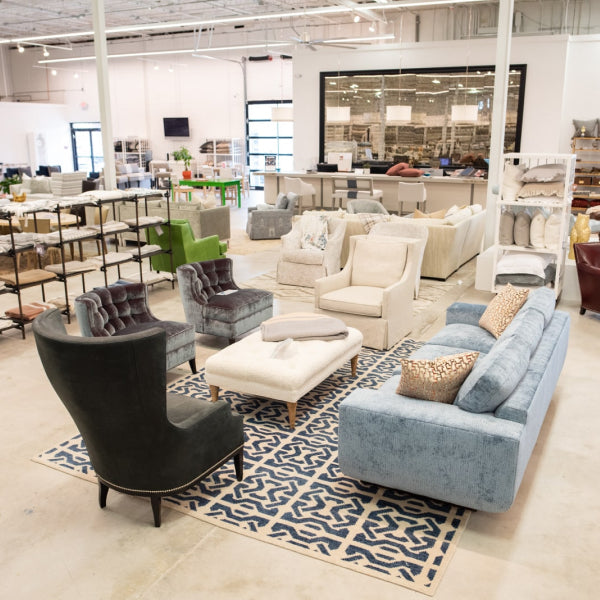
Hiring an expert from a high-end furniture and fabric resource like our showroom on Collier Rd brings immense value. We handle the complex calculations, from fabric allowances to hardware specs. For interior designers, this service frees you to focus on the creative vision while we nail the technical execution.
Ultimately, working with a professional is about achieving peace of mind. If you're leaning this way, our guide on how to work with an interior designer offers great insights. When perfection is the only option, let our Atlanta experts deliver it.
Curtain Measurement Questions We Hear All the Time
After decades of helping Atlanta’s top designers and homeowners, we’ve heard every question about measuring for curtains. Here are a few that pop up in our Buckhead showroom, answered with the clarity you need.
Should I Measure Before or After Buying the Curtain Rod?
This is a big one. Choose your rod first, but take final measurements after it's installed.
The installed position of the rod dictates your exact curtain length. Once the hardware is on the wall, you can take a precise measurement from the rod down to your desired end point. This eliminates all guesswork.
How Much Wider Than the Window Should a Curtain Rod Be?
A designer rule of thumb is to extend the curtain rod 3 to 10 inches beyond the window frame on each side. A wider rod makes the window appear larger and allows curtains to 'stack back' against the wall when open, maximizing natural light.
For a standard 36-inch window, a rod that is 42 to 56 inches wide would be perfect. This extra width is essential for creating that grand, intentional look—a key detail our Atlanta interior design clients never overlook when selecting luxury furniture and drapery.
What is the Difference Between an Inside and Outside Mount?
An 'outside mount' is when the rod is installed on the wall above and outside the window frame. This is by far the most common method, as it allows you to add visual height and width.
An 'inside mount' places the hardware inside the recessed window casing. This offers a clean, minimalist look but limits your light control and drapery fullness. For a luxurious look with gorgeous designer fabrics, an outside mount is almost always the superior choice.
The choice between inside and outside mount fundamentally changes the scale of your window. An outside mount is a tool for architectural enhancement, not just for hanging fabric.
Do I Need to Calculate Hem and Header Allowances?
If you're ordering custom drapery from a professional workroom like ours at Lewis and Sheron, you do not. You just provide the 'finished length'—the exact measurement from where the top of the curtain will hang to where you want it to end.
Our experts add all the necessary fabric for hems and headers. This is a crucial benefit of going custom; we handle the technical calculations to ensure your vision is executed flawlessly. It’s the difference between a project and a masterpiece, whether you're in Cumming or right here in Buckhead.
Ready to transform your vision into reality with flawless, custom drapery? Visit the Lewis and Sheron design showroom in Buckhead to explore Atlanta’s most exquisite collection of designer fabrics and luxury furniture and get expert guidance for your next project.
Explore our collections online at https://lsfabrics.com.