


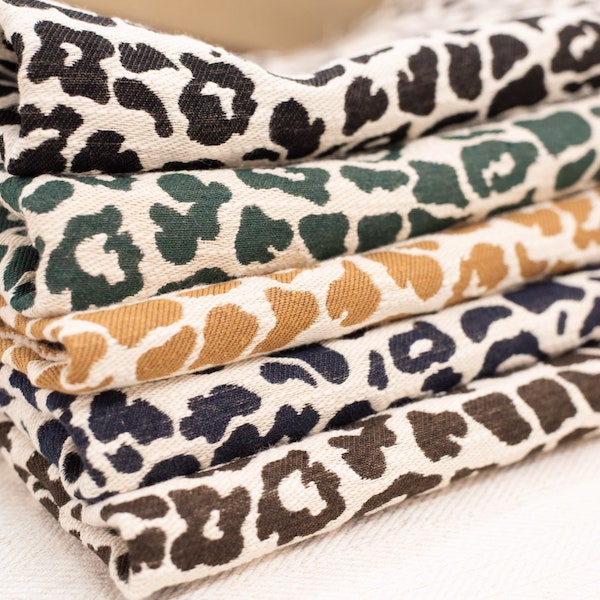
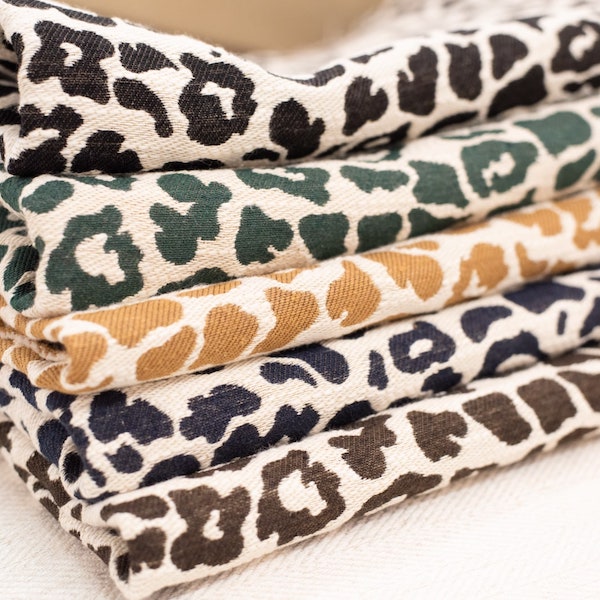
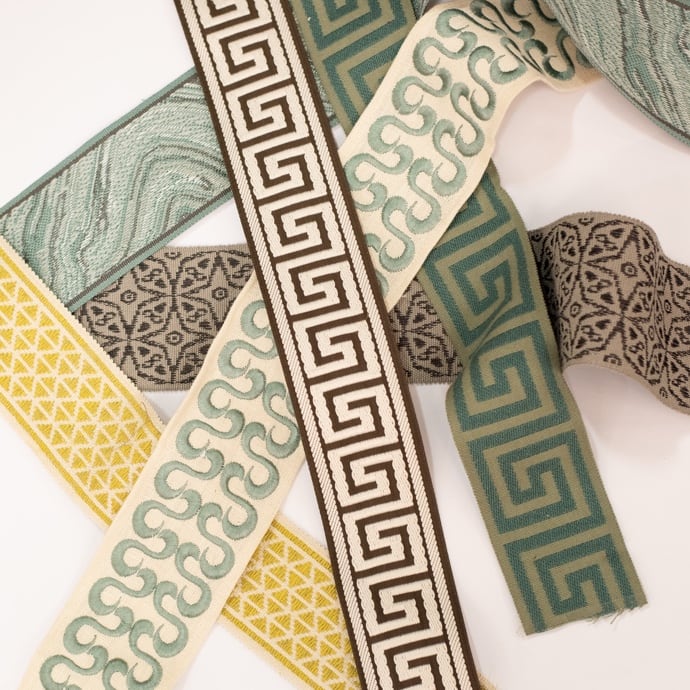

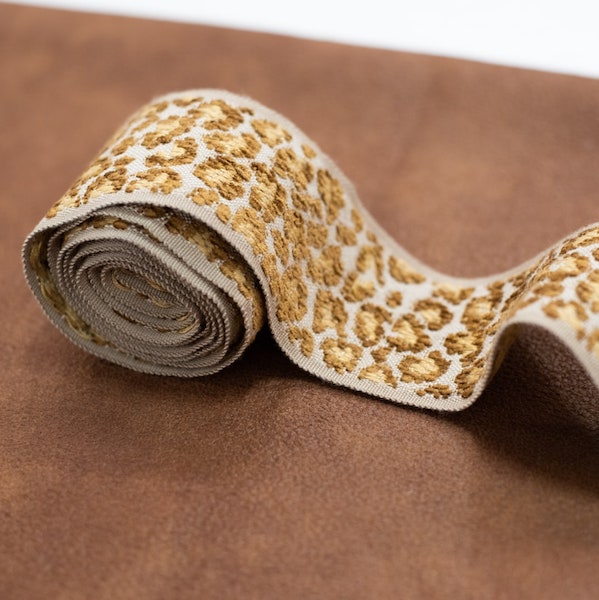
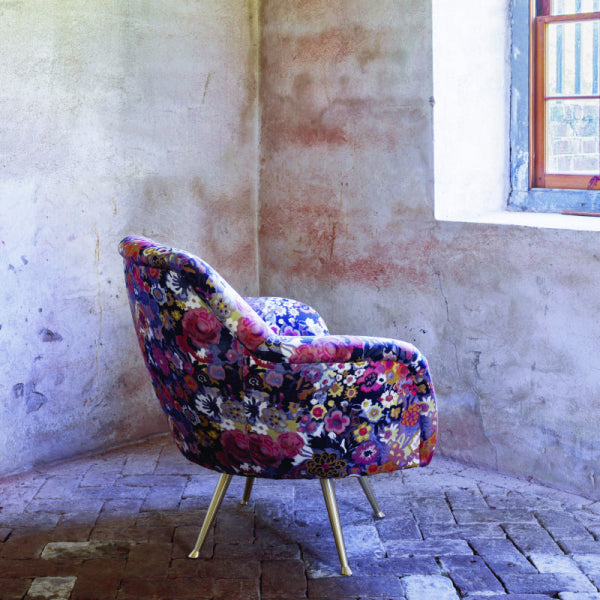
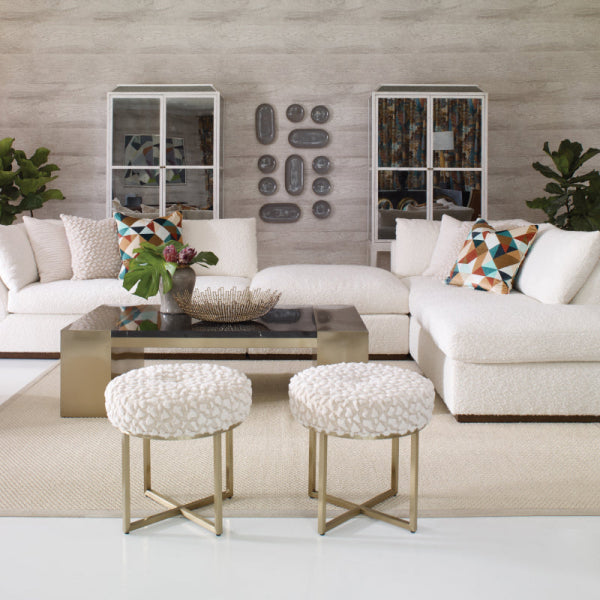
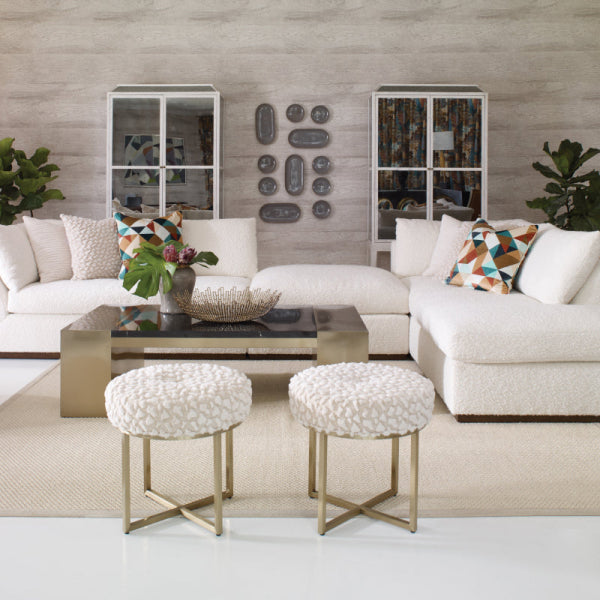







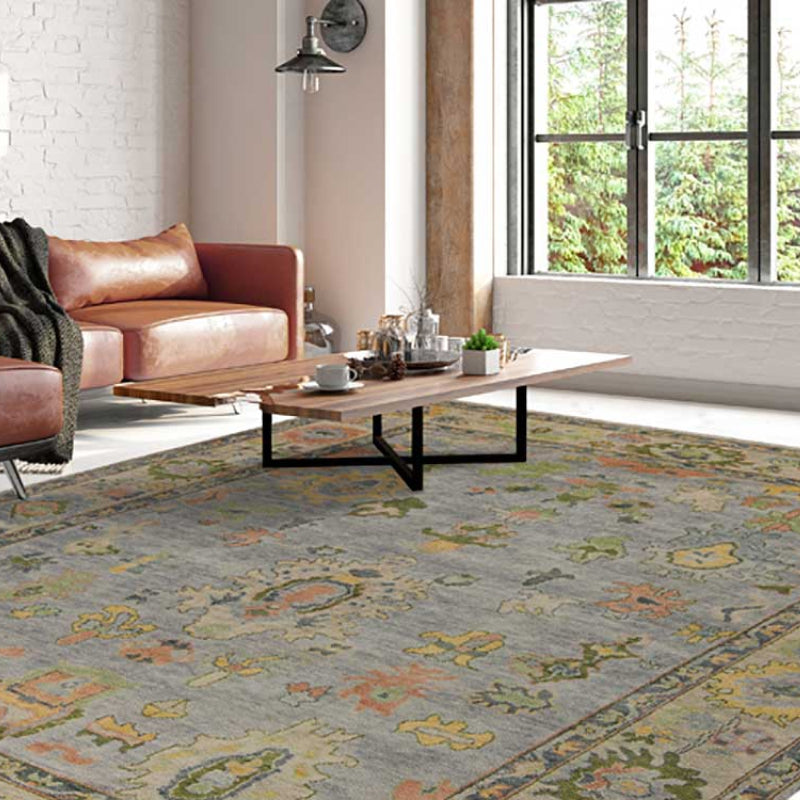
Forget your grandmother’s doilies. Lace is having a serious moment in high-end interior design, and it’s anything but fussy. This is your guide to using one of history’s most elegant textiles—from Chantilly to Guipure—to create breathtaking, sophisticated spaces in your own Atlanta home.
Lace, Reimagined for the Modern Atlanta Home
Think of lace less as a fragile antique and more as a powerful textural layer. It adds depth and character, much like a hand-knotted rug or Belgian linen. It's the design secret Atlanta's top tastemakers, from Buckhead to Alpharetta, are using to elevate everything from custom upholstery to bespoke drapery.
In the world of luxury furniture and designer fabrics, lace introduces a story of craftsmanship. It’s not just a delicate pattern. It’s a thoughtful, curated detail that transforms a room from simply beautiful to truly unforgettable.
A New Role for a Timeless Textile
The modern approach to lace is all about light and texture. It's no longer confined to the edge of a pillow. We're seeing it in bolder, more integrated ways that feel both fresh and timeless.
Imagine filtered light through a sheer lace panel in a Roswell sunroom. Or the unexpected touch of a robust lace inset on the back of a Lee Industries chair. This guide is your new secret weapon for sourcing and applying exquisite lace with confidence. It’s about understanding the different kinds of lace and knowing precisely how to use them to achieve a high-end, polished look.
Lace is the ultimate textural tool. In the right hands, it can soften modern architecture or add historical richness to a transitional space. It’s about balance, not abundance.
Your Guide to Speaking Lace Fluently
Before you specify the perfect textile, you need to know the key players. Each type of lace has its own personality, its own "hand," and its own best use. Understanding these distinctions is what separates a good design from a masterful one.
Here’s a glimpse of what makes each variety a powerful tool for designers and homeowners:
- Chantilly: The ethereal romantic. Known for its fine, web-like net and delicate floral patterns, it’s perfect for creating soft, light-filtering draperies.
- Alençon: The confident classic. A corded lace with a defined, slightly raised outline, it adds structure and dimension to trims on custom upholstery.
- Guipure: The bold statement-maker. A heavier, sculptural lace with no net background, its patterns are durable enough for accent panels on furniture.
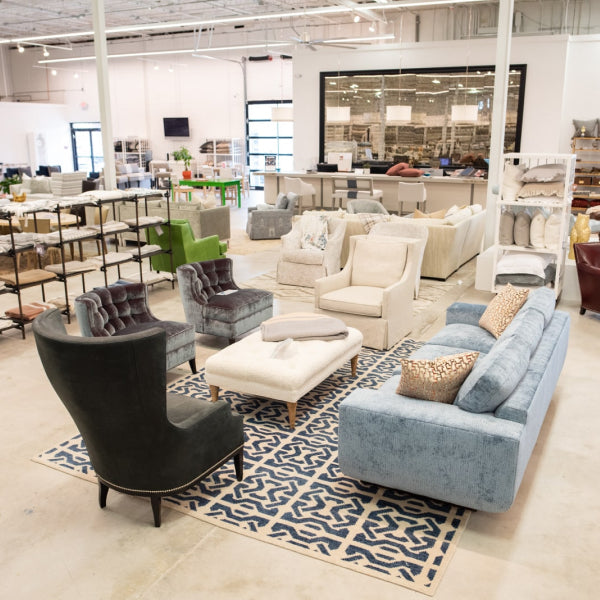
Step inside our Buckhead showroom, and you’ll see why Lewis and Sheron has been Atlanta’s destination for exquisite furniture and fine fabrics for decades. From the handcrafted lines of Verellen and Wesley Hall to our curated designer fabrics, every piece tells a story of quality and design mastery. This guide will help you write the next chapter.
Exploring the Most Celebrated Types of Lace
Ready to meet the icons of the textile world? To make an inspired choice, you have to understand the personality of each lace. This isn't just about picking a pattern. It's about selecting a texture, a weight, and a story that perfectly complements your design vision.
Let's dive into what makes each type of lace unique, from its construction to its ideal application in a luxury Atlanta home. Think of this as your private tour through our curated collection of designer fabrics—a tactile guide to speaking the language of lace fluently.
The Ethereal Classic: Chantilly Lace
Chantilly is the whisper-thin romantic of the lace world. Named for the French town where it originated, it’s known for its exceptionally fine, web-like ground and delicate floral patterns. It’s incredibly lightweight with a soft, fluid drape.
This is the lace you choose when you want to filter light with grace. Imagine sheer curtain panels in a Roswell sunroom, catching the afternoon sun and casting intricate shadows. It’s too delicate for heavy-duty upholstery but makes an exquisite overlay for bedding or a subtle trim on a decorative pillow.
The Sculptural Standout: Alençon Lace
If Chantilly is a whisper, Alençon is a confident statement. Its defining feature is the cording that outlines its floral motifs. This simple detail gives the lace a raised, three-dimensional quality and a slightly stiffer hand.
This is your go-to for adding dimension and structure. An interior designer might use Alençon trim to define the elegant lines of a Wesley Hall sofa. It adds bespoke luxury to pillows, lamp shades, and drapery, giving the finished piece a crisp, tailored look that commands attention.
The real artistry in using different kinds of lace is knowing when to be subtle and when to be bold. Chantilly creates atmosphere. Alençon creates focus.
The diagram below shows how we conceptualize using elegant textiles like lace not just as trim, but as a core element and textural layer in modern interiors.
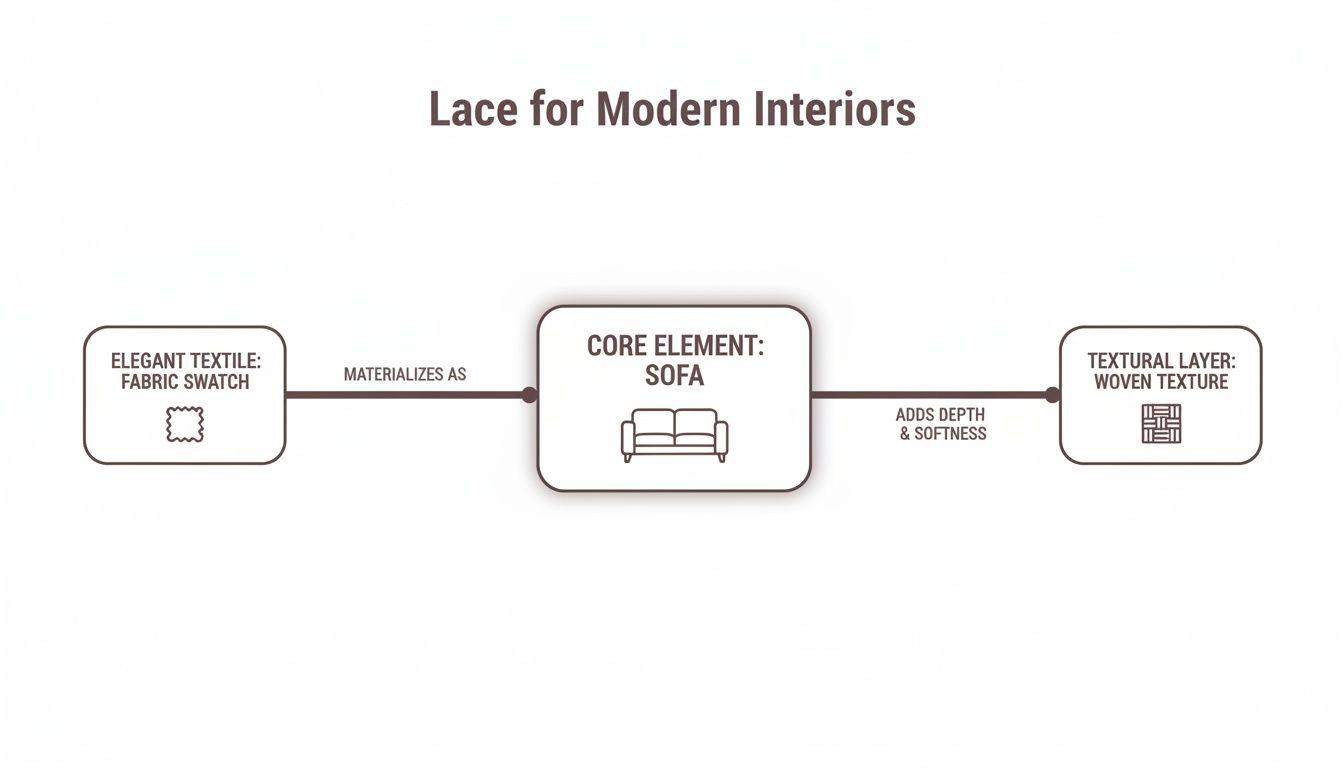
The visualization shows that lace is no longer just an accent but a fundamental component that can define the character of luxury furniture.
The Bold and Textural: Guipure Lace
Guipure is the powerhouse of the lace family. It’s a heavier, substantial lace defined by what it lacks: a net background. Instead, bold motifs are connected by fine braids, creating an open, almost sculptural fabric.
Because of its durability and visual weight, Guipure is perfect for a dramatic statement. Designers in our trade furniture program love it for:
- Dramatic Overlays: Use it over solid silk for a stunning textural contrast on a cushion.
- Furniture Accents: An inset panel on the back of a Lee Industries dining chair adds unexpected elegance.
- Table Linens: A Guipure runner brings instant gravitas to a dining room in a classic Buckhead home.
Other Key Players in the Lace Lexicon
While Chantilly, Alençon, and Guipure are the headliners, our Atlanta fabric showroom features a full cast of characters, each with a distinct role.
-
Cluny Lace: A heavier bobbin lace, often made from cotton, characterized by its geometric patterns and braids. It has a more casual, rustic feel, perfect for adding a handcrafted touch to farmhouse or transitional interiors in places like Milton or East Cobb.
-
Eyelet Lace: Crisp, clean, and classic. Eyelet is a cotton fabric with small, patterned cut-outs finished with an embroidered stitch. It offers a fresh, airy feeling, ideal for breezy curtains or charming accents.
-
Battenberg Lace: A tape lace, created by stitching linen tapes together to form intricate designs. It has an heirloom quality that feels both substantial and delicate, perfect for restoring a treasured antique or adding a touch of old-world grandeur.
Each of these celebrated laces offers a unique tool for designers and homeowners. Understanding their characteristics is the first step toward creating spaces that are not just beautiful, but deeply personal and expertly crafted.
The Art of Lace Construction: From Thread to Textile
So, how does a simple strand of cotton transform into such a breathtaking textile? The magic is in the method. Understanding the construction behind different kinds of lace is like knowing the difference between a print and an original painting—it informs your appreciation and, ultimately, your investment.
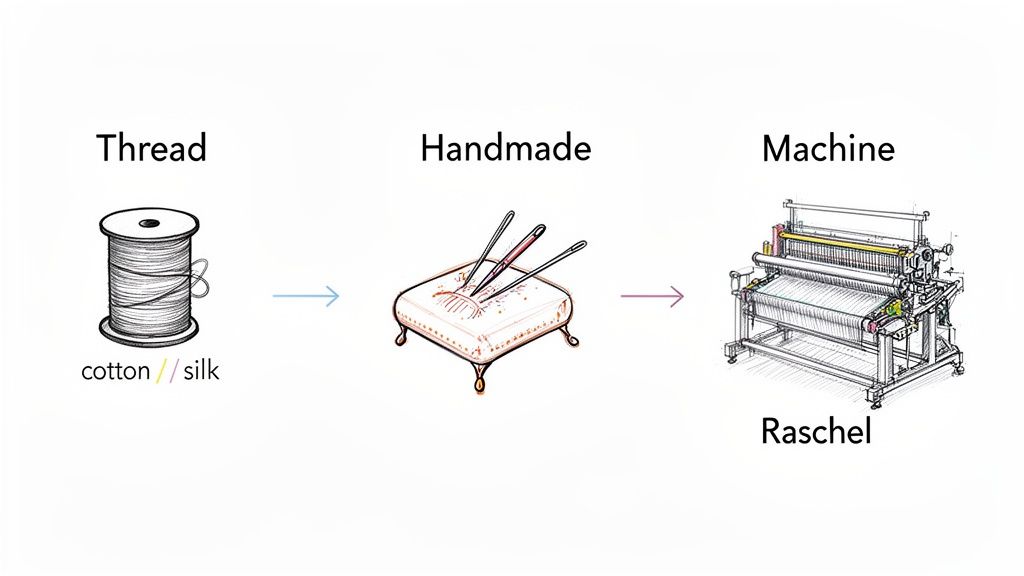
This journey from thread to textile gives each lace its unique personality. Whether crafted by an artisan's patient hand or perfected by modern machinery, the process defines the final product's texture, durability, and soul.
Handmade Heritage: Needlepoint and Bobbin Lace
Handmade lace is the original art form, a testament to incredible patience and skill. Two primary techniques have defined this world for centuries:
- Needlepoint Lace: Think of this as painting with a single thread and needle. Artisans create patterns stitch-by-stitch, producing dense, structured laces like Alençon, where every corded outline is meticulously applied.
- Bobbin Lace: This is like weaving in thin air. Dozens of threads are wound onto bobbins, then twisted and braided around pins held in a pillow to build up the pattern. This is how we get the airy structure of Chantilly and the geometric charm of Cluny.
A handmade Battenberg tape lace has an unmistakable heirloom quality. You can almost feel the artisan’s touch—a characteristic that makes it a prime candidate for restoring treasured pieces in an East Cobb home. This human element truly distinguishes it.
Modern Mastery: Machine-Made Lace
While handmade lace is pure artistry, modern machine methods have made this luxury far more accessible, durable, and consistent. This innovation allows designers to specify fine textiles for high-traffic applications without sacrificing beauty.
The most common method today is Raschel knitting. This high-speed process uses thousands of needles to create complex, stable patterns that mimic handmade designs with incredible precision. The result is a lace both beautiful and resilient enough for custom upholstery on a Wesley Hall sofa or an accent on durable Ambella furniture. This is the technology that brings exquisite design into everyday life.
Understanding construction is really about making smarter sourcing decisions. It’s knowing when to specify a delicate, handmade trim for an heirloom pillow versus a robust, machine-made lace for a high-use sectional in a busy Buckhead family room.
The Critical Role of Fiber Content
The thread itself is just as important as the technique. The fiber dictates everything from drape and luster to durability and care. For members of our trade furniture program, this knowledge is essential for creating pieces that stand the test of time.
- Cotton & Linen: These natural fibers create strong, breathable laces with a beautiful matte finish. They are workhorses, perfect for crisp eyelet curtains or durable trims on fine furniture in Roswell or Alpharetta.
- Silk: The ultimate luxury fiber, silk produces lace with unmatched luster and a fluid drape. It’s best reserved for decorative applications like delicate drapery or pillows.
- Synthetics (Nylon, Polyester): Modern synthetic fibers offer incredible durability, colorfastness, and ease of care. They are often blended with natural fibers to add strength, a practical choice for custom upholstery meant for daily life.
Lace has evolved through centuries into diverse types, each with unique production methods and market impacts that make it a timeless choice for premium home furnishings. Take cotton lace, a classic prized for its breathability and natural texture. Historically, it gained prominence in the 19th century when Britain's Nottingham lace industry mechanized production, boosting output from handmade pieces to millions of yards annually by 1850—a shift that increased global lace supply by over 500% in just two decades.
Today, cotton lace remains a staple in the global lace fabric market, which was valued at $2.5 billion in 2023 and is projected to hit $4.1 billion by 2032. The construction process is just one part of the story; knowing about what sewing notions are can further deepen your appreciation for textile arts. This is why visiting our Atlanta fabric showroom is so valuable—you can see and feel these differences firsthand, empowering you to make the perfect choice for your project.
Sophisticated Ways to Use Lace in Your Home
Alright, now for the fun part. Knowing the different kinds of lace is one thing. Knowing how to use them with confidence and real style is something else entirely. Let's move beyond theory and talk about how to bring these exquisite textiles into your home without a hint of anything dated or fussy.
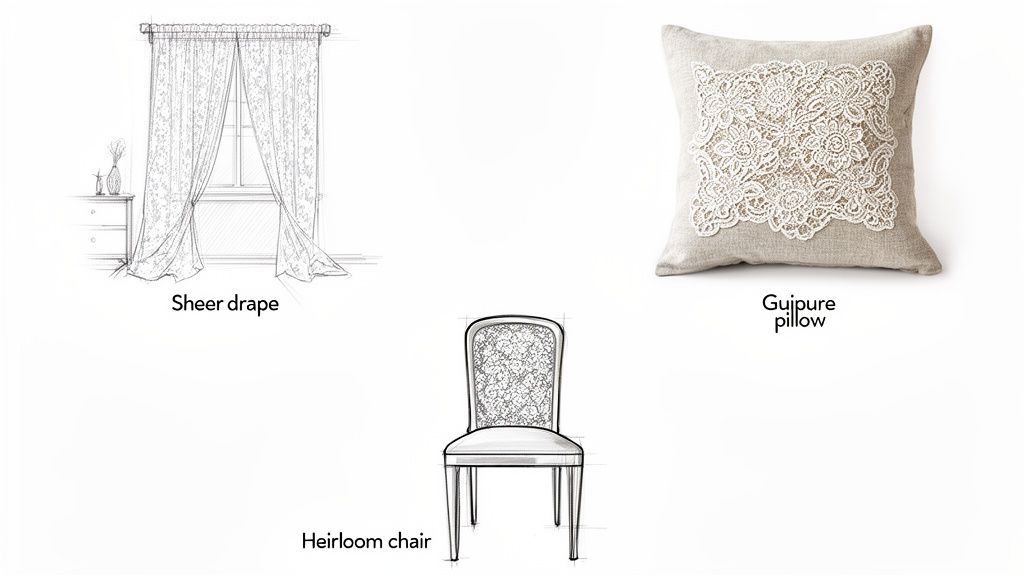
These are the go-to strategies our designers use to bring that bespoke, timeless elegance of Lewis and Sheron into homes from Marietta to Milton. It’s all about creating moments of unexpected beauty.
Drapery That Dances with Light
One of the most dramatic ways to use lace is in your window treatments. Forget heavy, opaque curtains. Think sheer, elegant drapery panels that catch the sunlight and transform it into a soft, diffused glow.
Picture a Buckhead living room with floor-to-ceiling panels of Chantilly lace filtering the morning sun, casting floral shadows across the hardwoods. This choice adds layers of texture and atmosphere, making the room feel both grand and incredibly inviting. For a more structured feel, an eyelet lace panel brings a crisp, clean aesthetic perfect in a modern Alpharetta farmhouse.
Elevating Custom Upholstery with Fine Details
This is where the real artistry comes in. A subtle touch of lace can elevate custom furniture from beautiful to absolute showstopper. It’s a detail that quietly signals exceptional craftsmanship.
Imagine a classic Verellen sofa in a rich Belgian linen. Now, add a delicate Alençon lace trim along the skirt or cushion edge. Instantly, the piece takes on a bespoke, couture feel. This small but significant detail is something our in-house designers often use to create one-of-a-kind furniture. For more ideas, our guide to ribbons and trim is a fantastic resource.
Lace on modern upholstery is like the lining of a finely tailored suit—a hidden detail of exceptional quality that speaks volumes. It isn’t meant to shout; it’s meant to be discovered.
For an especially cozy and romantic feel, you can see how lace enhances a Shabby Chic interior design, a style practically made for it.
Texture and Depth with Pillows and Bedding
Throw pillows and bedding are the perfect places to experiment with bolder, more textural laces. This is your chance to play with a robust Guipure or a geometric Cluny without overwhelming the room. A single accent pillow with a Guipure lace overlay can add immediate depth and sophistication to a Wesley Hall armchair.
Layering is everything. A few ideas our designers in the trade furniture program absolutely love:
- Contrast is King: Pair a heavy Guipure lace pillow with a smooth silk or velvet sofa. The textural friction is stunning.
- Monochromatic Moment: Use a cream-colored Cluny lace trim on a cream linen duvet. The texture-on-texture effect is subtle, sophisticated, and deeply luxurious.
- Modern Edge: A black Chantilly lace overlay on a crisp white pillow feels daring, modern, and incredibly chic.
Unexpected Elegance on Heirloom Pieces
Have an heirloom chair or beloved antique that needs a refresh? Reupholstering it with a touch of lace can breathe new life into the piece while honoring its history. Instead of a full lace fabric, which might be too delicate, consider an inset panel.
A durable, machine-made lace panel on the back of a dining chair or the seat of a vintage vanity stool adds a dash of unexpected elegance. It’s a nod to the past, completely reimagined for today’s interiors—a perfect project for our expert reupholstery team. This is how you transform furniture into a piece of art.
Caring for Lace to Ensure Timeless Beauty
When you invest in a beautiful, high-quality lace, you're also investing in its future. Proper care isn’t about cleaning; it’s about preserving the delicate artistry and unique texture woven into every thread. Whether it's trim on a custom Wesley Hall sofa or stunning drapery for a Forsyth County home, the right steps ensure these textiles stay lovely for decades.
This isn’t about some complicated ritual. It’s simply knowing the right approach for the right fabric. A sturdy cotton eyelet is far more forgiving than a whisper-thin silk Chantilly. Understanding that difference is the secret to long-term beauty.
For the designers in our trade furniture program, this knowledge is a crucial part of educating clients. When you deliver a custom creation—from an Ambella accent chair to bespoke bedding—ensuring it stays pristine is part of that luxury service experience.
Gentle Cleaning for Delicate Applications
For most lace items like drapery, pillows, or table linens, a gentle hand is a must. First, always check the fiber content—that's your primary guide.
-
Hand-Washing: For pure cotton or linen lace, your best bet is lukewarm water with a mild, pH-neutral detergent. Never twist or wring the fabric. Gently squeeze the water out, then roll the item in a clean, thick towel to soak up excess moisture.
-
Machine Washing: If you must use a machine, always place the lace item in a mesh laundry bag first. Stick to the delicate cycle with cold water and a gentle soap. And never, ever put lace in the dryer—the high heat can damage fragile fibers.
-
Drying: Lay lace flat on a clean, dry towel away from direct sunlight, which can cause yellowing. Gently reshape the piece while it’s still damp to ensure it dries perfectly.
Spot Cleaning and Professional Care
When lace is integrated into upholstery on pieces from Verellen or Lee Industries, spot cleaning is your first line of defense. Blot spills immediately with a clean, white cloth, working from the outside of the spill inward to prevent spreading. Use a mild solvent or an upholstery cleaner for delicate fabrics, but always test it on a hidden spot first.
Of course, some situations need a professional’s touch. For heavy soiling, laces with silk or metallic threads, or complex heirloom pieces, professional dry cleaning is the only safe way to go. Think of it as an investment in preserving your luxury furniture.
The textile industry is always changing. The global bra lace market, for instance, is projected to hit $206 million by 2032, driven by demand for flexible, long-lasting designs. This growth is powered by computerized machines that create high-quality synthetic laces—perfect for high-use home applications where you need both beauty and resilience. You can learn more about these market trends.
Beyond lace specifics, understanding general guidance on cleaning fabric drapes is also incredibly helpful for maintaining all the fine textiles throughout your home.
Find Your Perfect Lace at Our Atlanta Showroom
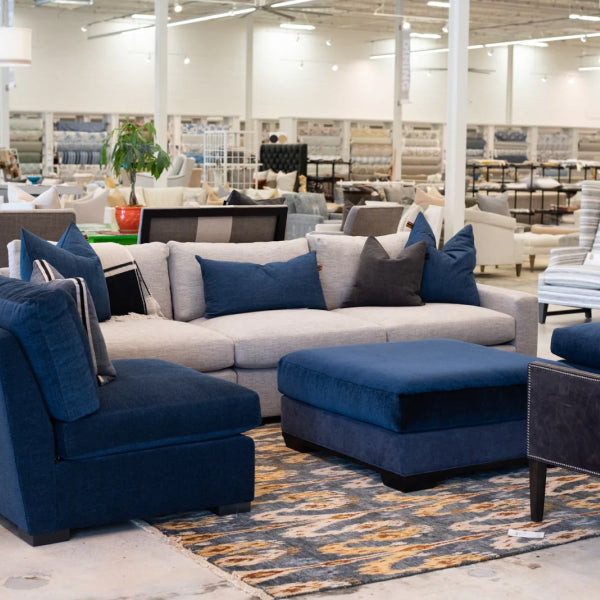
You've got the vision—so where do you find these beautiful textiles? Your journey begins right here, in our Buckhead showroom. We've created more than just a fabric store; it's a curated, hands-on experience for Atlanta’s discerning homeowners and interior designers. This is where your concepts start to feel real.
Step inside, and our design consultants will guide you through our incredible collection of designer fabrics and trims. You can actually feel the difference between a delicate Chantilly and a substantial Guipure. Seeing these different kinds of lace up close is the only way to truly appreciate their character and imagine the possibilities.
Your Design Partner in Buckhead
Think of our in-house experts as your greatest resource. They know exactly how a specific trim can elevate a piece of luxury furniture Atlanta clients will cherish for years. Imagine weaving a sophisticated lace detail into a custom sofa from Lee Industries or adding that bespoke touch to a timeless Wesley Hall armchair.
We believe the most beautiful interiors are born from collaboration. Our role is to provide the finest materials and the expertise to help you use them with confidence and creativity.
This partnership extends across North Georgia, from Roswell to Marietta. Whether you're a homeowner searching for that one perfect detail or a designer sourcing a large-scale project, we're here to make the process seamless and inspiring. Finding the right textile should be a joy, not a chore. For more guidance, take a look at our article on the best places to buy upholstery fabric.
A Premier Resource for the Design Trade
For professionals, our Lewis and Sheron Trade Program is a vital tool. We offer exclusive access, dedicated support, and the resources designers in Forsyth County and Milton need to deliver exceptional results. With our premium vendor partnerships, including Verellen, Wesley Hall, and Ambella furniture, we’ve become a cornerstone of the Atlanta interior design resources community. Your vision for a timeless, elegant interior starts right here.
Answering Your Questions About Decorating with Lace
We get it. You love the beauty of lace, but you have questions. Is it practical? Can it feel current? We’ve heard these concerns from homeowners and designers across Atlanta, and we have the straightforward answers you’re looking for.
Is Lace Too Delicate for Everyday Furniture and Use?
Not at all. While some whisper-thin laces are best for decorative touches, many of today's options are surprisingly tough—especially robust Guipure and many machine-made cotton varieties. They are absolutely up to the challenge of daily life.
When used as a smart accent on a throw pillow or integrated into custom upholstery by our workroom, lace is more than ready for a busy home. It all comes down to choosing the right lace for the right job—something our consultants at the Atlanta fabric showroom specialize in.
How Can I Make Lace Look Modern Instead of Old-Fashioned?
The secret is context and contrast. It's not about swathing a room in fussy details, but about making one or two confident statements.
Imagine pairing a bold, geometric lace with the clean, modern lines of the luxury furniture Atlanta designers adore, like a stunning piece from Verellen furniture or one of the classic Lee Industries chairs. Or, use lace in an unexpected, saturated color. When you skip the fuss, the look becomes instantly sophisticated and contemporary—a perfect fit for a modern home in Buckhead or a chic space in Alpharetta.
Can I Use Lace in a Minimalist Interior?
Absolutely. In a minimalist space, texture is your best friend. A single, beautifully crafted element can bring warmth and visual interest without creating clutter.
In minimalist design, a touch of lace isn’t clutter—it’s a carefully chosen detail that celebrates craftsmanship and softens the space.
Picture a crisp white eyelet lace curtain that gently filters light without adding visual noise. Or a simple linen cushion with a clean Cluny lace edge. It’s all about a thoughtful, restrained touch that lets the textile shine. Let our Atlanta interior design resources show you how a whisper of lace can enhance, rather than overwhelm, a minimalist design.
Ready to explore the possibilities? Visit Lewis and Sheron Textiles to discover our collection of designer fabrics and see how different kinds of lace can transform your space. Find your inspiration at https://lsfabrics.com.