



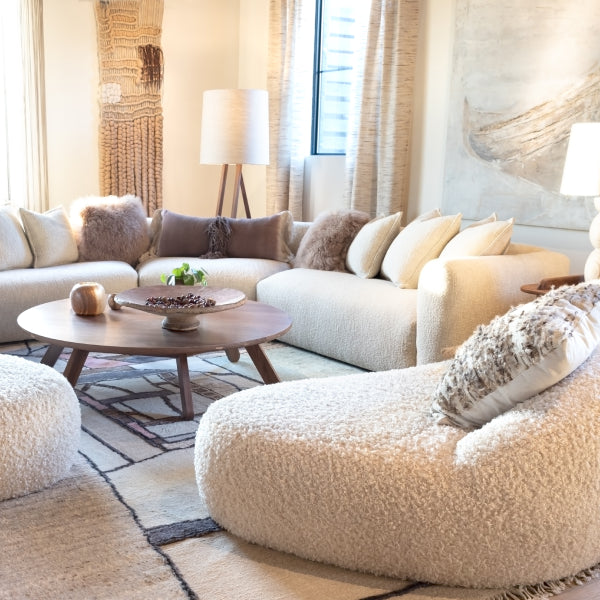
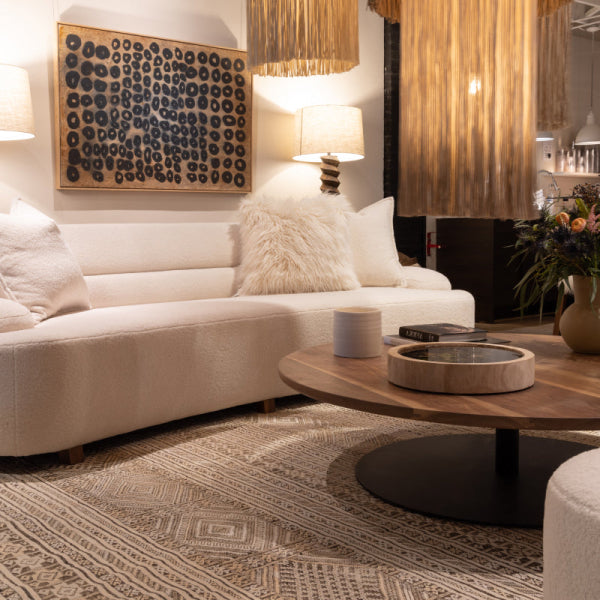









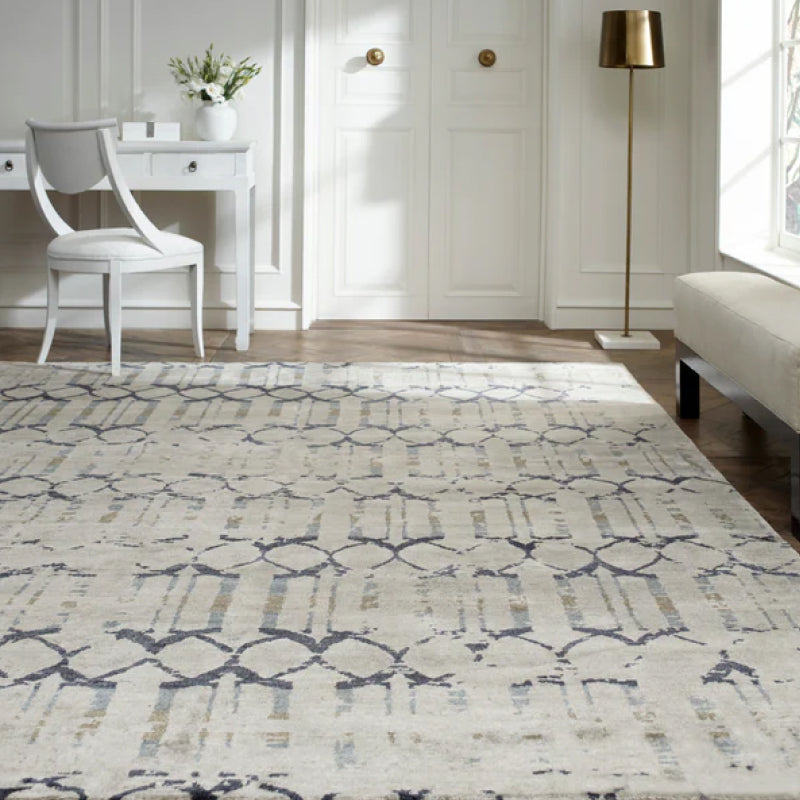
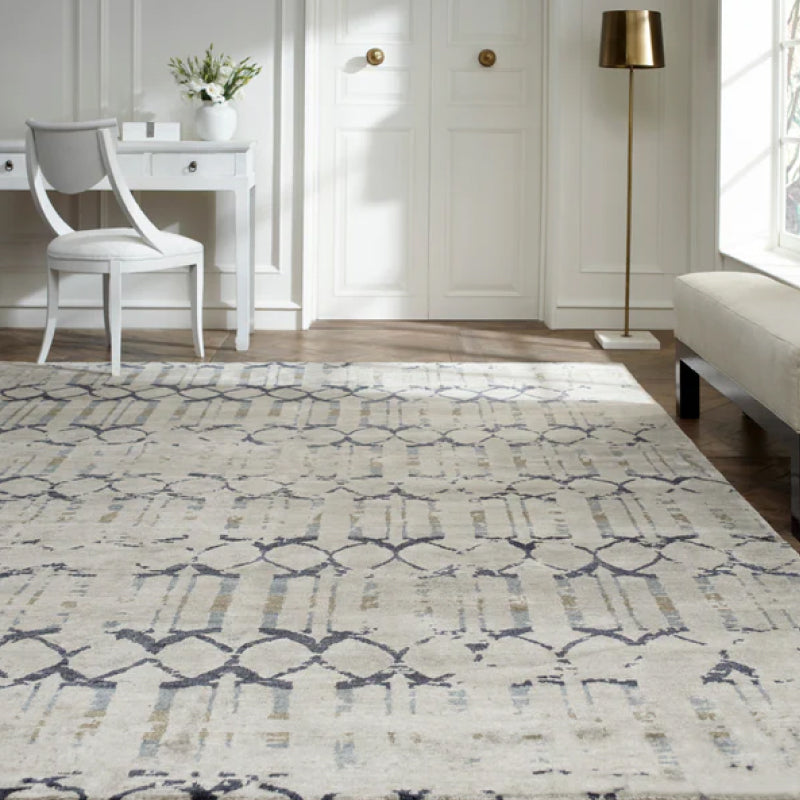
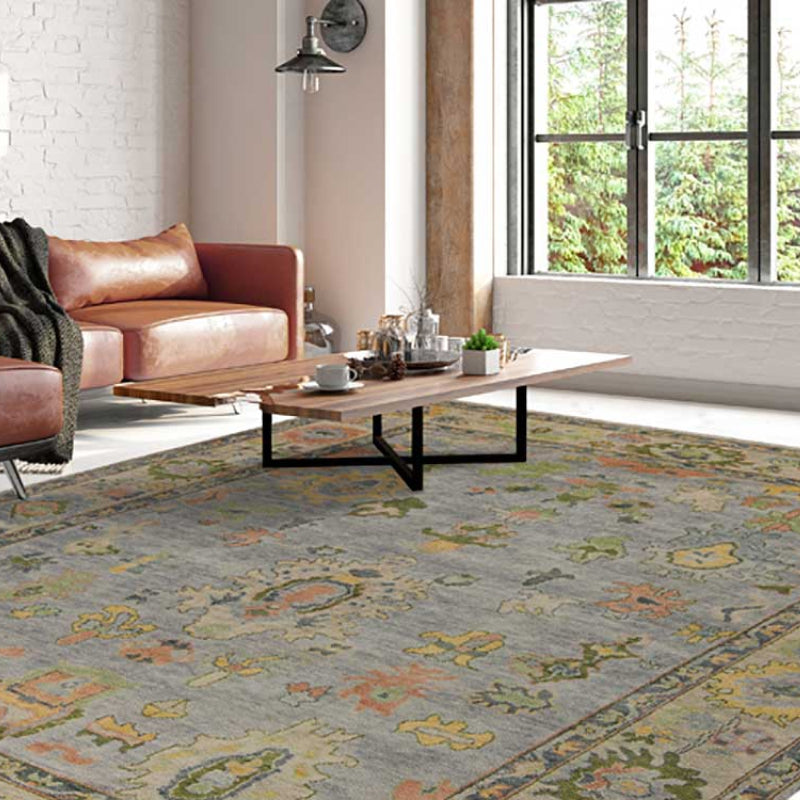
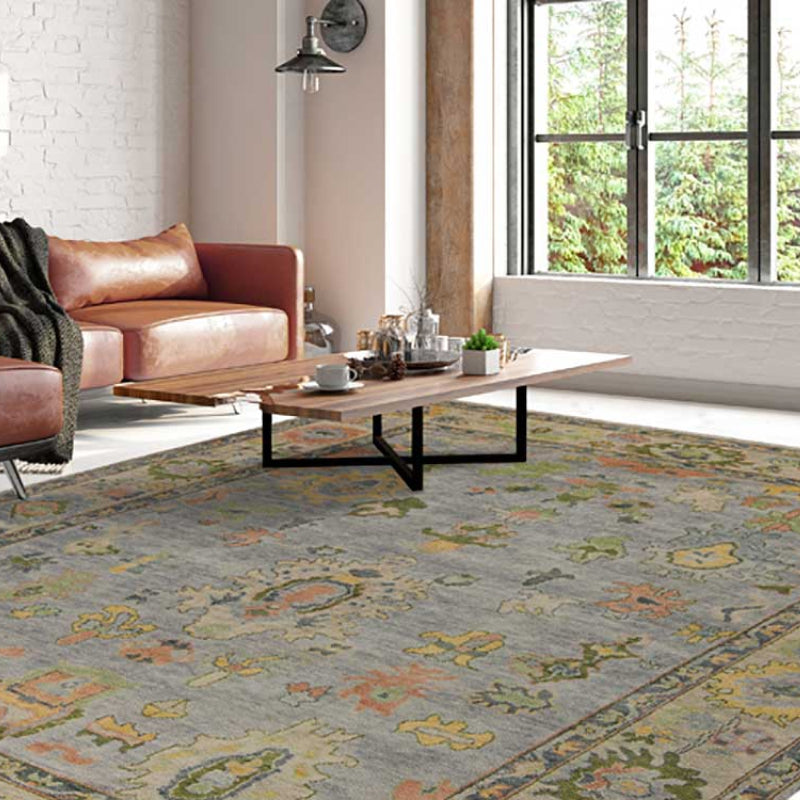
Let’s be honest. Choosing a living room rug feels like a high-stakes decision. In Atlanta’s most thoughtfully designed homes, from elegant Buckhead estates to modern lofts on the Westside, the right rug separates a nice room from a truly breathtaking one.
It’s not just about covering the floor. It’s about laying the foundation for your entire design story.
A perfectly selected rug anchors your furniture, defines the space, and injects a layer of texture and personality that nothing else can. Get this one piece right, and everything else—from your exquisite Wesley Hall sofa to your curated art—simply falls into place.
This isn't about guesswork. This guide breaks down the process with the confidence of an insider, sharing the secrets we use to help our clients across North Georgia, from Roswell to Marietta, select rugs that feel intentional, luxurious, and uniquely theirs.
Think of a rug as the punctuation for your living room. It can be a quiet comma that lets other pieces shine or a bold exclamation point that becomes the star of the show. The goal is to make a deliberate choice.
Of course, a perfectly styled living room is a sum of its parts. Once your rug and furniture are in place, you might want to integrate other focal points. A large, beautifully framed mirror, for instance, can add depth and light. It's just crucial to know how to safely hang a heavy mirror to protect your walls and your investment.
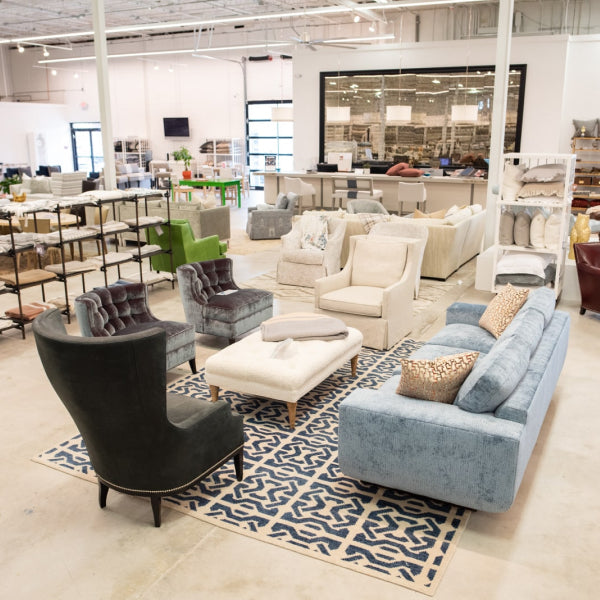
Finding the ideal piece is a journey, and our Atlanta fabric showroom on East Paces Ferry is the perfect starting point. Here’s what matters most:
- Understanding Scale: It’s rule number one. A rug that’s too small will make even the most luxurious furniture Atlanta has to offer look disconnected.
- Material Matters: Your rug must match your lifestyle. We’ll help you choose between the timeless appeal of wool and the rugged durability of modern synthetics.
- Curated Style: Your rug should complement your aesthetic, whether it’s a subtle foundation for your Lee Industries chairs or a bold statement piece that commands attention.
This process should feel inspiring, not intimidating. Let's find the perfect foundation for your space.
Getting the Scale and Placement Just Right
Let’s be blunt: the single biggest mistake we see is a rug that’s too small. It makes an entire room feel disjointed, instantly cheapening the look of your beautiful, high-end furniture. A postage-stamp rug floating in the middle of your floor is the fastest way to shrink a room visually.
On the other hand, a rug that’s too large can swallow the room whole, feeling more like awkward carpeting than an intentional design choice. The secret, which Atlanta’s top designers understand instinctively, is finding that sweet spot where the rug confidently anchors the entire seating arrangement.
This isn’t about guesswork. It’s about a simple, proven approach that works every time, from a cozy Virginia-Highland bungalow to an expansive Milton estate.
The Designer’s Blueprint for Rug Placement
Think of your main seating area—your sofa and chairs—as an island. The rug is the landmass that connects them all.
The absolute, non-negotiable rule is that, at a minimum, the front legs of all your major furniture pieces must be on the rug. This simple act creates a unified, cohesive look that makes the whole room feel larger and more purposeful.
For most living rooms we work with, a standard 8'x10' or 9'x12' rug provides the perfect foundation. But before you commit, grab some painter's tape and map out the dimensions on your floor. This little trick is a lifesaver, letting you visualize the scale and ensuring your furniture has the anchor it deserves.
This simple infographic breaks down the core steps for getting rug placement right every time.
Following this measure, place, and anchor method ensures your furniture feels grounded rather than adrift in the room.
Sizing Scenarios for Atlanta Homes
The layout of your room dictates the specifics. Let's walk through a few common scenarios we see in homes from Buckhead to East Cobb.
-
Sofa Against a Wall: If your sofa is pushed up against a wall, the rug should slide underneath its front legs. You don’t need it to go all the way to the wall—just enough to connect the piece to the rest of the room.
-
Floating Seating Arrangement: For open-concept spaces so popular in Alpharetta and Cumming, the rug is absolutely crucial for defining the living area. Here, an "all legs on" approach is often best. Choose a rug large enough to accommodate all four legs of your sofa and chairs, leaving a generous border of at least 8-12 inches around the furniture.
-
Facing Sofas or Sectionals: When you have a large conversational area with two sofas or a substantial sectional, the rug must be substantial enough to contain the entire grouping. It should extend at least a foot beyond the ends of each sofa to create a sense of grandeur and intention.
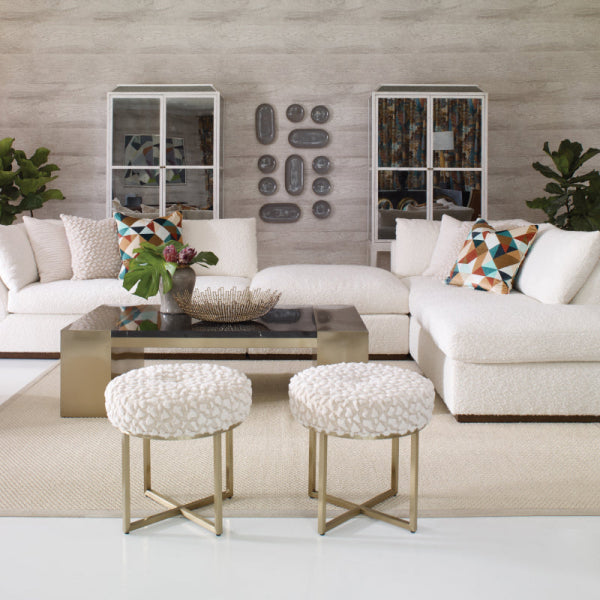
The goal is to create a visual "room within a room." Your rug should be generous enough to unify your seating, coffee table, and any upholstered ottomans or benches, making the conversation area feel like a destination.
Your Living Room Rug Sizing Cheat Sheet
Feeling overwhelmed by numbers? Here’s a quick-reference guide to help you nail the right size for your specific layout.
| Layout Goal | Recommended Rug Size | Best For |
|---|---|---|
| All Legs On | 9'x12' or larger | Open-concept spaces; creating a defined, floating seating area. |
| Front Legs On | 8'x10' | Most standard living rooms; sofas placed against a wall. |
| Just the Coffee Table | 5'x8' or 6'x9' | Smaller spaces or apartments where a larger rug would overpower the room. |
This table should get you started, but always remember to measure your own space for the perfect fit.
Getting the scale right is the first—and most important—step. It’s the framework that ensures your investment in beautiful furniture truly shines.
Choosing Materials That Weave Quality into Your Home
A living room rug needs to look stunning, but it also has to live up to your lifestyle. Whether it’s handling foot traffic from family gatherings in your Marietta home, stray pet hair, or the bright Georgia sun, selecting the right material is everything. This is where quality speaks for itself.
Forget the flimsy, disposable options. In a well-appointed home, the feel of the rug underfoot is just as important as how it looks. The material determines its durability, its softness, and how it will age over time. Let’s walk through how to choose a rug that's as practical as it is exquisite.
The Great Debate: Natural vs. Synthetic Fibers
When clients visit our Buckhead showroom, this is often the first conversation we have. Each type of fiber brings its own character to a room, and the best choice depends entirely on how you live.
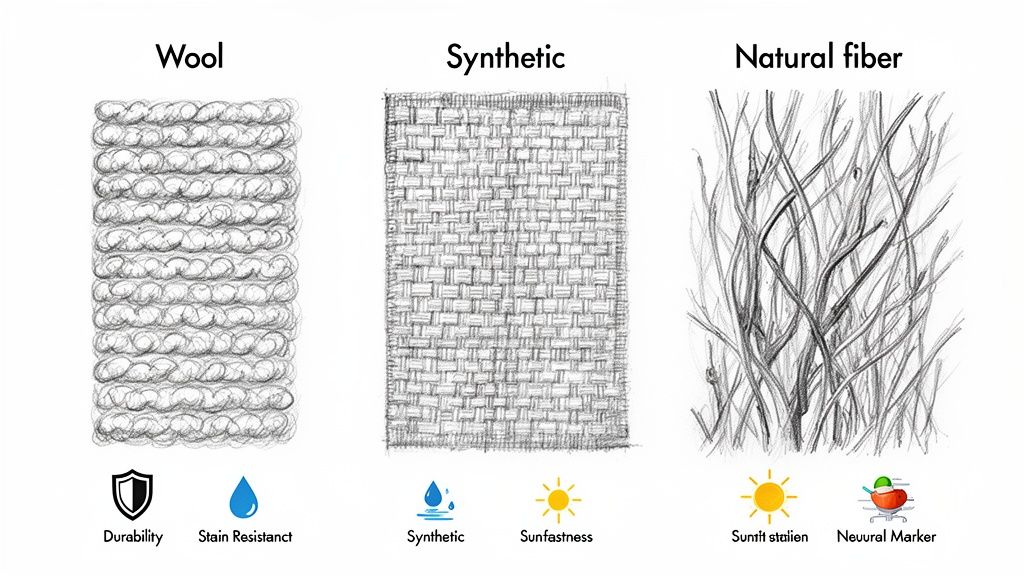
Natural Fibers: Think wool, silk, cotton, and jute. These are the classics for a reason.
- Wool: The undisputed champion of luxury rugs. It’s incredibly durable, naturally flame-retardant, and has a springy texture that resists crushing. A high-quality wool rug is a true investment piece.
- Jute & Sisal: These bring an organic, earthy texture that’s perfect for grounding a room. They are wonderfully durable and a great choice for layering under a smaller, decorative rug.
Synthetic Fibers: Don't dismiss them. Modern synthetics like nylon and polyester are engineered for performance. They offer exceptional stain resistance and durability, often at a more accessible price point. They're a brilliant choice for high-traffic family rooms or homes with pets.
The global rug market, projected to hit nearly USD 295 million by 2032, has surged with high-performance synthetics. It makes sense—in North America, where residential use accounts for 72% of sales, materials like nylon and polyester are favored because they can withstand thousands of footfalls before showing wear. With 65% of US households now preferring synthetics for living rooms, it's clear performance matters. These materials can repel stains up to 50% better than untreated wool. You can discover more insights about these market trends at Custom Market Insights.
Understanding Pile Height
Pile refers to the density and length of the fibers. It’s the difference between a sleek, flat surface and a plush, sink-your-toes-in cloud. Neither is better—they just serve different purposes.
- Low Pile (Flatweave): These rugs have a tight, flat weave with no pile. They are incredibly durable, easy to clean, and perfect for high-traffic areas. They also don't trap as much dust, making them a practical choice for many Atlanta homes.
- Medium Pile: This is the versatile sweet spot. It offers a balance of comfort and practicality, with enough softness underfoot without being difficult to vacuum. Most rugs you’ll find fall into this category.
- High Pile (Shag): Think deep, plush, and luxurious. High-pile rugs add instant coziness and a touch of glamour. They are best suited for lower-traffic areas where you want to create a sense of warmth and comfort.
A rug's construction is as critical as its material. Understanding the difference of a hand-knotted rug versus a machine-made one can help you appreciate the craftsmanship and longevity you're investing in. One is an heirloom; the other is a beautiful, but more temporary, design element.
Matching Material to Your Atlanta Lifestyle
Let’s get practical. How do you choose the right material for your home, whether it’s in Roswell, Milton, or right here in Buckhead?
- The Busy Family Hub: If your living room is the center of a bustling household, prioritize durability and stain resistance. A high-quality nylon or a dense, low-pile wool rug is an excellent choice. Our collection of performance fabrics and rugs is designed for exactly this.
- The Formal, Sun-Drenched Room: For a living room that gets a lot of natural light but less foot traffic, you can indulge in more delicate materials. Wool has good resistance to sun damage, but certain synthetic fibers are specifically treated for UV protection.
- The Sophisticated Retreat: In a more formal, adult-focused space, you can embrace luxury. A wool-and-silk blend offers a beautiful sheen and incredible softness. This is where you invest in a true statement piece that complements your finest furniture, like a custom piece from Ambella Home.
Ultimately, the right material supports your life without compromising on style. In our Atlanta fabric showroom, we guide designers and homeowners through these choices every day, ensuring the final selection is not just beautiful, but perfectly suited for years of enjoyment.
Mastering Style, Color, and Pattern
This is where the fun really begins. Think of your rug as the artwork for your floor—it can make a space feel serene and calm or vibrant and full of energy. This is your chance to infuse your personality into the very foundation of your design.
So, what's the goal? A quiet, neutral rug that lets that stunning Wesley Hall sofa do all the talking? Or a bold, patterned masterpiece that becomes the star of the show? There's no wrong answer, only an intentional one.
Finding Your Color Story
A room that feels truly put-together isn't about matching everything perfectly. It's about building a harmonious palette that feels curated and thoughtful. Your rug is the perfect tool for tying it all together.
Start by looking around the room. Pull inspiration from your existing decor—a shade from a favorite piece of art, a subtle hue in the custom upholstery on your Lee Industries chairs, or a color from your drapery fabric.
A common misconception is that your rug needs to contain every single color in the room. In reality, just picking one or two accent colors and repeating them in the rug's design is often all it takes to create a sophisticated, connected look.
Design psychology backs this up. While neutral rugs make up 55% of the market because they're so versatile, a well-chosen color can completely transform a space. A classic approach is the 60-30-10 rule. Here, your rug might establish the room's 60% dominant color, with walls making up 30%, and smaller accents contributing the final 10%. It’s a simple formula that helps harmonize up to 85% of interior spaces, creating a balanced and pleasing aesthetic.
To Blend In or Stand Out?
Once you have a color direction, the next decision is about impact. For high-end furniture in a Buckhead home, both strategies are winners.
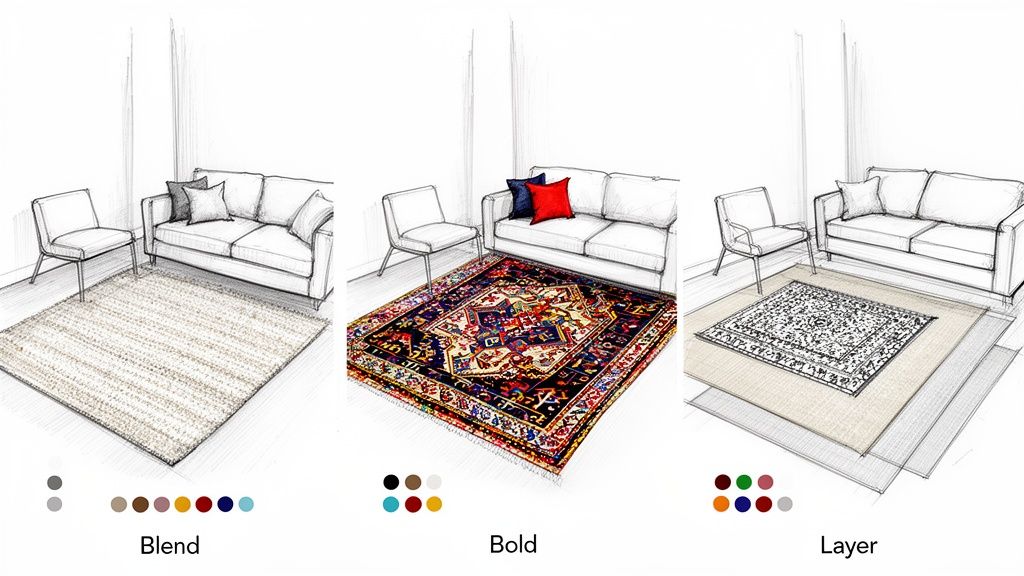
The Understated Approach: A neutral rug with a subtle texture is a timeless choice. It allows your exquisite furniture—like a handcrafted Verellen sofa or a sculptural Ambella cocktail table—to remain the center of attention. Think of a beautifully woven wool or a soft jute; they add warmth without shouting for the spotlight.
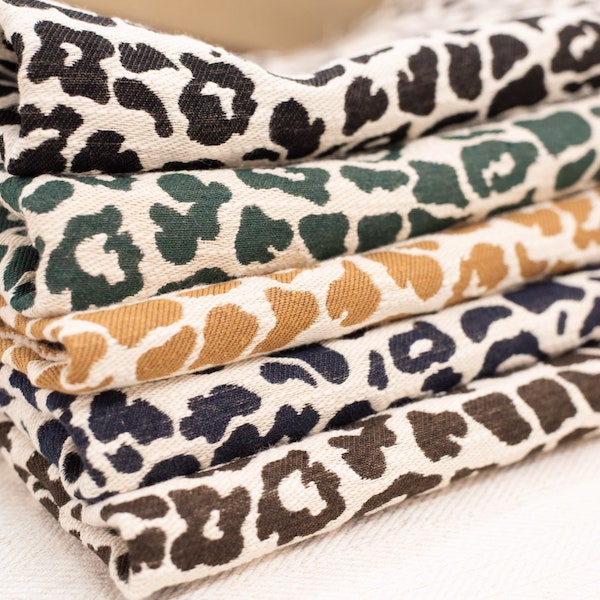
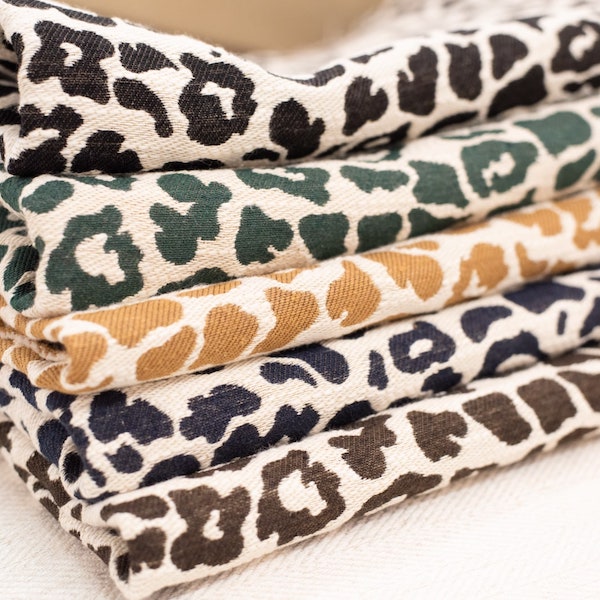
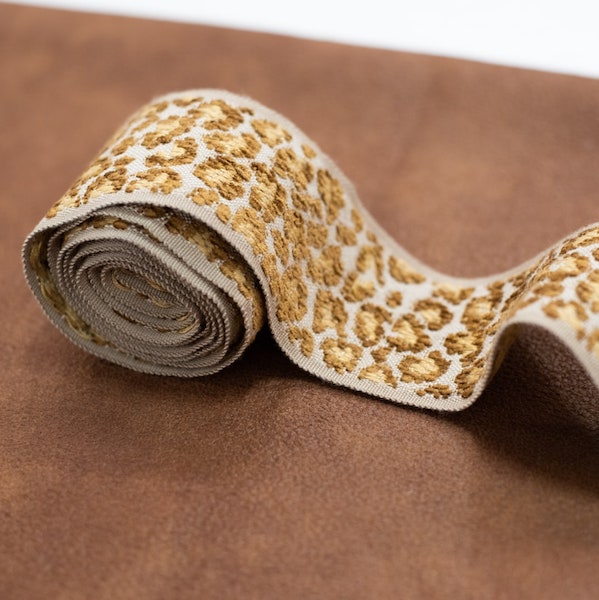
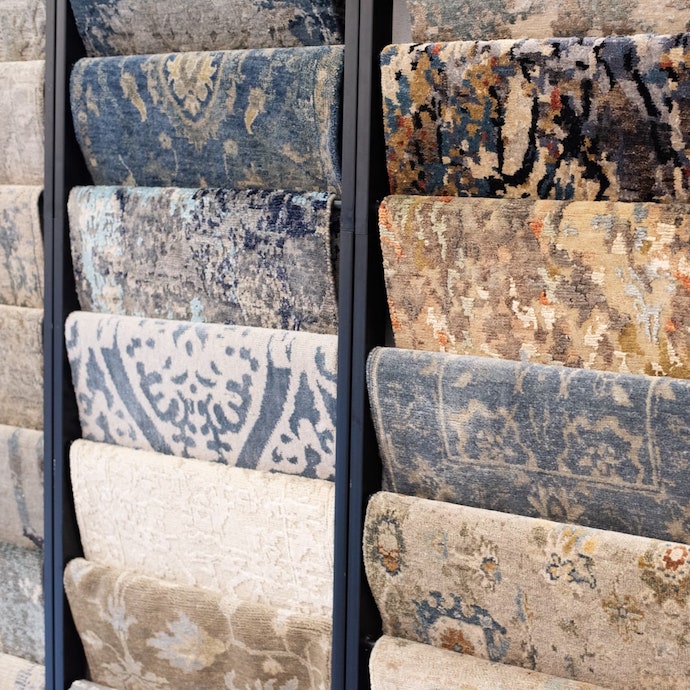
The Bold Statement: A patterned rug is your chance to make a definitive style statement. Timeless geometrics add structure, while organic, abstract designs introduce an artistic flow. A bold rug works beautifully when the rest of the room's furnishings are relatively solid. For homeowners in Alpharetta or Roswell who love a layered, collected look, a patterned rug brings everything together.
The Art of the Pattern
Choosing a pattern can feel intimidating, but it doesn't have to be. The key is to consider the scale of the pattern in relation to the scale of your room and furniture.
- Large-Scale Patterns: Bold, oversized patterns work best in larger living rooms. They can make a grand space feel more intimate and defined.
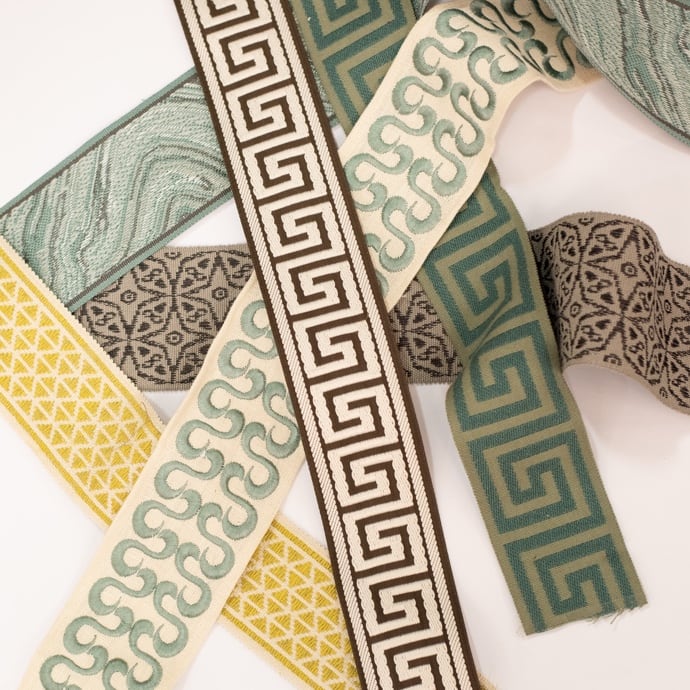
- Small-Scale Patterns: Tighter, intricate patterns often read as a subtle texture from a distance. They are excellent for smaller rooms or for spaces where you already have other prominent patterns, like in your designer fabrics.
When pairing a patterned rug with other fabrics, vary the scale. If your rug has a large design, choose smaller-scale patterns for your pillows or accent chairs. This creates visual interest without descending into chaos. It also helps to understand how textiles are constructed; you can learn more about different examples of woven fabrics to see how texture and pattern intertwine.
Ultimately, choosing the right style, color, and pattern is about trusting your eye. Whether you're in Marietta or Milton, the goal is the same: select a rug that not only complements your luxury furniture but also completes the story of your home.
The Finishing Touches: Rug Pads, Layering, and Care
You found it. The perfect rug. But don't roll it out just yet. The details designers never skip are what truly elevate a room from simply "done" to flawlessly designed. Let's talk about the final touches that protect your investment and give your space that polished, professional look.
From Buckhead to Forsyth County, these are the secrets to making your luxury furniture and fine fabrics look their absolute best.
The Unsung Hero: A Quality Rug Pad
Let’s be direct: a good rug pad is non-negotiable. Skipping it is like buying a bespoke suit and wearing worn-out shoes. It’s an investment that pays for itself.
A quality pad does several critical things:
- Prevents Slipping: A safety essential, especially on hardwood or tile floors.
- Adds Comfort: It provides a wonderful layer of cushioning underfoot, making the room feel more luxurious.
- Protects Your Floors: The pad creates a barrier that prevents a rug’s backing from scratching your hardwood.
- Reduces Wear and Tear: By absorbing the impact of foot traffic, the pad significantly extends the life of your rug’s fibers.
Think of it as the foundation for your foundation. It’s a detail that makes a world of difference.
The Art of Layering
Walk into Atlanta’s most stylish homes, and you’ll often spot this sophisticated technique. Layering rugs is a designer’s secret for adding depth, texture, and a truly custom feel to any room.
This technique is especially useful when:
- You fell in love with a vintage rug that’s just a bit too small for your room.
- You want the rich texture of a jute rug but crave a softer feel underfoot.
- You’re looking to define a specific zone, like a cozy reading nook anchored by your favorite Lee Industries chair.
The key is contrast. Start with a larger, neutral base rug—a flatweave jute or sisal is perfect. Then, layer a smaller, more decorative rug on top. This could be a plush wool piece, a colorful antique, or even a cowhide for an organic shape. Just make sure the top rug still anchors a key piece of furniture, like the coffee table, so the arrangement feels intentional.
Keeping Your Investment Pristine
Your beautiful new rug deserves proper care. First, vacuum regularly, preferably without a beater bar, as the aggressive bristles can damage delicate wool or silk fibers. For spills, act fast. Blot, don’t rub, with a clean, dry cloth.
Designer Tip: For stubborn stains on natural fiber rugs, a simple solution of water and white vinegar is often your best friend. But always, always test any cleaning solution on an inconspicuous spot first. For a deep, restorative cleaning, trust a professional rug cleaner.
Maintaining your rug isn't a chore; it’s about preserving a piece that brings so much style to your home.
Experience the Collection for Yourself at Lewis and Sheron
Reading about how to choose a rug is one thing. Experiencing its texture, color, and quality firsthand? That’s something else entirely. We invite you to our Buckhead showroom on East Paces Ferry to see, touch, and feel the difference craftsmanship makes.
Don’t just choose a rug—invest in a masterpiece that will define your home for years to come.
Our curated collection of high-end rugs is hand-selected to complement our exquisite furniture. Imagine pairing a hand-knotted treasure with the elegant lines of Verellen furniture or the timeless comfort of a Wesley Hall sofa. It’s this thoughtful synergy that truly elevates a room.
A Resource for Atlanta’s Design Community
Our on-site design consultants are here to offer personalized advice. From Roswell to Marietta, homeowners visit us to discover unique pieces that can’t be found anywhere else.
For Atlanta’s design professionals, our trade furniture program offers an unparalleled resource for sourcing exclusive rugs and designer fabrics. We're more than a high-end furniture store in Buckhead; we're a partner in creating beautiful homes across North Georgia.
Your rug is the soul of your living room. Seeing how it interacts with light, texture, and furniture in person is the final, essential step in making a confident decision.
Stop by our Atlanta fabric showroom to explore the possibilities. Let us help you find the perfect rug to complete your vision. Your story starts here.
Common Questions We Hear in the Showroom
We get it. Picking a living room rug can feel like a huge commitment. So, let’s go over some of the most common questions our designers hear every day, right here in our Atlanta showroom.
What's the Best Rug for a Home with Pets and Kids?
For busy households, from East Cobb to Forsyth County, durability is king.
High-quality synthetic fibers like polypropylene are brilliant choices—they are built to resist stains and stand up to serious foot traffic. Another fantastic option is a wool rug with a low, dense pile. Wool is naturally resilient and surprisingly easy to spot clean. We’d steer you clear of high-pile shag rugs or delicate fibers like silk, which are much happier in lower-traffic zones.
How Do I Choose a Rug for an Open-Concept Space?
In an open-concept layout, the rug’s main job is to define the living area. To do this effectively, go big. You need a rug large enough to anchor the entire seating arrangement—your sofa, chairs, and coffee table should all feel connected.
Aim for all front legs of your furniture to sit comfortably on the rug. This simple trick creates a cohesive, intentional look that separates your living space from other areas without putting up a single wall. Our Buckhead showroom has plenty of large-scale options perfect for Atlanta's popular open-plan homes.
Can I Really Layer a Rug on Top of Carpet?
Absolutely! Layering a rug over wall-to-wall carpeting is a sophisticated design technique we love. It’s a fantastic way to add a pop of color, pattern, or much-needed texture.
The trick is to choose a rug with a contrasting texture and a lower pile than your carpet to avoid a lumpy look. A flatweave or a short-pile wool rug works beautifully. It’s an excellent strategy for defining a seating area and introducing personality without the commitment of new flooring.
Ready to discover the perfect foundation for your room? The Lewis and Sheron Textiles design team in Buckhead is here to help you explore our collection of exquisite, high-end rugs. Visit our showroom today and let's find the one.