


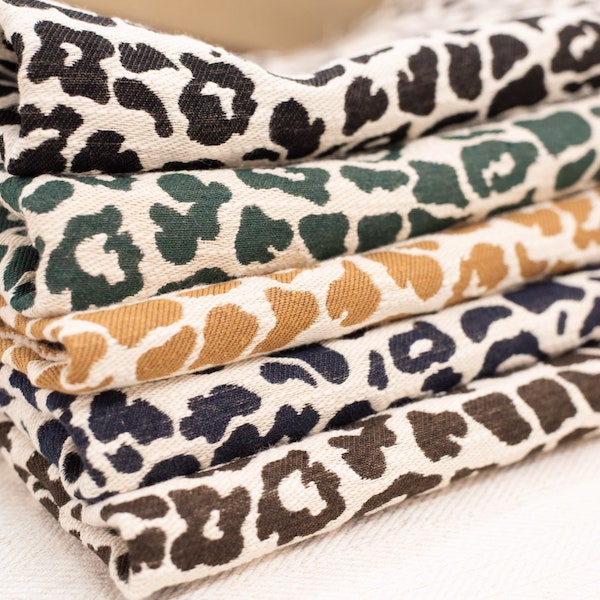
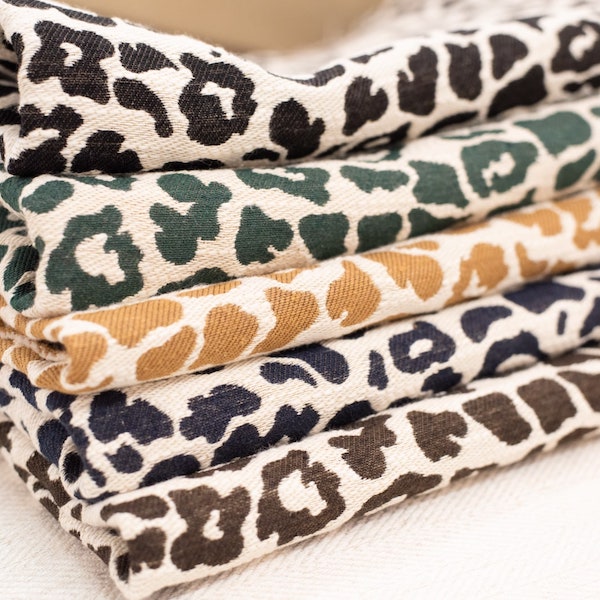
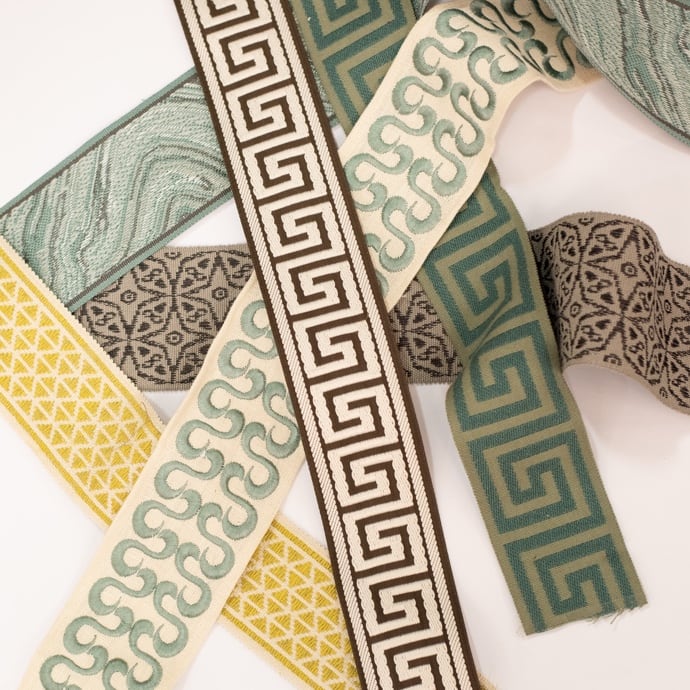

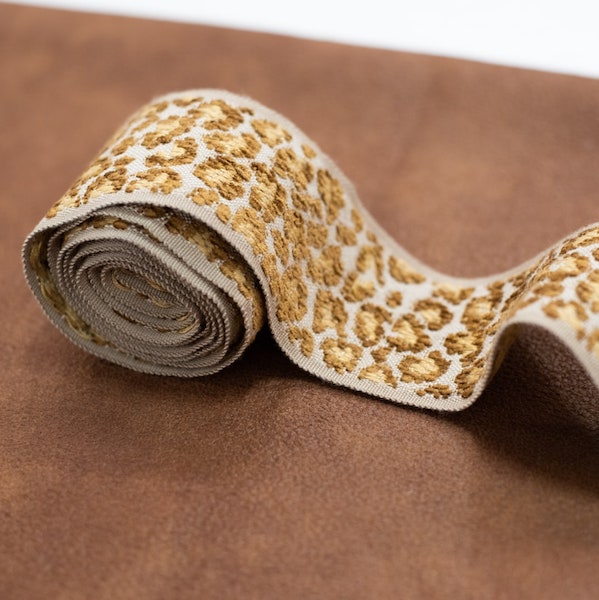
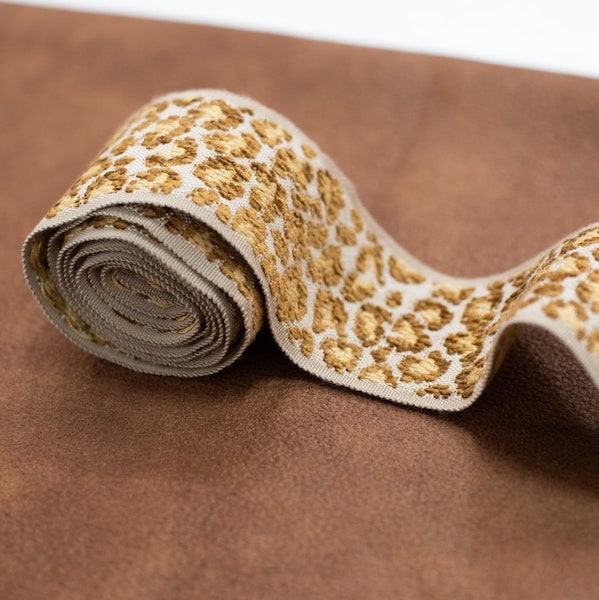
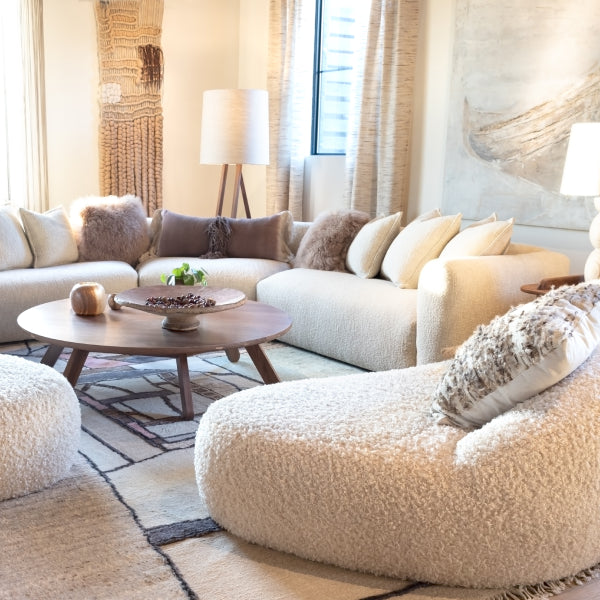
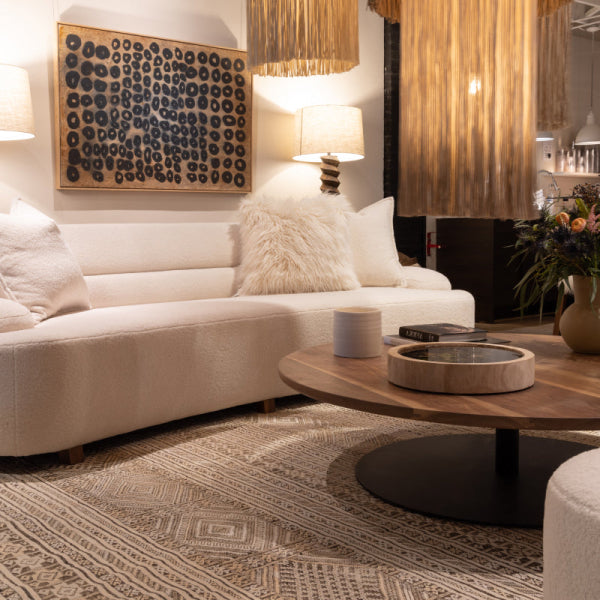








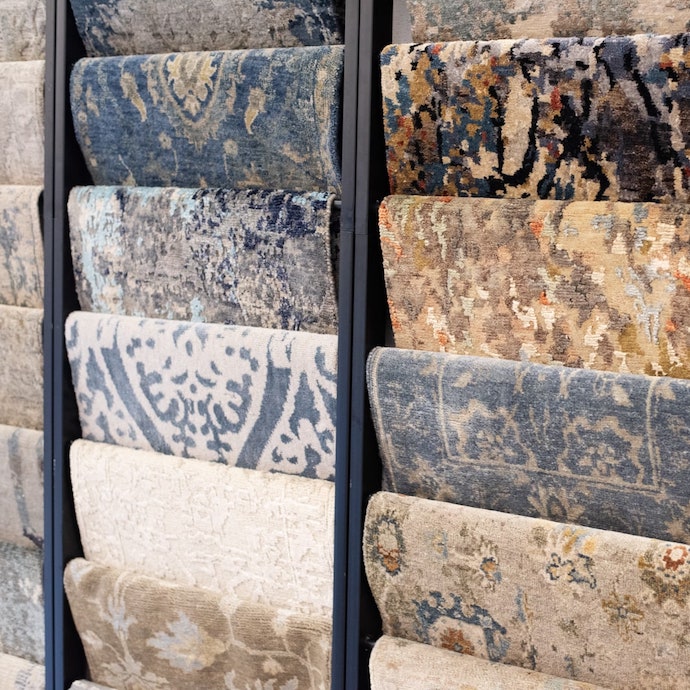
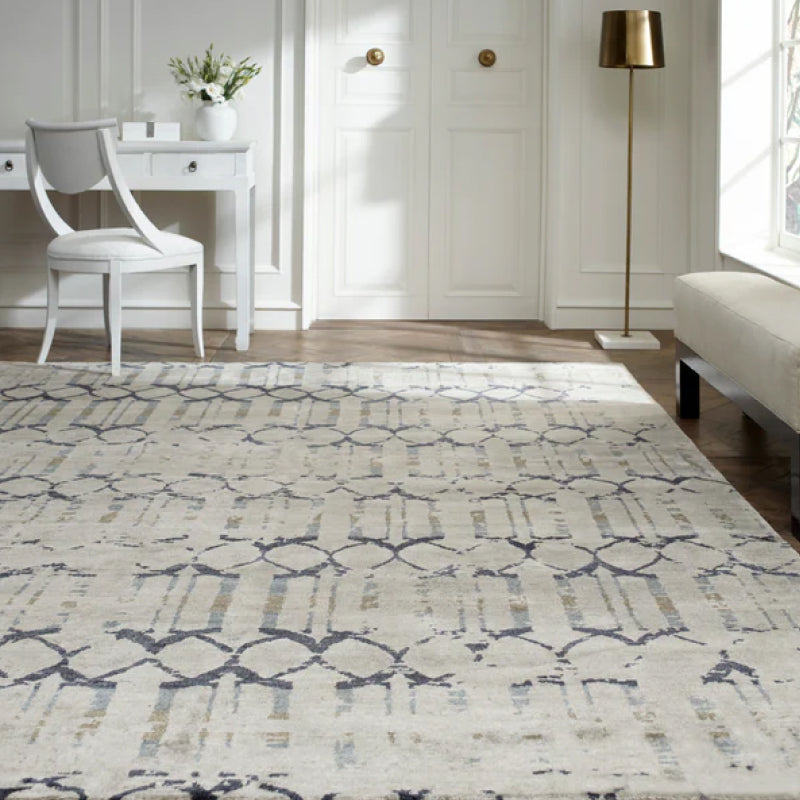
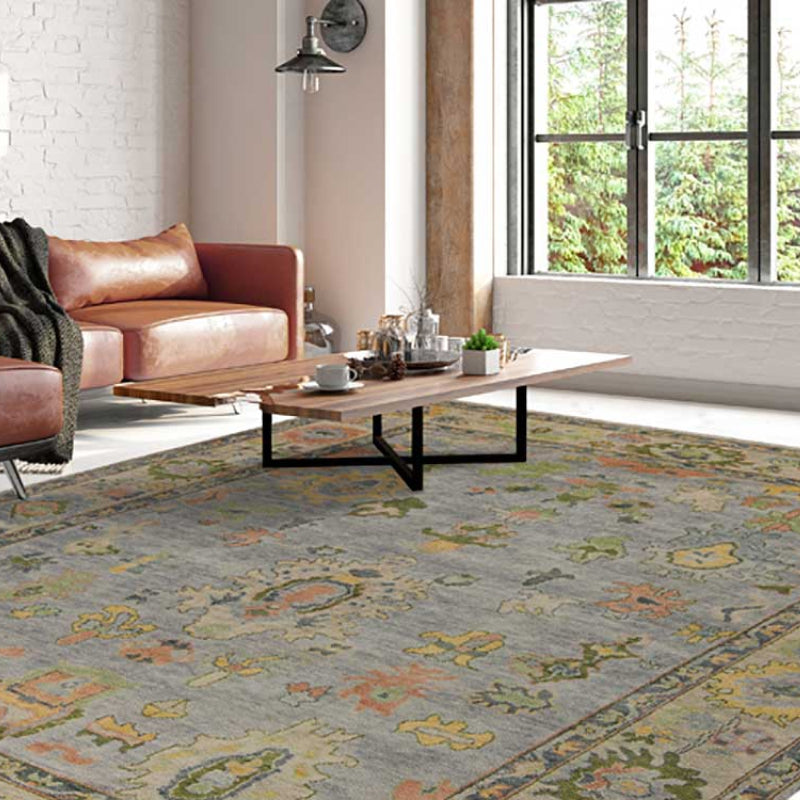
You're standing in a Buckhead showroom with a handful of beautiful swatches and a much larger problem: one pattern looks perfect on a chair, another feels right for the sofa, and none of the labels tells you whether the same textile will still be available when the project expands. For a luxury room, that uncertainty can become an expensive mistake.
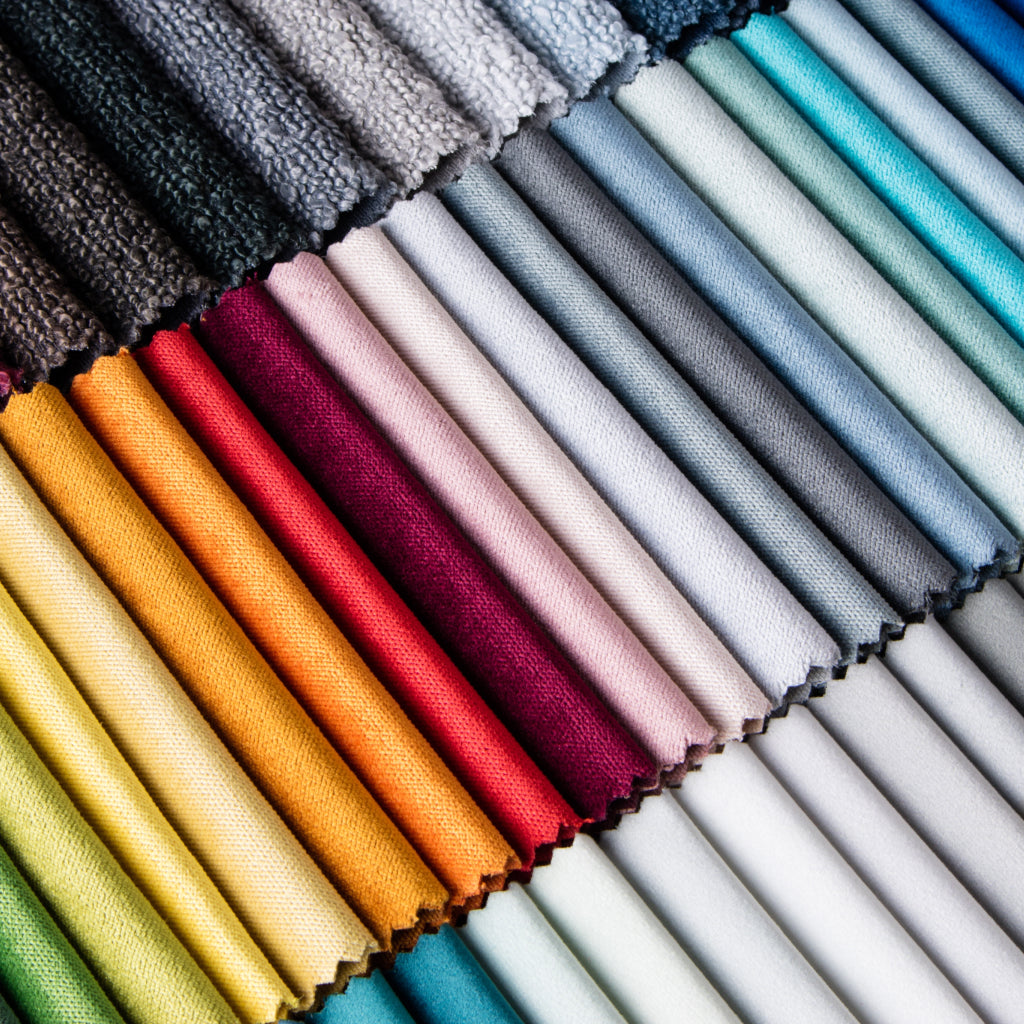
Bolts of upholstery fabric deserve more scrutiny than a color card or a pleasing hand. The bolt determines continuity, usable yardage, pattern placement, dye-lot control, and your ability to repair a custom piece years after installation. For Atlanta homeowners, interior designers, and trade professionals working in Buckhead, Alpharetta, Roswell, Sandy Springs, Fulton County, and North Atlanta, buying fabric by the bolt is often a quality decision before it's a quantity decision.
Why Bolts Matter for Luxury Upholstery Projects
A homeowner furnishing an entire living room rarely thinks about the fabric roll behind the sample. The focus stays on the silhouette, the finish, and whether the sofa feels sufficiently distinctive. Yet a custom sectional, matching lounge chairs, dining seats, and window treatments can require enough material that a cut-yardage purchase creates unnecessary risk.
A full bolt gives the upholsterer one continuous source for the visible surfaces. That matters when a textile has a directional weave, a large motif, a subtle color variation, or a texture that changes under light. In a formal Atlanta residence, the difference between coordinated pieces and nearly coordinated pieces is visible across the room.
Practical rule: Treat the fabric source as part of the furniture specification, not as a decorative afterthought.
Continuity has real design value
Dye lots can vary slightly even when the fabric name and color remain the same. A designer who buys separate cuts for a sofa and chairs may discover that the pieces look related in the showroom but separate under daylight. A full bolt reduces that continuity problem and helps the workroom place the pattern consistently across cushions, arms, and outside backs.
Bolt purchasing also protects a broader project from availability problems. If a homeowner adds a second seating area, orders a matching bench, or needs a replacement cushion, remaining yardage from the original bolt can be more valuable than a small initial discount.
The economics extend beyond the invoice
The upholstery fabric market's scale reinforces why inventory planning matters. The global market was valued at USD 46.2 billion in 2023 and is projected to reach USD 65.75 billion by 2032, with a 4% compound annual growth rate during 2024–2032, according to DataIntelo's upholstery fabric market report. That forecast reflects a broad category supporting residential seating, commercial furniture, renovation, replacement, and new production.
For a luxury project, the relevant point isn't the market size alone. It's that upholstery textiles sit inside a large, active supply chain where collections change, mills retire patterns, and desirable materials may become difficult to replace. Buying enough fabric at the outset can protect the visual language of a whole-home installation.
Think like a steward of the piece
A high-end sofa should be planned for maintenance, not just installation. Well-maintained upholstery commonly lasts 7 to 15 years, while higher-end pieces can last longer when they have a solid frame and durable materials, as described by Gomez Upholstery's guide to upholstery longevity.
That makes a full bolt especially compelling for custom furniture, heirloom restoration, and rooms where several pieces must read as one composition. Cut yardage still has a place, but luxury buyers shouldn't default to it just because the project starts with one chair.
Understanding Bolt Dimensions and Yardage
A fabric bolt is a put-up length, not a universal measurement. Manufacturers choose lengths based on fiber content, weave, backing, thickness, handling requirements, and intended use. Upholstery bolts commonly range from about 30 to 70 yards, with home décor bolts often positioned around 30 to 50 yards and widths frequently falling between 54 and 60 inches, according to Pura Fabric's guide to fabric bolts.
One yard equals 36 inches, so a 50-yard bolt contains 1,800 inches of fabric length, using the same benchmark cited in that guide. That's substantial inventory, but it isn't automatically excessive for a design studio or a multi-room furnishing plan.
Start with width, then calculate yield
Upholstery fabric commonly falls within a practical width range of 54 to 60 inches, while many standard rolls are specifically 54 to 56 inches wide, according to House of Fabrika's fabric specifications guide. Width affects how efficiently an upholsterer can cut seat decks, cushion faces, inside backs, and long pattern runs.
A wider textile can reduce seam count and pattern-matching waste on large furniture. But width alone doesn't determine the final yardage. The upholsterer must also account for pattern repeat, nap direction, railroaded construction, cushion layout, and the shape of the frame.
Use this sequence before committing:
- Confirm the bolt width. Don't assume a 60-inch textile will arrive because it's labeled upholstery fabric.
- Ask for the actual put-up length. A heavy weave may ship in a shorter bolt because weight and bulk affect handling.
- Measure the furniture through the workroom. A curved sofa and a sofa with loose cushions can have very different yields.
- Add pattern and nap allowances. Large repeats and directional velvet require more planning than a small-scale woven texture.
- Reserve matching material. If the project includes several rooms, calculate all pieces before cutting.
Industry guidance notes that heavier upholstery fabrics may arrive in shorter put-ups, including 10-yard lengths, because bulk affects packaging and usability. That's why a serious workroom should verify the manufacturer's specification rather than rely on a generic bolt assumption.
Common bolt specifications
| Fabric Type | Standard Width | Yards per Bolt | Pattern Repeat Considerations |
|---|---|---|---|
| Standard upholstery weave | 54–56 inches | Varies by mill | Check vertical and horizontal repeats before cutting |
| Wide upholstery textile | 58–60 inches | Varies by mill | Wider goods can reduce seams on large pieces |
| Heavy upholstery construction | 54–60 inches | May be shorter | Weight and bulk can affect the put-up |
| Coordinating home décor fabric | 54–60 inches | Often 30–50 yards | Confirm whether the pattern is directional |
A useful purchasing reference is this guide on how to buy fabric by the yard. It helps clarify the difference between a measured cut and the larger inventory decision represented by a bolt.
Premium Fibers and Mill Sources Explained
Luxury fabric selection starts with the intended room, not the label. Belgian linen, performance weaves, wool, mohair, velvet, and refined blends each create a different balance of touch, maintenance, visual depth, and aging. The right bolt makes a piece feel considered. The wrong one can make an expensive frame look tired quickly.
Belgian linen brings relaxed authority
Belgian linen has a breathable, natural presence and develops character as it ages. Libeco Home is a strong choice for formal living rooms, guest spaces, and custom seating where a relaxed European sensibility matters more than stain-proof practicality.
Linen is not automatically the right answer for a busy family sectional. A household with pets, frequent entertaining, or demanding daily use should ask the workroom about weave structure, abrasion performance, and cleaning requirements before approving a natural textile. Beautiful texture doesn't excuse poor application.
Performance weaves protect demanding rooms
Crypton and Sunbrella are practical options for family rooms, breakfast areas, media spaces, and furniture exposed to spills or heavy use. They bring stain resistance and durability, although some performance finishes can feel less soft or nuanced than an untreated luxury fiber.
The right performance textile can still look elevated. Choose a refined weave, restrained color, and convincing hand instead of settling for a visibly commercial fabric. In a premium sectional, performance should disappear into the design rather than announce itself.
Mohair, wool, and velvet add depth
Italian mohairs and wools offer tactile richness and natural resilience, while velvet creates saturated color and a dramatic surface. These materials work particularly well on statement furniture pieces, custom chairs, library seating, and formal entertaining rooms.
Velvet needs disciplined placement. Its nap reflects light differently depending on direction, and an upholsterer must handle the bolt carefully to maintain a consistent appearance. Bouclé, chenille, and linen blends can also be compelling, but highly tactile fabrics may be poor choices for high-wear family seating or sunny rooms if snagging, pilling, fading, or maintenance become concerns.
Mill consistency matters
A reputable mill provides clearer technical information, more reliable coloration, and a better basis for future sourcing. That doesn't mean every European fabric suits every Atlanta home, nor does domestic performance fabric lack luxury value. It means the buyer can evaluate the textile according to use rather than marketing language.
Check the fabric's:
- Fiber content: Understand whether the hand and appearance come from natural fiber, synthetic performance fiber, or a blend.
- Abrasion rating: Match the rating to the room's traffic instead of judging durability by weight alone.
- Light exposure: Ask how the textile should perform in rooms with strong southern or western sun.
- Cleaning code: Confirm the maintenance requirements before the workroom cuts the bolt.
- Pattern behavior: Review the repeat, nap, railroad direction, and matching requirements.
For a deeper look at textile manufacturers and buying criteria, consult this guide to upholstery fabric brands. The best luxury sofa fabric is the one that supports the room's lifestyle and the furniture's construction.
When to Buy Full Bolts Versus Cut Yardage
Buying a full bolt makes sense when the project has enough scope to use the material intelligently. It also makes sense when continuity, future repairs, and pattern control matter more than minimizing the initial outlay.
The common mistake is to assume bolt buying always produces a dramatic discount. Pricing varies by mill and supplier, so don't build a budget around an invented percentage. Ask for the full-bolt price, the cut-yardage price, shipping terms, and the usable length after inspection.
Use a full bolt when the project is coordinated
A full bolt deserves serious consideration for:
- A living room with a sofa, chairs, ottoman, and bench in one textile.
- A dining set requiring consistent upholstery across multiple seats.
- A whole-home scheme where the same fabric appears in separate rooms.
- A custom sectional with a large repeat or difficult pattern match.
- A restoration project where future repair yardage is important.
The hidden value lies in fewer procurement decisions and lower risk of a later mismatch. It also gives the workroom freedom to place the best sections of the cloth on the most visible areas.
Choose cut yardage when the scope is narrow
Cut yardage remains the better decision for a single accent chair, a small headboard, a pair of pillows, or a design phase where the furniture dimensions haven't been finalized. It's also sensible when the bolt length would leave an unreasonable amount of unused stock and the fabric has no meaningful future application.
Design judgment: Don't buy a full bolt to make a small project feel more professional. Buy it when the furniture plan, fabric behavior, and future use justify the inventory.
| Factor | Full Bolt Purchase | Cut Yardage |
|---|---|---|
| Project scale | Best for coordinated furniture or multiple rooms | Best for one-off or limited pieces |
| Color continuity | Strong control within the purchased put-up | Later cuts may vary by dye lot |
| Pattern placement | Gives the workroom more layout freedom | Can restrict matching and motif placement |
| Cash commitment | Higher upfront purchase | Lower initial commitment |
| Future repairs | Leaves material available for later work | May require a difficult reorder |
| Storage needs | Requires a suitable protected location | Easier to manage in a small studio |
| Waste risk | Can create surplus if the plan is vague | Limits unused inventory |
Calculate the project before ordering. Ask the upholsterer for a cutting estimate that includes repeats, nap, seams, cushions, and pattern matching. Then compare the full-bolt length with the total planned consumption and the value of retaining the remainder.
The strongest decision is often not “bulk versus small order.” It's whether the project is important enough to deserve a controlled textile source from start to finish.
Storage and Handling Best Practices
A bolt can be flawless when it leaves the showroom and damaged by the time it reaches the workroom. Dust, pressure, moisture, direct sun, careless lifting, and hard creases can all compromise a premium textile before an upholsterer cuts a single panel.
Store upholstery fabric in a clean, climate-controlled room. Natural fibers benefit from stable conditions, and a practical humidity target for delicate textiles such as linen and silk blends is 40% to 50%, as specified in the project guidance. The goal is to avoid both excessive dryness and trapped moisture.
Protect the roll from pressure
Keep the fabric on its original core whenever possible. Store bolts upright with adequate support, and don't place heavy materials on top of them. Stacking can compress the lower roll and create permanent creasing, especially in plush or dimensional textiles.
Use breathable fabric bags rather than airtight plastic for longer storage. Direct sunlight can fade exposed sections, while dust can work into the surface and become difficult to remove from open weaves.

Inspect before cutting
The workroom should unroll enough fabric to inspect the surface, selvage, and reverse side before approving the cut. Look for slubs, misweaves, printing irregularities, backing problems, stains, and changes in color. A natural slub can be part of linen's character, but an unexpected defect should be documented before the fabric is altered.
For delicate constructions, acid-free tissue can help separate layers and reduce friction during storage. Re-roll smoothly if the fabric has been opened, maintaining the grain and avoiding sharp folds.
Transport deserves the same care. Support the full roll, keep it covered with breathable protection, and avoid leaving it in direct sun or an uncontrolled vehicle. Performance fabrics still need protection from contamination and heat, even when their finish is designed for demanding use.
Sourcing Bolts at Atlanta Design Centers
A serious sourcing appointment starts with the furniture plan. Bring dimensions, room photographs, the intended use of each piece, and a clear description of the household. A textile consultant can recommend very different fabrics for a formal Buckhead sitting room, a Roswell family room, and a sunny Alpharetta sunroom.
At a premium design center, ask to see more than a small memo sample. View the textile in natural light, examine the reverse, feel the weight, and check how the surface changes when folded or brushed. A swatch can suggest quality, but a larger presentation reveals scale, nap, slubs, repeat, and color movement.
Ask questions that affect the workroom
Trade professionals should confirm:
- Available put-up length: Find out whether the fabric is in stock by the bolt or only available as cut yardage.
- Pattern repeat: Get the vertical and horizontal repeat in writing.
- Performance specifications: Ask for abrasion, cleaning, lightfastness, and finish information.
- Special-order timing: Confirm the expected arrival window before scheduling upholstery.
- Reserve policy: Ask whether the supplier can hold a particular dye lot while dimensions are finalized.
- Discontinuation risk: Learn whether the collection is established, seasonal, or approaching replacement.
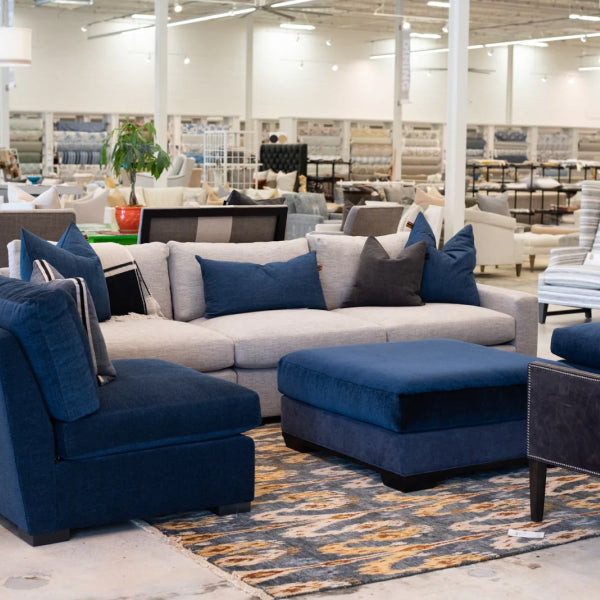
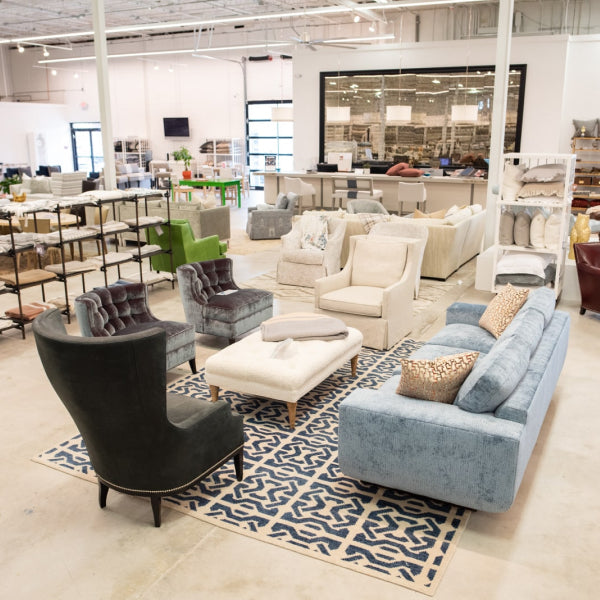
In Atlanta, Lewis and Sheron Textiles' Design Center carries more than 1,000 in-stock bolts and additional cut-yardage options from mills including Kravet, Fabricut, P. Kaufmann, Libeco Home, and Crypton. The company also offers made-to-order American-crafted upholstery, reupholstery services, custom drapery, and complimentary in-house design support when clients shop there.
That range matters because the right fabric may need to be evaluated alongside a frame, cushion style, trim, rug, and drapery plan. A source with both textiles and furniture expertise can help prevent a costly mismatch between fabric performance and construction.
Use this guide to places to buy upholstery fabric as a starting point, then build a relationship with the showroom staff. Consistent communication can make it easier to identify new collections, reserve inventory, and respond quickly when a mill changes its line.
Building Heirloom Quality with the Right Fabric
Fabric can't compensate for a weak frame, poor joinery, or careless upholstery. A high-end sofa typically begins with kiln-dried hardwood, with moisture content reduced to about 6% to 8% to help limit warping, twisting, and cracking, according to this overview of luxury sofa construction. Solid hardwoods such as oak, maple, walnut, and beechwood support the kind of construction buyers expect from heirloom-quality furniture.
The textile completes that system. ACT guidance commonly benchmarks woven upholstery for low-traffic private spaces at about 15,000 Wyzenbeek double rubs or 20,000 Martindale cycles, while high-traffic public spaces are generally targeted at 30,000 double rubs or 40,000 Martindale cycles, as outlined by Sizemarker's upholstery specifications guide. Choose the target according to the room, not according to a showroom's luxury vocabulary.

A premium upholstery construction may also use eight-way hand-tied springs, where each coil is tied in eight directions and secured to the frame for weight distribution, support, and reduced sagging, according to O. Henry House's craft information. The fabric should receive the same level of scrutiny.
Choose the bolt with the future in mind. Confirm the construction, reserve usable yardage, document the mill and color information, and store any remainder properly. A piece built with a sound frame, appropriate suspension, skilled upholstery, and a carefully selected textile has a credible path toward long service and family significance.
For custom furniture in Atlanta, treat fabric sourcing with the same rigor you'd apply to selecting the craftsman. Visit Lewis and Sheron Textiles to review in-stock bolts, explore premium mill collections, and discuss custom upholstery or reupholstery for the specific pieces in your home. Browse the available options at Lewis and Sheron Textiles, then schedule your visit before approving the next luxury sofa, sectional, or statement chair.