


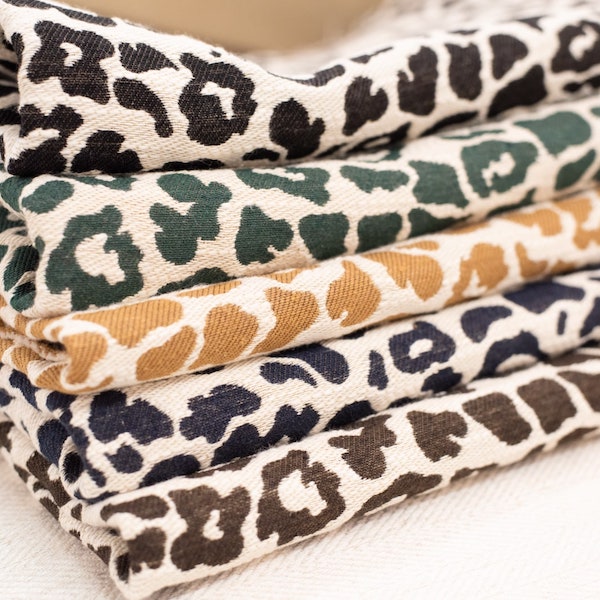
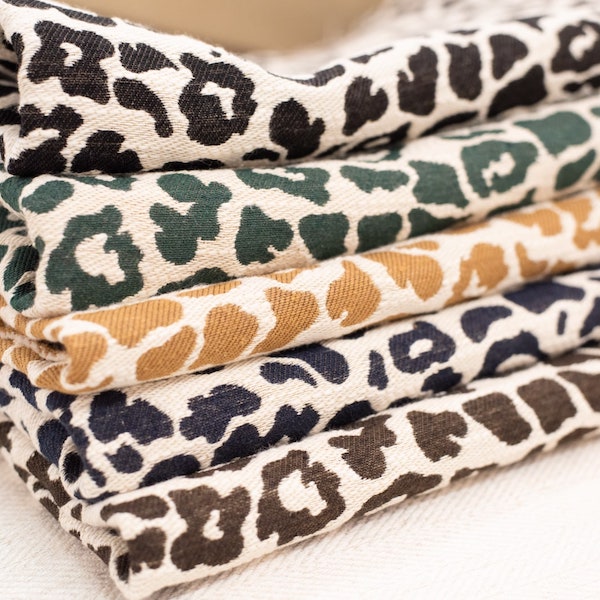
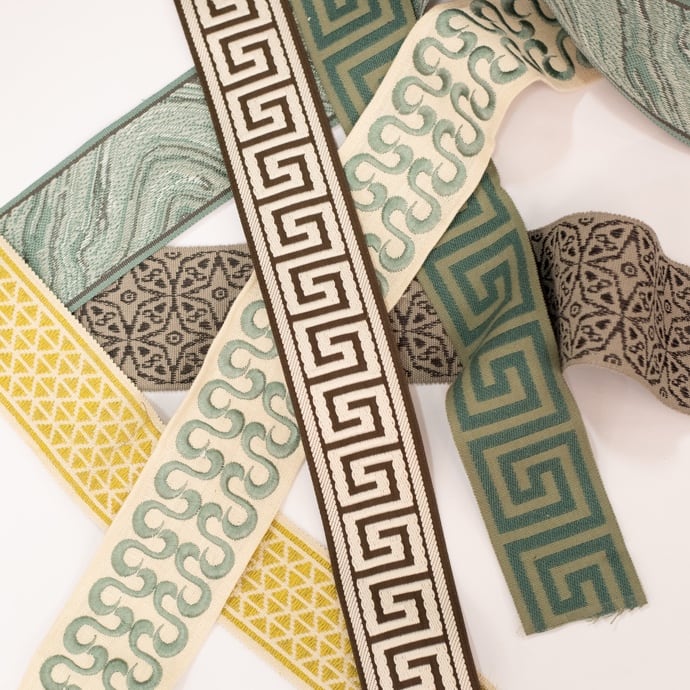

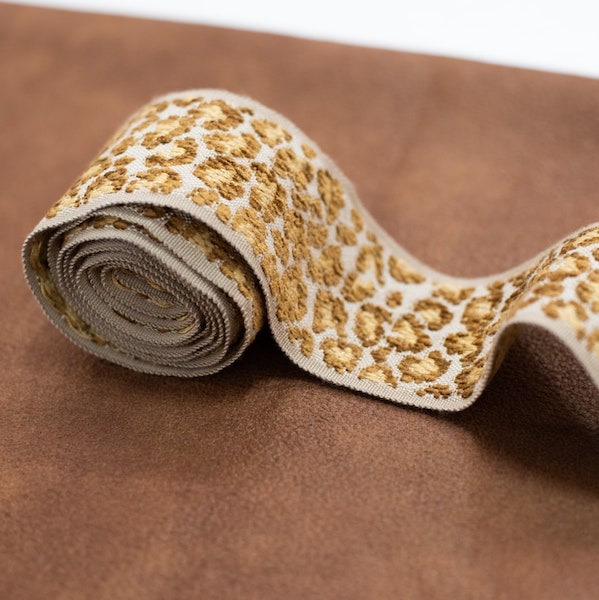








Most buying advice tells you to choose brocade fabric upholstery because it looks luxurious, heavy, and therefore durable. That advice is backwards. A beautiful brocade can be exactly wrong for a busy sofa, and a plainer fabric can outlast it by years, because appearance tells you almost nothing about how raised pattern yarns will handle friction, seams, and daily contact.
If you're comparing luxury sofas, premium sectionals, or custom upholstered furniture in Atlanta, Buckhead, Alpharetta, Roswell, or Sandy Springs, judge brocade the way an upholsterer does. Start with its weave. Then check its tested wear. Then decide which piece it belongs on. That order protects high-end furniture that's meant to be used, not just admired, and it helps heirloom-quality furniture stay beautiful in real rooms across Fulton County and North Atlanta.
How Brocade Is Woven and Why Its Pattern Stands Up
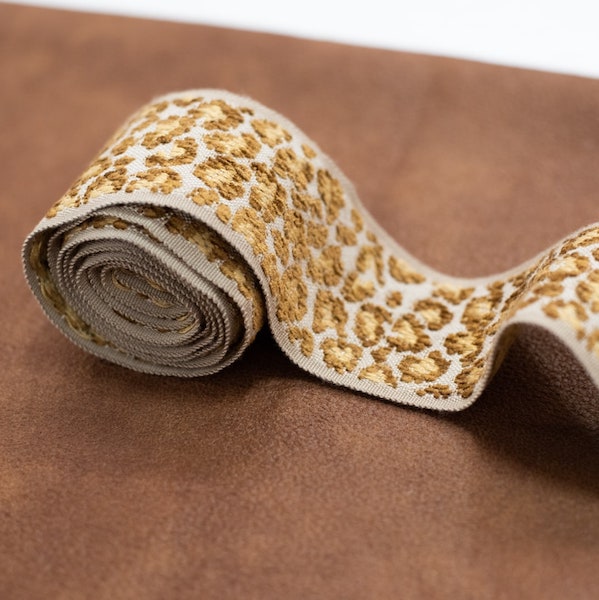
Say you're holding two fabric samples. One has a floral pattern printed flat on cotton. The other is brocade, and you can feel the flowers with your fingertips. That difference is construction, not decoration.
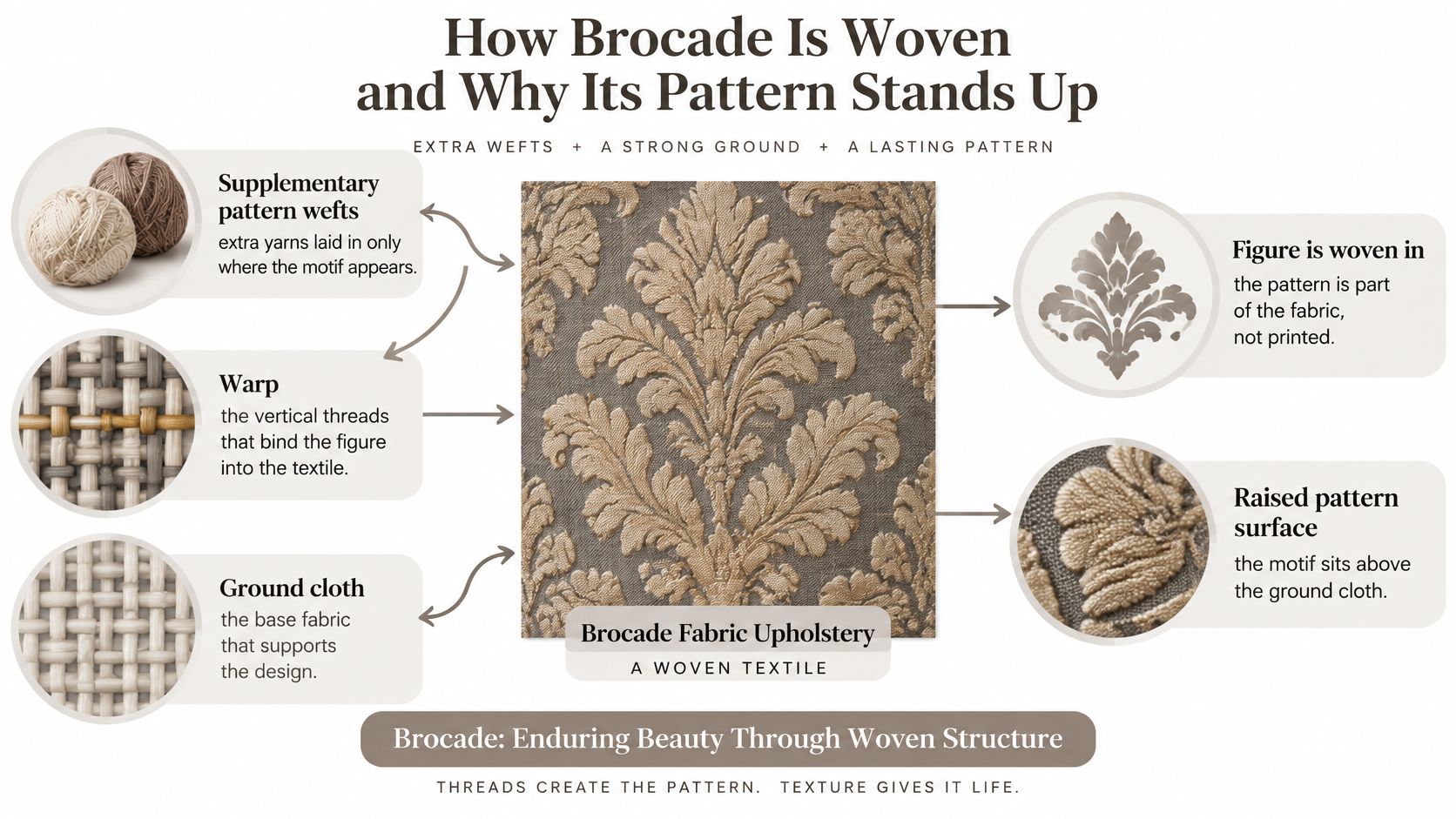
Think of the ground cloth as a plain canvas. Brocade adds a second layer of work on top of that canvas, much like embroidery adds thread only where a design needs it. The loom lays in supplementary pattern wefts, which are extra yarns inserted only where a motif occurs. The warp, the lengthwise threads under tension on the loom, binds those extra yarns into the ground cloth. The figure is part of the textile itself.
What a Surviving Chair Shows About the Work
An armchair preserved in Copenhagen still carries its original covering from around 1760, and the documentation of that original upholstery from 1760 describes a figured silk taffeta broché made with two warps and two wefts, a tabby ground, and supplementary wefts carried by several small shuttles. A draw system lifted individual pattern heddles, so weavers could form complex figures instead of simple repeats. That chair shows brocade working as a furnishing material, not as surface ornament.
Width shaped the upholstery work too. The same documentation notes the fabric was approximately 50 centimeters wide, so sections had to be stitched together across the furniture. Seam placement and pattern matching weren't later compromises. They were built into the original process, and they still matter when a workroom cuts brocade today.
History explains the prestige in one line. A Metropolitan Museum of Art example attributed to Iran and dated to approximately 1600 uses silk and metal-wrapped thread with roses and irises on a gold ground, reflecting a period when Safavid weavers were prized for making repeated units look continuous.
Try this on any sample: Turn it over. If you see long floats of pattern yarn traveling across the reverse, you're looking at a motif woven in, not printed on.
Those floats are the key to everything that follows. They create the raised, sometimes metallic relief that makes brocade rich on custom chairs and statement furniture pieces. They also create yarn that sits exposed on the surface, where hands, clothing, and pets can catch it. For more background on how woven structures differ, see these examples of woven fabrics.
Brocade Compared with Other Upholstery Fabrics
| Fabric | Construction | Surface look | Wear notes | Best use |
|---|---|---|---|---|
| Brocade | Supplementary pattern wefts bound into a ground cloth | Raised motifs, sometimes metallic | Floats can snag; check the abrasion rating | Statement chairs, accent pieces, decorative backs |
| Jacquard | Pattern woven through the loom's harness | Flat or subtle figure | Usually tight weave; rating varies by fibre | Sofas and chairs needing pattern with less relief |
| Damask | Reversing warp and weft satin figure, usually one colour | Tone-on-tone with a flat sheen | Tight weave; rating varies by fibre | Formal sofas, dining chairs, bolsters |
| Velvet | Pile cut or looped above a backing | Soft, directional nap | Pile crushes and shows marks | Low-traffic, sculpted pieces |
| Linen | Plain or basket weave, natural fibre | Matte, slightly irregular texture | Slubs can pull; heavier weights hold up better | Everyday seating and relaxed interiors |
Read the table by asking one question. Does the pattern sit on top of the cloth, or is it locked flat inside it?
Brocade and jacquard both create figure in the weave, but brocade adds supplementary yarns, so its motifs stand proud. Jacquard usually gives you pattern with less relief, which is often a safer route for high-quality couches that need visual interest across a large seat. If you're weighing those tradeoffs for a custom order, the fabric considerations for custom furniture orders from Indian River Furniture offer a useful overview of how material choice follows use.
Damask takes a different path. Its figure comes from reversing satin weave areas, usually in one colour, so you get a tone-on-tone pattern with a flat sheen. It suits formal luxury home furnishings, dining chairs, and bolsters where you want pattern without raised yarn to catch.
Pile and Plain Weaves Behave Differently Again
Velvet isn't flat either, but its risk is different. Its pile can crush and show pressure marks, so it suits sculpted, low-traffic designer furniture better than a family sectional. Linen sits at the other end. Its matte, slightly irregular texture reads relaxed, and heavier weights handle everyday wear well, although loose slubs can pull.
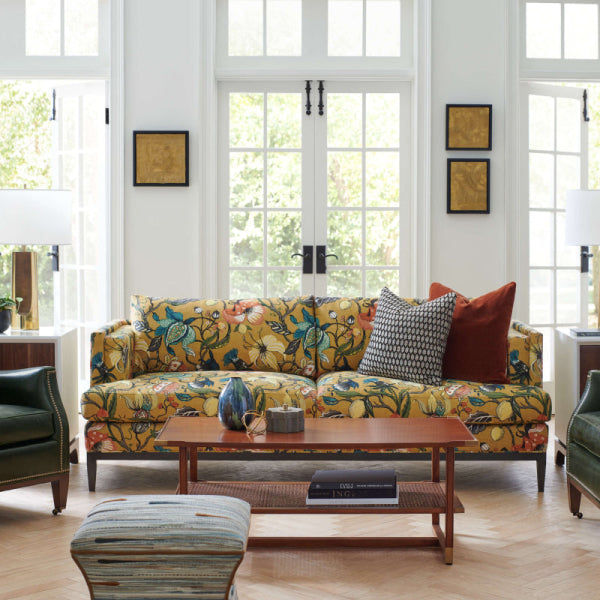
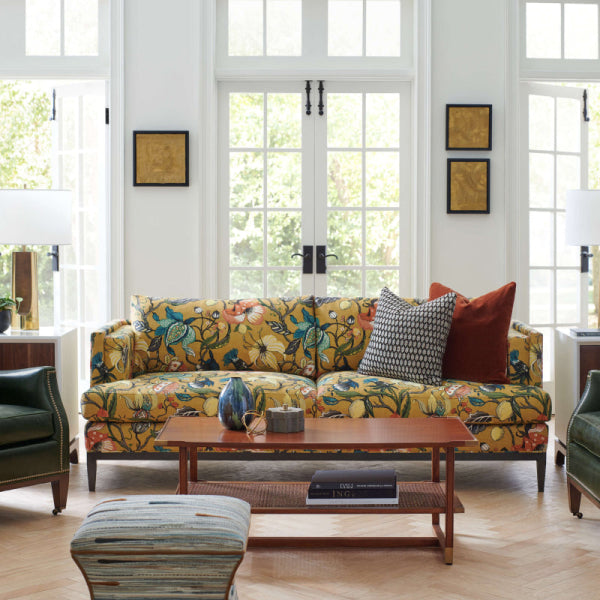
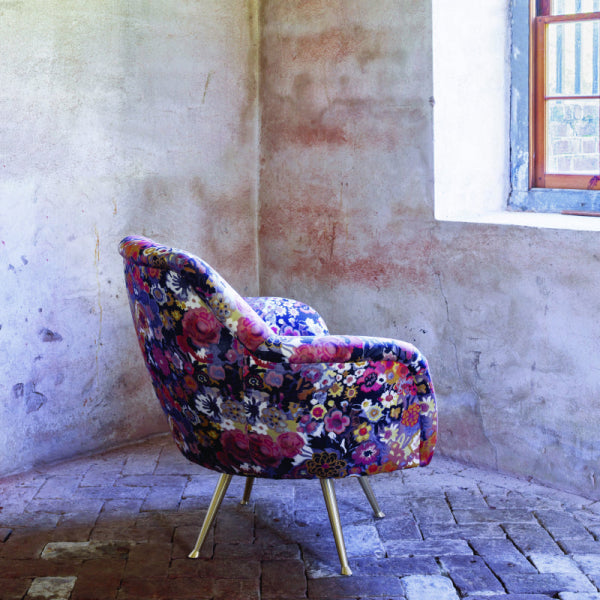
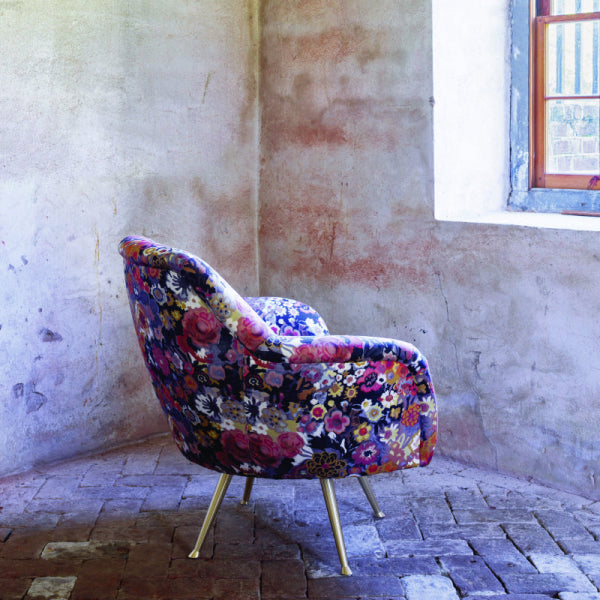
Choose brocade when the fabric is the feature, such as a wing-back or statement chair. Choose a flatter weave when the fabric must carry heavy daily use across a whole sectional.
Reading Abrasion Ratings Before You Buy
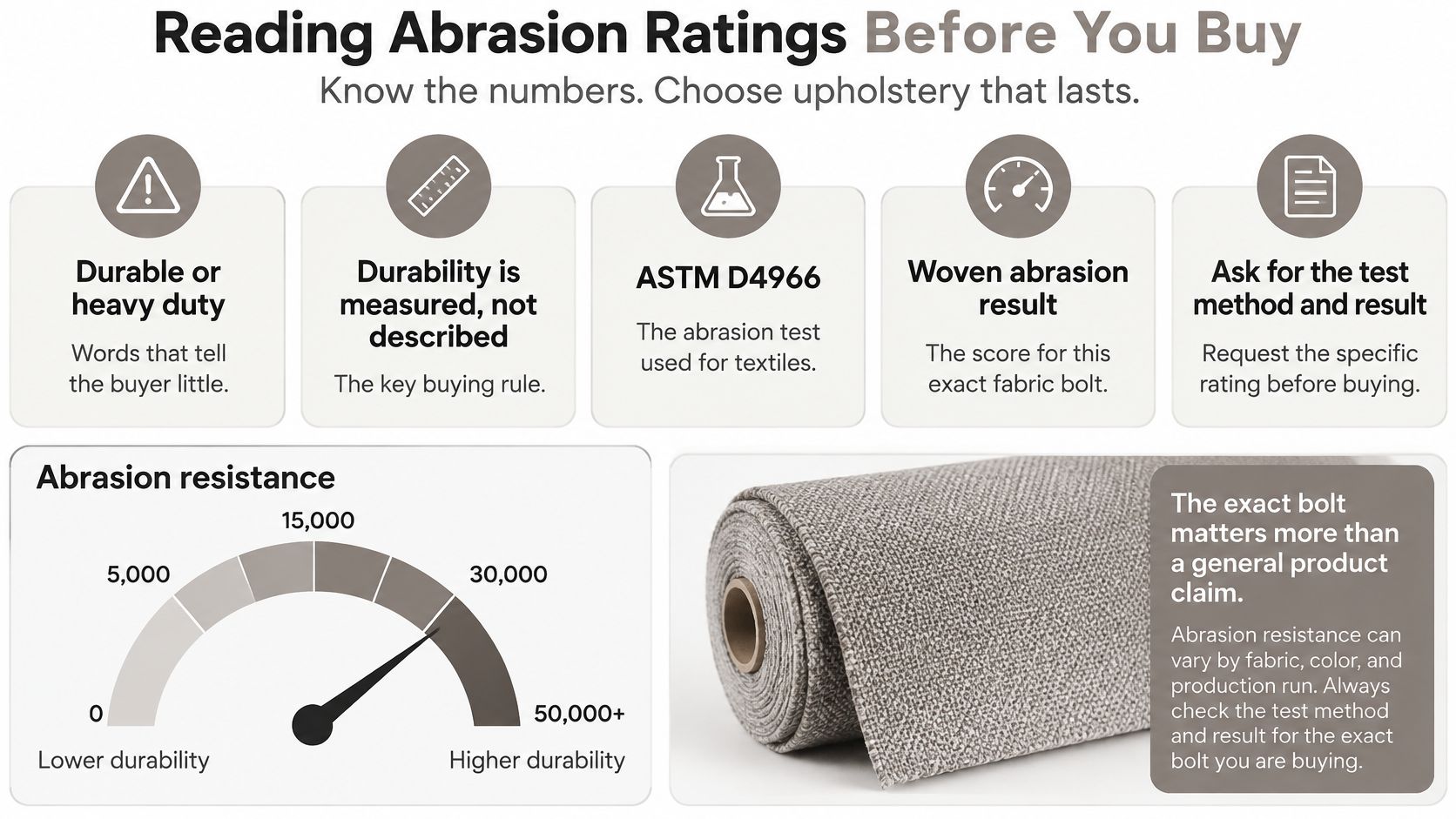
Words like durable or heavy duty tell you almost nothing. Durability is measured, and a seller who can't name the test method hasn't given you a specification.
The ASTM textile standards listing includes ASTM D4966, which measures textile abrasion resistance with the Martindale tester and applies broadly to woven fabrics, and ASTM D4852, which covers evaluation of attached upholstery fabrics. Ask which method produced the number on the label. A rating with no method behind it is like a speed with no unit: "fast" could mean a bicycle or a jet.
| Test method | Unit | How to read the result |
|---|---|---|
| Wyzenbeek | Double rubs | Heavy-duty grades score well above general-contract grades on the same scale |
| Martindale | Cycles | The method behind ASTM D4966 for woven fabrics, with results on its own scale |
Published guidance sorts upholstery ratings into tiers such as general contract and heavy duty, so a fabric sold as contract grade has cleared a defined testing bar rather than a marketing label. One caution matters more than the tier names, though: Wyzenbeek and Martindale results are not directly correlated, and no formula converts one into the other. A strong Martindale count tells you nothing about how that same cloth would score in double rubs.
Why a Bigger Number Doesn't Settle Brocade
Chasing the largest count has limits. The Herman Miller textile quality standards guidance warns that results above 100,000 double rubs have not been shown to reliably indicate a longer fabric lifespan. Buying on the biggest number is like choosing tyres rated for racing on a street full of potholes: the rating survives, but something else fails first. For brocade, a raised or metallic motif can show objectionable wear, seam slippage, or snagging before the ground cloth gives out, so judge visible change alongside the rating.
For Atlanta residential seating, get the exact test method, result, composition, finish, and cleaning code for the selected bolt. Then compare that record against how hard the piece will work. Our guide to fabric abrasion resistance explains how to read those results in context. A family-room sofa needs a verified upholstery rating. A decorative back or occasional chair can justify a more ornamental construction.
Where Brocade Works and Where It Falls Short
Start where failure usually starts. The front edge of a seat cushion takes friction every time someone sits down and stands up. Arm caps take hands, sleeves, and bags. Those are exactly the places where raised pattern yarn sits most exposed.
The construction explains why. An explanation of brocade as an inlaid woven structure describes supplementary, non-structural pattern wefts bound into the ground cloth by the warp, with long floats possible on the reverse. It notes those long surface floats can be vulnerable to snagging or abrasion at high-contact points, especially on seat fronts, arm caps, and household areas exposed to pets.
A brocade accent often carries a room better than a brocade sofa, because it gives the eye one focal point instead of asking exposed motifs to survive every seat.
Sorting Uses Into Three Groups
- Strong fits: Statement chairs, wing-backs, front-facing panels, bolsters, decorative pillows, and low-contact headboards, where the motif is seen more than it's rubbed and a decorative check may be enough.
- Selective fits: One brocade piece among plainer seating, or brocade on a sofa back and sides while the seat uses a tested flat weave, so the high-contact surface gets the stronger construction.
- Poor fits: Full premium sectionals used daily, frequently used dining chairs, and children's seating, where high-contact seating needs a verified upholstery rating that ornamental brocade often can't supply.
Households with pets should be candid here. Claws don't need to tear a ground cloth to ruin a piece. One caught float can pull a motif out of line, and that damage shows immediately on a patterned luxury furniture in Atlanta project where the fabric is the focal point.
Cutting can reduce risk, but it can't remove it. Ask for a layout that keeps prominent motifs off edges and arm caps, and matches the pattern repeat across cushions so seams don't cut through the main figure. A tightly bound ground weave with stable backing gives better dimensional control than a loose decorative brocade. Still, neither appearance nor fibre name alone proves a fabric belongs on seating. Assess it on the actual geometry of the piece, cushion by cushion and arm by arm.
Specification Checklist and Next Steps
Bring this list to any conversation about custom furniture in Atlanta, whether you're ordering new custom upholstered furniture or reupholstering a cherished chair. Each item answers a question appearance can't.
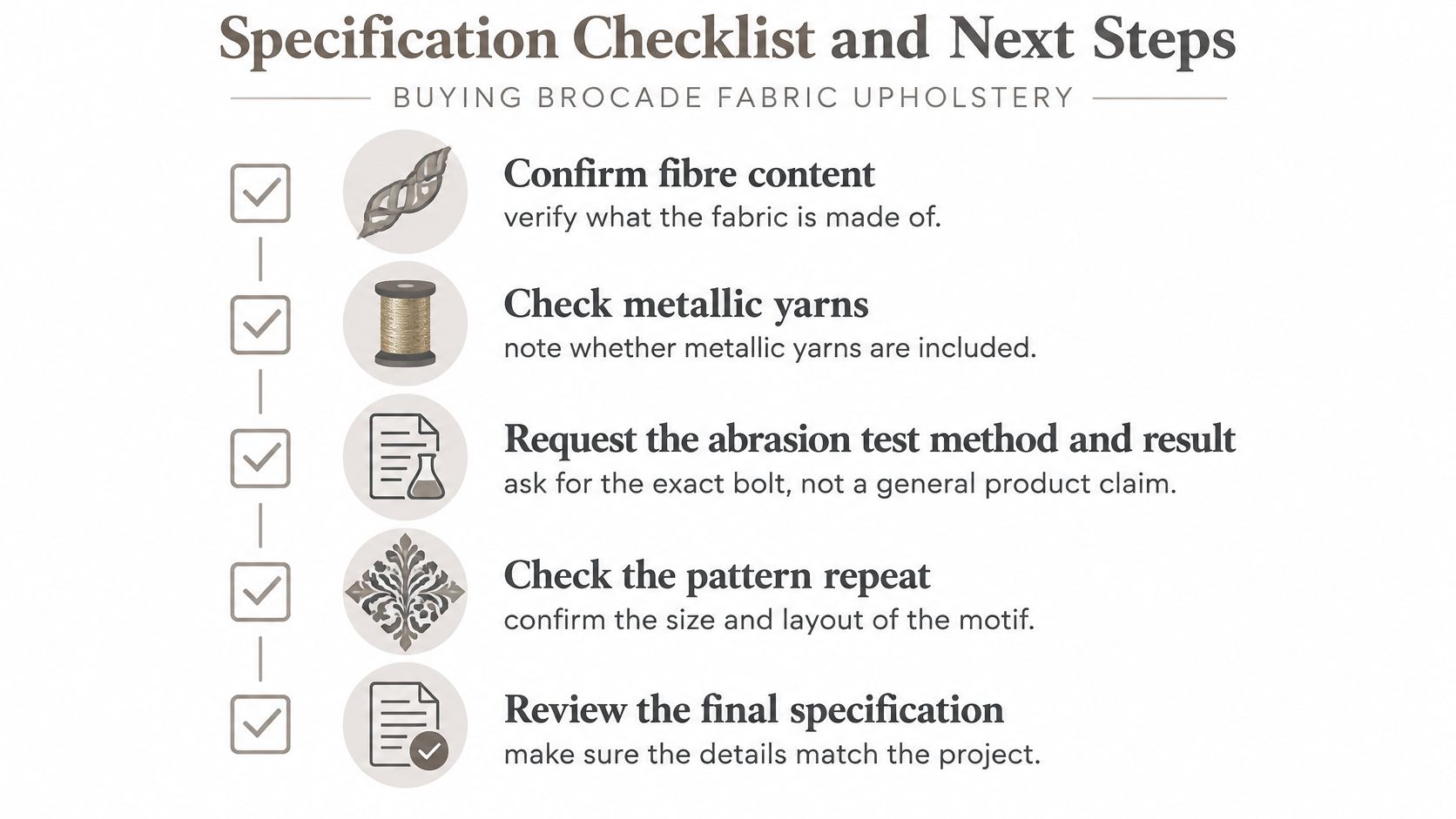
- Confirm fibre content: Silk, cotton, polyester, and blends age differently, so get the full composition rather than a marketing name.
- Check for metallic yarns: Metallic threads change cleaning limits and can show wear differently from the ground cloth.
- Request the abrasion method and result for this exact bolt: A general product claim doesn't describe the fabric you'll receive.
- Check the pattern repeat: Repeat size drives seam placement, cushion matching, and how much extra yardage the workroom needs.
- Confirm rub direction: Brocade can read differently depending on orientation, so the cutting plan should state which way motifs run.
- Read the cleaning code on the bolt label: That code governs care from day one, not the advice that works for another fabric.
- Confirm upholstery rating: Ask directly whether the fabric is rated for upholstery or sold as decorative only.
- Check flammability compliance: The federal upholstered furniture flammability regulation incorporates California Technical Bulletin 117-2013 smolder-resistance requirements, so ask whether the fabric, filling, and finished assembly are appropriate for the applicable requirements.
Don't Forget What's Under the Fabric
For premium seating, frame construction matters as much as the textile. Consumer Reports identifies a kiln-dried hardwood frame combined with eight-way hand-tied springs as a top-quality construction in its guide to finding quality furniture. That's a more useful benchmark for designer furniture near me searches than styling alone, because a weak frame can stress seams and fabric no matter how good the brocade is.
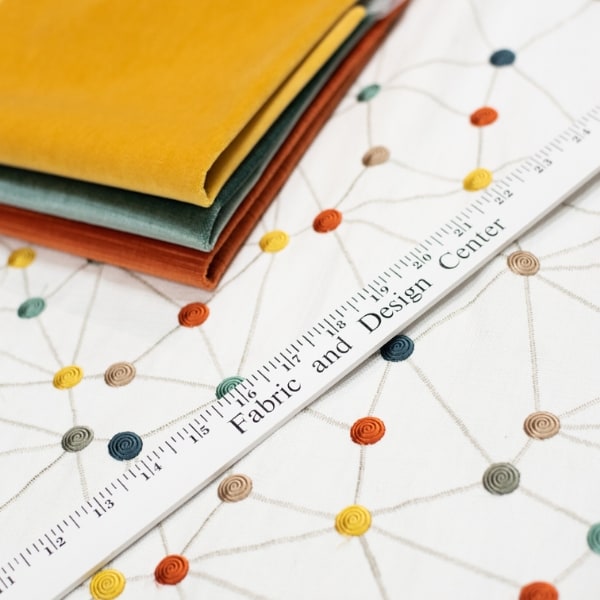
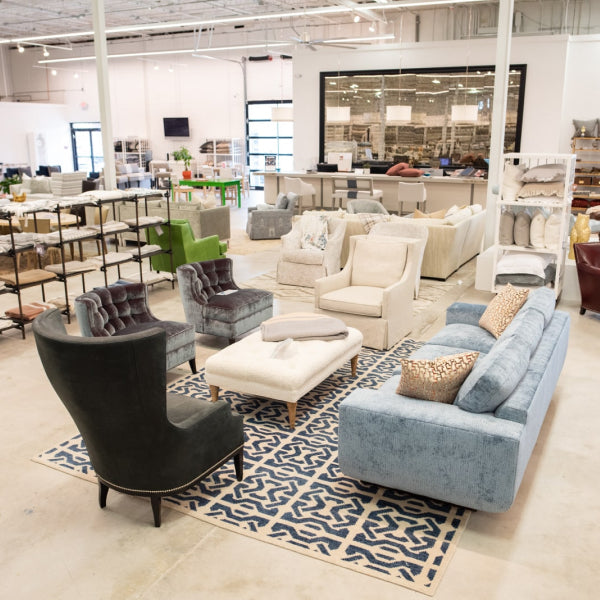
Our reupholstery process includes steps for material selection and design details such as stitching, buttons, or tufting before production begins. We provide upholstery repair and re-upholstery services in Atlanta, and fabric samples are available in the Design Center.
Order a sample before you commit. Drape it over the actual cushions and arms, check where motifs land, and rub the raised areas with a fingertip. Bring the room, traffic level, pets, and intended use into that decision. A high test result doesn't settle snagging, fading, or motif damage, so judge the sample on actual furniture.
Cleaning Codes and Everyday Care for Brocade
The cleaning code on the bolt label is your first instruction. Follow it before any general upholstery advice, because brocade grounds and metallic motifs don't all tolerate the same cleaners.
| Code | Meaning | Brocade guidance |
|---|---|---|
| W | Water-based cleaner only | Test on a hidden seam; keep liquid away from metallic motifs |
| S | Solvent-based cleaner only | Use only with a tested professional; avoid saturating the backing |
| W/S | Either water-based or solvent-based cleaner | Most flexible code; still spot-test before any cleaner |
| X | Vacuum or brush only, no liquids | Use a soft brush at low suction; best for delicate silk-blend ground |
Brocade Specific Cautions
- Spot test first: Try any permitted cleaner on an inside seam or hidden panel, then let it dry fully before judging colour or texture change.
- Blot, don't rub: Rubbing drags across raised floats and can pull or flatten a motif while spreading the spill.
- Keep liquid away from metallic motifs: Water and solvent can mark or tarnish metallic yarn, and a wet spot can leave a ring on a silk-blend ground.
- Vacuum gently: Use a soft brush attachment at low suction so you lift dust without tugging pattern yarns.
- Rotate cushions: Turn and fluff cushions regularly to spread contact instead of wearing one motif area thin.
Common mistakes cause most avoidable damage. Scrubbing a spot until a float pulls turns a small spill into a visible snag. Using a steam cleaner on a metallic motif risks heat and moisture where the fabric is least forgiving. Leaving a spill to soak lets liquid reach the backing, where it dries slowly and can leave a larger mark. Our overview of how to clean upholstery fabric covers the general method behind these steps.
A workable routine: Vacuum weekly, blot spills immediately within the limits of the code, and arrange professional cleaning only as that code allows.
Reassess the plan when life changes. A brocade chair that worked in a quiet study may struggle when children or pets start sharing it daily. Care can slow wear, but it can't turn a decorative brocade into a high-contact family fabric. Match the routine to the piece you own, and brocade will keep the depth and relief you bought it for.
Bring your brocade sample, room photos, and honest traffic notes to Lewis and Sheron Textiles, where our Atlanta Design Center team can help you match fabric construction and abrasion data to the right chair, sofa, or reupholstery project. We'll help you place brocade where its raised pattern can shine, and choose a tested flat weave where your furniture needs to work hardest.