



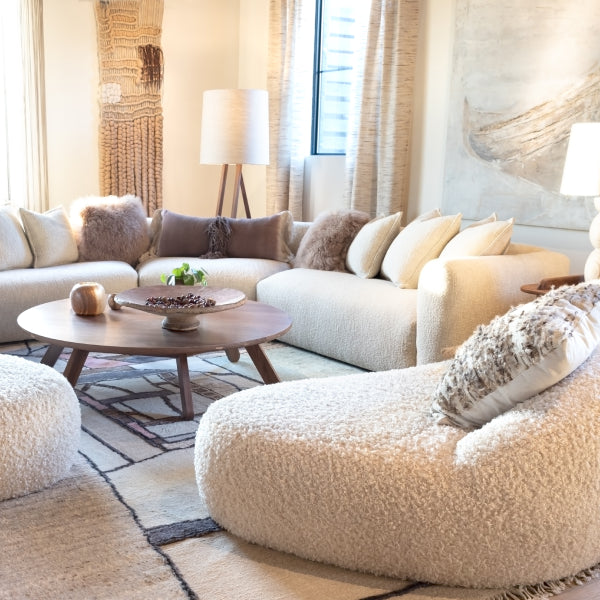
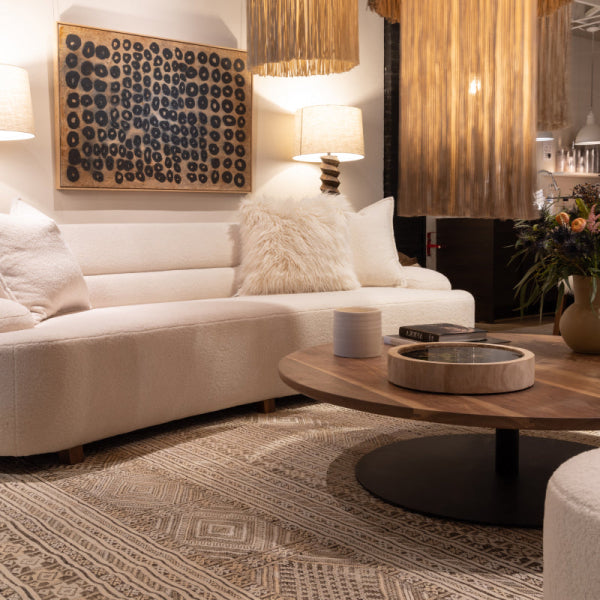
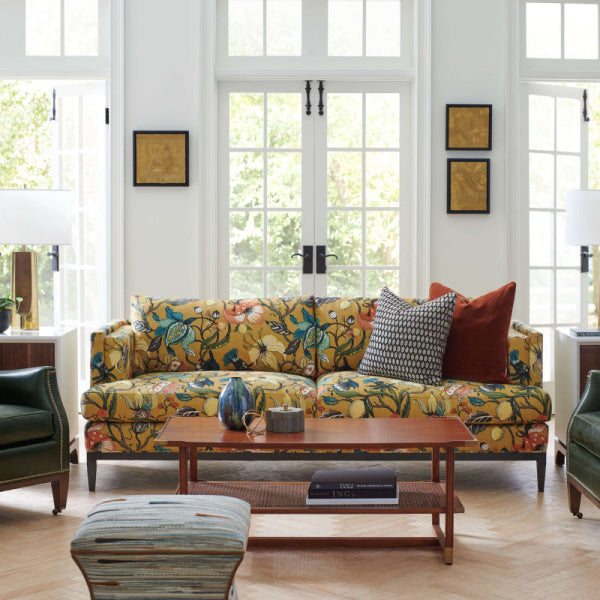
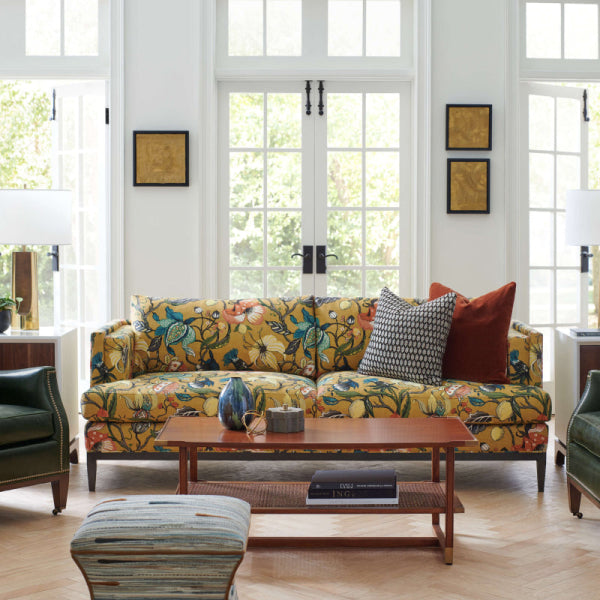
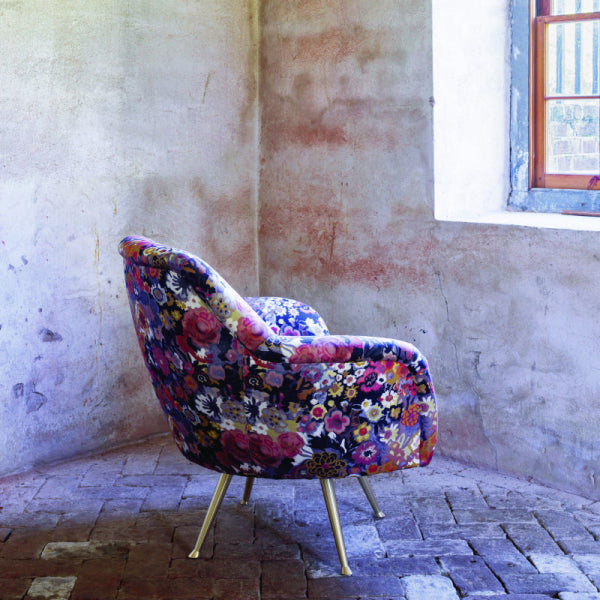












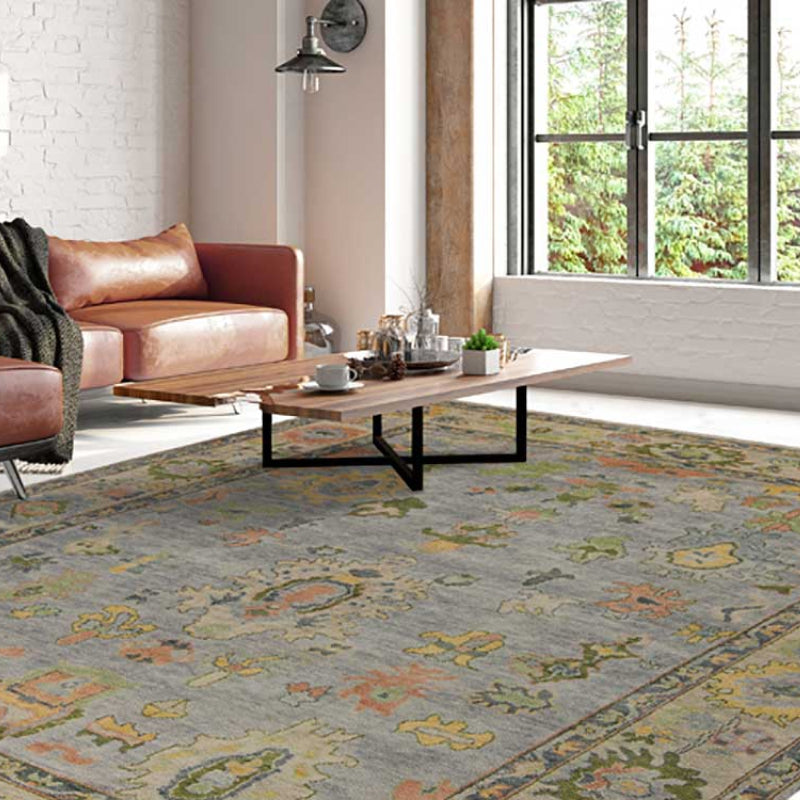
You've invested in a custom sectional, selected linen or performance upholstery, and planned a room around tall Atlanta windows. Then the drapery arrives, and the panels drag, the rod bows, or the fabric catches at every opening. The problem often isn't the textile. It's the hardware carrying it.
In a luxury home, window treatments deserve the same scrutiny as a sofa frame, a hand-knotted rug, or a custom chair. Custom drapery hardware is both a design element and a structural system, supporting valuable fabrics while shaping how a room feels, functions, and ages.
The Hidden Foundation of Luxury Window Treatments
A Buckhead living room can contain beautiful decisions at every visible level, from a premium sectional to Belgian linen pillows and a carefully chosen statement table. Yet the window treatment may still depend on an underspecified rod fixed into drywall with inadequate projection. The result is familiar: the fabric looks exceptional at installation, but the center begins to sag, the returns sit too close to the trim, and opening the panels becomes an awkward two-handed task.
That failure is avoidable. High-end furniture offers a useful comparison. A designer-quality sofa earns its longevity through construction details such as kiln-dried hardwood frames, mortise-and-tenon joinery, reinforced corners, and dovetail construction, all of which help limit wobble, sagging, and premature failure, as described in this luxury furniture construction checklist. A window treatment needs the same hierarchy of thought. The fabric may be the most visible component, but brackets, carriers, returns, fasteners, and support points determine whether the finished installation performs.

Why custom specification matters
Off-the-shelf rods assume a relatively predictable window, treatment weight, and mounting condition. Luxury Atlanta residences rarely offer that simplicity. A designer may be working around deep crown molding, layered sheers and lined panels, a bay window, a broad glass wall, or a return that must clear a premium upholstered bench.
Custom specification lets the hardware respond to the room rather than forcing the room to accept a generic component. Bracket projection can be adjusted, rods can be cut to the opening, finishes can be coordinated, and support can be placed where the wall or ceiling can carry the load.
The global drapery hardware market reflects the category's established role in home improvement and interior design. One estimate places it at USD 5.76 billion in 2025, with a projection of about USD 8.79 billion by 2034, representing a 4.8% compound annual growth rate across that period (Future Market Report). The market isn't limited to decorative accessories. It includes the engineered rods, tracks, brackets, and mechanisms that make custom window treatments usable.
Practical rule: Treat the hardware as part of the architecture, not as an afterthought added after the fabric has been selected.
For homeowners searching for factory-direct window treatments, it's useful to compare not only fabric collections but also the specification and installation approach behind the finished treatment. A resource on factory-direct window treatments can broaden that research, but the same questions still apply: What supports the weight? How will the panels travel? Can the system be repaired or adjusted later?
That standard matters whether you're furnishing a new home in Alpharetta, refreshing a Roswell residence, or sourcing custom furniture Atlanta designers can coordinate with a broader furnishings plan. The best window treatment looks effortless because the engineering beneath it has been handled deliberately.
Understanding the Core Types of Drapery Hardware
The correct hardware begins with the way the treatment must move. A decorative rod, a traverse system, and a ceiling-mounted track can all support drapery, but they create different experiences at the window.
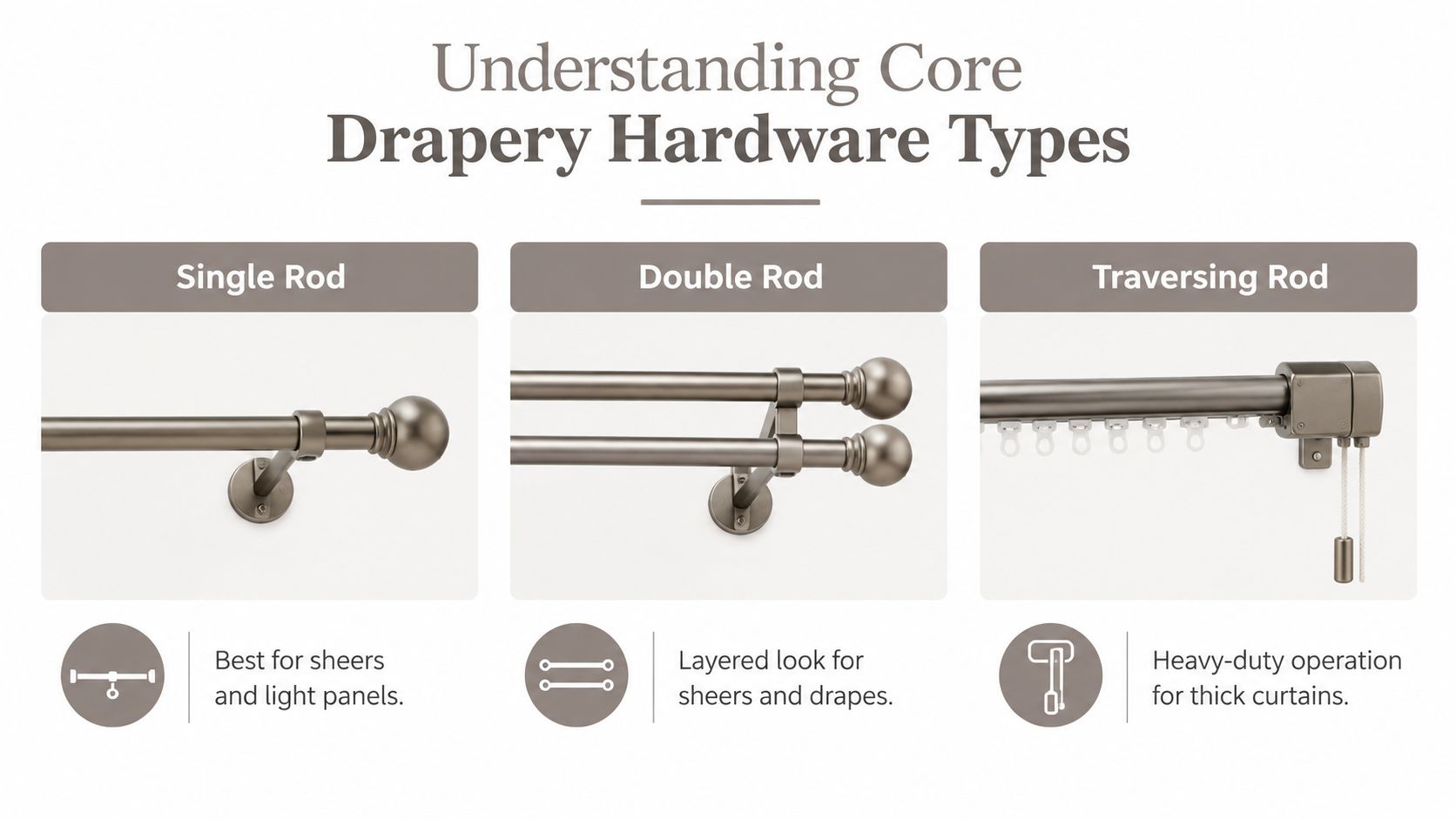
| Hardware type | Best application | Primary advantage | Main limitation |
|---|---|---|---|
| Single rod | Sheers or lighter panels | Visible design detail and simple installation | Less suitable for substantial treatments without robust support |
| Double rod | Layered sheers and drapes | Separates privacy and decorative layers | Requires more projection and careful clearance |
| Traverse rod | Thick or heavy curtains | Cord-controlled opening and closing | Mechanism needs precise specification and installation |
| Ceiling-mounted track | Contemporary architecture and broad openings | Clean, continuous profile | Structural anchoring and leveling are critical |
A single rod works well when the rod itself should contribute to the room's composition. Brass, blackened steel, or a sculptural finial can give a window the same finished quality as a carefully selected light fixture. It's a strong choice for a single layer of sheers or lighter panels, particularly where the treatment is opened infrequently.
A double rod supports a layered arrangement, often pairing a translucent panel with a lined drape. That combination offers visual depth and flexible light control, but the extra layer increases the demand on projection, bracket strength, and clearance from trim. A shallow double rod placed directly against deep molding can cause the front panel to scrape or compress its folds.
Choosing movement over appearance
A traverse rod conceals the operating cord and is often preferable for fuller, heavier draperies. It distributes the opening action through carriers, so the client doesn't pull directly on the fabric. That's valuable for lined panels, tall windows, and rooms where the treatment is used every day.
A ceiling-mounted track creates the most restrained visual line. It suits contemporary homes in North Atlanta, rooms with minimal trim, and installations where the fabric should appear to descend from the ceiling. Tracks also work well across wide openings, but they must be level and securely anchored. The installation guidance in this curtain rod installation resource reinforces the importance of measuring, selecting appropriate supports, and matching the system to the window condition.
Choose the mechanism before finalizing the decorative language. A beautiful rod that cannot carry or move the selected treatment isn't a luxury solution. It's an expensive compromise.
Materials, Finishes, and Architectural Cohesion
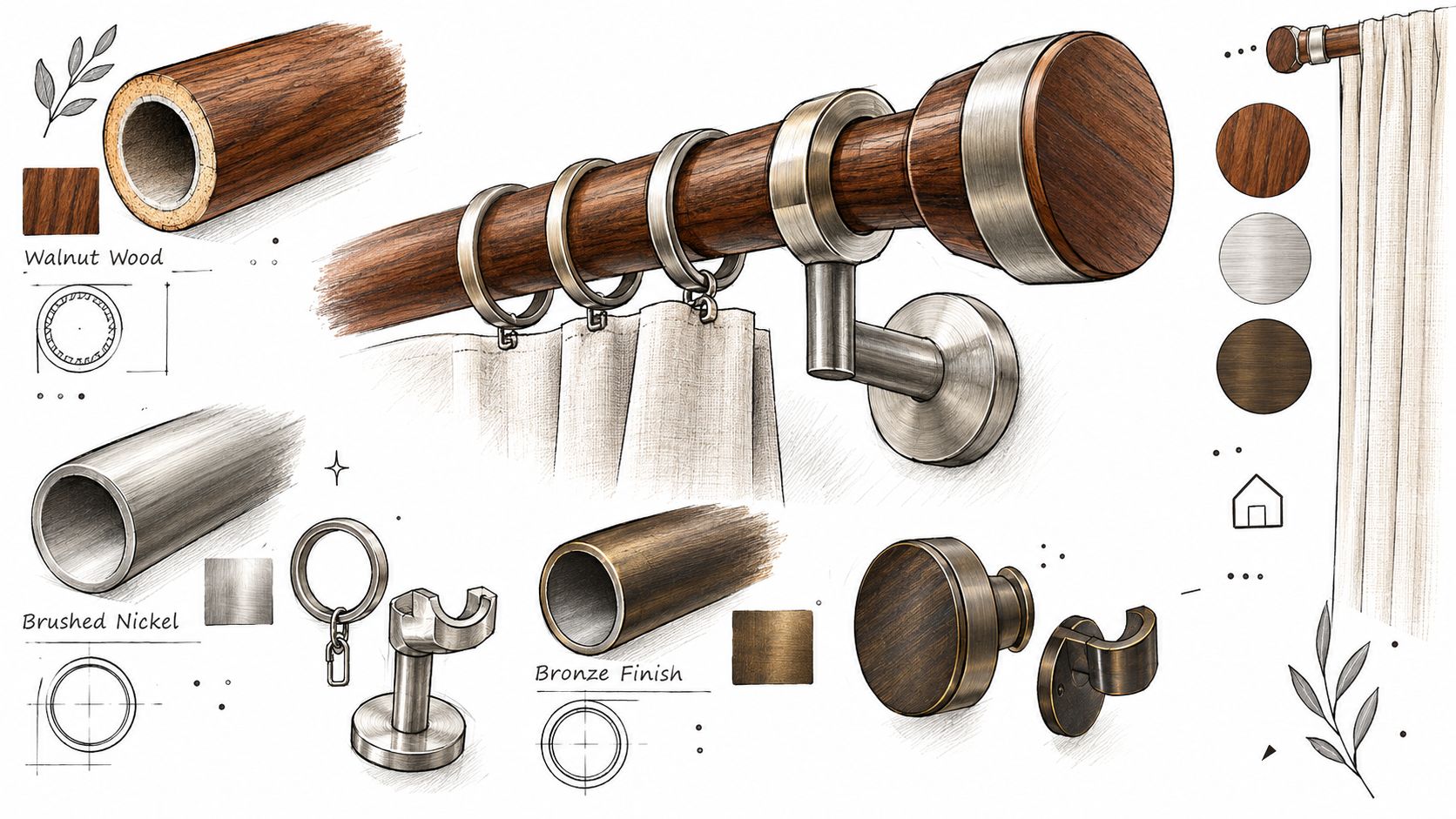
Hardware finish should be selected with the same care given to upholstery leather, solid hardwood, or a natural linen weave. The decision affects the visual temperature of the room, how often fingerprints show, and whether the hardware reads as a quiet support or a deliberate architectural accent.
Start with the room's permanent metal vocabulary. Look at door levers, cabinet pulls, lighting, plumbing fixtures, and furniture details. The drapery hardware doesn't need to match every element exactly, but it should belong to the same design conversation.
Build the finish into the palette
Brushed nickel and satin silver tones suit contemporary interiors where the goal is a cooler, quieter line. They're particularly effective beside pale stone, gray upholstery, and restrained architectural millwork. A brushed surface is generally more forgiving than a highly polished one because it softens the visibility of fingerprints and minor marks.
Antique brass adds warmth and works naturally with walnut, camel leather, cream upholstery, and traditional Atlanta architecture. It can connect drapery hardware to an aged mirror, a brass lamp, or the warmer undertones in a patterned fabric without requiring an exact match.
Matte black gives a stronger graphic edge. It can frame a light wall, echo black window sashes, or sharpen a room filled with soft textiles. In a transitional interior, black hardware often succeeds because it provides definition without competing with the furniture.
Wood rods can soften a room and support a more collected, traditional scheme. Metal is often the better choice when the treatment is substantial, the span is broad, or the design calls for a slim profile with a precise finish. The material choice should follow the structural requirement as closely as it follows the aesthetic brief.
Think beyond matching
A finish can either disappear or announce itself. Concealed hardware behind a pocket should coordinate with the construction even if no one sees it, while an exposed rod needs a finish that remains convincing beside premium fabrics and designer furniture.
Finish research is also useful when coordinating metals across a wider room. A practical 2026 hardware guide from The Cabinet Coach offers a helpful reference for thinking about finish relationships beyond the window. The same principle applies to drapery: select a coherent family of tones, textures, and reflectivity rather than assembling unrelated samples.
Lining matters, too. A substantial blackout, interlining, or thermal layer changes both the hand of the fabric and the load carried by the hardware. This guide to the role of drapery lining is useful when the design needs privacy, light control, insulation, or a fuller fall.
For a luxury home, the best finish doesn't just match. It makes the surrounding furniture, textiles, and architectural details feel more intentional.
Critical Mounting Considerations and Load Capacity
A substantial drapery treatment needs the same structural discipline as a finely upholstered chair. A generous rod diameter cannot compensate for brackets spaced too far apart, excessive projection, or fasteners installed without structural support. Mounting geometry matters as much as the visible hardware.
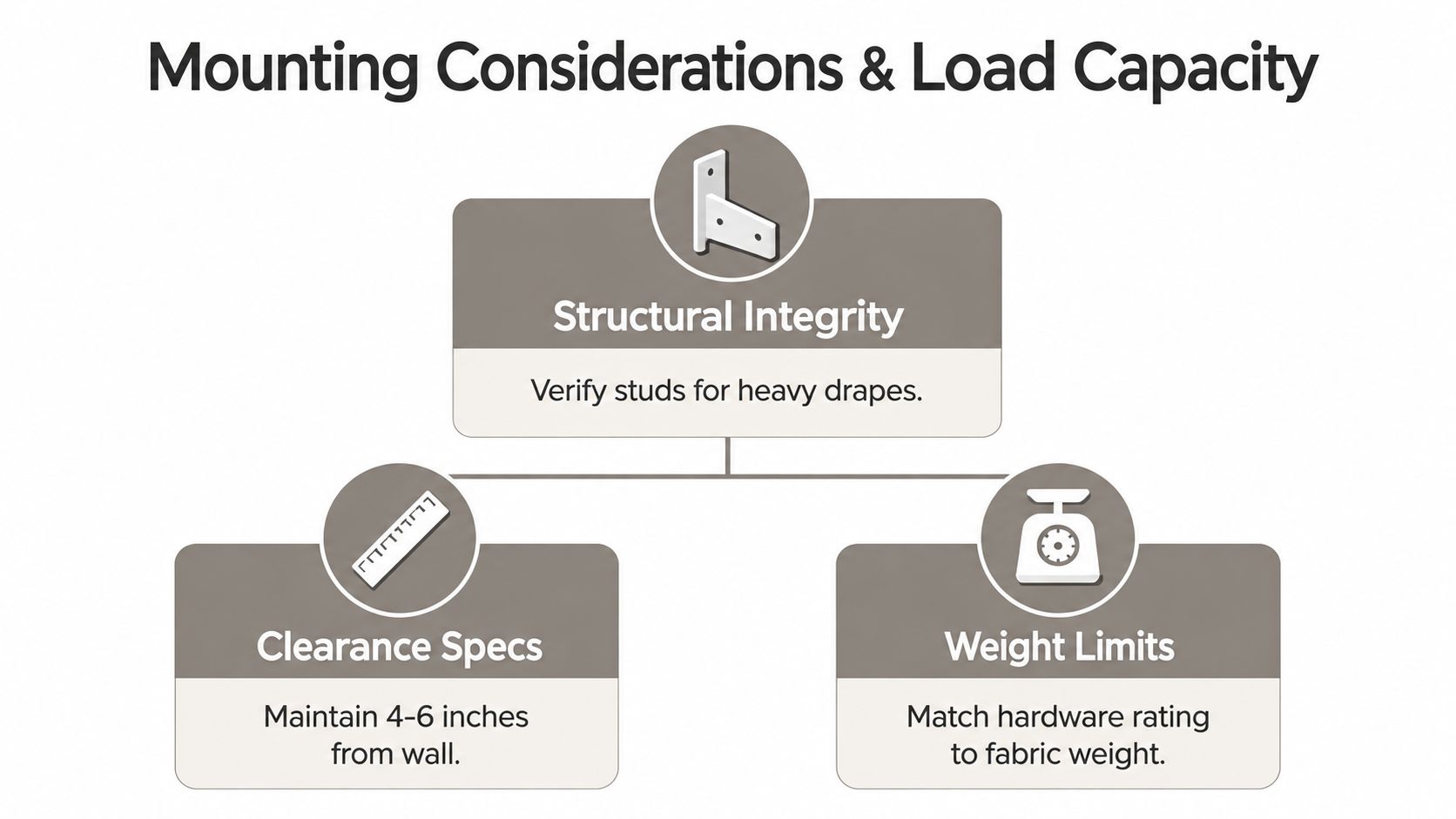
Bracket projection changes capacity quickly. A bracket with approximately 3 inches of wall clearance can support up to 30 pounds before deflecting. At 5 inches, capacity falls to about 12 pounds, and at 7 inches to 5 pounds, according to Loom Decor custom-cut drapery hardware. Greater projection increases the bending moment, placing more strain on the bracket and its fasteners. In a luxury Atlanta interior, that calculation matters because layered fabrics, generous fullness, and substantial linings add weight that a catalog example may not reflect.
Specify the actual condition, not the catalog condition
Measure the deepest obstruction before selecting the bracket. It may be crown molding, a window casing, a shade, a radiator cover, or the front layer of a double treatment. Add the fabric's fold depth, lining, and return so the panels can move without catching. Clearing the wall is not enough if the treatment still strikes the trim.
Custom bracket clearances can range from one-quarter inch up to 8 inches, as noted in the Loom Decor custom-cut drapery hardware specifications. That range accommodates thick moldings, layered drapery, and deep returns. Extra projection, however, should solve a measured obstruction rather than compensate for incomplete planning. The added clearance may improve movement while reducing the load the bracket can safely carry.
A proper specification should document:
- Treatment weight: Include fabric, lining, interlining, headings, and operating hardware.
- Projection depth: Measure to the outermost part of the treatment, not only to the rod.
- Support location: Identify studs, blocking, joists, or another suitable structural member.
- Span and center support: Broad openings need intermediate support to control deflection.
- Operating frequency: A frequently opened treatment places more stress on the installation than a fixed decorative panel.
Tracks are load-bearing systems
Motorized and track-based installations demand the same care as other engineered furniture components. Ceiling-mount cam-locks must fasten into structural members, and the track must remain level for proper operation. For recessed pocket mounting, the Lutron drapery chassis specification calls for structural support no farther apart than every 16 inches, or 406 millimeters. The same document lists straight-track lengths up to 240 inches, or 610 centimeters, and tandem assemblies up to 480 inches, or 1219 millimeters, with capacities of 145 pounds and 290 pounds, respectively.
Those figures do not prescribe one solution for every room. They show how engineered systems handle broad spans through planned, modular support rather than one unsupported length.
A premium fabric deserves a mounting plan based on its actual weight, projection, substrate, and daily use.
Motorized Systems and the Show-versus-Hide Debate
The question isn't only whether hardware should be visible. It's whether the hardware should contribute to the room's architecture or disappear so the fabric and furniture carry the visual emphasis.
A ceiling pocket or valance can create a continuous, quiet line across a room. That approach suits minimal interiors, tall glass walls, and spaces where a clean ceiling plane matters. Concealment also helps when the architecture is already expressive, such as a room with dramatic beams, detailed millwork, or a sculptural fireplace.
Visible hardware takes a different position. A blackened steel rod, architectural bracket, French return, or hand-finished finial can frame the window like a piece of furniture. In a restrained room, that detail may provide the contrast needed to keep full-height drapery from feeling visually soft.
Match the choice to the room
Hiding the hardware works particularly well when:
- The ceiling line should feel continuous: A pocket can reduce visual interruption.
- The treatment is expansive: A concealed track keeps a broad glass wall visually calm.
- The furniture is expressive: Statement furniture pieces may need the window to recede.
- The room needs acoustic softness: Full fabric coverage can contribute to a quieter atmosphere without adding competing metal detail.
Showcasing the hardware can be more effective when:
- The window needs architectural framing: A visible rod can establish proportion.
- The room has compatible metal accents: Repeated material cues make the choice feel deliberate.
- The treatment is decorative: A stationary or lightly used panel can support a sculptural rod.
- The design references traditional craft: Finials and returns can reinforce a collected, classic interior.
Motorization adds another layer to the decision. Battery-powered, wire-free systems can avoid hardwiring and are especially compelling for tall windows, hard-to-reach openings, multi-window great rooms, and heavy custom draperies. Industry coverage identifies systems designed to support custom draperies up to 110 pounds and connects motorization with smart-home integration and retrofit flexibility (Iron Art by Orion motorized drapery resource).
When motorization earns its place
Motorization is about more than convenience. It can protect fabric by reducing direct handling, make high windows usable, and coordinate multiple panels across a large room. It also allows the designer to preserve a clean appearance where manual cords or exposed controls would interrupt the scheme.
It isn't automatically the right choice for every window. A small, rarely used bedroom treatment may not justify the added system complexity, while a great room with heavy lined panels may benefit every day. Battery systems also require an ownership plan, including access for charging or maintenance. A concealed motor that cannot be serviced easily creates a future problem, even if the installation looks perfect on day one.
For contemporary projects, a custom curtain track resource can help frame the conversation around track profiles, movement, and architectural integration. The most successful installations decide visibility and motorization together. A hidden motor behind a visible fascia creates one experience, while a fully concealed ceiling system creates another.
The right answer depends on whether the window treatment should behave like architectural trim, operate like a piece of smart-home equipment, or do both without calling attention to the mechanics.
Partnering with Lewis and Sheron for Elevated Interiors
Custom drapery hardware sits at the intersection of textiles, architecture, installation, and furniture planning. That makes local design guidance valuable, particularly when the same room includes custom upholstered furniture, premium sectionals, rugs, lighting, and layered window treatments.
Lewis and Sheron Textiles has served Atlanta since 1944 and combines fabric sourcing with custom furnishings, reupholstery, and design services. Its Design Center carries in-stock and cut-yardage textiles from mills including Kravet, Fabricut, P. Kaufmann, Libeco Home, and Crypton, while its made-to-order offerings include American-crafted upholstery from Verellen, Wesley Hall, LEE Industries, and Ambella.
For a homeowner in Buckhead, Alpharetta, Roswell, Sandy Springs, or the wider Fulton County market, the practical advantage is coordination. A designer can evaluate the fabric, lining, furniture scale, hardware finish, operating method, and installation requirements as one composition instead of treating each purchase as a separate transaction. Custom drapery service also includes professional home installation and white-glove delivery, according to the publisher information provided for the service.
That approach reflects the same quality standard used to evaluate heirloom furniture. Construction, material selection, support, and repairability matter more than surface appearance alone. The finished room should feel resolved because every layer, including the hardware hidden above the panels, was specified for the life of the interior.
Lewis and Sheron Textiles offers custom drapery, custom upholstered furniture, reupholstery, premium fabrics, rugs, trims, and in-house design support for Atlanta-area homes and design professionals. Visit Lewis and Sheron Textiles to explore fabrics and furnishings, discuss custom window treatments, and plan hardware that performs as beautifully as the rest of your room.