



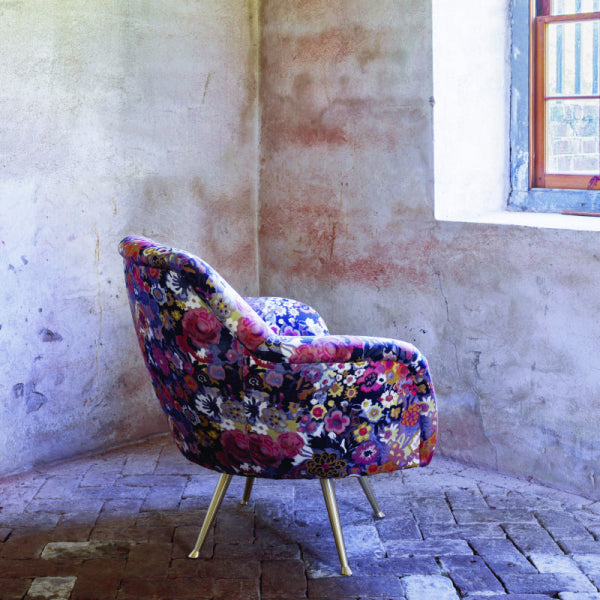
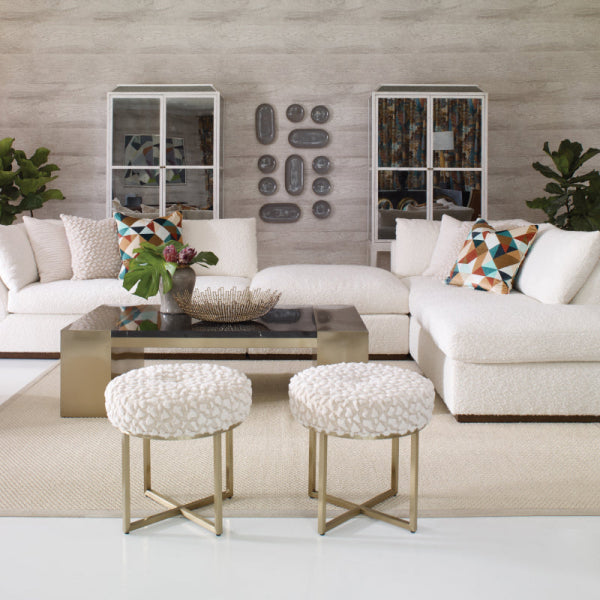












You've found the chair. It has the right leather, the right silhouette, and the kind of presence that makes a room feel finished. Then you sit down and discover that the seat swallows your legs, the arms sit too high, or the beautiful barrel back blocks half the walkway in your Atlanta den.
That mistake happens because shoppers start with appearance. Seat depth and arm height should come first, followed by room function, body size, construction, and upholstery performance. The best club chair styles are not merely attractive variations on a classic form. They solve different seating problems, and the right choice should feel comfortable before it looks impressive.
What Makes a Club Chair Different
The two details shoppers underestimate most are seat depth and arm height. A chair can look compact from across a showroom and still have a deep seat that suits a tall reader but leaves a shorter sitter without lumbar support. Arms can create the same problem. If they're too high, relaxed lounging becomes awkward. If they're too wide, the chair may not clear a doorway or fit neatly beside a sofa.
A club chair is a low, deep-seated lounge chair designed for relaxation. Traditional examples are upholstered from the seat down to the floor, with full arms that sit level with or slightly below the seat rail. The result feels enclosed and substantial, unlike a light accent chair with an exposed frame or decorative shell.
The classic club-chair identity developed in France as a luxury lounge seat, with a low back, deep seat, wide arms, and leather upholstery. Contemporary versions now include fabric, velvet, linen, swivel, armless, barrel, and leather-match constructions, so the name describes a family of forms rather than one fixed appearance. Living Spaces' club-chair guide is useful for seeing how broad that modern category has become.
Start with the sitter
A typical club chair seat depth falls around 22 to 24 inches, which is deeper than a standard armchair and allows the sitter to recline while distributing weight across the thighs. This club-chair buying guide pairs that depth with seat heights around 17.75 to 19 inches and upholstered arms that support a relaxed elbow position.
Use the measurements as a starting point, not a substitute for sitting down. A taller person may appreciate a deeper seat, while a smaller adult may need a shallower cushion or a lumbar pillow. Your feet should rest comfortably on the floor, your lower back should meet the cushion, and your elbows should settle naturally on the arms.
Practical rule: If you need to perch on the front edge to keep your back supported, the chair is too deep for your frame, no matter how luxurious the upholstery feels.
A dining chair is formal and upright, with a shallower seat built around meals rather than long lounging. An accent chair may contribute color or sculpture but isn't necessarily engineered for nightly use. A recliner uses a mechanical extension and often carries more bulk, while a club chair provides a defined upholstered seat without a moving mechanism.
The seven core club chair styles each answer a different room need. Chesterfield chairs bring refined heritage, Lawson chairs favor relaxed family comfort, barrel chairs wrap around the sitter, slipper chairs save space, wingbacks add height and drama, English roll arms soften transitional rooms, and tuxedo chairs sharpen modern interiors.
A Brief History of the Club Chair
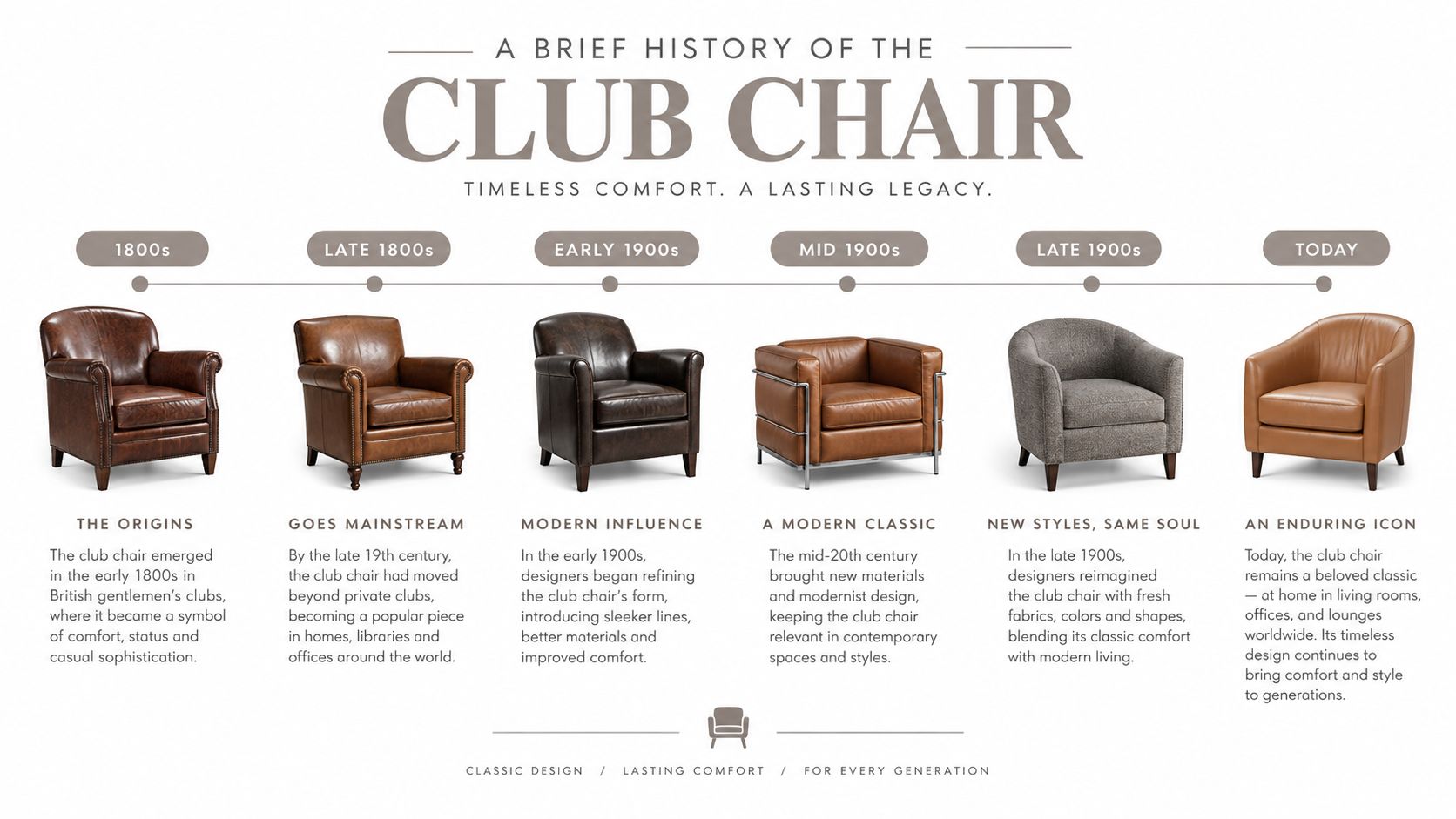
The modern club chair is rooted in late-19th-century France, where a luxury lounge seat developed into a recognizable form with a low back, deep seat, broad arms, and leather upholstery. That original proportion favored comfort and enclosure. It looked grounded rather than delicate, with upholstery doing much of the visual work.
By the 1920s, French designers were pushing the form into the Art Deco era. The chair became more geometric, more refined, and more willing to experiment with the outline of the back. Later examples were identified by silhouettes such as round, square, cloud, moustache, and the distinctive "gendarme's hat" shape. The historical overview of the club chair shows why the category should be understood as an evolving family of forms.
Why the silhouettes diverged
The Chesterfield became associated with deep button tufting, rolled arms, and a formal leather presence. Its construction communicates ceremony and permanence, which is why a Chesterfield club chair still works as a statement piece in a library, study, or traditional living room.
The wingback came from a different practical impulse. Its tall sides and flared wings created a more sheltered fireside seat, and that vertical profile remains useful today when a room needs architectural presence. It works particularly well beside a fireplace or in a space with traditional millwork.
The barrel chair later brought a more continuous, enveloping curve. Its back flows into the arms, creating the feeling of a small upholstered shell. The Lawson took a more comfort-first direction, using loose seat and back cushions to make a formal chair feel relaxed and approachable.
From formal rooms to contemporary interiors
The slipper chair answered the needs of smaller rooms by removing the arms and lowering the profile. It remains a smart choice for entry vestibules, dressing areas, and compact reading corners. The English roll arm retained traditional upholstery craft but softened it with a graceful, compact scroll.
The tuxedo chair took the opposite path. Its arms and back rise in a clean, nearly continuous line, giving it a crisp Art Deco and modern-parlor character. Today it suits lofts, contemporary studies, and interiors where a club chair needs to look polished rather than rustic.
These lineages still dictate what you see on a showroom floor. Tufting signals heritage, curves encourage enclosure, tall wings create vertical emphasis, and square arms make a room feel more architectural. The style may change through fabric, finish, or scale, but its history remains visible in the proportions.
The Seven Core Club Chair Styles
A useful comparison starts with the room and the sitter, not with the upholstery swatch. The table below gives you a practical filter for the seven most useful club chair styles.
| Style | Seat Depth | Arm Profile | Best Room Size | Ideal For |
|---|---|---|---|---|
| Chesterfield | Deep, often suited to the deeper club-chair range | Rolled arms near seat height | Medium to large | Tall adults, libraries, formal living rooms |
| Lawson | Moderate to deep, with loose cushions | Low rolled arms | Medium to large | Families, relaxed lounging, mixed body types |
| Barrel | Deep and enveloping | Continuous curved arms | Medium to large | Curling up, reading, conversational seating |
| Slipper | Shallower and compact | Armless | Small to medium | Petite sitters, entry areas, bedrooms, tight nooks |
| Wingback | Moderate to deep, depending on cushion | Tall flared wings | Medium to large with vertical clearance | Fireside seating, traditional rooms, statement placement |
| English roll arm | Moderate to deep | Gracefully scrolled, upholstered arms | Medium | Transitional rooms, upright conversation |
| Tuxedo | Moderate, usually more structured | Square arms aligned with the back | Medium to large | Modern rooms, lofts, design-forward seating |
The traditional choices
Choose a Chesterfield when the chair needs to carry visual authority. Deep button tufting and low rolled arms make it a strong partner for leather sofas, bookcases, and dark wood. It isn't my first choice for a small room or anyone who wants a soft, loose, sink-in sit.
The Lawson is the practical family choice. Its loose back and seat cushions offer a less formal posture, and its low rolled arms keep the shape welcoming. If the chair will serve several people with different builds, this is one of the easiest profiles to specify comfortably.
A barrel chair is excellent for curling up because its continuous curved back creates a sheltered seat. That same curve consumes visual space, so it needs breathing room. Don't force one into a narrow passage just because the footprint looks acceptable on paper.
The space-saving and modern choices
A slipper chair is the answer when arms would make the room feel crowded. Its low profile works in a bedroom, vestibule, or reading nook, but it doesn't provide the elbow support many people want for long reading sessions. Petite sitters often find its shallower proportions easier to manage.
A wingback earns its place when you want height and drama. It needs a room that can absorb its vertical profile, and its wings can visually close off a corner. Pair it with traditional upholstery, textured linen, or a restrained pattern rather than adding unnecessary ornament around it.
The English roll arm is my transitional favorite. It has enough tailoring for a refined sitting room but avoids the severity of a square modern arm. The tuxedo is the cleanest choice for a contemporary loft or a room built around architectural lines. Its square arms can feel firm and upright, so test the back angle before ordering.
For another way to compare accent seating by silhouette and placement, find your perfect accent chair offers a useful companion resource from Tyner Furniture. Treat the table as a screening tool, not a verdict. Your frame, posture, and daily habits should make the final decision.
Reading Construction Quality on the Showroom Floor
At the showroom, start with the chair's structure before judging its silhouette or upholstery. A club chair should feel stable under your body, suit your proportions, and support the way you plan to use it. A reading chair needs dependable suspension and a seat that fits your leg length. A compact accent chair can tolerate a firmer, simpler build if it will see less daily use. This furniture quality guide offers a useful framework for looking past surface design.
Check the frame first
Lift the front of the chair slightly, or ask a showroom associate to show you the underside. A quality frame should feel solid and balanced, with no twisting, rattling, or unexpected flex. Kiln-dried hardwood is a strong starting point because it supports stable furniture construction.
Inspect the corners and ask how they are joined. Mortise-and-tenon or doweled construction gives me more confidence than joints held mainly by staples. Guidance on identifying high-quality furniture also identifies kiln-dried hardwood frames and reinforced suspension as signs of well-made upholstered furniture.
Solid hardwood frames, mortise-and-tenon joinery, and tightly woven upholstery are the signs I look for first because they help a chair stay beautiful and usable for decades.
Test the suspension and fill
Sit all the way back, then stand slowly. The seat should support your weight without collapsing beneath you. Eight-way hand-tied springs remain a respected traditional benchmark. Properly engineered sinuous coils can also provide a credible, often more controlled alternative. Webbing can suit some constructions, but ask more questions when a chair is presented as premium furniture.
Seat fill determines the feel immediately. High-resilience foam wrapped in down gives you support with a softer surface, while an all-foam cushion feels firmer and more controlled. Test both with your normal reading posture. Ask whether the cushion needs regular plumping and whether the cover can be removed for service.

Read the tailoring
Inspect seams at the arms, back, and front rail. Patterns should meet cleanly, welt cord should remain even, and any skirt should hang with balanced spacing instead of pulling toward one corner. On leather, check the finish and look for deliberate placement of natural variation.
Treat a plywood frame marketed as luxury construction, premium-priced zigzag springs, or a cushion that bottoms out immediately as clear warnings. You are paying for the structure beneath the upholstery. A well-built chair can remain worth recovering, while weak internals can make a fashionable piece disposable when its first cover wears out.
Fabric and Leather Choices That Hold Up
Start with the chair's job and the sitter's habits, then choose the material. A chair used for daily reading, television, or long conversations needs a surface that feels comfortable against the body and remains easy to maintain. A decorative chair in a formal room can accept more delicate upholstery. Body size matters too. A larger sitter puts more pressure on the seat and arms, while a smaller sitter may find a stiff, deep chair difficult to use comfortably. Cleanability, abrasion resistance, hand, and aging pattern matter more than a generic label such as “luxury fabric.”
| Material | Cleanability | Abrasion Resistance | Pet and Kid Suitability | Patina Behavior |
|---|---|---|---|---|
| Full-grain leather | Wipes clean when properly maintained | Strong, depending on finish and use | Good for many homes, though scratches remain visible | Develops the richest natural character |
| Corrected-grain leather | Generally straightforward to clean | Consistent surface, but finish can wear | Practical for active rooms | More uniform, less natural variation |
| Bonded leather | Follow manufacturer care instructions closely | Can show surface failure as it ages | Not my first choice for heavy daily use | Doesn't develop the same hide patina |
| Performance boucle | Spot-clean according to the maker's instructions | Can perform well, but texture can catch debris | Good when selected for the room's use | Keeps a soft, tactile appearance |
| Velvet | Requires careful spot treatment | Durable options exist, but pile can show marks | Better for supervised or formal use | Shows shading and hand direction |
| Linen blend | Moderate, with careful spill treatment | Varies by weave and blend | Better in lower-contact rooms | Relaxes and softens over time |
| Treated cotton | Practical with the correct finish | Varies by construction | Useful for active rooms when treated | Can develop a casual, lived-in look |
Leather rewards the right room
For an heirloom chair I specify full-grain leather over a hardwood frame and skip bonded leather without hesitation. Full-grain or top-grain leather suits a study, primary suite retreat, or reading chair that should gain character instead of staying pristine. It also gives a substantial club chair a distinguished, classic presence.
Aniline leather has a beautiful natural hand and changes visibly with use. That quality is the point, but it makes the material a poor choice for a busy family room where spills and scratches need to disappear. Buy it for a room where marks, tonal shifts, and developing patina add character. If the chair will face pets, children, or frequent entertaining, choose a more protected finish and accept that the surface will feel less natural.
Corrected leather provides a more consistent appearance and is easier to manage in active rooms. Its finish can still wear, so inspect the sample in strong light and ask how the manufacturer recommends cleaning it. For a focused comparison of leather silhouettes and upholstery choices, review these leather club chairs.
Textile performance is more nuanced
A tight performance weave is my recommendation for a sun-soaked Atlanta den or any chair that sees daily use. Solution-dyed fabrics and performance finishes can address staining and fading concerns while retaining a residential appearance. Crypton is one example of a performance textile system, but check the exact cleaning code and warranty for the selected fabric. The finish, weave, and color all affect how practical the chair will be.
Velvet belongs in a formal living room that still hosts real life when the finish suits the use and the household accepts visible pile variation. Run your hand across the sample before ordering. Pile direction can create shading, pressure marks, and a changing appearance after someone sits down.
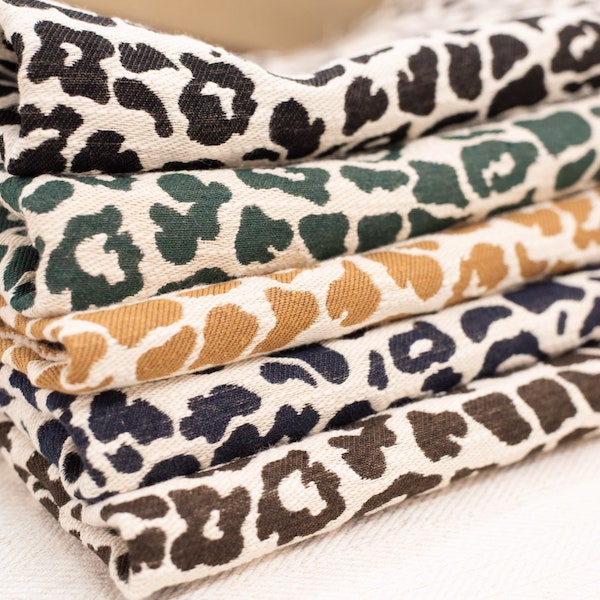
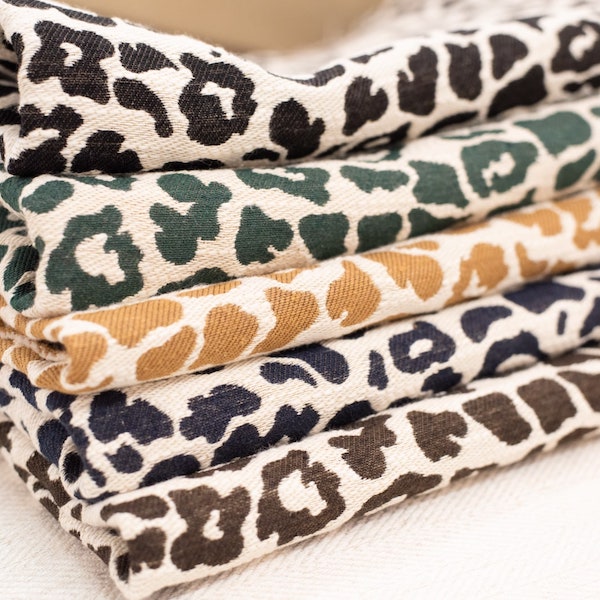
A durable linen blend works well in a guest library or lower-contact room, where its relaxed texture supports a collected look. Treated cotton can suit an active room, provided its finish and care instructions match the expected spills. Use this guide to choose upholstery fabrics before ordering, and compare the actual cleaning requirements rather than relying on the fabric name alone. A beautiful swatch is a poor choice if the household will spend every week protecting it.
Scale and Placement for Real Rooms
A club chair belongs in a room when four measurements work together: seat depth, arm height, overall width, and back height. Ignore any one of them and the chair can fight the architecture. A deep barrel profile may dominate a modest den, while a low slipper chair can disappear beside a substantial sofa.
Start by marking the chair's full footprint with painter's tape. Include the arms, not just the seat, and leave enough room for the sitter to enter and exit without brushing a table or blocking a passage. This simple floor test catches proportion problems before delivery.
Match scale to the room
Small spaces generally favor a tighter silhouette, narrow arms, and a controlled seat depth. A reading nook often benefits from a chair that supports the back without extending too far into the room. Larger living rooms can absorb a deeper Chesterfield, generous barrel chair, or tall wingback, especially when the chair balances a sofa or anchors a fireplace.
A wingback needs visual room above and behind it. If the ceiling, wall, and surrounding furniture can't support its height, the chair will look stranded rather than intentional. Use a lower tuxedo, English roll arm, or slipper profile when the room's architecture calls for horizontal calm.
Build the arrangement around conversation
Two chairs should face each other or angle toward a shared center, not point vaguely into the room. Keep the layout open enough for conversation and movement, and place the front legs on the rug while allowing the back legs to sit off it when the chair is used as an accent.
A matched pair flanking a fireplace or sofa creates symmetry and gives a large room a clear conversation zone. A single club chair should behave more like a punctuation mark. Give it a reading lamp, side table, or artwork so it looks placed rather than abandoned.
Don't buy a chair until you've measured the doorway, stair turn, elevator, and final placement. A perfect custom chair is still the wrong purchase if it can't reach the room.
Care and Reupholstery
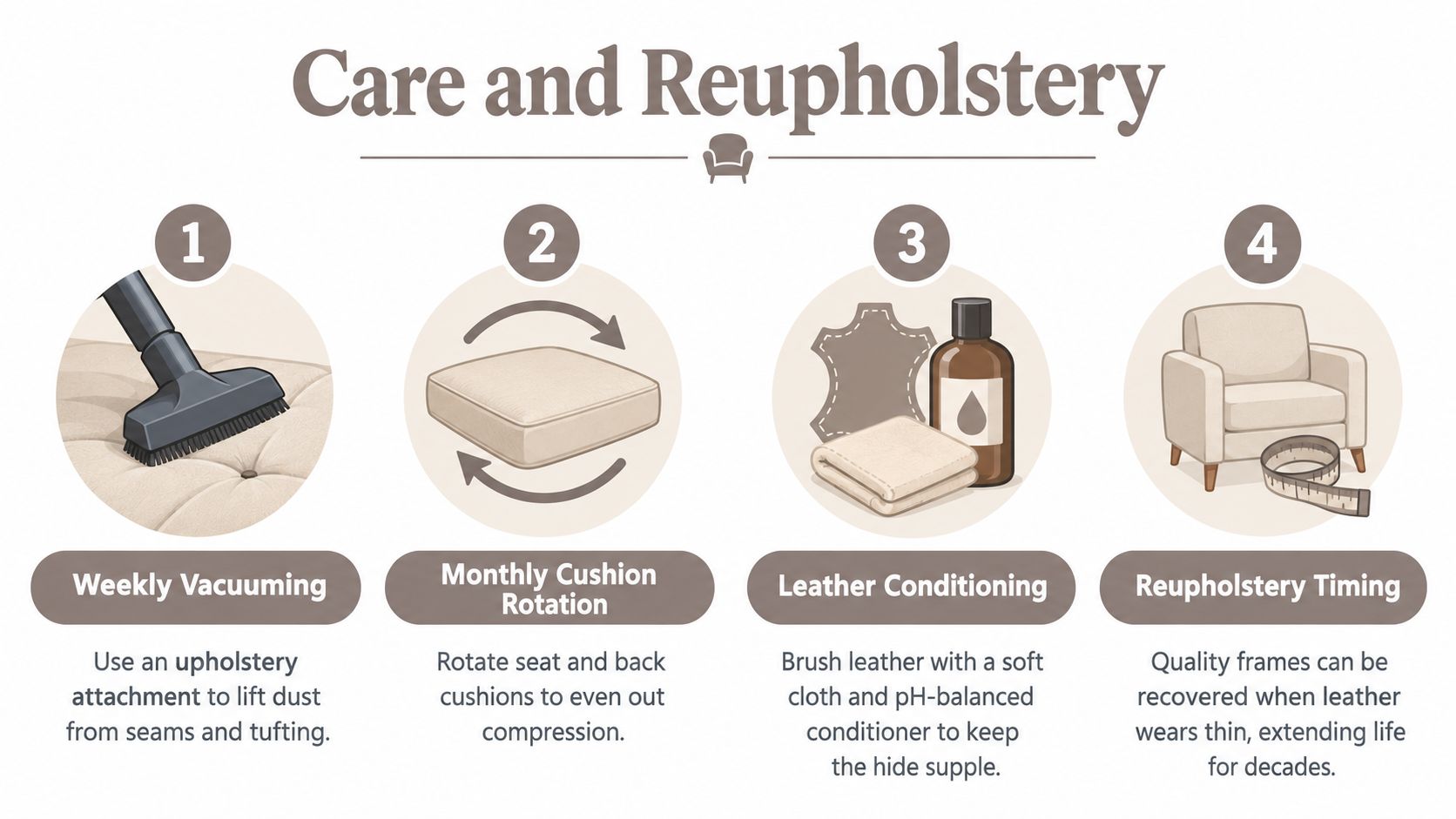
Care begins with restraint. Use an upholstery attachment to lift dust from seams, tufting, and the junction between the arms and seat. Textile spills respond best to prompt treatment with a slightly damp microfiber cloth and minimal water, working from the outside of the mark inward rather than spreading it across the cushion.
Rotate removable seat and back cushions regularly so compression doesn't concentrate in one place. Leather benefits from a soft cloth and a pH-balanced conditioner selected for the specific finish. Keep the chair away from harsh direct sunlight when possible, and follow the upholstery maker's cleaning code instead of applying a household product by guesswork.
Know when the chair deserves recovery
The upholstery is replaceable. The frame determines whether the chair is worth saving. Inspect the hardwood structure, corner joints, suspension, and any creaking or movement before choosing a new fabric or hide.
A sound frame is an asset. Worn upholstery is a service decision, not automatically a replacement decision.
Reupholstery makes sense when the frame remains stable and the suspension can be tightened or renewed. Replacement is more sensible when springs sag beyond practical repair, webbing has torn repeatedly, or the frame creaks and shifts under normal use. A proper recovery should address more than the visible cover. Ask whether the work includes new fill where needed, fresh webbing or springs, replacement deck fabric, and matched welts or topstitching.
Specify the work before it starts
A professional workroom should explain how it will handle pattern matching, cushion construction, trim, skirts, nailheads, and fabric direction. Request a written estimate for fabric yardage, labor, treatment, and any structural repairs. If the workroom needs customer-supplied material, confirm the required yardage before ordering the textile.
For a detailed look at the process, the art of professional reupholstery explains why skilled recovery involves careful dismantling, preparation, cutting, and tailoring rather than just stapling a new cover over the old one. Ask for client references and a realistic shop schedule, especially when the chair has tufting, leather panels, complex welting, or a patterned textile.
A well-maintained, well-constructed club chair can remain relevant through several upholstery changes. That is the true advantage of heirloom-quality furniture. You can update the room without discarding the piece that already fits your body and your home.
Choosing Custom Upholstery in Atlanta
Custom upholstery becomes the right choice when standard sizing compromises comfort or a ready-made finish makes the room feel generic. In Atlanta, that often means specifying a club chair for a particular floor plan in Buckhead, a family room in Alpharetta, a reading space in Roswell, or a more compact arrangement in Sandy Springs.
Start with a written list of must-haves. Include the seat depth your body needs, the arm height that allows easy rising, the textile performance required by the household, and the visual relationship between the chair and existing luxury sofas or premium sectionals. If the room combines traditional and modern elements, a leather exterior with a custom-fabric cushion, or the reverse, can create a more considered transition than an off-the-floor chair.
Bring the room to the showroom
Don't rely on memory. Bring a measured floor plan, photographs taken from the main sightlines, paint or wood samples, and fabric swatches from the room. A designer can evaluate the chair's scale more accurately when the surrounding materials are visible.
Ask for construction details before you fall in love with the shape. A serious custom specification may include a kiln-dried hardwood frame, eight-way hand-tied or sinuous spring suspension, down-wrapped foam cushions, and matched topstitching. This guide to custom luxury furniture describes made-to-order furniture as an option for selecting finishes, textiles, dimensions, and other details, which is precisely where custom upholstery earns its place.
Make the workroom accountable
For customer-owned material, ask about COM yardage requirements before purchasing fabric. Confirm who handles welt, skirt, nailhead, and pattern matching, and whether those details are completed in house. Trade clients should also establish wholesale terms, lead times, and White-Glove delivery arrangements before approving the order.
Local design support matters because the chair must fit the room, not force the room to accommodate an arbitrary showroom size. An Atlanta textile and custom-furniture source can help compare performance fabrics, leathers, trims, and cushion constructions while coordinating the rest of the interior. The Atlanta custom upholstery workroom guide is a useful resource when you're evaluating that process.
For homeowners and designers across Atlanta, Buckhead, Alpharetta, Roswell, Sandy Springs, Fulton County, and North Atlanta, Lewis and Sheron Textiles offers premium home fabrics, custom furnishings, reupholstery, and in-house design support. Visit Lewis and Sheron Textiles with your room measurements and upholstery goals, and choose a club chair that fits your body, your space, and the way you live.