
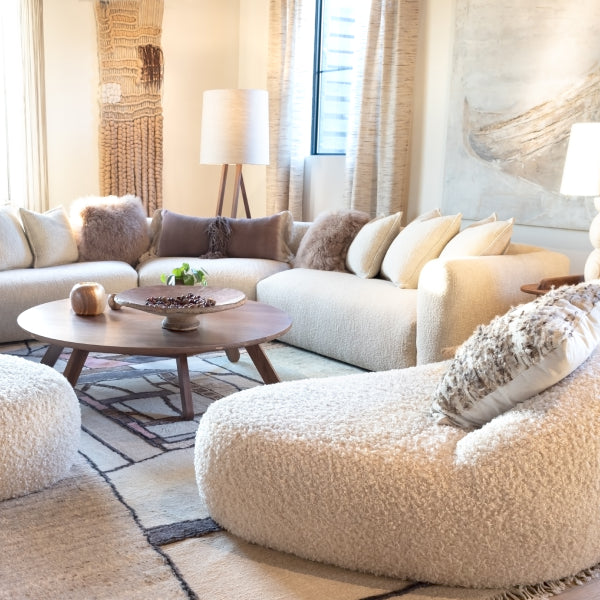
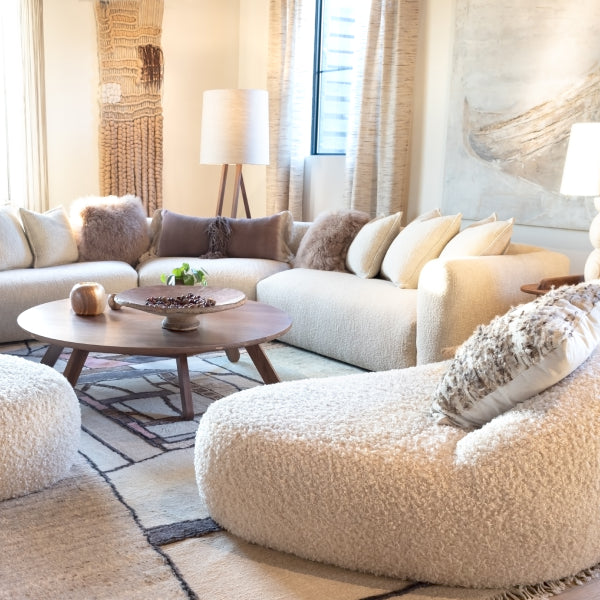
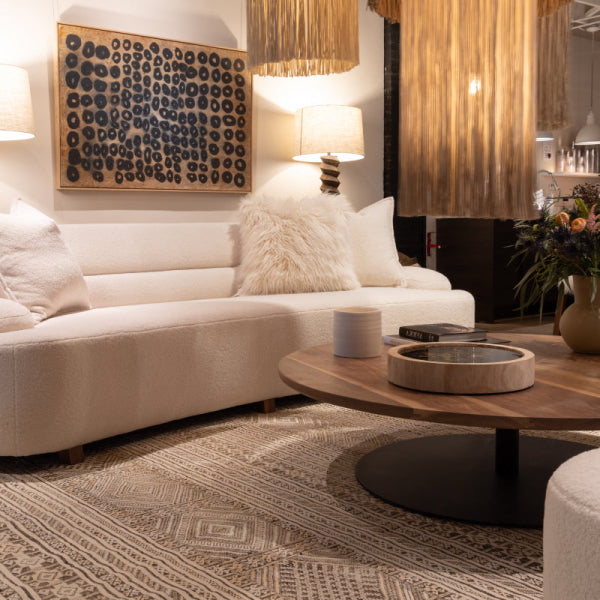
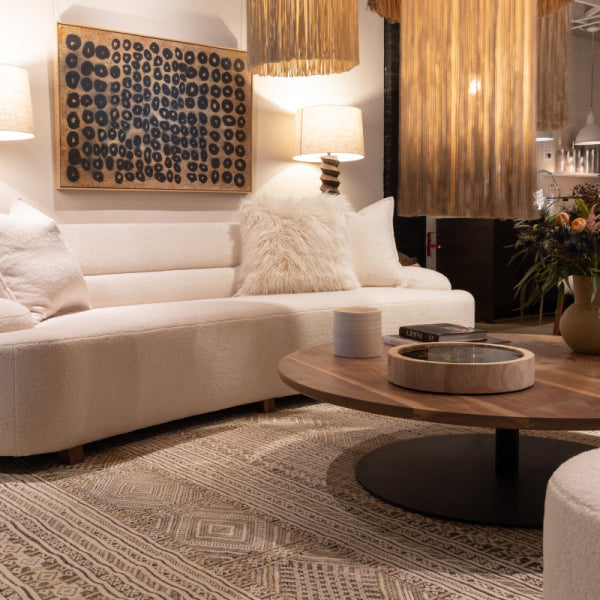








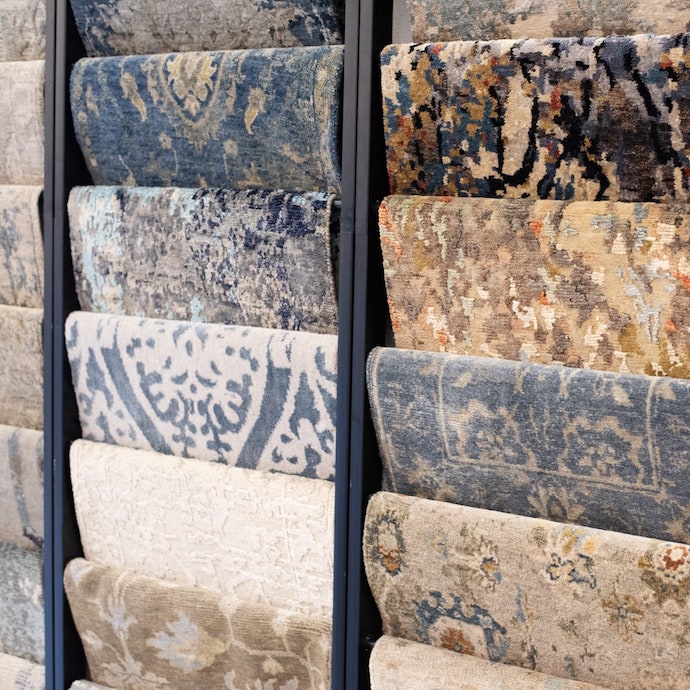
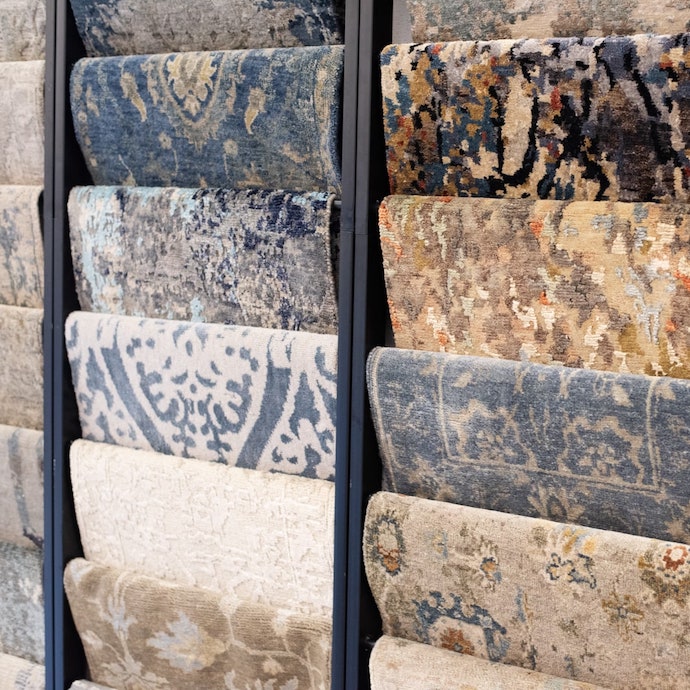
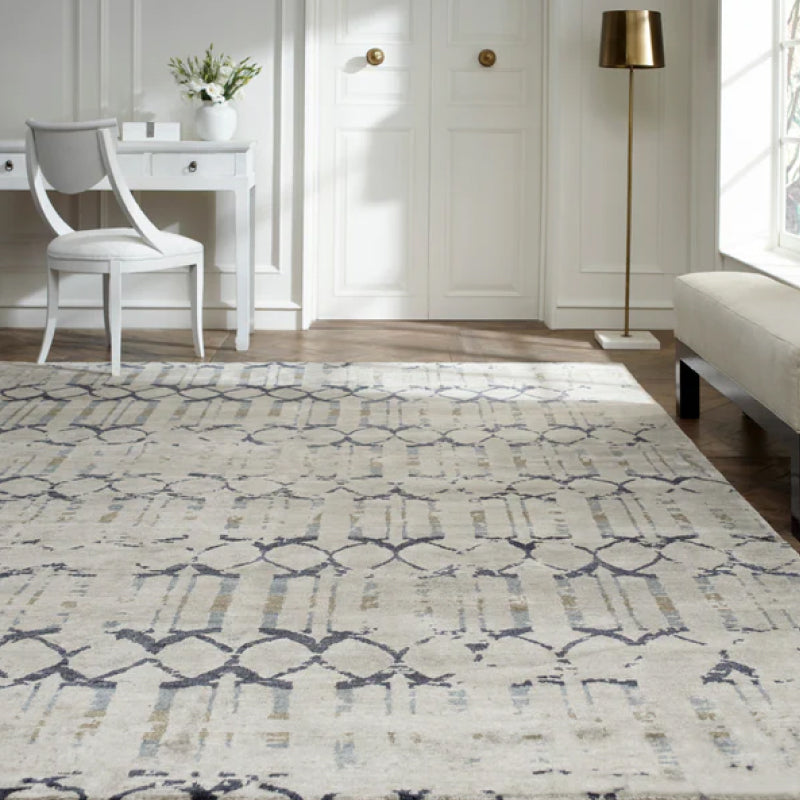
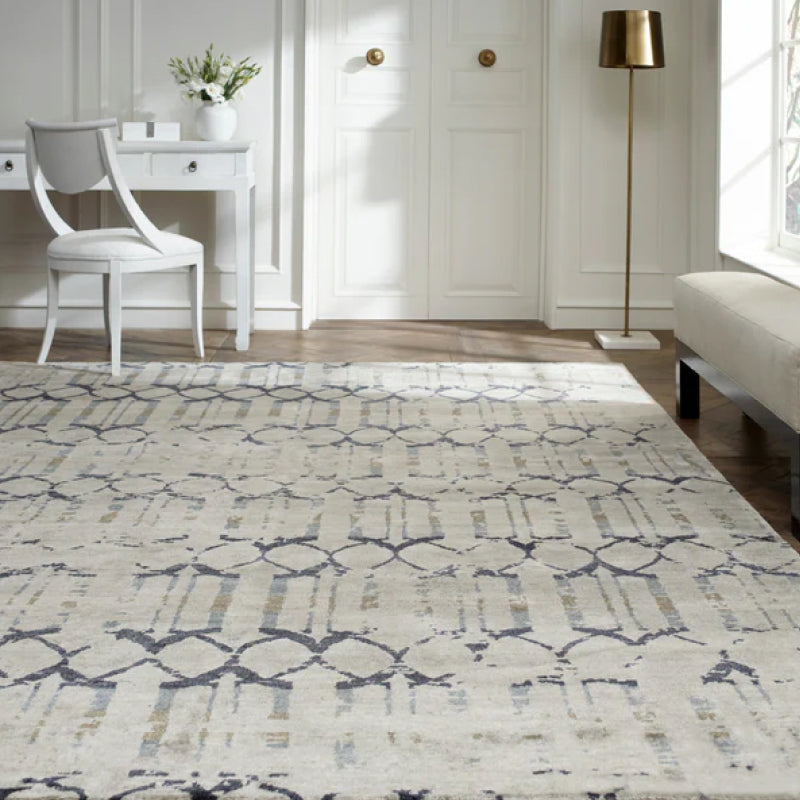
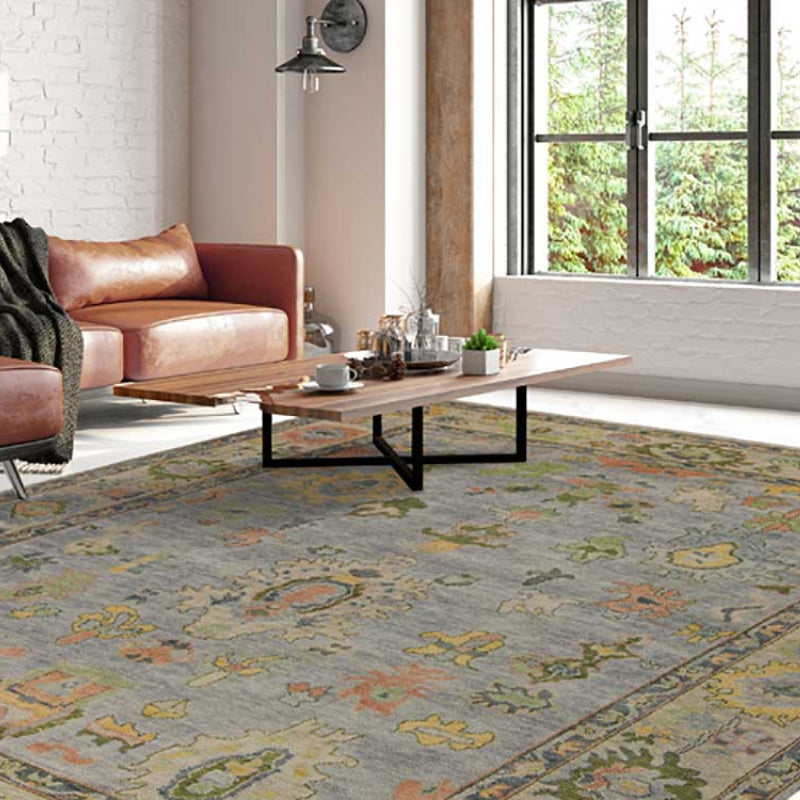
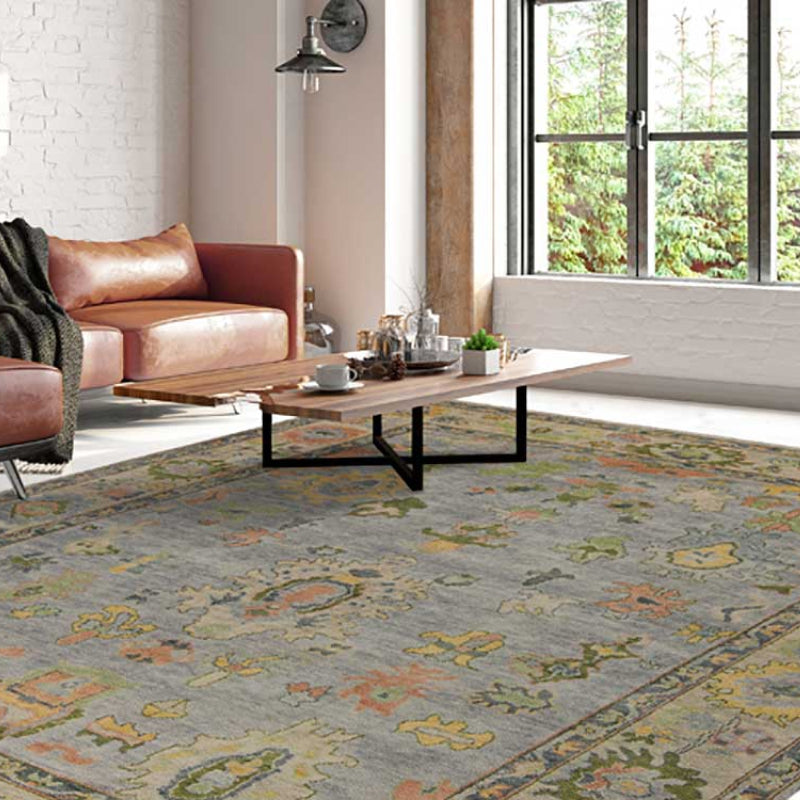
You're standing in a showroom with two rugs pulled across the floor, trying to decide which one belongs beneath the sofa you've spent months selecting. One has the fine, luminous surface of a Persian design. The other has a thicker Indo-Nepalese texture that feels relaxed and architectural. From a distance, both look luxurious. Under your hand, and beneath a piece of high-end furniture, they'll behave very differently.
A hand woven area rug is more than a decorative layer. Its knotting method, fiber, foundation, dye, and regional tradition affect how it reflects light, responds to furniture, withstands foot traffic, and can be repaired. Those details matter just as much as the pattern when you're furnishing a Buckhead living room, a North Atlanta dining space, or an heirloom-quality interior in Alpharetta.
A Rug That Tells Its Own Story
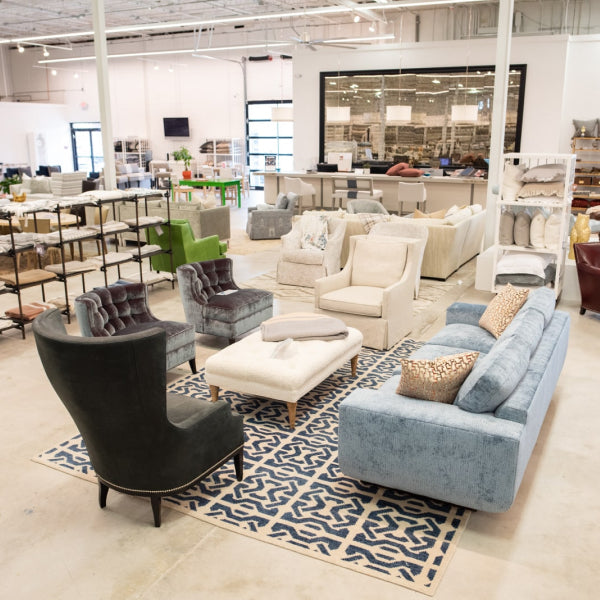
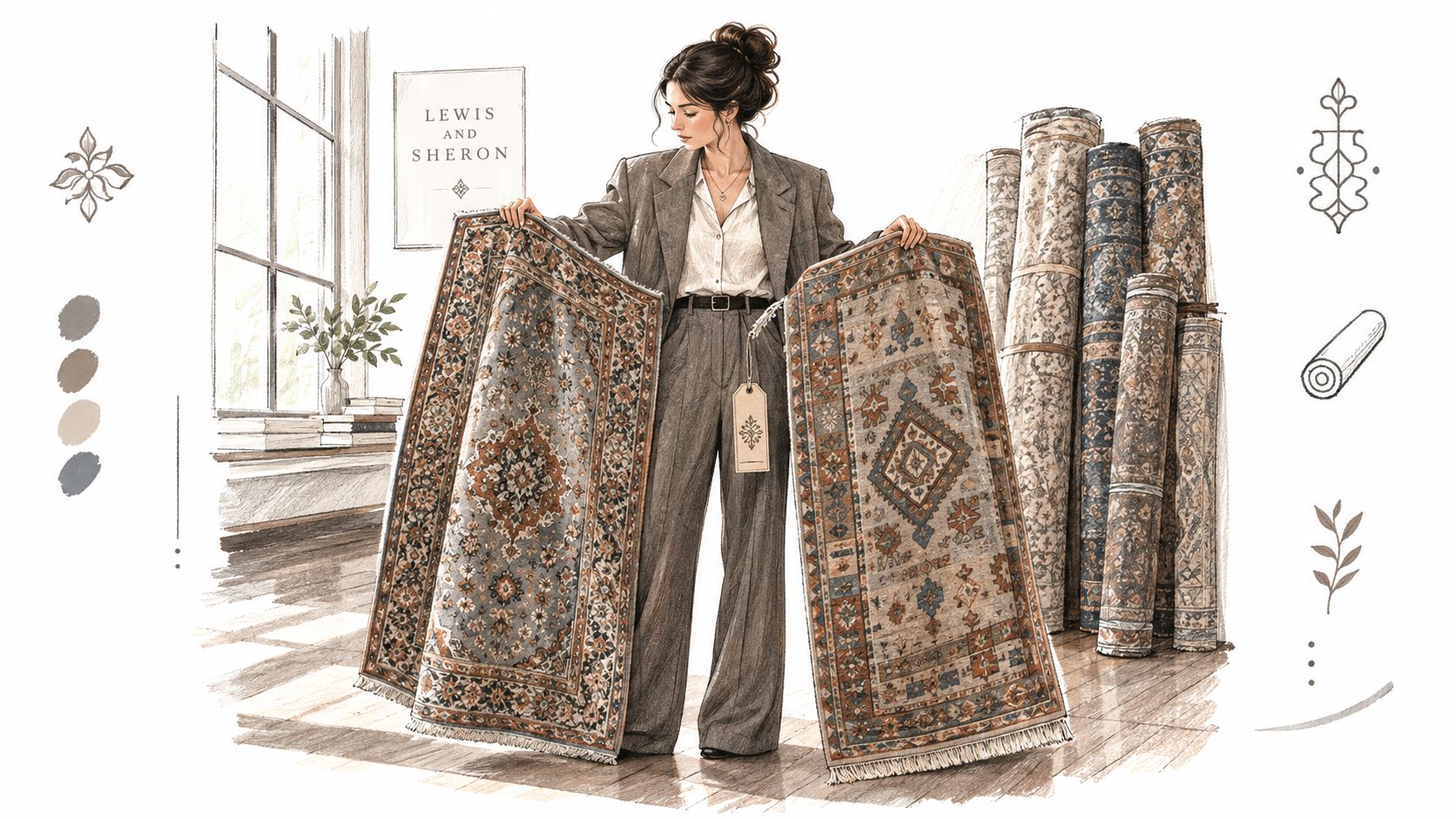
At the Lewis and Sheron showroom, a designer is comparing a Persian Kashan with a silk foundation against an Indo-Nepalese Tibetan-knot rug. The Kashan has a quiet, compressed surface. Its fine construction makes the botanical pattern appear almost drawn onto the floor, with silk catching the light whenever the designer changes position. The Indo-Nepalese piece is more tactile, with a fuller pile and a softer visual rhythm that would suit a contemporary sectional or a relaxed family room.
The price difference forces a useful question. Which rug is better, and which rug is better for this room?
A fine Kashan often belongs in a formal seating area where pattern clarity and surface refinement take priority. Its dense pile can sit neatly beneath the legs of designer furniture without looking bulky. The chunkier Indo-Nepalese weave creates more volume and texture, which can make a large room feel warmer and less rigid. Neither choice is automatically superior. Each construction answers a different design brief.
Craft history with structural consequences
Persian carpet production has deep roots in Persia, now Iran. Under the Safavid dynasty, established in 1501, weaving developed from primarily nomadic and rural work into a nationally important industry supported by village workshops, urban producers, and royal manufactories. Safavid carpets from Isfahan became renowned for elaborate designs, and many remain in museums and private collections today. The history of Persian rugs shows why these pieces carry cultural meaning as well as visual appeal.
Kashan offers an even more direct connection between a rug and the community that makes it. UNESCO reports that almost one in three residents of Kashan is employed in carpet-making, and more than two-thirds of the city's carpet-makers are women. UNESCO inscribed the traditional skills of carpet weaving in Kashan on its Representative List of the Intangible Cultural Heritage of Humanity in 2010, recognizing the knowledge and practices surrounding production, not only the finished carpet. UNESCO's account of Kashan carpet weaving gives useful context for understanding a premium rug as a cultural product.
Showroom rule: Don't judge a hand woven rug only by its face. Ask how the foundation, pile, and fiber will behave beneath the furniture you already own.
The finest design can still be the wrong choice for a busy hallway. A rug's construction determines whether its surface stays crisp, whether its edges remain stable, and whether a damaged area can be restored without replacing a glued backing. That's why hand weaving should be viewed as a structural decision, not just an appeal to tradition.
The Core Techniques Behind Hand Weaving
The label “handmade rug” covers several construction methods. Before comparing color, pattern, or price, identify how the maker turned yarn into a finished surface. That choice affects texture, stability, repair, and placement.
Hand-knotted construction
On a vertical or horizontal loom, the weaver ties pile yarn around the warp threads, row by row. Weft threads then pass through the foundation to secure each completed row. Persian, or asymmetrical, knots and Turkish, or symmetrical, knots are common in traditional weaving. Both create a pile mechanically integrated with the foundation. For a closer explanation, read our guide to what hand-knotted rugs are and how they are built (https://lsfabrics.com/blogs/the-stitch-and-scissor/what-are-hand-knotted-rugs).
That integration matters during the rug's working life. The yarn is not held by adhesive, so a skilled restorer can often re-knot or reweave a worn area instead of replacing a glued backing. Knot density may support finer motifs and spread pressure across more individual knots, but density alone cannot establish quality. Assess it with the foundation, yarn twist, pile height, selvedges, and tension. This guide to hand-knotted rug construction explains why those factors need to be considered together.
Hand-tufted construction
A stretched canvas, or a similar primary foundation, receives the drawn design first. The maker then pushes yarn through it with a tufting gun. After the pile is complete, a secondary cloth backing is commonly glued in place to hold the yarn.
The result can be a plush surface with expressive contemporary shapes, produced without tying every knot. It suits settings such as a bedroom or reading room, particularly when a design update matters more than extensive repair options. Adhesive-backed construction responds differently to moisture, age, and friction, so its care should not be treated like the care of a hand-knotted rug.
Flatweave construction
Flip a kilim, dhurrie, souraa, or Navajo rug over and you may find a surface that is usable from either side. These rugs use interlaced warp and weft threads rather than a raised pile, so the pattern is formed directly within the structure.
The flat profile brings practical advantages beneath dining tables and in layered arrangements. A flatweave offers less cushion than a deep pile, yet it can pass beneath doors and furniture more easily. Its graphic clarity also adds pattern without making a room feel heavier. For a designer specifying tight clearances, that difference is often more useful than extra softness.
Hand-loomed construction
Manually operated looms produce hand-loomed rugs with looped or cut pile. Indo-Nepalese rugs often use this approach, along with related Tibetan-style techniques, to create visible volume and texture. The surface may feel more dimensional than a flatweave while remaining distinct from the individually knotted structure of a Persian rug.
| Technique | Construction | Pile profile | Durability |
|---|---|---|---|
| Hand-knotted | Yarn tied around warp threads and secured with weft | Fine to substantial | Strong structural stability and repairability |
| Hand-tufted | Yarn pushed through canvas and secured with adhesive backing | Often soft and plush | Suitable for selected rooms, less repairable than knotting |
| Flatweave | Warp and weft interlaced without raised pile | Flat and lightweight | Practical, reversible, and easy to place beneath furniture |
| Hand-loomed | Manually operated loom creates looped or cut pile | Textured and dimensional | Depends on yarn, foundation, tension, and traffic |
Turn the rug over before accepting a construction claim. The back can reveal exposed knots, woven structure, a canvas foundation, or adhesive, giving you evidence to compare with the seller's description.
Regional Styles and the Materials That Shape Them
Regional attribution begins with two clues, material and pattern logic. You won't establish provenance from appearance alone, but recognizing those clues helps you ask better questions.
Persian traditions
Persian rugs from Kashan, Tabriz, and Isfahan are associated with fine hand-spun wool, silk highlights, and detailed curvilinear designs. Floral medallions, scrolling vines, and formal compositions often depend on a tight foundation that can support small changes in color and line.
Kashan pieces are frequently associated with refined floral language and controlled detail. Tabriz designs may feel more architectural, while Isfahan traditions are known for elaborate compositions and a high level of visual polish. These descriptions are starting points, not proof of origin. A Persian-style rug can be made elsewhere, so a dealer should be able to explain its actual country and workshop.
Anatolian traditions
Turkish or Anatolian rugs often use locally dyed wool and symmetrical knotting. Hereke and Oushak traditions can feature medallions, prayer formats, and geometric structures that settle gracefully beneath substantial seating.
Wool gives these rugs a grounded, tactile presence. In a formal room with luxury sofas or a premium sectional, an Anatolian piece can soften the architecture without competing with the furniture's silhouette. The color may also feel more settled as the pile receives use, particularly when the design depends on nuanced dye variation.
Moroccan, Indian, and Indo-Nepalese work
Moroccan rugs, including Beni Ourain and Azilal traditions, are known for wool surfaces and bold geometric language. Undyed wool can create a quiet ivory field, while vividly dyed examples may use asymmetric diamonds, chevrons, or loosely drawn symbols. Their informality works well with contemporary designer furniture, sculptural tables, and relaxed custom upholstered furniture.
Indian and Indo-Nepalese workshops use Tibetan-style knotting on vertical looms. Chinese silk or New Zealand wool may create a thick, lustrous pile suited to modern interiors that need touchable texture. Some pieces use cotton or hemp in the foundation, while others emphasize wool throughout.
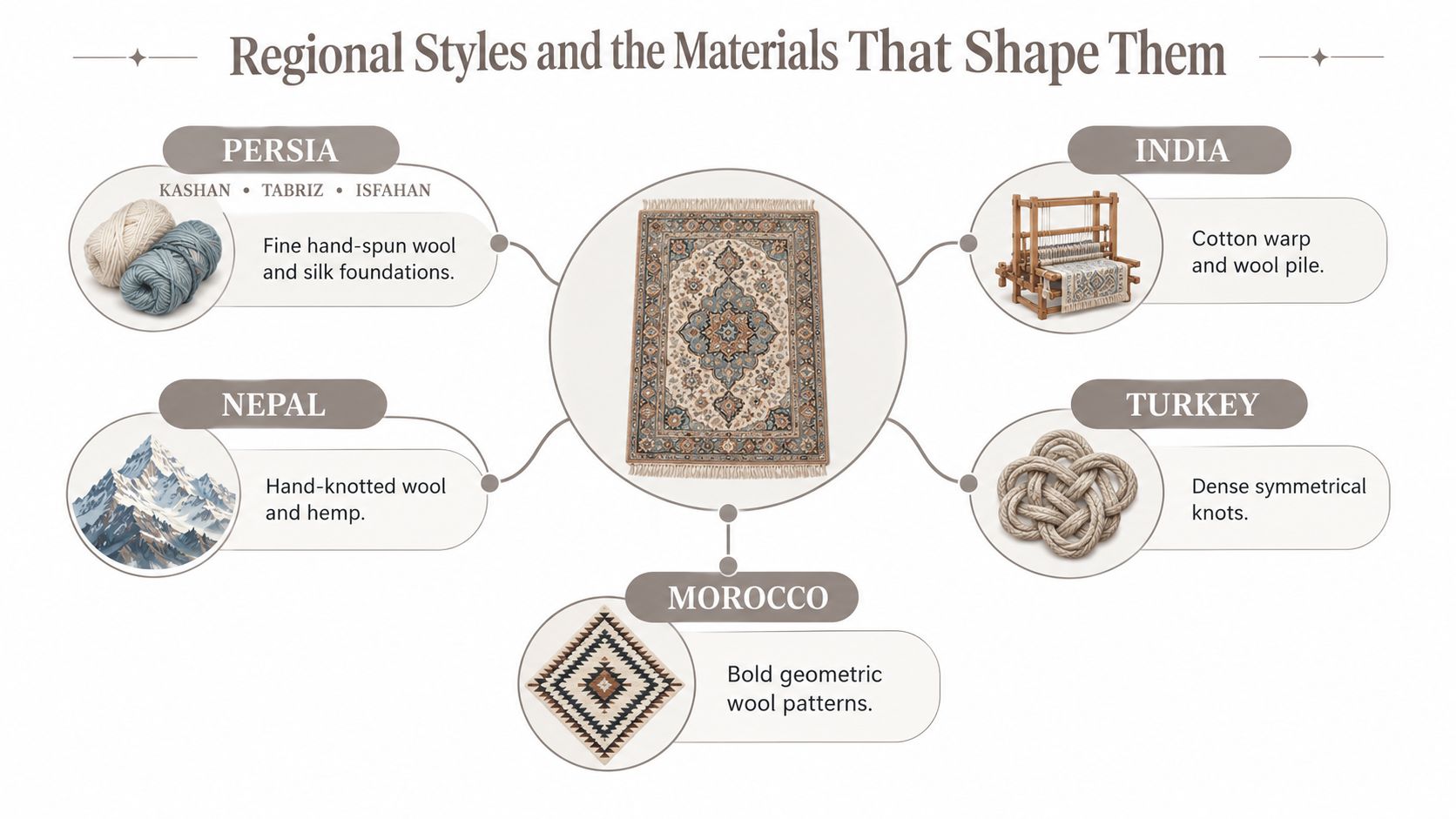
A useful attribution habit is to separate what you can observe from what must be documented. You can observe a lustrous silk highlight, a dense symmetrical knot, or a bold woolen diamond. You can't confirm a rug's origin, workshop, labor conditions, or material composition from those visual cues alone.
Hand Woven Versus Machine Made in Real Terms
Place a hand-knotted Tabriz beside a power-loomed polyester rug and the difference begins at the back. In the hand-knotted piece, the pattern remains legible through the foundation, with individual knots and slight variations in tension. The machine-made rug generally presents a more uniform backing, regular pile, and computer-mapped repeat.
That distinction isn't a moral judgment. Machine-made rugs are useful tools for budget-conscious furnishing, temporary interiors, rental properties, and rooms that need a quick design change. A premium hand woven area rug makes a different promise. It offers material depth, individual variation, and a construction that may be more suitable for restoration.
Four practical differences
Longevity depends on fiber, foundation, traffic, and care, not on the word “handmade” alone. A well-built hand-knotted rug can remain in service for generations, while a machine-made rug may be chosen deliberately for a shorter design cycle.
Repairability favors hand-knotting because the pile is tied into the foundation. A restorer can reproduce a damaged motif or rebuild a worn edge. A damaged polypropylene run in a machine-made rug usually calls for a different kind of repair, and the result may be less integrated.
Pattern depth often comes from how yarn is dyed and how the pile reflects light. Hand-dyed yarns can create abrash, or gradual shifts between related shades, while printed or highly uniform machine production tends to produce a flatter field of color.
Value is more complicated than resale price. A hand-knotted rug may carry cultural, material, and restoration value, but not every handmade piece is collectible. A machine-made rug may offer excellent visual value for a specific room. Choose the construction that matches the room's intended life.
| Attribute | Hand-knotted | Hand-tufted | Machine-made |
|---|---|---|---|
| Foundation | Knots integrated with warp and weft | Yarn held by canvas and adhesive backing | Mechanically produced foundation and pile |
| Surface | Individual, often subtly irregular | Plush and controlled | Highly uniform |
| Repair | Local re-knotting or reweaving may be possible | Backing and pile repairs are more limited | Repair depends heavily on material and construction |
| Pattern character | Can show abrash and hand-drawn variation | Supports bold, modern motifs | Crisp repeats and consistent color |
| Best fit | Long-term, design-led furnishing | Soft updates and selected low-wear rooms | Practical, accessible, and easily coordinated interiors |
For a buyer comparing custom furniture Atlanta options, a rug should be evaluated with the same seriousness as the frame or upholstery. It forms the visual and physical foundation of the room.
How to Evaluate a Hand Woven Rug Before You Buy
The front of a rug tells you about color and pattern. The back tells you whether the construction supports the story.
Start with the reverse side
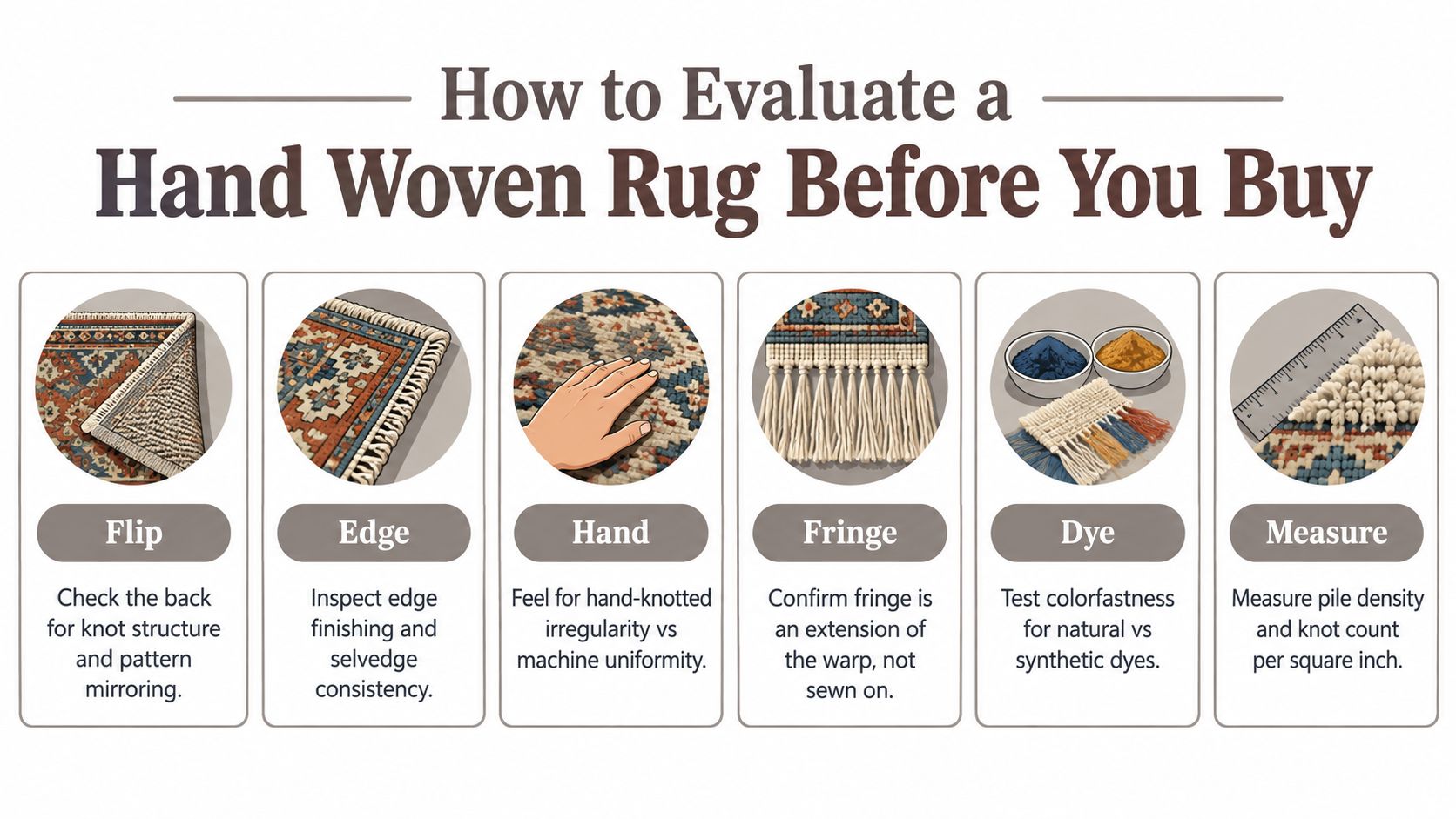
Turn the rug over and look for a visible relationship between the front and back. A hand-knotted piece usually shows the design through the foundation, although the reverse isn't as plush. You should be able to see the knot structure, the way the pattern mirrors the face, and the consistency of the weave.
A glued canvas backing points toward hand-tufted construction rather than traditional hand-knotting. That isn't automatically a defect, but the seller should name the method accurately. Also inspect the fringe. In a hand-knotted rug, fringe is an extension of the warp threads. Fringe sewn onto the edge can be a decorative addition rather than evidence of the rug's construction.
Read density in context
Knot density is commonly described as knots per square inch. Higher density can support finer detail, but it doesn't automatically make a rug more durable or more appropriate for your room. Foundation stability, pile height, yarn quality, tension, edge finishing, and intended traffic all matter.
A dense silk rug may be exquisite beneath formal seating but poorly suited to a muddy entry. A sturdy wool rug with a less intricate pattern may perform better beneath a family room sectional. Ask the dealer to show you how density relates to this specific rug rather than accepting a number without context.
Use your hands and eyes
Wool generally feels resilient and recovers from compression well. Silk has a smoother hand and stronger light response. Cotton often appears in the warp or weft and can feel firmer and cooler than pile fibers. Don't perform a burn test in a showroom. Request a fiber specification or sample instead.
Look for abrash, subtle transitions between related colors that can result from separate dye baths. Variation may be intentional and desirable, but it shouldn't be confused with fading or unstable dye. Ask whether the dyes are natural, synthetic, or a combination, and request care guidance before purchase.
Verify the claim, not only the appearance
Use this checklist before committing:
- Provenance: Request the country, region, workshop, and any available history of ownership.
- Materials: Confirm the actual fiber composition, including the foundation and any silk or cotton elements.
- Construction: Ask whether the rug is hand-knotted, hand-tufted, hand-loomed, or flatwoven.
- Documentation: Look for an origin label, invoice description, signature, or other supporting record.
- Ethical production: Ask what social-certification evidence or labor-policy information is available. “Artisan,” “natural,” and “sustainable” don't establish traceability by themselves.
- Remote inspection: If buying online, request close-up images of the front, back, selvedges, fringe, and any irregularities, along with exact dimensions and a written return policy.
GoodWeave certification can be relevant to a buyer evaluating labor practices, but no label should replace careful questions about the specific piece. Ethical purchasing includes material origin, expected service life, repairability, and documented labor conditions.
Sizing and Placement for Every Room
A rug should make furniture look connected to the room, not stranded on separate islands. Before shopping, tape the intended footprint on the floor and place the furniture where it will live. This simple test exposes scale problems before a hand woven area rug arrives.
Living rooms
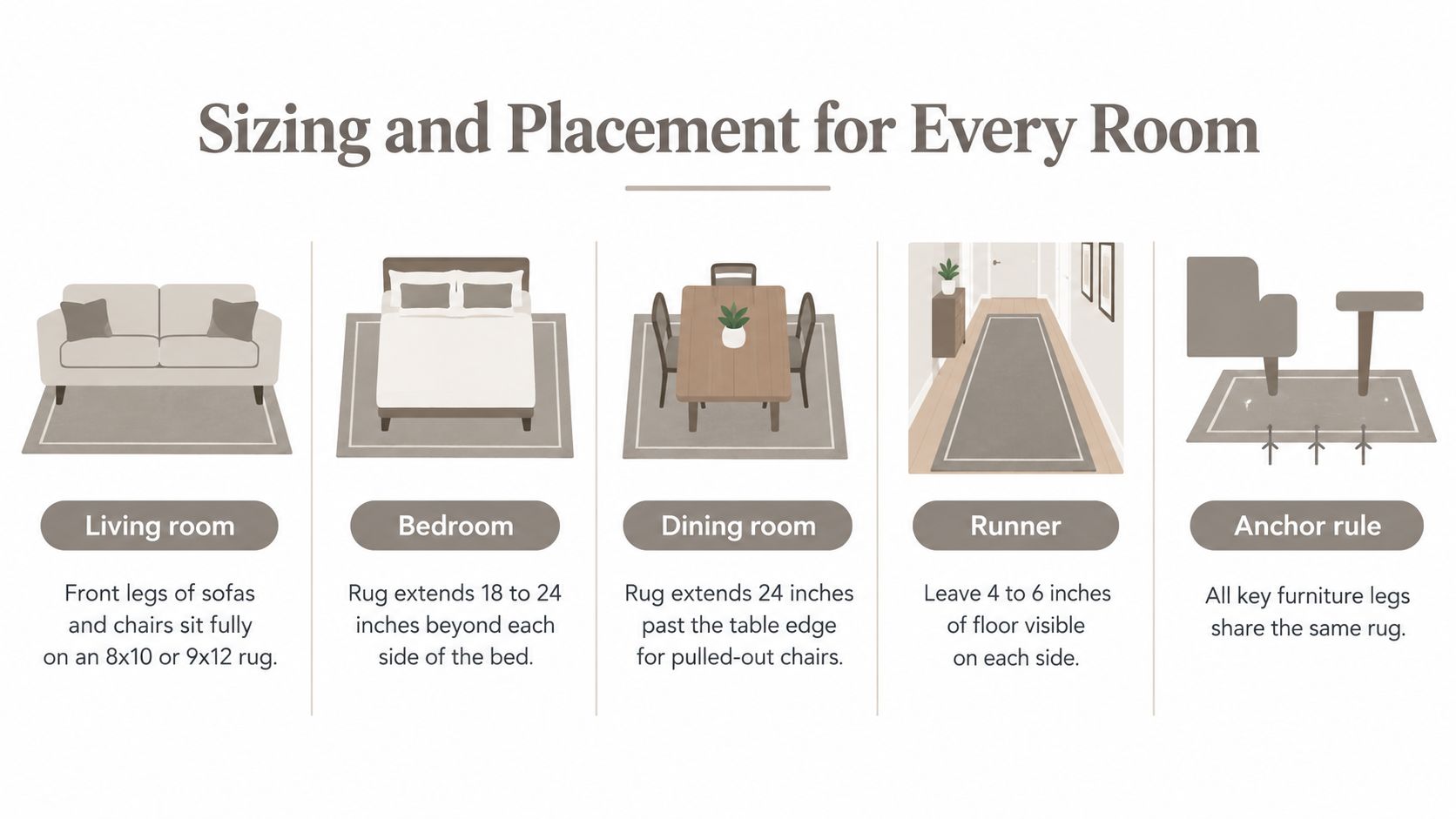
In a seating arrangement, the front legs of sofas and chairs should sit fully on the rug. A larger footprint that accommodates all four legs of the main sofa creates a more unified composition, especially beneath a luxury sofa or a premium sectional.
If the room contains a large coffee table, make sure the rug extends far enough around it that the surrounding chairs don't appear disconnected. An undersized rug can make high-end furniture look smaller and less intentional, no matter how beautiful the upholstery is.
Dining rooms
The rug should extend beyond the table far enough for dining chairs to remain on the rug when guests pull them out. This is a functional requirement, not merely a proportion preference. A low-profile felt-and-rubber pad can help the rug stay stable while allowing chairs to move smoothly.
A flatweave or low-pile wool construction often makes sense in this setting. Thick pile can catch chair legs and make daily use frustrating, particularly around a custom dining table.
Bedrooms and entries
In a bedroom, the rug can run beneath the lower portion of the bed and extend toward the nightstands, creating a soft landing on both sides. Layered runners can work when a larger rug would overwhelm the room, but keep the visual weight balanced.
Entryways need a stable, appropriately scaled piece with a firm pad. The rug shouldn't interfere with the door swing or create a loose edge at the point where people enter. A flatwoven wool or tightly built hand-knotted piece is often easier to manage than a high, delicate pile.
A quality pad adds cushioning, reduces movement, helps protect the rug from concentrated shear, and can prevent dye transfer to hardwood floors. Rotate the rug periodically so sunlight and foot traffic don't concentrate in one area. For more room-by-room guidance, this rug sizing resource offers a useful planning reference.
Caring for a Rug Built to Outlast Trends
Care begins with respecting the way the rug was made. A hand-knotted wool rug can tolerate routine maintenance that would be risky for a silk-rich, vegetable-dyed, or adhesive-backed piece.
Vacuum with restraint
Use suction-only or a low-beater setting appropriate to the pile. Vacuum in the direction of the pile and avoid pulling the machine across the fringe. A rotating brush can catch warp threads, loosen fibers, and create damage that looks like ordinary shedding at first.
Wool resists visible soiling and recovers from compression well, but it isn't immune to grit. Soil trapped near the fiber surface acts as an abrasive, so regular gentle vacuuming protects the pile. A rug pad also reduces creep and friction beneath furniture.
Treat spots promptly
Blot spills with a clean, absorbent cloth. Don't scrub, because rubbing can spread dye and distort the pile. Use a pH-neutral solution only after confirming that the fiber and dye can tolerate it, and don't apply detergent containing bleach to silk accents.
Flatweaves can tolerate handling that would be unsuitable for a delicate Persian rug, but never assume that a washable-looking surface is colorfast. Test in an inconspicuous area or contact a professional before using moisture.
Plan restorative care
Professional cleaning should follow the rug's construction, dye behavior, fiber, and traffic rather than an arbitrary schedule. Entryway runners may need more frequent attention than a formal-room rug, while over-cleaning can strip valuable natural oils from wool. This wool-rug care guide provides additional practical guidance for maintenance planning.
Keep direct sun in mind, rotate the rug periodically, and inspect dark storage areas for moth activity. Cedar can help deter moths, while naphthalene should not be used around living spaces. If you need to store the rug, roll it around a tube rather than folding it, then wrap it in breathable cotton.
Care principle: The safest cleaning method is the one chosen after identifying the rug's fiber, dye, backing, and construction.
Choosing a Rug Worth Living With
A premium rug earns its place by fitting the life of the room. The most expensive or densely knotted piece isn't automatically the wisest choice for a family room, sunroom, or entry.
Use four filters.
Start with traffic and light. A frequently used living area needs a resilient construction and a surface that can tolerate routine maintenance. Strong sunlight, pets, children, dining chairs, and sliding furniture should influence the decision before color does.
Match fiber to conditions. Wool is a strong candidate for living areas because it combines resilience, abrasion resistance, and resistance to visible soiling. Flatwoven cotton can suit a lighter, more casual setting. Silk accents are best reserved for areas where contact and abrasion are controlled.
Let regional language support the architecture. A village-run Anatolian kilim can reinforce a home with warm, grounded materials. A Persian Kashan can bring formal refinement to a room with custom upholstered furniture. An Indo-Nepalese Tibetan-knot piece can balance contemporary designer furniture with substantial texture.
Verify the story. Ask for the workshop, country of manufacture, material composition, dye information, construction method, and any available ethical-certification evidence. If you're comparing custom area rugs at Groen's, use the same questions you'd ask about a made-to-order sofa or heirloom-quality furniture piece.
A well-made Indo-Nepalese rug, an Anatolian kilim, and a city-quality Persian Kashan can all be excellent purchases. They answer different briefs, budgets, rooms, and expectations. The right rug is the one whose construction matches the life lived on top of it.
Ask any dealer one direct question: “Show me the back, tell me the origin, and walk me through one repair.” The answer will reveal more than a polished front photograph ever can.
Lewis and Sheron Textiles offers premium hand-knotted rugs, luxury home furnishings, custom upholstered furniture, reupholstery, and in-house design support for Atlanta-area homeowners and professionals. Visit Lewis and Sheron Textiles to compare materials, coordinate a rug with a luxury sofa or statement furniture piece, and create an interior built for lasting use.