












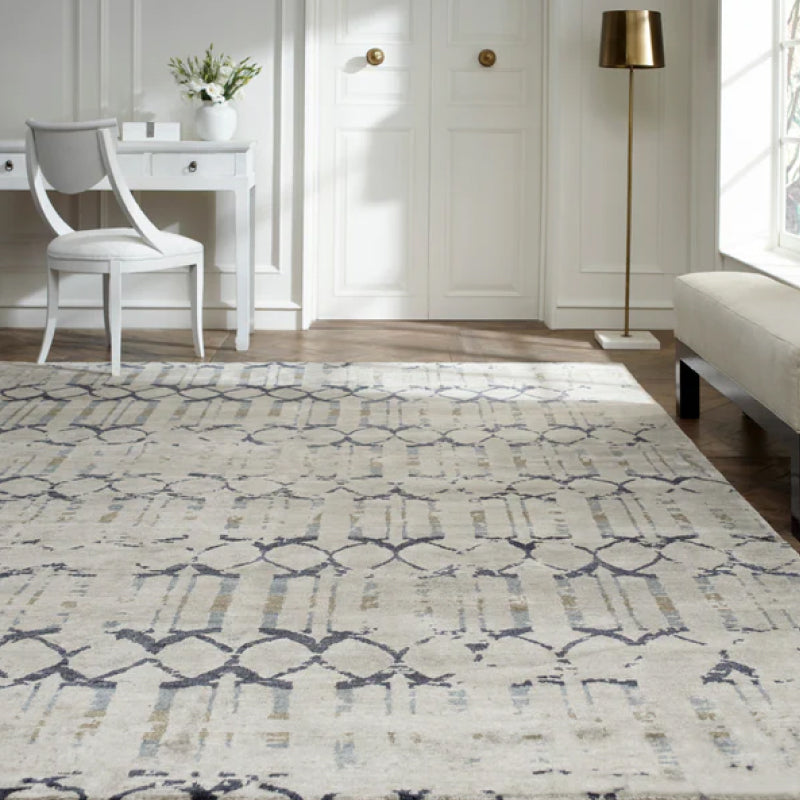
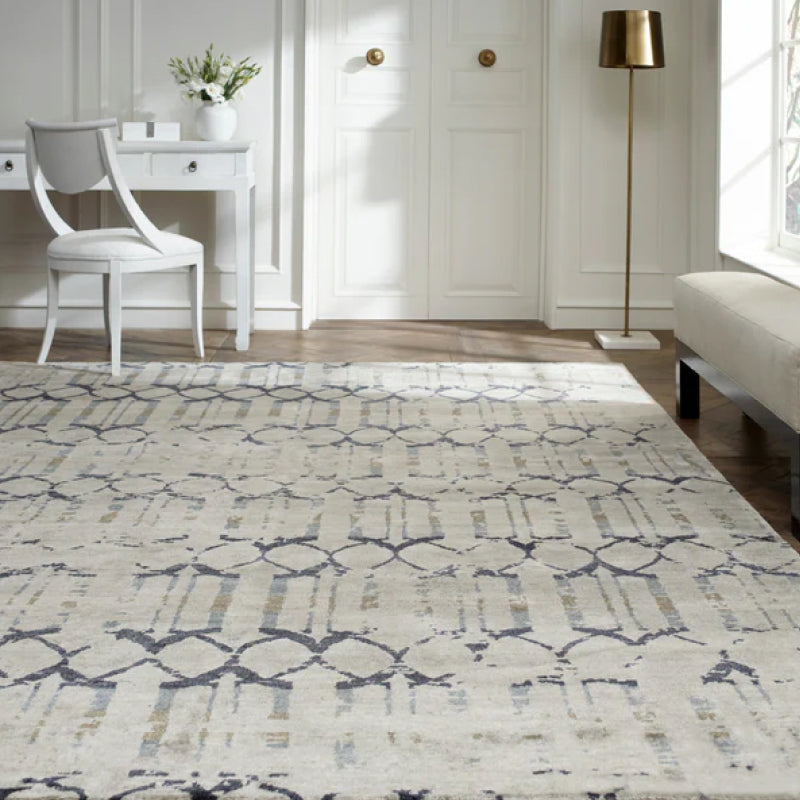
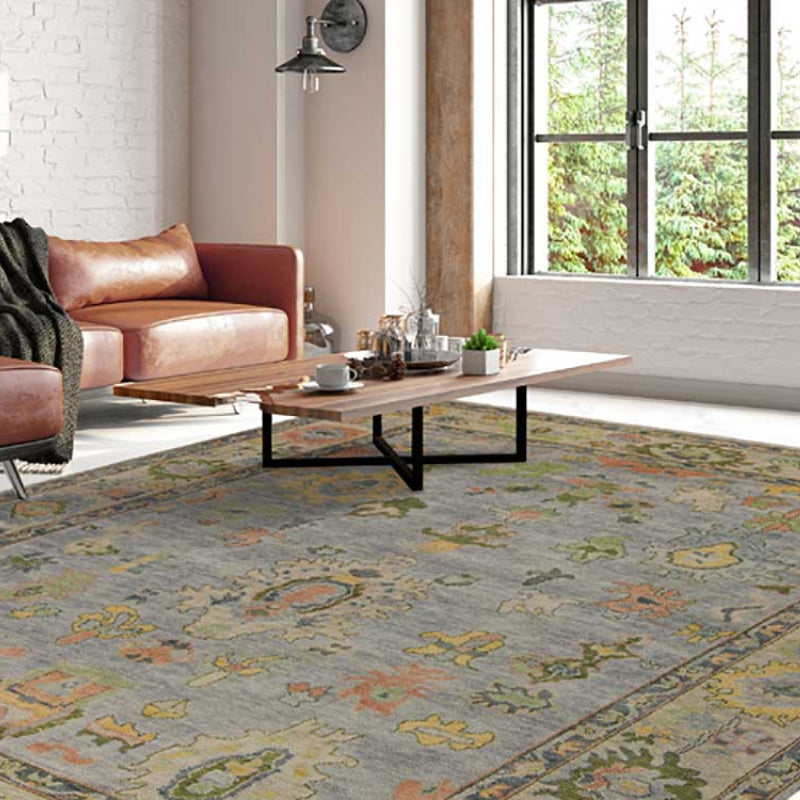
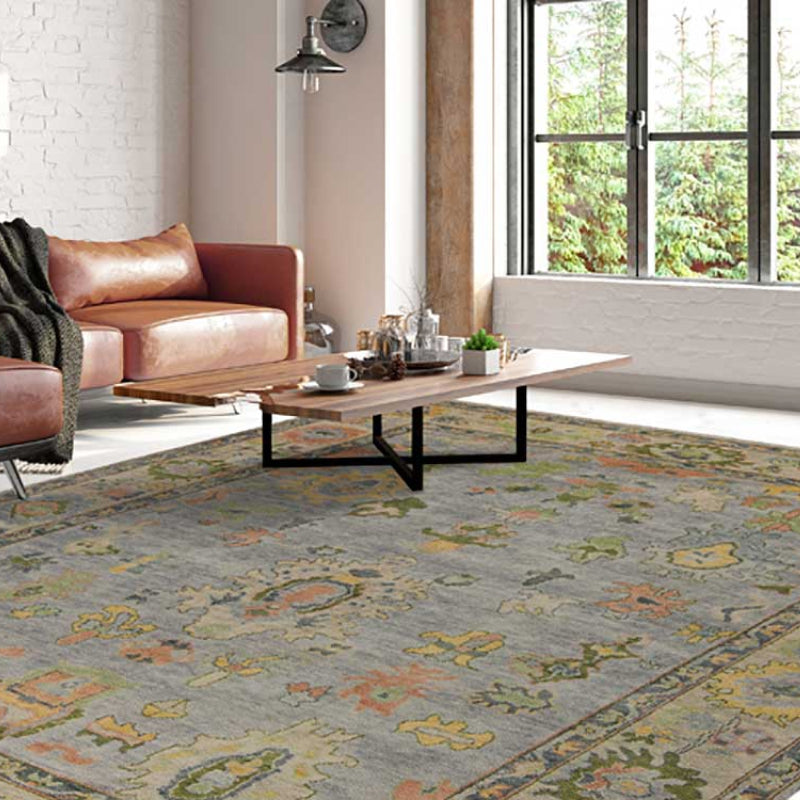
If two rugs look identical from the top, why does one cost several times more than the other, and why can one be repaired for decades while the other can't?
That gap confuses most buyers because handmade, hand-tufted, and hand-knotted sound like grades of the same thing. They're not. They're different structures, and the structure decides how a rug wears, cleans, and holds value. For homeowners choosing hand knotted area rugs to sit under luxury sofas, premium sectionals, and other heirloom-quality furniture, learning to read that structure matters more than memorizing style names.
How to Tell a Hand Knotted Rug From Tufted and Machine-Made Versions
| Method | How the pile is made | Reverse side | Fringe |
|---|---|---|---|
| Hand-knotted | Each pile yarn tied by hand around foundation warp threads | Visible, orderly knot rows with no separate backing | Continues the warp threads |
| Hand-tufted | Yarn pushed through a primary backing, then sealed with adhesive | Coated backing, often latex or fabric | Usually sewn or glued on |
| Handwoven flatweave | Weft woven through warp, with no pile | Mirror of the front pattern, no knots | Structural warp ends |
| Machine-made | Pile produced by power loom or machine tufting | Uniform backing with no individual knots | Sewn or structural, depending on the model |
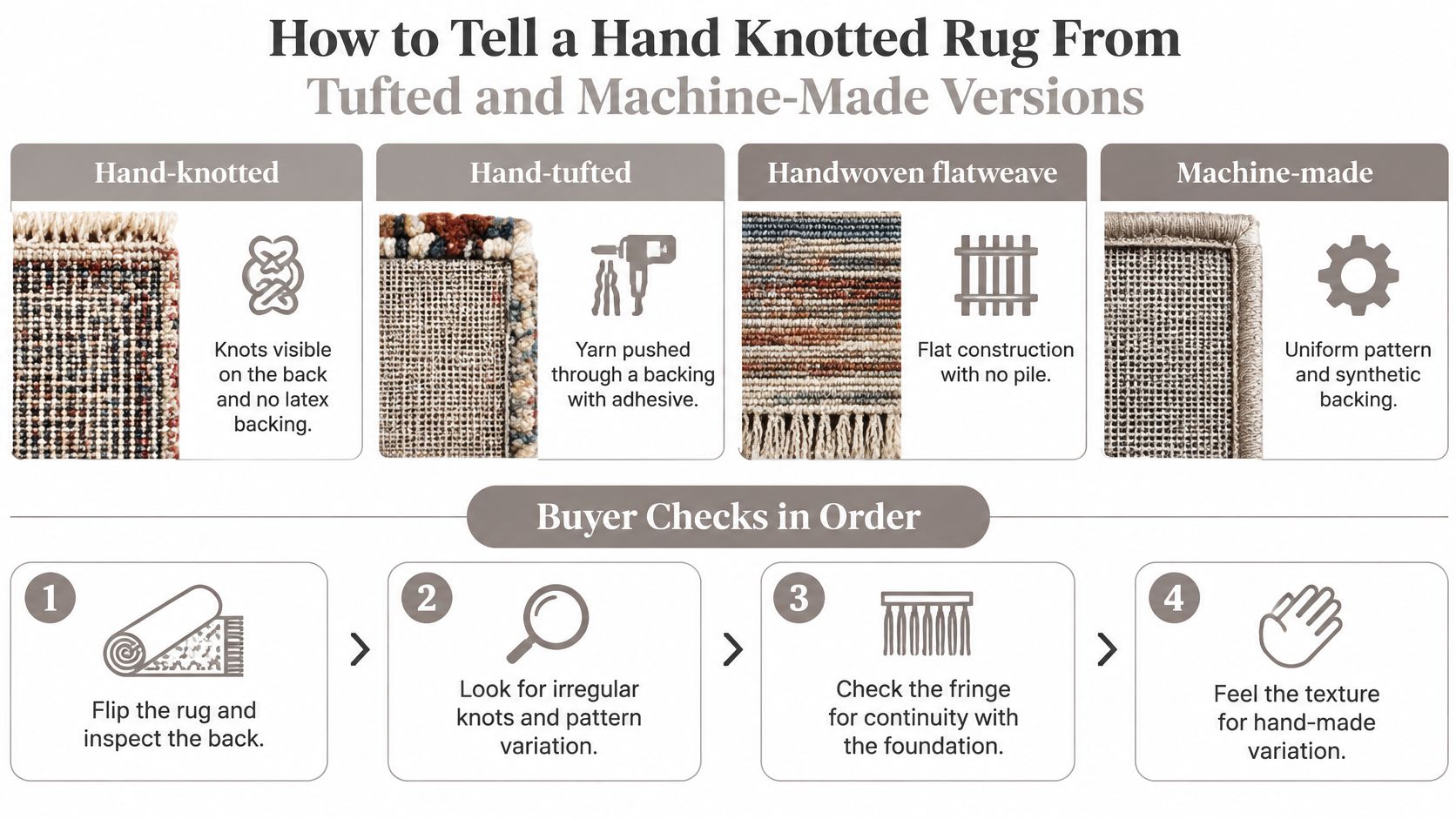
A hand-knotted rug is a load-bearing textile, not pile glued to a backing. Each yarn is tied around warp threads and compacted by weft rows, so there's no adhesive layer to delaminate, as explained in this comparison of hand-knotted, hand-tufted and machine-made construction. That structure is also why damaged pile, edges, or fringe can often be rewoven.
Checks to Run in Order
1. Turn the rug over. You should see individually tied knots in rows that follow the pattern. Slight irregularity is normal because a person tied them. A separate fabric sheet covering the back means you can't verify knotting throughout.
2. Follow the fringe. In a genuine piece, fringe isn't decoration. It's the ends of the foundation warp threads continuing out of the rug body. If you can see stitching where fringe was attached after weaving, you're looking at an assembled finish.
3. Feel and look for adhesive. A tufted rug is made by pushing yarn through a primary backing, then sealing it with latex or glue. The back often feels stiff or rubbery, and you won't see knots at all.
4. Compare front and back. A flatweave has no pile and shows the pattern on both sides, which is correct for that construction. A machine-made rug usually shows a flat, perfectly uniform reverse with no individual knots.
5. Inspect the edges. Look for consistent wrapping and stitching along the sides. Loose, glued, or heavily repaired edges affect how the rug lies and how easily it can be maintained.
Tufted rugs aren't automatically a bad purchase. They're quicker to make, often plush, and can suit a room you plan to refresh sooner. You're buying a different product, with different repair limits because the pile depends on adhesive rather than knots.
Showroom rule: If you can't see knots on the reverse, the rug isn't hand-knotted throughout.
What Knot Density Tells You About Quality
| Style | Knots per square inch | What the density supports |
|---|---|---|
| Coarse Heriz-style | 60-120 | Bold geometric motifs and active rooms |
| Fine Tabriz | 200-400 | Detailed curves, floral medallions and formal rooms |
| Fine Hereke silk | 800-1,500 or more | Exceptional detail for low-traffic display pieces |
Knots per square inch, often shortened to KPSI, counts how many knots sit in one square inch of pile. Think of knots like pixels. More knots let a weaver draw sharper curves, smaller flowers, and cleaner outlines. Fewer knots force larger, bolder shapes, which is why a Heriz-style rug looks geometric rather than finely floral.
Density is a design-resolution measure. It isn't a standalone durability score. Fiber quality, yarn twist, pile height, foundation strength, and workmanship decide how long a rug serves in your home.
The scale of the handwork helps explain the cost. Berlin's Museum of Islamic Art account of carpet making documents a 17th-century Caucasian carpet at 38 x 38 knots per 10 centimeters, representing more than 2.3 million knots across its surface. Every pile unit required a separate knotting process, not printing or mechanical tufting.
Why Prices Spread So Widely
Labor is central. The Encyclopaedia Iranica history of Persian carpet production notes that a 1971 International Labour Organization survey reported approximately 300,000 of Iran's 1.2 million manufacturing workers were carpet weavers, about 25% of the manufacturing workforce at that time. That history points to the lasting price drivers you'll still encounter today: labor intensity, regional expertise, design complexity, and production time.
A higher count therefore raises cost because it takes longer to tie. It doesn't by itself make a rug better for your room.
Use three steps before you judge a quote:
- Ask for KPSI. Get the number in writing.
- Match it to the style row. A bold tribal design doesn't need silk-rug density.
- Check the foundation. A dense rug with weak yarn or a weak foundation isn't the stronger buy.
Wool, Silk and Blends Compared for Daily Living
Fiber labels get too much credit. How a rug handles daily life depends on fiber plus construction, including pile density, twist, and foundation stability.
Wool is the practical default for most premium hand knotted area rugs. Its fibers have natural crimp and elastic recovery, so pile rebounds after compression from feet and furniture legs. That recovery offsets wool's comparatively lower tensile strength and gives durability that tensile figures alone would miss, according to this technical review of wool carpet performance. Wool also resists soiling relatively well and can be cleaned effectively when you maintain it properly.
That doesn't mean wool is carefree. It still needs prompt blotting, periodic professional cleaning, and a correctly sized pad that limits sliding and abrasion.
Where Each Fiber Belongs
Silk allows the finest detail and a soft sheen that changes with light. It also has lower tolerance for abrasion and moisture, so it's better in a primary bedroom, a formal sitting area, or a low-traffic display spot than in a family entry.
Cotton most often forms the warp and weft foundation. You don't walk on it directly, but it holds the knots in place. A stable foundation helps the rug keep its shape and makes future repair more feasible.
Blends usually pair a wool body with silk highlights. The wool carries traffic while silk catches light in motifs. Expect the two fibers to wear and clean at different rates, so ask how much silk is present and where it's placed.
Pile density also affects crushing. A sparse, high pile can flatten faster than a compact wool pile even when both labels say wool.
Place resilient wool constructions in circulation zones such as living rooms, hallways, and dining rooms. Reserve silk-rich or viscose-rich surfaces for quieter rooms with limited moisture and abrasion.
Before you buy, ask three questions:
- Which fiber covers the pile?
- How dense is the pile?
- Where does the seller recommend placing it?
If the answers don't match your traffic, keep looking.
Sizing and Placement for Each Room
| Space | Placement rule | Typical size |
|---|---|---|
| Living room with sofa | Front legs of all seating sit on the rug | 8 x 10 ft or 9 x 12 ft |
| Seating group with chairs | Front legs of chairs sit on the rug | 5 x 8 ft or 6 x 9 ft |
| Dining room | Rug extends about 24 inches past the table on every side | 8 x 10 ft for a 60-inch table; 9 x 12 ft for a 72-inch table |
| Bedroom | Rug extends 18 to 24 inches past each side and the foot of the bed | 8 x 10 ft for queen; 9 x 12 ft for king |
| Hallway or entry | Runner leaves 4-6 inches of floor visible at each wall | 2.5 to 3 ft wide runner |
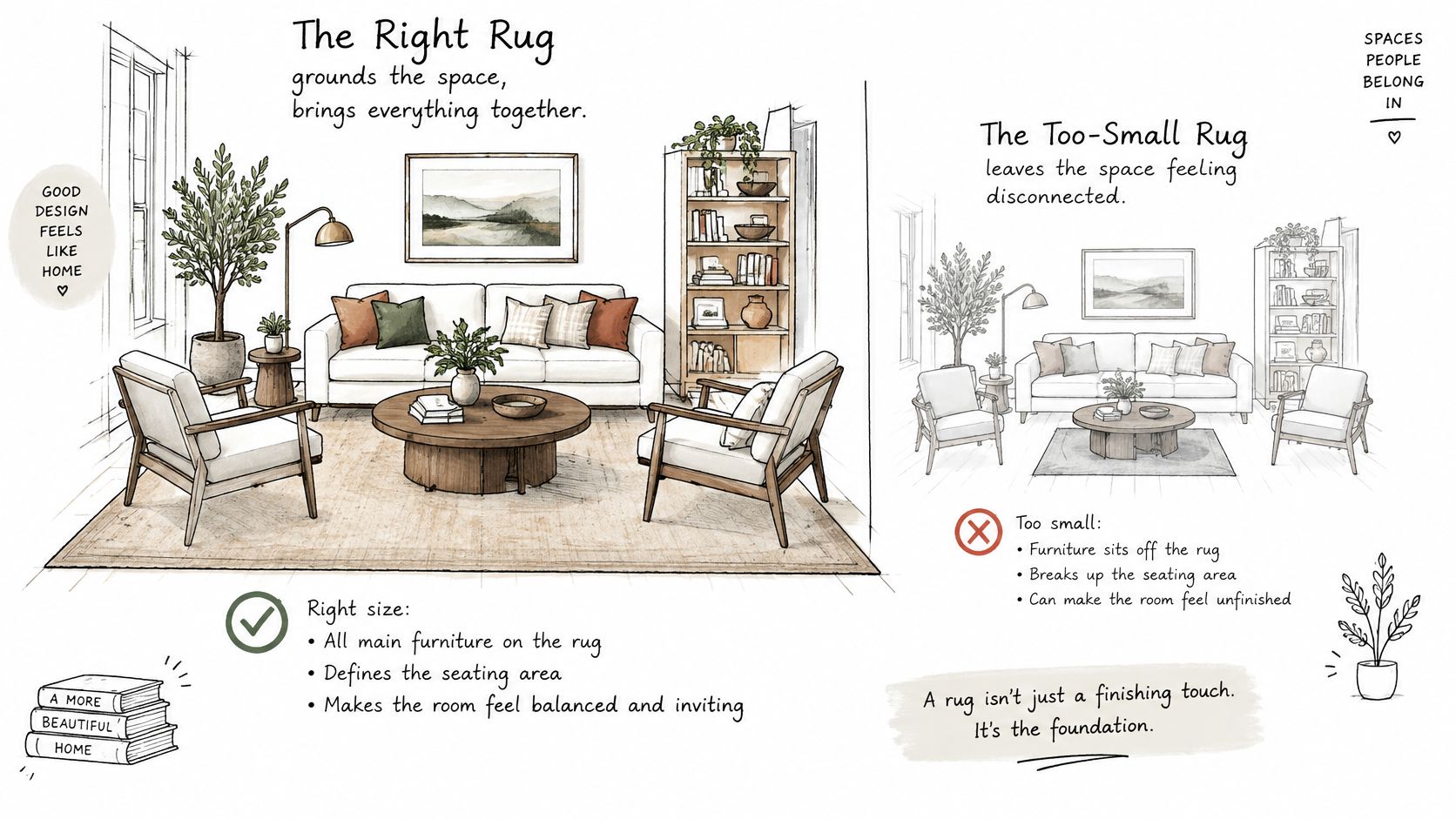
The most common sizing mistake is buying too small. A small rug floats in the middle of the room, seating sits stranded off its edges, and even high-end furniture looks disconnected. The right size anchors the grouping and helps balance visual weight around seating so a sofa, chairs, and tables read as one arrangement.
Measure Before You Shop
Start with the furniture footprint, not the empty room. Tape the outline of your sofa and chairs on the floor with painter's tape. Then add the clearance your room needs, such as space for dining chairs to slide back or for bare feet beside a bed.
Walk through the taped outline. Open doors, pull out chairs, and check traffic paths from hallway to seating. If chair legs catch the tape edge in a dining room, they'll catch a rug edge too, so size up.
Our detailed guide to choosing rug size walks through these measurements room by room if you want to double-check your tape lines before ordering.
For luxury furniture in Atlanta homes with open plans, a larger rug often does quiet zoning work. In Buckhead, Alpharetta, Roswell, and Sandy Springs, many living areas flow into dining spaces, and a correctly sized rug defines the seating zone without adding walls.
Buy for the furniture grouping, not for the leftover floor in the center.
Styling a Hand Knotted Rug With Your Furniture and Palette
A hand-knotted rug is usually the most detailed textile in the room, so let it set the palette and let other pieces follow. That's easier than buying designer furniture first and then hunting for a rug that somehow ties together five competing colors.
Pull one or two colors from the rug and repeat them in upholstery, drapery, or cushions. Keep the rest quiet. If you need help narrowing wall and fabric tones around those rug colors, this interior color advice from Alex Trend Painters is a useful starting point for building a limited, repeatable palette.
Pattern, Scale and Silhouette
A large, detailed rug suits a larger room with simple upholstery. A busy rug in a small room needs solid-colored seating so patterns don't compete at the same scale. Curved custom chairs and curved sofas also read best against solids, because directional textures and most patterns fight the silhouette.
For custom upholstered furniture, bring rug photos in daylight and evening light when you choose fabric. Wool pile shifts tone as light moves across it, and silk highlights shift even more.
Layering works when each layer has a job:
- Smaller rug over a larger base: Define a reading corner or bench area without buying another full-size piece.
- Flatweave beside pile: Use a sisal-look or flatweave texture near an entry to contrast with a softer pile rug in seating.
- Cushions from the rug extremes: Pick the rug's darkest or lightest tone for cushions so they connect without matching every motif.
For example, say you place a neutral wool rug with a faded medallion under a solid linen sofa, then add one patterned chair that repeats the rug's border color. The rug anchors the front legs, the sofa stays calm, and the chair becomes the accent. That balance suits statement furniture pieces because the floor supports them instead of shouting over them.
How to Verify Origin, Makers and Certifications
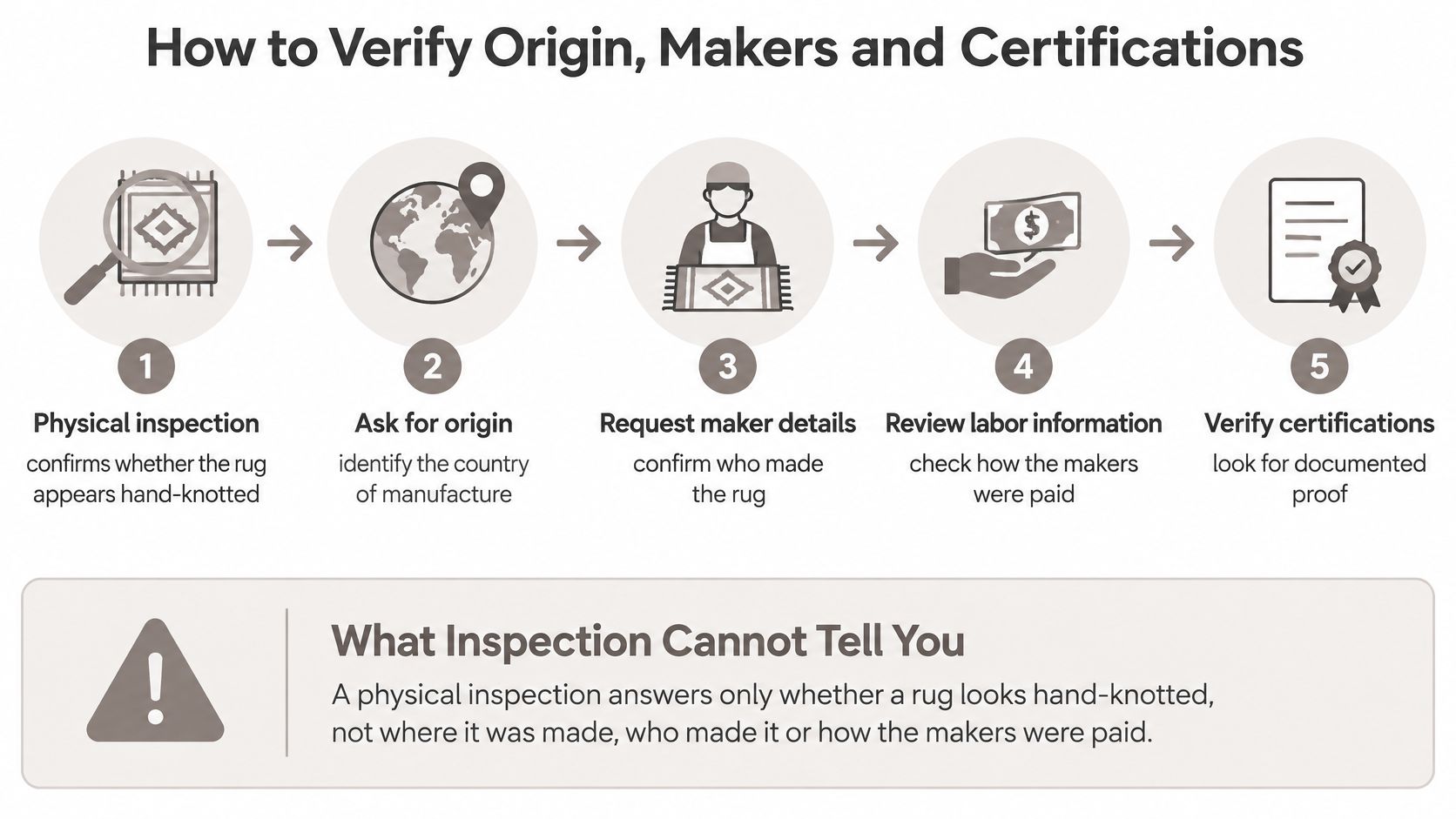
Turning a rug over tells you whether it looks hand-knotted. It doesn't tell you where it was made, who made it, how workers were paid, or whether a handmade claim was independently checked. A recent discussion of ethical handmade rug purchasing recommends asking for production region, knotting method, fiber and dye details, labor policies, artisan compensation, repairability, and the exact scope and current status of any certification.
Six Verification Steps
- Ask for origin and method. Confirm the production region and knotting method cover the whole rug, not only a sample section.
- Request fiber and dye details. Documentation should identify pile fiber, foundation fiber, and dye type clearly enough for cleaning decisions.
- Ask who made it. A workshop or artisan group name is more useful than a vague country label alone.
- Review labor information. Ask what labor policies apply and how artisan compensation is handled.
- Confirm certification scope. GoodWeave addresses labor, GOTS addresses organic fiber processing, and OEKO-TEX addresses harmful-substance testing. None of them alone proves a rug is hand-knotted.
- Ask about repair. Confirm who can reweave pile, secure edges, or repair fringe, because repairability is part of long-term value.
Certifications aren't interchangeable. Labor certification doesn't prove organic fibers, and harmful-substance testing doesn't prove authenticity.
Treat a logo as the start of a conversation, not the end of one. Our roundup of the best area rug brands to compare can help you prepare brand-level questions, but you still need documentation for the specific rug in front of you.
Paperwork habit: Keep origin, fiber, knotting method, and certification answers in writing before you pay.
That record also helps a future cleaner, repairer, or appraiser identify the piece correctly.
Care Schedule That Protects Wool and Knots
| Task | How often | Method |
|---|---|---|
| Vacuum | Weekly in high-traffic areas | Upright with no beater bar, or suction only near fringe |
| Blot spills | Immediately | Clean dry cloth, press gently and do not rub |
| Rotate the rug | Every six months | Turn 180 degrees so sun and foot traffic wear it evenly |
| Professional cleaning | Every 1-3 years, depending on traffic | Wool-safe cleaner used by a specialist |
| Check the rug pad | Once a year | Confirm the pad is sized to the rug and not sliding or worn |
Vacuum high-traffic areas weekly with suction or an upright that has no beater bar. A rotating bar can fray fringe and abrade pile, especially at edges where high-quality couches and chairs concentrate weight.
Blot spills at once with a clean, dry cloth. Don't rub. Rubbing pushes liquid and soil toward the foundation and roughens the pile surface. Work from the outside of the spot inward and stop if color transfers heavily.
Rotation, Pads and Professional Cleaning
Rotate the rug every six months so sunlight and walking paths wear it evenly. Check the pad yearly, because a correctly sized pad reduces sliding and mechanical abrasion under the rug.
Schedule professional cleaning every one to three years depending on traffic. Our guide to caring for wool rugs covers wool-safe methods in more detail, and the core rule stays simple: use gentle methods and avoid harsh chemicals that can damage fiber and dye.
Buyers also ask whether wool purifies air. Research summarized by the International Wool Textile Organisation reports that wool carpets can reduce high concentrations of formaldehyde to virtually zero within about four hours, including under heated conditions. Independent Delft University research is more cautious, framing odor cleaning in small-scale environments where carpet covers floor and walls and odor sources contact the wool. A single area rug covers only part of a room, so don't treat it as a substitute for ventilation or source control.
Lifespan depends on fiber, pile density, traffic, and care. Localized damage can often be repaired by reweaving, which is one reason construction matters long after purchase.
Confirm Your Size and Visit the Design Center
Before you visit, measure the room and mark the furniture footprint with painter's tape. Note your fiber preference, traffic level, and whether the rug must work with pets, dining chairs, or a premium sectional already in place. Bring photos of your palette in natural light.
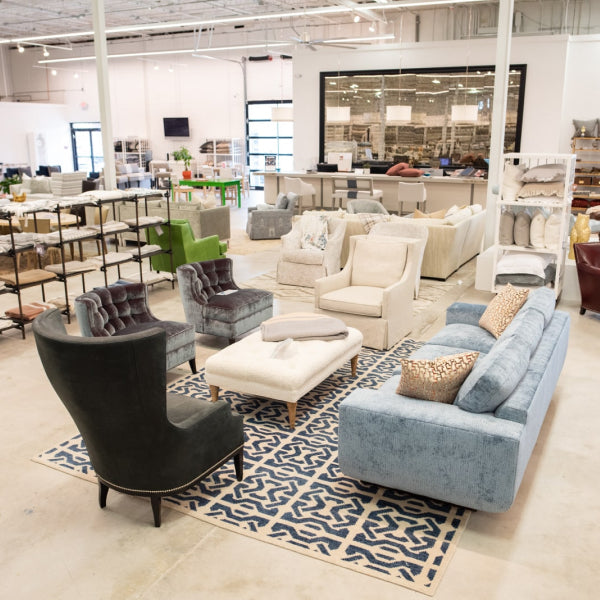
In the showroom, compare rugs side by side with actual upholstery fabrics, not from memory. Ask to check the reverse and fringe, confirm KPSI for the exact size you're considering, and request pricing on that specific construction rather than a general range.
We offer rugs from vendors Kalaty and Harounian, and our rug lines include Kalaty and HRI. Exclusive pricing details for rugs are available by contacting us, so bring your measurements and ask for origin, knotting method, and care documentation in writing before you decide.
That preparation turns a visit for custom furniture in Atlanta or North Atlanta into a focused comparison. You'll leave knowing whether the rug fits your room, your traffic, and your furniture, not only whether you liked its pattern under showroom lights.
Bring your taped measurements, room photos, and fabric swatches to Lewis and Sheron Textiles and compare Kalaty and HRI hand knotted area rugs beside the upholstery and furniture they'll live with. Our team will help you confirm size, fiber, knot density, and documented origin for the exact rug you're considering, then share exclusive pricing when you contact us.