















You closed the drapes at two in the afternoon, and by four the room still felt like the inside of a car. The fabric looks generous, the color is right, and the folds fall reasonably well. What you can't see from the sofa is that a single layer of decorative cloth has very little to slow heat down.
That's the gap interlining for drapes fills, and it's the layer most homeowners never ask about. It's also the layer where buying advice gets sloppy, because a soft middle layer gets sold as a guaranteed energy upgrade when it's really one part of a system. Here's how the layers work, what the testing measured, and where the money is well spent.
What Interlining Is and How It Compares With Lining
The sun clears the roofline in a west-facing living room and lands flat on the drapes. The fabric glows, the folds flatten out, and the upholstery underneath warms up within the hour. Nothing is broken. The drape is doing one job, decoration, and leaving the second job, heat management, undone.
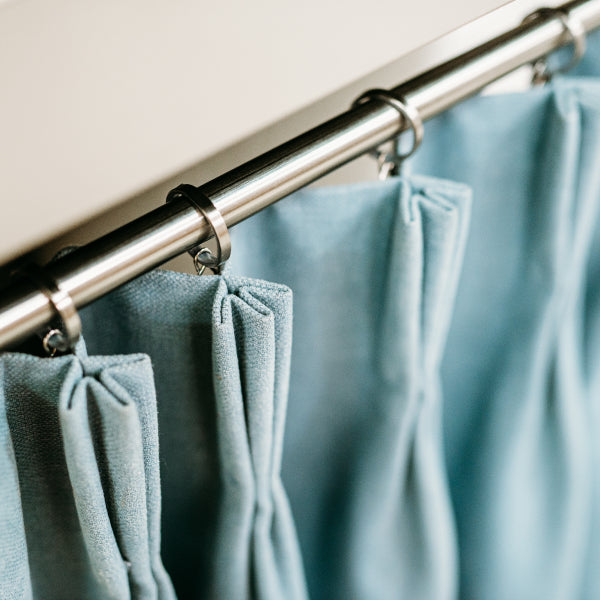
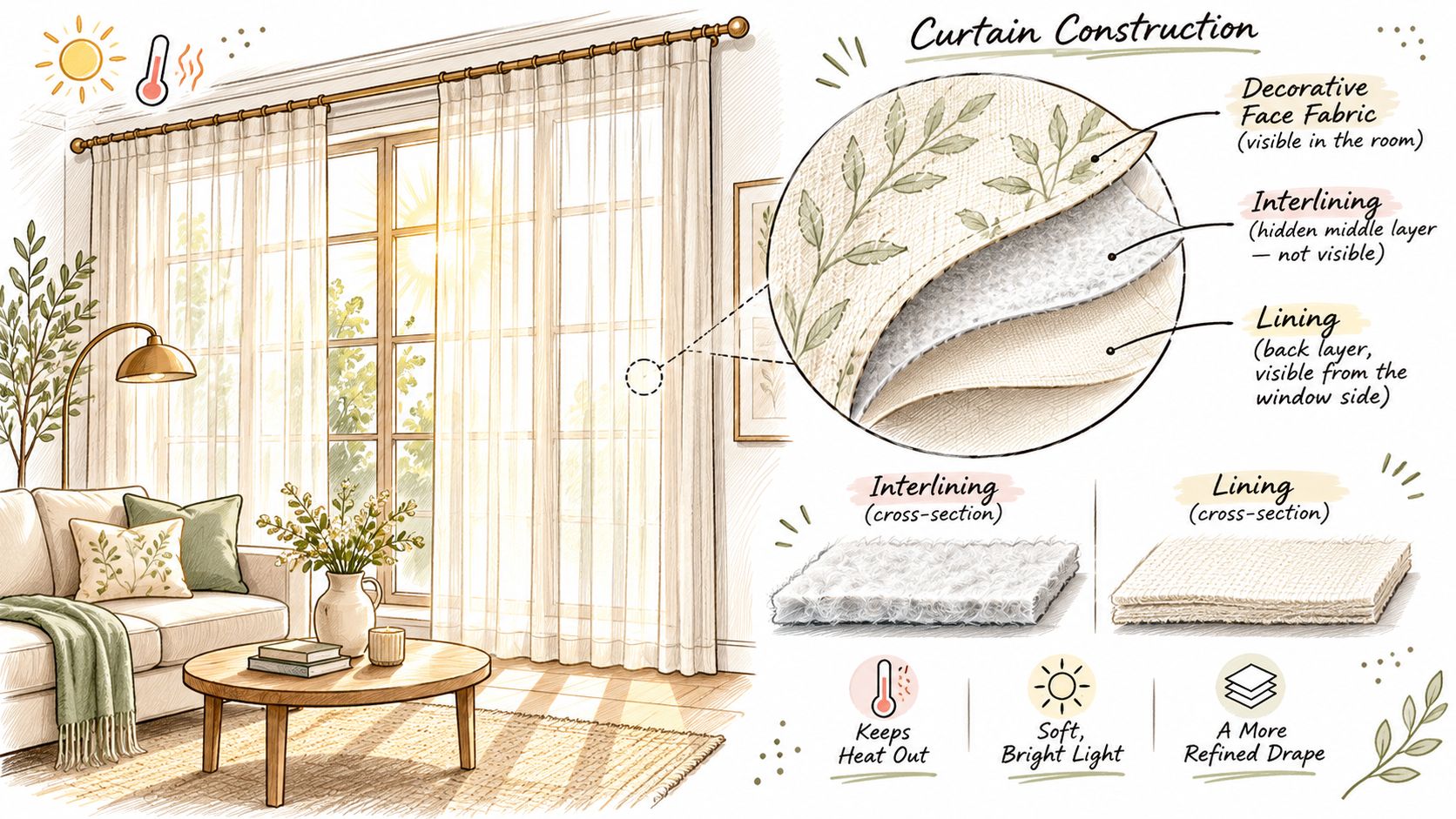
The missing layer is invisible. James Dunlop Textiles' guide to choosing the right lining defines interlining as a textile layer installed between the decorative face fabric and the conventional lining. Think of the canvas inside a suit jacket: nobody sees it, but it's the reason the front holds its shape instead of collapsing. Interlining does that for a drape.
The layer stack, from the glass inward
- The window. Glass, frame, and every gap around it. Gaps matter more than expected.
- The lining. The smooth inner layer you see from the street. It protects the face fabric and adds a little body.
- The interlining. A soft middle layer, usually cotton flannel or a cotton blend.
- The face fabric. The silk, linen, velvet or print you chose.
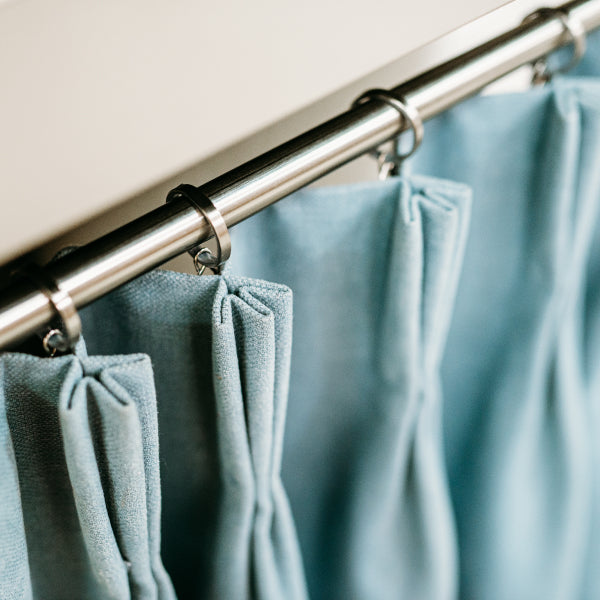
An interlined drape almost always has a lining as well, so the finished panel is three textiles thick. A drape with a soft layer against the back of the face fabric and no separate lining is a shortcut, not the same construction.
What the middle layer changes
Adding that layer raises composite thickness, areal mass and bending stiffness, and traps air between the textiles. Lightweight and loosely woven fabrics such as silk, linen and taffeta respond most visibly, with rounder folds, more fullness and better dimensional stability. The trapped air and added mass also create a supplementary resistance layer against conductive and convective heat transfer, while the interlining acts as a sacrificial buffer that takes ultraviolet exposure the face fabric would otherwise absorb.
For a premium specification, choose a soft cotton, cotton blend, or polyester and viscose interlining sized to the face fabric's weight and hand. Thicker isn't better. An over-heavy interlining can overload the heading, increase stack-back, and make a traverse track drag or stall.
In a sample: pinch the heading and the hem. You should feel three layers, stitched together at top and bottom and loose in the middle. If you can't separate the middle layer at the hem, ask what you're actually being quoted.
What each layer combination changes
| Effect | Interlining | Standard lining | Both together |
|---|---|---|---|
| Fullness and fold | Rounder, fuller folds | Light structure, little body | Fullest, most tailored hang |
| Heat transfer | Traps air, modest gain | Small gain | Largest gain of the three |
| Sun and UV protection | Buffers the face fabric | Moderate protection | Strongest protection |
| Light blocking | Low to moderate | Moderate | Highest with a blackout backing |
| Sound absorption | Some, from the extra porous layer | Little | Most of the three |
| Weight and stack-back | Adds bulk | Adds some | Adds the most, check hardware |
Read the rows as relative, not absolute. Fullness is the most reliable column, because it's a physical result you can see in the workroom. Heat transfer is the least predictable, because it depends on the window as much as the cloth. Light blocking is a separate decision entirely: interlining dims a room, but a blackout backing is what darkens it.
If you want to see how lining and interlining get specified together on a real project, this explanation of the role of drapery lining in custom drapes walks through the sequence. By the end of a good quote, you should be able to name all three layers without asking.
How Much Interlining Changes Heat and Solar Gain
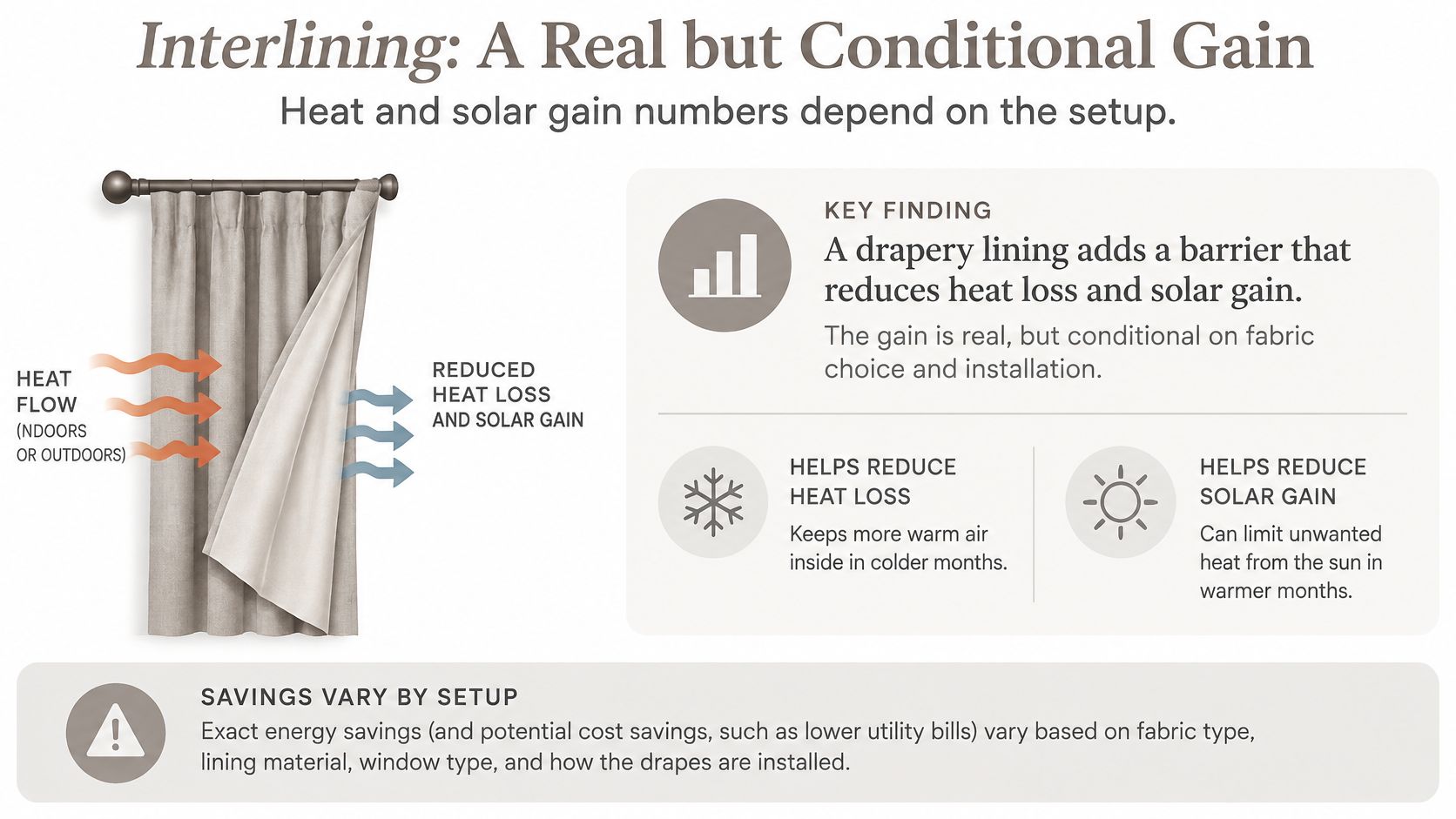
Interlining produces a real gain, and a conditional one. The honest version of this topic is a set of measured examples, each attached to the setup that produced it, rather than a single percentage you can bank on.
The Colorado energy-conservation publication on drapery linings frames lining as an energy-saving treatment in its own right, because it adds a barrier against summer solar gains and winter heat loss. It sorts insulating linings into four families: plastic or vinyl barriers, vinyl-coated fabric, silver-backed fabric, and foam-backed fabric, the last of which can also improve acoustic insulation. That list is a useful corrective, since "lining" covers materials with wildly different performance.
Read the study before you trust the number
The Illinois Institute of Technology tests are the figures quoted most often, and they were run on a medium-colored drapery with a white plastic backing. The winter reduction was small. The summer reduction was roughly five times larger. So the pattern confirms the direction, but the test describes a plastic-backed drape, not a cotton flannel interlining behind a linen face, and it shouldn't be read as a promise for every interlined panel.
Movable curtain research points the same way. A Rutgers University review of movable curtain insulation reports heat-energy savings from 22% to 58% in controlled greenhouse systems, with the strongest results from thermally opaque, airtight materials, particularly ones aluminized on their upper surface; two tested materials reached 58%. Greenhouses aren't living rooms, but the lesson transfers: air tightness, surface reflectivity, opacity and how completely the curtain closes decide the result, not the presence of fabric.
| Source | Setup | Reported result |
|---|---|---|
| Colorado energy publication | Drapery linings in general | Barrier against summer solar gain and winter heat loss |
| Illinois Institute of Technology tests | Medium-colored drape with white plastic backing | Winter conducted heat loss cut 6–7%; combined summer gains cut 33% |
| Whole-house test | Sealed-edge vs loose-edged curtain | Window U-value improved about 19% |
| Earlier studies | Curtain systems across window types and installations | Savings roughly 3.8% to 62% |
| DOE-backed research | High-efficiency window attachments | Summer cooling savings 15–25%; winter heating savings 12–14% |
In Atlanta, the summer column is the one that pays. Cooling load and afternoon solar gain drive comfort and bills from May through September far more than winter heat retention does, so an interlined drape on a west window is doing its most valuable work at 4 p.m. in July, not in January.
What moves the result
- Edge sealing. A sealed edge beats a loose one by a wide margin, because air movement cancels insulation.
- Glazing. A single-pane window has more to gain than a modern low-E unit.
- Coverage. A drape that clears the window by 8 inches on each side covers more than one that stops at the trim.
- Daily operation. Closed is the whole point; a drape pulled back all day insulates nothing.
- Orientation. West and south glazing in this climate reward solar control most.
If you're weighing drapery against shades and blinds, energy-efficient window covering ideas lays out the trade-offs before you commit to a fabric. Rooms with a wall of glass need a different calculation again, and window treatment ideas for large windows covers how coverage and stack-back change the plan.
Where Interlining Pays Off and Where It Does Not
The most expensive interlining is the one you didn't need. Treating it as a universal upgrade, applied to every window regardless of fabric and fit, is the mistake that turns a good material into wasted budget.
Independent building research keeps landing on the same conclusion: construction details outperform the lining label. A study of curtain energy performance published through Springer compared whole-house measurements and found that a curtain with sealed edges and one with loose edges, hung over the same opening, behaved like different products. It also notes that published curtain savings vary enormously by window type, installation and operating conditions, which is exactly why a single number can't answer your room.
| Case | Fit | Reason |
|---|---|---|
| Lightweight silk, linen or taffeta face fabric | Strong fit | Adds fold and dimensional stability |
| West- or south-facing room with heavy afternoon sun | Strong fit | Adds solar control and protects the face fabric |
| Bedroom facing a busy street | Good fit | Adds sound absorption and light control |
| Sheer or voile panels | Poor fit | Adds weight and stiffness without a clear benefit |
| Heavy velvet or thick brocade | Limited fit | Adds bulk, stack-back and load on traverse hardware |
| Window with side gaps or loose edges | Limited fit | Air leakage caps gains; add side returns or sealed edges first |
Where it earns the money
Delicate and lightweight fabrics are the clearest case. Silk, fine linen and taffeta need help holding a fold, and the extra layer is what keeps a panel from looking limp six months after installation. The UV buffer matters here too, since a face fabric that fades unevenly can't be repaired.
The second strong case is exposure. A west or south wall of glass in Buckhead or Sandy Springs gets punishing afternoon sun, and an interlined panel with good side coverage reduces both glare and the radiant heat that pushes an air conditioner harder. A street-facing bedroom is a softer yes: the sound absorption and light control are worth having, even if the thermal gain is secondary.
Where it doesn't
Sheers and voiles are the wrong candidate. Hanging a soft middle layer behind a fabric whose whole purpose is to let light through adds weight and stiffness and delivers nothing the eye or the thermostat will notice.
Heavy velvets and thick brocades are already substantial. Adding another layer increases stack-back, strains the heading, and puts load on the hardware, so the panel looks bulkier at the edges than it does in the showroom. And no amount of interlining rescues a window with a gap at each side, because air leakage cancels the benefit. Side returns, sealed edges or an overlap come first; the interlining is the finishing move.
Decision order: exposure first, then face-fabric weight, then fit details. Cost only enters the conversation after those three, because an interlined panel that doesn't close properly is money spent twice.
Fiber, Weight and Safety to Check Before You Buy
A heavy interlining can ruin a good drape. The failure isn't dramatic; the heading sags, the stack-back crowds the return, and a traverse track that glided on the sample starts to catch. Match weight and fiber before you discuss anything else.
Start with the face fabric's hand. A crisp silk takes a light cotton flannel. A heavyweight linen can carry more. Polyester and viscose blends resist creasing and hold a fold well, while a pure cotton interlining feels softer and breathes more. The right answer is the one that behaves like the cloth it sits behind, not the thickest option in the workroom.
The safety questions worth asking
Flame resistance arrives two ways. Some fibers are flame resistant, and the property is part of the fiber itself. Others get a finish applied during manufacture or afterward by coating, spraying, impregnation or curing, and those routes can change wash resistance, cost, hand and durability. Neither route is automatically safer, and the word "FR" on a swatch doesn't tell you which one you're buying.
Regulation is moving. A 2025 Japanese study developed sensitive testing for three flame retardants prohibited in textile products, including curtains, after toxicological concerns were documented for some compounds, as reported in Biomedical and Pharmaceutical Bulletin reports. Residential, hospitality and commercial requirements also differ by jurisdiction, so the standard that applies to a hotel panel isn't necessarily the one that applies to your living room.
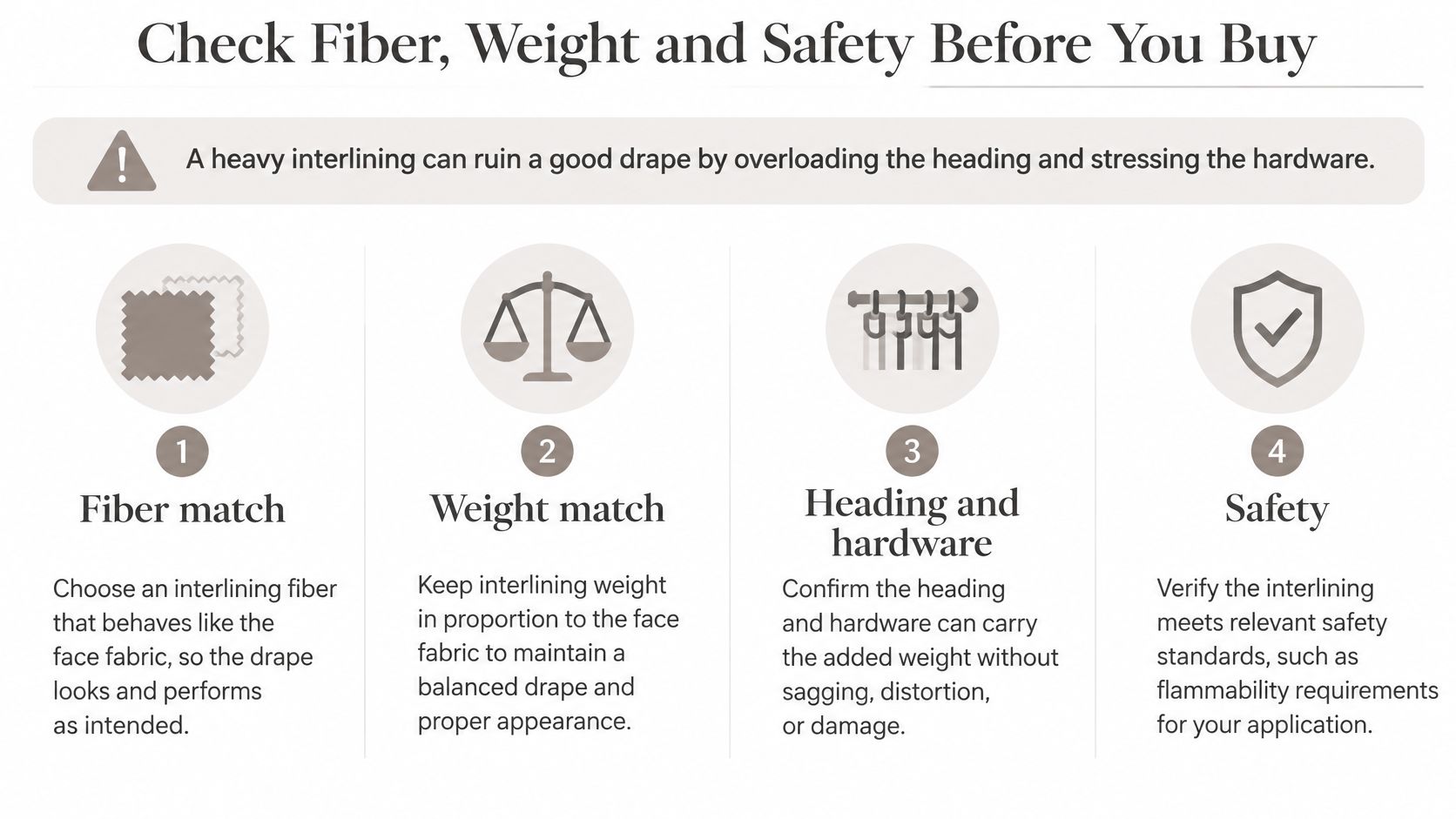
Ask for five things in writing, and don't accept a verbal answer:
- Fiber composition of the interlining, not just the face fabric.
- Treatment type, meaning inherent or applied, and by which method.
- Test documentation for the standard that applies to your project.
- Interlining weight, ideally in grams per square meter, so it can be matched to the face.
- Care instructions that account for every layer, not just the decorative one.
One durability point belongs here: an applied finish may not survive the cleaning method the label recommends, so confirm wash resistance before the panel is cut.
How Interlining Affects Longevity and Care
The middle layer buys the face fabric time. It takes direct ultraviolet exposure that would otherwise reach the decorative cloth, so fading and fiber breakdown slow down over the years. That's the quiet return on interlining, and it's often worth more than the thermal gain.
The trade-off runs the other way. Added weight sits on the heading and the hardware every day, so confirm the track, carriers and brackets are rated for it at purchase rather than after the first season. Then care for it deliberately:
- Follow the composition label for washing or dry cleaning, and treat the strictest layer as the rule.
- Check whether a chemical finish is water-washable before any wet cleaning, since a finish that lifts leaves patchy texture.
- Test any interlined velvet on a hidden patch before cleaning; pile and flannel can react differently.
- Rotate panels between windows where sun exposure is uneven, to even out fading.
- Ask how the layers can be repaired, because interlining is usually stitched in and a repair means unpicking the panel.
Add end-of-life disposal to the document request. Blended interlinings are harder to separate than single-fiber ones, so a recyclable panel starts with what's inside it. Our guide to how to clean custom drapes covers the cleaning sequence in more detail.
What the research doesn't give you is a lifespan figure. Anyone quoting a specific number of years for an interlined drape is guessing, so judge the panel on construction, fiber and care instead.
Confirm the Interlining Spec Before You Order
Finish with a written specification, not a general sense that the drape will be "interlined." A spec is what survives a change of workroom, a reorder, or a conversation two months from now.
Work through it in this order:
- Confirm the layers. Name the face fabric, the interlining and the lining, and confirm all three are included.
- Measure the window and note the details. Record orientation, glazing type and any gap at the sides.
- Match the interlining to the face. Weight and fiber chosen for hand, not for maximum thickness.
- Request documents. Composition, treatment type, test documentation and care instructions.
- Check the heading, stack-back and hardware. Confirm carriers and brackets are rated for the finished weight.
- Decide the energy details. Side returns, sealed edges or overlap if heat and solar gain are the goal.
Our custom drapery runs from classic linen to modern sheer fabrics, with pleat style, trim and nailhead details settled in a design consultation. Customers begin by speaking with Design Studio Associates about the look they want, a professional measures the space at the home, and custom drapes take four to six weeks to produce. Confirm that production window with us when you order, since it can shift with fabric availability.
The reason to settle the specification early is simple. Adding or removing an interlining after the fabric is cut means remaking the panel, so the decision belongs in the consultation, not in the workroom.
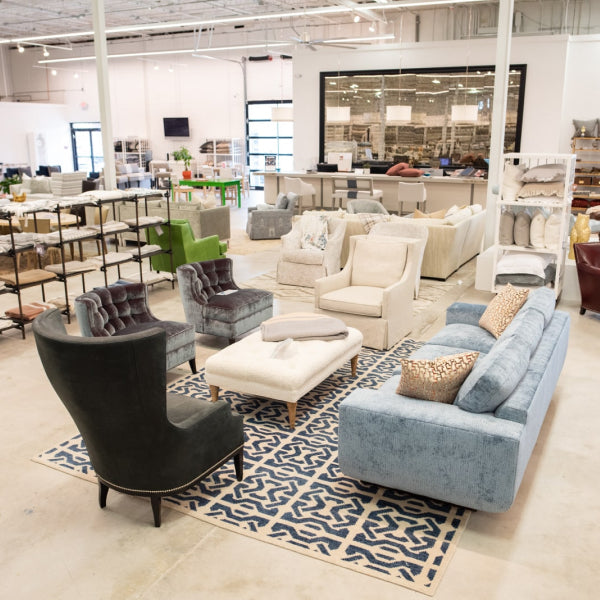
Lewis and Sheron Textiles has supplied Atlanta with home fabrics and custom drapery since 1944, and our Design Center carries the drapery lining and interlining fabrics these panels are built from. Bring your window measurements, your face fabric or just a photograph of the room, and our Design Studio Associates will help you settle the layer stack before anything is cut. Visit Lewis and Sheron Textiles to start the conversation.