






















You usually notice custom drapes at the wrong moment. Morning sun catches a film of dust across the pleats. A small spot near the leading edge suddenly looks larger than it did last week. Or you take one panel in hand, feel the weight of the lining and interlining, and realize this isn't something you want to toss into a washer and hope for the best.
That instinct is right.
Knowing how to clean custom drapes starts with understanding that the fabric is only part of the job. With custom work, the value often sits in the details: the lining, the pleat memory, the hem weight, the trim, the hand of the cloth, and the way the panel breaks exactly where it should. If you clean only for stain removal and ignore construction, that's when drapes lose shape, shrink unevenly, or come back hanging crooked.
For homeowners in Atlanta, Buckhead, Alpharetta, Roswell, Sandy Springs, and the broader North Atlanta market, this matters for more than housekeeping. People investing in luxury home furnishings, designer furniture, custom upholstered furniture, and heirloom interiors usually aren't looking for a quick fix. They want preservation. The same judgment that goes into choosing high-end furniture, luxury sofas, premium sectionals, or custom chairs should go into caring for drapery, because these pieces live together and age together.
Why Custom Drapes Need Different Care Than Regular Curtains
A ready-made cotton panel and a fully lined custom drape might look similar from across the room. In hand, they're not close.
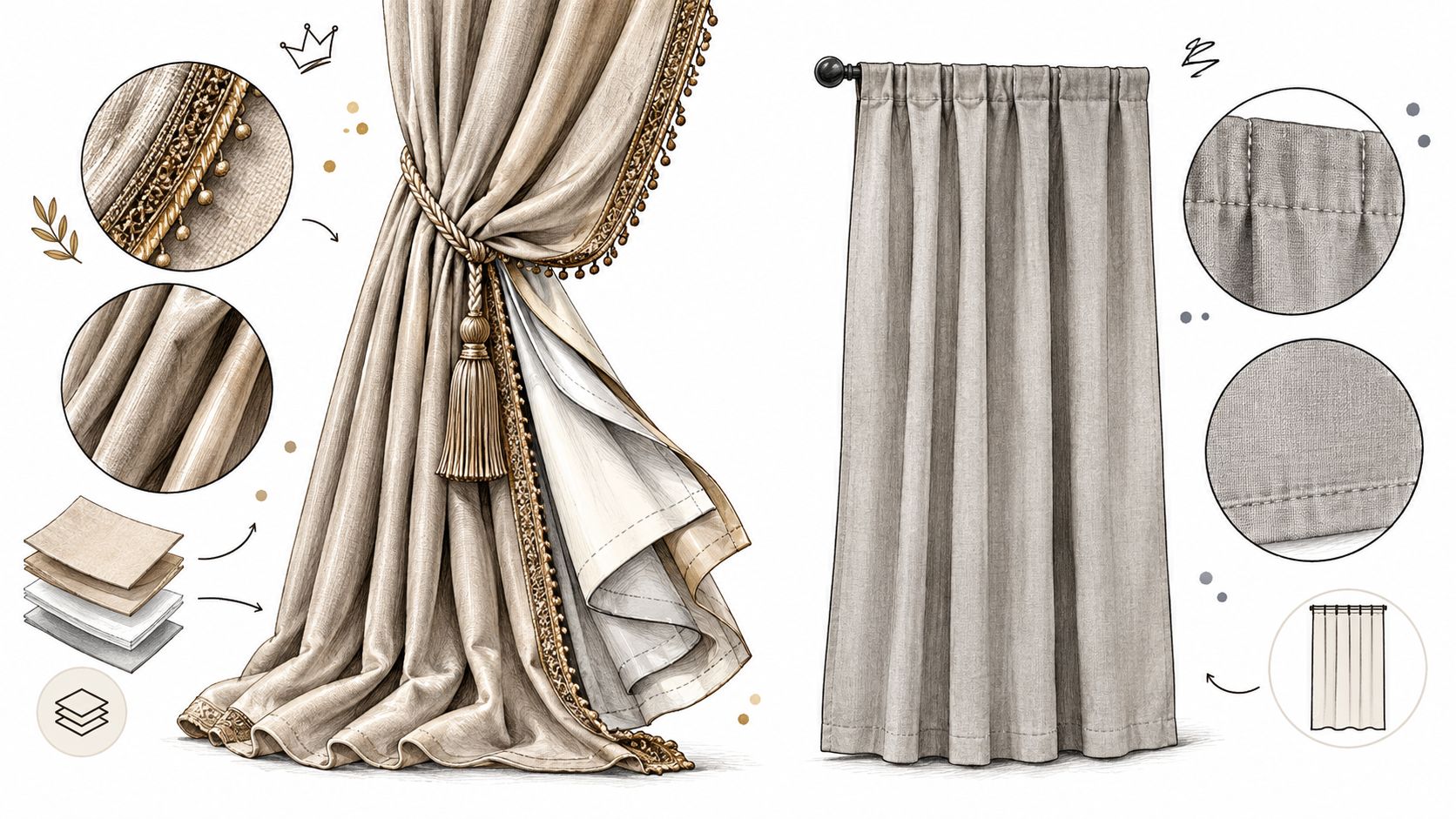
Custom drapes often combine face fabric, lining, interlining, buckram or pleated headers, stitched hems, trim, and specialty finishes. That layered construction is why an aggressive wash cycle can do damage even when the face fabric seems sturdy. I've seen panels survive the water but lose the crispness at the pleat, twist at the side seam, or ripple at the hem because one layer reacted differently than the others.
Construction changes the cleaning risk
What makes custom drapery beautiful also makes it less forgiving. Silk can water-mark. Velvet can crush. Linen can shift and tighten. Trim can bleed or fray. Interlining can pucker if moisture reaches one section unevenly.
That's why custom drapes are typically cleaned on a longer maintenance cycle than everyday washable textiles. One widely cited home-textile guideline notes that light- to medium-use drapes can be cleaned every 3 to 6 months, while heavier or more complex window treatments are often cleaned about once a year, and another professional home-textile source says curtains and drapes may generally require cleaning every 3 to 5 years because stains can oxidize and permanently discolor over time, as summarized by The Spruce's drape cleaning guidance.
The value is in the fit, not just the cloth
A custom drape isn't just fabric hanging from a rod. It's measured to the window, the stack-back, the puddle or break, and the room. The lining is part of performance. The pleating is part of appearance. If you flatten or shrink one layer, the whole treatment can start looking tired even when it's technically clean.
That's also why drapery lining deserves more respect than it usually gets. If you want a clear sense of how lining affects shape, protection, and longevity, this overview of the role of drapery lining in custom drapes is worth reading before you clean anything.
Practical rule: The right method is the gentlest one that removes what needs removing without disturbing the tailoring.
Why luxury interiors need a preservation mindset
In homes filled with statement furniture pieces, high-quality couches, and carefully selected textiles, drapes should be treated like part of the furnishing plan, not an afterthought. That's true whether you're maintaining a formal dining room in Buckhead or a layered family room in Sandy Springs.
People searching for custom furniture Atlanta, designer furniture near me, or luxury furniture Atlanta usually understand the long-term value of craftsmanship. Custom drapery belongs in that same category. Clean for preservation first. Refresh appearance second.
How to Read Care Labels and Identify Your Drape Fabric
The care label decides what happens next. Not your guess. Not the salesperson's memory. Not what worked on another panel in a different room.
A specialty-fabric care guide is very clear on this point: when custom draperies use specialty fabrics, the manufacturer's care instructions must be followed, and labels should be checked first so the treatment is classified correctly for cleaning, as outlined in these fabric care instructions for specialty textiles.
Start with the tag, then inspect the build
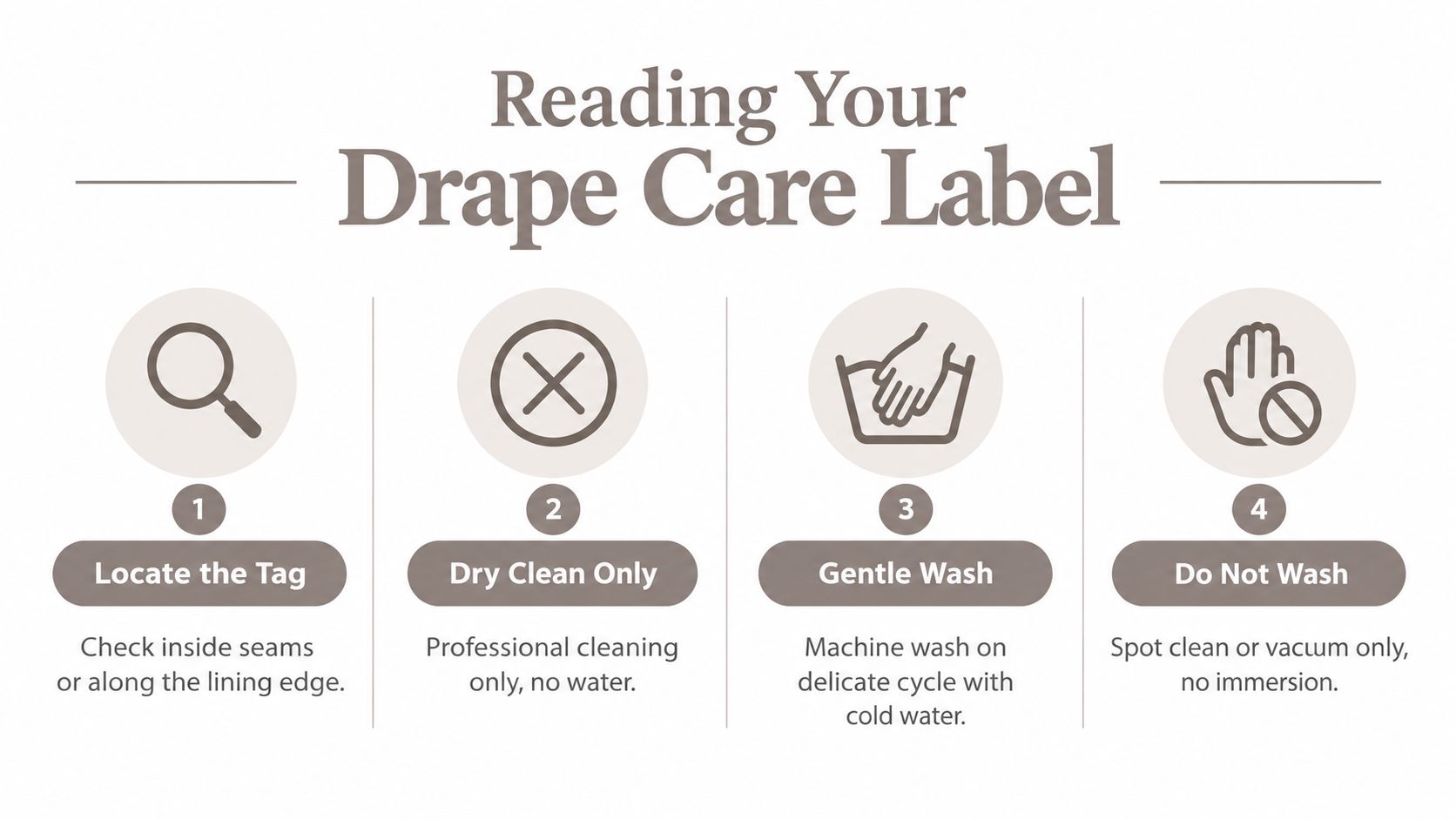
The label may be tucked into a side seam, hidden along the lining edge, or attached near the header. Find it before you unhook anything.
Then look beyond the wording on the tag and inspect the panel itself:
- Face fabric: Silk, velvet, and heavy brocade are high-risk fabrics for DIY washing. Even when the surface looks durable, moisture and agitation can distort the finish.
- Lining and interlining: These inner layers often shrink or react differently from the outer fabric.
- Trim and embroidery: Decorative edges, tape borders, beads, or stitched appliqué can snag, fray, or bleed.
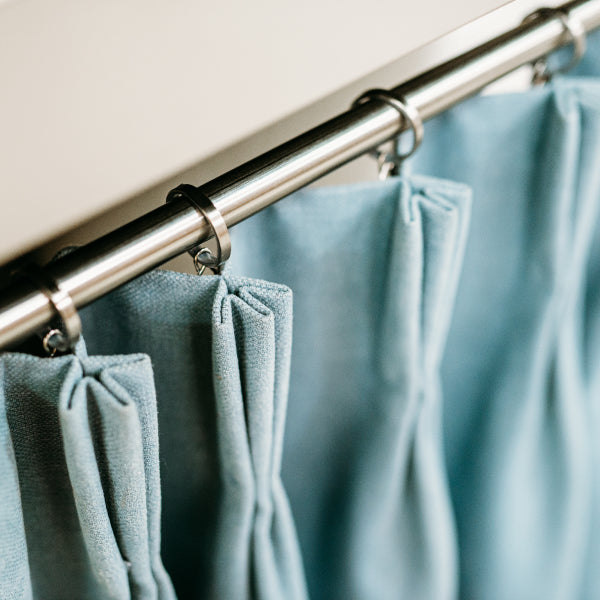
- Pleat structure: Pinch pleats, goblet pleats, cartridge pleats, and headers all rely on shape retention.
What the label usually means in practice
Most care labels push custom drapes into one of three practical buckets.
Dry clean only
This is the point where home experiments usually get expensive. Dry-clean-only drapes should stay out of the washer, even if the face cloth feels washable. The issue is often the full construction, not only the front fabric.
This matters especially in rooms finished with luxury home furnishings and designer furniture, where drapery often carries a heavier visual role and replacement won't be simple.
Gentle wash allowed
If the label permits wet cleaning, that still doesn't mean standard laundry treatment. It means controlled cleaning with cool water, mild detergent, and as little agitation as possible.
Do not wash
Some custom treatments are better handled with vacuuming, spot treatment, and periodic professional service only. “Do not wash” should be read as directed.
Check the drape the way a workroom would. Fabric content tells you part of the story. Seams, pleats, linings, and trims tell you the rest.
A quick pre-clean assessment
Before any moisture touches the panel, run a basic risk check.
-
Look for sun stress
Faded edges, brittle folds, or a powdery feel can signal light damage. Those fibers may fail during washing even if the fabric once tolerated it. -
Test an inconspicuous area
Use the smallest possible amount of moisture and a white cloth. You're checking for dye transfer, finish disturbance, or texture change. -
Inspect the hem and side seams
If threads are loose now, agitation will enlarge the problem. -
Feel the body of the drape
A panel with body from interlining or specialty finish should be approached much more cautiously than a simple unlined washable panel.
For design-conscious homeowners comparing custom and ready-made options, this is part of what defines quality. The same buyers considering best luxury sofa brands, custom vs mass-produced furniture, and what separates designer quality from ordinary production should think this way about drapery too. Better construction gives a better result in the room. It also demands better care.
Routine Dust Removal and Safe Spot Cleaning Techniques
Most custom drapes don't need frequent full cleaning. They need consistent low-risk maintenance.
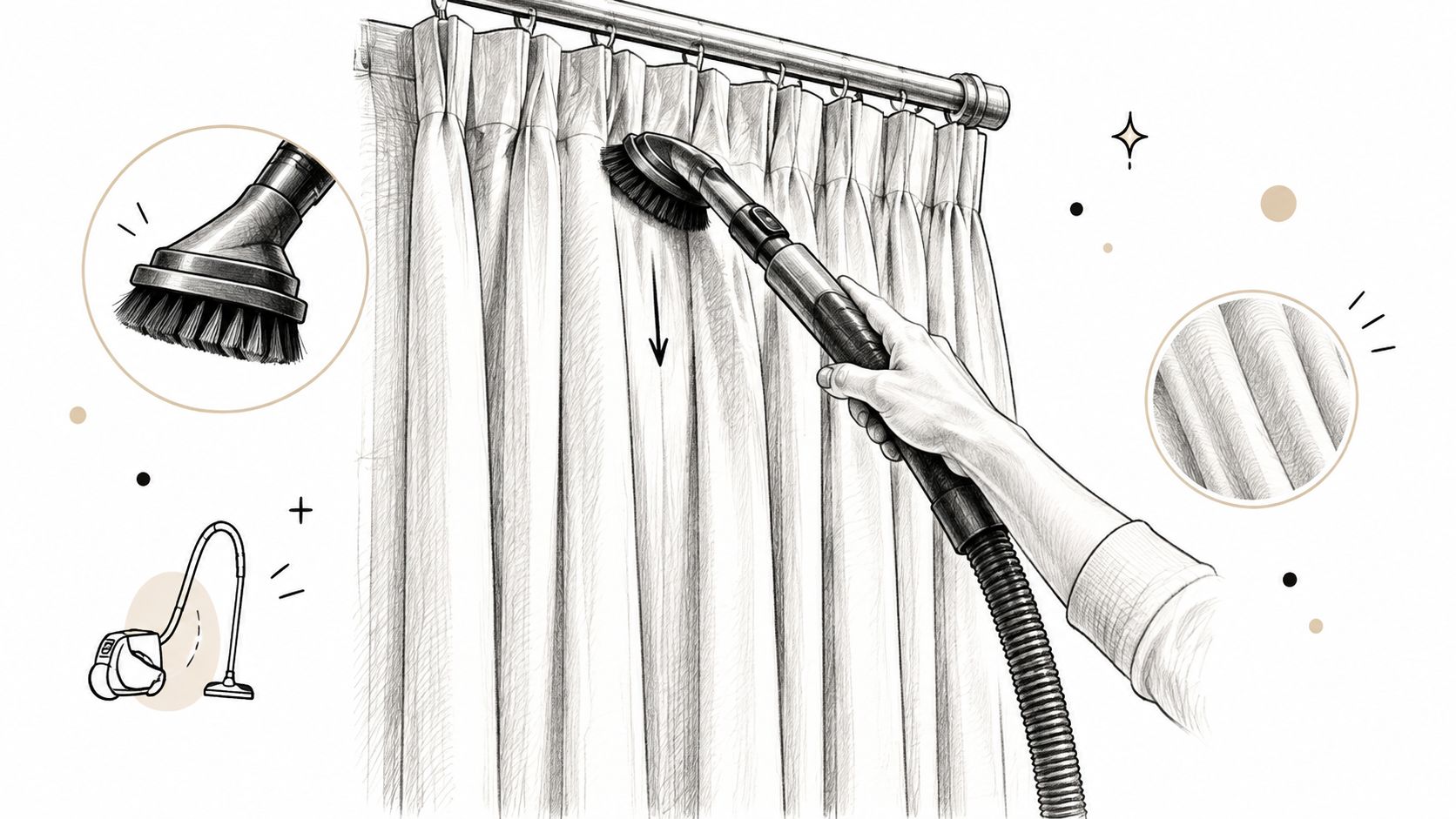
That's the safest way to keep shape, reduce soil buildup, and avoid forcing stains deeper into the fabric. A practical care guide recommends starting with the drape fully closed, then vacuuming with a soft brush attachment on low suction from top to bottom, with extra attention at the header and pleated areas where dust settles most. The same guidance advises using a lint roller carefully on trim or embroidery and treating spots immediately by pretesting first, blotting from the outside inward with a white cloth, and never rubbing, as explained in this complete drapery care guide.
The vacuuming method that protects pleats
Close the drape fully so the panel hangs flat. Use a vacuum with a soft brush attachment and reduce suction if your machine allows it. Work from the top down in slow overlapping passes.
Give extra attention to these areas:
- Header and pleats: Dust packs in first.
- Leading edge: Hands touch it constantly.
- Hem area: It catches floor dust and pet hair.
- Decorative trim: Use a lint roller if brushing risks snags.
If the fabric pulls toward the nozzle, the suction is too strong. Back off immediately.
Spot cleaning without creating a larger problem
Fast action helps, but rough action ruins fabric. For isolated spots, test first in a hidden area. Then use a white cloth and blot from the outside inward so the stain doesn't spread into a ring.
A good spot-cleaning rhythm looks like this:
- Blot, don't scrub: Rubbing roughens fibers and can shift pile or sheen.
- Use minimal moisture: Damp, not wet.
- Support the fabric: Keep one hand behind the cloth if possible on lighter panels.
- Stop if dye transfers: That's your signal to move to a professional cleaner.
A stain that remains small is manageable. A stain that has been rubbed, soaked, and spread into the lining is a restoration job.
What works and what usually doesn't
Routine care is where many expensive mistakes can be avoided. In homes with heirloom-quality furniture, custom chairs, and textiles, restraint is usually the better technique.
Here's the short version:
- What works well: Low-suction vacuuming, careful lint removal, prompt blotting, hidden-area testing.
- What often fails: Saturating the fabric, rubbing with colored cloths, household stain sprays used without testing, and strong suction around pleats or fringe.
Homeowners in Roswell, Alpharetta, and other affluent North Atlanta markets often maintain beautiful rooms filled with layered materials. Drapes in those spaces don't need force. They need regular attention before the soil becomes embedded.
Choosing the Right Cleaning Method for Your Fabric Type
The question isn't “How do I wash these?” It's “What's the least risky effective method for this exact panel?”
Many custom drapes should never be laundered. One manufacturer care card for custom window treatments says to never wash or launder them, to vacuum accumulated dust about twice a year using a soft brush attachment at reduced suction, and to dry-clean the treatments every 3 to 5 years depending on site conditions, as noted in this window drapery care guidance.
Three practical buckets
Most custom drapes fall into one of these categories:
Vacuum only or vacuum plus spot care
Best for heavily structured treatments, elaborate trim, sensitive fabrics, and panels that show any sign of fragility. This is often the right lane for silk, velvet, and treatments with decorative details that won't tolerate immersion.
Professional dry cleaning
Use this for dry-clean-only labels, lined or interlined panels, and expensive treatments where the tailoring matters as much as the face fabric. This is usually the safest route when the label is restrictive or the panel has multiple layers.
If you're dealing with turnover properties or need a more general maintenance reference for simpler panels, this guide on curtain cleaning for rentals can be a useful contrast. Rental-grade solutions often prioritize speed and practicality, while custom drapery care needs a more preservation-focused standard.
Gentle wet cleaning
This is reserved for drapes already confirmed as washable. Think simpler construction, stable fabric, and no vulnerable trim or specialty lining. If you own linen-look or true linen panels, these linen care instructions are helpful because linen can shift in texture and size if handled too aggressively.
Custom Drape Cleaning Method by Fabric and Construction
| Cleaning Method | Best For | Key Risk to Avoid |
|---|---|---|
| Vacuum only | Silk, velvet, heavily pleated or trimmed custom treatments, fragile older panels | Pulling at pleats, crushing texture, snagging trim |
| Professional dry cleaning | Dry-clean-only drapes, lined and interlined panels, structured luxury treatments | Using water on construction that can shrink, bleed, or distort |
| Gentle wet cleaning | Label-approved washable panels with simpler construction | Heat, heavy agitation, and washing multiple panels together |
Site conditions matter more than people think
A formal drape in a quiet room ages differently from one near an open window, a kitchen path, or strong afternoon sun. Sun exposure can weaken fibers. Dusty conditions can force more frequent maintenance. Humidity can affect linings and encourage stale odors to settle into the cloth.
That's why the same fabric can call for different decisions in different homes. In a Buckhead dining room with lined statement panels, I'd lean conservative. In a simpler washable panel in a secondary room, gentle wet cleaning may be perfectly reasonable.
Washing Drying and Rehanging Custom Drapes Without Damage
If the label and construction both support wet cleaning, the job still needs patience. Washable custom drapes don't behave like towels or bedding. They need prep, space, and a light hand from start to finish.
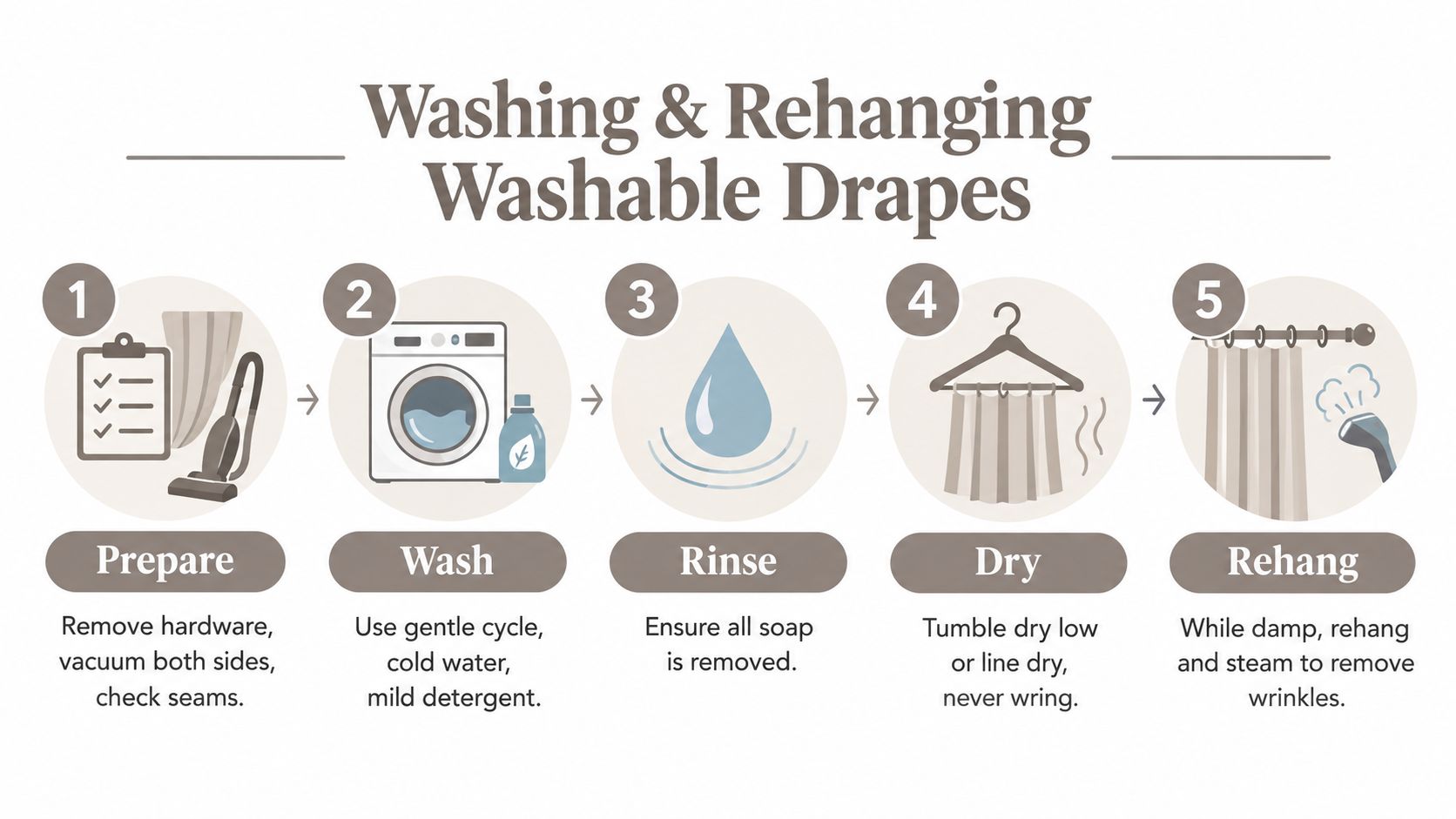
A current care guide recommends removing all hardware, vacuuming both sides before washing, checking seams and hems for loose threads, washing one panel at a time, using cold water with a gentle cycle and mild detergent, skipping fabric softener because it leaves residue that attracts dust, and air-drying instead of machine drying, according to this custom drapery cleaning guide.
Preparation protects the tailoring
Before washing, take off pins, hooks, rings, and removable hardware. Vacuum both sides first so loose dust doesn't turn into muddy residue in the wash.
Then inspect the panel in good light:
- Seams and hems: Repair loose threads before they widen.
- Trim attachment: Make sure decorative edges are secure.
- Lining condition: Check for stress, bubbling, or areas that already look unstable.
This is the same kind of caution people use when maintaining custom upholstered furniture or selecting high-end furniture over mass-produced pieces. Better construction deserves slower handling.
The safest wash routine
Wash one panel at a time. Use cold water, a gentle cycle, and a mild detergent. Skip fabric softener, because residue attracts dust and can alter the feel of some fabrics.
A few practical cautions matter here:
- Don't overload the machine: Weight and friction increase fast.
- Don't use high heat: That's where shrinkage and distortion start.
- Don't wring the panel: Support the fabric as you lift it out.
If you're looking for a simpler household cleaning example with a much less complex material than custom drapery, this piece on how to clean shower curtain liner easily is a useful reminder of the basic principle: the simpler the construction, the more forgiving the cleaning. Custom drapes sit at the opposite end of that spectrum.
When a panel is technically washable but heavily tailored, the washer is still the harshest part of the process. The goal is to get in and out with as little stress as possible.
Drying and rehanging without losing shape
Air-drying is the safer route. Machine drying introduces heat and tumbling, which is exactly what custom construction dislikes.
Rehang the drapes while they're still slightly damp if the label permits and the panel is stable enough to handle. The weight of the fabric helps release wrinkles naturally. As you hang each panel, smooth the seams by hand and reshape the pleats so they settle back into position.
If wrinkles remain, steam lightly and cautiously. Keep the steamer moving, avoid soaking the cloth, and stay especially careful around trim, velvet pile, and any area that could water-mark.
For homes filled with premium sectionals, statement furniture pieces, and well-planned interiors, this final rehanging stage matters as much as the wash itself. A clean drape that hangs badly still looks wrong.
Long Term Care Tips to Preserve Beauty and Extend Life
The best custom drapery care plan is quiet. It doesn't wait for visible grime, and it doesn't rely on emergency cleaning after stains set.
One sensible long-term rhythm is to vacuum dust periodically, address spots quickly, and schedule professional cleaning based on the fabric, room conditions, and label guidance rather than habit. For clients who invest in luxury sofas, designer furniture, and other luxury home furnishings, that approach usually fits how they already care for the rest of the room.
A practical preservation checklist
Keep sunlight in mind
Strong sun changes fabric over time. Rotate leading edges when possible, use shades behind decorative drapes, and pay attention to any area that feels brittle or looks faded before attempting deeper cleaning.
Control dust before it embeds
Routine dusting and vacuuming matter more than dramatic seasonal washing. Fine dust settles into headers, folds, and trims first, then works deeper into the weave.
Call for help when construction is the issue
If pleats have collapsed, lining has shifted, hems are twisting, or trim is loosening, that's no longer just a cleaning question. That's when a workroom, cleaner, or design professional should look at the treatment before more damage is done.
Drapes age like upholstery
There's a useful parallel with furniture care. An industry upholstery guide states that well-maintained furniture upholstery typically lasts 7 to 15 years on average, which reinforces the broader point that longevity depends on maintenance as much as construction, as noted in this upholstery longevity guide. Drapery behaves the same way. Good material helps, but consistent care is what preserves appearance.
That matters in Atlanta homes where clients are also evaluating what makes furniture designer quality, how long high-end furniture lasts, and whether custom work is worth it. It is, if the care standard matches the purchase.
Protect drapes during larger home projects
If you're painting, moving furniture, replacing rugs, or staging a room, cover nearby textiles instead of exposing them to dust and abrasion. Practical moving materials like these Furniture Protectors For Moving illustrate the kind of barrier protection that helps during home transitions. For adjacent seating and upholstered pieces, this guidance on fabric protection for furniture is also useful when you're trying to preserve the whole room, not just the window treatment.
For homeowners and designers in Fulton County, North Atlanta, Buckhead, Roswell, Alpharetta, and Sandy Springs, the main takeaway is simple. Custom drapes should be maintained like heirloom-quality furniture. Use the label as your authority, choose the gentlest effective method, and treat construction details as part of the asset, not as background.
If you're caring for custom drapes, reworking a room, or selecting new textiles that need to perform beautifully over time, Lewis and Sheron Textiles can help with fabric expertise, custom drapery services, and design guidance that takes maintenance seriously. Visit Lewis and Sheron Textiles to explore materials, discuss construction options, and choose window treatments that are as practical to live with as they are beautiful.