




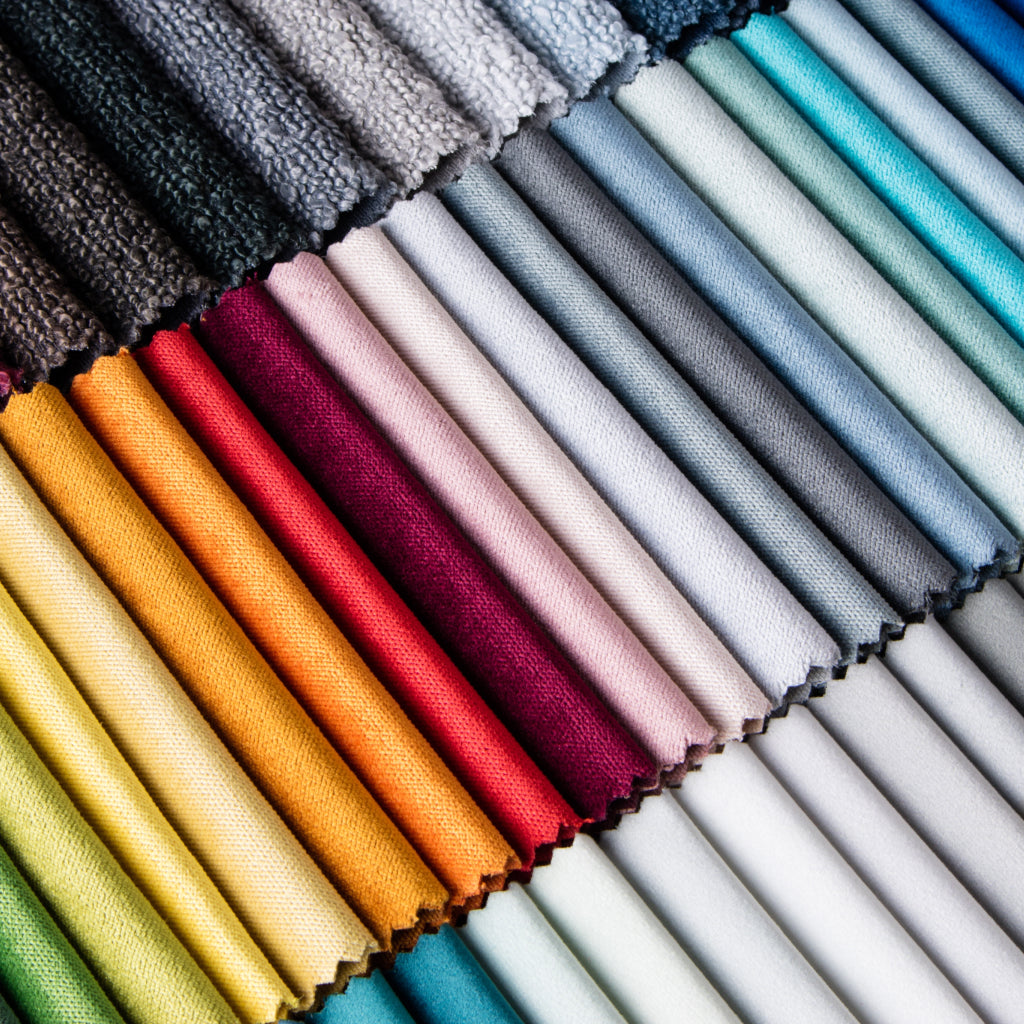







You've selected a beautiful linen for a Buckhead living room, measured the windows, and ordered what looks like enough yardage. Then the workroom calls. The fabric is short because the pattern repeat wasn't included, or there's more left over than expected because the fabric width didn't suit the cut plan. With premium textiles, that mistake affects more than convenience. It can delay custom drapery, interrupt a luxury sofa project, and make matching a dye lot difficult.
A fabric yardage calculator helps you make a confident buying decision before fabric is cut. The reliable method goes beyond dividing dimensions by 36. You'll account for fabric width, fullness, finished and cut length, pattern repeat, hems, heading allowances, direction, shrinkage, and layout efficiency. That matters whether you're furnishing a home in Atlanta, sourcing custom upholstered furniture in Alpharetta, or specifying statement pieces for a North Atlanta client.
Introduction to Fabric Yardage Calculators and When to Use Them
A yardage calculator is most useful when the fabric is expensive, difficult to replace, or essential to a coordinated design. A shortage can leave a pair of drapery panels mismatched. Overbuying can tie up money in fabric that doesn't fit another project, especially when a designer has selected a limited dye lot or an unusual motif.
For a homeowner replacing a sofa in Sandy Springs, the calculation starts with the furniture dimensions and the fabric's usable width. For an interior designer planning a Roswell project, it may also include directional cutting, matching across a premium sectional, and enough reserve for a future repair. The calculator turns those decisions into a documented cut plan instead of a guess.
Workroom rule: Calculate the cut, not just the finished appearance.
Use the guide as a reference rather than a strictly linear lesson. The measurement terms establish the inputs. The core formulas show the base math. The drapery sections add fullness and pattern repeat, while the upholstery sections focus on direction, layout, and reserve fabric. Pillow calculations use the same logic on a smaller scale.
The practical outcome is simple. You'll know when a standard calculator is sufficient, when a designer or upholsterer should review the layout, and why the lowest yardage result isn't always the safest order for high-quality couches, custom chairs, or heirloom-quality furniture.
Essential Fabric Measurement Terms and Conversions You Need
先掌握計算器需要的尺寸資料,才能看懂結果,也能判斷高級布料是否需要增加預留量。
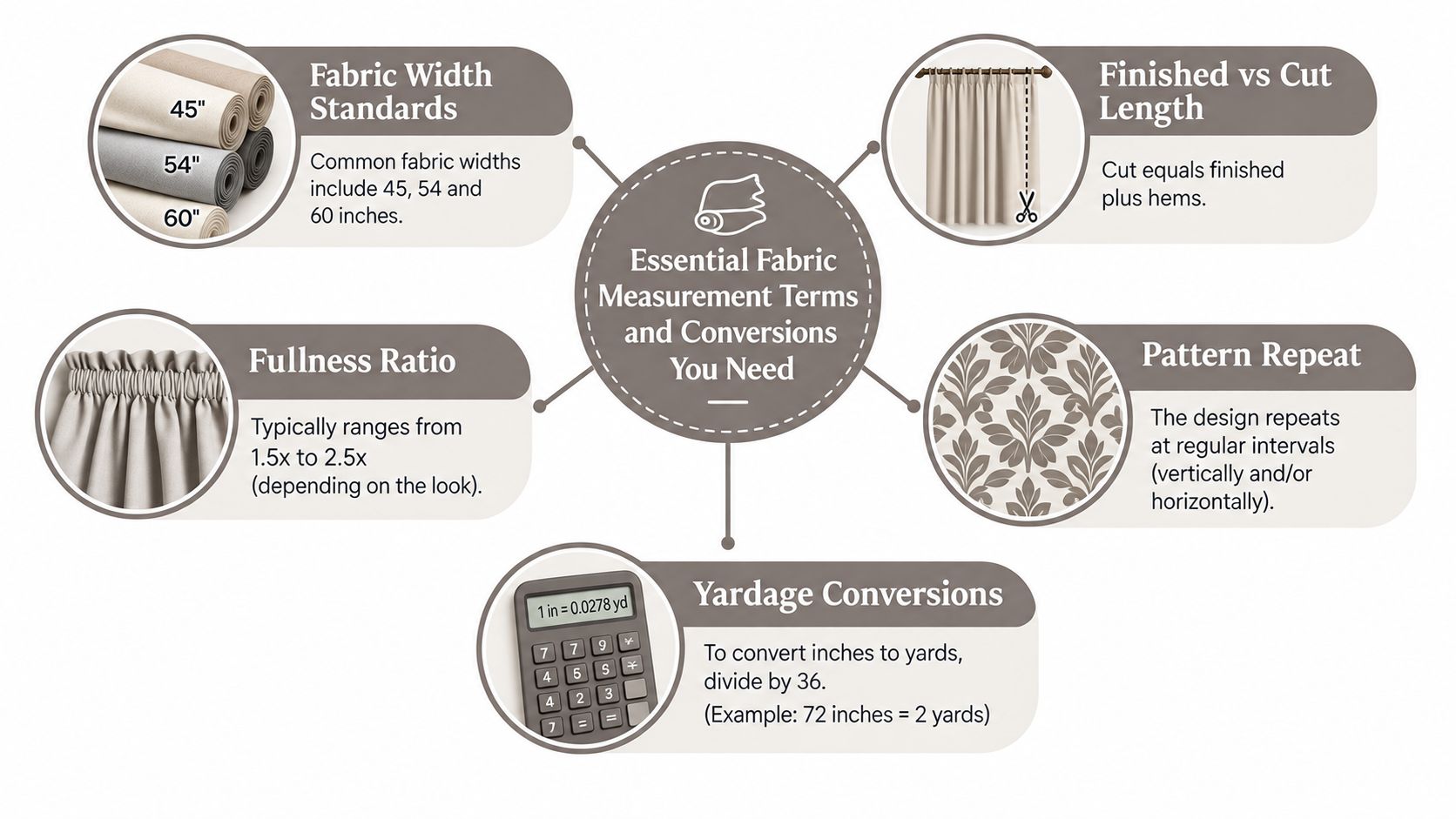
Fabric width 是布料兩條布邊之間的距離。常見規格有 44、54 和 60 inches,但布邊、織造結構或瑕疵可能使可用寬度小於標示寬度。許多窗簾與軟裝計算以名義上的 54-inch width 作為基準,可參考 Best Fabric Store's yardage calculation guide。
Finished length 是縫製完成後看得見的尺寸。Cut length 則是裁剪前所需的長度,還要加入下擺、上方車縫、穿桿袋或其他製作預留,因此通常比完成尺寸更長。
Fullness 表示窗簾在窗寬上需要多少聚集量。2.0x 代表使用相當於完成窗寬兩倍的布料。聚集越豐滿,所需布幅或總米數越多。
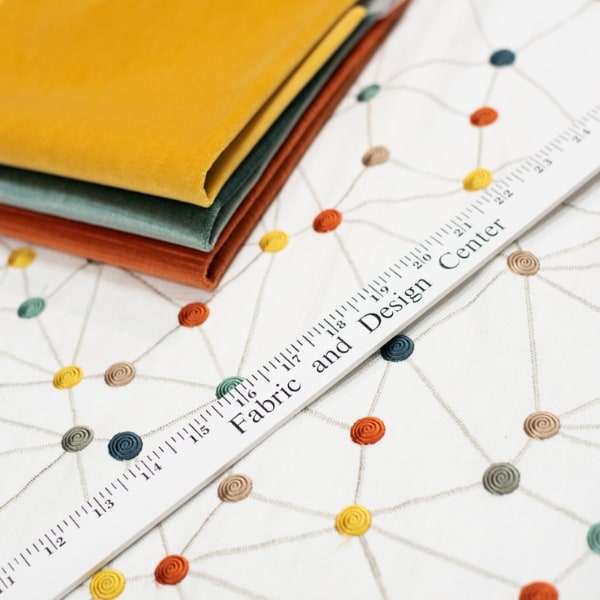
Pattern repeat 是印花或織紋重新開始前的距離。垂直花版重複會影響每幅的裁剪長度,因為圖案往往需要對齊完整循環。布料寬度、花版方向與縮水幅度也要一併確認,否則單看換算結果可能低估用量。
Yardage 是布料長度的 yard 單位。將英寸除以 36 可換算成 yards,再向上取整,為裁剪誤差與實際採購保留空間。相關的 54 英寸布料計算方式也可參考 Best Fabric Store's yardage calculation guide。
Quick width reference
| Nominal fabric width | Typical planning use |
|---|---|
| 44 inches | 較小型軟裝、抱枕,以及可有效旋轉裁片的項目 |
| 54 inches | 窗簾與軟裝常用的計算基準 |
| 60 inches | 較寬的裁剪配置,可減少接縫或改善裁片安排 |
先量完成後的窗戶或物件,再記下布料寬度、花版重複、方向、縮水與製作預留。這些資料共同決定實際採購量。
Core Fabric Yardage Formulas Explained Step by Step
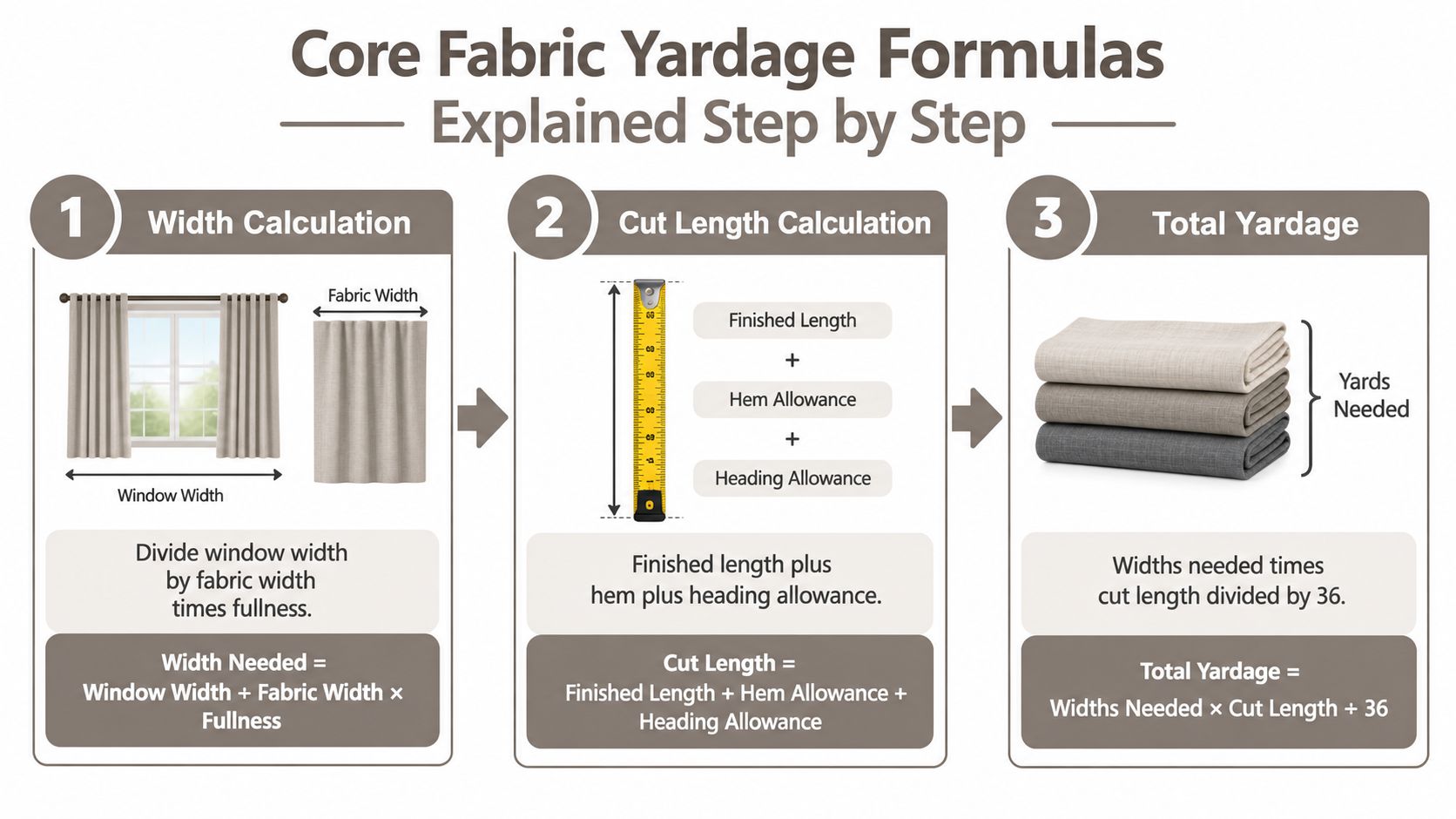
一個可靠的布料用量計算,先處理橫向寬度,再處理縱向裁剪長度,最後把總英寸換算成 yards。這個順序能避免只用窗戶寬度除以 36,卻漏算聚集量、花版或布幅限制。
第一步,計算所需布幅數
窗簾可使用:
窗戶寬度 × fullness multiplier ÷ 可用布料寬度 = 所需布幅數
結果要向上取整到完整布幅。若聚集後的總寬度超過一幅布能覆蓋的範圍,就需要增加布幅。計算時應採用實際可用寬度,而不是只看標示寬度,因為布邊或裁切配置可能減少可用範圍。
第二步,計算裁剪長度
使用:
完成長度 + 下擺預留 + 上方車縫或掛法預留 = 裁剪長度
有花版的布料還要檢查垂直 pattern repeat。如果裁剪長度落在兩個重複循環之間,就向上調整到下一個完整重複,讓相鄰裁片能夠對花。這一步會增加每幅的長度,即使窗簾的完成尺寸沒有改變。
第三步,換算成 yards
使用:
布幅數 × 每幅裁剪長度(英寸)÷ 36 = 總 yards
以兩幅、每幅裁剪長度 90 inches 的簡單窗簾為例:
- 兩幅 × 90 inches = 180 inches。
- 180 inches ÷ 36 = 5 yards。
- 若供應商的販售單位或工作室預留需要更大的裁切量,訂購量就應向上調整。
這只是基礎用量。Fullness 會改變橫向布幅數,花版重複會改變縱向裁剪長度,布料寬度、方向與縮水則會影響最後能否有效排版。對高級布料,先確認這些條件,再決定採購量,通常比單純換算 yardage 更可靠。
How Fullness Multipliers Affect Drapery Yardage
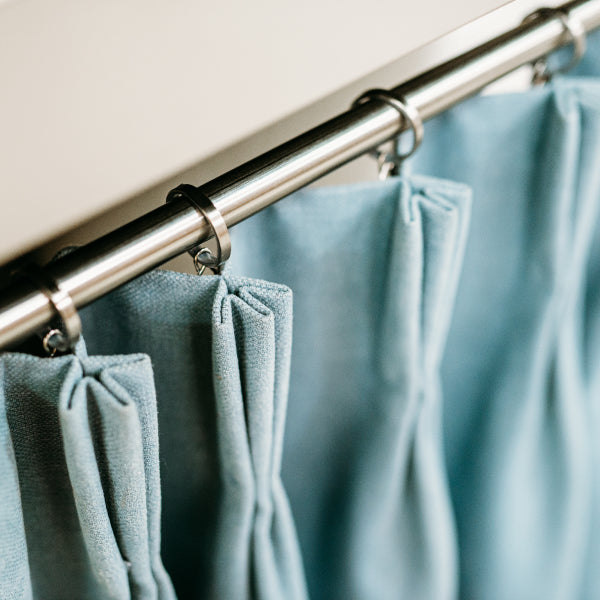
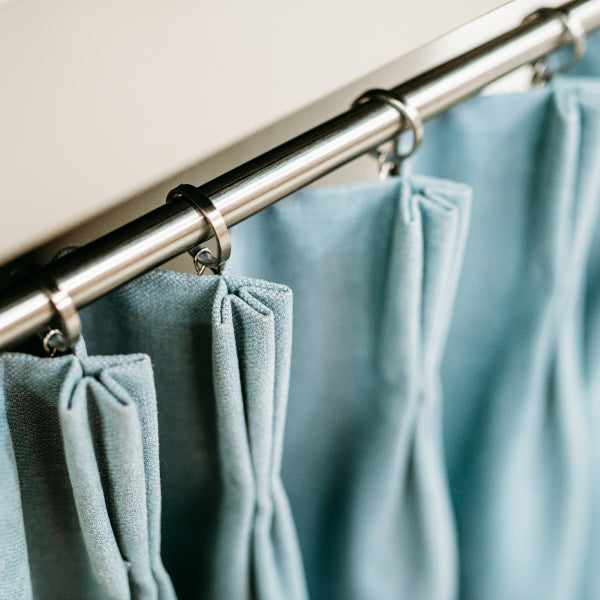
Fullness is both a visual choice and a yardage decision. A flatter treatment may suit a refined room, while a richer treatment gives luxury drapery the gathered body expected beside high-end furniture. A curtain calculator commonly uses about 2.0x fullness for a standard look and 2.5x to 3.0x for a more luxurious result, then converts the gathered width into whole fabric widths, as shown in this curtain fullness calculation guide.
Take a 60-inch window dressed at 2.5x fullness with 54-inch fabric. The target gathered width is 150 inches, calculated as 60 × 2.5. The calculator divides that target by 54 and rounds up to the next whole width. That is why the fabric yardage calculator prevents a shopper from treating the visible window width as the entire fabric requirement.
| Window width | Fullness 2.0x | Fullness 2.5x | Fullness 3.0x |
|---|---|---|---|
| 60 inches | 120 inches gathered | 150 inches gathered | 180 inches gathered |
| 84 inches | 168 inches gathered | 210 inches gathered | 252 inches gathered |
| 120 inches | 240 inches gathered | 300 inches gathered | 360 inches gathered |
The table shows gathered width, not final yardage. Cut length, pattern repeat, hems, and the number of whole fabric widths still determine the purchase quantity.
Choosing fullness for the room
Use 2.0x fullness when the design calls for a cleaner, more restrained treatment. Choose 2.5x to 3.0x when the fabric needs deeper folds, a more substantial appearance, or a formal luxury effect. A designer specifying premium drapery in Buckhead should make that choice before ordering, because adding fullness later requires more fabric and may alter the entire cut plan.
Accounting for Pattern Repeat and Hem Allowances Accurately
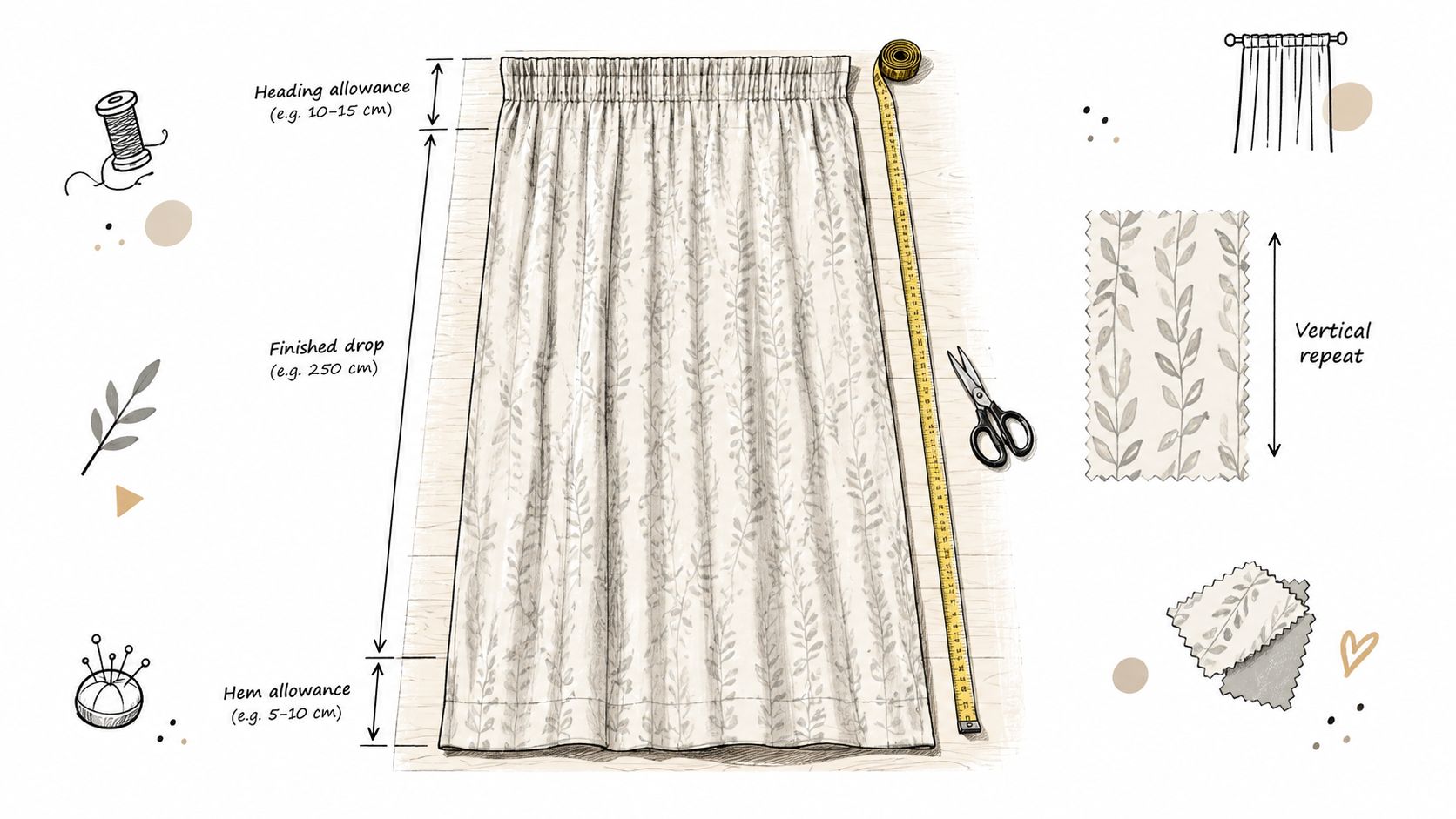
Pattern repeat is not a casual waste allowance. It's a construction constraint. The workroom must often cut each panel at the next complete repeat so the motif doesn't stop in an awkward position or shift between paired panels.
The basic cut-drop formula is:
Finished drop + heading allowance + hem allowance = preliminary cut drop
A common combined allowance is 12 inches, made up of 6 inches for the bottom hem and 6 inches for the heading, according to the curtain fabric calculation guidance from SewCalcs.
Worked repeat example
Suppose the finished panel length is 102 inches.
- Finished panel: 102 inches
- Hem and heading allowances: 12 inches
- Preliminary cut drop: 114 inches
- Vertical pattern repeat: 27 inches
- Repeats required: 5
- Adjusted cut length: 135 inches
- Yardage per panel: 135 ÷ 36, or 3.75 yards
This complete-repeat method is detailed in Fabric for Home's drapery yardage workflow. The extra length isn't decorative waste. It protects the visual alignment of the design across paired panels and multiple windows.
For a premium custom treatment, tell the workroom whether the print must be centered, matched at the leading edge, or aligned across separate windows. Those instructions can change the cut plan even when the room measurements stay the same. A useful companion reference is this seam allowance guide, particularly when a custom finish depends on precise construction.
How to Use the Built In Fabric Yardage Calculator
A built-in calculator works well when every field reflects the actual project. Entering only height and width may produce a neat number, but it won't necessarily reflect a lined drapery panel, a directional print, or a repeat-matched design.
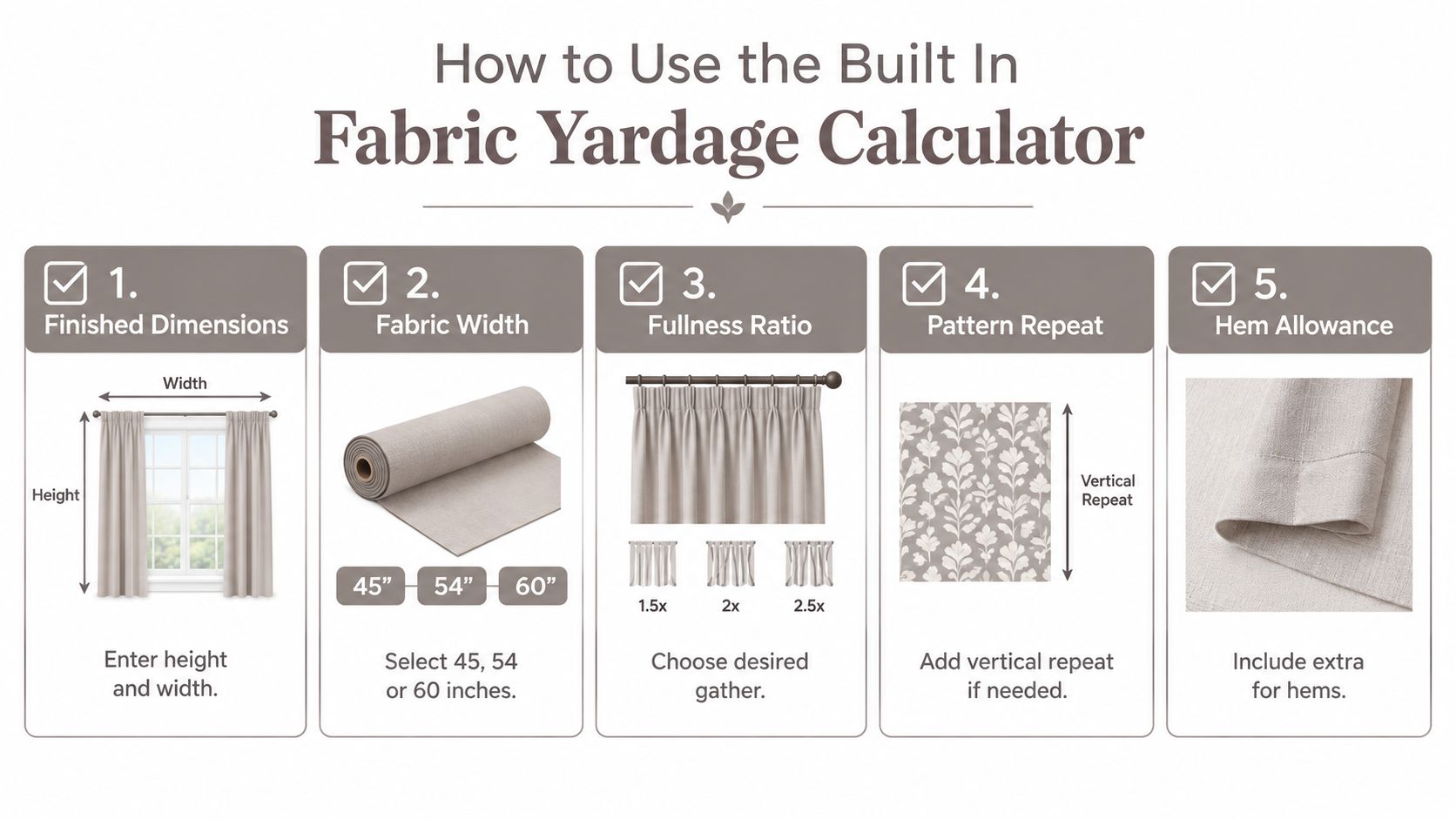
Enter the project inputs
- Finished dimensions: Enter the finished width and length, not the rough wall or window opening.
- Fabric width: Select the nominal width, such as 44, 54, or 60 inches, then verify the usable width with the supplier.
- Fullness ratio: Choose the intended gather. A structured treatment and a luxurious treatment won't use the same multiplier.
- Pattern repeat: Add the vertical repeat when the design must align across panels.
- Hem allowance: Include bottom, heading, rod pocket, or other construction allowances.
The output should show the number of widths required, the cut length for each width, and the total yardage. If the result rounds upward, keep that rounding. It represents a whole width or a complete repeat, not a random increase.
Cross-check the result manually. Multiply the widths required by the adjusted cut length, divide by 36, and compare that result with the calculator. If the two answers differ, inspect the width, repeat, and allowance fields before placing an order.
For an expensive custom sofa, premium sectional, or matched pair of custom chairs, use the calculator as a planning aid and have the workroom verify the final cut layout. The tool can calculate dimensions, but a specialist must still account for nap, seams, motif placement, and the furniture's construction.
Sample Fabric Calculations for Drapery Upholstery and Pillows
The same measuring principles produce different buying decisions across project types. Drapery yardage changes with fullness and pattern repeat. Upholstery requires a cut plan shaped by furniture contours, fabric width, nap, and motif direction. Pillows use less yardage, but matching and construction allowances can still change the order.
Two-panel drapery
Use the documented example of two panels at an 84-inch finished width with a 27-inch repeat. The basic estimate totals 200 inches, or 5.625 yards. Once the repeat-related requirement is included, the total becomes 227 inches, or 6.30 yards, as shown in Best Fabric Store's repeat example.
Order from the matched cut rather than the lowest unadjusted estimate. Before purchasing, confirm the finished length, heading style, hem size, fullness, and whether the pattern must be centered. Fabric width also affects how many full widths each panel requires, so the same finished dimensions can produce different yardage with 44-inch, 54-inch, or 60-inch goods.
Luxury sofa reupholstery
For a luxury sofa, start with the workroom's cut list. Record the inside back, outside back, deck, seat cushions, arms, fronts, sides, skirt, and welt requirements. Test each piece against the 54-inch fabric width, then check whether the fabric can be turned without changing its appearance.
A directional stripe, velvet nap, or large motif may require every piece to run in one direction. A calculator can total cut lengths, but it cannot show whether those pieces fit together without unwanted seams, mismatched motifs, or extra waste. The layout remains the deciding step.
For a professional reference on custom upholstery from fabric selection through construction, review Miller Waldrop's upholstery process.
Four 20-inch pillows
For four finished 20-inch pillows, measure each finished face, add the seam allowance required by the workroom, and plan for pattern centering or matching. Plain, nondirectional fabric may permit compact placement. Directional or repeat-matched fabric may require separate face and back cuts, plus reserve for alignment.
The final order should follow the complete cut list, not four times the finished pillow size. Include boxing, flange, closures, and pattern positioning wherever the design requires them. For premium fabric, allow the workroom to confirm the layout before the order is finalized.
Choosing Fabric Width Direction and Layout for Best Efficiency
A calculator can return the correct result for the inputs it receives, yet the inputs may not describe the best layout. Fabric width affects how many pieces fit across the roll. Direction determines whether those pieces can be rotated. A cut plan connects the two.
| Fabric choice | Layout advantage | Common limitation |
|---|---|---|
| 44-inch fabric | Useful for smaller pieces and compact projects | May require more widths or seams on large furniture |
| 54-inch fabric | Familiar baseline for many upholstery and drapery calculations | May not accommodate broad furniture components in one piece |
| 60-inch fabric | Can offer more placement flexibility | A wider roll doesn't automatically eliminate direction or repeat waste |
A nap is a surface direction, common with velvet and other fabrics whose color or texture changes when viewed from different angles. A directional print also has a fixed orientation. In both cases, the cutter may need to keep every piece running the same way, even when rotating a piece would mathematically save fabric.
Pattern matching creates another constraint. A large floral or geometric design may require the cutter to shift each piece so motifs align across a sofa back, sectional cushions, or adjacent drapery panels.
Layout decision matrix
- Plain, nondirectional fabric: Start with the calculated quantity and review the piece placement.
- Directional print or nap: Plan one-way cutting and expect more offcut material.
- Matched repeat: Position motifs before finalizing the order.
- Multiple furniture pieces: Combine the cut list so large and small pieces can share the layout.
For simple projects, waste buffers may fall around 10% to 15%. Complex directional or matched layouts can push the buffer to roughly 20% to 30%, as explained in Canvas Etc.’s fabric yardage calculator discussion. The right amount depends on construction and cut plan, not a universal rule.
Managing Shrinkage Waste and Extra Yardage for Premium Fabrics
Shrinkage belongs in the buying decision when you're working with natural fibers. Cotton may shrink around 3% to 5%, while linen may shrink around 5% to 10%, and some calculator guidance recommends an additional 5% to 10% waste buffer beyond shrinkage, according to this fabric cost and shrinkage reference.
Decide whether to pre-wash
Pre-washing can make sense for removable covers or washable workroom projects, but it may not suit every upholstery fabric, finish, lining, or formal drapery construction. Ask the workroom whether the fabric should be preconditioned, steamed, or left in its supplied state.
If the fabric is expensive or sold in a limited dye lot, buying only the calculated minimum carries risk. A cutting error, a damaged section, or a future repair can create a sourcing problem that more fabric would have prevented.
Buying principle: Protect the complete project, not just the first installation.
Heirloom reupholstery deserves particular care. Well-made upholstered furniture often uses solid hardwood frames with jointed and glued construction. Commercial-grade seating may use high-density foam in the 6 to 15 PCF range, while outdoor furniture commonly uses open-cell reticulated foam for drainage and resistance to mold and mildew, according to MakeBespoke's upholstered furniture construction overview.
Independent upholstery guidance places typical well-maintained upholstery life at 7 to 15 years, with higher-end pieces lasting longer when the frame and materials are durable. Leather, microfiber, and high-performance synthetics are commonly cited at 10 to 15 years of use, as described by Gomez Upholstery's longevity guide. Buying a considered reserve can protect that long-term investment.
Quick Reference Charts Cross References and Next Steps
Keep this condensed reference near your measurements. It won't replace a workroom cut plan, but it will help you identify which variables deserve attention before you request a quote for custom furniture Atlanta projects, luxury sofas, or designer furniture near me searches.
Fast calculation chart
| Project | Primary inputs | Main adjustment |
|---|---|---|
| Drapery | Window width, finished drop, fabric width, fullness | Add hems, heading, and vertical repeat |
| Sofa reupholstery | Full cut list and fabric width | Check direction, nap, seams, and motif placement |
| Sectional | Each component and cushion orientation | Build a complete layout before ordering |
| Custom chairs | Individual upholstery panels | Confirm pattern direction and matching |
| Pillows | Finished size and construction | Add seams, boxing, closures, and centering |
| Statement furniture pieces | Full cut list and design intent | Reserve fabric for matching and future repairs |
Glossary at a glance
- Fullness: The gathered fabric ratio across a window.
- Cut length: Finished length plus construction allowances.
- Pattern repeat: The distance before a motif repeats.
- Usable width: The portion available after selvages or unusable edges.
- Nap: A surface direction that must remain consistent.
- Dye lot: A production batch that may differ subtly from another batch.
For drapery, revisit the fullness calculation guide when the look changes from crisp to richly gathered. For panel alignment, use the repeat method explained earlier. For upholstery, compare the actual fabric width against the yardage charts, then verify the result with a professional layout.
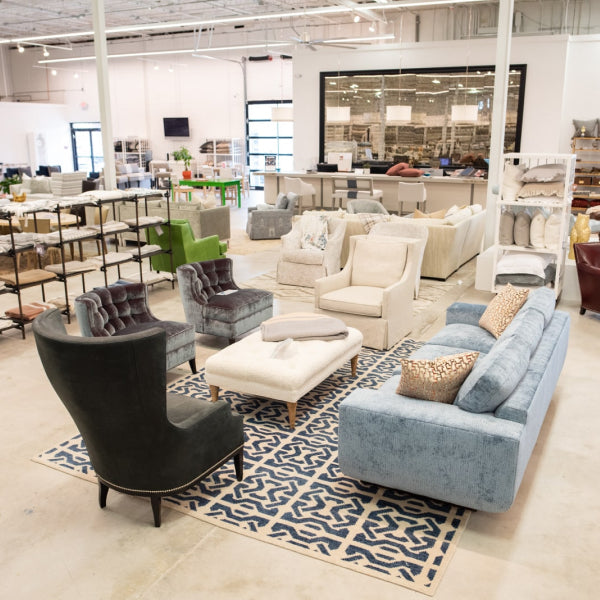
Atlanta homeowners and designers can also bring the fabric, furniture dimensions, and room plan to Lewis and Sheron Textiles' Design Center. The showroom offers in-stock bolts, cut-yardage options, custom upholstery, reupholstery, custom drapery, trims, pillow forms, and complimentary in-house design support for shopping projects. A specialist review is especially useful for complex repeats, directional velvet, large sectionals, and heirloom pieces where a shortage would be difficult to correct.
Visit Lewis and Sheron Textiles in Atlanta to compare premium upholstery and drapery fabrics, review yardage with design professionals, and plan custom furniture or reupholstery with the complete cut strategy in mind. Bring your measurements and fabric preferences so the team can help you move from a calculator estimate to a confident order.