

































You can measure a Buckhead window three times and still feel uneasy if the curtain hangs wrong in your head. That hesitation usually comes from measuring the glass instead of the hardware, then trying to guess how much fabric will fold, stack, and read like a finished drape. A curtain fullness calculator fixes that by turning a rod or track span into a fabric plan that makes sense before anyone cuts a yard.
What Curtain Fullness Actually Means
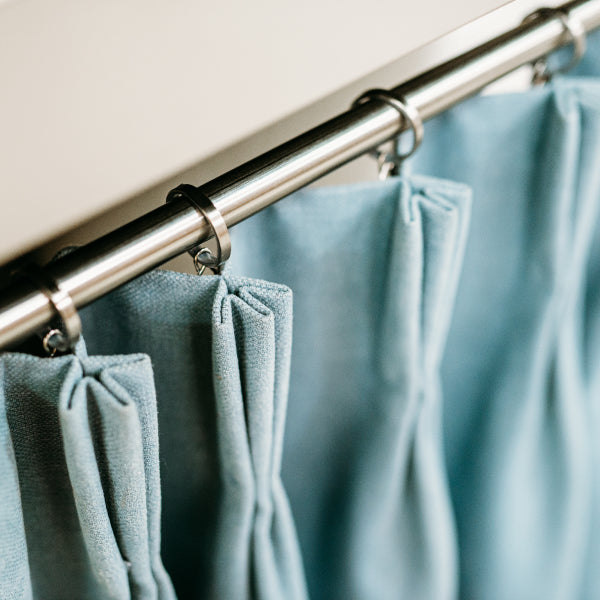
The first number that matters is not the window opening, it's the installed hardware span. Curtain fullness is the relationship between the flat width of fabric and the width of the rod or track it hangs from, and that ratio decides whether the finished panel looks polished, relaxed, or flat. In practice, major calculators keep coming back to 2.0x fullness as the classic baseline, and one widely used guide says standard curtain width is usually 2, 2.5, or 3 times the window width, while pencil pleat curtains are usually specified at double fullness with some styles reaching 2.5x or 3.0x. Omni Calculator's curtain size guide
In a well-finished room, fullness isn't decoration, it's structure. Too little fabric and the panel pulls tight across the span, showing gaps and looking borrowed. Enough fabric and the folds settle into a shape that suits the room, whether the space is a formal dining room in Sandy Springs or a clean-lined primary suite in Alpharetta.

Why the ratio matters before fabric choice
The ratio comes first because it changes everything downstream. Fabric width affects seam count, how many widths need to be joined, and how the panel behaves when opened or closed. That's why a curtain fullness calculator is a planning tool, not a guessing device.
A good rule of thumb is simple, the same span can produce three very different results depending on whether you choose a restrained, standard, or generous multiplier. On a 100-inch pole or track, standard fullness lands near 200 inches of flat fabric, a fuller look needs about 250 inches, and very full drapery needs about 300 inches. That ratio is what turns design intent into a cut list, before the first snip.
Practical rule: if the panel looks right on paper but the span is wrong, the curtain will still hang wrong in the room.
Choosing the Right Fullness Multiplier by Style
A workroom doesn't start with one universal number, it starts with the heading style. Pencil pleat, eyelet, wave, and pleated custom headings all behave differently, and the fabric needed for each one changes with the look you want and the weight of the cloth. One calculator published explicit ratios of 100% = 2.1× coverage width, 80% = 1.8×, and 60% = 1.6×, while another industry guide uses 2.0x as the default and notes that eyelet curtains often sit at 1.5x and sheers can rise to 3.0x. Loft Curtains' curtain calculator
| Heading Style | Typical Fullness Multiplier | Best For |
|---|---|---|
| Pencil pleat | 2.0x to 2.5x | Everyday gathered curtains, adaptable rooms |
| Pinch pleat | 2.0x to 2.5x | More tailored, classic custom drapery |
| Goblet pleat | 2.5x to 3.0x | Formal rooms, statement furniture pieces, elegant interiors |
| Eyelet | 1.5x to 2.0x | Cleaner, looser hang, casual-to-polished looks |
| Grommet | 1.5x to 2.0x | Simple contemporary panels |
| Wave | About 2.0x to a distinct wave-system reference | Sleek, modern tracks, even folds |
| Tab top | About 1.5x | Relaxed, light, low-structure treatments |
The multiplier is not a style preference alone, it's a response to what the heading is physically doing. A pleat folds fabric into depth, so it usually asks for more cloth than an eyelet top, which hangs with less built-in shaping. Sheers need even more because the eye wants visual density, not exposed gaps.
The room's formality nudges the number too. A Buckhead living room with high ceilings and custom upholstered furniture usually tolerates fuller drapery better than a plain kitchen breakfast nook.
A quick way to choose
If the room needs a refined, custom look, start near 2.0x. If the fabric is light, translucent, or meant to feel luxurious and soft, move higher. If the panel is heavy, lined, or designed to move often, stay closer to the lower end so the curtain doesn't fight the track.
Measuring Hardware First, Window Second
The tape goes on the hardware, not the glass. That's the habit that separates a clean custom order from a panel that arrives looking skimpy over a wide span. A rod that extends past the frame, a track with side clearance, or a pair of panels that meet at center all change the usable width before fullness is even applied.
Start at the outermost usable edge of the rod or track. If the system isn't installed yet, measure the planned span from the hardware points, including any side extensions the curtain needs so it can clear the window when open. A home in North Atlanta with sliding doors, for example, often needs a different planning approach than a narrow dining window with a centered pair of drapes.
For a measurement workflow that keeps the order clean from the start, use this window-measuring guide alongside your tape.
Why the hardware span wins
The window opening only tells you what the glass measures. It doesn't tell you where the curtain will stack, how far the track extends, or how much space the open panels need to clear the edges. That's why ordering off the glass width usually produces panels that look under-dressed once they hang.
A single continuous span over sliding doors is usually treated as one hardware width. A centered pair over a dining room window needs a deliberate overlap allowance, because the panels have to meet cleanly in the middle without exposing a gap. That center point changes the cut list, even when the window itself seems simple.
Measure the rod or track as it will exist in the room, then let the curtain fullness calculator do the rest. The glass is secondary.
Once the hardware number is correct, the rest becomes a chain of decisions, fullness, panel count, and finishing allowances. That chain is what a workroom uses to translate a room measure into a fabric order that fits.
Building the Calculation Step by Step
A workroom builds the number in layers, not all at once. The starting point is the hardware span, then the fullness multiplier turns that span into total flat fabric width, and after that the real-world allowances begin to shape the cut list. That includes panel count, pattern repeat, hems, header allowance, overlap, and returns.

The basic chain of decisions
- Measure the usable hardware span. That is the width the curtain spans.
- Choose the fullness multiplier. The style and fabric weight set the starting point.
- Convert to flat fabric width. Multiply the span by the chosen ratio.
- Split across panels. Then divide the target width by the number of panels and round up to whole widths.
A neutral calculator workflow also distinguishes the rod or track width from any side extension, then applies fullness, then divides paired draperies into panel targets. That sequence matters because fullness changes how many fabric widths must be joined, which changes seam count and labor. Softonic's curtain size calculator guidance
The rounding step is where many first-time orders go wrong. Fabric doesn't buy itself in half widths, and a panel that lands just under the target can finish flat once hems and folds are taken out of the equation. In custom work, rounding up is often the safer choice because it protects the look of the curtain when the cloth is patterned or wider than expected.
Where the extra allowances enter
Pattern repeat affects how much fabric must be bought if the motif has to line up. Hems, header depth, overlap, and returns are separate from the gathered width, they're built into the construction, not the fullness ratio itself. If the cloth is directional or patterned, the order needs a paper trail so the workroom can review the numbers before cutting.
For a clean yardage check, this drapery yardage guide is useful beside the calculator. And for a useful comparison outside drapery, Newline Painting's paint estimator shows the same basic planning logic, start with coverage, then apply the world allowance that changes the final quantity.
Two Worked Examples From Real Rooms
A calculator becomes useful the moment it stops feeling abstract. Two rooms, two cloth types, two different results, and the math tells the story more clearly than a style board ever can.

A sunroom bay with sheers
A wide sunroom bay asks for softness, not weight, so sheers usually need a fuller hand. If the installed track spans 144 inches, a 3.0x fullness choice turns that into 432 inches of flat fabric, before construction allowances are considered. In a sheer, that extra width keeps the fabric from looking sparse when the light comes through.
That kind of order also changes the seam plan. A fabric width around 118 inches means the workroom has to think about joining widths cleanly, because fullness directly affects how many widths must be assembled and how much labor the panel requires. Loft Curtains' calculator guidance makes the same point in practical terms, more fullness means more joined widths and a different cut strategy.
A primary bedroom in heavier linen
Now shift to a room where the drapery is meant to feel grounded and precise. A 90-inch track with a 2.5x pleated treatment gives a flat fabric target of 225 inches before allowances. If the cloth has a 27-inch vertical repeat, the pattern planning adds length pressure because the motif has to land predictably across both panels.
That's the part many homeowners miss. Heavier decorative cloth can sometimes need less width than a sheer to look substantial, but it often needs more length planning because pattern repeat and finishing depth matter more. In a custom bedroom, the result should look deliberate from the hem up, not merely wide enough to cover the window.
The cleaner the room, the less forgiving the math. Pattern repeat and panel symmetry show up immediately in the finished drape.
The contrast is simple. Sheers ask for more width so they read as full. Decorative cloth asks for disciplined length planning so the pattern and hem read as intentional. In both cases, the hardware span drives the order.
Troubleshooting the Mistakes That Flatten the Finished Drape
The most common failure is also the least glamorous, measuring the window instead of the hardware. That mistake leaves panels short on body and too tight across the span, especially on wider tracks and taller windows where the eye notices every compromise. Workroom guidance warns that underestimating fabric by ignoring heading style, returns, overlap, and fabric behavior is the biggest failure mode, and that failing to round up to whole fabric widths or whole panels can leave the curtain visually flat. Studiomatrx's curtain fullness calculator guidance
The errors that cause the damage
- Window-only measuring: The glass doesn't account for stack-back or side extensions.
- Rounding down fabric widths: A heavy cloth can lose its intended body fast if the order is too tight.
- Skipping pattern repeat: A stripe or motif can land awkwardly at a seam if repeat isn't counted.
- Ignoring returns: On a wall mount, the fabric that wraps toward the wall matters more than many people expect.
Each fix is straightforward, but it has to happen before the cut. Check the installed span, confirm the heading style, and decide whether the room needs overlap for center closure. If the cloth is patterned, confirm the repeat with the workroom before anyone commits to yardage.
A ceiling-mounted system behaves differently from a wall bracket, which is why returns deserve real attention during planning. The hardware detail can change how the edge of the curtain sits, and that affects how full the drape feels once it's hung. The panel may be correct in width and still feel wrong if the edges don't return cleanly.
For lining decisions that affect body and finish, this drapery lining note is worth keeping close. Lining won't fix bad math, but it will affect how the curtain settles once the width is right.
Ordering Custom Drapery With Lewis and Sheron Textiles
Once the hardware span and fullness target are set, the rest of the order gets much easier to manage. At Lewis and Sheron Textiles in Atlanta, the in-house design service works through the same planning logic when turning measurements into a workroom-ready specification, including fabric, lining, header, finish, and the cut list the sewer needs. The showroom also keeps a deep fabric library, including in-stock bolts and cut-yardage options from mills like Kravet, Fabricut, P. Kaufmann, Libeco Home, and Crypton, so the chosen fullness target can be matched to the right cloth without forcing the project into a compromise.

What to bring to the consult
- Hardware span: The installed width of the rod or track.
- Heading style: Pencil pleat, eyelet, pinch pleat, wave, or another finish.
- Panel count: One span or a paired treatment with center overlap.
- Fabric direction: Solid, stripe, motif, sheer, or heavier decorative cloth.
- Lining preference: Standard lined, unlined, or more structured construction.
That list keeps the calculator, the showroom, and the workroom aligned before any fabric gets cut. It also makes it easier to compare fabrics against the fullness target instead of choosing a bolt that looks good in the room sample but doesn't behave well at the required width.
For homeowners in Atlanta, Buckhead, Alpharetta, Roswell, Sandy Springs, Fulton County, and nearby North Atlanta markets, that kind of planning matters because premium drapery is an investment in how the room holds together. If the fabric and fullness are right, the curtains support the furniture, frame the architecture, and finish the space with the same confidence as a custom sofa or statement chair.
Visit Lewis and Sheron Textiles when you're ready to turn your rod or track measurement into a precise custom drapery plan, compare fabric options against the fullness you need, and get a consult that keeps the cut list, the fabric, and the finished room working together.