













You've chosen the fabric, saved a photograph of the room, and measured the window opening twice. Yet the finished curtains still look skimpy, sit awkwardly above the floor, or refuse to close cleanly across the glass. That result usually has less to do with sewing skill than with decisions made before the first cut.
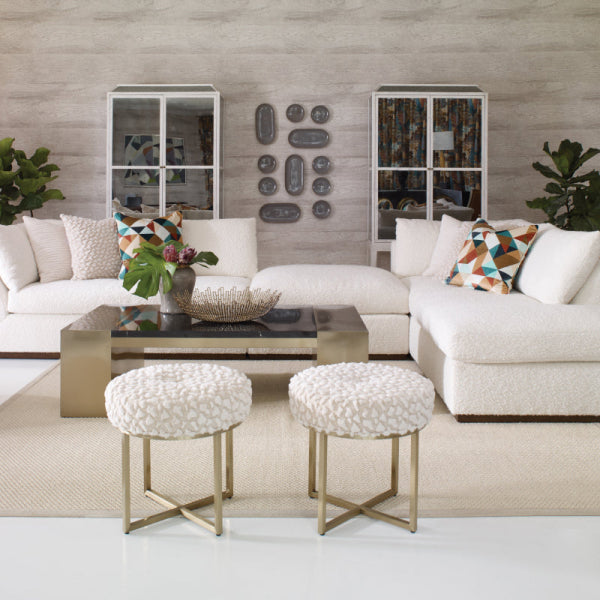
A custom drape begins as a specification. Finished width, fullness, stack-back, returns, overlap, mounting height, lining, and hem depth determine whether the panels look like custom upholstered furniture for the window or fabric hung at either side. The same discipline that separates high-quality couches from mass-produced seating applies here: proportion, materials, construction, and installation must work together.
Whether you're furnishing a Buckhead living room, updating a North Atlanta bedroom, or sourcing luxury home furnishings in Alpharetta, the process below will help you plan custom drapes that support designer furniture, premium sectionals, statement furniture pieces, and heirloom-quality interiors.
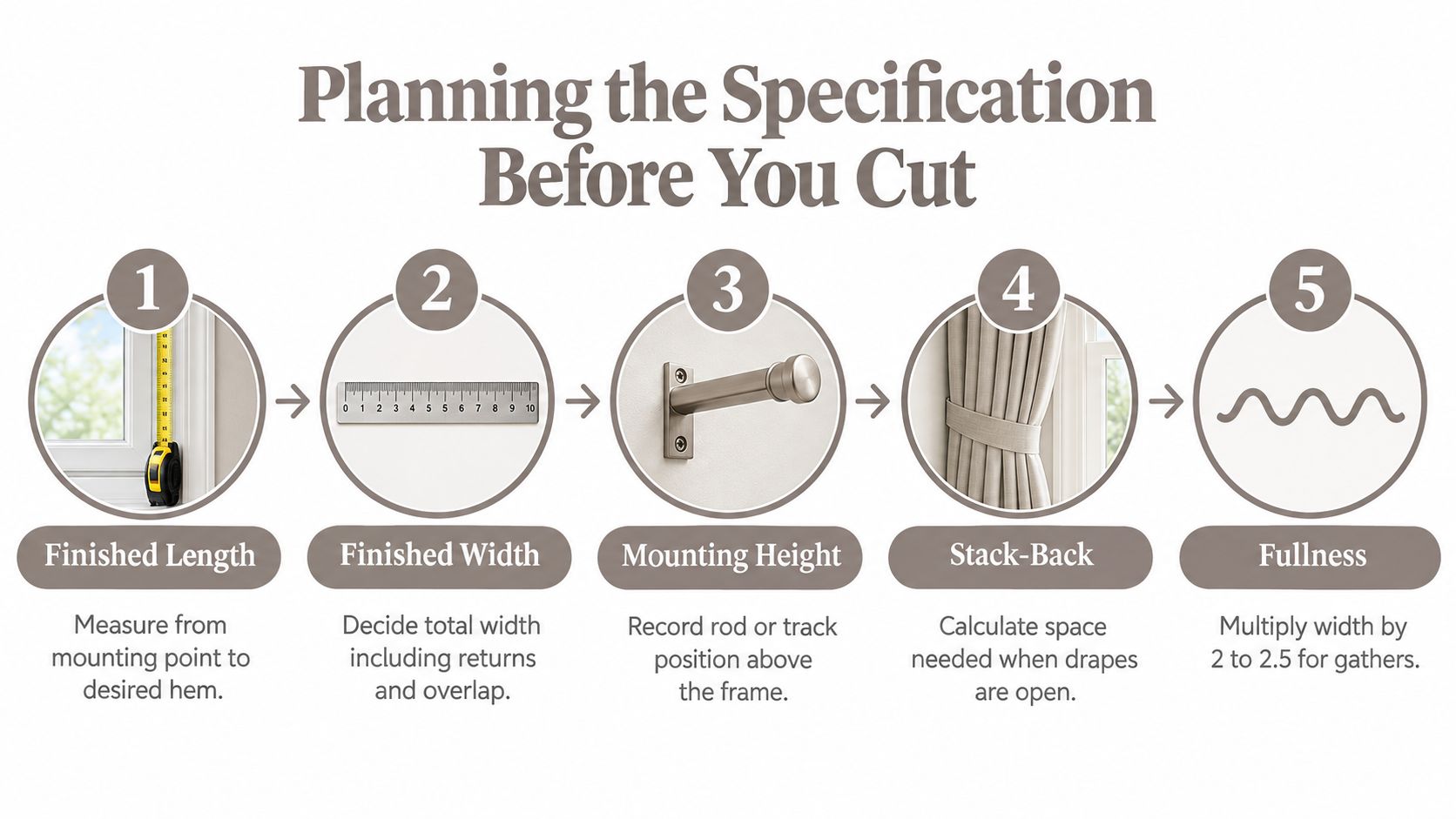
Planning the Specification Before You Cut
The most common reason DIY drapes look homemade is simple: the maker starts cutting before writing a complete specification. A window opening is only the starting point. The workroom needs the actual rod or track width, the installation point, the desired finished length, and the operating details that determine how the fabric will hang.
Measure the installation location rather than relying on the glass dimensions. Record whether the treatment will mount inside or outside the opening, then document the following:
- Finished length: Measure from the rod or track position to the sill, floor, or intended puddle.
- Finished width: Record the total coverage required across the rod or track.
- Mounting height: Note the exact position above the frame or below the ceiling detail.
- Return: Measure how far the rod comes back toward the wall at each side.
- Center overlap: Specify the fabric overlap where paired panels meet.
- Stack-back: Allow for the space occupied by the panels when open.
- Fullness: Calculate the flat fabric width needed to create the selected folds.
Fullness is based on the finished rod or track span, not the window opening. A 100-inch rod at 2.0-times fullness requires 200 inches of flat fabric before hems, headings, pattern matching, and other allowances. Medium-to-heavy fabrics commonly use 2.0 to 2.5 times fullness, while sheers generally need 2.5 to 3.0 times for a convincing fold pattern. A 100-inch finished width at 2.5 times therefore requires 250 inches of flat fabric before construction allowances, as outlined by this drapery workroom measurement guide.
Make the finished length a deliberate choice
Floor-length panels should generally be specified to meet the floor cleanly, while sill-length curtains need a precise stopping point that relates to the trim and furniture below. A puddled finish requires extra fabric and a clear agreement about how much fabric will rest on the floor. Guessing at length creates pooling that can look accidental rather than luxurious.
A floor-length panel commonly uses a 6- to 8-inch double bottom hem, while short curtains often use a 4- to 5-inch hem. Those allowances affect both yardage and the final proportion. Use a measurement worksheet such as this window-measuring reference, and don't approve fabric quantity until every allowance is written down.
Practical rule: If a number affects the way the panel opens, closes, stacks, or meets the floor, it belongs on the specification sheet.
Choosing Fabric, Lining, and Interlining
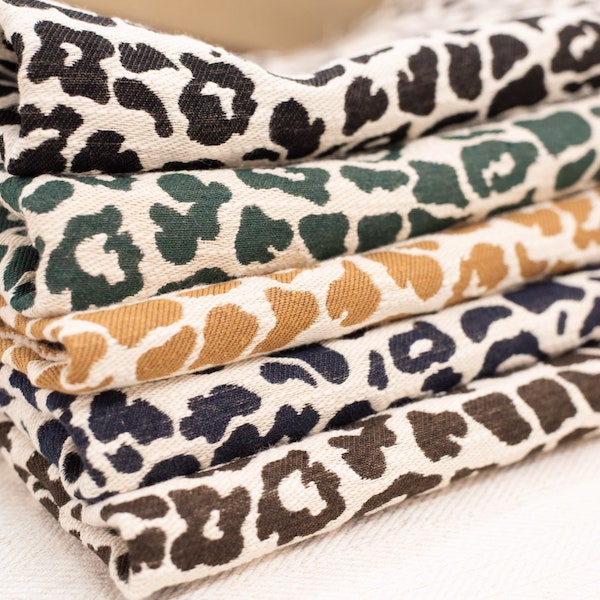
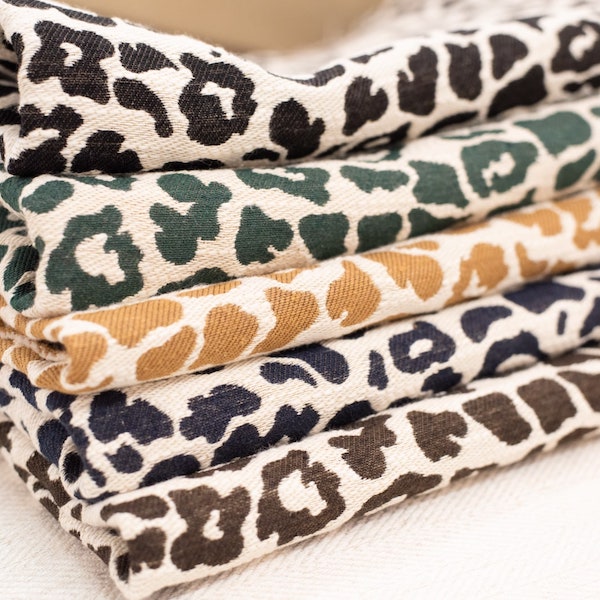
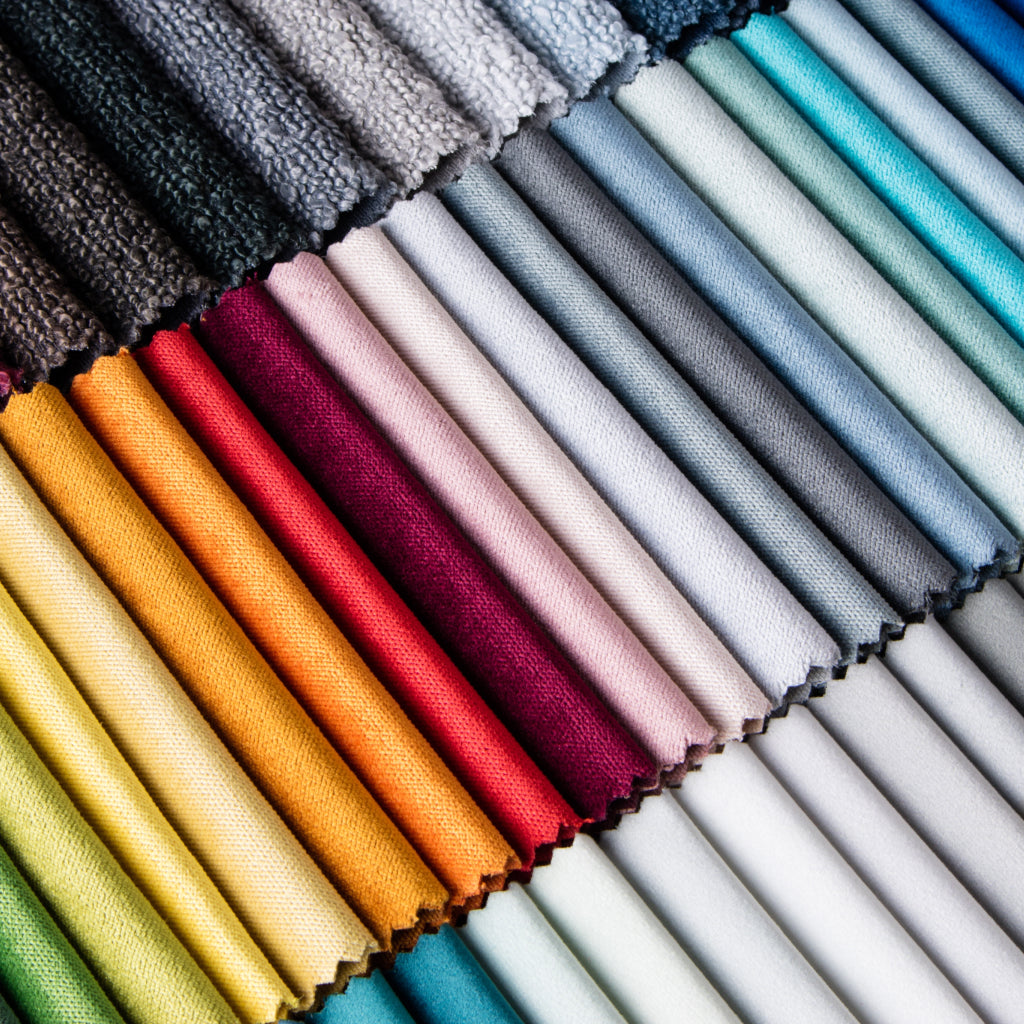
A luxury drape isn't chosen by fiber label alone. Read the fabric as a workroom would: consider its weight, hand, recovery, width, pattern repeat, light exposure, humidity, and compatibility with the lining you intend to use.
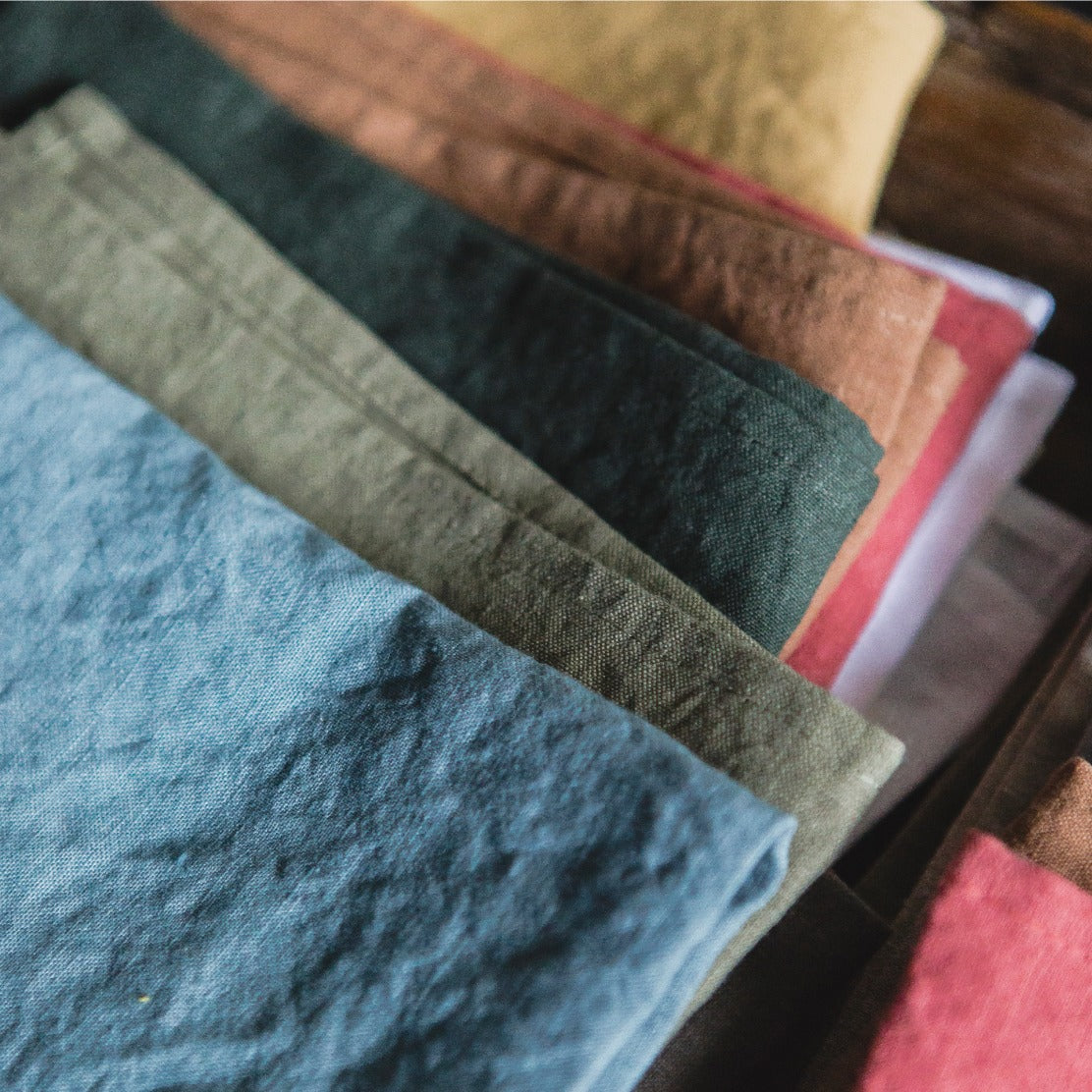
Linen can provide a relaxed, architectural texture, but it may show slubs, soften with use, and require careful stabilization. Cotton can offer a crisp or casual finish, depending on the weave, but dimensional stability and fading still matter. Performance fabrics and recycled-polyester options can be practical in rooms exposed to pets, children, strong sun, or frequent handling. The right choice is the one that stays attractive under the room's actual conditions, not necessarily the one with the most appealing natural-fiber story.
Treat the pattern repeat as a yardage decision
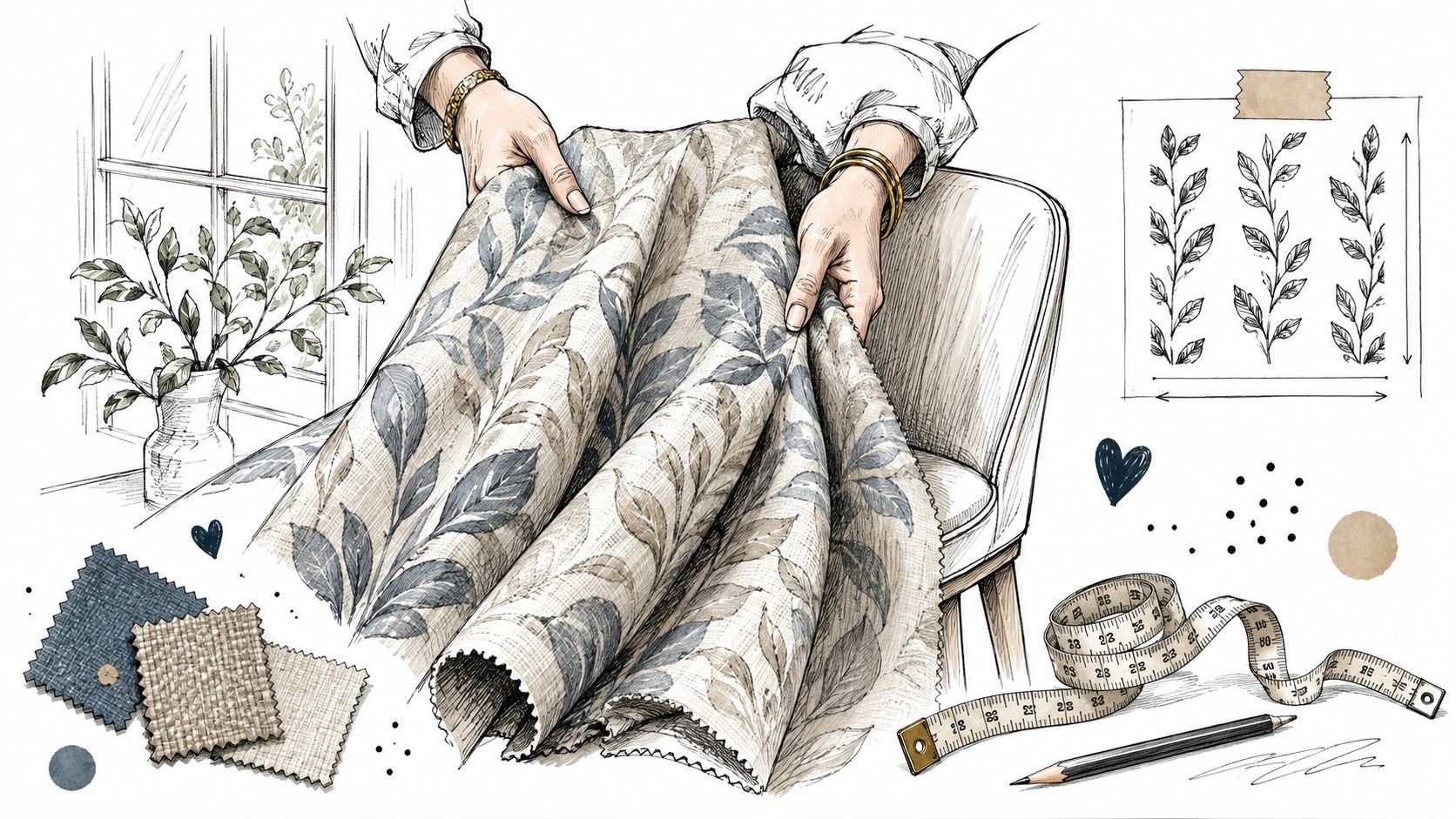
A large floral, stripe, or geometric pattern must align across joined widths. That alignment creates waste because each cut may need to begin at a matching point rather than at the most economical place on the roll. Check both vertical and horizontal repeats, then confirm the usable fabric width after selvages are removed.
Prewashing isn't automatically the correct answer. Some fabrics need preconditioning, professional preshrinking, or stabilization rather than a domestic wash that changes the hand unpredictably. Ask how the face fabric, lining, and interlining respond together. A panel that shrinks unevenly after construction can develop a crooked hem or pull at the side seams.
For readers comparing fibers and fabric behavior across sewing projects, the guide to best fabric for dressmaking offers useful background on weight, drape, and suitability. Drapery fabric has different construction demands, but the same principle applies: the fiber and weave influence how the finished piece behaves.
Match the material to the room
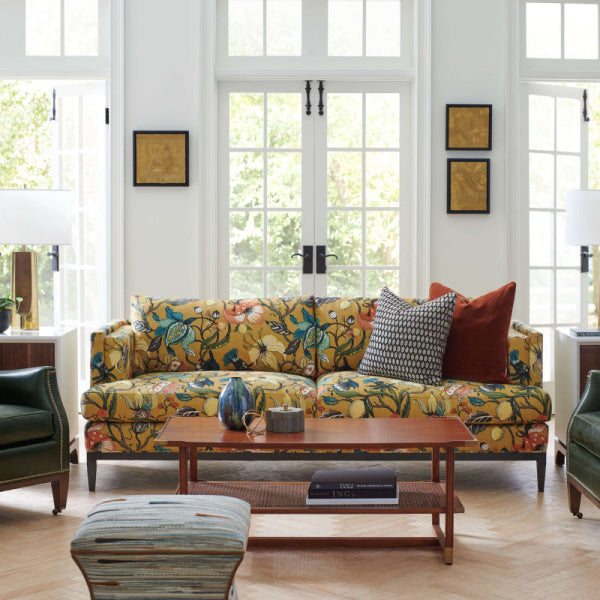
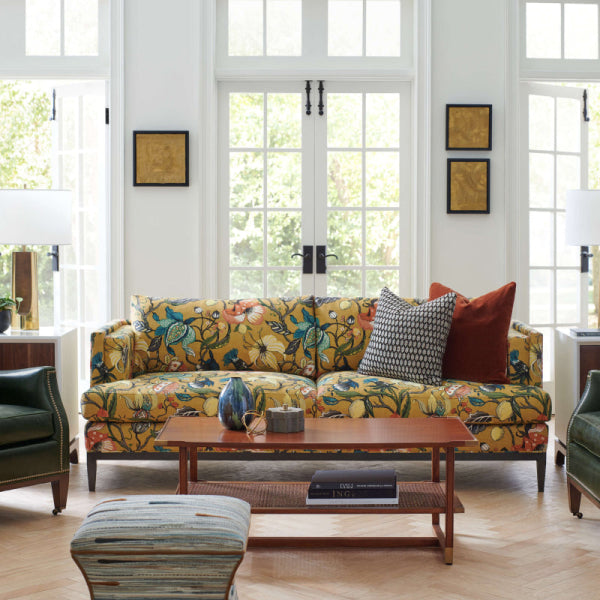
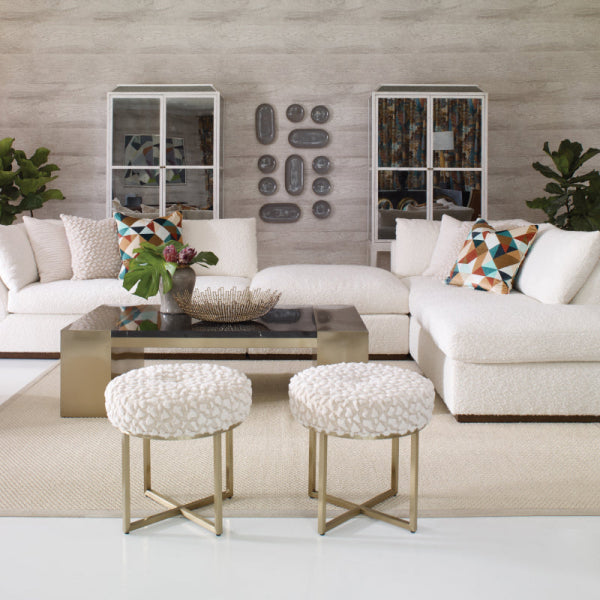
Use a quiet, stable textile when the furniture already carries a strong pattern. A textured neutral can support a designer sofa without competing with it, while a bold botanical or stripe can become the statement furniture piece of the wall.
Before ordering, approve a full specification that includes face fabric, lining, interlining, usable width, repeat, and finishing method. Sample the fabric in the room at different times of day. A swatch under showroom lighting won't tell you how a dark velvet absorbs afternoon sun or how a pale linen responds to glare.
Why Lining Choices Change the Whole Project
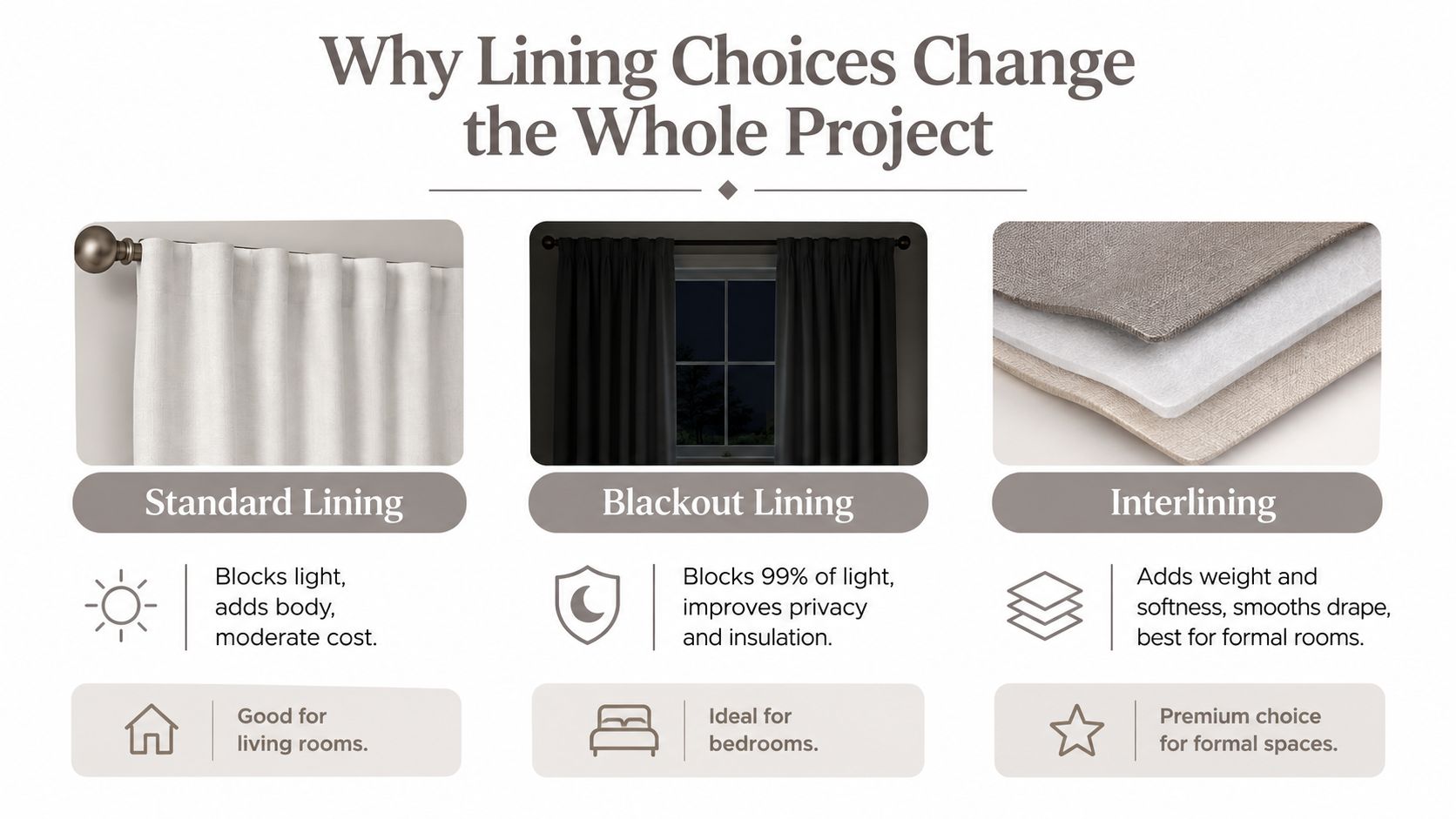
Lining controls more than the back of the panel. It changes light, privacy, visual weight, insulation, and the way the face fabric falls. A light decorative fabric may need lining to avoid a weak silhouette, while a dense textile may need only a compatible backing to protect the room-facing surface.
Standard lining is the straightforward choice for living rooms, dining rooms, and decorative panels where you want moderated light and added body without a heavily insulated construction. Room-darkening or blackout lining is more appropriate for bedrooms, media rooms, and spaces where privacy matters after sunset. Interlining sits between the face fabric and lining, adding softness, weight, and structure for a more formal finish.
Choose for operation, orientation, and climate
Atlanta, Sandy Springs, and other Southeast markets present a different planning problem from a cold-weather market. A south- or west-facing window may create substantial glare and solar heat, while a north-facing window may need a different balance of daylight and privacy. Record the orientation, glass type, clearance, and whether the treatment will be used for decoration, glare control, privacy, insulation, or several purposes.
The U.S. Department of Energy modeled 11 residential window-attachment types across four house configurations, three window types, and 12 climate zones, finding that performance varies with climate, season, window construction, and occupant operation. Its analysis estimated 10% to 34% annual HVAC-energy savings for insulated cellular shades and 12% to 25% cooling-HVAC savings from exterior shades on south- and west-facing windows. Those figures aren't guarantees for fabric drapes, but they support a practical design lesson: lining, installation, and operation can matter as much as the face fabric. See the Department of Energy discussion of window treatments.
For a sunny Atlanta bedroom, blackout lining may be sensible, but a cellular shade paired with drapery can provide more flexible control than relying on fabric alone. Independent research reports 10% to 20% heating-energy savings and 8% to 10% cooling savings for window attachments, while a Lawrence Berkeley National Laboratory analysis estimates nationwide commercial window upgrades could produce roughly 4% to 6% site-energy savings in typical buildings and up to 26% where savings potential is highest. These figures describe window systems, not a promise from a custom curtain. The window-attachment research makes the broader point clear.
Specify the lining in writing
Don't write “thermal lining” and assume everyone means the same thing. Identify the lining family, whether interlining is included, the desired darkness, and the treatment's operating schedule. A decorative stationary panel may need a different build from a daily-use bedroom drape.
The role of drapery lining also affects seam allowances, heading stability, weight, and cleaning decisions. A proper specification prevents the face fabric from being selected in isolation, as explained in this guide to custom drapery lining.
Layout, Cutting, and Pattern Matching
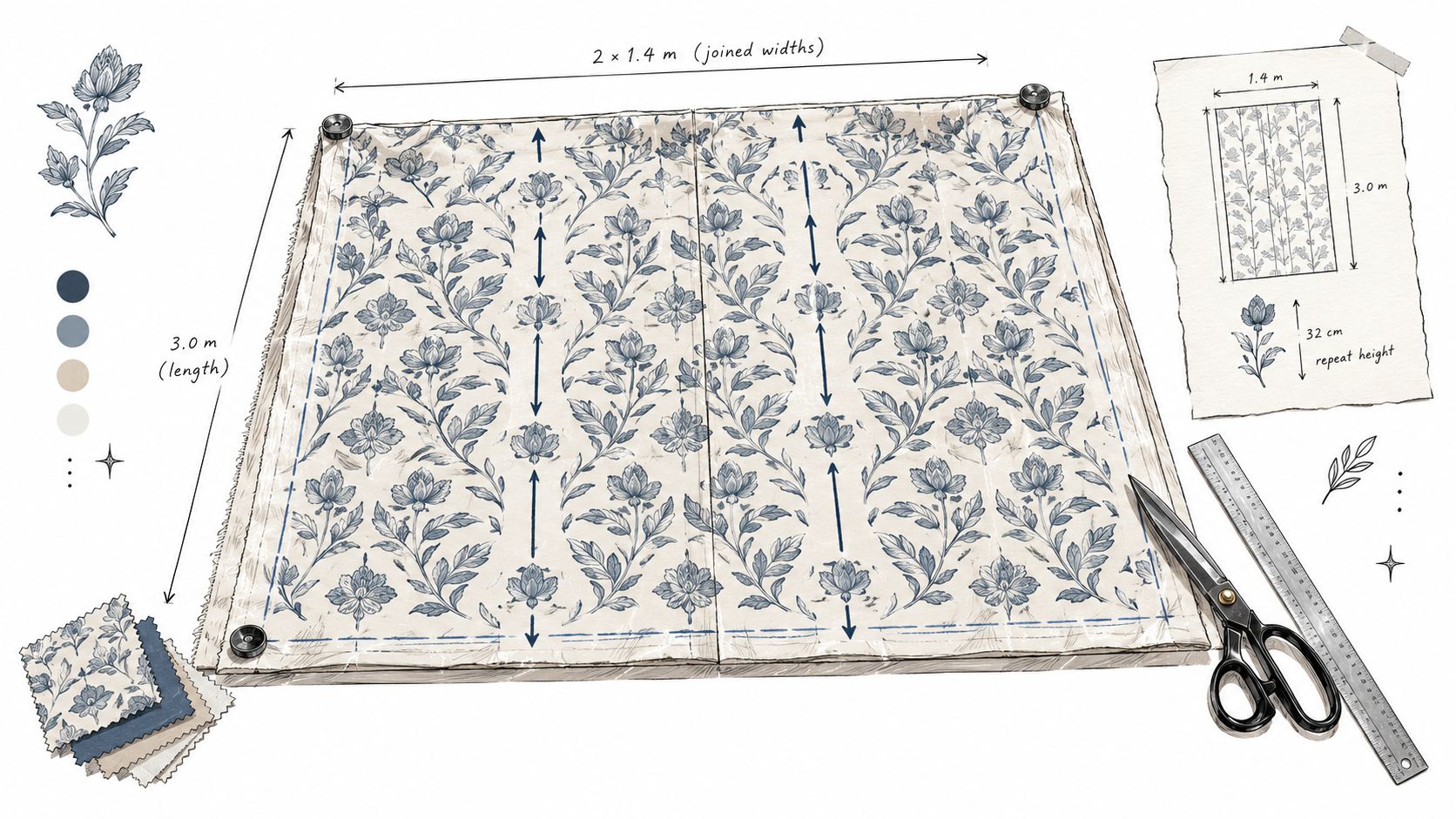
Once the specification and fabric are approved, cut in a controlled sequence. Spread the textile on a clean, level surface, identify the direction of the pattern, and mark the repeat before placing a single long cut. If the fabric has a nap, such as velvet, keep every panel oriented consistently. Turning one width upside down can make the color appear different even when the fabric is technically the same.
Pattern matching deserves more attention than it usually gets. Mark a common horizontal reference across every width, then position each cut so stripes, motifs, or geometrics continue through the joined seam. A small mismatch near the top of a tall panel can draw the eye across the entire wall.
Use a workroom order of operations
A reliable sequence protects the fabric and keeps the construction square:
- Stabilize the materials: Precondition or professionally preshrink the face fabric when appropriate, then allow the lining and interlining to acclimate according to their specifications.
- Cut matched widths: Mark the repeat and verify the usable width after removing selvages.
- Join the widths: Use consistent seam allowances, then serge or otherwise secure raw edges.
- Press carefully: Press seams without flattening the face texture or distorting the grain.
- Add lining or interlining: Keep the layers aligned while allowing the construction to hang naturally.
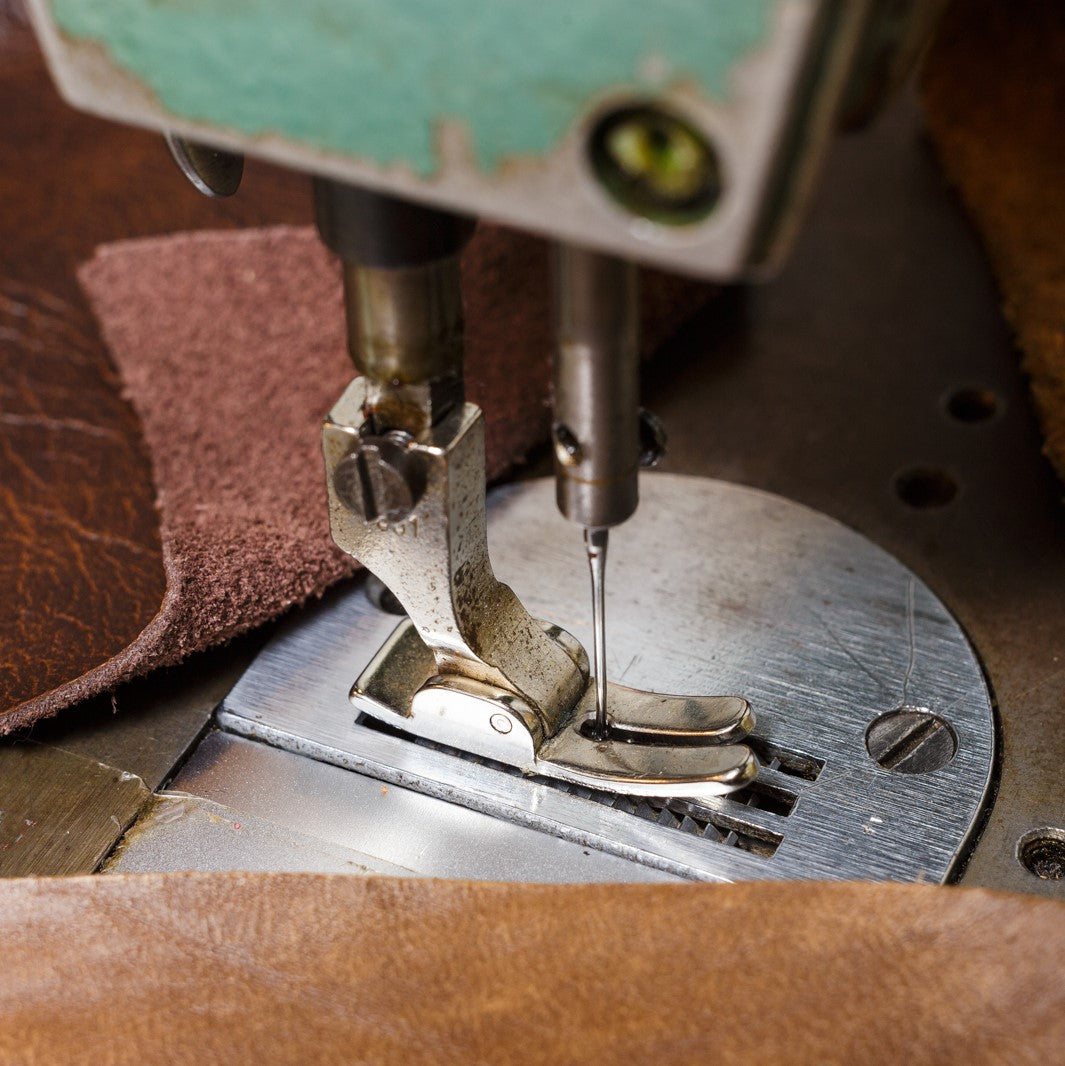
- Build the hems: Use blind stitching for a clean double-fold finish, adding weights at corners and seams where the design calls for them.
- Construct the heading: Add buckram or another stabilizer before forming structured pleats.
For finished side hems, a practical benchmark is approximately 1.5 inches in a double fold. A short curtain commonly uses a 4-inch finished double bottom hem, while a floor-length treatment often uses a 6- to 8-inch double bottom hem. Those details create the visual weight associated with high-end furniture and custom upholstered furniture. They also give the panel enough material to hang straight instead of curling at the edges.
Pattern matching is not decorative fussiness. It determines whether the fabric reads as one considered architectural surface or as separate pieces joined in haste.
Picking the Right Header Style for the Room
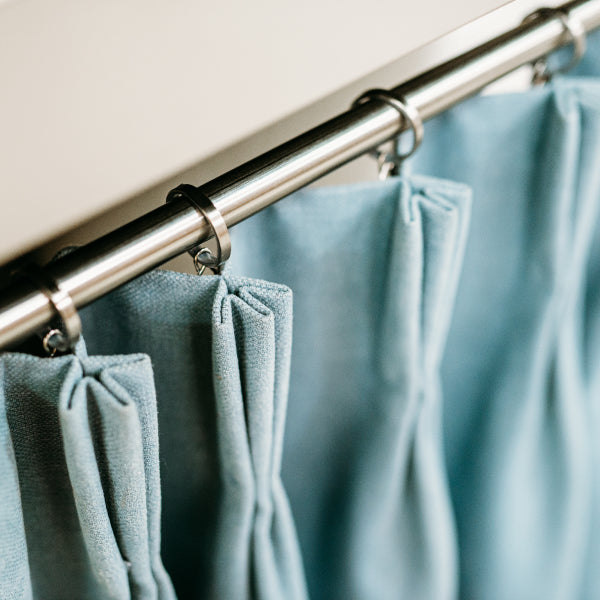
The header controls the transition between fabric and hardware. A pinch pleat creates a structured, traditional line and usually benefits from buckram or another stiffener. A goblet pleat is more formal and needs enough body to keep its cup-shaped folds. Tab tops and grommets are more casual, while ripplefold creates a controlled continuous wave that depends on the track and carrier spacing.
| Header Style | Typical Fullness | Best Fabric Weight | Works Best In |
|---|---|---|---|
| Pinch pleat | 2.0 to 2.5 times | Medium to heavy | Formal living rooms, dining rooms, bedrooms |
| Goblet pleat | 2.0 to 2.5 times | Medium to heavy with body | Traditional rooms and ceremonial spaces |
| Tab top | About 2.0 times | Light to medium | Casual, stationary, or relaxed rooms |
| Grommet | About 1.5 to 2.0 times | Light to medium | Contemporary spaces with decorative rods |
| Ripplefold | Around 1.8 times for lined fabric and 2.2 times for sheer fabric | Light to medium | Modern rooms using a functional track |
The ripplefold figures come from workroom practice, but the carrier spacing determines the actual appearance. Snap tape alone doesn't establish the final fullness. A narrow carrier arrangement can make the folds look crowded, while a generous arrangement can make the same fabric appear too flat.
Pinch pleats and goblets should be stabilized with buckram so the folds hold their shape. Grommets require careful spacing and reinforcement around each opening. Tab tops are more forgiving for a first project, but they can be awkward to operate and often read as casual rather than custom-made.
Match the header to the furniture
A substantial luxury sofa or premium sectional usually needs a header with enough structure to hold its own visually. A relaxed linen panel beside a low, modern designer chair may suit a simpler heading. Hardware finish matters too. Dense fabric and deep color can handle more substantial hardware, while sheers and pale textiles usually benefit from a restrained track or rod.
For a first serious project, choose a header that matches both your sewing confidence and your operating needs. A workroom is the better choice for complex pleating, large repeats, tall panels, or ripplefold treatments where the carrier system must be coordinated precisely.
Hanging, Hardware, and Final Installation
Good fabric can't correct weak hardware. Select the rod or track based on the panel weight, opening width, header style, and frequency of operation. A decorative rod may suit rings and pinch pleats, while ripplefold and some functional pleated treatments need a dedicated track with compatible carriers.
Mount brackets into studs when possible, or use anchors rated for the load and wall construction. Keep the hardware level before hanging the panels. A slight slope becomes obvious across a wide window, especially when the hem is intended to meet the floor cleanly.
Close the gaps deliberately
Returns bring the side of the panel back toward the wall. They help cover the space between the rod face and the wall, reducing side light and preventing the treatment from looking detached from the architecture. Center overlap serves a similar purpose at the meeting point of paired panels. Specify enough overlap to prevent a visible light gap when the drapes are closed.
Useful track hanging system types include systems designed for different carriers, panel weights, and operating patterns. Hardware isn't an afterthought. Its projection, return, carrier spacing, and mounting strength all affect the finished appearance.
Before finalizing the installation, check:
- Level: Confirm the rod or track is level across its full span.
- Returns: Make sure both returns reach the wall consistently.
- Overlap: Close paired panels and inspect the center for a light seam.
- Floor clearance: Check that the panels meet the floor or puddle evenly.
- Operation: Draw the panels open and closed without dragging or fighting the carriers.
- Stack-back: Confirm the open panels clear the intended glass and don't bury the view.
The custom drapery hardware guidance is useful when the treatment includes specialized tracks, decorative rods, or coordinated hardware. Tall windows, bay windows, corner conditions, and high ceilings deserve professional installation. A skilled installer can account for an uneven floor, difficult access, heavy panels, and the small adjustments that make a finished treatment look settled rather than merely hung.
Troubleshooting the Mistakes That Show Up Later
Most drapery failures are specification failures that become visible after installation. The sewing may be neat, but the panels still look wrong because the maker guessed at finished length, used the window width instead of the rod width, or ignored how the hardware projects from the wall.
Pooling is deeper than intended. The finished length was probably guessed from the window rather than measured from the actual mounting point. If the fabric is already made, shorten the hem only after hanging both panels and checking the floor across the entire opening. On the next project, record the mounting height, floor condition, and desired finish before calculating the bottom hem.
The returns don't cover the sides. This happens when the decorative rod projection is treated as an afterthought. The fix may involve repositioning the brackets, adding a deeper return, or changing the hardware. On the specification sheet, record the hardware projection and return together, not as separate assumptions.
The panels gap at the center. Paired panels need a specified center overlap. If there isn't enough fabric at the lead edges, a larger overlap may require rebuilding the heading or adjusting the hardware. For the next pair, write the overlap into the finished width before applying fullness.
The hem looks uneven. Floors and ceilings are rarely perfectly level, especially in older homes around Fulton County. A panel can be measured accurately and still appear uneven if it is cut from a level table without checking the installed floor line. Hang, relax, and mark the final hem when practical. Use weights at corners and seams where they support the design rather than hiding a construction error.
The lining changes color or behaves poorly. Sun exposure, cleaning methods, fiber compatibility, and heat can affect the backing. A lining that looked appropriate in a swatch may yellow, shrink, or become brittle in a bright room. Replace the lining when possible, and document the room's orientation and maintenance requirements before ordering the next fabric.
The folds spread instead of holding. The header may lack buckram, the fullness may be too low, or the fabric may be too light for the selected style. Steam and train the folds only after correcting the construction issue. A temporary tie can encourage a fold pattern, but it can't turn an underfilled panel into a full one.
High-end furniture buyers already understand this principle. A sofa's fabric performance, cushion construction, frame, and proportion all affect whether it becomes heirloom-quality furniture or an expensive short-term purchase. Custom drapes work the same way. The second pair often looks better because the first project reveals how the room's light, floor, hardware, and daily operation interact.
Lewis and Sheron Textiles offers fabric selection, custom drapery planning, made-to-order production, and optional installation for clients who want the specification handled alongside the finished treatment. Visit Lewis and Sheron Textiles to explore home fabrics, custom furnishings, and design support for Atlanta, Buckhead, Alpharetta, Roswell, Sandy Springs, and surrounding markets.