











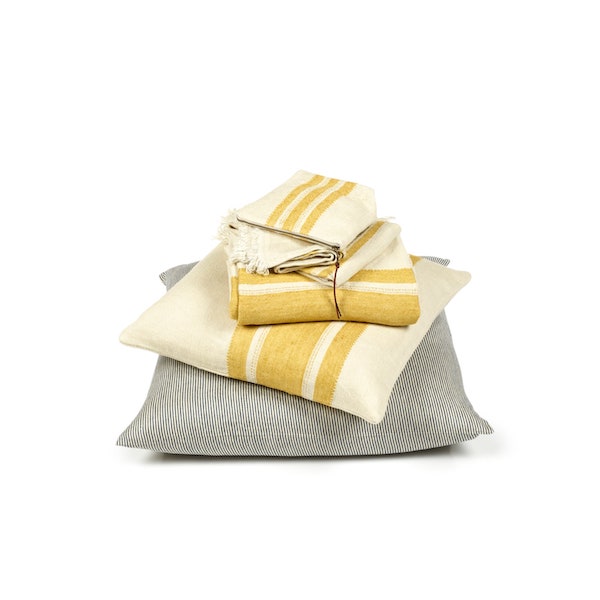
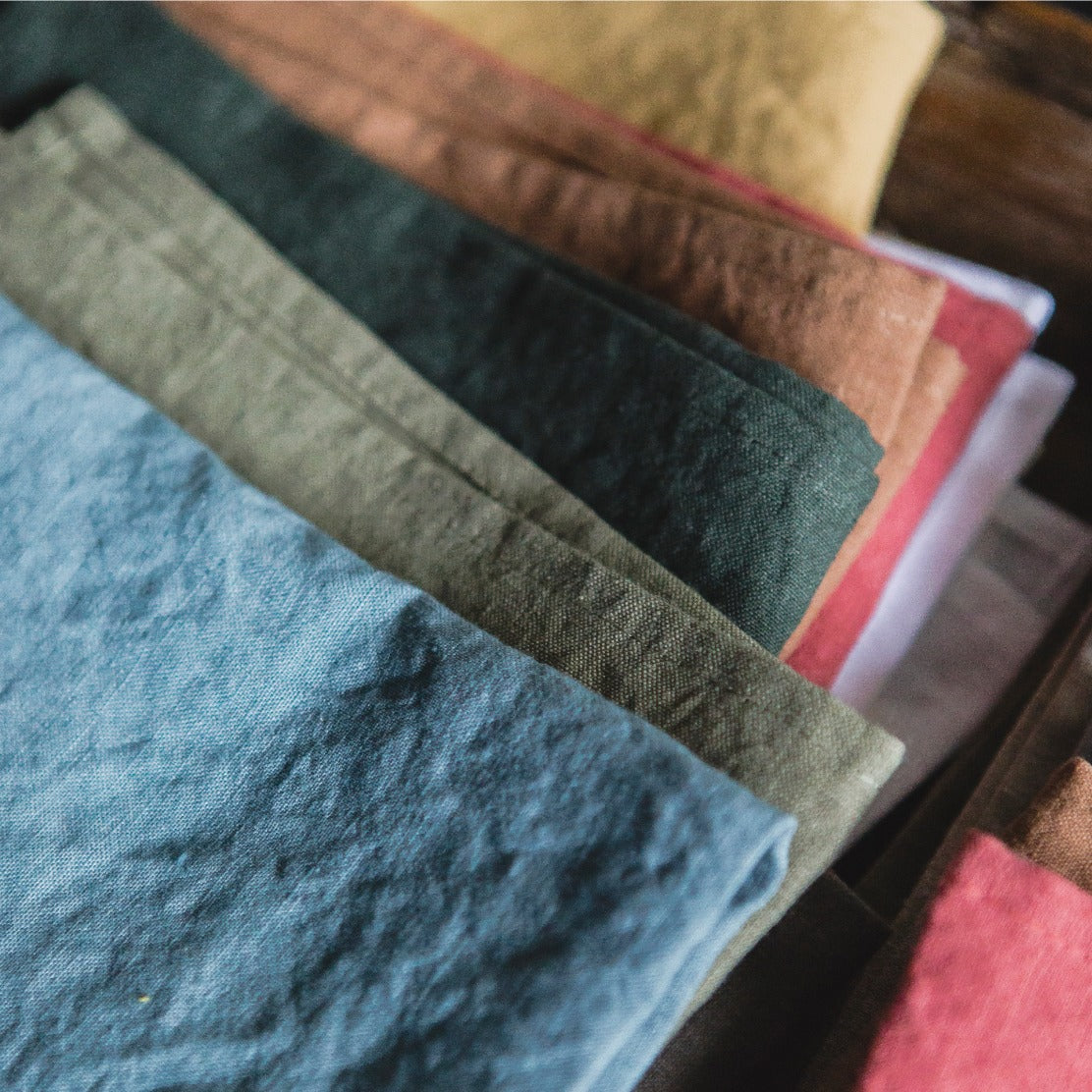

You can stand in a showroom with two bolts marked natural linen and feel the mismatch before you even touch them. One reads soft oat in the overhead light, the other leans taupe and cool, and suddenly the phrase linen natural color stops sounding simple.
That moment catches a lot of Atlanta shoppers off guard. If you're choosing custom upholstered furniture, luxury sofas, or drapery for a Buckhead living room, you need more than a label. You need to know why the cloth looks the way it does, how it will behave in your room, and how to source it with confidence.
The Moment Two Natural Linens Do Not Match
A homeowner reaches for two swatches in a design center and assumes the word natural means they'll coordinate. They don't. One looks like warm oatmeal, the other like cooler taupe, and both are telling the truth.
That's the first shift to make with linen natural color. It's not a single shade sitting on a shelf, it's a family of undyed tones that move between beige, grey, ivory, ecru, and deeper earthy notes depending on how the fiber was grown and processed. The CFDA's flax and linen material guide describes the natural range as beige to light grey, while textile references also note pale golden brown and écru in untreated fibers.
What the label really means
When mills call something natural linen, they usually mean undyed linen. That sounds precise, but it isn't the same as standardized color matching. It's closer to saying “solid wood” than naming walnut or oak.
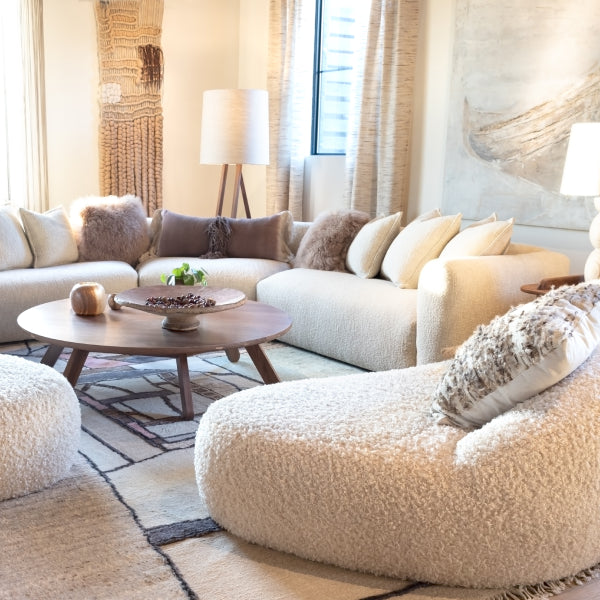
For homeowners choosing designer furniture near me in Atlanta, that matters because the same bolt can sit beautifully beside a white oak side table in Sandy Springs and look warmer beside honey-stained trim in Roswell. A drapery panel for a North Atlanta bedroom may read more ivory at the window, while the same cloth on a sectional in Alpharetta can tilt grey under cooler light. The cloth hasn't changed, the room has.
Practical rule: treat natural linen like a material family, not a fixed paint chip.
That's why the most useful questions are practical ones. What undertone does this bolt show in your actual room light, how much lot variation is acceptable, and will the same batch work across pillows, drapery, and upholstery? Those are the questions that keep a purchase from feeling random later.
If you're shopping for high-end furniture or luxury home furnishings in Atlanta, this guide will give you the language to name what you see and a checklist to buy with conviction.
Why Undyed Linen Reads as Natural in the First Place
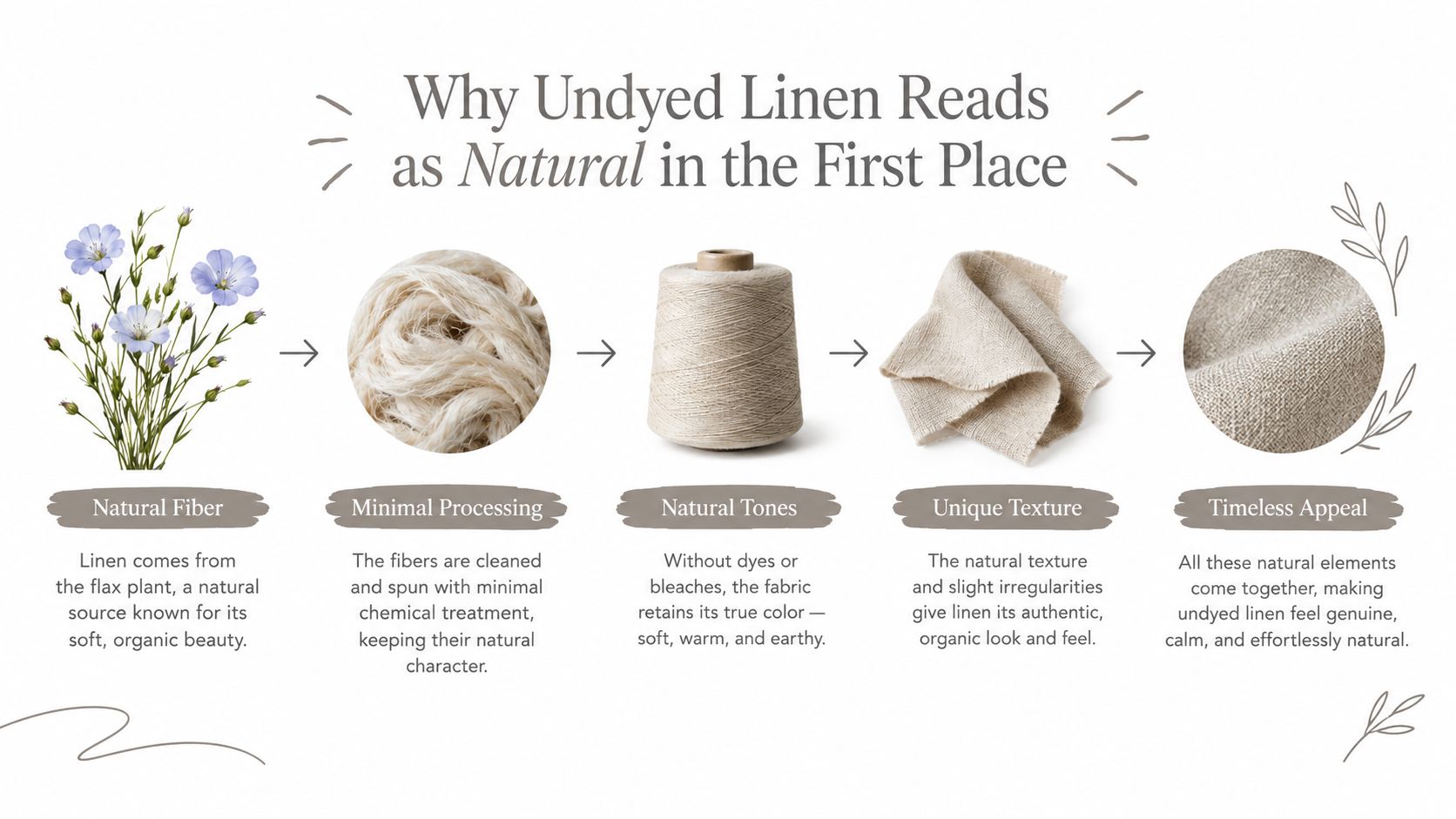
From flax field to finished cloth
Linen starts as flax, and flax fiber carries small amounts of non-cellulosic material even after processing. That residue, along with the way the fiber is handled, is part of why undyed linen doesn't look like bleached cotton. The CFDA notes that flax is chemically similar to cotton but stronger, stiffer, more sunlight resistant, and faster drying, and that its natural color can range from beige to light grey.
Think of retting as the point where tone begins. In dew retting, the stalk sits in the field and is exposed to moisture and microbes. In water retting, the process happens in water. Same plant, different exposure, different outcome, a little like how a sliced apple left on the counter starts changing color as air interacts with it.
The processing steps that matter
After retting, the fibers are scutched, hackled, and spun. That's the mechanical cleaning and aligning stage, and it influences how evenly the yarn will take on the look of “natural” once it's woven. Then the mill decides whether to wash, beetle, calender, bleach, or leave the cloth closer to its raw state.
Finishing choices matter more than most shoppers realize. A fabric can be sold as natural even if it was lightly washed, calendered, or given other surface treatments that change how it catches light. Optical brighteners or bleach push it in a different visual direction, while a minimally processed cloth holds more of the fiber's own muted character. That's why natural means undyed, not standardized.
For people sourcing custom furniture Atlanta projects, this is the point to remember. Two premium linens can both be “natural,” but one may read cleaner and paler while another looks warmer and more rustic because the processing path was different. If you're buying for a custom chair or premium sectional, ask for a sample and hold it in the same room where the piece will live.
The Spectrum of Tones Hiding Inside Natural
Natural linen is easier to trust once you stop calling every shade beige. The spectrum runs from pale, almost creamy notes to deeper grey-brown tones, and the reason usually lives in the crop, the retting, and the finish. A good buyer doesn't ask whether the cloth is natural, they ask which natural.
Reading the tones from pale to deep
Early-harvest, dew-retted flax tends to sit at the lightest end, with ivory and ecru showing up first. Water-retted summer flax often lands in flax, oat, or soft sand territory. Older field-retted stalks, or lots processed under darker conditions, can move into taupe, mushroom, or putty.
The useful part is not memorizing every term, it's learning the pattern. As the source material notes, tone shifts with sun, rain, retting conditions, and cultivation methods, and organic flax can appear darker because no chemicals were used during cultivation. The European Flax-Linen-Hemp news archive on flax colors also describes flax fiber as ranging from beige to brown to grey, which matches what buyers see on the floor.
Why lots differ inside one mill run
Batch variation is normal. That's the piece many shoppers miss, and it's why two drapery panels cut from different bolts can read mismatched at the seam even when both are technically correct. In a showroom, that can feel like a defect. In textile production, it usually means the mill worked with real plant material, not a dyed synthetic recipe.
| Tone | What Produces It |
|---|---|
| Ivory | Early-harvest, dew-retted flax with very light processing |
| Ecru | Slightly deeper pale flax, often from gentle finishing |
| Oatmeal | Balanced natural tone from mixed harvest and processing conditions |
| Flax | Water-retted or mid-range lots with more visible fiber character |
| Sand | Warmer lots that hold a golden cast |
| Taupe | Cooler or deeper lots with more grey in the base |
| Mushroom | Older, more field-retted material with muted brown-grey depth |
| Putty | The deepest muted end of the natural spectrum |
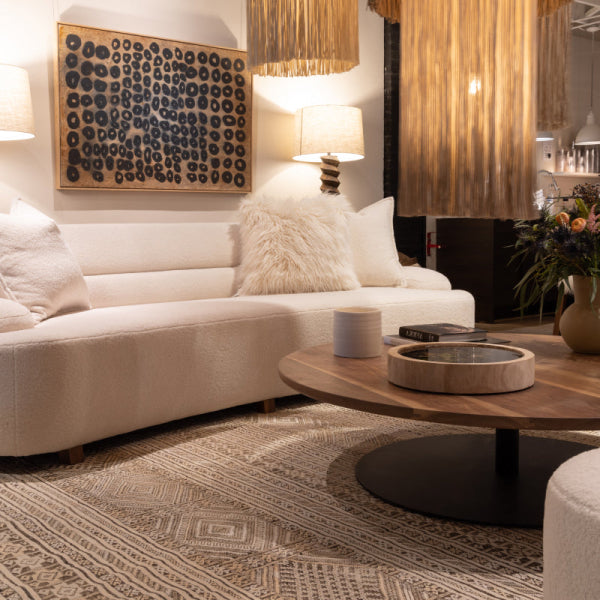
If you're planning luxury sofas or statement furniture pieces, this spectrum matters as much as style. A serene bedroom palette might work best with ivory or ecru. A family room with high-quality couches can handle taupe or mushroom because those tones disguise daily life better.
For a calm, cohesive bedroom palette, these calming room design tips are a useful companion read, especially if you're balancing fabric tone with bedding, walls, and woodwork.
How Room Light Changes What You See
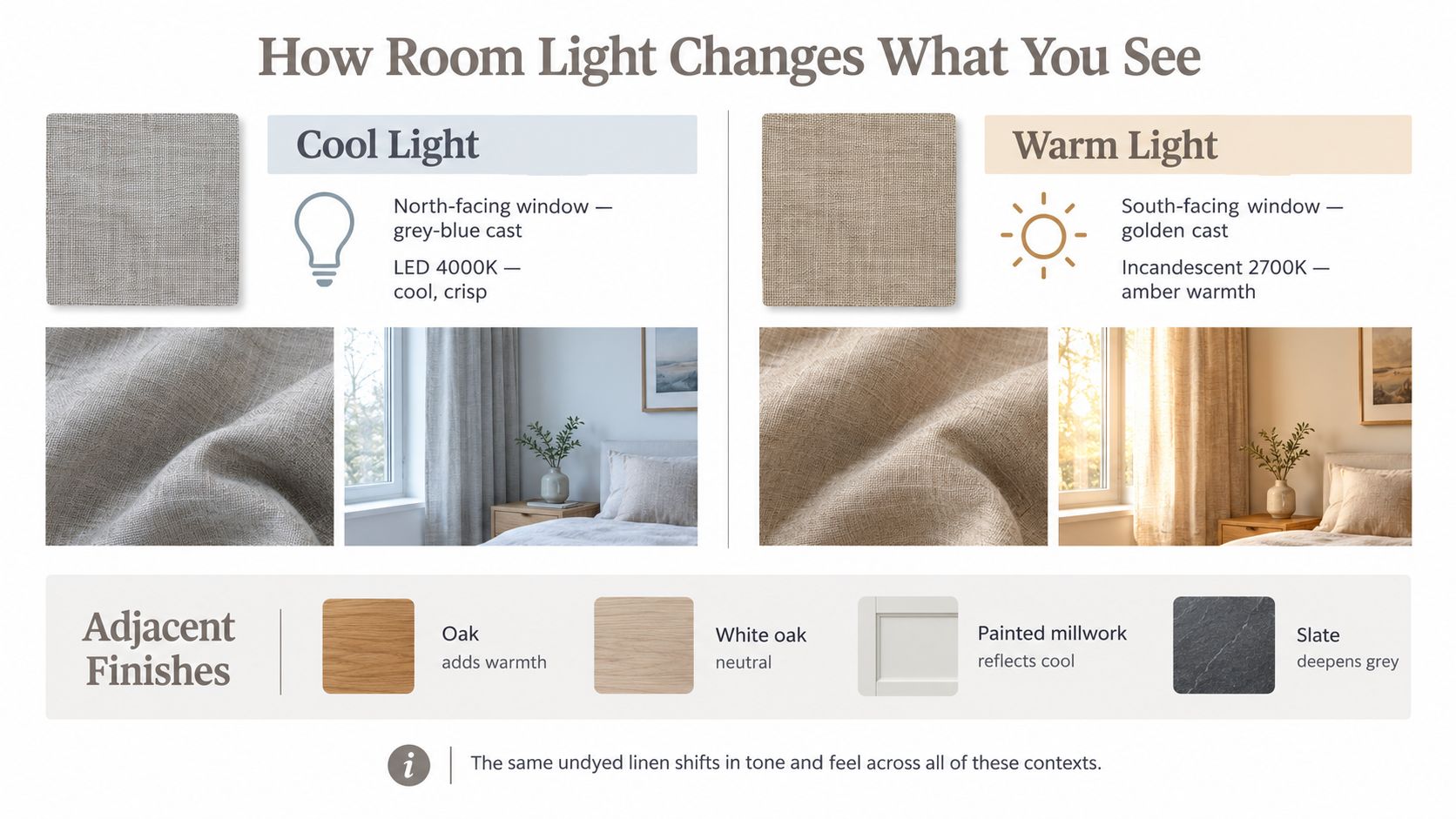
The room acts like a filter
A swatch taped to a window is not a final answer. North-facing light tends to cool linen down and pull out grey-blue notes. South-facing light often warms it up and can make the same cloth look more golden than it did in the showroom.
Bulb choice does the same thing. Under 3000K LEDs, some natural linens can read a little greenish or crisp, while warmer incandescent light pushes them toward amber. Adjacent finishes matter too. Oak can add warmth, white oak stays more neutral, painted millwork reflects cooler light, and slate deepens the grey cast.
A simple sampling routine
If you're choosing fabric for luxury home furnishings in Atlanta, test the cloth the way you live with it. A single daytime glance can miss the undertone you'll see every night after dinner.
- Cut three small squares. Keep them unwashed, because the finish matters.
- Tape one at night. Check how it sits under your lamps.
- Tape one in the morning. Morning light often reveals a different cast than afternoon light.
- Tape one at evening. That's when many living rooms lean warm.
- Compare against your finishes. Oak, white oak, painted trim, and stone all alter the read.
Hold the swatch near the sofa arm, not just by the window.
That advice keeps buyers from overtrusting a single sample. It also helps when you're specifying custom upholstered furniture for a Buckhead condo or a Roswell family room, because the room itself is part of the color decision. If you're comparing designer furniture near me options, bring the sample home before you commit to yardage.
For another helpful perspective on how ambient conditions change visual color, this guide on how natural light changes paint colors is worth a look.
Matching Natural Linen to Drapery Upholstery and Bedding
The right linen natural color depends on what the fabric has to do. Drapery wants softness and movement. Upholstery needs structure. Bedding needs comfort and consistency after washing. Those are different jobs, so the best natural shade changes with the application.
Drapery needs air and diffusion
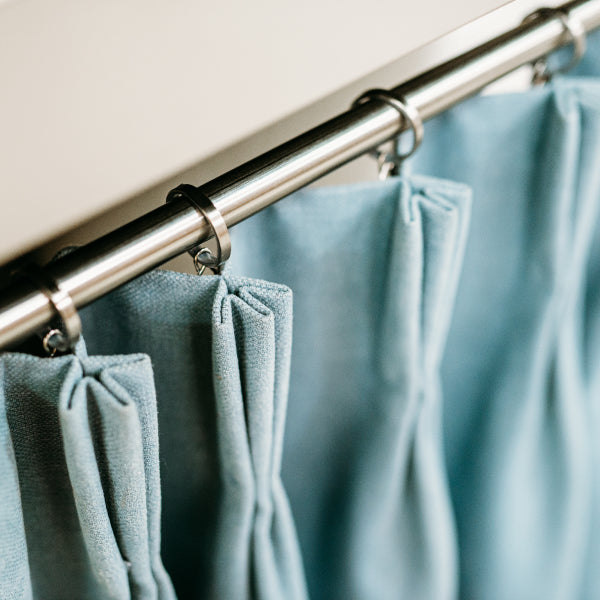
For drapery, loose weaves and lighter weights are the sweet spot. Oat, ecru, and soft flax tones usually work best because they let light pass through without looking stark. If you've ever seen linen curtains that feel too heavy at the window, the problem is often the weight, not just the color.
A useful companion reference for curtain hardware and proportion is That Blanket Co's guide to 2-inch diameter curtain rods, especially if your drapery is part of a larger designer plan. If the rod is undersized, even beautiful linen can look fussy instead of relaxed.
Upholstery needs tighter structure
For sofas, sectionals, and chairs, the cloth has to hold seams and resist wear. Tighter weaves in flax, taupe, and greige usually make more sense here because they hide daily use and support the body of the piece. If you're searching for high-end furniture or premium sectionals in Fulton County, that's the category where tone and build need to work together.
The internal guide on drapery linen fabric by the yard is useful if you're comparing fabric weight for window treatments. For upholstery, the rule changes fast. A drapery-weight linen on a club chair will look elegant for about five minutes, then fight the shape of the frame.
Bedding can live across the range
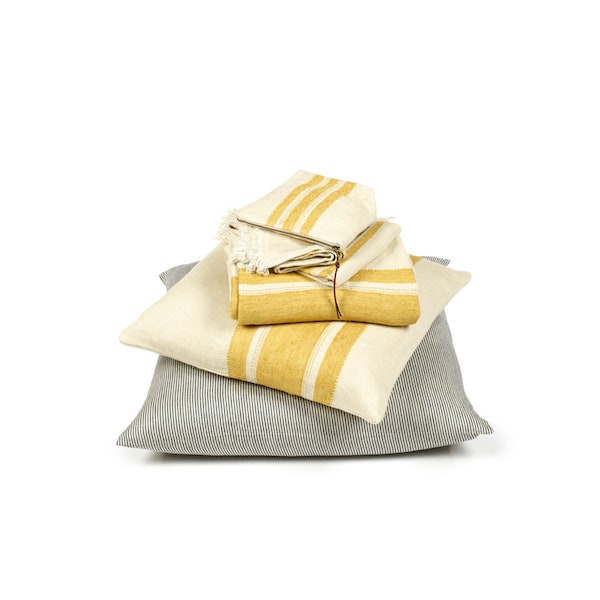
Bedding is more forgiving, but washed mid-tones are often the smartest choice because they hide laundering variation better than very pale linen does. That's useful if you're building a room around luxury home furnishings and want the bed to coordinate with both wood tones and painted trim.
| Application | Weight (oz/yd²) | Weave | Recommended Natural Tone |
|---|---|---|---|
| Drapery | 6 to 9 | Loose weave | Oat, ecru |
| Upholstery | 12 to 16 | Tighter weave | Flax, taupe, greige |
| Bedding | Varies by product | Washed, flexible weave | Mid-tones, softened flax, oat |
If you're sourcing custom chairs or high-quality couches, ask for the fabric in the actual construction weight, not the drapery version of the same line. The tone may be similar, but the performance won't be.
Caring for Undyed Linen Without Stripping the Patina
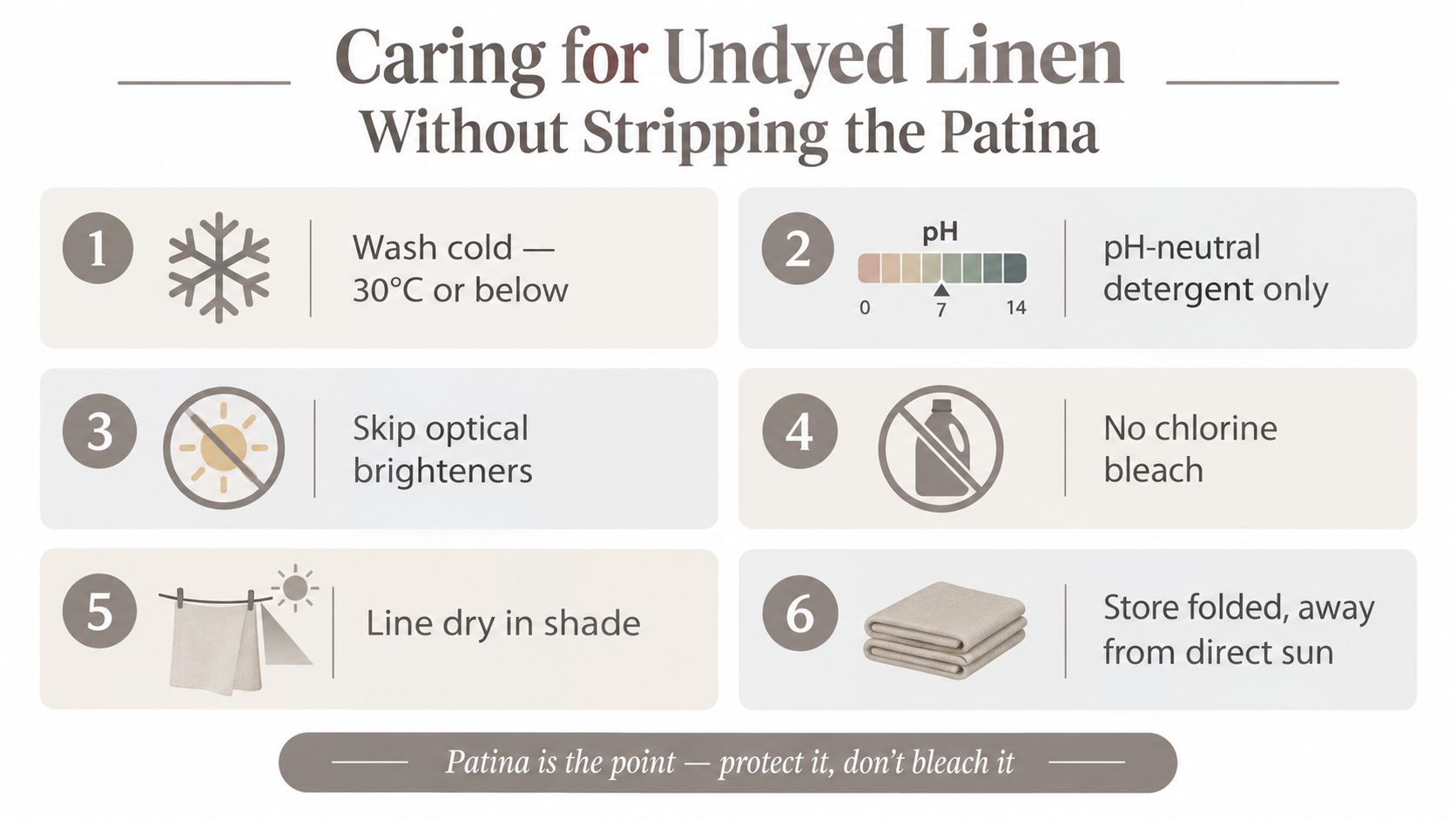
Wash for preservation, not whitening
Undyed linen holds its appeal because of its surface character. If you wash it too aggressively, you don't just clean it, you can flatten the very patina you paid for. The safer path is cold water, a pH-neutral detergent, and no optical brighteners or chlorine.
Heat can push natural linen toward a yellower look over time, especially when the cloth is repeatedly exposed to high drying temperatures or direct sun. That doesn't mean it's ruined, but it does mean the tone will age. For people buying luxury sofas or linen cushions in sunny Atlanta rooms, that aging pattern should be part of the plan.
A care routine that keeps the cloth alive
- Wash cold: Keep the water at or below 30°C.
- Use mild detergent: Choose a pH-neutral formula.
- Skip brighteners: They fight the linen's natural cast.
- Avoid chlorine: It strips character fast.
- Dry flat or on a line in shade: That limits distortion and keeps color more even.
- Press slightly damp: A medium iron smooths creases without scorching the fiber.
Enzyme-based stain removers can help lift spots without blasting the whole piece into a paler, flatter look. That's useful on bedding and on casual upholstery covers where you want the stain gone but the tone intact.
Clean it gently, then store it like something you want to keep for years.
For storage, use breathable cotton bags, not plastic. Add cedar blocks instead of mothballs, and rotate seat cushions so sun and wear don't age one side faster than the other. If you're working from the linen care instructions while protecting a designer piece, this routine keeps the fabric looking lived in rather than washed out.
The Lightfastness Tradeoff Most Buyers Miss
A linen cushion placed beside a sunny Atlanta window may look unchanged at first, then develop a softer or warmer cast than the fabric on the shaded side. The fiber can remain strong while its visible tone shifts. That difference is the lightfastness question, and it matters more than durability alone when natural linen is used near glass.
Why natural tone can still drift
Undyed linen is a spectrum of warm beige, straw, oat, and gray-beige tones, not one fixed shade. The residues that create those organic undertones can also make the cloth respond to prolonged light exposure. In a bright room, the same bolt may gradually read paler, warmer, or less even, especially on furniture close to a sunny wall.
Plant-dyed linen can show a similar pattern. In practice, these fabrics vary widely. Some hold their tone through washing yet fade sooner in daylight, while others remain more stable. Direct sun creates the clearest risk, particularly for upholstery near south-facing glass.
Choosing the right exposure zone
| Linen Type | Light Stability (qualitative) | Expected Shade Drift | Best Room Exposure |
|---|---|---|---|
| Undyed natural linen | Varies by construction and exposure | Noticeable tonal shift in bright rooms | North-facing or filtered light |
| Plant-dyed linen with light-sensitive dyes | Often lower light stability | Greater visible fade risk | Low-light rooms and accents |
| Plant-dyed linen with better-performing dye systems | More stable than fugitive dyes | Moderate tonal change | Controlled light, away from direct sun |
The table describes tendencies rather than a verified Blue Wool score. Public information does not provide one confirmed rating for every linen type, so a qualitative comparison is more honest. Undyed linen is not immune to light shift, and the change becomes easier to see in Buckhead or Alpharetta homes with large windows.
Room lighting also changes the starting point. North-facing light tends to keep natural linen's cooler side visible, while warm evening bulbs can make the same fabric appear more golden. Requesting a cutting and viewing it in both conditions helps separate a true color mismatch from a lighting effect.
Choose natural linen freely where a soft, living patina suits the room. For a piece exposed to constant sun, use filtered window light, a protected position, or a fabric whose color stability better matches the desired finish. That choice is especially important for designer furniture, where a gradual tonal difference can become part of the room's visual balance.
Sourcing Premium Belgian Linen With Confidence
By the time a buyer gets to the showroom, the decision should already be narrowed. The fabric should fit the room, the weight should suit the use, and the tone should be checked under actual lighting. For premium Belgian linen, the final job is confirming that the bolts match each other as well as the room.
What to ask before you buy
- Ask for lot matching. Compare multiple bolts side by side, not one sample.
- Check traceability. Ask where the flax was grown and where the cloth was finished.
- Verify certification. Look for European Flax or Masters of Linen when the supplier provides them.
- Confirm the weight. Make sure drapery, upholstery, or bedding weight matches the end use.
- Ask about retting and finishing. Those choices influence tone and hand feel.
- View it in room light. A cutting in daylight and evening bulb light is more useful than a showroom glance.
The sourcing checklist matters even more if you're building high-quality couches, statement furniture pieces, or a full living room package in North Atlanta. One lot may read softer and warmer, while the next may lean cooler. If you don't compare them together, you can end up with visible variation across pillows, upholstery, and drapery.
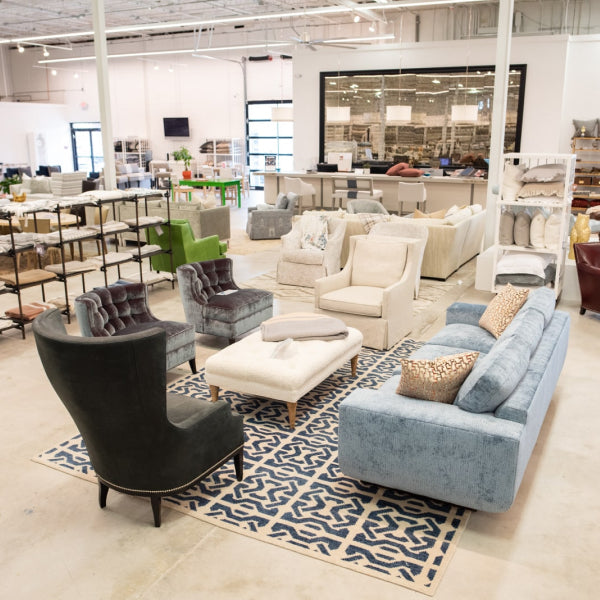
For shoppers who want a practical place to start, Lewis and Sheron Textiles carries Belgian linen and Libeco Home fabrics, and their showroom lets you compare cut yardage and upholstery options in person. Their internal guide on the Verellen Belgian linen sofa is a useful next step if you're narrowing fabric and frame together.
A good buying rhythm looks like this. Choose the application, verify the weight, compare the bolts, and make the final call in the same light the piece will live in. That sequence turns natural linen from a vague idea into a confident purchase for a home that has to look good for years.
Lewis and Sheron Textiles can help you compare Belgian linen, upholstery weights, and custom fabric options side by side, which is exactly what this topic demands. If you're planning a room refresh in Atlanta, Buckhead, Alpharetta, Roswell, or Sandy Springs, visit Lewis and Sheron Textiles to see how natural linen tones read in person and build a selection that fits your light, your furniture, and your room.