


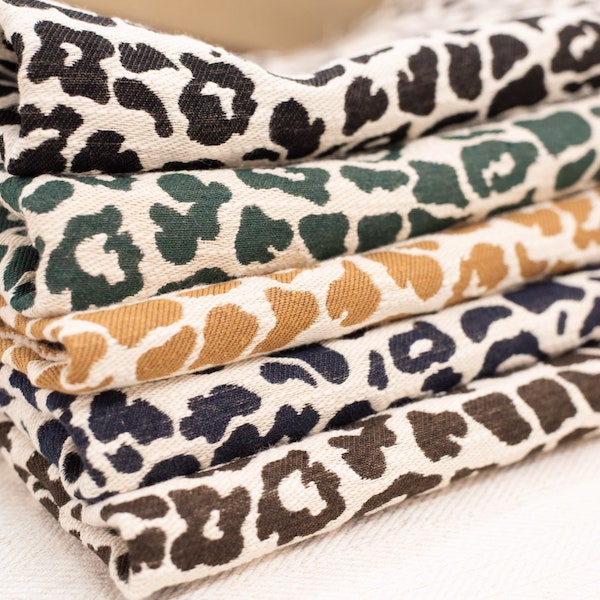
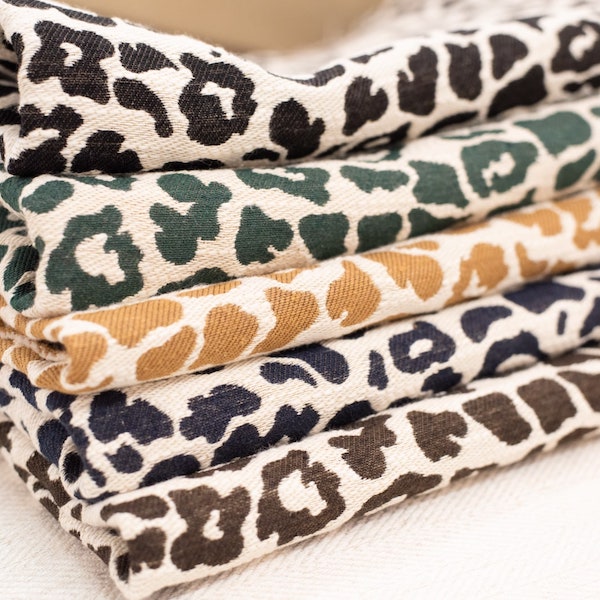
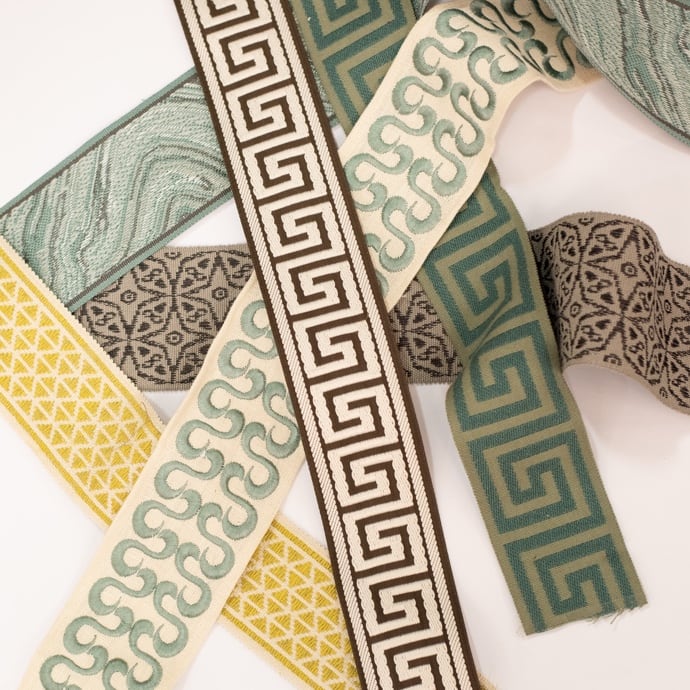

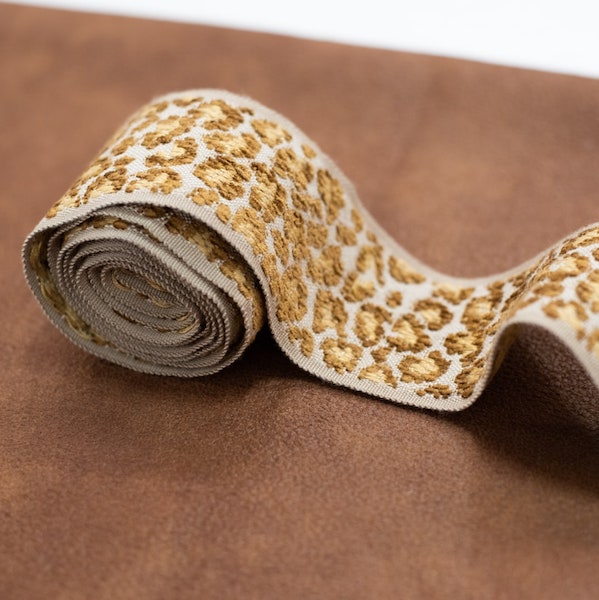
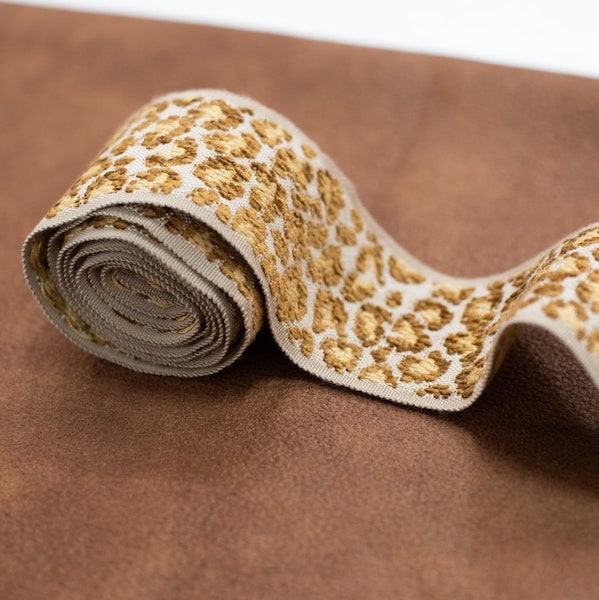
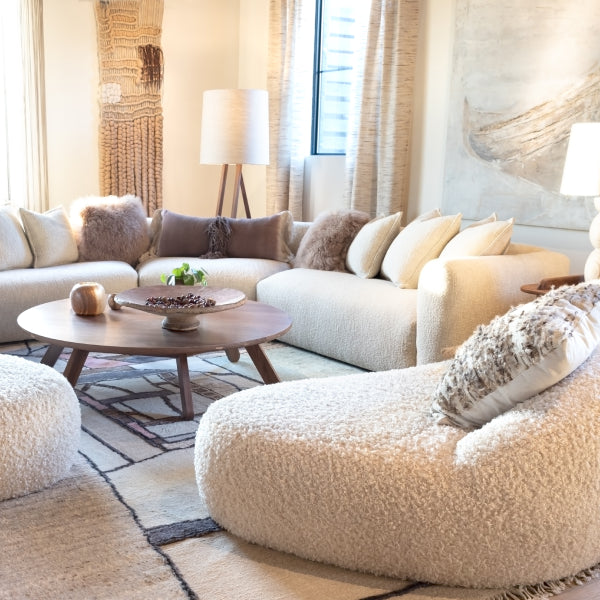
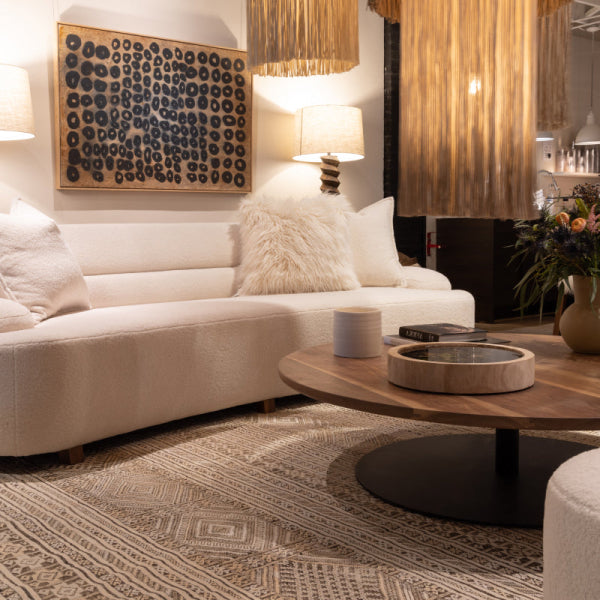






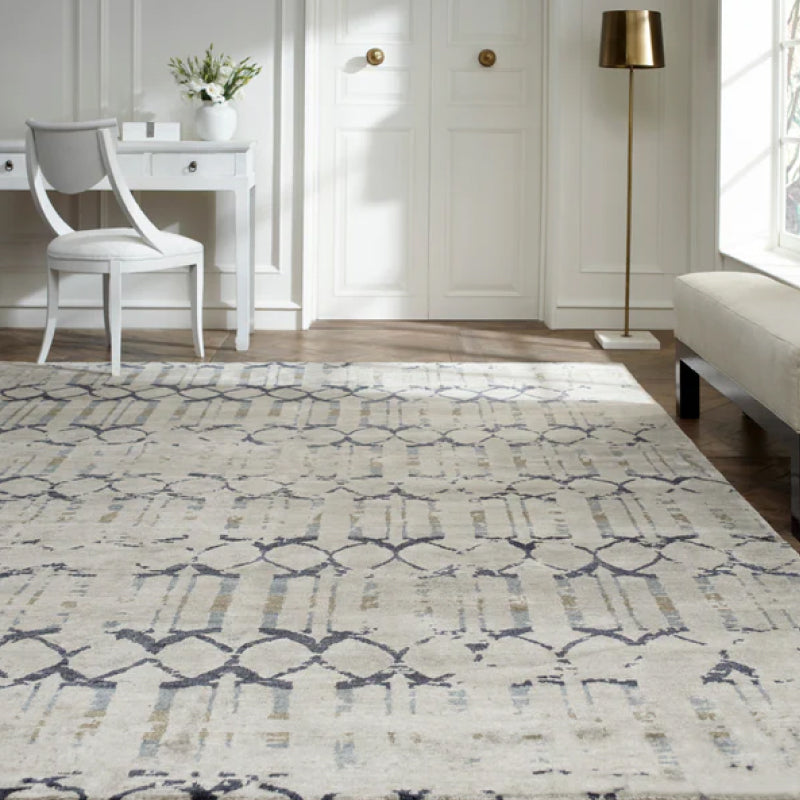
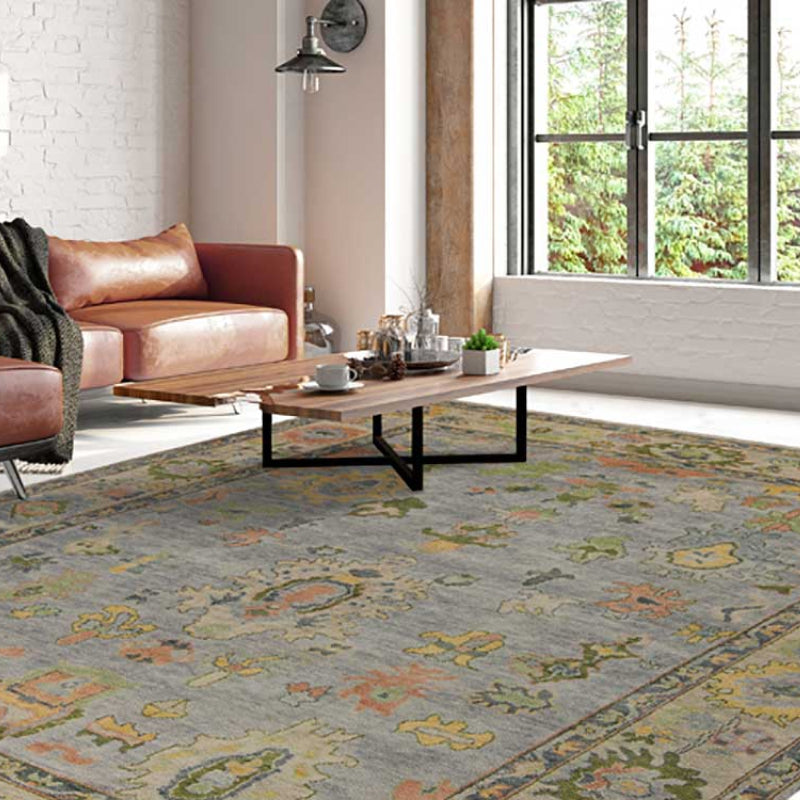
A client in Buckhead can spend an afternoon choosing the perfect Belgian linen, only to discover that the roll contains less usable fabric than the upholstery plan assumed. The pattern repeat demands extra length, the width doesn't suit the chair backs, and the “bolt” price suddenly looks very different from the finished cost.
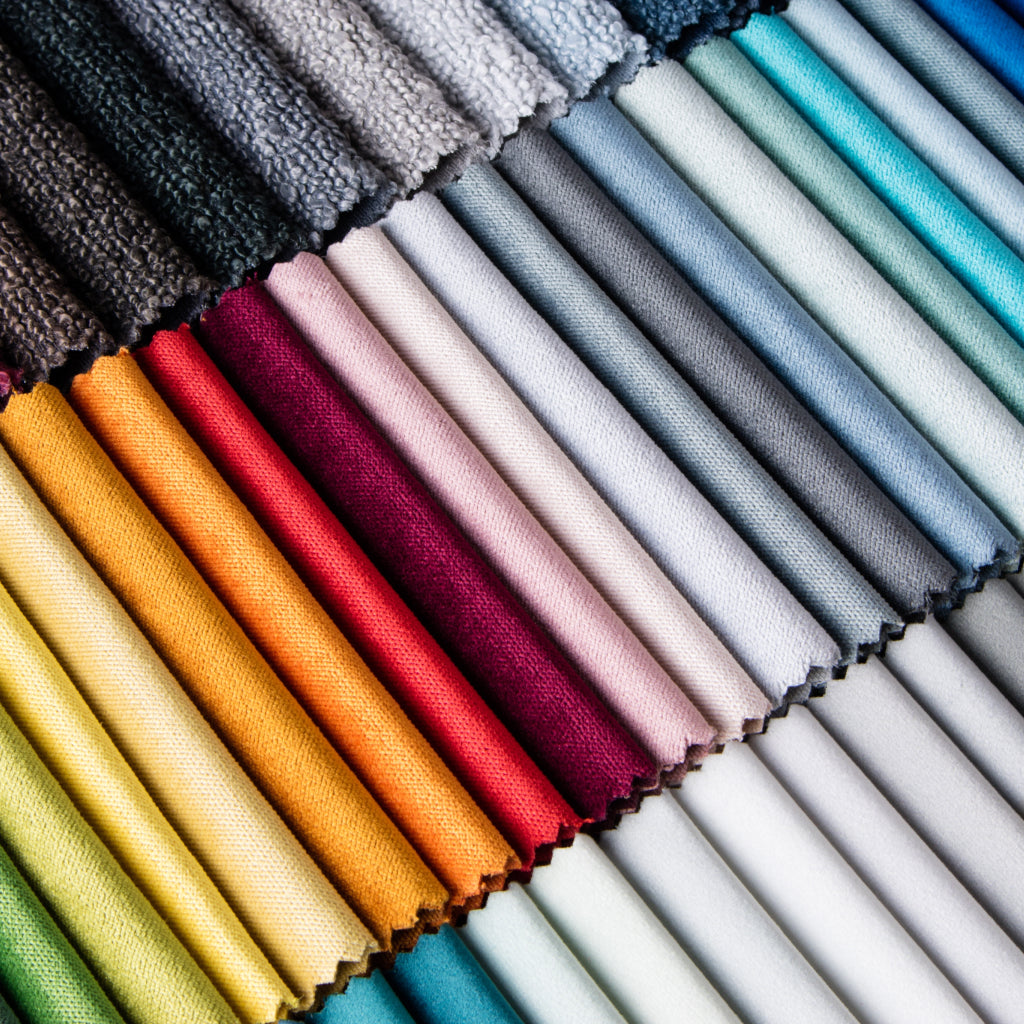
That moment, often called bolt shock, is avoidable. Fabric bolts for sale are commercial units, not universal project quantities. Their length, width, weave, pattern repeat, and usable yield determine whether a luxury sofa, custom chair, or premium sectional is beautifully covered or compromised by shortages and substitutions.
For affluent homeowners, interior designers, and buyers searching for designer furniture near me, fabric selection is part of the construction decision. The right textile supports comfort, maintenance, visual scale, and longevity. The wrong one can waste expensive yardage and weaken an otherwise heirloom-quality result.
The Reality of Buying Fabric Bolts for Sale
A homeowner commissioning a custom sofa for a North Atlanta residence may begin with a simple question: “How many yards are on the bolt?” That question sounds practical, but it rarely has one universal answer. A bolt can hold roughly 30 to 100 yards, depending on the material and manufacturer, while some upholstery and decorator bolts are commonly closer to 50 to 60 yards according to industry buying guidance.
The bolt format exists because fabric must be stored, transported, inspected, and sold efficiently. Historically, bolts served as a standard trade unit for cloth, with one historical account describing fixed lengths such as 24 yards in fourteenth-century England. Modern references still describe bolts as rolls that commonly range from 30 to 100 yards, showing why the format remains relevant to both wholesale sourcing and residential design. That continuity is documented in textile trade history.
Why the first estimate often fails
The most common mistake is treating linear yardage as the whole calculation. A sofa may need fabric in several directions, and a large floral or stripe may require careful matching at every seam. A narrower cloth can also create more joins than a wider one, even when both are sold at the same price per yard.
Before approving a full bolt, ask for:
- Exact length: Confirm the packaged yardage rather than relying on the word “bolt.”
- Usable width: Separate selvage-to-selvage width from the width available after trimming.
- Pattern repeat: Record both vertical and horizontal repeats for directional designs.
- Dye lot: Keep all visible pieces from the same dye lot whenever color consistency matters.
- Fiber behavior: Ask whether the fabric stretches, relaxes, shrinks, or changes character after cleaning.
Practical rule: Treat a bolt as a starting inventory quantity, not as a guaranteed amount of finished furniture coverage.
This matters especially for custom upholstered furniture. A bolt may be sufficient for several pillows and a pair of custom chairs, yet unsuitable for a large sectional with a prominent repeat. The reliable purchase decision comes from matching the fabric's technical specifications to the cutting plan, not from choosing the largest roll or the lowest listed price.
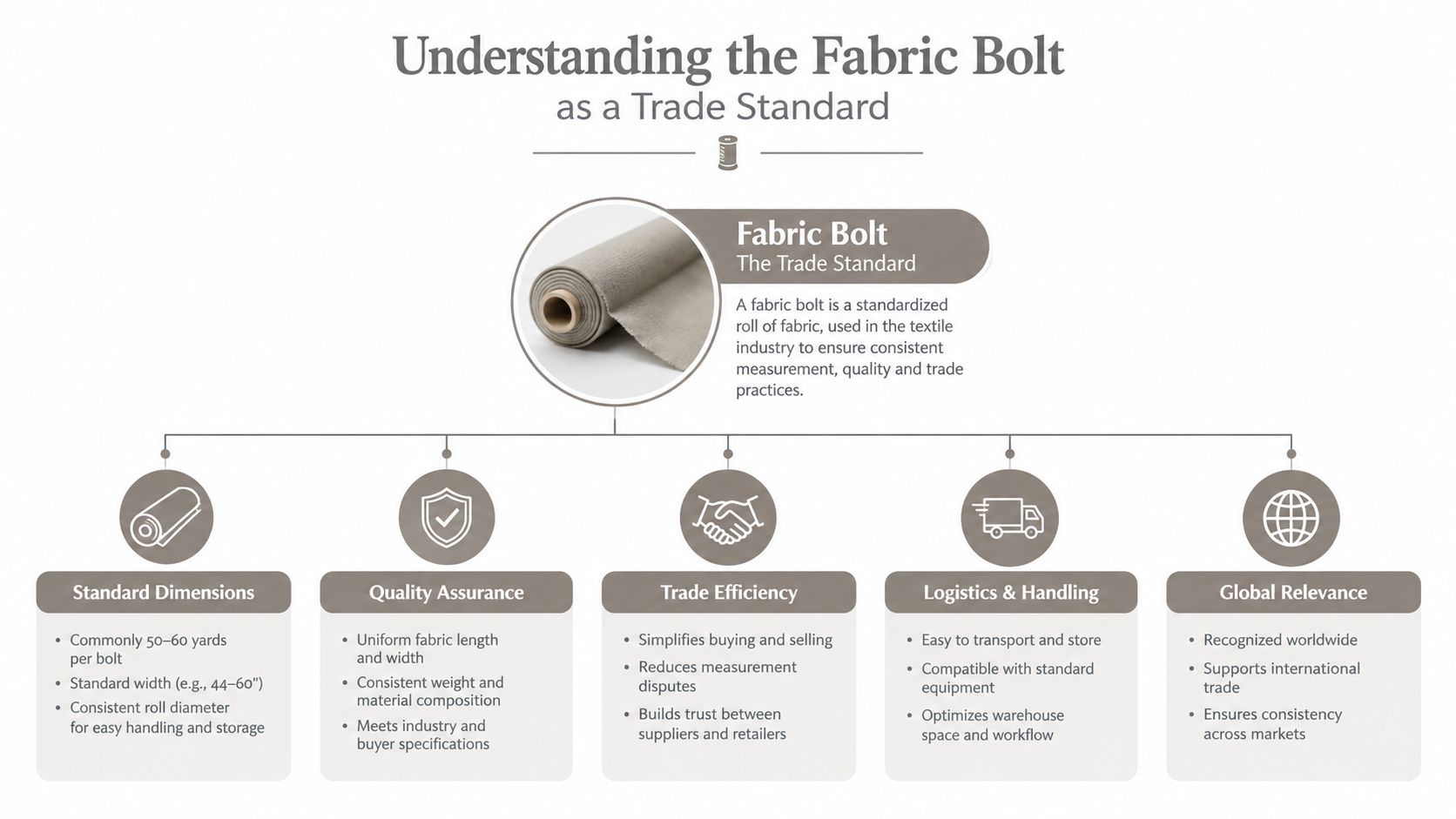
Understanding the Fabric Bolt as a Trade Standard
A fabric bolt is a wound, packaged length of cloth used for retail, wholesale, and professional handling. It isn't defined by one fixed yardage. Textile references commonly describe modern bolts as roughly 40 to 100 yards, with other commercial descriptions placing many products around 35 to 90 yards or 40 to 80 meters, depending on the fabric and manufacturer. A practical overview of bolt dimensions and commercial use is available here.
Read the bolt in a linear order
First, confirm length. Upholstery and home-decor goods may be supplied in longer rolls, while apparel, quilting, and specialty fabrics can arrive in shorter packages. A reference on fabric bolt terminology and commercial ranges notes that upholstery and home-decor goods are often sold in 50 to 100-yard rolls, while cottons and apparel fabrics may be closer to 40 to 50 yards, with some quilting bolts shorter still.
Second, confirm width. Common mill widths include 44/45, 54/60, and 108 inches, although the correct width depends on the end use. Width determines how many pattern pieces fit across the cloth and whether a drapery or upholstery layout needs additional seams.
Third, identify the fabric category. A dense upholstery textile occupies roll space differently from a lightweight linen. Manufacturers choose packaging lengths around fiber content, thickness, finishing, and intended application. That's why two bolts can have different yardage while both are correctly labeled.
Finally, verify the sale unit. A store may offer a full bolt, a partial bolt, or cut yardage from the same roll. Before ordering, confirm whether the listed price applies to the entire package or to each linear yard.
For designers and homeowners comparing upholstery bolt options, the useful question isn't “What does a bolt usually contain?” It's “What exact length and width will arrive, and what can my project yield from it?” That distinction protects both the budget and the design intent.
Choosing Between Linen, Performance, and Upholstery Fabrics
Material choice changes the experience of a room long after installation. Linen can deliver an airy, tactile surface that suits relaxed luxury, while performance fabric may provide greater resistance to everyday spills and abrasion. Heavy upholstery textiles can offer the body and stability needed for a high-quality couch, but they may feel too substantial for a light occasional chair.
Linen for visual softness
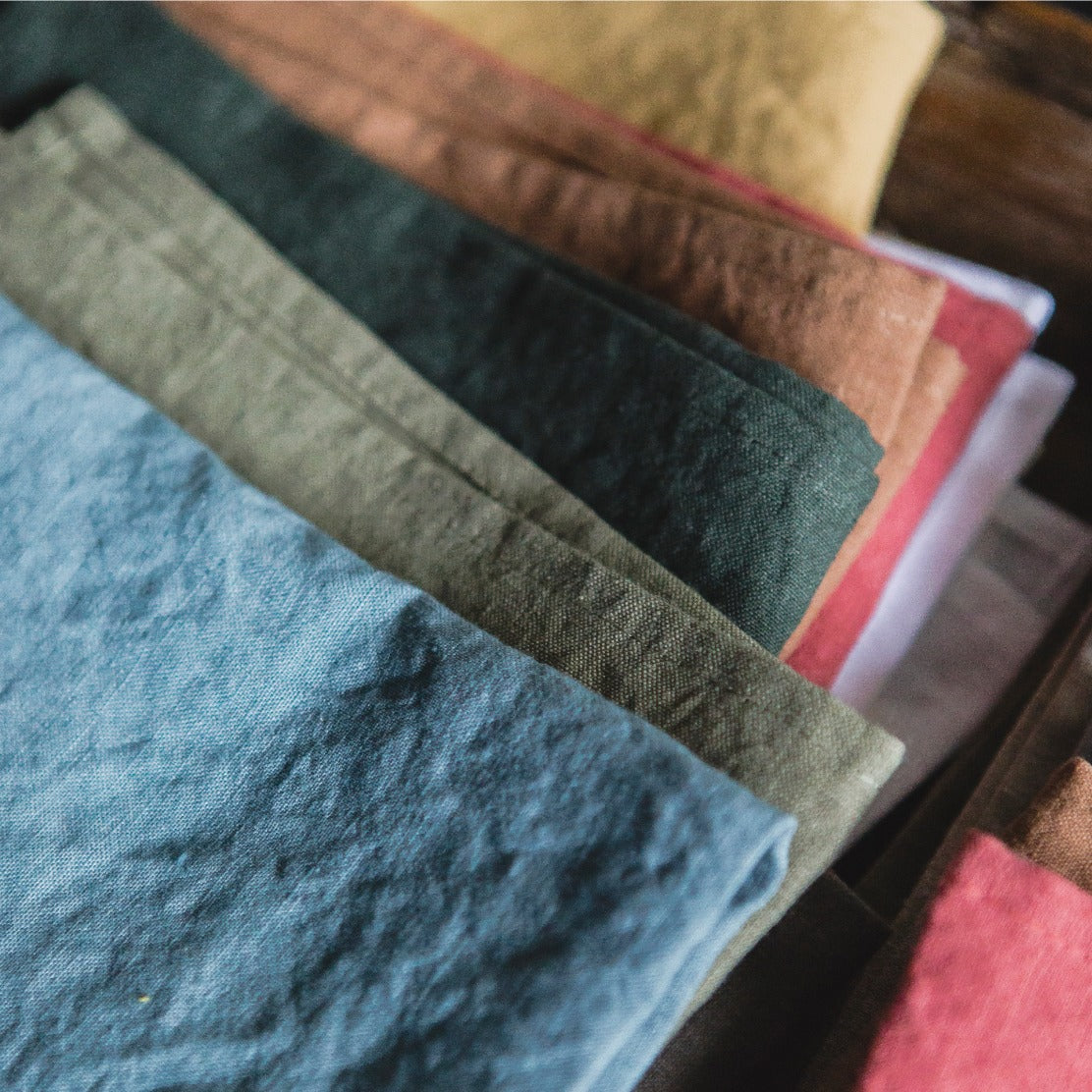
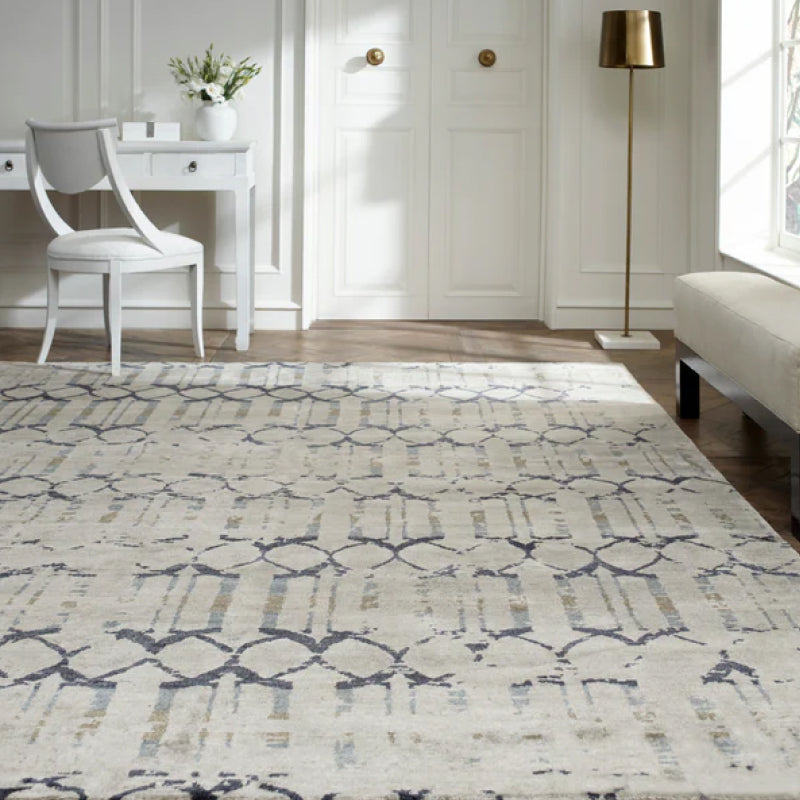
Belgian linen is valued for its natural texture, breathable hand, and gentle irregularity. It can make a custom sofa feel quieter and more architectural, particularly in rooms with limestone, oak, or hand-knotted rugs. The trade-off is that linen's relaxed appearance is part of its character. It may crease, show slubbing, and require more thoughtful placement in a heavily used family room.
For a formal sitting room or a statement furniture piece, those variations can be desirable. For a household with frequent entertaining, pets, or young children, the buyer should discuss cleaning requirements and expected patina before committing to a full bolt.
Performance fabric for active rooms
Performance textiles are designed around practical maintenance. Their value lies less in a specific visual style and more in how the finish, fiber, and weave respond to spills, repeated contact, and cleaning. That doesn't mean every performance fabric feels synthetic or looks casual. Premium options can support designer furniture while offering a more forgiving surface.
The relevant comparison is between the specific construction and the intended use. Review guidance on selecting performance fabrics, then request a sample large enough to assess color, nap, pattern scale, and hand. A small swatch can hide how a fabric behaves across a sofa deck or a long sectional.
Upholstery cloth for structure and wear
Heavy-duty upholstery fabrics are often selected for their dense weave, dimensional stability, and ability to withstand furniture construction. They can be the right choice for high-traffic seating, dining chairs, ottomans, and premium sectionals where the fabric must tolerate friction at seams and edges.
A useful decision matrix looks like this:
| Material direction | Primary strength | Main trade-off | Suitable setting |
|---|---|---|---|
| Belgian linen | Tactile texture and natural elegance | Visible creasing and a more delicate visual character | Formal rooms, calm living spaces, design-led interiors |
| Performance fabric | Easier maintenance and practical resilience | The finish and hand vary significantly by product | Family rooms, active entertaining areas, everyday seating |
| Heavy upholstery | Stability, body, and wear resistance | Can feel visually or physically heavier | Sofas, sectionals, dining chairs, and custom seating |
For interior designers preparing winning client presentations, showing these trade-offs helps clients choose with confidence rather than reacting only to color. Luxury isn't achieved by selecting the most delicate textile. It comes from matching material behavior to the way the room will really be lived in.
Mastering Yardage Calculations and Cost Efficiency
The cheapest bolt isn't necessarily the least expensive choice. The meaningful figure is the cost of usable fabric after width, pattern matching, cutting direction, and waste have been considered.
A 60-inch bolt provides 33% more usable area per linear yard than a 45-inch bolt, according to fabric buying guidance on width and yield. That difference can affect the number of seams, the amount of offcut, and the labor required for upholstery or drapery. A wider fabric may cost more per yard while reducing the amount needed for the finished piece.
Start with the cut plan
Measure each upholstered component separately rather than estimating from the furniture's outside dimensions. Record the length and width of cushion tops, cushion boxing, deck, arms, inside back, outside back, front rail, and any skirt or welt requirement. Then place those shapes against the fabric's usable width.
For a designer sofa, the cutting plan should answer four questions:
- Which pieces must run in the same direction? Directional patterns and napped fabrics can prevent efficient rotation.
- Which seams need a visual match? A large repeat can require extra cloth at every join.
- Which parts need a full pattern repeat? Inside backs and cushion fronts often deserve priority.
- What width remains after selvage and flaw allowances? The listed width may not equal the usable width.
A fabric yardage calculator for upholstery projects can organize the arithmetic, but it can't replace a cutting layout prepared by an experienced upholsterer. The calculator is useful for checking assumptions. The layout determines whether the assumptions work.
Price the project, not the roll
Pattern repeat changes the actual cost. Calculator guidance commonly recommends adding approximately 10% to 25% for repeat matching, as explained by fabric yardage planning guidance. The correct allowance depends on the repeat size, the furniture's shape, the direction of the design, and the standard of matching expected.
A practical comparison looks like this:
- Linear-yard price: Useful for comparing the same fabric in the same width.
- Area price: More meaningful when widths differ, especially between 45-inch and 60-inch goods.
- Usable-project cost: The strongest measure once matching waste and cutting constraints are included.
- Replacement risk: A shortage can force a dye-lot change or an unwanted substitution.
The right fabric is the one that completes the design without forcing compromises at the cutting table.
Ask the supplier to confirm whether the yardage was measured flat and whether the stated amount represents usable length. Roll circumference, tension, shrinkage, and prewash can all affect the final result. For an expensive custom sofa or full room of drapery, buying with a documented allowance is less costly than discovering a shortage after production has begun.
The Value of High-End Craftsmanship and Custom Furniture
Fabric is the visible surface of a sofa, but the frame carries the long-term burden. High-end furniture is generally distinguished by superior materials, exceptional craftsmanship, intentional design, and lasting durability, four characteristics outlined in this overview of high-end furniture.
That standard changes how fabric should be evaluated. A rare linen or performance textile deserves a structure capable of supporting it. Covering a weak frame with premium cloth creates an expensive surface on a short-lived foundation.
What supports a durable frame
Luxury sofas and custom upholstered furniture often rely on:
- Kiln-dried hardwood: Proper drying helps the frame remain stable as household conditions change.
- Mortise-and-tenon joinery: Interlocking joints create a stronger structural connection than simple fasteners alone.
- Dovetail construction: This method is associated with strong, precise connections in areas exposed to repeated stress.
- Reinforced corners: Additional support helps reduce movement, wobble, and premature failure.
These methods are specifically discussed in a construction checklist for luxury furniture. They don't eliminate the need for proper use or maintenance, but they give the upholsterer and designer a more dependable base.
Custom versus mass-produced
Mass-produced furniture can solve a short-term furnishing need, especially when dimensions, fabric, and delivery speed are fixed. Custom furniture offers a different proposition. The buyer can specify seat depth, arm profile, cushion construction, fabric direction, trim, and room-specific scale.
Durability is part of that proposition. Independent guidance states that properly maintained custom solid wood furniture routinely lasts 30 to 50 years, while mass-produced furniture is often in the 5 to 10 year range under normal household use. The comparison is detailed in this durability guide.
For homeowners in Atlanta, Alpharetta, Roswell, or Sandy Springs, the strongest result often comes from coordinating the textile and frame decisions together. A premium sectional should fit the room, suit the household, and permit future reupholstery when the fabric eventually needs renewal. That is how a purchase becomes heirloom-quality furniture rather than a disposable décor cycle.
How Lewis and Sheron Textiles Serves Atlanta and Beyond
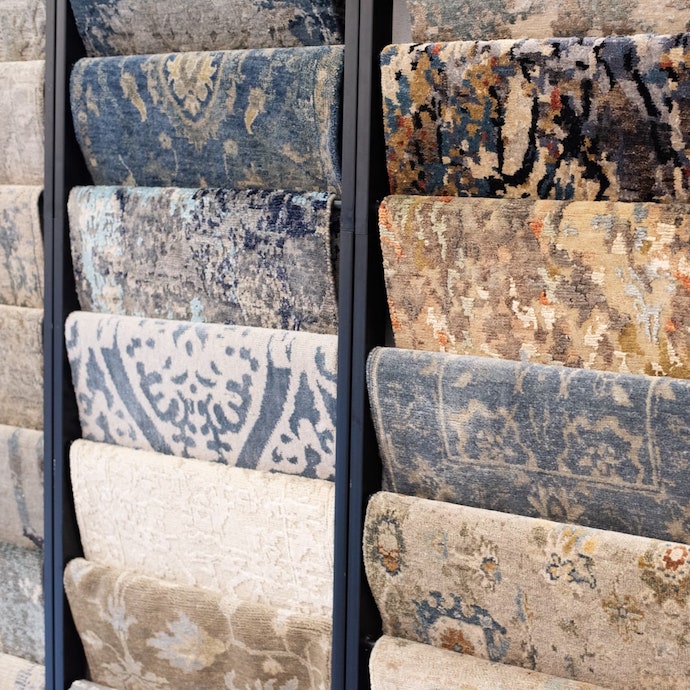
The final decision is rarely made from a product thumbnail alone. Designers and homeowners need to handle the cloth, compare neighboring colors, inspect the reverse, assess the scale of the repeat, and confirm that the available yardage supports the furniture plan.
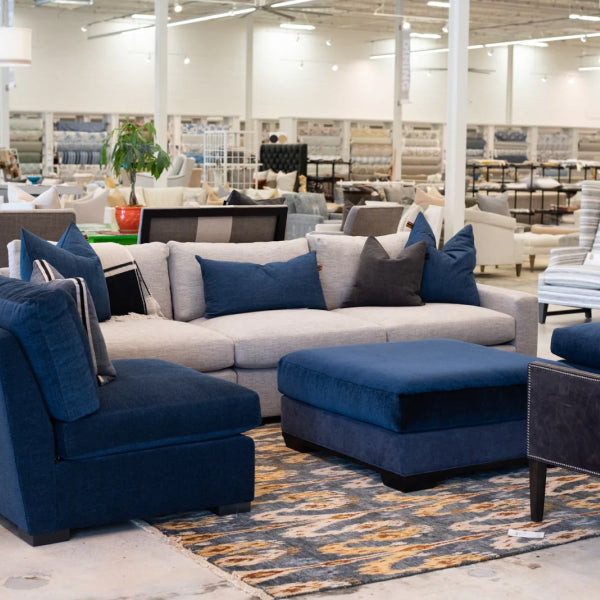
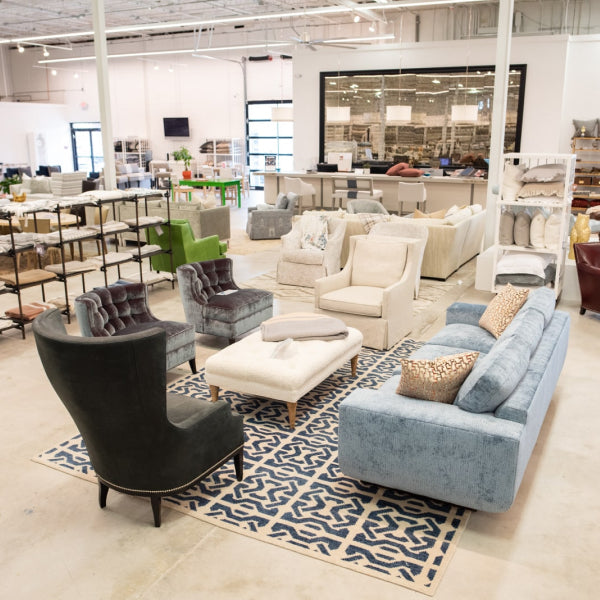
Lewis and Sheron Textiles offers a Design Center with over a thousand in-stock bolts and thousands of cut-yardage options from mills including Kravet, Fabricut, and P. Kaufmann. Its service also extends to made-to-order American-crafted upholstery, expert reupholstery, custom drapery, Belgian linens, rugs, trims, and accessories. Complimentary in-house design support can help connect a fabric selection to the room's furniture, proportions, and finish palette.
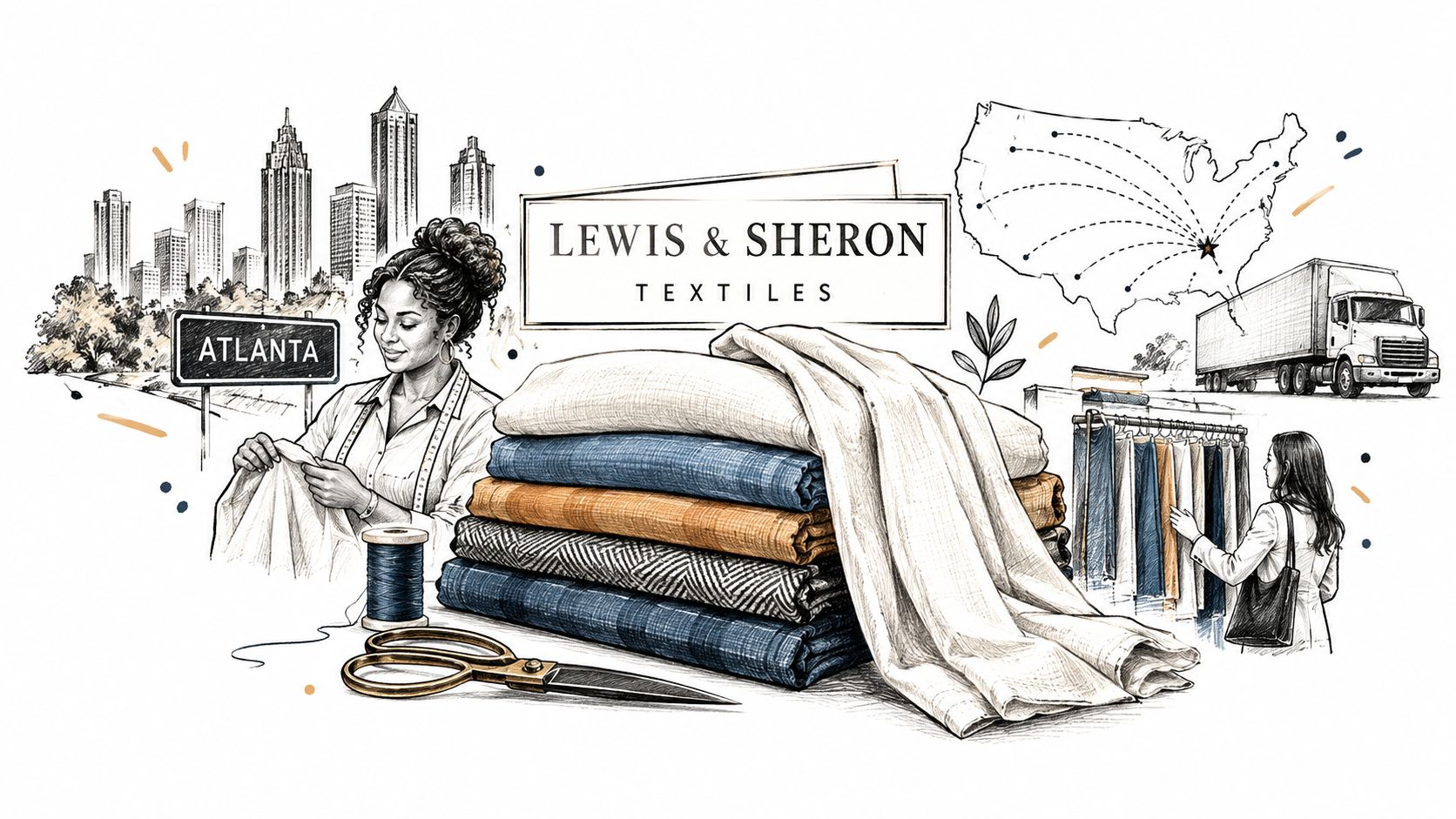
Buckhead is recognized as an Atlanta area associated with higher-end, design-focused furniture, according to this Atlanta furniture market overview. That context makes local expertise useful for clients comparing luxury furniture in Atlanta, custom furniture in Atlanta, and designer furnishings across Fulton County and affluent surrounding markets.
Nationwide shipping also allows clients outside the immediate showroom area to source from the same textile and furnishings collection. The important service is more than access to fabric bolts for sale. It's having knowledgeable guidance before the order, accurate yardage planning during production, and a clear path to reupholstery or replacement when the room evolves.
Visit Lewis and Sheron Textiles to compare fabric bolts, cut-yardage options, custom upholstery, and design support in one place. Bring your furniture dimensions or project drawings, and ask the in-house team to help match the textile's width, repeat, durability, and available yardage to an heirloom-quality result.