













The most repeated advice about poly cotton twill is that it is the easy, safe pick for a luxury sofa: cotton comfort, polyester toughness, and almost nothing left to decide. That advice is what gets buyers in Buckhead, Alpharetta, and Sandy Springs into a cloth that bags, shines, or behaves badly near heat.
A hangtag that only says "poly cotton twill" doesn't tell you how the fabric will sit on a custom chair, how it will fall at a window, or how it will react to skin oil, a dryer, or a candle. Blend ratio, twill construction, and finish are the key specifications. Softness, durability, and safety pull in different directions, and a finish sold as protection can fail once oils or high heat show up.
If you're investing in high-end furniture, designer furniture, or an heirloom-quality piece in Atlanta, read the spec the way a textile buyer does.
What Poly Cotton Twill Is and Why Buyers Choose It
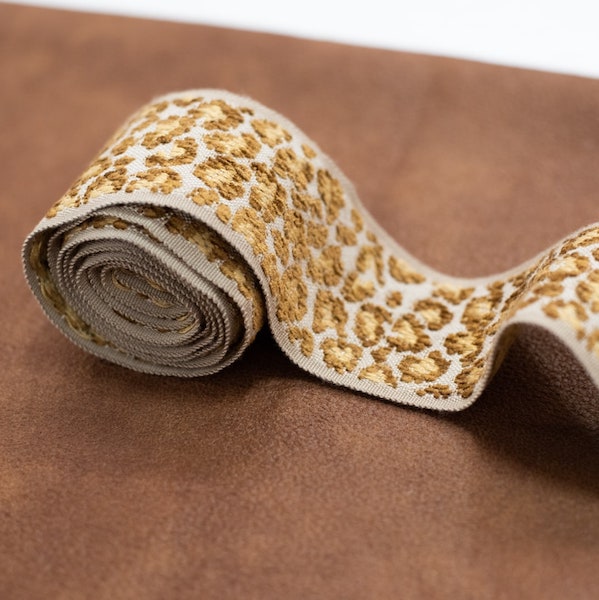
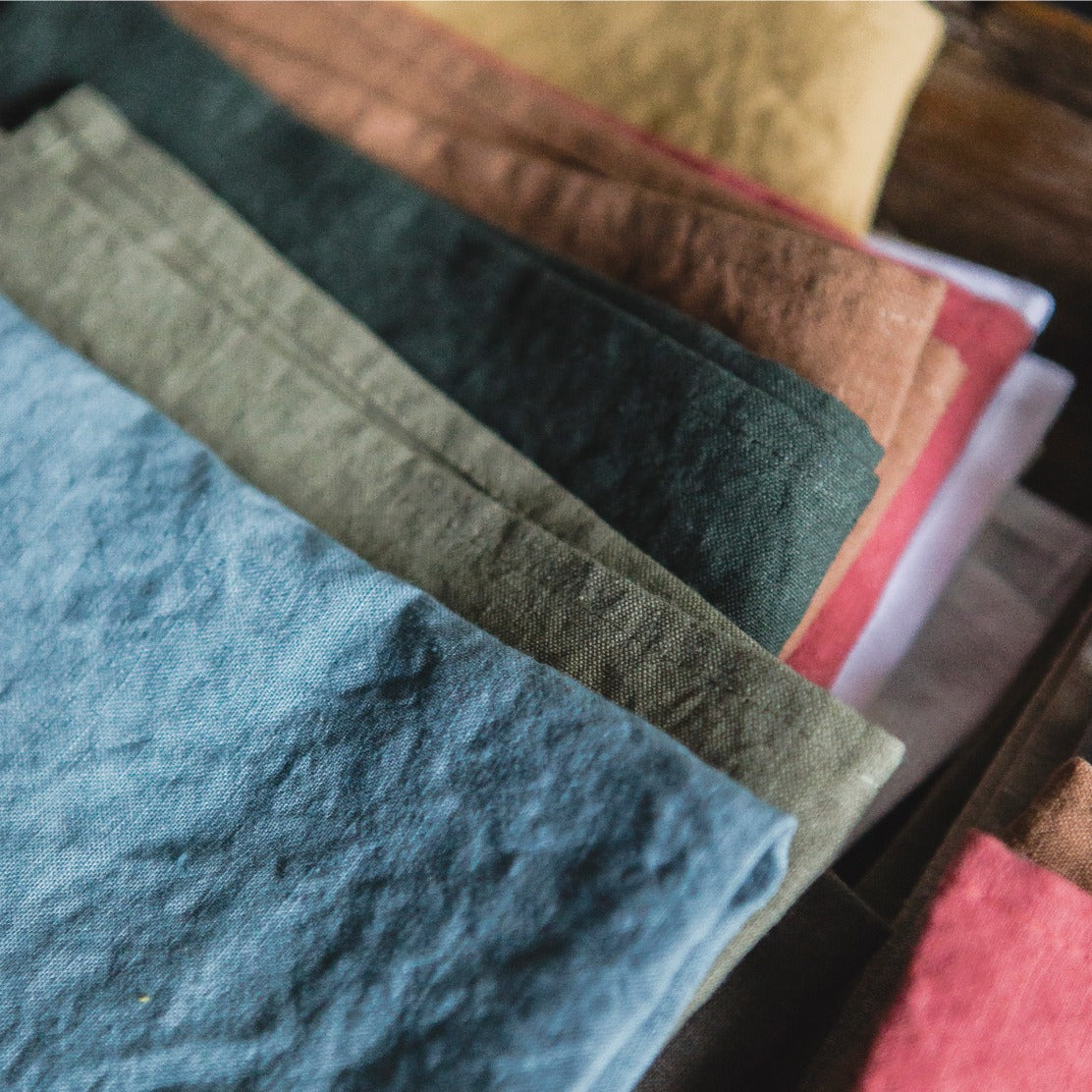
Poly cotton twill is a woven cloth that mixes cotton and polyester in a twill weave, so diagonal ribs show on the face. Cotton supplies the familiar, breathable hand. Polyester supplies the frame that holds shape. The ribs spread wear across the surface instead of letting it cut a groove in one spot.
The blend exists to balance those jobs. Polyester was invented in the early 1940s, became commercially prominent in the 1960s, and overtook cotton in global demand in 2002. A fashion-history account in Fashion Theory tracks polyester demand from about 5.2 million metric tons in 1980 to 19.2 million tons in 2000 and 46.1 million tons in 2014. In the United States, cotton was 64% of fibers in 1960 and synthetics 29%. By 1970, synthetics were 58% and cotton 39%. Pairing polyester's strength, dimensional stability, and wrinkle resistance with cotton's hand and absorbency is why the blend became a workhorse for interiors, not a passing trend.
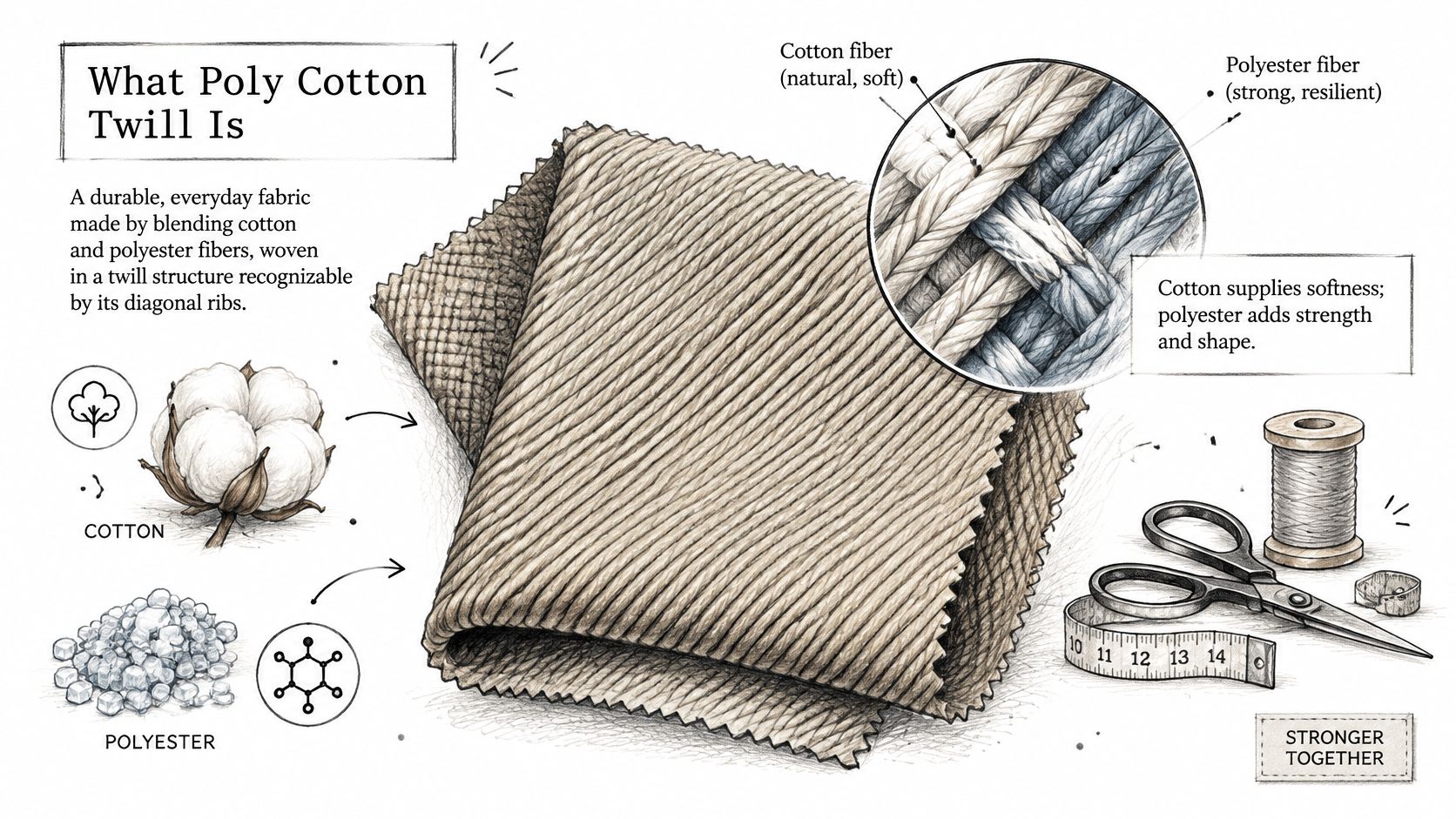
The name still doesn't set performance. Ratio, weight, yarn count, and finish do. Buyers choose it for three plain reasons: moderate cost, wrinkle resistance, and a familiar hand. The uses that matter on luxury home furnishings are upholstery, drapery, and pillows. Judge the specification, not the name.
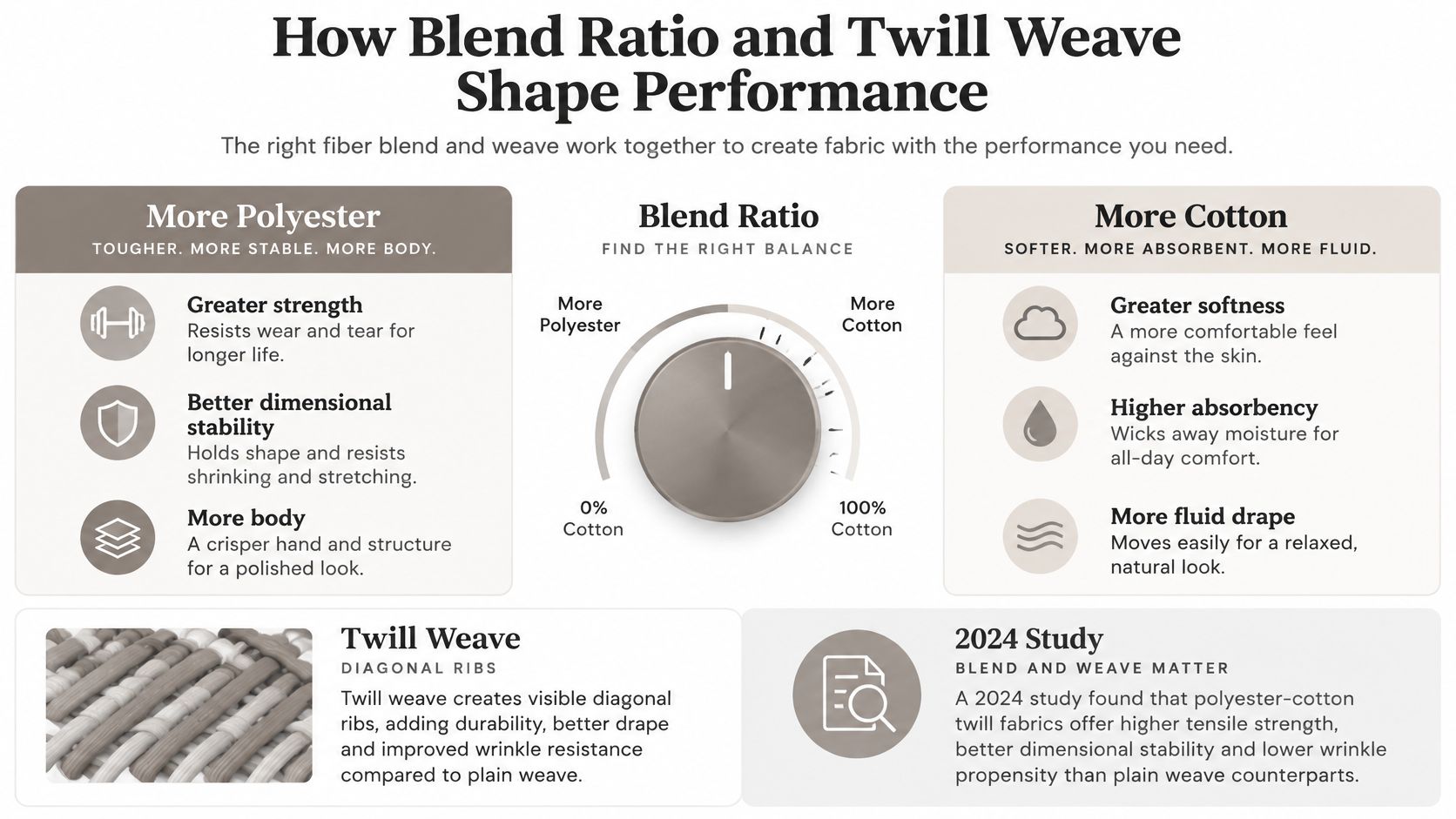
How Blend Ratio and Twill Weave Shape Performance
Treat the blend as a dial. More polyester adds strength, dimensional stability, and body. More cotton adds softness, absorbency, and a more fluid hang. You can't get every setting at once, which is why two swatches with the same label can feel like different cloths on a premium sectional.
A 2024 study of woven cotton-polyester composites in a 3/1 Z-twill makes the dial visible. Raising polyester content lifted areal density from about 184 to 199 g/m². Weft-direction tensile strength rose toward a 19-fold gap between the cotton-rich and polyester-rich samples. Polyester-rich constructions showed nearly twice the flexural rigidity, and drape coefficients moved from 0.655 to 0.789. The richer polyester cloth hangs with less flow and keeps its shape.
What a 3/1 twill actually does
In a 3/1 twill, the yarn floats over three yarns and ducks under one. That float builds the diagonal rib and a denser hand than a plain weave. A heavy, tightly set 3/1 can feel like seating cloth. A lightweight apparel version at the same ratio can drape like a shirt. Moisture behavior sits between pure cotton and pure polyester and moves with the blend. For how those mixes are put together, this primer on what a cotton blend is is a useful companion.
| Blend (poly:cotton) | Hand and drape | Stiffness and body | Moisture absorbency | Best fit |
|---|---|---|---|---|
| 35:65 cotton-rich | Soft, fluid drape | Lower, more flexible | Highest of the three | Light drapery, lightweight throws |
| 65:35 polyester-rich | Firmer, structured drape | Higher, roughly double the cotton-rich rigidity | Lower of the three | Upholstery, bench seating, high-contact cushions |
Cotton-rich cloth belongs on light drapery and throws, where movement matters more than seat recovery. Polyester-rich cloth belongs on upholstery, bench seating, and high-contact cushions, where you need the face to resist bagging. A near-even mix is the middle setting when you want a softer hand without giving up all the structure. Ask for finished blend percentage, yarn count, thread density, weight, and finish before you compare two "poly cotton" options for custom upholstered furniture.
Practical rule: If someone sits there every evening, move the dial toward polyester. If the cloth only has to fall from a rod, move it toward cotton.
How Durable Poly Cotton Twill Really Is
Poly cotton twill is durable enough for most residential upholstery. The result still depends on the test and the use, not on the fiber name printed on the memo.
Fiber content can't predict wear by itself. ASTM lists fiber mechanics, fiber dimensions, yarn structure, fabric construction, finishing, specimen tension, contact pressure, and the abradant as variables that change the outcome, which is why an ASTM abrasion method page is about the test setup, not a promise that polyester wins. Polyester generally improves tensile strength, crease recovery, dimensional stability, and abrasion resistance. Cotton contributes absorbency, air permeability, and a softer hand. Twill ribs spread rubbing differently than a plain weave. Those same ribs can polish into a visible track. On a dark high-quality couch, that track shows before the yarns break.
Two scales you can't swap
Wyzenbeek double rubs come from an oscillating-cylinder test under ASTM D4157. Martindale cycles come from ASTM D4966. Wolf Gordon's textiles primer is clear that the units aren't interchangeable, and it pairs 15,000 Wyzenbeek double rubs with 20,000 Martindale cycles for low-traffic private upholstery, and 30,000 double rubs with 40,000 Martindale cycles for high-traffic public upholstery. Compare cloths only when method, load, abradant, endpoint, and construction match. Dry and wet tests can also track thickness loss or breaking-strength loss, so "passed abrasion" without those details is an empty claim.
| Use case | Wyzenbeek double rubs (ASTM D4157) | Martindale cycles (ASTM D4966) | Typical application |
|---|---|---|---|
| Low-traffic private rooms | 15,000 | 20,000 | Formal sofas, accent chairs, decorative pillows |
| High-traffic private or public | 30,000 | 40,000 | Family sofas, sectionals, dining chairs |
| Above 100,000 Wyzenbeek | Not a reliable extra-performance signal | No Martindale equivalent to convert | Verify construction and care instead of the number |
Haworth's materials guidance states that results above 100,000 double rubs have not been shown to indicate extra performance, while treating 30,000 as heavy-duty and 15,000 as a lighter spec. A huge advertised number is not how you pick cloth for a statement furniture piece.
Before you order yardage, ask for the method, load, and endpoint in writing, then take a cut length. Check seam slippage, pilling, crocking, color change, and cleaning response on that cut. A high rub count doesn't guarantee the face will still look neat after a year of use. This walk-through of fabric abrasion resistance shows how to read those reports on furniture cloth.
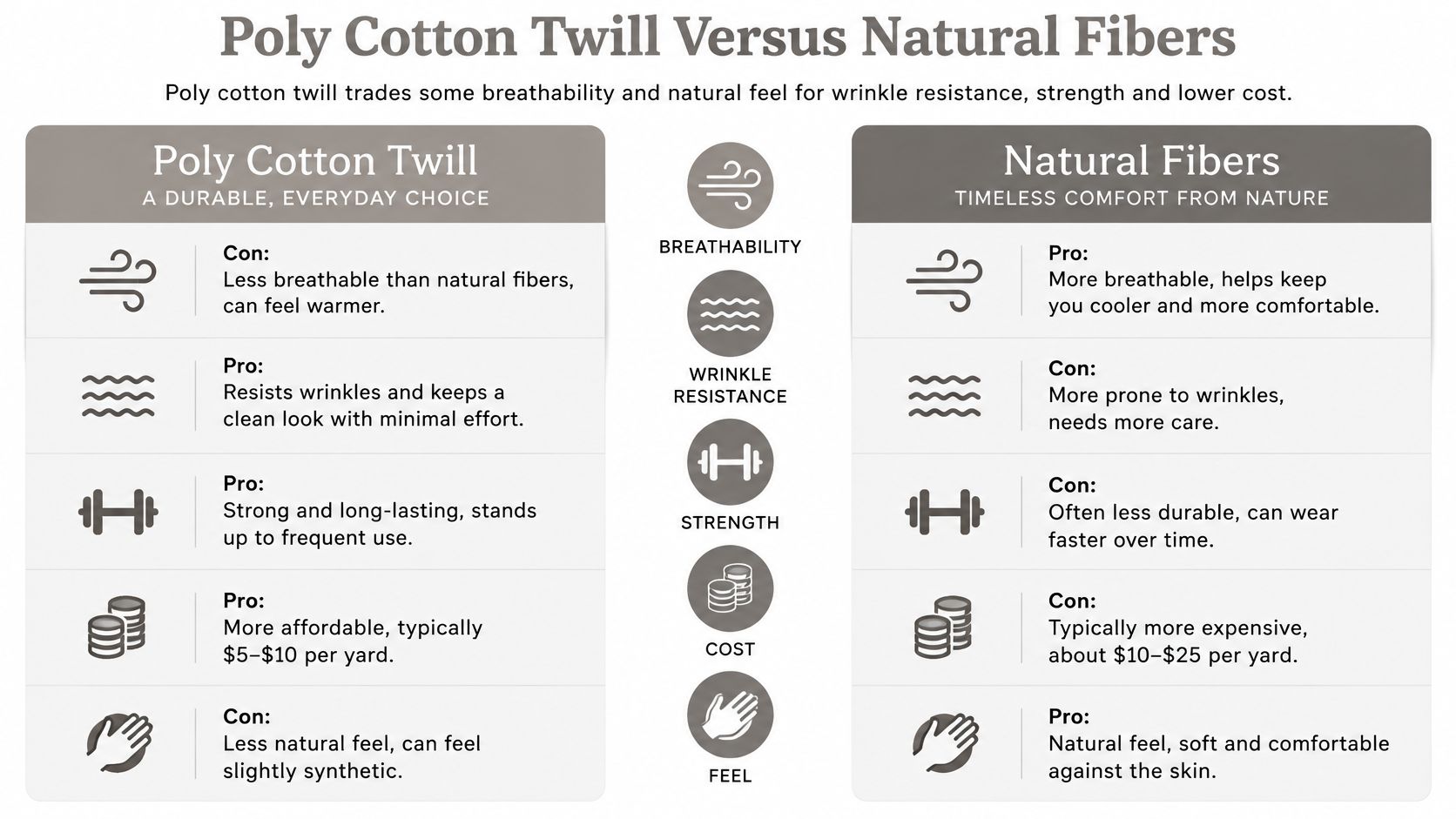
Poly Cotton Twill Versus Natural Fibers
Poly cotton twill trades some breathability and natural feel for wrinkle resistance, strength, and lower cost.
| Fiber | Durability | Softness | Breathability | Wrinkle resistance | Care effort |
|---|---|---|---|---|---|
| Poly cotton twill | High | Moderate | Moderate | High | Low |
| Linen | Moderate | Moderate | Very high | Low | Moderate |
| Wool | High | High | High | Moderate | High |
A 100% cotton twill usually breathes more and wrinkles more than the blend, with a hand many people prefer on a formal sofa they barely sit on. Linen wins on airflow and loses on creasing. Wool wins on softness and asks more of the person who maintains it. None of those words replace a spec sheet.
What you gain with the blend
- Dimensional stability: Seams and cushion boxes stay closer to the pattern you approved.
- Faster drying: Spills and damp cleaning leave the face sooner than on a thirsty natural cloth.
- Predictable supply: Mills run these yarns at scale, so a custom chair reorder is less of a treasure hunt than a niche fiber.
What you give up is real. Breathability sits below cotton. Lightweight versions can pill where a dense upholstery twill would not. Heat can mark the polyester, a limit natural fibers don't all share in the same way.
Designers often reach for wool beside an open fireplace because polyester can melt while wool tends to char. That habit is not a safety certificate.
Flame behavior follows weight, finish, and the full furniture build. If candles or a firebox sit in a Roswell or North Atlanta living room, ask for a rating on that construction. Don't assume wool, linen, or a synthetic blend is safer because of its name.
Natural fibers win when the piece is meant to be heirloom-quality and the look and hand matter more than wear resistance. A designer may still put a performance backing behind linen or wool so the face stays beautiful and the inside of the cushion does the hard work. On a family sectional that takes daily traffic, the blend's stability usually earns the seat.
Finishes and Performance Treatments Worth Specifying
A finish changes one property. Specify each one for a specific risk. On luxury sofas and custom chairs, an unspecified "performance finish" is only a label.
| Treatment | What it does | Limit | What to verify |
|---|---|---|---|
| Stain and soil release | Lets spills lift during cleaning | Wears off with repeated cleaning | Durability after wash or cleaning cycles |
| Water repellency | Sheds liquid for a period | Does not block oil-based stains | Test with oil and water on a sample |
| Flame-retardant treatment | Slows ignition and flame spread | Can be reduced by oils and wear | Certification for the intended use and furniture build |
| Antimicrobial finish | Limits microbial growth on the surface | Does not clean soiling | Test method and durability claim |
Read the table as four separate purchases. A finish that keeps coffee from setting does nothing for flame, and a flame treatment says nothing about how the cloth cleans. When a spec sheet lists several finishes on one fabric, each claim needs its own test method and durability rating, because one strong line item can borrow credibility the others never earned.
Why synthetic content is not fire safety
Polyester-cotton blends can have low flame retardancy because polyester melts while cotton stays combustible: two failure modes sharing one rib of twill. A published ignition study indexed on PMC found a 52/48 polyester-cotton fabric took much longer to ignite than cotton when it was clean, then dried emollients cut that ignition time from 328 seconds to 12.9 seconds.
The second number is the one a lived-in sofa runs on. Emollients are what hand lotion and skin oils leave behind, and an armrest or headrest collects them between cleanings. A lab result describes one swatch under controlled conditions; the rating that matters is the one covering the finished construction. Ask whether the treated fabric is certified for the intended use and the furniture build, or only marketed with words like durable and performance.
Abrasion ratings and flame compliance are separate questions too. A twill can post strong wear numbers and carry no flame rating at all. Before committing yardage to a custom piece, collect the finish documentation, the test method behind each claim, and a sample cut you can expose to the spills and contact the room will produce.
How to Care for Poly Cotton Twill Safely
Heat is the care variable that does the quiet damage. The cotton side tolerates laundering; the polyester side sets the ceiling. A 2025 forensic-fiber study reported wrinkling and shrinkage in polyester-cotton fabrics at about 175°C, with polyester melting around 225°C. That is why a washable label still leaves out the setting that matters: an iron soleplate, steamer head, dryer exhaust, or hot lamp can create one damaging patch while the rest of the piece looks unchanged. The same temperature check belongs to any blended cover in the house, including the routine behind keeping stylish dog beds fresh.
- Read the label first. Note the fiber ratio and any stain, water, or flame finish so the first cleaning does not strip the treatment that made the fabric worth buying.
- Test a hidden spot. Use a damp cloth and mild detergent, because a dense 3/1 can crock or watermark where a light apparel blend would not.
- Vacuum weekly with an upholstery tool. Grit trapped in the ribs works like sandpaper on a luxury sofa arm.
- Spot clean with cool water. Blot, don't rub, so you lift the spill instead of driving it down the twill line. The sequence in this guide to how to clean upholstery fabric matches that order.
- Steam or press on low, through a cloth, from the reverse. Polyester can distort well before it melts, so use the coolest setting that still relaxes the rib.
- Air dry loose covers away from vents and lamps. Repeated hot drying is how a cushion cover slowly changes size.
- Send structured pieces out. A boxed seat or a skirted chair isn't a pillowcase, and home machines crush those shapes.
Skip solvents and "miracle" spotters on a finish you haven't confirmed. A finish is part of the specification, so treat an unknown coating as delicate until the supplier names it; some spotters lift the treatment along with the stain, and the next spill behaves like untreated cloth.
Matching Poly Cotton Twill to Use and Checklist Before You Buy
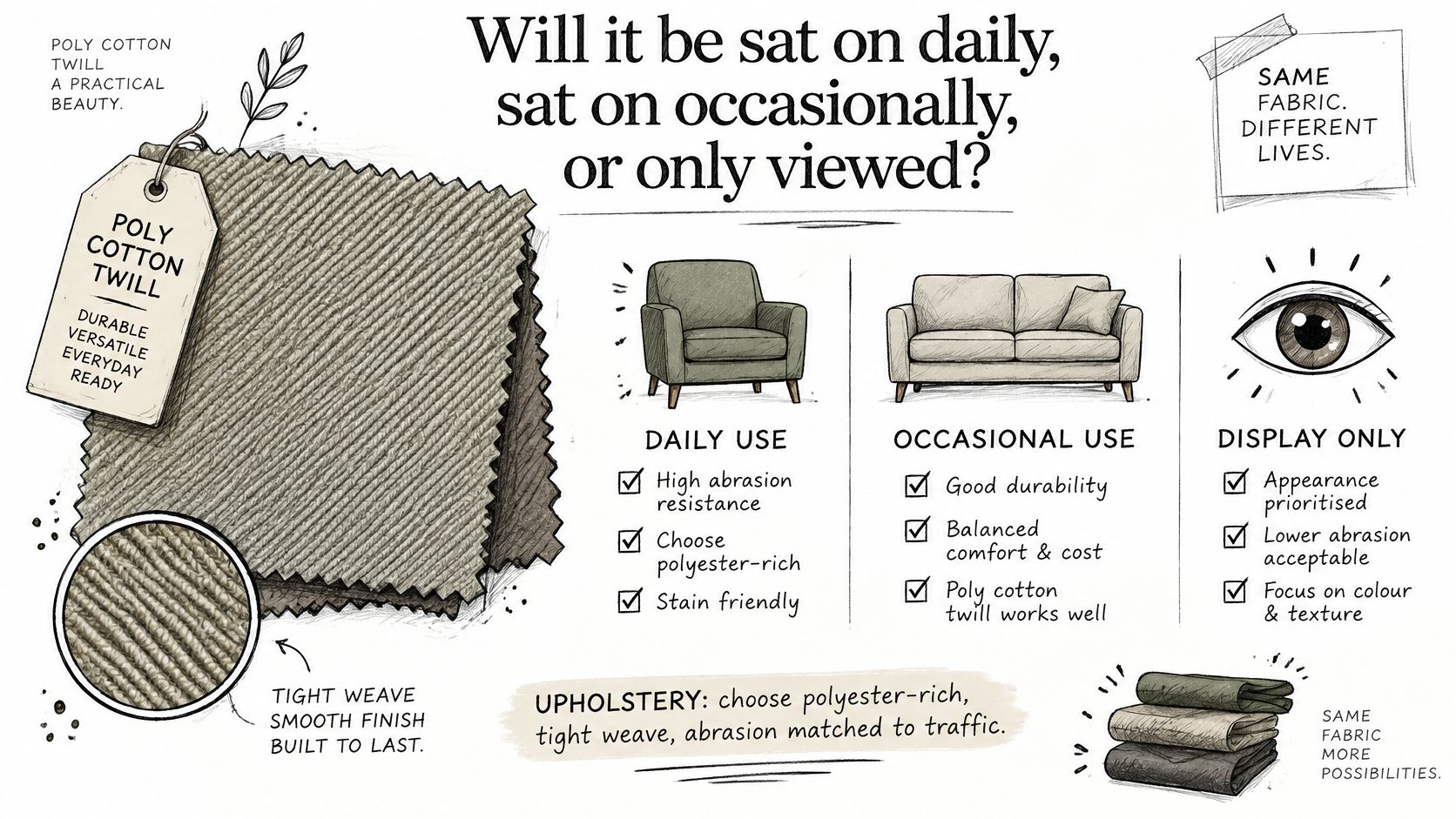
Start with one question. Will the piece be sat on daily, sat on occasionally, or only viewed? That answer picks the blend, the weave tightness, and the rating you should demand for designer-quality furniture in Atlanta.
Upholstery, drapery, and pillows
Upholstery wants the polyester-rich end, a tight set, and an abrasion result matched to traffic. Test the cut on the actual frame and cushion, not on a table, because crown, boxing, and seam pull change how the ribs read. That is the difference between a custom sofa and a mass-produced frame wrapped in a generic face.
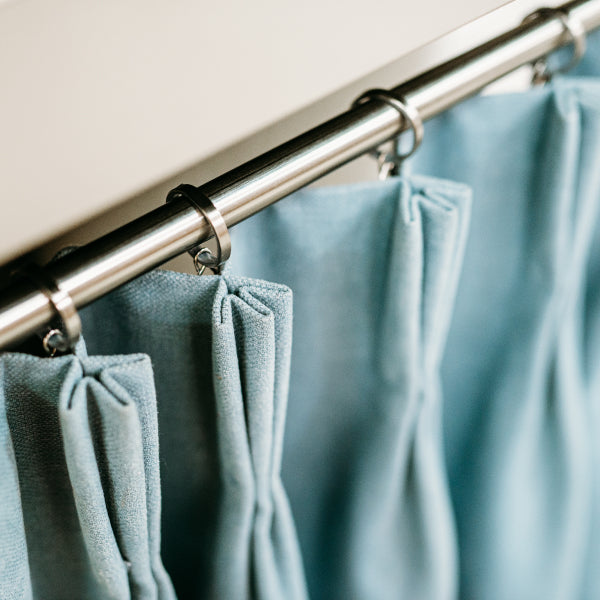
Drapery wants a balanced or cotton-rich blend so the panels hang instead of standing out from the wall. A lining shields the face from sun and room moisture and adds insulation. Heavier twill holds a crisp pleat. A shirt-weight version will not.
Pillows are happiest on a balanced blend: soft enough for the hand, firm enough to keep a knife edge. They take less traffic than a seat and more handling than a drape.
Two edge cases trip people up. A dark twill in a sunny Alpharetta or Sandy Springs room can fade and show rib wear, so specify a lighter tone or a lining. A premium sectional or bench that is used every day needs the high-traffic rating even when the room is formal. Occasional seating, such as custom chairs in a dining space you use on weekends, can sit at the lower private-room target if the test method is stated.
The checklist before you order
- Confirm fiber percentages as poly:cotton. "Poly cotton" without numbers is not a spec.
- Confirm weight in g/m², plus yarn count and thread density. Weight without construction still hides a loose weave.
- Confirm the abrasion result, the test method, and the traffic level it targets. Don't mix Wyzenbeek and Martindale in one comparison.
- Confirm the finish, and whether any fire paperwork covers rooms with candles, fireplaces, or cooking. Marketing language is not certification.
- Confirm the care label matches how you clean. If you only use a service, say so before the cloth is cut.
- Request a cut and test seam slippage, pilling, and color change. Do this before the bolt is reserved.
Say you're comparing a listed 65% polyester, 35% cotton twill, 60–61 inches wide, 250 GSM, and 0.50 millimeters thick, which is how one Walmart poly-cotton twill listing is written. Read it against the list. The ratio leans to seating, not fluid sheers. The width works for many sofa rails. The weight says mid-range cloth, not proof of a rub rating, and the thickness says it isn't a sheer. You still need yarn count, an abrasion method, finish papers, and a cut on your cushion before it belongs on an heirloom frame.
The next step is concrete. Request a cut sample and the finish documentation, then have a designer match that specification to the sofa or the drapes. That is how custom furniture in Atlanta stays custom, instead of a cookie-cutter cover with a familiar name.
Lewis and Sheron Textiles stocks home fabrics and builds custom upholstery so you can match a poly cotton twill specification to a luxury sofa, drapery, or chair instead of guessing from a hangtag. The Atlanta showroom pairs in-stock bolts with made-to-order pieces and complimentary design help when you shop. Visit Lewis and Sheron Textiles with your room's use, the blend you want, and any heat or stain concern, and have a designer confirm the cloth before you order the yardage.